
Home Blog Page 7

Foods in Ethiopia: 13 Best Dishes and Drinks

0
gurage -

Foods in Ethiopia is part of the culture. It is the life and blood of every ceremony and every mourning. Ethiopian has been associated with poverty and famine, which has killed thousands in the 1980s. Many foreigners assume Ethiopia has always been in such a way throughout history. The reality is the famine that killed millions at the time was an intentional misguided policy that was aimed to weaken opposition forces in the northern part of the country. The plan was to cut the transportation of edible goods to and from the north. And the place where the drought occurred was on the way of the plan.

Food is a necessity for all human beings. It is a necessary part of life. It is a health and it is a definition of culture, especially for countries that have a long history.  It is one of the defining elements of society whether it’s a meaning about ourselves, and how we fit into the wider and broad culture. Depending on where people are located, what their type of ethnicity is food can be seen as a marker of difference. Cuisine can be a distinctive method of identifying certain types of clusters of people that have similar ethnicity, even though how the food is prepared still may differ because of geographical location.

Ethiopia’s variety of food can be frozen and classified with traits of spicy Foods in Ethiopia. As we go from national to regional levels the cuisine can be seen to be distinctive and a particular sort of national representation.

Traditional ingredients

Ethiopian cuisine characteristically consists of vegetables and often very spicy meat dishes. This is usually in the form of wat/wot, a thick stew, served on top of Injera, a Sourdough flatbread, (about 50 centimeters in diameter and made out of fermented Teff flour). Ethiopians eat most of the time using their right hand (also is a sign of respect to use the right Foods in Ethiopia in Ethiopia to eat) form the served Foods in Ethiopia called Gebeta. The process is simple, it is cutting a piece of injera and dip it into the wot or roll the wot with the Injera before eating it, The Wot could be either beef, lamb, vegetables or various types of legumes, such as lentils.

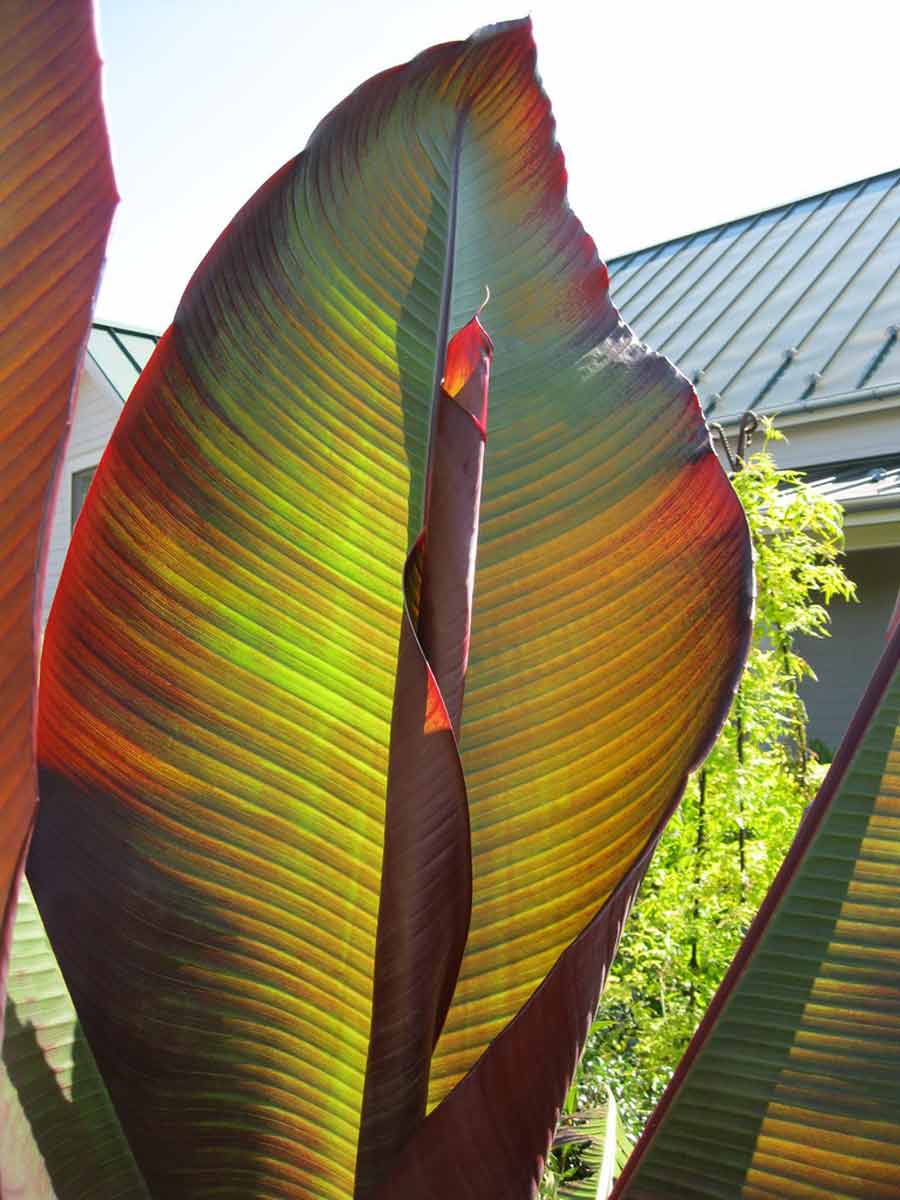
In southern nations, nationalities, and people region the Sidama people also have additional traditional Foods in Ethiopia which makes use of false banana plant a type of ensate. The plant is pulverized and fermented to make various Foods in Ethiopia, including a bread-like Foods in Ethiopia called qocho or kocho.

Due in part to the brief Italian occupation, pasta is popular and frequently available throughout Ethiopia, including rural areas.

gurage -
“Kitfo raw beef sandwich AUD7 – Gibe African Restaurant” by avlxyz is licensed under CC BY-NC-SA 2.0 

Coffee is also a large part of Ethiopian culture and cuisine. After every meal, a coffee ceremony is enacted and coffee is served.

Foods in Ethiopia in Ethiopia and Beliefs

The Ethiopian Orthodox Tewahedo Church prescribes a number of fasting periods from any kind of animal products (including dairy products and eggs) on Wednesdays, Fridays, and the entire Lenten season, so Ethiopian cuisine contains many dishes that are vegan. This is remotely compared to the idea of veganism. Although the fasting even does not limit one only to eat vegetables all week, it encourages staying from it at least twice a week. Although many Ethiopians may not get enough calories of protein or even meat and poultry, the event supports the effort of many to stay in shape and stay religious as well.

Even having such a diverse collection of dishes Ethiopian Orthodox Christians, Ethiopian Jews, and Ethiopian Muslims avoid eating pork or shellfish, for religious reasons. Pork is considered unclean in Ethiopian Orthodox Christianity, Judaism, and Islam. Many Ethiopians abstain from eating certain meats and mostly eat vegetarian and vegan foods in Ethiopia.

Like any kind of Foods in Ethiopia is prepared various spices oils and necessary ingredients are also used in Ethiopian dishes. Berbere, a combination of powdered chili pepper and other spices like an onion is an important spice used in many of the Ethiopian dishes. Mitmita, this one being a bit harsh and spicy than berbere is a powdered seasoning mix also used in Ethiopian cuisine. It’s an orange-red color and contains ground Birdseye chili peppers, cardamom seed, salt, and cloves.

What are Known Dishes in Ethiopia?

The national Foods in Ethiopia have a major character and defining element of Ethiopia because many of the countries share common dishes even though the process and ingredients might slightly differ.

Wot

It starts from onions chopped with large amounts, which then is sautéed in a pot. Once the onions have softened and the aroma has changed depending on the season cooking oil is added. After cooking these together berbere is added to give that spicy key wat taste. Depending on the season again meat like beef, chicken, goat, or lamb is also added. Legumes like lentils split peas vegetables like potato, carrots and chard are also used in the fasting season or as a side dish.

The variation of how the wot is named is by appending the main ingredient to the type of wot it is. Using lentil as the main ingredient we call it misir wot for potato its denich wot, for beef like lamb and goats its sega wot, and the most famous chicken is considered a national dish is Doro wot.

 foods in ethiopia
“Fassil, Ethiopian Restaurant, Vancouver – 2” by nep is licensed under CC BY-NC 2.0 

Tibs

Tibs is a dish found all around the world which is basically made by frying beef with vegetables, in Ethiopia though it is served in a variety of manners, and can range from mild to hot and contain no to little vegetables

Raw meat

This particular dish is very uncommon to see elsewhere in the world because it’s mostly considered unhealthy or too hard for the human body to digest. But this meal has been in Ethiopia for many generations and will continue for generations to come. This meal has no complexities it’s just raw meat usually of an ox and is served with spicy sauces like awaze, powdered mitmita, senafich.

Regional dishes differ mainly because of their ingredients and how it’s made. They also differ as Oromo dish, Gurage dish, Amhara dish, South Nation and Nationalities dish, Tigray dish, and many other dishes.

Southern nation and nationalities and sidama – The cuisines of the Southern Nations, Nationalities and Region, and the Sidama people also make use of the false banana plant, a type of ensete. The plant is pulverized and fermented to make various Foods in Ethiopia, including a bread-like Foods in Ethiopia, called qocho or kocho , which is eaten with kitfo. The root of this plant may be powdered and prepared as a hot drink called bulla, which is often given to those who are tired or ill. Another typical Gurage preparation is coffee with butter. Kita herb bread is also baked.

Oromo dishes – here the dishes are similar to the dishes served around Ethiopia but somehow different in how they are prepared and some additional ingredients. Anchotte, Baduu (ayibi), Chechebsa made of flatbread torn into pieces the mixed with a bit of a spicy sauce the either has butter or vegetable oil, Chuuco also known as besso that has a sweet flavor of whole-grain seasoned with butter and spices.

foods in ethiopia
“Tef platter with lamb shiro and beef kitfo” by Joel Abroad is licensed under CC BY-NC-SA 2.0 

Gurage dish – Kitfo is another distinctive Ethiopian dish many people from around the world have enjoyed eating. It consists of raw beef sliced into very small pieces mince marinated in mitmita and butter. Ayibe is a white color cottage cheese that has a mild and crumbly taste.

It’s often served as a side dish to soften the effect of spicy foods in Ethiopia. It is mostly served with Kitfo and distinctly makes it Gurage dish. Gomen kitfo is also another distinct Gurage dish made of collard green boiled then dried and finely chopped served with butter, chili and spices. It’s mostly prepared for the meskel season a very popular holiday nationally but is celebrated big and large through the Gurage people.

What Foods in Ethiopia Are for Good for Breakfast?

Widely in Ethiopia, the traditional dishes are often served to start from lunchtime onward. The meals before then like breakfast are often light and easy to digest. Fit-fit or fir-fir is the most common breakfast dish served nationally, it’s made of shredded injera fried with spices or wat. Another famous dish is fatira made of large fried pancake made with flour, sometimes with a layer of egg stirred in honey. Chechebsa is similar to a pancake covered with spices mostly berbere and in some cases, mitmita is used and butter with other spices on top. Genfo is a porridge that is usually served in a large bowl filled with spiced butter at the center like a small eatable volcano.

Foods in Ethiopia

According to local interpretation grains like barley, wheat, teff, maize, and zengada/masella are the predominant constituents of the Ethiopian indigenous diet. Most of which have heavy carbohydrate content making them very filling meals. Injera most of which is consumed on a daily basis around the urban and developed parts. In rural areas, wheat bread commonly called qitta is an important element in daily diet.

The distinction of high/rich and low/poor Ethiopian cuisine is maintained through unequal access to resources like Food in Ethiopia in Ethiopia, exotic ingredients, time along with the skill to produce certain types of dishes.

The differences in high and low cuisine Foods in Ethiopia in Ethiopias is mostly because of economic status. So, in some places, the distinction is not only based on the types of dishes served but also on each dish’s quality and attention to detail given. In most parts of Ethiopia wealth is not seen as much so the classification really has a gap on how the dishes are provided and served.

When Do Ethiopians Have Foods in Ethiopia in Ethiopia in Ethiopia?

In almost all parts of Ethiopia, there are 3 main eating times, morning breakfast (kurs), lunch (mesa), dinner (erat). But there is also a snack time in-between lunch and dinner which is mostly not counted as the fourth time of eating because it isn’t considered as a heavy meal. But snacks in Ethiopia have very commonly eaten throughout the day in-between meals, before coffee ceremonies like Dabo Kolo, Koloo popcorn are the common ones.

Foods in Ethiopia in Ethiopia in Ethiopia And Social Bond

Ethiopian Foods in Ethiopia in Ethiopia is not only defined by the way they are prepared but also how they are consumed. Gursha is an act where people show friendship and love when eating with family or friends where one feeds others in the group. Foods in Ethiopia in Ethiopia is not the only thing defining Ethiopia as a loving country but the way people act together and show respect for elders is basically how the Ethiopian community survives.

Drinks and beverages

Ethiopia is not only famous for the spiced-up Foods in Ethiopia in Ethiopia we eat but also our beverages both alcoholic and non-alcoholic beverages that have a very potent effect on the community and how it functions. Traditional alcoholic beverages like Tella which is basically a home-brewed beer made from barley and Gesho for fermenting the barely and is commonly served during holidays.

“Kitfo” by Charles Haynes is licensed under CC BY-SA 2.0 

Tej is potent honey wine with a light yellow color having a sweet taste at first but when stored for some time it ferments more and so the higher the alcohol content and a stronger taste, Areki is so far the strongest alcoholic drink in Ethiopia making it a drink for elders that can handle the effects. Non-alcoholic beverages which include natural and healthy ingredients like Kenetto which also goes by another name of Keribo is a non-alcoholic drink used for those who won’t drink alcoholic drinks as a substitute for Tella and Tej. Borde common around southern Ethiopia it’s a cereal-based traditional fermented beverage.

These are the cold drinks that are prepared, on the other hand, there are non-alcoholic hot drinks like Atmet given to women who are nursing, the sweet taste and softens makes it comforting to drink. It’s a barley and oat flour-based drink that’s cooked with water sugar kibe which is placed on a stove and has to continuously be stirred until it forms a mixture slightly thicker than egg-nog. Coffee –Ethiopia is considered to be the origin coffee and humankind, a key national beverage that has such a huge impact on society and commerce.

The coffee ceremony is of the most traditional ceremonies celebrated throughout Ethiopia starting from roasting the coffee in front of the guests to walking around wafting the smoke throughout the room so the guest can sample the scent of coffee being prepared afterward being ground in a traditional way which requires a metal bar and a wooden pot. The coffee is then put into the jebena, boiled with water, and when ready is set to cool and condense the coffee particles then poured into small cups called Cini and is served to the guest usually with sugar and some may prefer salt and butter.

Do you Have Tips for Having Ethiopia Food?

If it is your first time Having Foods in Ethiopia, then you really need to be more careful in some areas. Although Ethiopian food is one of the friendly foods for the body, taking in excess could give you discomfort.

You usually pay a fixed amount of money, but sometimes hotels may push you to taste more. ( it is a kind of culture for a host to ask for more). Eat slow and small.

Tej is not your everyday beer. It is one of these drinks that you would not know that you drink until you leave your seat. Its sweet taste may confuse some for a low alcohol drink. Drink small. Or suffer the hangover.

Some foods in Ethiopia are spicy. It doesn’t mean it would be hard to eat. Many hotels make them less spicy, and yet you would feel the burn. Mix your food with the nonspicy. Go for variety, not quantity.

Avoid eating in small business areas( although they could be clean and well-cooked foods). Choose well-established places, such as traditional places or hotels or high-quality restaurants in a local standard. This may seem harsh advice. But it saves you a lot of time and health issues.

Conclusion

Ethiopia has a lot of diverse Foods in Ethiopia in Ethiopia and drinks many of which even the local nationals don’t recognize much and this factor has inhibited these dishes from becoming a national dish which you can’t find everywhere. This is my consideration has halted the growth of these tasty dishes to develop further but what is happening now is the adaptation of western and eastern Foods in Ethiopia more than the traditional elements. This being said the incorporation of better ways of producing and making traditional Foods in Ethiopia should be widely considered throughout the country.

Cover: “Kitfo (raw spiced beef) with collards, cheese, and injera” by Joel Abroad is licensed under CC BY-NC-SA 2.0  ( Color edited)
A Rough Guide to Tigray Ethiopia

0
tigray debre damo

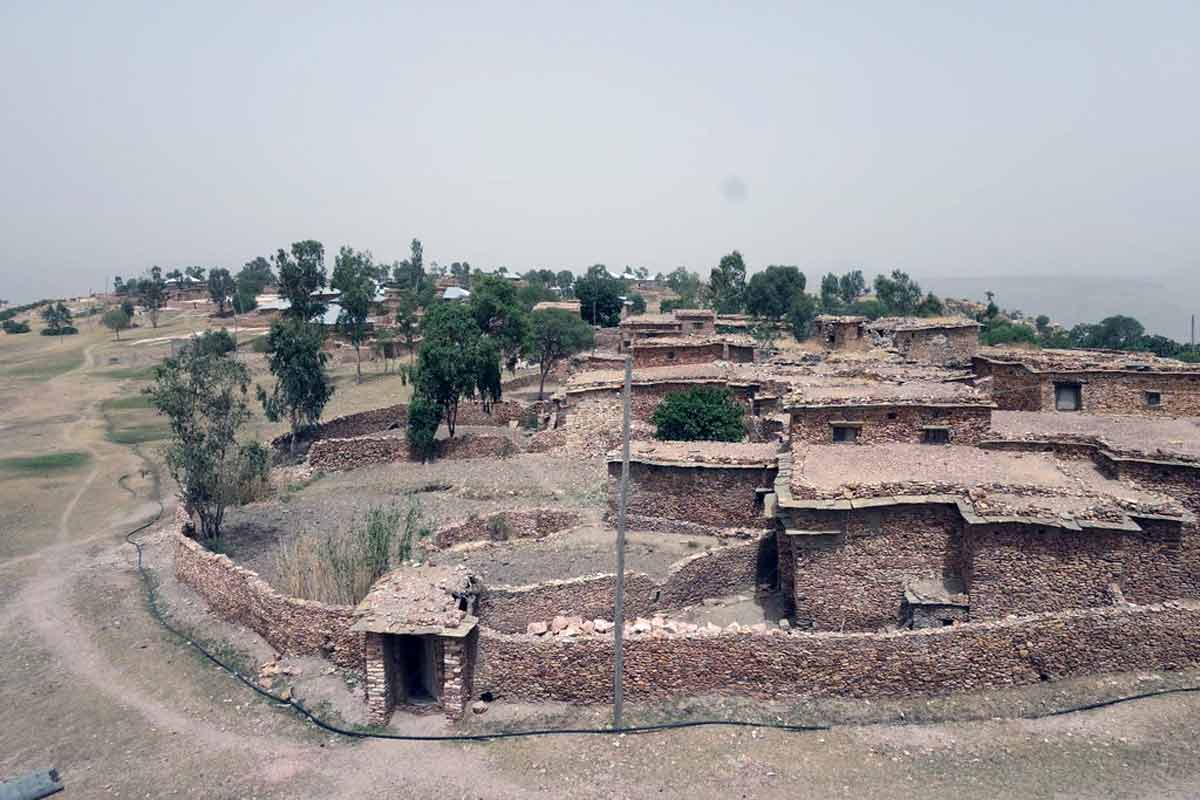
The Tigray Region is the northernmost of the nine states of Ethiopia. It is the place where the Tigrayan, Irob, and Kunama people live in large numbers. Tigray is otherwise called Region 1 in the government constitution. Tigray constitutes some of the tourist attraction locations such as Axum and Mekele.

Mekele is the capital of Tigray and is also one of the largest cities in the region. Tigray people mainly speak Tigrigna and Amharic. Tigray has 53,638 square kilometers that inhabit 8.3 million population. The majority of the place is agricultural, contributing 46% to the territorial GDP 2002/03.   The considerably less populated are swamps, 48% of Tigray land.

Today, Tigrayans number about 4.9 million and are gathered in Tigray state (Ethiopia) and Eritrea. The locales of Ethiopia and Eritrea where most Tigrayans live are high levels, isolated from the Red Sea by a slope (bluff like edge) and a desert. In great years, precipitation on the level is satisfactory for the furrow agribusiness occupied by most of Tigray. Nonetheless, when precipitation is low, the district is dependent upon unfortunate dry seasons.

Where is Tigray?

Tigray is surrounded by Eritrea toward the north, Sudan toward the west, the Amhara Region toward the south, and the Afar Region toward the east and southeast. Besides Mekelle, significant urban areas incorporate Adigrat, Aksum, Shire, Humera, Adwa, Adi Remits, Alamata, Wukro, Maychew, Sheraro, Abiy Adi, Korem, Qwiha, Atsbi, Hawzen, Mekoni,Dansha, and Zalambessa. There is likewise the truly huge town of Yeha.

What is the History of Tigray?

It is speculated that Mekelle became a town in the 19th century when Ras Wolde Selassie made it his seat of power and the region surrounding it his recreational center. Mekelle was a tributary district within Enderta, hamlet from the 13th century, with a negarit of its own.

Mekelle grew into a regional capital when Yohannes IV made it the political capital of his expanding state. He chose Mekelle for its strategic proximity to both Afar salt country and to the rich agricultural areas as well as its position on the route to Shewa, Menilik’s power base.

The major three institutions that are still important to Mekelle were founded by Yohannes IV. They are:

  1. The grand palace,
  2. The large market Edaga Senuy
  3. The church at Debre Gennet Medhane

Mekelle became the capital city of Yohannes IV in the 1880s. Mekelle’s accelerated growth was triggered by the establishments of residential quarters by nobilities and court servants, the amole salt market, and the establishments of local and foreign trading occupational. Mekelle had a strategic position of transition between long trade routes.

After the crowning of Menelik II, the trading routes of Ethiopia were moved from Mekelle to Shewa, current-day Addis Ababa. Mekelle lost its significance but it retained its political importance as an administration center and its economic role in Ethiopian salt trade.

Later, during the Italian war of 1895-1896, Mekelle became an important site in the war.

In the 20th century, there were three major events that helped sustain Mekelle’s urbanization. These were: –

  1. The arrival of Dejazmach Abreha Araya Demsu, governor of Eastern Tigray in Mekelle. He attracted various occupational groups including Muslim traders, women service vendors, and army retainers
  2. The Italian occupation between 1936 to 1941. They contributed to the modernization of Mekelle. 
  3. The urban development of Mekelle during 1942-74. Modern urban sectors were diversified, and new administrative offices were established. The Mekelle municipality (founded 1942), telecommunications and post office, Commercial Bank, and the atse Yohannes Elementary (in 1952) and Secondary School (in 1960) were established.

During the 1983–85 famine in Ethiopia, Mekelle was known for the seven “hunger camps” around the city. These housed around 75,000 refugees.

Geography & Demography

Mekelle lies at an elevation of 2,254 meters above sea level, close to the edge of the northern portion of the Ethiopian Rift Valley, on a Jurassic limestone plateau, in a semi-arid area with a mean annual rainfall of 714 millimeters (28.1 in). 

Mekelle is divided into seven local administrations: Hawelti, Adi-Haki, Kedamay Weyane, Hadnet, Ayder, Semien and Quiha. Within each local administration, there are kebeles or ketenas. The sub-cities of Mekelle comprise the area formerly incorporated as Mekelle City.

The climate in this area is characterized by relatively high temperatures year-round and distinct wet and dry seasons.

1994 national census reported the population of Mekelle as 96,938 people (45,729 men and 51,209 women). Mekelle had a total population of 215,914 people (104,925 men and 110,989 women) in 2007.

Mekelle city served as the administrative or capital city of Ethiopia from 1872 to 1889 and afterward for many administrators of the region as well as for the current administrative system.

It is one of the country’s principal economic and educational centers. Presently, there are rapid and expanding socio-economic developments such as infrastructural development, universities, and colleges, firms, hospitals, schools, electric, water supply, telecommunication services, etc. Most of the populations of the city depend on trade, micro, and small scale institutions, public service, agriculture and etc.

tigray debre damo
“Mosteiro de Debre Damo, Etiópia” by Samuel Santos is licensed under CC BY-NC-SA 2.0 

Sights & Landmarks: What Should I visit in Tigray?

The known Ethiopia history begins with an enticing historic leftover of Yeha – a civilization thousands of years ago. Yeha resides a few hours’ drives from the more open city of Axum, the excursion takes you on unpleasant tracks through an emotional good country view and in the long run finishes in lovely and tranquil agrarian villages.

It is there, near a substantially more ongoing Christian church, that you may see the transcending remains of Yeha Temple of the Moon – assembled over 2,500 years back, in Sabaean times. Tigray contains the center of the antiquated Aksumite realm and the noteworthy settlements of Aksum, the realm’s capital; Yeha, a demolished town of the extraordinary relic; and Adwa, the site of a fight in 1896 where the Italian attacking power was vanquished.

The sanctuary is an overwhelming rectangular building. Although it lost its rooftop and upper stories, the remains stand somewhere in the range of twelve meters in stature. As night falls, the sanctuary’s finely dressed and cleaned limestone mirrors the sparkle of the setting sun with a glow and splendor that can’t be unplanned. The gigantic, unequivocally fitted squares from which the internal slanting dividers are framed appear to tolerate out antiquated feeling that Sabaean structures could be loaded up with water without a solitary drop being lost.

Aside from the sanctuary, in any case – which talks articulately of crafted by a high civilization – little or nothing is thought about the individuals who fabricated this incredible building. To be sure, their starting points are enclosed by a secret of which, maybe, the best is this: if a culture had advanced to the degree of modernity required to construct landmarks of such quality in the good countries of Tigray by the 6th C.

Although vegetation is scanty, a large portion of Tigray’s populace is occupied with horticulture (oats, vegetables, espresso, and cotton) and stock raising. Stows away and skins are significant fares. Salt and potash from desert stores are additionally traded. The district, which has for some time been home to the Tigray individuals, likewise underpins the Raya, Azebo, Afar, and Agau people groups.

The realm of Axum (Tigray) kept going from the first to the eighth hundreds of years AD. Situated at the intersection of three lands, Africa, Arabia, and the Mediterranean. It was the most remarkable civilization among the Roman realm and Persia and it was the principal state to once in the past embrace Christianity around 325 AD. It likewise quickly allowed refuge to a portion of the early devotees of Mohammed in the seventh century. Remains of royal residences, structures, and tombs spread a wide region in the Tigray Plateau, the most noteworthy being the Axum, Ethiopia stelae, or monoliths at the stelae field of present-day Axum. A few stelae date between the third and fourth hundreds of years AD.

The pillars mark the area of the core of antiquated Ethiopia when the realm of Axum was the most impressive state between the Eastern Roman Empire and Persia. In any case, these world legacies are said to be under a basic condition for the most recent two years.  

The Monument to the War

The tower spirals more than 100 feet above the ground, mounted by a large ball. It is visible through much of Mekelle. The memorial stretches on both sides of the central tower. On each side are figures, representing the victims and victors of the war. The figures include mothers and children trekking out from the famine, several of them not making it. With them are the Tigrayan fighters, machine guns over their backs, and trusty donkeys in tow. 

one of the tanks left over from the war lies just beside the monument. Mekelle was only captured from the Derg in 1989, yet the monument is the only visible reminder of the devastation of the time.

Yohannes Castle

The Castle is the major attraction point in Mekelle.

Ayder School

Ayder is the school that was bombed by the Eritreans at the outset of the war. The war broke out in May 1998, and the school was bombed on June 5th.

The school sits in an ordinary poor residential district of Mekelle. A clumsy fence surrounds the school, and the gate is marked by a simple sign.

Today most of these areas in Tigray are tourist attractions and Axum town is a registered UNESCO destination.

How Can I Communicate in Tigray?

The Tigray language is classified in the Semitic group of dialects and is identified with Arabic, Hebrew, and Aramaic. Toward the north of the Tigrinya speakers’ live individuals who communicate in the firmly related language known as Tigre. Amharic, the official language of Ethiopia, is so firmly identified with Tigrinya that most Tigray has little trouble imparting in Amharic. Tigrinya, Amharic, and the old strict language Geez are composed of a similar letter set. Huge numbers of the letters utilized recorded as a hard copy of these dialects are gotten from old Greek.

There are many people who speak Italian and English in Tigray. The Italian language has been popular among the senior population who had experience with the Italian occupation of Ethiopia in the 40s. English is another popular language. Most students have English classes at school. Although usually poor, you can still ask directions, and get information.

tigray people
“i20141129_170158b” by KrisFricke is licensed under CC BY-NC-ND 2.0 

What Is every day of the Tigray People?

Following European missionaries, Christianity became a religion of north Ethiopia, including in Tigray. The realm focused on Axum and Adowa was a piece of the Mediterranean world in which Christianity developed. The appearance of Christianity in Tigrayan lands occurred about a similar time that it showed up in Ireland.

Some say that the Tigrayans already received Christianity several years prior to the majority of Europe accepted the religion. Numerous Tigrayan places of worship were cut into precipices or from single squares of stone, as they were in Turkey and in parts of Greece, where Christianity had existed from its most punctual years. The congregation is a focal element of networks and of every family’s day by day life. Every people group has a congregation with a consecrated leader individual.

Most Tigray occasions are related to the congregation schedule Easter, Epiphany, and so on. The common occasions incorporate Ethiopian or Eritrean national occasions.

A baby is perceived as an individual from the network in a naming service held forty days after birth for young men, and eighty days after birth for young ladies.   

At about the age of twelve, kids come to the “period of reason” and assume on greater liability, for example, helping care for more youthful siblings and sisters and for grouping livestock. Additionally, at about this age, kids are purified through water and enter the network of religion.

With adulthood comes new duties. One of the indications of adulthood is citizenship; that is, participation at town gatherings after chapel on Sunday mornings. Different signs are marriage and turning into an elder.

Tigrinya utilizes a detailed arrangement of welcome to show respect, the closeness of the relationship, and sexual orientation. There are ten individual pronouns individuals use to address each other. The decision of welcome is significant in setting up and keeping up great relations. When meeting a more peculiar whom one adjudicator may merit some unique regard, one may choose to address him with khamihaduru (How are you, my respected equivalent?). Subsequent to discovering that an outsider is expected a lot of regards, one may address him with khamihadirom (How are you, my respected prevalent?).

Most Tigray names have explicit implications. By and large, individuals allude to each other by their first names. On the off chance that one wished to recognize a few people with that name, one would include the individual’s dad’s name. Abraha, for instance, becomes Abraha Gebre Giyorgis, meaning, Abraha is the offspring of Gebre Giyorgis.

In the event that a further qualification must be made, the granddad’s name could be included, for instance, Abraha-Gebre Giyorgis-Welede Mariyam. People’s names adhere to similar standards, with the special case that new spouses are regularly given new names by their relatives when they initially go to live with the husband’s family. This applies just to the primary name continue as before.

Relationships

For provincial Tigray, there is no dating in the Western sense. Articulations of sentimental enthusiasm between two individuals are not shown by the couple going out together. Rather, guardians of both make an understanding of a joining between the two families, and marriage happens. Guardians, for the most part, consider the interests of their kid. On the off chance that an individual gets separated, the person in question may date before going into a subsequent marriage.

What Is the Living Condition in Tigray?

 Higher Education

With over 20,000 students, Mekelle University has outstanding standards of education, teaching, research, and consultancy.

The Mekelle Institute of Technology is Ethiopia’s elite university for Computer Science and Electronics. Mekelle also hosts several high-quality private colleges and reputed TVET centers. 

Investments

Mekelle provides an attractive environment for investors in agro-processing and manufacturing. Textile and leather sectors are appealing and its metal cluster is expanding. Agro-processing is growing at a remarkable rate. Poultry, animal husbandry, and related value chains are on the rise, and opportunities exist in cash-crops and food-processing. Additionally, the industrial production of animal food and beverages, as well as the processing of honey, meat, and dairy products, has immense potential.

A cement factory and a multitude of small enterprises produce construction materials for Tigray and its neighbors. Finally, the cobblestone trade offers business opportunities, since the city is dedicated to paving all its roads.

Urban Expansion

The land policy infringes on property rights; is a symbol of injustice; endangers food security and could be a culprit of unsustainable development and environmental degradation.

In some areas of Mekelle and Enderta, the GOT is providing as low as three birr per sqm (square meter), while selling it to the highest bidder for as high as thirty thousand birr per sqm.

Most of the land that is being arbitrarily seized by the GOT is fertile farmland which has been a source of food for farmers and their families living on subsistence farming.

Although the current Mekelle population is unknown, a sharp increase in the number of its urban residents is quite visible.

Yet, Mekelle is a city with poor infrastructure; suffers from a chronic scarcity of water; has very poor waste management and sewage system; narrow roads, and parking spaces, which make vehicle and pedestrian movement a challenge.

If allowed to continue, this trend would put the city and its residents in a very precarious position.

While the value of factories in creating jobs; producing goods that help reduce imports and saving hard currency; producing export materials thereby earning hard currency is undeniable, it’s not being done in a way that minimizes adverse environmental impacts.

tigray landscape
“Igreja de Abuna Yemata Guh, Tigray, Etiopia” by Samuel Santos is licensed under CC BY-NC-SA 2.0 

What Is the Clothing Culture of Tigray?

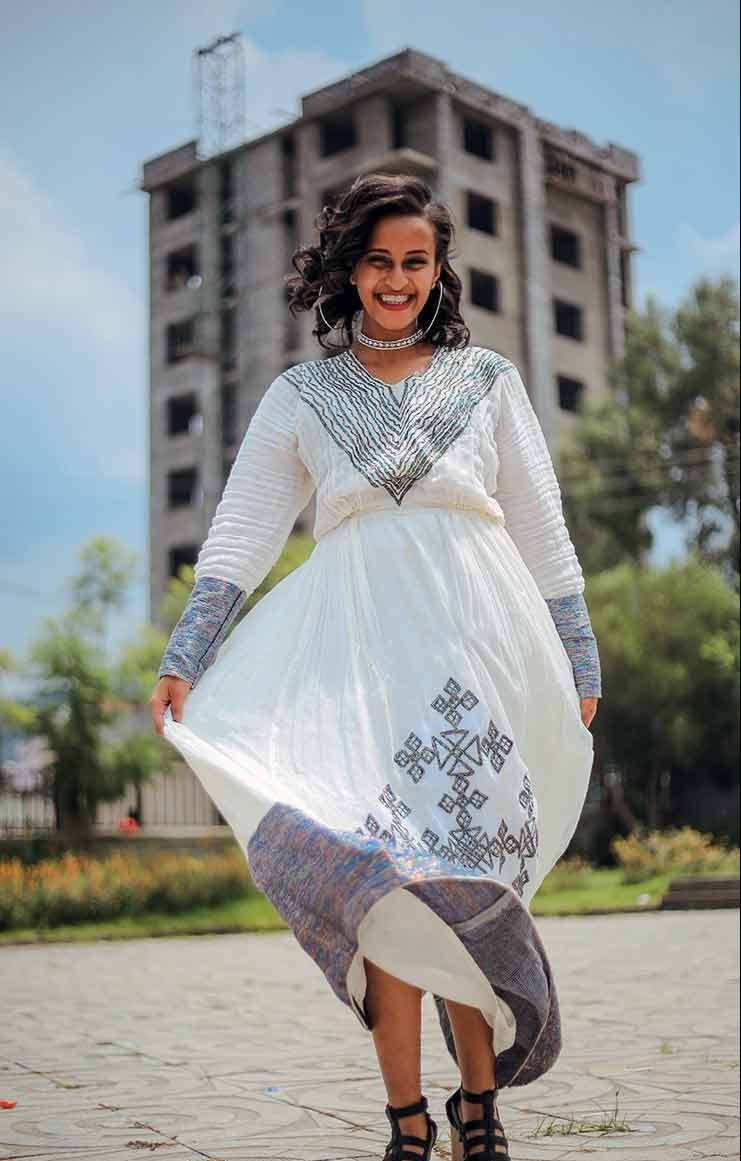
Conventional Tigray apparel is white, which is viewed as Christian, with little embellishment. For dressy events and church, ladies wear lower leg length dresses with long sleeves made of fine material. Men wear lower leg length pants that are tight from the knee to the lower leg and loose in the upper legs and hips.

A fitted, long-sleeved shirt covers the chest area. The shirt reaches out to simply over the knee for laymen and to simply underneath the knee for clerics and elders. The two people wear a Gabbi (shawl or frock) hung around the shoulders. For some of Tigray, utilized attire imported from Europe has substituted customary apparel for everyday wear.

Food

Presumably, the most significant reality about nourishment in Tigray is that it isn’t sufficient of it. Families must make up for nourishment shortfalls with government appropriations.

In Tigray, bread is one of the fundamental nourishments. Two of the more typical assortments are a slender, hotcake like bread favored by a great many people, and a thick, plate moulded portion of heated entire wheat bread. Flapjacks are 12 to 18 inches (30 to 45 centimeters) in measurement and are produced using numerous sorts of oat grains (wheat, grain, and so on.). An assortment of Tsebhi is eaten with the bread.

Families and visitors typically eat from a Messob (shared nourishment bushel), with every individual eating from the side closest to them and plunging it into a stew in the focal point of the container.

What is the Cultural Heritage of the Tigray?

There are two fundamental classifications of music: church music and acclaim melodies. Elders sing and go with the melody with drums and a sistrum (a clatter like an instrument) as a major aspect of the mass.

Recognition artists structure a sort of tribe. Groups of commendation vocalists intermarry with different groups of applause artists. Artists go with themselves with a one-stringed instrument that is similar to a violin. Has frequently contract artists to engage at parties, for example, weddings. Visitors offer tips to the entertainers to sing, frequently cleverly, about their companions.

Entries from the Book of Psalms are as often as possible brought into conversations of individuals’ conduct. Numerous ministers and elders convey the hymns Dawit (for King David) in a calfskin pocket.

Qene is a respected type of verse known for its utilization of twofold implications, delightful language, and intelligence. A couple of lines ought to have surface importance and a more profound one. Qene is designated “wax and gold,” a similarity that alludes to the way toward throwing gold articles in wax molds squeezed into the sand. In qene, the audience “hears the wax” and should utilize thought to locate the gold inside. Tigray lords and rulers are regularly associated with their qene pieces.

What Crafts and Hobbies the Tigray Has?

Probably the most terrific Tigray workmanship is related to the congregation. Tigray holy places are well known for their engineering, with many cuts into strong stone. The bigger holy places use configuration highlights of the Parthenon in Athens, Greece. Symbol painting—the formation of pictures of holy individuals—is another work of art-related to the congregation. A few elders who have learned at Debri (religious communities) return as symbol painters. Symbols are bought by people to fortify a relationship with a specific holy person.

Tigray Today

There has been a boom in hotel services for tourism and conferences due to the predominant place Mekelle holds in northern Ethiopia. The development of healthcare services has greatly aided in improving the quality of life of Mekelle’s inhabitants. A $3.5 million modern referral public health laboratory was constructed by the US CDC to serve as a training site as well as providing quality assurance for Tigray’s hospitals and medical laboratories.

It is one of the country’s principal economic and educational centers. Presently, there are rapid and expanding socio-economic developments such as infrastructural development, universities, and colleges, firms, hospitals, schools, electric city, water supply, telecommunication services, etc. Most of the populations of the city depend on trade, micro, and small-scale institutions, public service, agriculture and etc.

Mekelle offers unique and enormous tourism resources though not able to use them to the maximum level owing to so many drawbacks. Additionally, the destination service delivered is not enough for visitor’s good experiences.

Conclusion

In conclusion, Mekelle is one of the major cities in Ethiopia that contribute to the economic growth of the country. Mekelle has various tourist attraction points, well-developed universities and schools, various trading and industrial areas.

Mekelle has a very strong hold on the history of Ethiopia from the very beginning. It is a city that has been the center of development for Ethiopia for a long period of time. But the current urbanization of the city is unsustainable and thus will result in a chaotic disturbance for its surrounding as well as for itself in the near future.

Cover: “Igreja de Abuna Yemata Guh, Tigray, Etiopia” by Samuel Santos is licensed under CC BY-NC-SA 2.0 

Gurage People, Gurage Clothing, Gurage Culture – A Precise Guide

1
gurage enset

Gurage clothing, Gurage food, and the Gurage life made a unique people with unique culture that live in a green land and in the south of Ethiopia. People of Gurage are a member of the Afro-Asiatic family group. Also known as Afrasian. It is one of the largest language family including over 300 languages spoken predominantly in the horn of Africa.

The Gurage clothing has its own design that makes it different from the rest of Ethiopia. Even the Gurage clans have unique dresses and articulations.

They have three main sub-group of the clan. they are Kistane Sebat-bet and Silte (they were the part of Gurage but know they asserted non-Gurage identity). 6 different languages spoken.

They are Inor, Soddo, Mesmes, Zay, Sebat bet, and Mesqan. the languages belong to the Semitic and the Afro-Asiatic language group. Which makes them relate to Geez. But not always they understand or perceivable. For example, the seven houses known as Sebat Bet, they have seven tribes under them, and over one point two million speakers. These people grouped under sematic language. Like Amharic. But by the influence of the immediate surrounding of other groups of language like Cushitic. They add more vowel than the usual so it better to understand that Gurage is for more cultural rather than linguistic. It might also influence the Gurage clothing.

History of the Gurage

There is a lack of information and history about culture, origins, and the related topic of Gurage people. Many historians try to understand this history in brief from historian Paul B.Henze, an American writer. He noted in his book Ethiopian Journeys that the Gurage people might be military colonials during the late Axumite empire. He wrote, after the downfall of the Axumite empire, the Gurage separated from the northern part and lost connection. Waiting for further instruction from the Aksum, they remained settling.

The area they settled was rather more fertile and they had access to the much freshwater that made it good for agriculture. Henze claims that Gurage people are originally from the northern part of the Amhara and Tigray area.

Where Is the Gurage Zone Now?

Gurage Zone is Located 240km southwest direction from Addis Ababa, in the southern nation and nationalities and people region, surrounded by the Gilegel gibe river and Awash river. Eastern and western parts of the zone bounded by the Oromia region. The landscape is cover by the mountain chain with plateau flat land. the Gurage people occupy the center of the plateau land with elevation 3600 m above the sea level. There landscape almost semi-mountainous highland with forest, river and green valley. Gogeb river crosses the semi-mountainous landscape. Most settlements are dense around this river.

How Do the Gurage People Live?

Even if the zone locates in the three divisions of climate (kola, Dega, and weyinadega) the dominant climate is Weyinadega climate division. With a recorded low temperature of 14 degrees Celsius and highest of 34 degrees Celsius. This climate affects the housing system of Gurage people. It structured with one central wood column held together with wooden spokes. They use all traditional connecting systems to hold them together.

The center column also supports the thatched roof and its structure. The wall constructed from the wood structure and mad finishing. After that they decor the exterior part with some color and mud. Interior décor by hand made pottery hang on it. The center of the room serves as heating the entire house and cooking meals around it. The typical Gurage house has a small portion of livestock for their animals to keep them inside during difficult weather and night.

gurage enset
“Ensete ventricosum” by pris.sears is licensed under CC BY-NC-SA 2.0 

What is the economy of the Gurage people?

Like most Ethiopian cities, the Gurage People leading economy is depending on the traditional agriculture system. They dwell in infertile land and access to river water. It was easier to involve in complex agriculture systems like crop rotation and transplants. They produce a large amount of Ensete plant which is known as their typical food source, second khat, and coffee also produce in the Gurage zone.

The Gurage people also raise Zebu dairy cattle. These dairy cattle give next to no milk, which is only here and there alcoholic. Rather, it is agitated into the spread, and an average Gurage family unit has an enormous amount of spiced margarine maturing in earth pots dangled from the dividers of their cabins. Margarine is accepted to be restorative, and the Gurage regularly take it inside or use it a cream or poultice. Different types of Ensete are additionally eaten to mitigate ailment.

The Gurage see indulging as coarse and indecent and see it as poor manners to eat the entirety of the Ensete that a host goes around to visitors. It is viewed as affable to leave probably some Ensete bread considerably after an extremely little part is passed around. It is ordinarily expected that a Gurage will stretch out neighborliness to their neighbors and family in administering Ensete openly to them. Be that as it may, Gurage frequently crowds additional nourishment and eat it covertly to abstain from sharing it.

The Gurage are known for their broad development of the Ensete, or false banana plant, known as Ensete, even though this is the training they share with other southern and southwestern Ethiopians. The plant assumes an essential job in the monetary and public activity of the Gurage. they use it for an assortment of residential, what’s more, therapeutic purposes, yet its job in custom examination to be little. It is likewise utilized in different parts of life. For instance, they use Ensete leaves and its stem to cover a dead body and use it two cover a wounded body part of humans and animals. And so on.

Enset and Gurage

The tree has a major stem that becomes under the ground. Its serious development permits the centralization of huge networks is minimal and changeless towns. All around arranged methods of development (in covering two-year cycles) and deliberate stockpiling of Ensete nourishment make it workable for the Gurage to live well above subsistence level. To this, they have mixed it up of money crops which are developed between Ensete plants, without altogether changing the conventional example of cultivating.

Kocho is made by molding the Ensete glue to a thick circle and enveloping it by a meager layer of Ensete leaves. It is prepared in a little pit with coals. Once in awhile the glue is simply cooked over a frying pan. In a scene, in strange nourishments.

All through the Gurage social area, an intermittent advertising framework works, with most markets working just on a novel day of the week. A couple of the bigger markets like the one in Embedder worked in a restricted manner each day of the week however extended enormously “available day.” There were not many perpetual slows down or protects yet each class of merchandise had its specific territory of the commercial center.

Things exchanged included rural items, domesticated animals, stoneware, fabric, basketwork, money harvests, for example, espresso and visit, with a couple of outlandish things from the outside world.

The Social Structure of the Gurage people

The fundamental family structure is a lot bigger than the run of the mill Western atomic unit. The most established male is typically the leader of the family unit and is accountable for the decision. Men, as a rule having the essential salary, control the family financially, and convey cash.

Ladies are responsible for local life and have fundamentally more contact with the youngsters. Youngsters are socially required to think about their folks, thus there are frequently two to four generations in a family. With the coming of urban living, be that as it may, this example is changing, and youngsters frequently live a long way from their families and have a lot harder time supporting them.

Urbanites have to send cash to their families in country zones and regularly attempt their best to move their families to the urban communities.

gurage clothing

The customary establishments take authoritative structures dependent on committees of older folks set up at various levels from neighborhood inborn levels. Their job is to set and authorize standards and rules administering parts of life-extending from basic financial relations between people to a more extensive network, neighborhood, and territorial. 

Youngsters are raised by the more distant family and network. It is the essential obligation of the mother to think about the kids as a feature of her local obligations. On the off chance that the mother isn’t accessible, the obligation tumbles to the more seasoned female kids just as the grandmas.

During youth, kids have the best introduction to their moms and female family members. At around the age of five, particularly in urban regions, kids begin going to class if their families can manage the cost of the expenses. In-country territories, schools are not many and youngsters accomplish ranch work. This implies an extremely low level of rustic youth goes to class. The administration is attempting to ease this issue by building open schools in provincial regions.

The man-centric structure of society is thought about in the pressure instruction for young men over young ladies. Ladies face segregation issues just as physical maltreatment in school. Likewise, the conviction despite everything exists that females are less skillful then guys, and that instruction is squandered on them.

gurage girl
“Faces of Ethiopia (Gurage people)” by www.j-pics.info is licensed under CC BY-NC-SA 2.0 

Religion and Belief of Gurage People

The Gurage have confidence in the Supreme being and a Creator god called “Waq” (Sky God). They take part in customary strict practices, for example, contributions to Waq, their preeminent divinity. They balance models of tribal divine beings in their homes to avert insidious soul.

Earth places of worship to Waq are basic outside of towns. The Fuga individuals, a class of trackers and craftsmen, are considered to hold the way to customary ceremonies. Their rumored intensity of enchantment and witchcraft are extraordinarily dreaded. The Fuga is banned from working the dirt since they are accepted.

The Gurage at times experiences soul ownership. William A. Shack hypothesized that soul ownership is brought about by Gurage social perspectives about nourishment and yearning because while they have an ample nourishment supply, social weights that power the Gurage to either share it to meet social commitments or crowd it and eat it furtively cause them uneasiness. Differentiations are drawn between spirits that just have men, spirits that just have ladies, and spirits that have casualties of either sex.

A custom disease that lone influences men accepted to because by a soul called awre. This distress introduces itself by loss of craving, queasiness, and assaults from extreme stomach torments. If it continues the unfortunate casualty may enter a trancelike trance, wherein he once in a while recovers cognizance sufficiently long to take nourishment and water. Breathing regularly toils. Seizures and trembling beat the patient, and in extraordinary cases, even in complete loss of motion of the limits.

On the off chance that the injured individual doesn’t recoup normally, a customary healer, or sagwara, is gathered. Once the sagwara has decided the soul’s name using divination, he endorses a standard equation to exorcise the soul. This is certainly not a lasting fix, be that as it may, it is acceptable to permit the injured individual to frame a relationship with the soul.

In any case, the unfortunate casualty is dependent upon interminable repossession, which is treated by rehashing the equation. This equation includes the arrangement and utilization of a dish of ensete, margarine, and red pepper. During this custom, the unfortunate casualty’s head is secured with a wrap, and he eats the ensete avariciously while other ceremonial members serenade.

The ceremonial closures when having soul reports that it is fulfilled. Shack noticed that the unfortunate casualties are overwhelmingly poor men and that ladies are not as nourishment denied as men are because of ceremonial exercises that include nourishment redistribution and utilization. Shack proposes that the awre serves to carry the head man to the focal point of social consideration and to assuage his nerves over his powerlessness to pick up esteem from redistributing nourishment, which is the essential manner by which Gurage men gain status in their general public.

The consuming of the Meskel enormous campfire (Demera) on Mount Tabor, Ethiopia. Lately, the Gurage are for the most part Ethiopian Orthodox Christians, yet also practice Islam, Roman Catholicism, and conventional strict convictions. Both Christianity and Islam were outside religions forced on the Gurage by Invasion. Over half case loyalty to Christianity and another 40% to Islam.

Gurage Clothing

Before we see Gurage traditional clothing, lets define the term traditional clothes mean and what makes it traditional. Traditional dress might be characterized as the outfit of articles of clothing, adornments, and extras established in the past that is worn by a recognizable gathering of individuals. Even though slight changes after some time in shading, structure, and material are recognized, the collection is by all accounts passed on unaltered from an earlier time.

Custom made dress or ensemble is a way of showing of culture. It invokes pictures of rustic individuals wearing beautiful, layered, fascinating attire from a glorified past in some faraway spot. This idea of the customary dress has been examined and discovered lacking by numerous analysts and researchers, yet its uncritical use proceeds into the twenty-first century. The expression customary dress or outfit is frequently utilized reciprocally with the terms-ethnic, provincial, and society dress.

Shack in 1957 and 1959 in Gurage, in his field of research, wrote: ‘There are no local wage markets in any Gurage village and the vast majority migrate to Addis Ababa. There is a change in the need of the customer as the market change, the introduction of new material and annual income growth. It affects Gurage on village Life at that time, very dramatic changes must have occurred so that this description written by Shack thirty years ago, is no longer a reality in Gurage village society. The changes in Gurage material culture such as traditional clothes.

Dressing in modern clothes brought back by the young generation who lived in modern cities and urban. Then it considered by the villagers as an index of civilization. It is due to them (young generation) that the rural Gurage opened their eyes. and become civilized in terms, of their dressing, education, health services, roads, and everything. In the past, the Gurage clothing were made of animal skins, such as cow or oxen-skin. clothes locally known as mere for adult men and geta for women, and sheep and goat skin-made dresses locally called Nimad, of two different sizes for very young and adults. These clothes were Locally made by special artisans locally known as Buda i.e. tanners.

Also, other cotton-made traditional clothes such as Gider and Buliko garments for well-to-do adult women and men respectively; and Netela for the ordinary persons. These cotton-made dresses, known as Fafuya. were locally made by the Shamer, i.e. weavers.

Then, during the earlier and middle periods off an onset, other synthetic fabrics such as Abujedid (calico)and kaki garments were introduced and people began to weirs hand-sewn calico pants called Serefer and shirts called Ejetebab for adult males. They previously wore traditional belts called Tibtab, i.e made from cotton-garment for men and Azigart for women as well as men; and a hat made from Enewa, a dry stalk of Asat, which is locally called Wehembua.

Later, starting from the Italian occupation and after, different clothes prepared from processed fabrics and shoes have been introduced into the Gurage villages. As such, traditional clothes hand-made from animal skins and cotton were replaced by synthetic clothes, because the diseases (resulting from being dressed in traditional clothes) that existed in the country (Gurage village) are now eliminated.

As such, this change in clothing is considered not only as a sign of modernity but also as an agent responsible for improving the health status of the villagers. Improvements in housing is another positively perceived effect of those modern generations of Gurage.

Gurage and housing

Construction and the purchase of household objects are the distinguishing characteristics of migration-caused change in the village. One can detect the presence of a member in a household by looking at the size and quality of the house, and the types of household utensils available within the house.

In pre-migration times, household utensils had been predominantly Locally produced either by special local artisans such as potters, woodworkers, tanners, and iron-smiths or by odium people. Clay-made objects such as bitter, (bowls of various sizes and quality), Enjapa (containers used to drink water, milk, or traditional drinks such as Seher) and Tiwa (small containers used to drink Seher) were traditionally hung on the walls in the houses.

These are now being replaced by bowls, trays, glasses, and Jenricans. Different sizes of clay-made containers, Like and Weshere, used to carry water, and Gambo Weshere, used to brew Seher, are now being replaced by plastic and iron-made containers of different sizes. Clay-made traditional coffee-cups called Fujan have been completely replaced by glass cups and are no longer present in households.

Also, wooden utensils such as different types of Wagemas -Yeje. Yesafira and Gebete and eating objects made from grass and parts of Asat plant such as Sefe, and sleeping objects like Jipe and Kapuat as well as Guchigiche are disappearing as a result of remitted objects. In particular, Gebete, (a wooden-tray) and Yewedere, (an eating mat) have traditionally been considered as marks of respected women, because such household utensils are traditionally referred to as Yeshita Gibir, i.e women’s objects.

These items are being replaced by metal trays. Moreover, Ankefue the local material has been dominated by new material introduce to the culture, iron create a loss of identity by simplifying activities, spoons made from animal horns. In the majority of modern households, and in particular the successful ones, the utensils hung on the walls are predominantly remitted objects, which are locally referred to Yazeber giber, i.e. modem objects. Possession of such household objects is also regarded as a mark of modernity.

Therefore, it seems that the modern generation and the flows of commodities that result have negatively affected the local technology, particularly local artifacts. The current Gurage society is attracted to modern clothing that Gurage clothing. It might face a loss of identity. So as much as possible we have to give attention to our tradition and culture

Seasons and Climatic Zones and the Ethiopia Weather?

1
facts about Ethiopia -

The location the country exited, affected the Ethiopia weather both directly and indirectly. With 13 months of cool sunshine, the weather of Ethiopia is very comfortable and habitable. Even though Ethiopia is located in the tropical zone or the sub-Saharan zone, the mountainous terrain has helped the city maintain temperate or cooler weather throughout the year.

Ethiopia, therefore, has a wide range of altitude difference from 4550m above sea level to 125m below sea level. This altitude range made it possible for the occurrence of different kinds of climates in one country.

The location closer to the equator gave Ethiopia a 12 hour day and 12 hours a night and a consistent temperature throughout the day and throughout the year.

This article gives insight into the weather conditions in different regions of Ethiopia, as well as the weather in different seasons.

How Many Climate Zone Are In the Ethiopia Weather?

Based on an altitude range, Ethiopia can further be classified into 3 major regions: plateau region, arid region, and the desert region.

The Plateau Region the Ethiopia Weather

The plateau region has an altitude greater than 1500m. This region is mostly found in the western and eastern highlands. The Ethiopia weather in this region is cold, cool, or warm depending on the altitude.

There is a small amount of rain from November to February. A high amount of rainfall from June to September.

facts about Ethiopia -

The yearly precipitation ranges from 1000mm to 2400mm.

The central and northern part of the plateau region experiences a bimodal rainfall pattern from the Atlantic Ocean and the Indian Ocean. The rain in the summer, from June to September, mainly comes from the Atlantic. While the mild rain comes from the Indian Ocean between February and May.

As we go further north the number of rainfall drops rapidly. The western and southwestern parts of this region, experience a unimodal rainfall pattern that comes from the Indian Ocean and merges with the one that comes from the Atlantic. The measure of precipitation and the length of the blustery season diminishes as it goes toward the north. On the other hand, in the southeast region, there are two rainy seasons. However, they are moderate rainy seasons. From March to May and from October to November, but this rains might not occur in some years leading to draught in the southeast regions.

Even though Ethiopia is geographically located near to the equator, the high altitude made it possible to have weather that is similar to the temperate zone. Looking closely at this highland region, the altitude has made three weather conditions: warm to cool to semi-humid with altitude that ranges from 1500m-2500m. The annual rainfall ranges from 1200mm- 2400mm and annual average temperature varying between 16°c and 20°c.

The second the Ethiopia weather condition is cool to cool the humid zone with an altitude range from 2500- 3200. This zone has an annual rainfall of 1000mm to 2000mm and annual average temperature varying between 10°c and 16°c.

The third Ethiopia weather condition is the cold moist temperate zone with an altitude greater than 3200. This zone has an annual temperature of less than 10°c. Besides, annual rainfall averages less than 800mm, which is the least for this region.

the ethiopia weather -

Arid Region: the Ethiopia Weather

The second region is the arid region found in the eastern part of Ethiopia. This region has an altitude range from 500m- 1500m. This region has an annual average temperature ranging from 20°c to 28°c. The annual rainfall of this region drops below 800mm annually. There are only two months, July and august which rains heavily.

Desert Region: the Ethiopia Weather

The third region is the desert region. This region has an altitude that is less than 500m to 125m below sea level the lowest level in the world. This region is mostly the northeastern part of the country, which is the lowland areas of afar. The average annual temperature ranges from 28°c to 34°c. The annual rainfall is less than 400mm. there is only one rainy season and on this season, little rainfall.

How Many Seasons are in Ethiopia?

There are four different season types in Ethiopia:

The first one is the two-season type. Two-season type is the kiremt (wet) season and the bega (dry) season. This type of season is most dominant in the western parts of Ethiopia.

The second one is the bi- two-season type. This season type has two wet seasons between March and May and September and November. And two dry seasons that occur between the two wet seasons. This type of season occurs in the south and southeast part of Ethiopia.

The third type is the undefined season. This type occurs in the northern part of Ethiopia specifically the low lands or the rift valley.

The last one is the three-season type. This season type occurs in the central and the southwestern parts of Ethiopia where the annual rainfall ranges between 1000mm and 2000mm or even 3000mm in the western part.

Three Seasons in the Ethiopia Weather

The three seasons in these season types in Ethiopia Weather are kiremt, belg, and bega. Kiremt season is from June to September in the central highlands.

10 Places to Visit in Ethiopia, erta ale lava -

And July and August in the northern highlands are wet seasons and in most parts of the country, except for the eastern part of Ethiopia. This is the season where most of the annual rainfall is acquired in this part of the Ethiopia weather.

The subsequent season is the bega season and the beginning of this season is also known as harvest season. The Bega is the season from November to February. This season is dry windy and sunny. The dry and cool wind is pushed to Ethiopia due to the Sahara and Siberian high pressures cause dry season. This is why the days of the bega season are sunny while the nights are cold. Nevertheless, in the eastern parts of Ethiopia, this is not the case. Lowland areas like Ogaden get some rainfall during this season.

The third season is the Belg season. Belg is from March to May. It’s sometimes known as a small rain season. This rain will prepare the land for the Kiremt season farming by adding moisture to the soil. On the transition between Belg and Kiremt, the rain might stop for one month. From mid-May to the mid of June. However, sometimes there are no breaks.  

Conclusion, the Ethiopia Weather

The Ethiopia weather rapidly changes from place to place due to the altitude differences. The northern part of the country, for example, has the highest altitude and is usually cold and rainy. A few kilometers southwest is the Afar region, 125 meters below the sea level, and one of the hottest places in the world.

The great rift valley is also warm due to lower altitudes. The valley runs from the northeast to the southwest part of the country creating a different and unique climatic zone. Cities that cross this valley are usually warm and humid.

Addis Ababa, on the other hand, has one of the best Ethiopia weather. The highest daily temperature goes up to 26 degrees and the lowest up to 12. Recently, due to the assumed global warming and rapid development in the city, the weather is warmer from march to June.

Rough Guide To Gondar Ethiopia

1
how far is from gondar

Gondar Ethiopia is an ancient city. The Solomonic Emperors of Ethiopia until the 16th century moved around their realms from place to place living in tents gathering firewoods and farmers providing food, fixed capital was usually not the primary choice except for some rulers like Zara Yakob who founded Debre Berhan (1456).

In the mid-16th-century Ethiopian rulers began to spend different seasons of the year at different places, usually returning to the same location giving town’s encampment sites leading to flourishing cities like Emfraz, Ayba, Gorgora, and Dankaz.

What is the History of Gonder (Gondar Ethiopia)?

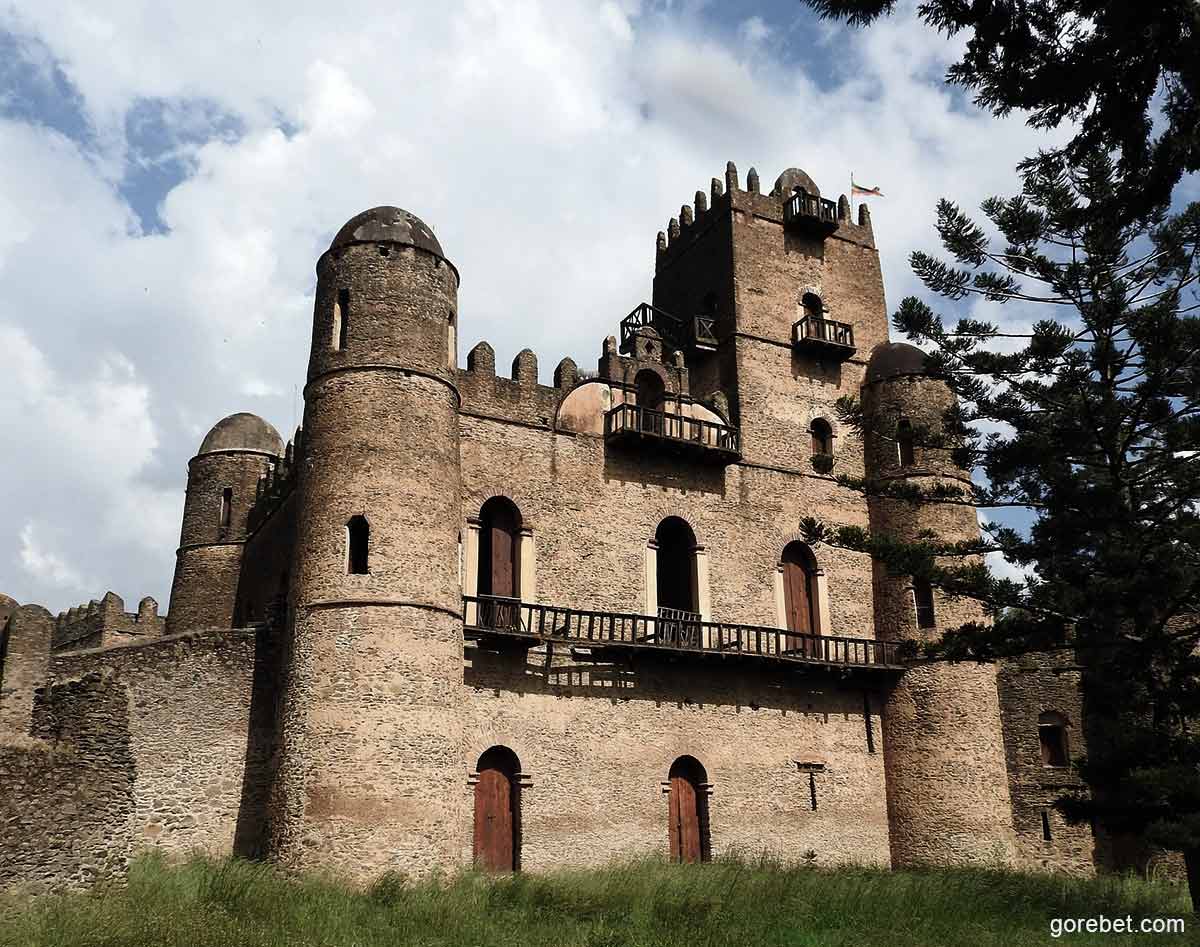
Gondar Ethiopia was the capital of Ethiopia from 1632 to 1855, and it has the remains of castles and royal residences developed by an arrangement of heads from Fasilides (ruled 1632–67) to Iyasu II (1730–55).

The ruins of these structures stand inside a walled majestic walled in area. The foremost vital buildings are the castle of Fasilides and the royal residence of Iyasu the Incredible (ruled 1682–1706).

The engineering fashion of these stone buildings shows a prominent Portuguese impact, alongside connections to the Aksumite empire’s royal residences and the mosques of South Arabia.

Only some of the 44 churches presumed to have existed in Gondar Ethiopia within the 18th century survive, but the city is still a critical middle of the Ethiopian Standard church; its delightfully beautified 17th-century Debre Berhan Selassie Church is still in utilize.

Gondar Ethiopia endured significantly amid the period of the gracious wars (1750–1890) in Ethiopia, but, after the British victory of Sudan (1899), the town continued its exchange with the Blue Nile locale.

The city’s tenants are primarily Christians, but a few Muslims live within the locality.

Although Gondar Ethiopia may be an exchange middle for grains, oilseeds, and cattle, the economy of the encompassing zone is fundamentally one of subsistence farming.

Gondar’s craftsmen create materials, adornments, copperware, and leatherwork. The city may be a noteworthy interstate intersection and is served by an air terminal. The cutting-edge clinic has a connected restorative college, preparing staff for country clinics.

Until the seventeenth century, Ethiopia had no capital, as the empire’s rules moved approximately their region living in tents in versatile regal camps whereas nourishment being provided by ranchers around the camp.

The history of Gondar Ethiopia City starts In 1636, Head Fasilides finished the convention by declaring Gondar to be Ethiopia’s capital and begin building a walled-in area around his castle got to be the royal residence compound for half a dozen of distinctive royal residences 3 churches and back buildings built of two centuries by his successors.

Most popular Gondar Ethiopia castles of Ethiopia are found in this 7-ha walled compound, the home of Ethiopia’s government from the seventeenth to the primary half of the nineteenth century, presently being a portion of the Gondar UNESCO World Legacy Location.

Other landmarks somewhere else in and around the city too having a place to this World Legacy Location are, Fasilides’ Shower and the Qusquam Walled in an area with Mentewab’s Royal residence and St. Mary Church, the Debre Berhan Selassie Church, Kidus Yohannes; the Sosinios Castle, too known as Maryam Ghemb, the Gorgora Church and the Royal residence of Guzara.

Who Founded Gondar Ethiopia?

The city of Gondar Ethiopia founded by Emperor Fasiledes around 1635 signified the end of this medieval tradition of roving capitals.

Located with an elevation of 2133 m above sea level Gondar Ethiopia served as his seat of government for its strategic placement and fertile lands.

Gondar grew as a market and agricultural town sustained by its local and long-distance trade in the relative peace in 17th century northern and central parts of Ethiopia, where the red sea and caravans from Sudan converged and dispersed from Gondar Ethiopia.

The Decline of Gondar Ethiopia

Gondar stayed the capital of Ethiopia from 1632 – 1855 and has seen a series of Emperors from Fasilides (reigned 1632 – 67) to Iyasu II (1730 – 55) and still has the remains of castles and palaces.

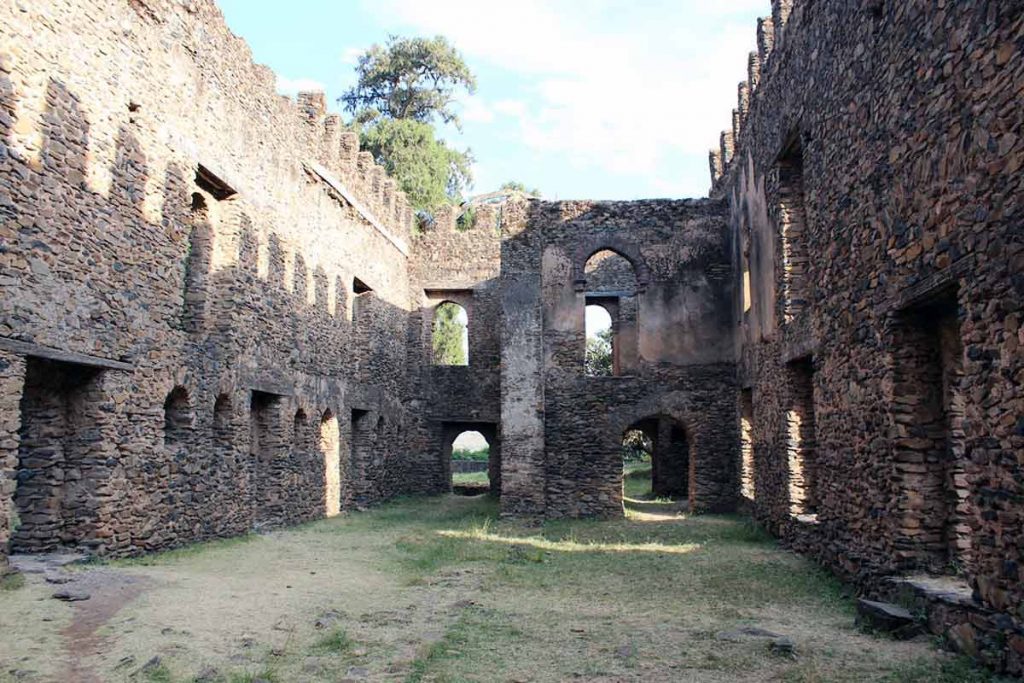
These structures although most of them in ruins due to attacks by Emperor Tewodros II and Sudanese invasion they still stand within the walled Imperial/Royal enclosure.

Most importantly the castle of Fasilides and palace of Iyasu the great and a few churches as well throughout Gondar city.

Gondar Ethiopia declined enormously insignificance. Since Sovereign Tewodros II moved the location of government to Debre Tabor. Finally, it was in this way plundered within the 1880s by the Sudanese Dervishes.

By the early nineteenth century, the city was an unimportant shadow of its previous self. More as of late, its appearance was not supported by the truths that a few noteworthy buildings were harmed by British bombs amid Ethiopian’s freedom campaign of 1941, most of the buildings have survived.

how far is from gondar

What Were the Quarters in Gondar Ethiopia?

Traditionally Gondar Ethiopia was divided into several neighborhoods and quarters majorly being Addis Alem, where Muslim being driven out of Gondar Ethiopia city settled in during the 17th century.

Kayla Meda, a quarter where the beta Isreal people lived. Abun bet, centered for the residence of the Abuna, nominal head of the Ethiopian Orthodox church. Qagn Bet – house for the nobility.

Italian Occupation and Modern Gondar Ethiopia

Italian troops occupied Gondar on 1 April 1936, and within two years 2,000 Europeans lived in the city.

Most of Gondar’s 14,000 Ethiopian inhabitants lived south of the main castle complex—called the Fasil Ghebbi—where the ridge slopes gently down toward the major market at the southern edge of town.

The Italians concentrated their building activity north of the Fasil Ghebbi on two adjacent level areas but separated by a twenty-meter change in elevation.

The lower area served as a commercial district, with a wide, tree-lined street running north from the castles, past the cinema to the prominently sited post office.

The higher area immediately to the east comprised the governmental district, centered on two monumental buildings for the military authorities, whose towers commanded distant views and marked the center of power in the new Gondar.

The Italians exploited the dramatic change in elevation between the two areas to establish a clear hierarchy between the quotidian functions of the commercial district and the ceremonial functions of the governmental district.

Downtown Gondar, the main piazza has commercial features like shops, a cinema, and other public buildings in a simplified Italian modernist style.

Gondar served as the capital of Amhara, one of the six provinces created by the Ministry of Italian Africa to administer Ethiopia, Eritrea, and Somalia.

The city, sited at a key crossroads in the northern Ethiopian highlands, functioned as the administrative, legal, military, transportation, communications, and distribution center for northern Ethiopia under Italian rule.

As the provincial capital, the city included offices and residences for the governorship’s civilian administration and courts, as well as a major military installation.

Gondar hosted facilities for the Fascist National Party (PNF) and a range of state and party social service organizations.

Major Banks and insurance companies-built branches in the city, and numerous private companies—among them such transport-related firms as FIAT, AGIP, and Pirelli—built offices, garages, workshops, and depots.

Gondar and the cities built by the Italians in East Africa need to be understood in the larger context of Italian city building throughout the fascist era.

Contemporary propaganda presented the new cities in the homeland—such as E’42, outside Rome—alongside their monumental counterparts throughout the empire, including Tripoli, Asmara, and, especially, Addis Ababa.

As in the new urban centers constructed in Italy, such as the pontine marsh cities and Guidonia, the spatial relationships between major buildings and public spaces in colonial cities were designed to foster mass identity and the veneration of Mussolini.

Earlier Italian experiences with urban planning in Libya informed the design of Gondar and other Ethiopian cities, which in turn influenced the design of Tirana and other cities in Albania, Istria, and the Dodecanese Islands.

Gondar, being one of the most adorable historical cities in Ethiopia assigned various functional meanings to social spaces. The Gondarian principle of settlement, social arrangement, and communal activities are tied to its legendary status.

The current activities of the dwellers are influenced by the glorious socio-cultural traditions of the past. Despite such grandiose achievements, the newly emerging urban developments, urban renewal, as well as the gentrification projects are enormously affecting the development of the city.

The present renewal and development meant to solve the scarcity of resources and urban unemployment. However, the “renewal” did not respond to any of the vital questions. Rather, it exacerbated the improper handling of the culture, tradition, and history of the city of Gondar.

Moreover, the surviving material and non-material heritage, as well as the cultures that have been contributing factors for the wellbeing of the society, are eroded from time to time in the name of development.

In spite of the fact that cultural change and social development are highly needed, they should never come at the expense of common social and cultural goods.

No urban phenomenon should be accompanied by degrading the ever-existing social capital. Also, urban development must not be spearheaded by sprawling.

Urban renewal must not be solely measured by economic developments that often come with the unfair distribution. Such development may erode historical legacies, propagate slums, undermine social values – on which the Gondarians’ pride.

Thus, the Gondarians still believe that their revered city would become the sacred center of spiritual and social wealth, requiring a constant nurturing.

gondar castle

Gondar Castle

Fasil Ghebbi covers a region of almost 70,000 square meters. To its south lies Adababay, the showcase put of Gondar, where majestic decrees were made, troops displayed, and offenders executed; it is as of now a city park. 

Dawit’s Corridor is within the northern portion of the walled-in area, adjoining to the building credited to Bakaffa and the church of Asasame Qeddus Mikael.

Regularly alluded to as the “House of Melody”, Munro-Hay notes that this may be due to a misreading of the Amharic zofan wagered (“House of the Divan” or “House of the Position of authority”) as zafan wagered (“House of Melody”).

Fasil Ghebbi is encased by a shade divider which is penetrated by twelve doors. These are, in counter-clockwise arrange Fit Ber (too called Jan Tekle Ber) opening onto Adababay; Wenber Ber (Door of the Judges); Tazkaro Ber (Entryway of Burial service Commemoration), which had a bridge annihilated by battling amid the rule of Iyasu II; Azaj Tequre Ber (Entryway of Azaj Tequre), which once was associated by a bridge to Adababay Tekle Haymanot church; Adenager Ber (Entryway of the Spinners), which was connected by a bridge to Qeddus Rafael church within the weaver’s area of Gondar.

Qwali Ber (Door of the Queen’s Orderlies), following to the cutting edge entrance to Elfin Giyorgis church interior the Walled in the area; Imbilta Ber (Door of the Artists); Elfign Ber (Entryway of the Privy Chamber), which gave get to the private lofts of the Fasil Ghebbi; Balderas Ber (Entryway of the Commander of the Cavalry); Ras Ber (Door of the Ras), moreover known as Qwarenyoch Ber (Door of the Qwara individuals); Ergeb Ber (Entryway of Pigeons), moreover known as Kechin Ashawa Ber (Door of the Endowments); Inqoye Ber (Entryway of Princess Inqoye, the mother of Sovereign Mentewab; and Gimjabet Mariyam Ber (Entryway of the Treasury of Mary), which leads to the churchyard of Gimjabet Mariyam church.

The serial property comprises of eight components. Inside the Fasil Ghebbi royal residence compound are: The Castle of Sovereign Fasilidas, the Castle of Head Iyasu, the Library of Tzadic Yohannes; the Chancellery of Tzadic Yohannes; the Castle of Head David, the Royal residence of Mentuab and Banqueting Lobby of the Sovereign Bekaffa. The rest seven heritages are found in Gondar and around the city: the Debre Berhan Selassie (Religious community and church); the Shower of Fasilidas; Kiddush Yohannes; Qusquam (Cloister and Church); Warm Range; the Sosinios (moreover known as Maryam Ghemb); the Gorgora (Cloister and Church) and the Royal residence of Guzara.

Between the thirteenth and seventeenth centuries, Ethiopian rulers moved their regal camps as often as possible. Ruler Fasil (Fasilidas) settled in Gondar and set up it as a changeless capital in 1636. Sometime recently its decay within the late eighteenth century, the regal court had created from a camp into an invigorated compound called Fasil Ghebbi

The 900m long battlemented divider of the compound of the royal residence with turrets, 12 doors, and 3 bridges ensured the diverse castles, royal residences, and churches as they were included by the diverse sovereignties over time. Nowadays one finds inside the premises of this window ornament divider: Fasilides Castle – or Enqulal Gemb (Egg Castle, for its egg-shaped domed rooftops on the towers)-, Iyasu’s Castle, Dawit’s Corridor, Bekaffa’s Banqueting Corridor, stables, a sauna, Mentewab’s Castle, the Library and Chancellery of Yohannes I as well as the Asasame Qeddus Mikael Church, Elfign Giyorgis church and Gemjabet Mariyam Church.

Depending on the building, the building plans reflect Middle Eastern, Indian, and Ornate impacts in expansion to Ethiopian Axumite and Lake Tana styles and structural conventions. With their shade dividers, colossal castles with approaching battlemented dividers and towers, Fasil Ghebbi and Kuskuam appear like a bit of medieval Europe transplanted into Ethiopia.

By declare of Sovereign Yohannes I, the individuals of Gondar were isolated by religion and status into diverse neighborhoods, which can still be recognized nowadays; the Muslim religion followers had to live out of Gondar; the Ethiopian Jewish individuals in Kayla Meda; in Abun Wagered lived the clerics of the Ethiopian Church and in Qagn Wagered, the respectability.

In 1887, Abdallahi ibn Muhammad and the following year Sudanese intruders violently assaulted Gondar, setting fire to all the city’s churches but one, Debre Berhan Selassie Church. During the occupation by Italy from 1936 – 1943, the Italians utilized the Illustrious Walled in area, Fasil Ghebbi, as their central station, whereas creating a few parts of the city for authorities and colonists, which can still be recognized by the Italian plan of their buildings. Amid the freedom by the British, a few castles were bombarded and extremely damaged.

After its decrease within the 19th century, the city of Gondar proceeded to be a commercial and transport center for northwest Ethiopia. With a populace of more than 200,000 occupants, Gondar is developing quickly due to quick urbanization, like all other cities in Ethiopia. The lion’s share of the tenants of Gondar is Ethiopian Conventional Christians, 2% Muslims and 1.5% Protestants. The Ethiopian Jews have been taken to Israel at the very beginning of the 1990s. The city is domestic to the College of Gondar, which incorporates Ethiopia’s rule workforce of pharmaceutical. The city is overhauled every day By Ethiopian Aircraft with flights interfacing with Addis Ababa, Bahir Dar, and Axum.

gondar ethiopia
“royal.grounds.entertainment.hall.5” by moi@warrior ant press is licensed under CC BY-NC 2.0 

Past the limits of the city toward the north-west is another fine landmark authorize to Fasiladas – a washing royal residence, Fasiladas Bath, or Swimming Pool. The structure is a two-celebrated battlemented structure set inside a rectangular pool. Water is provided from a close stream. in any case, it is kept void aside from during Timket, the Ethiopian Orthodox Tewahedo festivity of Epiphany. The washing pavilion itself remains on wharf curves and contains a few rooms which are come to by a stone scaffold, and some are raised for a guard.

Iyasu’s most enduring accomplishment was the Church of Debra Berhan Selassie (Light of the Trinity), which stands encompassed by a high divider on the raised ground toward the north-west of the city and proceeds in customary use. A plain, church on the exterior, the insides of Debra Berhan Selassie have lovely colorful wall paintings. The north divider is overwhelmed by a delineation of the Trinity over the Torturous killing; the topic of the south divider is St Mary which of the east divider the life of Jesus. The west divider appears major holy people, with St George in ruddy and gold on a skipping white horse.

 Not long after completing this surprising and amazing work, Iyasu went into profound discouragement when his top pick concubine passed on. He deserted issues of state and his child, Tekla Haimanot, pronounced himself Head and murdered his father. Tekla Haimanot was in his turn killed; his successor was persuasively evacuated from control and the following ruler was harmed.

The brutalities came to a conclusion with Sovereign Bakaffa, who cleared out two fine castles, one credited straightforwardly to him and the other to his spouse, the Sovereign Mentewab. Bakaffa’s successor, Iyasu II, is considered to have rules with the most noteworthy specialist. Amid his rule, work started on an entire run of unused building’s exterior Fasil Ghebbi, counting Kuskuam, where afterward Mentewab would build the St. Mary Church and the Mentewab’s Royal residence

The Gonderian Architecture

Gondar, formerly being a predominantly noted center for ecclesial learning of the Ethiopian Orthodox Tewahedo Church and being known for having 44 churches than any other settlement in Ethiopia.

The city of Gondar following its decline in the 19th century still continued as a commercial and transport hub for northwestern Ethiopia with a population exceeding 200,000 inhabitants the city is showing rapid growth due to fast urbanization. The architectural style of Gondar city has around 2 distinct characters.

The first being stone buildings showing the prominent Portuguese and Indian character, along with links to Aksumite empires palaces and mosques of South Arabia and also present-day Yemen. These characters are seen mostly in the Royal enclosure were the castles of Fasil and Iyasu’s Palace, Dawit’s hall, the chancellery, library, and 3 churches.

And outside the royal enclosure, there is Fasilides bath another fine monument sits to the northwest of the city accredited to Fasiledes as a bathing palace, bath, and swimming pool. The two-storied building placed within a rectangular pool stands on pier arches with multiple rooms that are accessed by a stone bridge that can be raised for defense purposes.

The 18th century Ras Michael Sehuls palace also known as Ras Ghemb is Gondar city’s remaining example of historically significant architecture. Currently, the palace is under the department of culture, tourism, and information of northern Gondar. The palace is being converted into a cultural center that will include ancient book stores, manuscripts, church relics, and more modern historical items.

Ras Ghemb was the stronghold of Ras Sehul Mikael. By the time Italians adapted it as a vice-regal residence, being extensively modified and renovated mostly on the inside without giving much consideration and regard to the traditions of Gondar and the traditional architectural style. After the Italian occupation, the palace Functioned as a holiday getaway residence for Emperor Haile Selassie and also as an interrogation center under the Derg regime.

Debrebrehan Selassie church the most prominent achievement during Iyasu’s reign meaning “light of the trinity” presents itself appealing with its stone walls, arched doors, and two-tiered thatch roof on the outside and its inner sanctuary of Debre Berhan Selassie with the colorful frescos that really shine. The ceiling with rows of winged cherubs representing a sense of holiness and omnipresence of God. It had 135 cherubs 13 of which were damaged by water and are no longer present.

The church is surrounded by a large stone wall that has 12 rounded towers representing the 12 apostles and the larger 13th tower serves as the main gate and symbolizes Christ and shaped to resemble the Lion of Judah.

The second style in Gondar city lies around the downtown part of Gondar and shows the influence of the Italian occupation colonial policy stating cities built-in Italian occupied East Africa further demonstrate the extent to which modern urban design could participate in the coercive project of constructing “colonial identities”, among both Italian settlers and African colonial subjects.

Gondar Expanded dramatically after the conquest of Ethiopia in the late 1930s for it served as the colonial administrative center for Italian East Africa. Altogether Gondar offers a valuable example of the form and development of cities throughout Ethiopia and other former Italian colonies in Africa.

Building materials for Gonderian design are limited. Basically, three materials were recognized: stone, chikka, and fortified concrete. Two combination sorts ought to be included: timber and press sheet and concrete piece structures. Brickwork structures include 29% whereas chikka 52%.

Conventional buildings for the nobbles such as circular houses are of brickwork structures and them final much way better than standard chikka, moo quality timber, and mud structures, which are not all tough. Strengthened concrete was presented by the Italians in the event of the development of open offices and commercial centers within the 1930s. In spite of the fact that it was broadly utilized from the 1950s in Ethiopia, as it were a couple of such buildings were found in this zone, such as two-story ‘bunna bet’

gondar ethiopia outside

Post-Italian buildings were basically laid out taking after the framework design. It ought to be famous that the idea of the arrangement showed up in such a way that these days made houses were constrained to be lined on the border of lanes and bundles. Until the mid-1960s the building movement was so frail that a restricted number of buildings possessed this region.

However, since the usage of the modern ace arranges by the Haile Selassie’s government in 1967, the region has been changed to be more commercial on the roadside additionally gotten to be denser behind these commercial buildings. Roadside shops have been developed by utilizing strong structures basically of stone and in remarkable cases by fortified concrete, in spite of the fact that most of the lodging units interior the piece was built by chikka The latter is within the frame of push houses with a single room for one household (5m2 in normal).

The townscape of this central zone is an exceptional level. Subsequently, the number of two-story buildings is exceptionally constrained. As it were nine buildings have two floors and the majority are situated within the northern piece. They include as it were thirteen lodging units that amount to 6.4% of the overall number of lodging units within the inquire about the region. Note that half of these two-story buildings are “bunnabet”, an Ethiopian fashion inn. The central area must have pulled in speculation by such commerce proprietors.

What is the Demographic of today’s Gondar Ethiopia?

Based on the 2007 national census conducted by the Central Factual Office of Ethiopia (CSA), Gondar had an add up to the populace of 207,044, of whom 98,120 were men and 108,924 ladies. The lion’s share of the tenants practiced Ethiopian Conventional Christianity, with 84.2% detailing that as their religion, whereas 11.8% of the populace said they were Muslim and 1.1% were Protestant.

The 1994 national census detailed an add up to populace of 112,249 in 21,695 families, of whom 51,366 were men and 60,883 ladies. The three biggest ethnic bunches detailed in Gondar Zuria were the Amhara (88.91%), the Tigrayan (6.74%), and the Qemant (2.37%); all other ethnic bunches made up 1.98% of the populace.

94.57% use Amharic with dialect and 4.67% used Tigrinya; the remaining 0.76% communicate all other essential dialects detailed.

83.31% followed to Ethiopian Standard Christianity, and 15.83% are Muslim.

Gondar Ethiopia was once the domestic of a huge populace of Ethiopian Jews, most of whom moved to Israel within the late 20th and early 21st century, counting the current Israeli Envoy to Ethiopia, Belaynesh Zevadia.

Is Gondar safe?

Yes.

Like most cities in Ethiopia, Gondar is safe for visitors. The Gondar men are known for being caring and compromising for some visitors. However, you need to be careful about how you came across other, you should be fine. Gondar is a tourist city, and many visitors all around the globe are in the city at any given time.

Stick in a group, especially late at night. Don’t carry valuables on the streets. And respect cultures. Then, Gondar is safe.

cover: “Ethiopia, Gondar” by Achilli Family | Journeys is licensed under CC BY 2.0 

Rough Guide To Bahir Dar City Ethiopia

0
lake tana

Bahir Dar is a lakeshore city, the name “Bahir Dar” by itself means Lake Shore in the Geez language. The lake that’s the reason for the name is Lake Tana. Bahir Dar is the current capital of the Amhara Regional State in Ethiopia. It’s also one of the leading tourist destinations in the country.

The city is located at about 578m from Addis Ababa, the capital city of Ethiopia. It’s at an average of 1820m above sea level. These Factors as well, as the city being at lakeshore make the weather as well as the overall climate of the city, vary at different times of the day and the year. Their climate is on a fence between the tropical savanna climate and subtropical highland climate. The weather varies within a day, mornings are usually cool and the afternoons till night are warm. 

What is the History of Bahir Dar City?

The city is said to have been formed around the sixteenth and seventeenth centuries by Jesuit settlers. Originally the settlement was called Bahir Giyorgis. In the early 20th century the British government sent several specialized teams (1902 – 1936) intending to make barrages (dams). But in 1930 the Ethiopian government sent their own team of experts to Bahir Dar. At this time the city was becoming a traditional settlement destination from other neighboring lake tana port cities such as Zege. When these settlers came, they brought their traditions and social positions along with themselves.

 In 1936 Bahir Dar was occupied by the Italians during the Ethiopian five-year occupational period. One of the things they did in this period was to completely destroy and abolish communal ownership of land, they encouraged the people to have private ownership of land. During their time in the city, they introduced different types of shops, tea rooms, tailor shops bars, and restaurants all run by foreigners. They gave Bahir Dar political status as well.

After the Ethiopian government came back to power in 1941, Bahir Dar was promoted to the capital of the sub-district and later on to the capital of the district level. In 1945 the city was announced to be a municipality. In the 1950s’ the city was deemed to be a good choice for an alternate capital of Ethiopia.

Starting from the 1960s up until the 1970s’ the city of Bahir Dar grew drastically and at an alarming pace. The rapid growth with in the city made it a center for large market areas, transportation centers, and economic growth especially those relating to Lake Tana and the Blue Nile river. In this period the Germans prepared a master plan for the city, which transformed the city of Bahir Dar tremendously.

This introduced their own water supply, hydroelectric power, improved lake port facilities, the Abbay Bridge, textile mills, a hospital, and their own higher education institutions, which have now formed the Bahir Dar University. A combination of the Polytechnic School (inaugurated by Emperor Haile Selassie) and teachers’ college formed the Bahir Dar University.

During the Ethiopian civil war (1988), the city was headquarters for the 603rd corps of the Third Revolutionary Army (TLA). The TLA left in disarray in 1990, blowing up a bridge on their way out. This kept the other forces at bay for a while. In 1991 the Ethiopian people’s Revolutionary Democratic Front (EPRDF) reoccupied Bahir Dar. After that period the city has been prospering in all aspects, growing and expanding at a surprising rate.

What is the Geography of Bahir Dar?

Bahir Dar is surrounded by Lake Tana. Lake Tana is a shallow lake with a maximum of 15m depth and covers a total area of 3,673km2.  The fact that the water is shallow provides a long-lasting supply of fresh fish to the people go to the city. It is also the largest lake in Ethiopia. Lake Tana is the source/origin of the Blue Nile River. The lake provides 85% of the Blue Nile River and is the origin of the river as well. The Lake Tana region is a UNESCO Biosphere reserve since 2015.

On Lake Tana there are islands, with eleven churches and monasteries on them, each has one. These churches are one of the oldest churches in Ethiopia and are of great historical significance to the country. These churches are said to be the safe keepers of some of the oldest and best-kept documents of the past regarding history, geography, medicine, engineering and construction, linguistical, and other knowledge sources.  

The Blue Nile Falls are positioned about 30 km to the south of the city, one of the origins of the river being Lake Tana. The water flow has been reduced since the beginning of the construction of the hydroelectric dam in the Benishangul – Gumuz Region of Ethiopia. Even under these criteria’s the falls are one of the most beautiful sights to see.

Bahir Dar is on relatively stable ground in comparison to most of Ethiopia. The rift system known as the Afar Triangle that is said to divide Africa into three different plates in about a million years doesn’t pass by, in or near Bahir Dar. Which makes it a desirable location for industrialization and new developments in the country.

lake tana

The people (Demographics, Linguistics & Ethnicity)

According to the census led by the Central Statistical Agency of Ethiopia in 2007, Bahir Dar has a total of 221,991 people out of which 108,456 are men and 113,535 are women. Out of the total population of Bahir Dar, 180,174 (81.16%) are urban inhabitants.

There are three mainly dominant ethnic groups in the city of Bahir Dar. The most dominant ethnic group is the Amhara at 96.23% next in line is the Tigrayan at 1.11%, the Oromo at 1.1%, and other ethnic groups make up to 1.56% of the total Bahir Dar population. The most dominant language in the city is Amharic as a first language at 96.78%, Oromiffa at 1.01% and other languages sum up to be 2.21%.

The latest statistics show that the number of Amhara is 93.21%, the Tigrayan at 3.98%, the Oromo at 0.7%, and all others summed up to 2.11%. In terms of linguistics, Amharic was spoken by 95.52% as their first language, Tigrinya was spoken by 1.55% and other languages made up to 1.55%.

Culture of Bahir Dar City

Since the city was mainly inhabited after the early 20th century by people from all around seeking markets and different factors, the city is an interesting scenery place to see. Bahir Dar offers a wide variety of goods at its very vast open markets at different venues. 

Some other cultural doings in the area are, for example on Ethiopian New Year’s (Enkutatash) Eve the local priests, deacons and the people go to the islands with the churches and monasteries, some even stay inland and with candles and drums wearing white spend the night singing to God and praying for all the good they want the new year to bring. This culture is open to all if wanted anyone can attend (while respecting their traditions and culture) or watch from a seat afar or at a selected spot. 

Another culture is that the city is very active at night, people walk and stay out late at cafes enjoying their time, and the master design of the city has allowed this to become a reality for the people of the city and those that come to visit it.

The religion of Bahir Dar

The most dominant religion in Bahir Dar is the Ethiopian Christian Orthodox Church with 79.72% followers of the faith, next to the orthodox church, are the Muslims with 18.47% followers, and the Protestants at 1.62%. There are Ethiopian Christian Catholics that practice the Alexandrian Rite in the Geez Language, have their own Cathedral and Parishes in the city.

Institutions in Bahir Dar

There are different institutions in Bahir Dar which were established in 1954, one of them is the Bahir Dar University which was a combination of originally two different smaller institutions after the departments in the smaller institutes were raised to degree levels after 1996. The current president of the university is Dr. Firew Tegegne Amogne, with a total of 54,000 students enrolled in the school currently.

bahir dar city
“File:Bahir Dar 7.jpg” by O.Mustafin is licensed under CC0 1.0 

The university is a combination of eight different campuses scattered at different positions in the city. These are the Bahir Dar University College of Medicine, Bahir Dar Institute of Technology, Bahir Dar University Agriculture College, Ethiopian Institute of Textile and Fashion Technology, Institute of Land Admission, College of Business and Economics, Institute of Educational and Behavioral Sciences and College of Natural Science. The now in use slogan of the university is “Wisdom at the source of the Blue Nile”.

Another institution in Bahir Dar is the Bahir Dar (Dejazmach Belay Zeleke or Ginbot Haya) Airport. It is located about 8km outside the west of the city. The Airport also serves the Ethiopian Air Force. It has only one runway designated 04/22.

The Bahir Dar stadium is the largest in the country so far and has the capacity to hold a total of 60,000 people in it. The stadium was started in 2008 and is still lacking some basic utilities such as chairs, bathrooms, and concessions. The stadium hosted the 2015 CAF Confederation Cup Match and is still getting work done on for finishing touches.

The Amhara Regional state convention and conference center, which was completed about seven years ago, the design of the conference center is interesting since the initial concept was driven from the basic characteristics of the city of Bahir Dar. The architects were quite successful in displaying the cities in-depth character by including some words that the people who went there described the city by terms such as stone, market, water, and island. These terms and descriptions of the city are later on visible in the building and the whole construction when one walks through it.

How do you Travel in Bahir Dar?

There are several means of transportation into and within the city. People mostly use Planes, Buses, Taxis, and privately chartered minibusses. The means of transportation with in the city are Public Buses, Public Taxis, Private Mini Buses, Bajaj and the most common means of transportation in Bahir Dar is that of cycling, since the weather is warm in the afternoons, people leave work and come to the city for their daily dose of relaxation and peace.

What are the places to visit in Bahir Dar?

Most of the places in Bahir Dar may not be travel destinations in the normal sense. However, some of the landmarks below will give you a general idea about the city. The landmarks in the Bahir Dar region aren’t those that we would describe as the regular landmarks but are unique in their own ways. A landmark is not only physical but could also be some form of celebration of activity done at some point at a certain time.

Lake Tana

Lake Tana is the lake that surrounds Bahir Dar and it is also the reason for which the city was named a “lakeshore”. It is a lake with a lot of features on it, in one day on a single boat ride you could see all islands, some hippos, the separation point of the Blue Nile Water (even though it’s from a distance for safety reasons). Since the location and position within which the lake is many hotels have lined up around the shore to be able to capture the beauty of the lake, along with some of the best restaurants in the city.

Kidus Giorgis Church

It is a beautiful church compound right on the lake and is full of beautiful sites and scenery. The compound is not attached or in any way part of the churches on the island areas. Many interesting programs and activities are held there, that add to the overall beauty of the city. Right outside of the church compound is one of the small-sized market areas that can be found in Bahir Dar. 

Martyr’s Memorial Monument

The Martyr’s Memorial Monument is a very large memorial in honor of those who died in the war against Derg and the downfall of Derg. It’s a local wedding and event site, it is a hangout spot for the new generation as well as the older ones. Its seen as a stepping stone for our country’s history and overcoming. The monument alongside it has a museum tracking the civil wars (the fall of Derg) progress with different pictures and paintings. 

Three Palaces of Haile Selassie 

They are found about two and a half kilometers (2.5km) south of the Martyr’s Memorial Monument and Northwestern to the town. They are a beautiful sight to see but the building can not be accessed for security reasons but the construction technique and style that the building was done in relation to the time the building was constructed in is fascinating. From the site itself, the route of the Blue Nile is visible with a spectacular view of the river and the surrounding landscape. 

The Blue Nile bridges 

The only way that the bridge is visible in is by renting a boat, you can even see the amazing Blue Nile outlet we can see the bridge and space where the separation actually happens and it is visible but also from afar since there are several safety and security hazards involved.  

The Lake Tana Islands

The islands have different types and kinds of monasteries and churches, which are historically significant and one of the oldest churches in Ethiopia. They are said to be the secret keepers of different historical scrolls and information, passed from generation to generation.

These islands are Tana Qirqos, Dek Island, Daga Island, Mitraha Island, Gelila Zakarias, and Rema Island. Some of the islands are gender-specific.

There are several monasteries on the islands, some of the top to see are Daga Estifanos Monastery, Debre Maryam Monastery, Kebran Gabriel Monastery, Nagra Selassie Monastery, Tana Cherkos Monastery. The Zege Peninsula is located about the southwest edge of Lake Tana, and endemic plants of coffee. There are seven ancient monasteries on the island, they are Azuwwa Maryam Monastery, Bete Maryam Monastery, Bete Selassie Monastery, Ura Kidane Mehret Monastery, saint Giorgis Monastery, and Tekla Haimanot Monastery.

As we can see the city is full of different landmarks ranging from all sorts of qualities it could also depend on the type of person and their affordability rate to each of them.

Rivers-in-Ethiopia -

What To Enjoy In The City Of Bahir Dar?

There are different features in Bahir Dar that make parts of the city the spot to be at and to enjoy. Some of these activities are; the lake itself is a tourist attraction that many people cross continents to see, one of the sources of the Blue Nile river. The activities around the water are beautiful and attract many people, the presence of the tourists from other parts of the world only adds to the beauty of the city. While at the lake people are prone to eat the famous Bahir Dar Fish, which comes from an abundant source, the lake.

The city masterplan was initially done by the German people between the 1960s’ and the 1970s’ and has served the city well. The city starting from the late afternoon up to the evening never makes one want to stop walking, the sea breeze with the warm air and the clean wide sidewalks lined with huge well-grown trees provides the perfect environment for a night’s stroll.

Anywhere you go in the city, there is a market spot be it small or big, these market places provide an assortment of cultural craftsmen’s work, ornaments, jewelry, local spices and the sort at cheap and reasonable prices. There are much larger markets in different parts of the city with a much more permanent status where you can basically find anything and everything ranging from local to international goods. Especially on the weekends, these market areas are usually congested by local people on their weekend errands.

There are some of the most beautiful hotels and restaurants are on the lakeshore of the city some of them are the Avanti Hotel, Castel Kuriftu wine house, Kuriftu Hotel has two branches, Dessert Lodge, Jacaranda Hotel, Olive Hotel and Spa, Homeland Hotel, Papirus Hotel, Unison Hotel and Spa, Grand Resort and Spa, Tayitu Meznagna and Abbay Minch Resort.

Bahir Dar has the greatest number of globally threatened species of birds. A survey in 1996 recorded a total of 217 species of birds in Bahir Dar, and more are said to occur. For example, there are trees in a raw that attract about thirty or so Hornbill birds and people can sit at a specific location and admire without disturbing each other. 

One of the most enjoyable experiences in Bahir Dar is cycling, which is also one of the most dominant means of transportation in the city. Rentable cycles are available in a few corners to take and replace. The long sidewalks and trees give a good environment for one to simply ride with the wind as they say.

To go to the monasteries and churches on the islands there is a long but enjoyable boat ride in between islands and the mainland, by chance one might even encounter some hippos on the way to one of the islands.

Conclusion

As mentioned above the Bahir Dar city is far away from any imminent danger regarding natural land disasters, and has also been suggested as being the backup capital of Ethiopia.

It has also been said that there are eight different campuses to the University of Bahir Dar with international partnerships around the world.

The city has also received different grants and industrialization promises in different aspects regarding good soil quality, good climate conditions, the overall layout of the city (master plan), and many other features that make Bahir Dar a special place.

The city of Bahir Dar has accomplished what most cities are still striving to accomplish, it has found the balance between proper urban green spaces with alarming city industrialization growth. They haven’t let one influence or change the other, instead, they have made them go along together. The city has been awarded the piece price for urban urbanization by UNESCO, for similar reasons.

There are a lot of places to see in Bahir Dar, and a week does not do the city justice, one needs to spend actual time in a place to become acquainted with all its features. The city having been said to have a bright future.  

Cover: “AAE026A” by gill_penney is licensed under CC BY 2.0 

Ethiopia Lalibela: 15 Top and Basic Questions Answered

0
things to do in lalibela -

Ethiopia Lalibela is a small town in the northern part of Ethiopia, this town holds one of the main representatives of the ancient Ethiopian architecture called Lalibela rock-hewn churches. They are seven in number carved from the rock in the earth, every church is connected through a tunnel underground and overground.

Even though Ethiopia Lalibela city is not well developed and lacks basic infrastructures, but still tourists go there and visit the rock-hewn churches every day Lalibela is one of the main tourist attraction center.

Here are basic facts that you need to know about Ethiopia Lalibela before visiting the city.

Are the People of Ethiopia Lalibela Sociable?

Ethiopia Lalibela has one of the most people that are priests, which is 10 percent. Religious ritual is central to the life of the town, with regular processions, extensive fasts, crowds of singing and dancing priests. This, combined with its extraordinary religious architecture and simplicity of life. People of Ethiopia Lalibela are welcoming and have good behaviors and most of them are structured with a figure of the spiritual world.

things to do in lalibela -

How were the Churches of Ethiopia Lalibela Built?

The seven rock-hewn are interconnected through tunnels. The churches are constructed through excavation methods from rocky land. Surprisingly, ancient people did this when technological advancement and use of machines were not involved, that is why many tourists want to see and visit this historical land Lalibela.

What is the Vernacular of the Ethiopia Lalibela Town

Other than Ethiopia Lalibela rock-hewn churches the town is engaged with remarkable vernacular architecture. There are two types of vernacular architecture in the town these are round huts having two stories and round huts having one story.

What is the Religious Celebration in Ethiopia Lalibela Churches?

There is an amazing celebration in Medhane Alem church by priests with music in the traditional way this shows we Ethiopians have our music on the pentatonic scale, they sing with the traditional way of music arrangement.

Do I get a place in Ethiopia Lalibela?

Now a day Ethiopia Lalibela is developing to receive guests from outside. Some hotels qualify international standards with a quality bedroom and there are some modern architectures constructed sooner for example ‘BENABEBA’ So this kind of modern architectures are appreciated in that town because different tourists and foreigners are highly involved there.

There is a lack of quality roads, and most of the roads are very dusty gravel. Prepare for adventure.

Ethiopia Lalibela --
DSCF0549-by-Giustino-is-licensed-under-CC-BY-2.0

What is up with Ethiopia Lalibela?

The town of Lalibela was initially known as Roha. It was renamed after the 12th-century Ruler Lalibela, who commissioned these exceptional churches. Lalibela was a part of the Zagwe tradition, which had seized the Ethiopian position of royalty around 1000 Ad. When his rivals started to extend in control, Lalibela looked for the back of the capable Ethiopian Standard Church by building the churches in this little town.

Lalibela’s objective was to make second Jerusalem for those who may not make a journey to the middle west city (and to form a sacrosanct city to equal effective Axum, with its Ark of the Pledge). Agreeing to a few reports, he had been to the Sacred Arrive himself and was propelled by what he saw. But the lord did not endeavor to duplicate the churches of the Heavenly Arrive; in truth, Lalibela’s sacrosanct design seems not to be more unique.

What is fascinating About Ethiopia Lalibela Churches?

The churches of Ethiopia Lalibela were not constructed — they were excavated. Each church was created by first carving out a wide trench on all four sides of the rock, then painstakingly chiseling out the interior. The largest church is 40 feet high, and the labor required to complete such a task with only hammers and chisels is astounding.

Well, known legend has it that blessed messengers came each night to choose up where the laborers had cleared out off. One of the churches, Wagered Maryam, contains a stone column on which Ruler Lalibela composed the insider facts of the buildings’ development. It is secured with ancient clothes and as it were the clerics may see on it.

Lalibela is also a UNESCO protected city.

What about King Lalibela in Ethiopia Lalibela?

Lalibela’s extend for picking up the church’s favor had two unforeseen comes about: the creation of a sacred put of unparalleled excellence and the king’s transformation to a devout life. After laboring for 20 a long time, he abandoned his position of authority to ended up a loner, living in a cave and eating as it were roots and vegetables. To this day, Ethiopian Christians respect King Lalibela as one of their most prominent holy people.

Who Noticed Ethiopia Lalibela First?

The churches have been in ceaseless utilization since they were built within the 12th century. The primary Europeans to see these uncommon sacred destinations were Portuguese pioneers within the 1520s, one of whom famous in his diary that the sights were so phenomenal, he anticipated peruses of his depictions would denounce him of lying.

How were the churches of Ethiopia Lalibela Built?

The rooftops of the Ethiopia Lalibela churches are level with the ground and are come to by stairs plummeting into contract trenches. The churches are associated with burrows and walkways and extend over sheer drops. The insides columns of the churches have been worn smooth by the hands of supplicating worshippers.

The rock-cut churches are essentially but delightfully carved with such highlights as fragile-looking windows, moldings of different shapes and sizes, diverse shapes of crosses, swastikas (an Eastern devout theme), and indeed Islamic traceries. A few churches moreover have divider depictions.

lalibela chruches

Who Manages the Ethiopia Lalibela Churches?

Each church has its own inhouse minister who shows up within the entryway in colorful brocade robes. Holding one of the church’s expound processional crosses, as a rule, made of silver, and now and then a supplication staff, these friars are very upbeat to posture for pictures. A few wear ambiguously cutting-edge shades with their impressive ensemble.

What do the 11 churches of Ethiopia Lalibela Look Like?

There are 11 rock-cut churches at Ethiopia Lalibela, the foremost fabulous of which is Wagered Giorgis (St. George’s). Found on the western side of the cluster of churches, it is cut 40 feet down and its roof shapes the shape of a Greek cross. It was built after Lalibela’s passing (c.1220) by his widow as a dedication to the saint-king. It may be a wonderful perfection of Lalibela’s plans to construct an Unused Jerusalem, with culminating measurements and geometrical accuracy.

Not at all like a few of the other churches, St. George’s is plain interior. A shade shields the Sacred of Holies, and before it more often than not stands a cleric showing books and canvases to guests. Within the shadows of one fo, the arms of the cruciform church are its tablet or duplicate of the Ark of the Pledge. One pilgrim was permitted to open it and found it purge. No one was able to tell him what happened to its contents.

In the “Northern Bunch” over the most street from St. George, the foremost eminent church is Bet Medhane Alem, domestic to the Ethiopia Lalibela Cross and accepted to be the biggest solid church within the world. It is thought to be a duplicate of St. Mary of Zion in Axum.

Bete Medhane Alem is connected by walkways and burrows to Beta Maryam (St. Mary’s), conceivably the most seasoned of the churches. Within the east divider of the church is a cluster of geometric carved windows in a vertical line. From the bottom up could: be a Maltese cross in a square; a semi-circle shape like that on the Axum stelae; a Latin cross; and a basic square window.

The windows light up the Sacred of Holies in which the church’s duplicate of the Ark is set. Other beautifications incorporate a Star of David combined with a Maltese cross, a Sun with a grinning human confront flanked by eight-spoked wheels, Mary on a jackass went with by Joseph and an Annunciation.

What other tourist Attractions are Near the Churches of Ethiopia Lalibela?

In a 1970 report of the memorable residences of Lalibela, Sandro Angelini assessed the vernacular earthen design on the Lalibela World Legacy Location, counting the characteristics of the conventional soil houses and investigation of their state of conservation.

His report depicted two sorts of vernacular lodging found within the range. One sort is a gather he calls the “tukuls”, circular cabins built of stone and ordinarily having two stories. The moment is the single-story “Chika” buildings which are circular and built of soil and wattle, which he feels reflects more “shortage”. Angel’s report moreover included a stock of Lalibela’s conventional buildings, setting them in categories rating their state of preservation.

Which of the Ethiopia Lalibela Churches is Popular?

The foremost popular of the churches at Lalibela is “Beta Giyorgis” (The House of Saint George). It isn’t a portion of an interconnected complex but stands on its claim on a plinth in a rectangular pit 11 meters profound, with a 30-meter long approach trench. It has daze lower windows, in an Aksumite fashion, with higher open windows central to each confront when seen from the exterior.

Cover : “Drum” by Andrea Kirkby is licensed under CC BY-NC 2.0 

Meaningful Things That Show the Awesome Ethiopian Culture

0
ethiopian woman wearing habesha kemis

Ethiopian culture has a long history and colors. A traveler visiting Ethiopia cannot fail to be impressed by the color and individuality of its cultures and traditions. Whether in the bustle of the town or the tranquillity of the countryside, there is a strong sense of identity and pride that is visible in all aspects of life.

Ethiopia has a diverse mix of ethnic and linguistic backgrounds. It is a country with more than 80 different ethnic groups each with its own language, Ethiopian culture, custom, and tradition.

One of the most significant areas of Ethiopian culture is its literature, which is represented predominantly by translations from ancient Greek and Hebrew religious texts into the ancient language Ge’ez, modern Amharic and Tigrigna languages. Ge’ez is one of the most ancient languages in the world and is still used today by the Ethiopian Orthodox Tewahedo Church. The Ethiopian Orthodox Tewahedo Church has its own unique customs and traditions, which have been influenced by Judaism.

Religion plays a guiding role in the life of Ethiopia’s peoples with a myriad of religions being practiced in the country, from Christianity to Islam to animistic beliefs. Accompanying these religions is a wealth of festivals that create high points in otherwise regular and well-ordered lives

Food is also pivotal to the Ethiopian lifestyle, whether it be the focal point of a communal gathering or the daily challenge to obtain enough food to be comfortable. There is a unique menu of food and drink which makes the most of sometimes scarce resources. Likewise, transport is a pragmatic mixture of the mechanical and the animal which often makes for an interesting spectacle on the street!

Music, dance, and imagery are everywhere. The churches are filled with a special brand of picturesque images of color and tradition, while itinerant musicians can be found in every town and village, lightening the mood and providing accompaniment for energetic dances. No matter how urban or rural the community, the people dress with style and pride in their white or embroidered wraps, contrasting with the opulent colors worn by the priests in their long robes holding sparkling umbrellas.

Here are the things that portray Ethiopian culture.

ethiopian woman wearing habesha kemis

Dressing and Ethiopian Culture

Ethiopian culture dress is quite different from the multi-colored traditions of people in West Africa for example. It also varies greatly according to the tribes and areas concerned. It is in fact very much different from the rest of African culture, including the horn of Africa. Ethiopian culture is portrayed in dressing and each ethnic group has its own unique styles

The Amhara people, who form the dominant group on the high central plateau, wear predominantly white.  The men wear tunics or shawls worn over the shoulders while white dresses and wraps are worn by women.

Special occasions see the best-embroidered dresses being paraded by the ladies, accompanied by complex hairstyles and jewelry.

Amid the relative quietness or minimalism of the national costume, the brightly colored robes of the many priests stand out, often accompanied in public ceremonies by large embroidered parasols that sparkle in the sunshine with their gold and silver threads.

In other parts of Ethiopia, particularly the southern tribes in the Rift Valley, the dress is much more primitive and basic. The men of the Surma tribe, for example, still wear nothing apart from a cloth that is knotted over one shoulder and hangs down over the body. Scarification is a common feature of many of the lowland tribes.

While the national dress is displayed at religious festivals and weddings, more day-to-day outfits include simple skirts, shirts, and trousers, some of them hand-outs from international charities.

Indeed, western attire is more commonly being worn, particularly in urban areas where young Ethiopians like to follow the latest fashions.  A premier league football shirt is a highly coveted item!

The Oromos and people in south Ethiopia have their own clothing that is vibrant and colorful.

These days, due to the effect of globalism, Ethiopian culture clothes are worn in cultural days or for special occasions.

  • Dressing and Ethiopian Culture

Painting and Ethiopian culture

Yet, another unique feature of Ethiopian culture is a simple style of painting that is found in every church and other important locations. This style seems to have remained almost unchanged for centuries. Figures are drawn in two dimensions, almost cartoon-like in their direct and simplistic portrayal, with strong colors and clear lines. The almond-shaped eyes are a particularly appealing characteristic.

Church painting in Ethiopia serves a very real purpose, with both biblical and more localized religious stories being portrayed clearly and simply to inform illiterate people of their traditions and heritage. European medieval imagery is a clear comparison here.

One modern name is clearly prominent in the world of Ethiopian painting today. Afework Tekle has an international reputation as an artist of immense standing. His works, though clearly based in an Ethiopian tradition, have a new and creative dynamism that is immediate of universal appeal. His vibrant paintings, many of them on very large canvases, are to be seen throughout Ethiopia in museums and galleries as well as on postage stamps and postcards.

  • Painting and Ethiopian culture
Ethiopia coffee -

Food and Drink and Ethiopian Culture

Ethiopia is an individual in its food and drink as it is in so many other aspects of daily life. Even though the menu choice is not particularly wide, the Ethiopian people delight in sharing what they have with Habesha and foreigners alike.

While the outside world may think famine is a permanent concern in Ethiopia, the majority of the country is able to secure their daily sustenance, either through growing their own food or exchanging goods at the market.

The staple fare of the Ethiopian home is injera, a pancake usually made from a locally grown cereal called t’ef which is found only in Ethiopia. The t’ef batter is fermented for three days before being cooked over a large open wood fire. A typical meal will consist of large injera, the size of a round coffee table, on which other dishes are placed such as boiled vegetables, spicy sauces, milk curds, and on special days, chicken, beef, lamb or fish.

The most commonly found dish is called shiro wat (‘wat’ means sauce or stew) which is made from chickpeas and is eaten at any meal of the day. The national dish is doro wat which consists of pieces of chicken and hard-boiled eggs served in a hot sauce made with a spice called berbera (the predominant flavoring in Ethiopia). Doro wat is usually reserved for special occasions, particularly Ethiopian New Year. More affluent households will enjoy meat dishes such as ‘tibs’ (fried lamb) while on Wednesdays and Fridays and during the fasting season, only animal-product-free dishes will be consumed by most Orthodox Christians.

A rather unusual Ethiopian delicacy is raw steak, which is eaten at special occasions such as religious ceremonies and weddings.  So much raw meat is eaten by Ethiopians that occasionally tablets have to be taken to kill off worms in their digestive system!

Usually, the women in the house prepare the food. When it’s ready, the master of the house sits down to eat first along with any guests present, followed by any other adults, and then the children last. Bread is a common accompaniment in many areas.

The national drink is coffee, originating in Ethiopia and providing one of the major exports of the country. Every meal will where possible, conclude or commence with the coffee ceremony, when green coffee beans are washed, roasted, ground, and boiled in water; all this taking place on a bed of fresh grass and in front of the family or guests.

Many people say that coffee served in an Ethiopian home is the best they have experienced. Shai (tea) is also popular in Ethiopia, and is usually served in small glasses with no milk and plenty of sugar,. Bottled water, Pepsi and Mirinda (fizzy orange) are found everywhere and are sometimes consumed in the home. T’eller is a ubiquitous and inexpensive local brown beer with a unique flavor found in the many t’eller bets in every village.

T’eller bets are usually someone’s home (they are marked by an upturned tin can on a pole outside the home) and, given most Ethiopian homes have only one or two rooms, you will often find children interspersed with beer-drinking men! T’ej is more often reserved for special occasions and is a potent and cloudy honey-wine.
Ethiopians love to invite visitors into their home for coffee ceremonies, injera and sometimes t’eller

  • Food and Drink and Ethiopian Culture
ethiopian-celebration

Music and Dance and Ethiopian Culture

St. Yared is the Ethiopian patron saint of church music and in every church, music serves to give atmosphere to the ritual and to heighten the personal experience. Every church has its drums, covered with decorated material, and its sistra, metal rattles that date back hundreds of years. These accompany the chanting of the priests, along with the beating of the prayer sticks and the clapping of hands.

Out in the community, musical instruments play a social and entertaining role. The single-stringed Masenko is played by minstrels who sing of life around them and invent calypso-like, topical verses on the spot. The Kirar is a lyre-like plucked instrument with 5 or 6 strings while the Begenna is the portable harp.

Up in the hills, boys are shepherds looking after cattle and sheep whilst playing on the Washint, a simple reed flute played with a single hand.

Ethiopian people know and love their folk songs. Singing is high pitched and shrill and frequently accompanied by exciting ululation, especially at weddings and other joyful occasions.

In addition to more traditional styles, Ethiopians also listen to popular music where the country boasts a whole host of contemporary artists, some of whom are internationally recognized such as Gigi.

Mainstream music from the West has also infiltrated Ethiopian culture where you can hear Lady Gaga and Justin Bieber alongside Ethiopia’s man of the moment Teddy Afro on the radio!

No joyous occasion passes without the Ethiopians indulging in their unique form of dancing. Each ethnic group has its own individual style of dancing (and costume that accompanies it) to match their own particular form of music.

In the north of Ethiopia, people dance mainly with their upper body, moving their head, neck, shoulder, and chest to the rhythm.  As you move further down the country, however, gradually more of the lower body is incorporated into the dance, for example, the waist and legs.

  • Music and Dance and Ethiopian Culture
culture of ethiopia -

Social Network and Ethiopian Culture

In Ethiopia, Iddirs are relatively recent indigenous voluntary mutual help associations that can be found through almost all the country, both in rural and urban settings. These organizations have been originally created to take care of the activities linked to the burial ceremonies and to support their members during the time of the funeral. Some of them have progressively expanded their spectrum of activities and can now get involved to help members facing different shocks, acting as a “multifunctional institution of self-help and solidarity.

There are several types of Iddirs. The number of members, the composition, the functions, and the organization can differ from an Iddir to another. All these associations are however based on a voluntary mutual agreement between community members in order to collaborate when one of them or one of their direct relatives faces a serious shock. They request therefore a high-level of participation from their members

Social Network and Ethiopian Culture

Every day and Ethiopian Culture

Ethiopian greetings are courteous and somewhat formal the most common form of greeting is a handshake with direct eye contact the handshake is generally much lighter than in Western cultures.

After a close personal relationship has been established people of the same sex may kiss three times on the cheeks across genders, men should wait to see if a woman extends her hand greetings should never be rushed. Take time to inquire about the person’s family, health, job, etc. People are addressed with their honorific title and their first name.

“Ato”, “Woizero”, and “Woizrity” are used to address a man, married woman, and unmarried woman respectively. Elders should be greeted first. It is customary to bow when introduced to someone who is obviously older or has more senior position children will often be seen doing so.

Every day and Ethiopian Culture

Gift Giving Etiquette and Ethiopian Culture

Gifts are very much known in Ethiopian society. Gifts may be given to celebrate events of significance or religious occasions since Ethiopia is an extremely poor country, expensive gifts are not the norm in fact, and giving a gift that is too expensive may be viewed negatively it may be seen as an attempt to garner influence or it may embarrass the recipient as they will not be able to match it in kind. If you are invited to an Ethiopian home, bring pastries, fruit, or flowers to the host. That is much used here. A small gift for the children is always appreciated.

Do not bring alcohol unless you know that your host drinks.

Gift Giving Etiquette and Ethiopian Culture

Communication Style and Ethiopian Culture

Ethiopians can be very sensitive when it comes to communication. Since they have only recently begun working with foreigners in business situations, they are still getting used to new ways of doing business and communicating. As a general rule, they are humble and respect that quality in others. They generally speak in soft tones. Loud voices are seen as too aggressive. Ethiopians pride themselves on their eloquent speaking style and expect others to speak clearly and use a metaphor, allusion, and witty innuendos. They often use exaggerated phrases to emphasize a point.

As a rule, Ethiopians tend to be non-confrontational and offer what they believe is the expected response rather than say something that might embarrass another. Honour and dignity are crucial to Ethiopians and they will go out of their way to keep from doing something that could bring shame to another person. Therefore, it is important to treat your Ethiopian business colleagues with the utmost professionalism and never do anything that would make them lose dignity and respect.

Communication Style and Ethiopian Culture

Conclusion

Ethiopia is truly a Land of discovery – brilliant and beautiful, secretive, mysterious, and extraordinary. Above all things, it is a country of great antiquity, with a culture and traditions dating back more than 3,000 years. Like any other ancient land, Ethiopian has its own complex social structure and everyday Ethiopian culture.

These days the traditional clothing culture seems to have been washed away and only its effects are left. You will usually experience Ethiopian culture on special occasions and yearly celebrations.

Everyday culture is still strong in the country. You will find Ethiopians being very affectionate Ethiopian culture encourages eating together, having fun together, and celebrating together. Even the Ider system is about sharing money and banking together.

If you have no experience in Ethiopia, Ethiopia is one of the friendliest countries, especially for visitors. If you plan to experience the Ethiopian culture, plan to visit cultural restaurants, cultural places, or join a coffee ceremony.

Lucy Ethiopia – A Concise Story of the Absurd

0
lucy -

Lucy Ethiopia, a very old discovered skeleton is a surprising find not only for its scientific inputs but also for its complete body structure. Lucy is not only a skull of part of bone structure, but it is also 40 percent complete humanoid found in the world. Lucy Ethiopia is a 3.2 million old skeleton of evolving ape that was found in 1974 in Hadar the site of Awash valley, Afar, Ethiopia.  

Australopithecus Afarensis Lucy was the primary Australopithecus Afarensis to be found, yet there has been in excess of 300 disclosures of the species to date. The vast majority of these disclosures were in Hadar, Ethiopia, and Laetoli in Tanzania. Unmistakable qualities of Australopithecus Afarensis are bipedalism (capacity to walk on two feet); sexual dimorphism (guys being greater than females); and strong teeth (that inferred a plant-based eating regimen). 

Why Was Lucy Ethiopia Called Lucy?

Lucy was named after the music “Lucy in the sky with diamond” by the Beatles, an English band, which was released in 1965. It is said that, as a mere coincidence, the discovery was a moment that the scientists(by the paleoanthropologist Donald C. Johansson and his student Tom Gray) were listening to the music, and as a celebration, they used the name of the song that is Lucy as a name of Lucy Ethiopia hominid skeleton. In Amharic, the natives called Lucy Dinknesh.

Who Found Lucy Ethiopia?

When we look at the biography of the founder of this masterpiece of the puzzle to many questions related to the human creation theory; Donald C. Johansson is an American paleoanthropologist born on June 28, 1943, in Chicago, USA. He is well known for his work of discovering the skeletons.

And he was a keeper of physical anthropology i.e. physical humanities, is a logical control worried about the organic and conduct parts of individuals, their terminated hominin progenitors, and related non-human chimps, especially from a transformative point of view, at the Cleveland Museum of Natural History from 1974 to 1981. He founded the Institute of Human Origins (IHO) in 1981 in California, USA where he filled in as the IHO’s director and as a research associate in the anthropology department at the University of California.

Johansson worked at the School a study of human evolution and social change During his career Johansson has been involved in excavations in numerous countries throughout East Africa and the Middle East. He made his first trip to Ethiopia in 1970. He has done the fossil-collecting visit to Hadar, in 1973.

What Does Lucy Ethiopia Look Like?

Lucy is among the most complete skeletons with the combination of both ape and human features. Forty percent of her remaining was complete with long arms, pelvic, spine, foot, and leg bones Adjusting her to walking upright.

Lucy is a fully grown adult female. Her body size is smaller than the male counterparts, as the general A. Afarensis males are also larger than females. Her tooth was a fully grown adult tooth as well. It stands three and a half feet (one hundred and seven centimeters) tall. Amusements dependent on other A. Afarensis skulls later discovered close by uncovering an apelike head with a low and overwhelming brow, broadly bending cheekbones and a sticking jaw-just as a mind about the size of a chimpanzee. She is a female skeleton of the hominin species Australopithecus Afarensis, signifying “African southern chimp from the Afar area.”.

Was Lucy a Human?

The shortest answer is NO.

Assuming the Darwinian theory to be true, the theory it also specifically accepts the of human evolution and it states that human species came from chimpanzees, ape, gurella and related animals through a time of period gradually they kind of evolve or change from that group to this one. It says the present is a long gradual change from certain related groups especially the chimpanzees this one is more related to the human species in a type of movement, their conscious decisions like eating, sleeping, and reproducing.

Lucy’s evolutionary relation to modern humans is a question asked by scientists. Human and related fossils all belong to a clade, meaning an evolutionary descendant to a common ancestor, we indicate to as hominins. This clade has a character of the common capacity to walk bipedally. Bipedalism entangles to movement meaning; how a creature moves or goes on two legs. They began walking bipedally at whatever point you walk, run, or skip a danger. Creatures, including chimpanzees, use quadrupedalism, which means to stroll by the assistance of four legs. Along these lines, chimpanzees are our nearest living family members, they are not part of the hominin clade.

lucy
“IMG_5752 Addis Abeba” by Ninara is licensed under CC BY 2.0 

What is the Lucy timeline?

600,000 years back- Homo heidelbergensis lives in Africa and Europe. Its mind is comparative in size to a cutting-edge human’s.

230,000 years back -Neanderthals show up in Britain and Europe.

195,000 years back- Homo sapiens shows up, yet it is a further

95,000 years back -Small individuals, Homo floresiensis, is accepted to rise in Indonesia.   

Where Can I Visit Lucy Ethiopia Now?

You can visit Lucy Ethiopia at Addis Ababa Museum.

The Lucy skeleton is saved at the National Museum of Ethiopia in Addis Ababa. A mortar imitation is freely shown there rather than the first skeleton. A cast of the first skeleton in its recreated structure is shown at the Cleveland Museum of Natural History. It has been on the tour in many cities for a long time. Selam, an earliest child ancestor ape-girl who lived three point three million years ago, had taken the Addis Ababa museum while the skeleton was away.

She was also found in Ethiopia. She is an infant ape girl with the age of three-year-old, and she is in the same race as Lucy as she is Australopithecus Afarensis. She was found in Dikika it is in the same region that both Lucy and Selam in afar region. The year that the fossil has dated is one hundred and twenty thousand years older than that of Lucy. the fossil of selam is often called the child of lucy.

As a heritage in Ethiopia, both are one of the bases for the smokeless tourism industry. Many tourists all over the world travel to visit these heritages. The skeletons tour the world as well. A six-year display voyage through the United States was attempted during 2007-2013 with the title ‘Lucy’s Legacy’.   The visit was organized by the Houston Museum of Natural Science and was endorsed by the Ethiopian government and the U.S.

 A part of the returns from the visit was assigned to modernizing Ethiopia’s exhibition halls. There was contention ahead of time of the visit over worries about the delicacy of the examples, with different specialists including paleoanthropologist Owen Lovejoy and anthropologist and protectionist Richard Leakey openly expressing their restriction.

Therefore, the Smithsonian Institution and Cleveland Museum of Natural History and different galleries declined to have the shows. The fossil’s pioneer Don Johanson expressed his anxiety for the chance of harm, however, he didn’t restrict visiting and displaying Lucy, as he felt it would bring issues to light of human-causes examines.

The Houston Museum made courses of action for showing at ten different exhibition halls, including the Pacific Science Center in Seattle. In September 2008, between the displays in Houston and Seattle, the skeletal gathering was taken to the University of Texas at Austin for 10 days to perform high-goals CT outputs of the fossils. Lucy was shown at the Discovery Times Square Exposition in New York City from June until October 2009.

In New York, the presentation included Ida (Plate B), the other portion of the as of late declared Darwinius Masilae fossil. She was additionally shown in Mexico at the Mexico Museum of Anthropology until its arrival to Ethiopia in May 2013. Ethiopia commended the arrival of Lucy in May 2013.

Conservation Her genuine skeleton isn’t accessible for open surveys. Her skeleton is kept in Ethiopia, explicitly in a very much built safely in the National Museum of Ethiopia in Addis Ababa. A mortar model of her skeleton is in plain view in a similar gallery. Her skeleton was removed from Ethiopia and around the US from the year 2007 until 2013.

The US presentation visit was classified as “Lucy’s Legacy: The Hidden Treasures of Ethiopia”. She was taken back to Ethiopia in 2013. The cast of Lucy’s skeletons is arranged in the Cleveland Museum of Natural History and the Field Museum in Chicago. In New York City, a diorama including the Australopithecus Afarensis and different forerunners of Homo sapiens is shown in the natural history of America.

lucy walking info
“IMG_5732 Addis Abeba” by Ninara is licensed under CC BY 2.0 

In 1981, Donald Johanson distributed a book about the disclosure of Lucy entitled “Lucy: The Beginnings of Humankind”. How could she pass on? No reason has been resolved for Lucy’s demise. One of only a handful barely any intimations we have is the prominent absence of after death meat eater and scrounger marks.

Ordinarily, creatures that were murdered by predators and afterward searched by different creatures, (for example, hyaenas) will show proof of biting, squashing and biting on the bones. The parts of the bargains are regularly absent, and their poles are now and then broken (which empowers the predator to find a workable pace).

Interestingly, the main harm we see on Lucy’s bones is a solitary flesh-eater tooth cut imprint on the highest point of her left pubic bone. This is what is known as a perimortem injury, one occurring at or around the hour of death. On the off chance that it happened after she kicked the bucket however while the bone was still new, at that point, it may not be identified with her passing.

The “genuine” Lucy is put away in a uniquely built safely in the Paleoanthropology Laboratories of the Ethiopian National Museum in Addis Ababa, Ethiopia.  

How Is Lucy Different Than Other Humans?

Attributes One thing the scientists discovered prominently was Lucy’s bipedalism. Looking at her bones, accurately the structure of her knees, spine, and pelvis, analysts could find that she spent most of her vitality walking around two legs, which is a conspicuous human-like property. At the point when her bones and teeth were breaking down, Lucy was seen as full-grown enough to be a grown-up. Albeit human-like and develop, Lucy was seen as littler and shorter than people. She was 1.1-meter-tall and weighed around 64 lbs.

Her smaller body additionally demonstrated that she’s female on the grounds that Hadar material indicated a recognizable size distinction among males and females. Lucy had a valgus knee, regularly known as thump knee, just as bended finger bones. Her bones inferred that Lucy hung in trees just as strolled upstanding. Her skull was like non-hominin primates, otherwise called hominoids. Her cerebrum was only 33% the size of the minds people has now.

The size of her skull underpins the case that strolling upstanding preceded cerebrum size increments. Discoveries in her ribs uncovered that she had a huge stomach, which drove the scientists to infer that Lucy ate for the most part plant matter in view of her stomach related limit.

How Old Is the Oldest Human Remains Every Found?

About 300,000 years. The oldest remains were discovered in 2017 in Morocco, at a place called Jebel Irhoud.

At last,

Lucy Ethiopia is one of the oldest humanoid skeletons found in the world. Many other structures have been found in the Afar area in Ethiopia as well. However, Lucy stays amazing find, for its almost complete skeleton. Lucy, a female bipedal, that resembles the modern human is a great opportunity to visit. If you plan to see her, Addis Ababa’s museum is open all week on work hours. It is a great experience.

cover: “IMG_5740 Addis Abeba” by Ninara is licensed under CC BY 2.0 

Harar- Little-Known Ancient town in Ethiopia

0

The Harar people, according to linguistic classification, are Semitic people in the east of Ethiopia. These people live in the Horn of Africa. The Semitic speaking people groups, counting the Harraris, are innate individuals within the Horn of Africa, with progressive interaction over the water bodies between Africa and Asia.

The Red Sea, the Gulf of Aden and the coast of East Africa are arranged along with one of the world’s earliest maritime exchange courses, which connected Egypt and along these lines the nations of the Mediterranean with Arabia, India, and the distant past. Hence, there have been trades of societies and developments of people due to different financial, social, and political reasons.

Harar is one of the zones within the horn where people utilized to live likely in open regions and caves since the ancient time. The rock-arts in different parts of this locale are the most prove for the age-old presence of mankind. For decades, researchers have been looking at the rock-arts, in Kimiat and Olad around Harrar (at Erer), from Ganda Biftu (Goda Kataba), Waybar, Ourso, Goda Rorris, Saqa Sharif, Goda Wonji, Laga Gafra, and Laga Oda. 

Even though the expressions shift in fashion and accentuation, most of them portray the practice of chasing and the taming of creatures within the region about 7,000 years before the present.

Composed, as well as, verbal sources state that assorted individuals had lived in today’s eastern portion of Ethiopia within the final thousand years. Be that as it may, no people are more prominent in the public memory within the locale than the Harla. In Futuh alHabashah and Awsa Chronicle, they are partnered to Muslim pioneers Qadi Salih, Imam Ahmed Ibn Ibrahim, and Imam Muhammad. Within the Vitae of Stephanie, the Harla were specified as merchants. In Futuh, the Harla was one of the three primary components of the Imam’s armed force, along with the Somali and Malasay.

For decades, researchers have collected, as well as, unearthed archeological confirmations from different archeological sites in the tremendous Charchar massif, particularly at the Harla town close to the town of Dire Dawa. To the east of Harrar, Azais and Chambard pointed out the ruins of a few old towns with mosques Jigjiga, Chinakson, and Nur ‘Abdoshe. 

Within the same locale, a couple of kilometers from Chinakson, Derbi-gar is mentioned as a ‘large town’ encompassed by dividers and characterized by the nearness of an ancient mosque as well as Muslim burials To the west of Harrar, toward the northern lakes of the Rift valley, Azais, and Chambard found a string of antiquated demolished cities, related with Muslim places of worship and burials. A few other ancient towns which are known in the verbal convention as works of the Harla were found within the Charchar Massif within the 1970s.

Francis Anfray distinguished the location of KhorfaKamona, found around ten kilometers to the west of Harrar. Huguette and Rogger Joussaume specify four other towns found within the immediate environment of Doba: these are Kubi, Addas, Mito, Djugola and Abadir. The megaliths at Doba are solidly credited to the 8th-12th centuries, agreeing to a few radiocarbon dates.

It can be derived from the different neighborhood and foreign coins, artifacts, family utensils, bric-a-brac, fabricating apparatuses, expansive mosques, key buildings with their walled in areas, grave marks, silos, water wells and archeological finding of 11th century of the Chinese coins demonstrate that Harlas were civilized and exchanging as distant as inward China and built a complex urban society of the time with a created framework of water system horticulture and stone engineering.

Marco Vigano in his later a long time of visits to the Harla town close Critical Dawa found Chinese coins at the hands of laborers who found the coins on their cultivate. Marco attests the individuals of Harla were in exchange with China and over the Red sea & Indian ocean as distant as China over 1000 years prior. Specified too the Coin he found was dated by Chinese archaeologist Prof. Quin Dashu. These were depicted as Huang ‘Song Tong Bao, casting in Song Dynasty Ren Zong reign’. The precise date they have been cast is from 1039 to 1053 AD.

In general, the existing information based on verbal prove and the archeological finds show that the Harla were the most punctual individuals within the Harar level. But it is among the Harraris that this process of survival and change of identities exists, an Oral tradition among the Harraris asserts that they are the relatives of the old Harla individuals almost whom numerous legends have been described in connection with the destroyed houses, mosques and other developments all over eastern Ethiopia.

The Harrari elders follow their roots to seven fundamental Harla tribes. These are Gidaya, Awari, Wargar, Gaturi, Adish, Hargaya, and Abogn. Within the A far distance location, Afambo range sources insinuated that Kabeer Hamza (from Harar), was a well-respected Harrari religious researcher who went to propagate Islamic education to Afar alongside his family and remained there. Furthermore, the book was written by father and son, Jamal ad-Din and Hashim, discussing the history of Afar, explicitly indicates that he belonged to the Harla clan and the clan members are commonly called “Kabirtu”.

Moreover, there are a few striking likenesses within the mechanical standards and indeed in basic details between the destroyed Harla sites like ruins of Qurso, Harla town, Harla Awful and the modern architecture of the city of Harrar and its houses. Based on these confirmations, it would not be an implausible presumption that the Hararis are the closest possible last representatives of the Harla. 

In this manner, as Braukamper concludes, the archeological discoveries within the Harar level appear that the Harraris are the descendants of the Harla people who are the earliest individuals known within the region in which no one existed within the zone taking after the Harla, but the Hararis. As such, confirmations appear that the Harraris are the genuine descendants of the Harla individuals.

The Founding of Harrar

The name Harari is derived from Harla, after the people. Referring to this, the Arabs also call the natives Harari. As such, Harari is the official name of the people. Also, they call themselves ‘Gey-usu’ while the Amhara and Oromo call them Adare.

Based on the data from verbal interviews and composed records, the Harraris lived temporarily in a series of settlements in seven distinctive towns sometime recently the establishment of Harar. These are Eskhanti gey, Tukhun gey, Hassan Gey, Harawe gey, Ruqiya gey (Ruhuq gey), Feraqa gey, and Samti gey (Khanti gey). But due to their defenselessness to different normal calamities and other variables, the Harraris left these towns, one after the other until finally, they established within the 7th century today’s Harrar, which fulfilled major needs and satisfying fundamental living conditions. Besides, it is described that Harrar had two earlier names, viz. Balad Gatur and Bandar Awliya.

According to the conventional account, Sheik Abadir Umar ar-Ridha and his companions entered Harar within the year 405 Ah (1001 GC) which coincided with the year of its choice as the capital of the Regional Confederation.

The Relationship of Hararis with Their Neighboring Peoples

Over time, Harar and the Harari individuals started to play a crucial part, reliably over five to six centuries, within the in general lives of the people groups of the Horn of Africa, in general, and in eastern Ethiopia, in specific. The Harari individuals were intensively included in devout instructing, and broadly in neighborhood long-haul transportation and the cross-border exchange. 

Audit of their multifaceted intuitive with the peoples and communities within the Harar Level, and overview of the settlement pattern in Harar and past, are certain to help in, and contribute to, the recreation of the history of the Harraris and Harar. Harraris made relationships with the Somali, Argoba, A remote place, Oromo, Silte and other people groups within the Horn.

The “Walled-City” a World Heritage City

“Their architectural and ornamental qualities are presently part of the Harari social heritage. The city is an exceptionally well preserved” Report from African Official UNESCO. Harar, special in differing social viewpoints, wealthy in music and moves, splendidly viable in an urban and open organization through a thousand years and a century of history, succeeded in passing impressive universal tests to achieve the status of ‘World Heritage City’.

The four critical tests, pertinent to the choice concerning the Harrar Jugal are Basis (ii), (iii), (iv), and the criterion (v). Each test stands particular in differing qualities and however bound together to portray a sharp and entirety picture of the walled city. Criterion (ii), was met as the noteworthy town Jugal shows imperative compatibility of values of unique Islamic culture communicated within the social and social improvement of the City encased inside the something else Christian region.

Criterion (iii) affirms Jugal and renders remarkable declaration to social and conventional relations to Islamic and African roots. By the same token, measure (iv) characterizes Jugal as an exceptional case of a sort of structural and urban likeness, which outlines the impact of African and Islamic conventions on the advancement of particular building sorts. The final of the tests, of course, Criterion (v) as expected, postures Harar Jugal with its encompassing scene, an exceptional illustration of a conventional human settlement agent of social interaction with the environment.

Basketry Hararis Commercial Article of Antiquity

The unpretentious design of interesting materials totaled in a specific article encapsulating Harrari’s social and social reflection in one of the ranges of financial advancement is the Harari bushel. The fabric components, even though from grass, uncover aesthetic traits of the innate Harari ladies. E. D. Hecht acknowledged the wonderful baskets that the city ladies have created for centuries. Wicker containers are visitor attractions for a long time presently. The basket convention has its special measurement and not all conventions share rise to weight within the domain of art appreciation. It may be a sign of character stacked with social and social meaning; its part in Harari society is three-fold utilitarian, decorative, and symbolic.

Harari basket can be portrayed inside both physical and typical settings to a certain refinement in color composition, rotation of designs inside the wicker container, and fragile setting on the divider were continuously up to the anticipated standard, to include, basketry delineates Harrari character as well as women’s circle of life. The embellishing and sensitive taste mixed to extravagance and so illustrated in visual interest that the magnificence to the brilliance is accomplished in controlling color, which is delivered by coloring.

The assumed idea behind the generation is, in reality, the economy. Basket work may be refined craftsmanship that it needs to be esteemed as an art legitimate is by up to presently, recognized as African art-making abroad. Moreover, Harrari basketry is making, craftsmanship, culture and overall it is wage. One exceptionally critical industry among the Har6rari ladies is bushel weaving. Harrar has ended up popular for its expound bushel. In common, things, determinations, and preparations in around 37 plan thick and modern baskets are distinct.

Harari Manuscript and Book-Binding Skills

Manuscript, scribing, and official are interrelated in a long convention of Hararis recognized within the Horn of Africa and broadly within the Middle easterner world. The aptitudes accomplished from the 14thcentury, onwards, and created in an Islamic center of learning had advanced through to the 19th century. Undoubtedly, the ability and the convention show the social legacy of Harraris. The excellent compositions, as historians and specialists within the field concur, were taken-up by the individuals of Wallo, Arsi, and other districts.

To begin with, scribing to form compositions, created to book-binding, not all original copies were bound in so distant as the scribe’s subject, in fact, things. The apparatuses, materials utilized as well as the ink, paper, and page-making within the last generation of original copies were professionally recognized. Polished skill worked as an impulse behind the scribing and its quality.

 The ancient Arabic and Harari compositions were artwork and the cover pages were especially appealing. The magnificence, instead of the substance of these original copies inspired dealers who energized their providers to offer them commercial articles in Mediterranean and Center Eastern markets.

Several manuscripts are committed to the memory of the eminent mental Ahmed Shami, who given, the scripts of History Book of Amirs from Amir Haboba (896) to Amir ‘Abdullahi ibn Muhammad container ‘Abd ash-Shakur (1885-1887); AlIslam Fil Habashah, Yahya Nasrallah’s; Fat’h Madinat al-Harrar, as well as ‘Jadwal ash-Shash wa ash-Shami’, two or three to specify original copies were accumulated and collated in multifaceted designs that incorporate letters, correspondence, and books.

Muhammed Mukhtar, the Egyptian officer as well, depicts them as the authoritative was solid and tough. The British author on Ethiopian history has particular subtle elements to appreciate, the Harrari bookbinding. “The two covers [back and front] and few books have connected fold cover are tucked beneath the front, in this manner securing the pages, free from dust”.

The flap binders are the most prominent contribution, to the bookmaking craft. The copyists cleared out edge pages are punctured at three places and hitched with string. Prepared as it is for cover page authoritative, goat or sheepskins, cleaned legitimately, cut in outlined page estimate to cover the book.

Books at Harar are mostly antiques, replicating have a place astoundingly uncommon, and square enormous character is more like Kufic diacritical focuses than the smooth present-day Naqshi. anybody may not be that as it may, but appreciate the ties no eastern nation spare Persia outperforms them in quality and appearance. As here it exits the calling of bookbinding which is more class is included to its workmanship, it would flawlessly coordinate its quality.

Another high comment of recognition distinctively touches on the quality. The Harar composition authoritative had not been as it were creative within the page-making in specific colors for content, but moreover broad utilize was made of metal stamps, exemplifying a wide assortment of decorative plans. Further, on a central plan, the central theme of Harar’s original copy binding, which is, for the most part, the foremost curiously portion of their enrichment, is nearly constantly either oval or circular.

The four pieces on Harrar ties are continuously indistinguishable to each other, for they are likely stamped from a single color. The border plans and folds comprise and shift in one, or more frequently, two or three tooled lines. Other than, they are lattices of information, and, other than, appear to alter and coherence, the manuscripts’ special authoritative included to a la mode calligraphy. Third, compositions progressed creatively to request commercial long-distance exchange items of diverse experts as revealed by cover designs in blossom or sun pictures.

Carpentry as Material Culture in Wood Carving

The woodwork of Harar was well created to be given to the encompassing individuals. He included carpentry was a work and a implies to gain a living. Harrar had as of now wood carving convention with its related ability and craftsmanship, portrayed in installation, furniture, instructive and melodic items. 

Especially, the ability of wood jointing was unmistakable. In the application, within the private houses, Gambari (entryways) ‘nadabadera’ customarily built-in cabinet openings and other notched wooden materials, existed through time and supported ceaseless improvement. The instructive fabric, connect alialouh (plate), kitabkursi (book sit) mustaralouh (line drawing-cliché), ‘kitabmoreja’ (bookcase) and ‘dibetmoreja’ (ink holder) were well created wooden items.

The bookbinding with its drying clamp ‘Kitab madraqa’(a device with ventilated holes might be included within the list as portraying the integration of wood to authoritative books. Furniture and installation expand, wanbar (seat), dufan (bed) appropriately arranged in.

Further, Harrari ‘karabu’ (drum) in different sizes and for diverse purposes comprise of karabu (the drum), deenzerkarabu, and hayzer; sheqlen, qandeel and afocha-karabu. The list of carpentry may go on to incorporate kabal(wooden clap), derbuja and daf (tambourine) all melodic things. The outlines of Nadaba dera plans on its entryways and the segments taking after mahogany in color, coated and varnished are common indeed nowadays. The artifact in shoes qaraeifis encapsulation of labor and time brought about in inventiveness. Qaraeif may be a match of shoes for men and ladies for indoor use.

Harari Traditional Dressing

Among the few exceptional components that depict the self-identification of Hararis, and without a doubt emanate from the social dresses dynamic in color and complicated plans, are radiant. The Harari piece of clothing dresses for young ladies hitched ladies and the elderly show up indistinguishable however they are distinct.

The ‘teyiraz’ [The black shirt] a long wide cotton shirt indigo-dyed or chocolate-colored and ornamented with a triangle of scarlet before and behind the base on the bear and the apex at the waist around the center with a scarf of white cotton blood red-edged. The ‘atlas’ and shinning colored ‘jawwi’ have the same brightened in gar-wari [house-door] plan. These two dresses and outfits are worn by hitched ladies. The elderly moms wear the other category, ‘shieshti-shilal’ in black color.

The Agrarian Black Smith and Gold/Silver Smith

A glimpse of a specific quality of decorations of the at that point Harrar. The city’s individuals were locked in basically in exchange, agriculture, and other less important exercises. Other than, goldsmith and silver work, metal forger are a few of the activities within the range. Blacksmithing and pollen-making, well-practiced as it were by an extraordinary course of individuals known as ‘Sayyaq’, they burrowed out minerals and purified press from which different rural apparatuses were made. The Harrari blacksmith’s sickle (Mancha), furrow (mahrasa), stick (warem) sword (seef), and partnered executes and combat hardware is labor-intensive and their work includes refining.

One must specify, the decorations molded and worked out in gold, silver, and other sorts of Harari jewelry, the ‘murayet’, jewelry of empty edges, beaten silver (uncommon gold) brightened with granulation work, and elective coral dots. Other than, horn-based decorations and valuable dots, pearls and other stones are utilized as embellishments for the Harari young lady. The enormous crescent-shaped pendants generally brightened with granulation work and the round and hollow holders, are worn in Harrar by brides. A sort of silver adornments which is seen in Harrar, a pendant, is rectangularly enhanced with appliqué work and has chimes on modest chains at the foot.

Ethiopia History – Facts, Timeline and Guide

1
yeha axum aksum

Ancient Greek scholars of history such as Herodotus and Diodorus Siculus used the word Aethiopia is utilized to denote to the people groups who live instantly to the south of old Egypt, specifically the region is presently known as the antiquated Kingdom of Kush, presently a portion of present-day Nubia in Egypt and Sudan, as well as all of Sub-continent Africa in common. The title Aethiopia is derived from the antiquated Greek terminology “Aethiops” (burned-look).

Ethiopia history begins prior to Aksum and D’mt. The power and fame of the country is stated in the bible with Egypt and Isreal. Ethiopia history has passed through various systems, from feudal to democratic to socialist and more in the millennia. Despite the change and the dark past and great ventures, the country has stayed as beautiful and unified. Today the country has more than 100 million people.

Overview of the History of Ethiopia

The kingdom of D’mt rose as one of the earliest civilizations in what is called the present territory of Ethiopia with its capital located in the ancient city of Yeha. Then another kingdom that rose into power and dominance on the red sea around the 1st century is the famous Aksumite kingdom.

Later in the early decades of the 4th century, the kingdom then converted to Christianity after subjugating the kingdoms of Meroe and Yemen. The Aksumite realm fell into decay with the rise of Islam within the Middle eastern landmass, which gradually moved exchange absent from the Christian Aksum.

The Aksumites (one of the first known Ethiopia history) gave way to the Zagwe Line, who later set up a modern capital at Lalibela sometime recently giving way to the Solomonic Line within the 13th century. Amid the early Solomonic era, Ethiopia went to military changes and royal extension that made it overwhelm the Horn of Africa. Portuguese ministers arrived at this time.

In 1529, the Adal Sultanate endeavored to prevail Abyssinia and met introductory victory; the Adal were provided by the Ottomans whereas Abyssinia has gotten Portuguese fortifications. By 1543, Abyssinia ad recovered a misplaced region but the war had debilitated both sides.

The Oromo individuals were able to extend into the good countries, overcoming both the Adal Sultanate and Abyssinia. The Portuguese nearness moreover expanded, whereas the Ottomans started to thrust into what is presently Eritrea, making the Habesh Eyalet.

An unused capital was set up at Gondar in 1632, and a period of peace and thriving followed until the nation was partly separated by warlords within the 18th century amid the Zemene Mesafint. Ethiopia was reunified in 1855 under the rule of Atse Tewodros II, starting Ethiopia’s present-day Ethiopia History and his rule was taken after by Yohannes IV who was murdered inactivity in 1889.

Beneath the rule of Menelik II Ethiopia begun its change to well-organized innovative headway and the structure that the nation has presently. Ethiopia moreover extended to the south and east, through the success of the western Oromo (presently Shoan Oromo), Sidama, Gurage, Wolayta, and other bunches, coming about within the borders of advanced Ethiopia. Ethiopia vanquished an Egyptian intrusion in 1876 and an Italian intrusion in 1896 which murdered 17,000 Ethiopians and came to be recognized as an authentic state by European powers.

A more fast modernization took put beneath Menelik II and Haile Selassie. Italy propelled a moment attack in 1935. From 1935-1941, Ethiopia was beneath Italian occupation as a portion of Italian East Africa. A joint drive of British and Ethiopian rebels overseen to drive the Italians out of the nation in 1941 and Haile Selassie was returned to the position of authority.

Ethiopia and Eritrea joined together in an alliance, but when Haile Selassie finished the alliance in 1961 and made Eritrea a territory of Ethiopia, the 30-year Eritrean War of Freedom broke out. Eritrea recaptured its autonomy after a choice in 1993.

Haile Selassie (recent Ethiopia History king) was toppled in 1974 and the battle-ready Derg Administration came to control. In 1977 Somalia attacked, attempting to attach the Ogaden locale, but was pushed back by Ethiopian, Soviet, and Cuban powers. In 1977 and 1978 the government tormented or murdered hundreds of thousands of suspected foes within the Ruddy Dread.

Ethiopia experienced starvation in 1984 that slaughtered one million individuals and a respectful war that brought about within the drop of the Derg in 1991. This came about within the foundation of the Government Law based Republic beneath Meles Zenawi. Ethiopia remains ruined, but its economy has ended up one of the world’s fastest-growing.

#The history of Ethiopia: overview

Dʿmt Ethiopia History

The one ancient kingdom known to have appeared in Ethiopia was the early kingdom of D’mt, with its capital at the city of Yeha, where a Sabaean fashion sanctuary was built around 700 BC. It rose to control around the 10th century BC. The D’mt kingdom was affected by the Sabaeans in Yemen. In any case, it isn’t known to what degree. 

Whereas it was once accepted that D’mt was a Sabaean colony, it is presently accepted that Sabaean impact was minor, constrained to many regions, and vanished after a couple of decades or a century, maybe speaking to an exchanging or military colony in a few sorts of beneficial interaction or military collusion with the civilization of Dʿmt or a few other proto-Aksumite states. Few engravings by or approximately this kingdom survive and exceptionally small archeological work has taken put.

Dʿmt Ethiopia History

yeha axum aksum
pre-Aksum Ethiopia history

Axumite Kingdom Ethiopia History

The primary unquestionable kingdom of extraordinary control to rise in Ethiopia was that of Axum within the 1st-century Advertisement. This was one of the numerous later kingdoms and dynasties to Dʿmt and was able to join together the northern Ethiopian Good countries starting around the 1st century BC.

They set up bases on the northern good countries of the Ethiopian Level and from there extended southward. The Persian devout figure Mani recorded Axum with Rome, Persia, and China as one of the four awesome powers of his time. The beginnings of the Axumite Kingdom are hazy.

Christianity was presented into the nation by Frumentius, who was sanctified, to begin with, religious administrator of Ethiopia by Holy person Athanasius of Alexandria around 330. Frumentius changed over Ezana, who cleared out a few engravings enumerating his rule both sometime recently and after his change.

The degree of Ezana’s control over Yemen is questionable. Although there’s small prove supporting Aksumite control of the locale at that time, his title, which incorporates ruler of Saba and Salhen, Himyar and Dhu-Raydan (all in modern-day Yemen), together with gold Aksumite coins with the engravings, “ruler of the Habshat” or “Habashite”, demonstrate that Aksum might have held a few legitimate or genuine balance within the area.

Toward the near of the 5th century, an incredible company of friars known as the Nine Holy people is accepted to have built up themselves within the nation. Since that time, religion has been a control among individuals, and not without its impact on the course of events.

The Axumite Kingdom is recorded once more as controlling portion – in case not all – of Yemen within the 6th century.

A few individuals accepted the conclusion of the Axumite Kingdom is as much of a secret as its starting. Missing a nitty-gritty Ethiopia History, the kingdom’s drop has been ascribed to a diligent dry spell, overgrazing, deforestation, torment, a move in exchange courses that diminished the significance of the Ruddy Sea—or a combination of these components.

The capital city of “the kingdom of Habash” was known as Jarma. Unless Jarma could be a moniker for Axum (speculatively from Ge’ez Girmaa, “surprising, respected”), the capital had moved from Axum to an unused location, however unfamiliar.

Axumite Kingdom Ethiopia History

Middle-Ages

Zagwe Dynasty of Ethiopia History

Almost 1000 (apparently c. 960, even though the date is questionable), a non-Christian princess, Yodit (“Gudit”, a play on Yodit meaning “fiendish”), planned to kill all the individuals of the illustrious family and build up herself as ruler.

Agreeing to legends, amid the execution of the royals, a  newborn child beneficiary of the Axumite ruler was carted off by a few reliable disciples and passed on to Shewa, where his specialist was recognized. Concurrently, Yodit ruled for forty a long time over the rest of the kingdom and transmitted the crown to her relatives.

In spite of the fact that parts of this story were most likely made up by the Solomonic Tradition to legitimize and run the show, it is known that a female ruler did overcome the nation at approximately this time. Precisely when the modern tradition came to control is obscure, as is the number of rulers within the tradition.

The engineering and design of the Zagwe civilization show a continuation of trends of earlier Aksumite traditions, as can be seen at Lalibela and Yemrehana Krestos Church. The building of Monolithic churches, which first was first observed in the late Aksumite era and proceeded into the Solomonic dynasty, reached its peak under the Zagwe.

The Zagwe tradition controlled a little range than the Aksumites or the Solomonic line, with its center within the Lasta locale. The Zagwe appear to have ruled over a for the most part tranquil state with a prospering urban culture, in differentiate to the more warlike Solomonids with their versatile capitals. David Buxton commented that the Zagwe accomplished ‘a degree of solidness and specialized headway rarely equaled in Ethiopia history ‘.

Zagwe Dynasty of Ethiopia History

Early Solomonic period (1270–1529)

Around 1270, a modern line was built up within the Abyssinian good countries beneath Yekuno Amlak, with help from neighboring Makhzumi Tradition removed the final of the Zagwe rulers and hitched one of his daughters.

Concurring to legends, the modern line was male-line relatives of Aksumite rulers, presently recognized as the proceeding Solomonic tradition (the kingdom being in this way reestablished to the scriptural regal house). This legend was made to legitimize the Solomonic tradition and was composed down within the 14th century within the Kebra Negast, an account of the roots of the Solomonic tradition.

Under the early Solomonic line Ethiopia locked in in military changes and royal extension which cleared out it overwhelming the Horn of Africa, particularly beneath the run the show of Amda Seyon I. There was moreover awesome imaginative and scholarly headway at this time, but moreover, a decrease in urbanization as the Solomonic heads didn’t have any settled capital, but or maybe moved around the domain in versatile camps.

Early Solomonic period (1270–1529)

The Abyssinian-Adal War Ethiopia History (1529–1543)

Between 1528 and 1540, the Adal Sultanate endeavored, beneath Ahmad ibn Ibrihim al-Ghazi, to overcome the Ethiopian Domain. Entering, from the moo nation to the south-east, and overran much of the Ethiopian level, constraining the Head to require asylum within the mountain fastnesses. In this inaccessible area, the ruler once more turned to the Portuguese. João Bermudes, a subordinate part of the mission of 1520, who had remained within the nation after the flight of the government office, was sent to Lisbon. Bermudes claimed to be the appointed successor to the Abuna (archbishop), but his accreditations are debated.

In reaction to Bermudes message, a Portuguese armada beneath the command of Estêvão da Gama, was sent from India and arrived at Massawa in February 1541. Here he got an envoy from the Sovereign importuning him to send offer assistance against the Muslims, and within the July taking after a constrain of 400 musketeers, beneath the command of Cristóvão da Gama, more youthful brother of the chief of naval operations.

Walked into the insides, and being joined by local troops were at, to begin with, productive against the adversary; but they were hence crushed at the Fight of Wofla (28 Eminent 1542), and their chief commander captured and killed. On February 21, 1543, in any case, Al-Ghazi was shot and murdered within the Fight of Wayna Daga, and his powers were completely steered.

The Abyssinian-Adal War Ethiopia History (1529–1543)

Oromo Movements in Ethiopia History

The Oromo relocations were an arrangement of extensions within the 16th and 17th centuries by the Oromo individuals from southern regions of Ethiopia to more northern districts. The relocations had a serious effect on the Solomonic line of Abyssinia, as well as being the passing blow to the as of late crushed Adal Sultanate.

The relocations concluded in around 1710 when the Oromo prevailed in the kingdom of Ennarea within the Scoff region. In the 17th century, Ethiopian sovereign Susenyos I depended on Oromo back to pick up control and hitched an Oromo lady.

By the late 17th century, (some say as part of Ethiopia history) the Oromo had neighborly relations with the Amharas. So when sovereign Iyasu I attempted to assault the Oromo, he was persuaded by nearby Amharic rulers to back down. The Oromo too shaped political coalitions with already stifled individuals of Ethiopia, counting the Sidama individuals and the local people of Ennarea, Deride, and the Kingdom of Damot.

Oromo Movements in Ethiopia History

Gondarine Period of Ethiopia History

Gondar was a third stagnant capital (coming later to Aksum and Lalibela) of the Christian Kingdom was founded after a long period by Fasiladas in 1636. This city was admittedly the most important center of trade and business for the Christian Kingdom.

Gondar Ethiopia history

Upon the passing of Sovereign Susenyos and promotion of his child Fasilides in 1633, the Jesuits were ousted and the local religion reestablished to official status. Fasilides made Gondar his capital and built a castle there which would develop into the castle complex known as the Fasil Ghebbi, or Regal Walled in area.

Gondarine Period of Ethiopia History

Zemene Mesafint Ethiopia History

This period was, on one hand, a devout struggle between settling Muslims and conventional Christians, between nationalities they spoke to, and, on the other hand, between medieval masters on control over the central government. Some Ethiopia History specialists date the killing of Iyasu I, and the resultant decay within the glory of the tradition, as the starting of the Ethiopian Zemene Mesafint (“Period of the Rulers” in middle age Ethiopia history), a time of disputes and fights when the control of the government was overshadowed by the control of neighborhood chiefs.

Nobles came to manhandle their positions by making heads, and infringed upon the progression of the line, by candidates among the respectability itself: e.g. on the passing of Head Tewoflos, the chief nobles of Ethiopia dreaded that the cycle of retaliation that had characterized the rules of Tewoflos and Tekle Haymanot I would proceed on the off chance that a part of the Solomonic tradition was picked for the position of royalty, so they chose one of their claims, Yostos to be Negusa Nagast (lord of rulers) – be that as it may, his residency was brief.

When Iyoas expected the position of authority upon his father’s sudden passing, the nobles of Gondar were stunned to discover that he more promptly talked within the Oromo dialect instead of in Amharic, prioritized his maternal side’s Yejju relatives over the Qwarans of his grandmas family.

It is accepted that the control battle between the Qwarans driven by the Ruler Mentewab, and the Yejju Oromos driven by the Emperor’s mother Wubit was around to eject into an outfitted struggle. Ras Mikael Sehul was summoned to intercede between the two camps. He arrived and cleverly maneuvered to sideline the two rulers and their supporters making a offered for control for himself. Mikael settled before long as the pioneer of the Amharic-Tigrean (Christian) camp of the battle.

Mikael Sehul had compromised the control of the Sovereign, and from this point forward it lay ever more transparently within the hands of the incredible nobles and military commanders. This point of time has been respected as one begin of the Time of the Princes. An old and sick majestic uncle sovereign was enthroned as Sovereign Yohannes II. Ras Mikael before long had him killed, and underage Tekle Haymanot II was lifted to the throne.

Zemene Mesafint Ethiopia History (the history of Ethiopia)

Modern Ethiopia History (1855–1936)

Tewodros II and Tekle Giyorgis II (1855–1872)

Atse Tewodros (or Theodore) II was born Lij Kassa in Qwara, in 1818. His paternal figure was a little neighborhood chief, and his relative Dejazmach Kinfu was the sole representative of the areas of Dembiya, Qwara, and Chelga between Lake of Tana and the northwestern plains. Kassa misplaced his legacy upon the passing of Kinfu whereas he was still a youthful child.

After getting a conventional instruction in a nearby religious community, he went off to lead a band of desperados that meandered the nation in a Robin Hood-like presence. His abuses got to be broadly known, and his band of adherents developed consistently until he drove an imposing armed force. He turned his consideration to prevailing the remaining chief divisions of the nation, Gojjam, Tigray, and Shewa, which remained unsubdued.

In early 1868, the British drive looking for Tewodros’ yield, after he denied to discharge detained British subjects, arrived on the coast of Massawa. The British troops and Dajazmach Kassa otherwise known as Kassa Mircha came to an understanding in which Kassa would let the British pass through Tigray (the British were attending to Magdala which Tewodros had made his capital) in trade for cash and weapons.

Tewodros II and Tekle Giyorgis II (1855–1872)

Ethiopia history

Yohannes IV and Ethiopia History(1872–1889)

When Victoria, Ruler of the Joined together Kingdom, in 1867 fizzled to reply to a letter Tewodros II of Ethiopia had sent her, he took it as an offended and detained a few British inhabitants, counting the diplomat. An armed force of 12,000 was sent from Bombay to Ethiopia to protect the captured nationals, beneath the command of Sir Robert Napier. The Ethiopians were crushed, and the British raged the fortification of Magdala (presently known as Amba Mariam) on April 13, 1868.

The Italians presently came on the scene. Asseb, a harbor close the southern entrance of the Ruddy Ocean, had been bought from the nearby sultan in Walk 1870 by an Italian company, which, after securing more arrive in 1879 and 1880, was bought out by the Italian government in 1882. In 1887 Menelik ruler of Shewa attacked the Emirate of Harar after his triumph at the Fight of chelenqo.

In the meantime, Head Yohannes IV had been locked in with the dervishes, who had meanwhile gotten to be aces of the Egyptian Sudan, and in 1887 a massive fight followed at Gallabat, in which the dervishes, were beaten. But a stray bullet struck the ruler, and the Ethiopians chose to surrender. When the news of Yohannes’s passing comes to Sahle Maryam of Shewa, he broadcasted himself sovereign Menelik II of Ethiopia and gotten the accommodation of Begemder, Gojjam, the Yejju Oromo, and Tigray.

Yohannes IV (1872–1889)

Menelik II and Ethiopia History. (1889–1913)

On May 2 of that same year, Sovereign Menelik marked the Settlement of Wuchale with the Italians, giving them a parcel of Northern Ethiopia, the region that would afterward be Eritrea and portion of the territory of Tigray in return for the guarantee of 30,000 rifles, ammo, and cannons. The Italians informed the European powers that this settlement gave them a protectorate over all of Ethiopia. Menelik dissented, appearing that the Amharic form of the arrangement said no such thing, but his dissents were overlooked.

Menelik commissioned the first railway concession, from the coast at Djibouti (French Somaliland) to the core of the country in the capital, to a French company in 1894. The railway was completed to Dire Dawa, 45 kilometers (28 miles) from Harrar, by the last day of 1902.

While Menelik was the emperor, starting within the 1880s, Ethiopia set off from the central territory of Shoa, to join ‘the lands and individuals of the South, East and West into an empire’. The individuals joined were the western Oromo (non-Shoan Oromo), Sidama, Gurage, Wolayta, and other groups. He began extending his empire to the southern and eastern parts of the land, growing into zones and areas that had never been under his run the show, coming about within the borders of Ethiopia of nowadays.

Menelik II (1889–1913)

Ethiopia History After 1913

Ethiopia history passed through various systems in the last 100 years. Three of the government systems that stayed on power for long were the feudal, the socialist, and the capitalist type systems. Haile Sellisse, A known king in Ethiopia history lead country until the 70s until forcefully replaced by the socialist Derg government.

Socialist Ethiopia history is identified with horror and killings. The government-controlled everything and anyone against was gunned down. This period of Ethiopia history probably killed the economy that doesn’t recover until today.

The famine in Ethiopia history happened this time. Many died due to economic and political decisions.

A new party controlled the government with power. and formed a democratic government, only to stay in power for more than 20 years. Through this period of Ethiopia history, the democratic system was better and some development was noticeable. However, many argue that what the government did wrong exceeds what it did right.

In 2019, a team took power with an assignment from the party, and the party could not stay together. Internal issues and other political differences created disparity. However, a better system has been placed and many political prisoners have been released and many new ventures have been introduced.

Ethiopia is in similar but different stages of Ethiopia history. The future holds better hope that creates a better Ethiopia history.

#The history of Ethiopia: Beyond Menelik

Merkato Addis: A Beauty in a Chaos

0
merkato addis ababa chaos

Merkato is the largest open-air market in Africa, covering several square miles and employing an estimated 13,000 people in 7,100 business entities. the Merkato was launched during the Italian occupation of Ethiopia, hence the name of Italian origin (” Merkato” meaning” market” in Italian and “new market” in Amharic).

The Market is vast. A good start would be the Old Italian archways to the north. You can find countless electronics stalls. To the west of Addis Ababa is a bus station (not to be confused with the main bus station, called ‘Autobus Terra’.

Merkato is arranged into separate areas for different items. This should make it easier for finding what you are looking for, but with the chaos there, it could still confound the best shoppers.

Everything from electronics to clothes, heavy industrial steel girders to tires, and all that goes in-between, can be found, some hidden up small alleys away from the main streets.  The newer buildings here offer a wide range of traditional Ethiopian clothes. There are a number of shops that will give you a good opportunity to bargain.

To the south into the grid-iron pattern of the newer market you can find the grain stores, often highlighted by the presence of people and donkeys alike struggling to carry huge sacks. One thing that Ethiopia is famous for its coffee and you can find plenty of that in the market. 

In fact, coffee can be found in abundance there. If you want to do some shopping for some coffee beans in Addis Ababa then head to Merkato. When the rain subsides and a ray of sun hits the streets it’s an explosion of activity. People who had been huddled into corners trying to stay dry hit the streets and join those who were not put off by the rain.

The buses from the nearby bus station come rolling out, along with more trucks filled with produce. The place doubles in traffic and movement in a heartbeat. You can wander through it all fascinated at everything going on. After leaving Merkato Market and getting back on the main streets of Addis Ababa, you enter a different kind of chaos. As the train rolls back in.

The Merkato’s merchants sit on small three-legged stools or burlap mats within the mountainous piles of grains and spice. The fresh produce of the market is usually grown in small lots just outside or even inside Addis Ababa and tended by city residents.

It is carried to the market by foot or loaded onto the tops of cars and trucks. Children carry the goods from wagon to stall in large baskets on their heads. Foreigners are typically charged more than natives in the market, as is true for accommodation and transportation in the city.  

Grain soon gives way to perfumes and stalls selling shampoos and soaps. It’s a fast-paced market with just about every type of business under the sun, from food to souvenirs and even building materials. Anything from food and drinks to chairs, saws, shoes, blankets, or stoves can be found at Merkato. It is home to 7,100 businesses that employ around 13,000 people.

This is not counting the thousands of informal stands that constitute an entire parallel economy within the market. Addis Merkato appears to be a small city within the city. It is an interesting slice of business life, its busy and packed people.

The must-see parts of Merkato include the Spice Market, the handmade baskets market, and the second-hand items market. It is closed on Sundays. Merkato is especially interesting for the fact that it is a museum of locals. You can meet different people who come from the more than 90 tribes of Ethiopia and communicate in the Amharic language. The order of trading here is bargaining.

Merkato isn’t one of those nicely photogenic markets with goods laid out on the ground or in little stalls. Most vendors now have permanent tin shacks to house their wares, so in many eyes, this changes the market from a scene of exotica to just a slum.

The mass of stalls, produce and people may seem impenetrable, but on closer inspection, the market reveals a careful organization with sections for each product. You can spend your Birr on pungent spices, silver jewelry, or anything else that takes your fancy.

What Are the Districts in Merkato?

There’s even a ‘recycling market’, where sandals (made out of old tires), coffee pots (from old Italian olive tins), and other interesting paraphernalia can be found. In fact, Merkato is a kind of ‘little Ethiopia” as far as its demographic composition is concerned.

For instance, we find people of south Ethiopia in what is known as the shemma terra were amazing works of arts and crafts combine to give you outstanding clothes that the local people wear. This is a process that combines skills with culture and identity.

You can go to the butter and honey quarters of Merkato and find scores of people from the Gurage ethnic group. Sidamo Terra is mostly frequented by merchants from Sidama Zone in the south. The Amahras are represented by the grain, salt, honey, and butter merchants of Gojjam Berenda, a place in Merkato where people from the Amhara Region abound.

There are Oromo merchants of Merkato you find around.  In brief, every part of Merkato exhibits its evolutionary past that it carries forwards into its present and future.

If you destroy the link between their past and their present and future, it may destroy the entire chain this is what is sometimes happening when we reconstruct a place under the flagship of modernity.

We should rather think about preserving the past as we build the present. The facelift that is going on around the old Menelik Palace these days can give a good example of how to build the future without destroying the past. If you pull down the old structures and replace them with state of the arts buildings, it may sound modern but without the soul of the past.

merkato addis ababa chaos

Thus, there is nothing you hand down to the present and less to posterity. Merkato, like any part of Addis Ababa, needs modernity without the destruction of its past. It has already lost its past when old houses were destroyed entirely and replaced by high-rising structures. In the process, it loses its flavors, smells, cultures, people, and traditions.

No one thought about preserving these relics while modernizing the market. Fortunately, it is not yet too late to do so. Merkato is no more an open market. The old terras (parts of the market) are leaving the area to high rise buildings. The narrow alleys and footpaths are being replaced with cobblestone lanes. A new modern era is certainly dawning over the old market which was once called Addis Ketema (new town).

Another new town is emerging on the ruins of the old town. Yet, Merkato is also committing cultural anthropological and historical suicide by getting its past destroyed in the name of modernity.

Merkato is a low-roofed house sheltering the cultures, habits, odors, and flavors of the tens of thousands of the people of all cultures that come and go to Merkato every day in a kind of collective enterprise of doing business the Ethiopian way.

Merkato largely resembles the houses, alleys, and footpaths Egyptian writer, the late Naguid Mahfouz so intimately, lovingly and clinically described in his classic novel, “Middaq Alley” and used them as backdrops for the drama that was unfolding in the backyards where the book’s characters fight their daily battles and survive.

The web-like alleys and footpaths of Merkato, and those particularly around Etan terra (the incense quarter), bomb terra where they don’t sell bombs but mainly light consumer goods imported from distant lands. How are you going to preserve all these things or even memories of these things if you destroy everything in the name of modernity and profit?

The modernization of Merkato is a fact but its modernizers should think about preserving what is worth preserving from its glorious past when people came there and rose from rags to riches.

The story of the rise and growth of Asfaw Wosen Hotel and the family of tycoons who built it is not a legend but a real part of Merkato’s lore. How many tycoons lived and did business in Merkato and left for better opportunities elsewhere?

There were indeed many of them. Merkato is not a one-dimensional story. It has its failures as well as its success stories. It was frequented by the insane that loiter around chat terra, where the narcotic leaves are sold and consumed, and where distributors have made themselves of famous tycoons and built so many high rises right in the heart of the capital.

The old Merkato is not totally demolished at this stage. There are still vacant plots and spaces that could perhaps be used to construct a kind of exhibition center for the old Merkato.

man holding ethiopia coffee

Pictures, a sample of goods, statues, and statuettes (from the present artifacts quarter) could go into making the visible culture of the slowly disappearing old Merkato.

We can preserve the traditional dresses and clothing, the musical instruments and tools sold and bought in Merkato not only to preserve for posterity but also to hand them down to the coming generations of merchants who would certainly get inspiration from the achievements of their predecessors. The stories and tales of famous tycoons can be preserved in the exhibition center to be visited by local as well as foreign tourists.

We can even preserve the smell and flavor of Merkato by creating a stand for the multitudes of incenses and peppers and spices that are parts of Merkato’s specialties. Merkato’s old Tej bets where the famous honey-flavored alcoholic drink is sold and where the loonies, the thieves and respected gentlemen of Merkato frequented, did business or discussed politics and daily life.

These are also anthropological pieces whose worth may not be evident now but might one day become rare souvenir pieces worth making money and providing invaluable information. It is, of course, one of the defining ironies of tourism that the traveler often values most what caters to him least, and on that score Merkato triumphs.

There’s one bunch of stalls peddling the same generic souvenir Africana I’ve seen as far away as Cape Verde and Swaziland. At a couple of antique shops on the edge of the market district, I’m offered gloriously illustrated 15th-century, wood-bound Amharic bibles and Haile Selassie’s own pith helmet (in my admittedly inexpert view.

I think it prudent to maintain doubt about the provenance of both). Other than those concessions to the tourist, Merkato couldn’t care less: almost everything else sold here are the basics for survival. tourists might not be interested to walk into the new high rises to see what the old Merkato looked like.

They would certainly ask about the old Merkato and its life, they might have read in books or seen in video clips. That is the Merkato they are going to ask you to show them in the future. A new museum for the old Merkato would not only be a feast for the eye. It will also be the place where the memories and lives of millions of people who shaped Merkato in its old days. That would be a place worth preserving not only for its anthropological worth.

It would also be a potential money-spinner as foreign tourists might flock and see it and compare it with its new and modern face and marvel at the transformations that have taken place and the histories that had been written with the sweat of its merchants, its memorable and ordinary people that frequented it for decades and left their indelible marks. Throughout this endless act of negotiation, the marketplace has increasingly become a microcosm of a nation that absorbs the frictions caused by its lack of uniformity.

Merchants and customers who speak more than eighty different languages meet and negotiate over sales with varying degrees of spatial and legal formality. This allows for a growing number of registered and unregistered businesses to operate in the slippages between structured and loosely defined means of trade.

Because most of the original architecture in Merkato was built cheaply from eucalyptus framing systems clad with corrugated sheet metal, modifications have been relatively affordable, allowing it to adopt various material and spatial identities over its seventy-five-year history.

In their everyday activities, merchants and shoppers challenged the separationist order, approaching the inscriptions of colonial power as sources of potential women have spread out their assortment of plastic containers; some women load donkeys with canisters, others carry baggage on their backs. A woman walks by. On her back, she carries a baby, and in front of her, there is a large metal tray with cups of tea to go.

In the warehouses, where trucks come in from the farms to unload their grain, one merchant fishes into several different pockets to show me samples of his wares: wheat, lentils, teff (the primary ingredient of injera, the spongy bread staple of Ethiopian cuisine).

Around a corner, a cluster of weavers makes and sells the colorful, circular baskets in which injera is stored. A little further on, a canvas tent shelters retailers of the jugs from which Ethiopians traditionally pour coffee, the drink with which they first energized the world in the 9th century. Other shops have with the signifiers of developing world marketplaces: electronics made by brands you’ve never heard of and clothes of brands you sort of have Behind the women, the building under construction is six stories high.

Addis Ababa quality of life: a guide for better living on your budget

With its ostentatious glass front and bright red decor, it seems fully out of place, but it is also easy to imagine that as construction begins creeping around every corner, the spatial verticalization might soon outdate Merkato’s currently more fluid, horizontal organization of exchange.

Those left behind will most likely include the women with plastic containers: How will they fit into the multistory commercial building? How will their economies, charged with a multiplicity of small—and for many outsiders—invisible services, find their way into the new order of enclosure.

To avoid displacement, some shop owners have formed cooperatives to introduce a common structure; others now rent spaces from developers. But the overall move to enclosure not only challenges Merkato’s spatial organization, but it also affects its social fabric: when merchants move into multistory buildings, they often lose access to the vibrancy of the old Merkato.

They find themselves cut off from the multiple networks of informal economies that rely on more fluid, intermediate spaces, and the economy of services and small favors. In effect, spaces of production and reproduction are often unlinked in the enclosed spaces of consumption, informal economies expelled, prices fixed, and social roles defined (as, for example, buyer or seller). Hence, some visitors to Merkato refuse to walk up the stairs to the upper floors.

As seen Merkato is a place where most of the Ethiopia business activity happens, following this it’s filled with too many ongoing activities that causes a lot of unpleasant smell, traffic, noise, but nothing else in Addis Ababa – or most of anywhere else, come to that – fascinates quite like Merkato.

To wander within its limits is to acquire the quickest and most bracing imaginable appreciation of Africa’s industry, its possibility, its genius for improvisation, its insuperable will, despite everything, to live. despite having all the uncomfortable scenes Merkato is a place where all the country’s people work together as one and have a positive relationship with each other.