Home Blog Page 3

Africa Safari On A Budget

0
is africa safari worth it

Are you planning to go on Africa safari on a budget? Many visitors also did. It is sometimes hard to spend all that money to take a vacation in another part of the world.

Many tourists are discouraged because they don’t have much to spend on their travel. Africa safari should not be that expensive. Here, I will show you the basics of Africa safari on a budget, why it is expensive to go on Africa safari, and tips on how to minimize cost and get the best Africa safari on a budget.

How Much Should I Budget for an African Safari?

Africa safari is an experience of a lifetime especially if you live in a place with such an exotic landscape. However, the real question is so I afford the cost of Africa safari?

So, how much should you budget for Africa safari? Generally, there are three costs that you should expect while you are in Africa safari: accommodation cost, travel cost, and entrance costs. You will always have alternative packages based on your budget.

Africa safari on a budget is possible. However, you need to refer to the packages they offer even before you travel. Therefore, you will have two options: Africa safari on a budget and the high-end Africa safari.

Entrance and travel costs are usually fixed and you probably won’t see much change depending on the time you are traveling. Airport travel costs differ from time to time based on traffic. Usually, the price goes up at high tourist travel times.

The time you book for your travel is another necessary factor as well. The sooner you book, the cheaper the price will be. Some tourists I know book a week before their travel, and that is a bad idea. Booking 6 months before the travel date would be much cheaper than booking 6 weeks prior.

The other fee is the Accommodation fee and services fees. This is usually fixed and it may differ from person to person. In some places, the cost of underage is much cheaper than adults. Some offer discounts for Africans and locals as well.

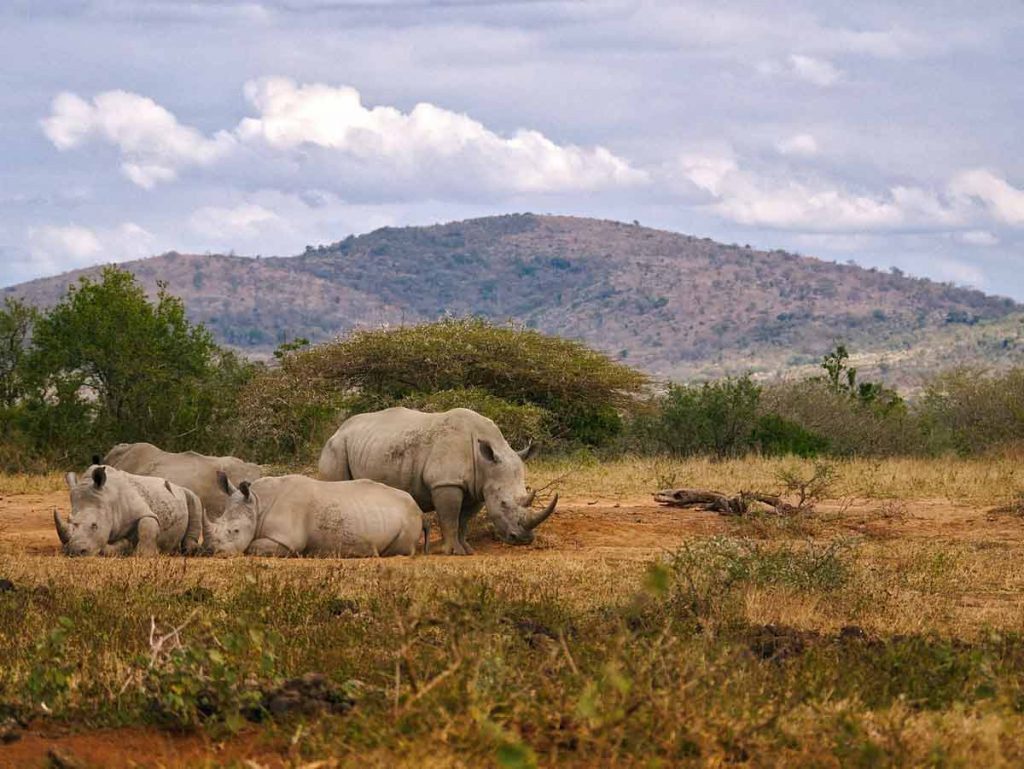
Amazingly some safaris like Etosha in Namibia and Kruger in South Africa offer daily Safari entrance fees as low as 25 USD. This is a great opportunity for those who do Africa safari on a budget.
is africa safari worth it

Inside these parks, you will find accommodations as low as 20 dollars. This is not a top standard service you will find here. Infact, some toursts enjoy the fact hat they may share bathrooms and kitichen with others (it could happen). For the price offered, sharing is not a bad deal.

There is an alternative here. Drive some kilometers outside the park, you l find better accommodations with better services. pay 100 dollars or a bit more, you will find good rooms with all the services you need. Tourists also book a family suite for 120 USD per night.

Another cost is the self-drive rent for safaris. Some tourists prefer driving their own cars, and without a guide or a driver. This is an option I don’t recommend.

First, this could be dangerous as you may encounter unforeseen situations. Second, you will miss many animals as most camouflage most of the day. Third, you will miss what is behind the whole story of the wild. A guide makes it fun to visit. However, self-drive could cost you as much as 100 dollars per day.

The high end could cost you more than a thousand dollars. Few Africa safari parks offer private or VIP type services where only a few entrees are allowed.

Here the services are better and the view is marvelous. The rooms are much more comfortable than the budget ones. You will get a spa, private pools, and many more services. You will get drinks and food, both local and international. You will get 4X4 SUVs that may cost you a high price compared to Arica safari on a budget package self-drive.
africa safari on a budget

Why is African Safari so expensive?

Africa is big. In fact, if you are from Europe, you may not comprehend how large the continent is. They say the United States, most of the major European countries, India, China, and the UK fit in the continent.

The distance in relation to the infrastructure is one reason. Most of the rural or park areas are not developed. They lack basic services such as shops and basic asphalt roads. Considering the time it takes to get these services and limited option, the cost could go higher

A sole business owner without competition could estimate its price priorly to their profit.

The second reason is the number of staff to guest ratio. Imagine you wash being washed with hand, you surely need to hire a lot of stuff to do for the whole guests.

Everything in Africa safari needs attention. From customer service to animal food needs some technicians.

How much would a safari cost?

The safari cost differs on various factors. Generally, the price range is similar.

  • Tanzania could differ from 450- 1500 dollars
  • Kenya daily safari price differs from 350-1500 dollars
  • Gorilla trekking cost stats around 1000 dollars and could go three times the price.
africa-safari-zebras

Where is the Cheapest Safari in Africa?

If you are looking for Africa safari on a budget, it is wise to find out the cheapest safari in Africa. Almost all these safaris and parks have their own cheaper packages. In general, some of these appear to be cheaper.

1- Masai Mara of Kenya

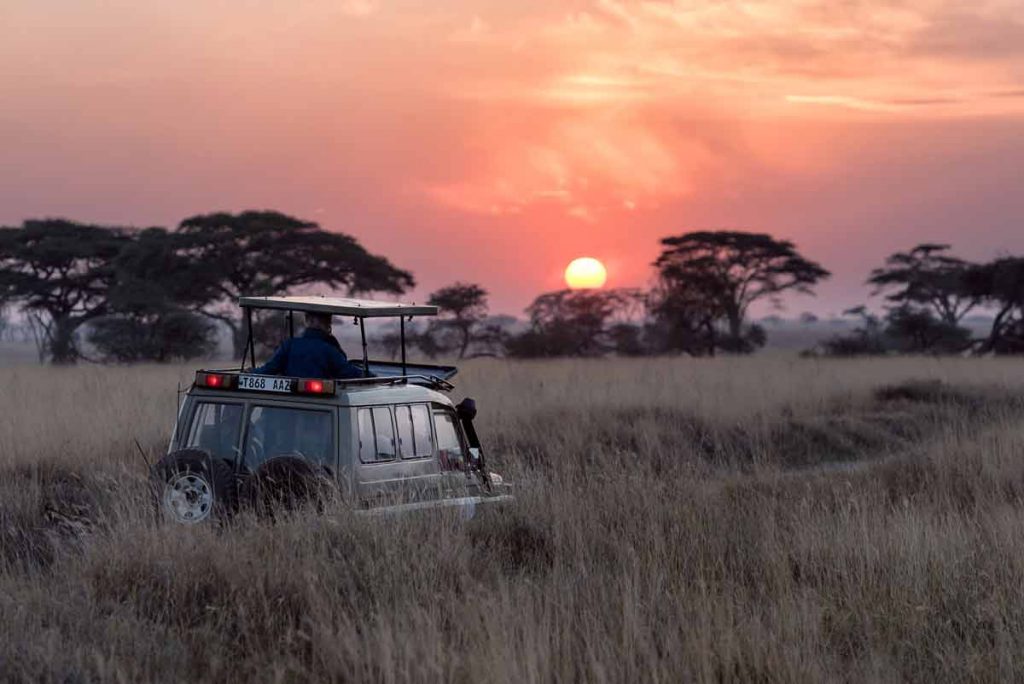
This is one of the best eastern Africa safari on a budget options. You will have a chance to visit the wild on 4WD vans together with your group. The game drives thought the natural landscape is a true experience.

2- Serengeti National Park of Tanzania

Tanzania is rich with its wildlife and natural landscape. At the same time, the country proved to be a place for various groups with various budgets. You will visit a bunch of animals and a mesmerizing landscape. And experience local beauty and culture on the way. If you are looking for Africa safari on a budget, Serengeti should be on your top list.

3- Kruger National Park in South Africa

Kruger national park is one of the best safari destinations in South Africa. It is one of the largest as well, even in Africa. Here you will find every animal that you are looking for. You will also find very cheap services as low as 25 dollars per day per person.

africa-safari-on-budget

4- Chobe National Park in Botswana

Chobe is another Africa safari on a budget. The Chobe National Park is much known for its trees, elephants, and lions. The Chobe River has crocodiles and hippos and birds that are fascinating for visitors. The game drive is another great experience a well

5- Etosha National park in Namibia

Don’t let the idea of Namibia’s hot climate fool you, it is one of the best destinations in Africa. It is also the best choice for Africa safari on a budget. The game drive, the animals, the landscape all make an experienced traveler. Etosha has cheap plans and is definitely one of the Africa safari on a budget option.

How Much Does a Kruger Safari Cost?

Accommodation

The Kruger national park accommodation services vary in price. The average cost of hotel rooms is about 100 dollars per night. On the other hand, you will find a third of that price in camps. You should know that this price may not include meals and other prices.

Gate entrance fees

Prices for adultsPrices for children
Local citizens and residents (you may need to show ID)$7-$8 $4
Foreign visitors$27 $14
*Price Per day Per Person

Driver rent

Another cost is the private drive. Usually, gate costs will be included in the drive with a guide. the personal drive could cost you from 100 USD to thousands per day.

Generally, the cost of a safari is related to the choice of accommodation, drive choice, number of days. In Kruger national park, you will find a three-day package for around 400 dollars, and with every ting included you will get service at 8000 dollars.

How much is a Masai Mara safari?

The main cost of Masai Mara Africa safari on a budget are travel costs to Kenya, lodges fee, entrance fee to parks, driving cost to safari, and other game drives.

Similar to the Kruger safari Masai Mara is another Africa safari on a budget and on the high end. Masai Mara could cost you from 190 USD per person. This is the cheapest you could get.

The mid luxury tour package starts from 250 dollars per day.

The luxury package starts from 500 per person per day.

How Much is a Trip to Serengeti?

Serengeti another great Africa safari on a budget destination.

Entrance

The main fee is a park entrance fee that is 60 used for adults and 30 USD for children below 16.

Accommodation

The cost of accommodation in Serengeti park depends on your needs and your budget. You will find accommodation as low as 200 USD. The high end could 5 times this price. The 200 USD is a camp type arrangement in a tent. While 1000 per night is a luxury lodge.

Additional costs are transportation, park fees, car rent depending on your needs, and other small unexpected costs.
Is It Safe To Go To Africa On A Safari?

10 Tricks to an Africa Safari on a Budget

  1. Package deals may not be the best option.- Despite a common conception, package deals are not necessarily the cheapest for Africa safari on a budget. A package is good to understand the services that you get within your budget. Packages put you in a fixed position and fixed schedule.
  2. A package is a great option for budget travel as well- Once you get an affordable package, that will be a great relief. Your agent will take all the responsibility once paid. They will book the hotel, pick you up from the airport and take you on a safari.
  3. The more service you want, the costly it becomes. If you are on a budget focus on basic services. Choose the cheapest accommodation, and avoid extra services such as private car rental and luxury lodges. You will save 5 times every day.
  4. Choose cheap destinations if you plan to stay long. For those who are on a budget for Africa safari, it is necessary to choose a cheap destination. South Africa is one of the cheapest destinations in Africa. This could be due to the better-developed tourism system and infrastructure.
  5. Self Service is usually expensive. – Do you plan to go on safari on private rent cars? It will cost you 100 dollars more per day. Do you plan to rent a place outside the park by yourself? It will cost you 5 times. Besides the fixed costs, hidden unexpected costs will be a challenge.
  6. Travel offseason outside peak months – Rainy season is a cheap season. Air transport becomes cheaper as well. Although you may miss some animals as these will migrate or hide from the rain, you will have experience. December to March is considered off-season from any African safaris.
  7. Choose unknown Safaris- For second-time visitors, you can choose another less known Africa safari on a budget.
  8. Go on guided driving safari- Guided driving safari is effective and you will save much. Self-driving is not that effective, especially for first-time visitors.
  9. Avoid buying local gifts and artifacts- Local artifacts could be cheap. But these are additional costs. Many tourists would like to buy lots of these as a gift for families back home. Others buy them as souvenirs. If you start buying one, the cost incurs fast.
  10. Avoid unplanned costs- You may wish to get spas. And staying at your low-cost tent room, you may not get that. If you suddenly wish to upgrade, that is an unexpected cost.

Generally,

Africa safari on a budget is possible. You will find cheap destinations at very minimal prices. If you plan ahead of time, you will save more. Your budget Africa safari will be a success.

Best African Safari Tours, Trips, Travel & Vacations 2020 & 2021
A Basic Guide to the Top 10 Animals in Africa Safari

0
black lion ethiopia

Africa safari animals could range from a simple zebra to a big elephant. These animals live together, cooperating and surviving on one other. These animals in Africa safari create hierarchy in the food chain, and you could witness hunting and killing. However, the number of animals is maintained throught this way. And with out human involvement, the animals could florish and the landscape maintains its natral state.

What Country in Africa Has the Most Animals?

Many of the eastern and southern parts of African countries have their own share of wildlife. These countries have utilized this by building lodges and services around the zoos and protecting natural resources.

Tanzania

Tanzania is a country with magnificent landscapes and wildlife. The savanna land makes it open for view and visitors can easily enjoy the wild.

Tanzania also created a safe and comfortable place for tourists and it has one of the highest in Africa.

Kenya

Kenya is another eastern Africa country with animals in Africa safari. Its climate and developed tourist destination make it the first choice. This is another place with a high number of visitors.

South Africa

South Africa is another country with a great climate and a large number of Africa safari animals. South Africa could also be high end on the price but the experience is worth the money.

Namibia

Namibia could look a Deseret but let not that fool you. Although Namibia has sparsely populated Africa safari animals, what you will experience would be worth it. Together with the unique landscape, Namibia is a good destination.

Sometimes, tracking animals is hard here due to the sparsely populated animals, however, the guides know where the animals are.

Uganda

Uganda is known for its chimps and mountain gorillas. Uganda is relatively lower on the services and animals are not as verse as Kenya and Tanzania. However, if you want to experience another African country, Uganda could be your choice.

Botswana

Botswana has become a good place for Africa safari animals. Although expensive, Botswana safari is a good destination. If you are a low or even mid-budget traveler, you may need to avoid Botswana or reconsider checking recent packages.

Zimbabwe

Zimbabwe is another destination with great Africa safari animals. This part of the world is criticized due to governmental issues

Top 10 Animals in Africa Safari

It is best to note that some animals prefer some climate while other stary for water and others are not migratory. based on their lifestyle, the animals that exist in one country may not exist in another.

Not only that depending on the season and other unpreceded reasons, but you may also see some animals and miss others. If you are lucky for example, you may see the while lion next to the dirt road where your van passes by and others may miss it in a day difference.

Here are 11 Africa safari animals that live in these countries.

black lion ethiopia

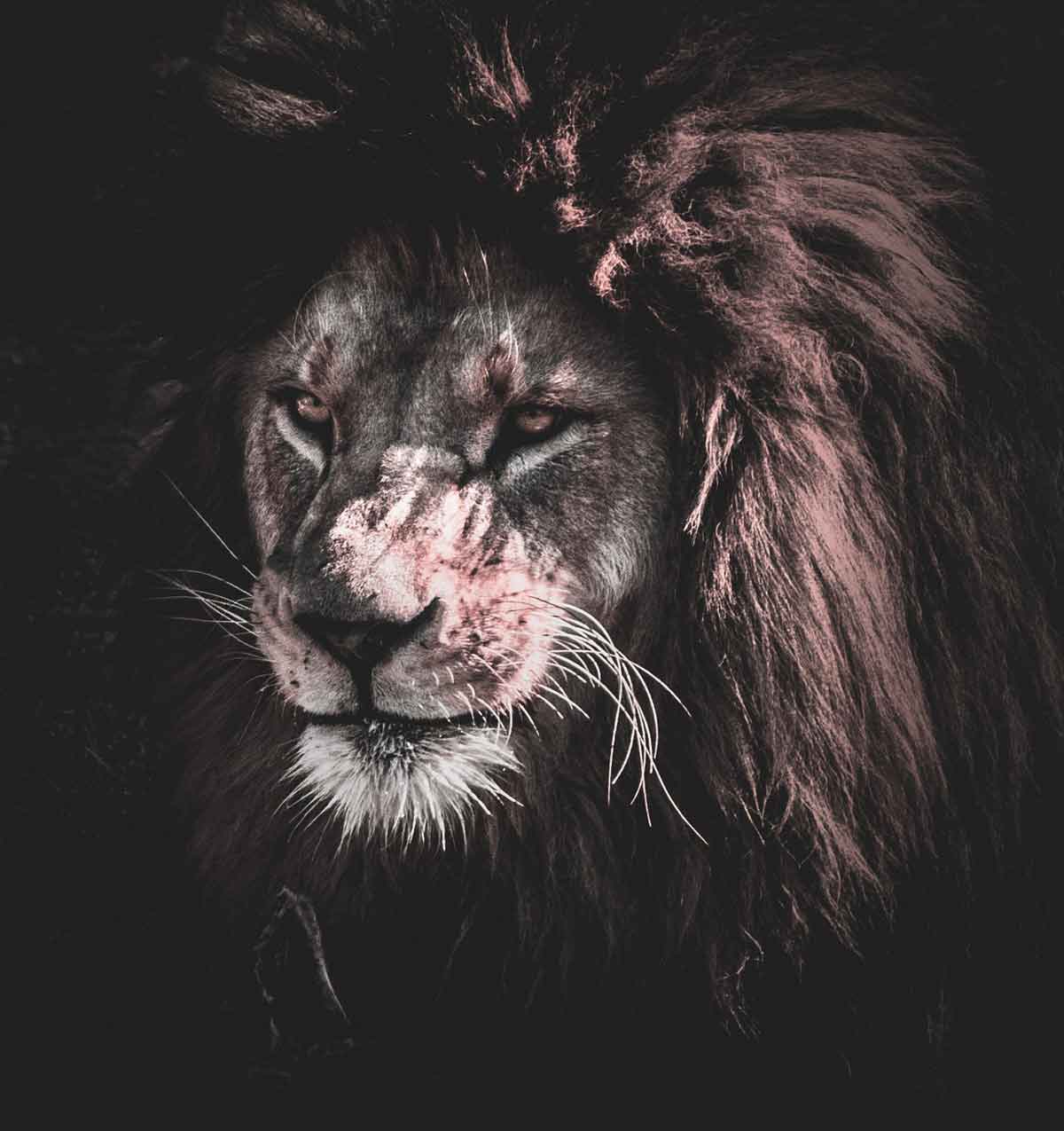
Lion

They call them the king of the Jungle. Some argue against it. One Guide in South Africa even said to me that wild dogs are rather the king of the jungle for a reason I don’t recall.

However, lions are not a mere cat. These are one of the most powerful animals in Africa safari. These animals prey on even larger animals such as buffalos and zebras. They sleep all day and only get up to hunt and feed the group.

The growl of a lion could be heard from 8 kilometers, and it is a mark they make to announce their territories.

The large cats don’t live that long. Most die even before their 10th birthday while others live up to 14 years.

Lions run as fast as 50 mph or 80 kmh.

You will find lions in Kruger national park, South Africa, Maasai Mara National Reserve, Kenya, Ngorongoro Conservation Area, Tanzania, and Okavango Delta, Botswana. And only a few have the chance to see lions hunting. If you encounter one, it will be an unforgettable experience.

africa safari animals wild dogs

African Wild Dogs

These are not ordinary home dogs that you see every day. These animals in Africa safari have larger ears and smart and live and hunt in groups.

Find these dogs in Kruger National Park in South Africa, Hwange National Park in Zimbabwe, Niassa National Reserve in Mozambique, Kwando, Selinda & Linyanti in Botswana.

ethiopia-awash-national-park--.jpg

Elephant

Elephants are other animals in Africa safari that are built largely in size. Adult elephants could weigh as much as 13,000 pounds and are up to10ft tall. However, these large Africa safari animals walk slow and in groups. They walk hundreds of kilometers in search of water in dry times.

Elephants are one of the smartest Africa safari animals. These animals know each other and even call one another by their names. Scientists even claim that elephants know each other using the mark they made with their feet.

Elephants have a strong family attachment and the group protects the young. They even stay for long in one place and mourn the dead.

Amazingly, this large animal lives up to 70 years. Find these magnificent Africa Safari animals in Kgalagadi Transfrontier Park, South Africa, Kruger National Park, South Africa, Maasai Mara National Reserve, Kenya, Ngorongoro Conservation Area, Tanzania, Okavango Delta, Botswana, and Chobe and Jabulani park, Botswana.

africa-safari-animals-hyena

Hyena

Hyenas could be one of the most underrated Africa safari animals. Despite the tales that gave a bad name for hyenas, these are very useful parts of the overall ecosystem. Hyenas scavenge recycling and decomposing what is left from the lions.

They even hide food for later. They consume every part of the body including bones that other animals in Africa safari wouldn’t dare to try.

Find these African safari animals in Ngorongoro Conservation Area in Tanzania, Serengeti National Park in Tanzania, Masai Mara in Kenya, and Chobe National Park in Botswana.

Buffalo

Buffalo

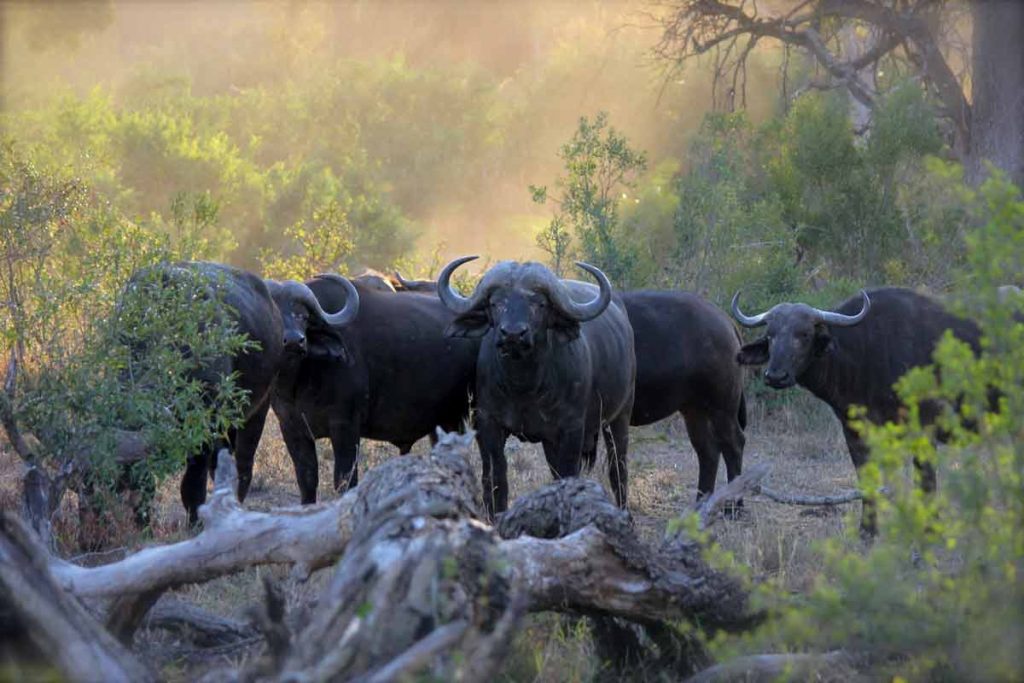
Buffalos are group animals in Africa safari. Thousands of buffalos survive together in a single place. Although these are one of the most preyed on Africa safari animals, there are about 900, 000 of them across the continent. They also live up to 22 years.

Buffalos are one of the few Africa safari animals that stay near water for long.

Find these animals Chobe National Park, Botswana, Katavi National Park, Lower Zambezi National Park, Zambia, Tanzania, Kruger National Park, South Africa.

africa safari animals zebra

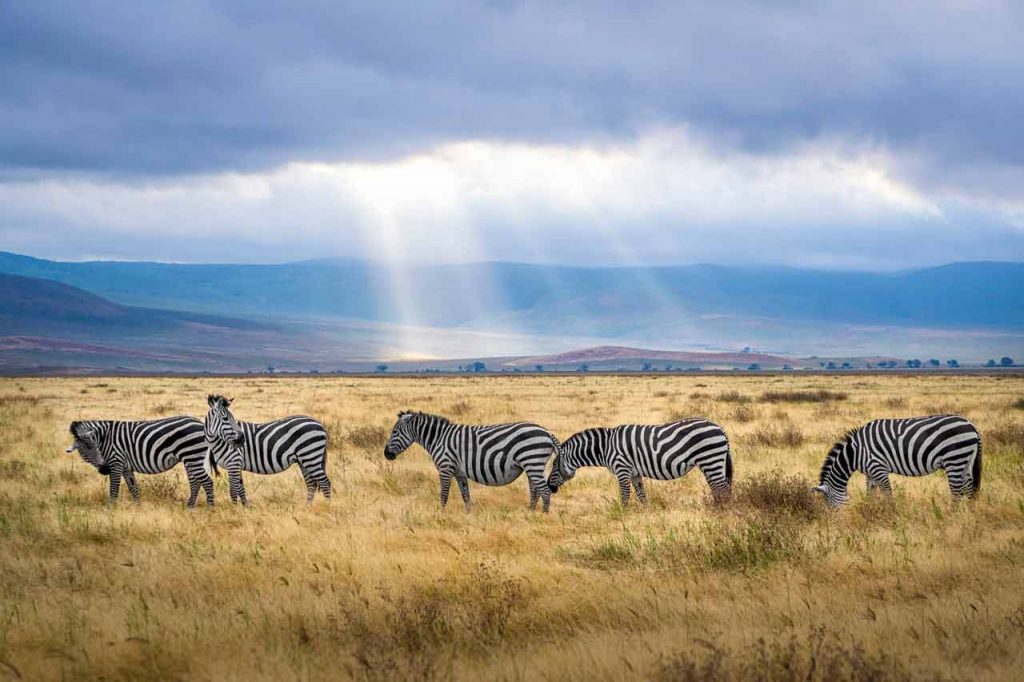
Zebra

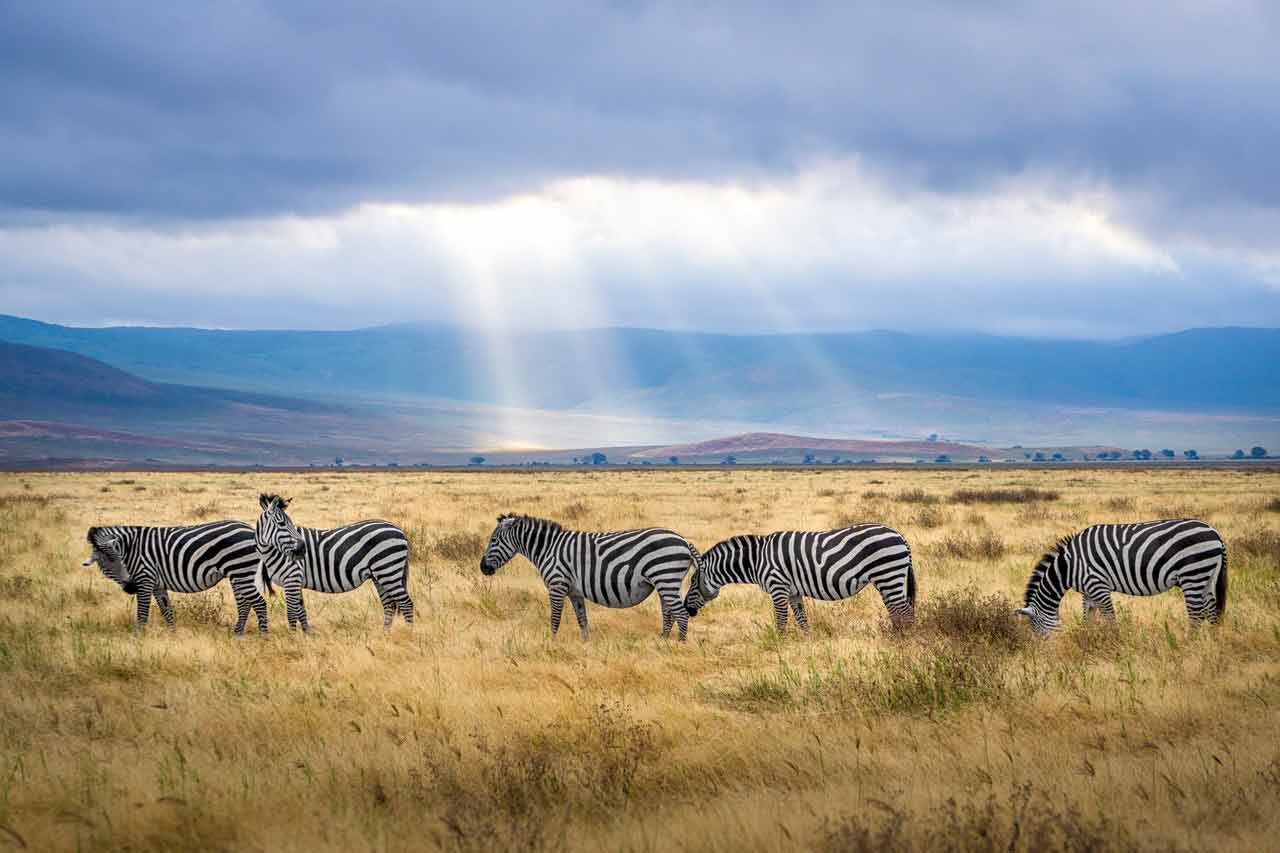
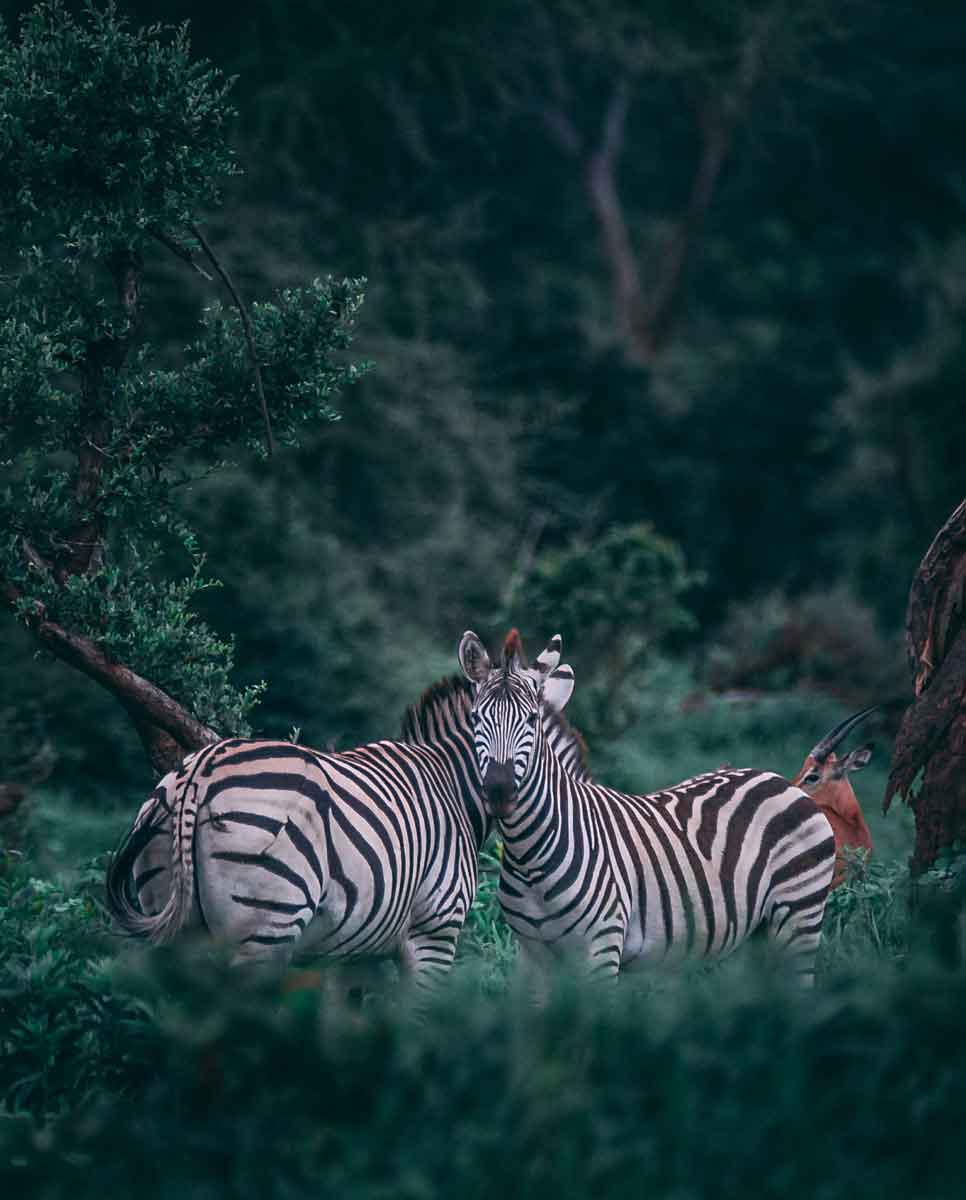
If you find Buffalos in the wild, you will probably see zebras too. These two survive together.

These live up to 30 years in the wild.

africa safari animals Wildebeest

Wildebeest

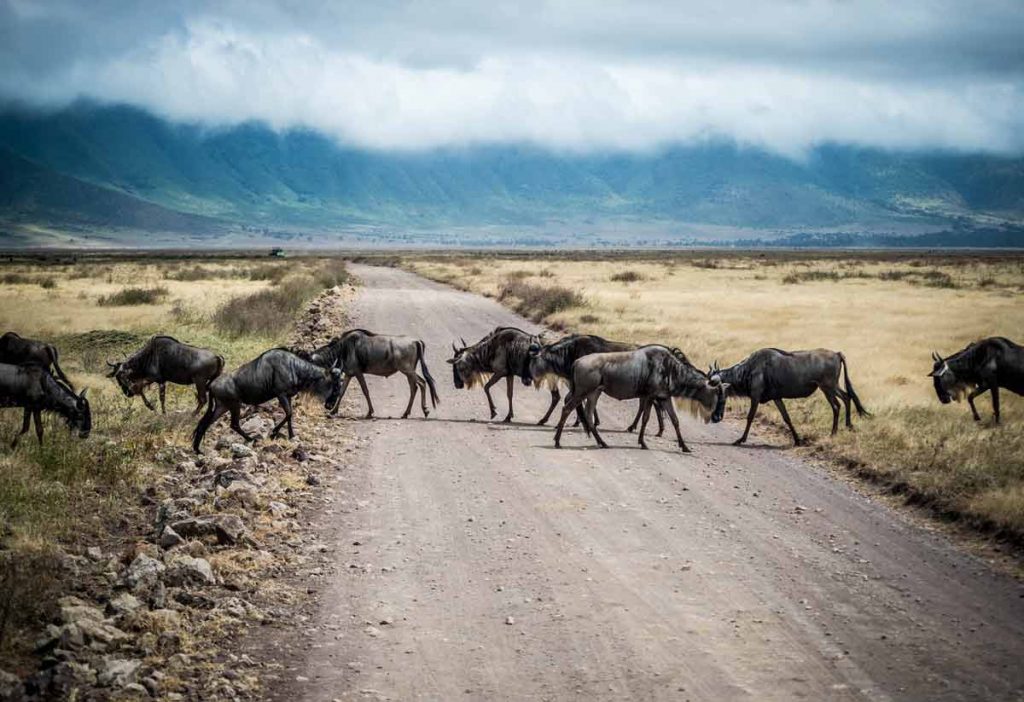
These Africa safari animals are one of the largest in number. You see them speeding around in groups. The graze all day and run from place to place scanning the place for danger.

There are millions of Wildebeest in Serengeti, Tanzania. These animals in Africa safari live up to 20 years.

africa safari animals rhino

Rhinos

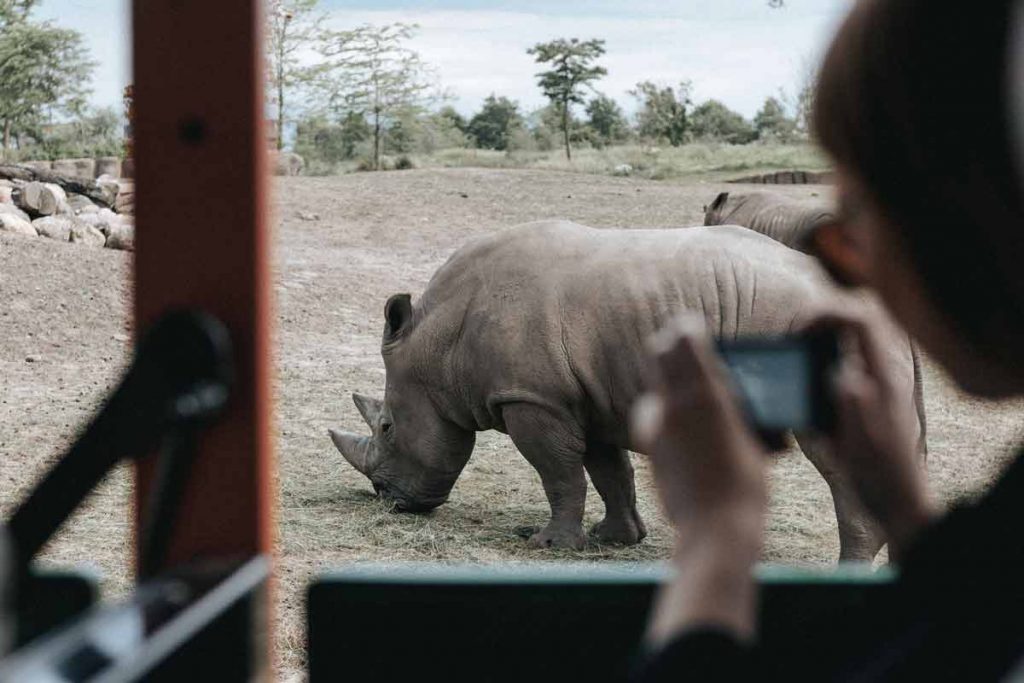
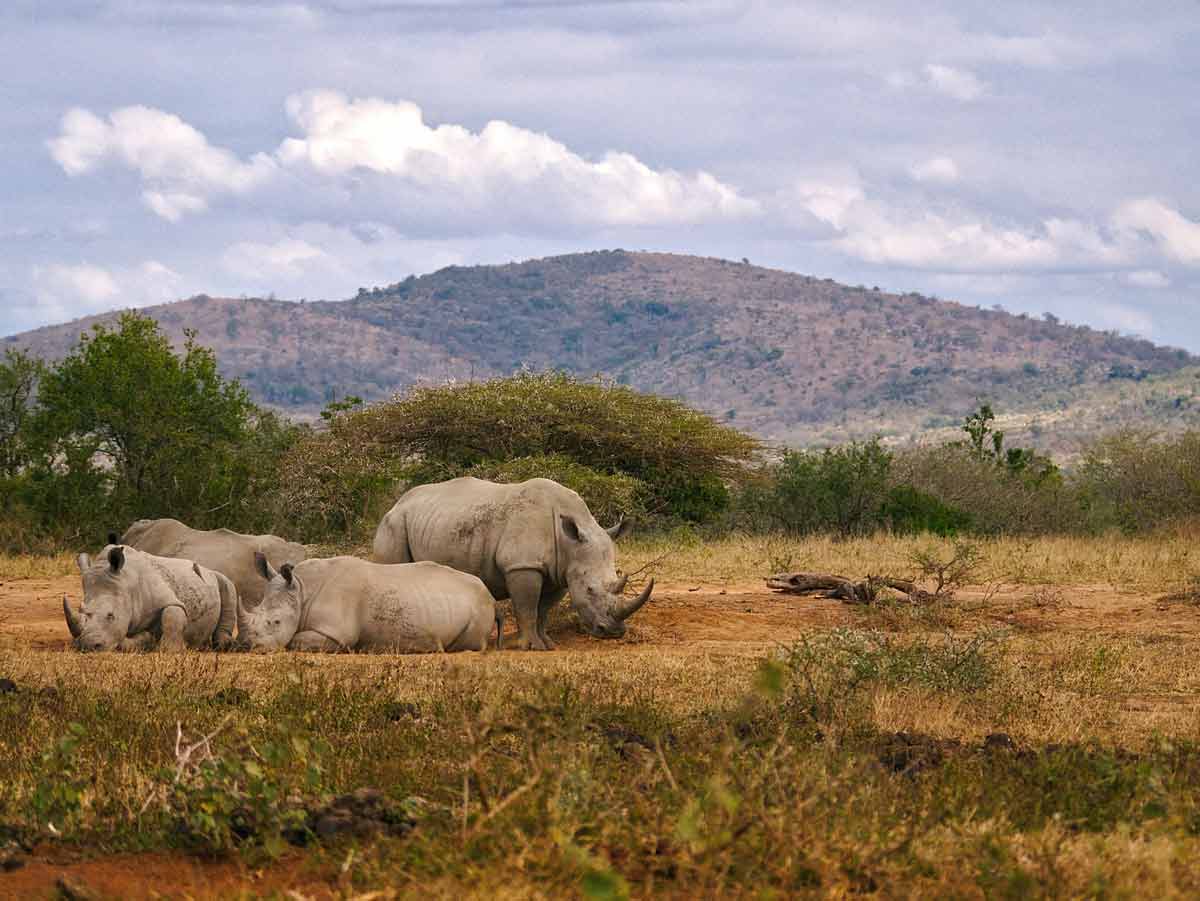
Rhinos are one of the few endangered Africa safari animals. poachers hunt them for their horns that will be sold in the black market for hundreds and thousands.

Every day, at least 2 rhinos are killed by poachers at this time, although much is done to deter the effort. Even the location of these Africa safari animals is not mentioned for visitors to discourage poachers.

Despite the threat, rhinos live up to 50 years.

Find these animals at Mkomazi National Park, Tanzania Etosha National Park, Namibia, and Hluhluwe–Imfolozi Park, South Africa.

giraffe

Giraffe

Giraffe is one of the tallest Africa safari animals. It is identified with its spots on the skin and long legs and neck. They could measure up to 20 feet in height.

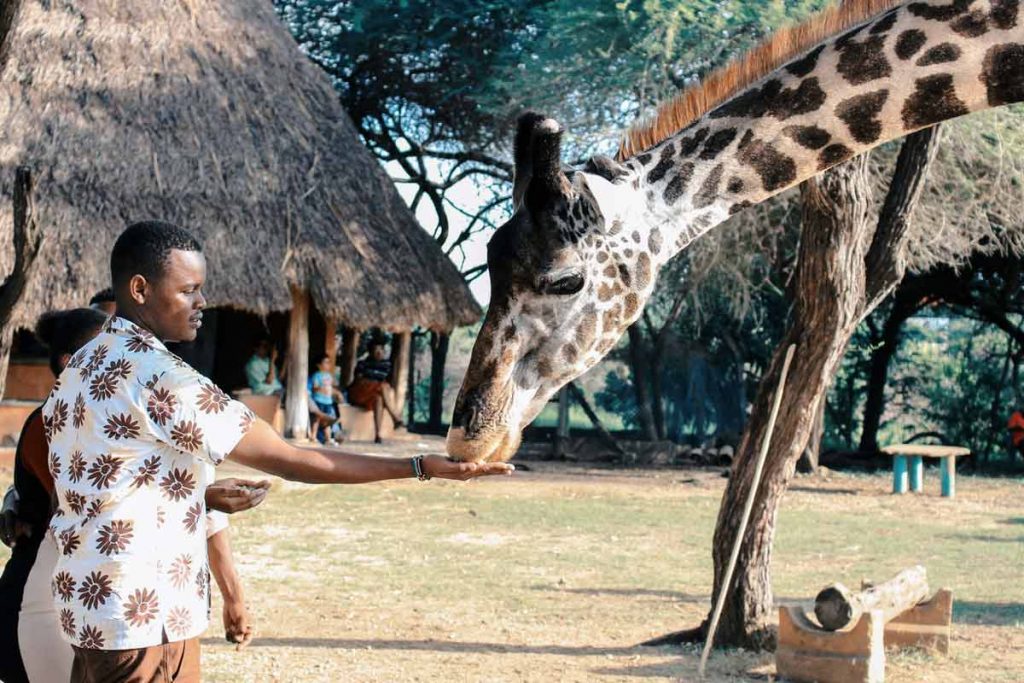
Most lodges in Africa safari tame them and you can see them from your room windows.

Giraffes live up to 25 years.

Find these Africa safari animals in Kruger National Park in South Africa, Serengeti National Park in Tanzania, Masai Mara National Reserve in Kenya

africa-safari-animals-leopard

Leopard

You may not witness this cat while you are on Africa safari. Leopards camouflage their surroundings and they are hard to spot. These African safari animals live alone and are independent hunters. These animals only get together for mating or raising a child.

Leopards live up to 12- 17 years. They kill big animals twice their size.

Unfortunately, these cats are not faster than the rhinos and the buffalos. leopards run 36 MPs while the others run up to 35.

Find these animals in Londolozi Game Reserve, South Africa, and MoSouth Luangwa National Park, Zambia.

cheetah

Cheetah

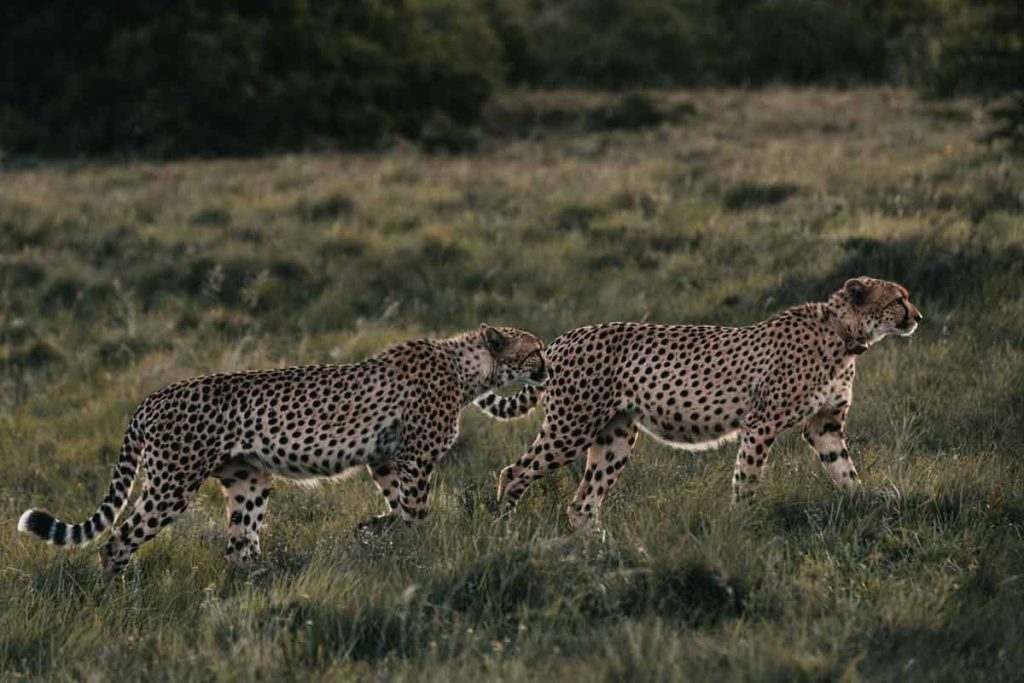
Cheetas are one of the fastest Africa safari animals. In fact, these cats run up to 75mph and turn corners with similar speed. They run full speed in just three seconds.

With their good eye sight, speed and balance with their tail, their prey has no chance of escaping.

You will find many cheetahs in Masai Mara and Savute.

Cheetah live up to a decade and 12 years.

Find these Africa safari animals in Etosha National Park, Namibia, Okavango Delta, Botswana, Savute, Botswana, Ruaha, Tanzania

Finally,

All the Africa safari animals have their own unique characters. If you are looking for experience, I advise you to look for what they do and how they do it. Some are social animals while others are loners.

Despite their structure, some are fast while others rely on their power and group setting to protect themselves. from danger.

If you travel in dry times, it is almost guaranteed that you will see most of these animals.

A Complete Guide to Africa Safari

0
africa-safari-zebras

Africa Safari is one of the best experiences you would have in your lifetime. It is an experience that you need to try at least once in your lifetime.

Africa safari is not a trip to a park where caged wild animals are displayed on glass walls. It is a full-fledged experience where you would go through the forest and the savanna land and witnesses the wild.

In this article, you will find answers to your top questions. What is the best African safari, is a safari in Africa safe; How much does Africa safari cost me; Do I need a visa to visit Africa safari; What medications I need to visit Africa; how do I visit on a budget and when do I visit safaris.

This is a complete guide to Africa safari.

What To Know Before Going On An African Safari?

Here are few things to get in order before going on Africa safari.

  • Going back one more time to the safari could cost you more, therefore, prepare your camera, and notebooks in advance.
  • Pack light. Too much cloth may not benefit you. Africa’s safari areas are not harsh in climate. Most places have a calm climate. Therefore, it is better to wear light clothes.
  • Get your malaria creams and sunscreens.
  • Get extra accessaries. Don’t expect to buy batteries and other accessories in Africa. Bring your own just to be safe.
  • Get your medications and shots. Some countries may demand anti-malaria shots in order to prevent possible diseases and limit transmissions. This is a must. Or regret later.
  • Get insurance This is optional but necessary.
  • Get a visa on time.
  • Plan in excess. On safaris don’t expect to be on time. or to leave on time. Have a few minutes more for other personal businesses.
  • Get prepared for cold showers in some areas. This is an experience.
  • Don’t assume Africa is full of violence. This is a false assumption that many visitors have. Don’t fear to bring clothes and your phone. This doesn’t mean you don’t have to look after them. Be responsible for your items.

What Is The Best Safari In The World?

Surprisingly, 4 of 5 Safries are in Africa. Masai Mara of Kenya, Serengeti National Park and Ngorongoro Crater in Tanzania, Chobe National Park & Moremi Game Reserve in Botswana, Kruger National Park in South Africa, South Luangwa National Park in Zambia, and Okavango Delta, Botswana are repetitively mentioned.

Besides this Yala park of Srilanka and Ranthambore National Park, India are mentioned in the top 10.

What Is the Best Africa Safari?

Best Africa Safari? Well, it depends on what you are looking for after all. Almost all the safaris in Africa have their own quality. Some have wild choices, while others offer cheap safari experiences while others have better user experiences. But here are the top five safaris according to various user ratings.

1- Masai Mara of Kenya

Kenya probably has one of the most organized safaris in Africa. They also have the best landscapes and a variety of animals as well. The Masai Mara is a continuity of Tanzania’s Serengeti where various wild animals live together. Here you will find animals from zebras and antelopes to elephants, rhinos to wild cats.

2. Serengeti National Park and Ngorongoro Crater in Tanzania

As an extension to the Kenya’s Masai Mara, this park is also a seasonal migration point in the area. With its vast land, you will visit thousands of trees and plants and groups of wild animals.

3. Chobe National Park & Moremi Game Reserve in Botswana

Botswana is truly an amazing place for Africa Safari. In fact, it is one of the few places where you will enjoy your Safari tour both on water and on land. At any point in your journey, you will witness a large group of elephants or lions of hyenas passing by your car.

The Victoria falls of Botswana is part of the Africa Safari in Botswana. The boat cruise under the falls gives a good experience for visitors.

Find hundreds of birds, animals, and faunas while staying at lodges with additional benefits. Self-drive is also possible, although we don’t encourage it.

4. Kruger National Park in South Africa

Kruger National Park is much larger than the Chobe National Park. It also serves a larger number of visitors.

Here, you will find hundreds of birds, and wild animals including wild dogs and cheetah.

You stay at the camp overnight before going on the safari. You will also get chosen based on what you need to visit and your budget. It is better to talk to the park before going on this Africa safari.

5. South Luangwa National Park in Zambia

Some say this is one of the best Africa safaris for first-timers for its guided tours and variety of natural landscapes and wildlife. This park is better for group visitors as the price is on the high end and the services consider group settings.

Visit with groups and find affordable stay with comfortable lodges and with group game services.

All these five parks are top in Africa. These have services that consider the budget of visitors. Not only that, despite the climate and other factors, these parks give full experience for visitors. Even when rivers dry in some seasons and the wild animals migrate to neighboring areas, you will witness birds and even these animals on their journey.

Africa safari is a true experience and definitely, you need to try it once in your lifetime. If you are on a budget, try visiting with groups and share costs. If you need to know an estimate, continue reading below.

african safari zebra

Which Is Better Serengeti Or Masai Mara?

Both have their own interesting advantages. Masai Mara may offer many animals to watch easily due to its smaller setting. On the other hand Serengeti is vast and offers landscapes and great scenes.

Is Kenya Or South Africa Better For Safari?

Should I go to Kenya or South Africa on a safari? This simple question provokes much thought in many tourists’ minds. For a simple visitor, the difference between these two places is simple.

The Kenya safari is the most organized safaris in Africa. Its natural landscape is great as well. Together with the colorful culture that you see around the safaris, your trip will be worth the money and the effort.

The South Africa safari is one of the best as well. The experienced guides that explain animals in a way that you have never imagined make your tour worth it.

Therefore, both safaris are worth the visit. Instead of comparing safaris, I would recommend you to decide which country to visit as well. South Africa is much further away from the rest of the world. While Kenya is much closer to Europe and Asia.

Second, South Africa has a much better GDP than Kenya. South Africa is more organized in services and infrastructures.

How Much Is A Safari In Africa?

100 dollars to 1500 per person per night.

African Safari could be costly or cheap based on the services you inquire about. Africa Safari could cost you between 100 dollars to 1500 per person per night.

In many of these Safaris, the midrange is near 800 dollars.

  • Kenya– from 200- 500+
  • Botswana from 300- 700+
  • South Africa from 200- 500+
  • Namibia from 200- 500+
  • Zambia from 200-500+

How Much Does A Kruger Safari Cost?

Kriger Safari costs differ based on what you plan to do with your stay. There are various activiries and sacocmodations that incur additional cost including trekking, vechicles , and other excursions.

In Kruger you need to book based on what you desire to do in the Safari.

However, there age various packages based on your choice. A simple three package may cost you 500 USD while everything included may cost you 8000 USD.

africa safari woman taking pics

How Much Does It Cost To Go On A Safari In Tanzania?

Tanzania Africa Safari also has a similar arrangement. Most Africa safaris work on certain packages. The average cost for this Africa safari starts from 500 USD per person. If you travel in groups you may save a few more dollars.

Therefore, you will have three general costs: Vehicle rent with a guide or a driver, entrance fee to parks, and accommodation.

Vehicle and guide costs and entrance fees are usually fixed. However, your accommodation cost differs based on your budget and your choice.

How Much Is A Trip To Serengeti, Tanzania? A 300 USD car rent for example would be cheap if you travel in a group. The cost of the 6 people in a group would be as low as 50 USD per person.

If you choose a cheaper staying place, you may save much more. Some hotels may accommodate you as cheap as USD per night.

What Does A Meal Cost In South Africa?

The cost of the South Africa safari is not that different from other Africa safari. Everything depends on your choice of accommodation. A general survey from various sources shows that many travelers spend about 20 USD on meals per day. About 15 USD on local transportation, 90 USD per day on hotels.

Therefore, one can expect to spend up to 500 dollars in a week.

How Much Is An African Safari Honeymoon?

Africa Safari for Honeymoon? That seems a very good choice. It is totally unforgettable experience that many choices are there.

However, you should expect relatively expensive services. You need to expect up to 400USD per night. Beach time cost starts from 180 USD per person.

The cost includes services, guides, vehicles, camping, and other costs. Generally, Africa safari for honeymoon costs up to 5200 for 7 nights and double that price for 10 nights.

How Do I Do An African Safari On A Budget?

  • Carefully choose services including lodges and activities
  • Choose how many days you can stay with your budget. Most packages offer services based on the number of days
  • For example, 6 days Masai Mara- LNakuru-Amboseli NP safari and tour with mid-range minivan will cost you from 1300 to 1900 dollars. But if you choose another package of 4 days visit, although the places you will visit will be minimized, the price will be discounted to 800-900 dollars per person.
  • Group travel always is less costly.
  • Always refer to packages if you are traveling with Africa safari services. And prebook if you are traveling in private.
is africa safari worth it

Why Is African Safari So Expensive?

African Safari is relatively expensive due to various reasons. First, most of the countries safaris and parks are out of town where infrastructure is up to the standard. This means the cost of acquiring simple items such as gasoline for cars is expensive.

Not only that a lodge that lacks appropriate laundry machines should hire at least 10 staff. Food comes from gardens that need gardeners. Animals need a follow-up and this needs trained need stuff. If power is not reliable, lodges may need alternative power sources.

This makes the overall cost more expensive.

These places don’t have standard supermarkets where you will find food for a fair price. Instead, the lodges are the only providers, and due to no competition, the price increases as well.

Not only this, most of the services demand a lot of manpower. Some statistics say that the staff to guest ratio is 3-1. Besides this, all this stuff live inside the lodges. The cost of services that all these staff members need is usually high.

So, Is Africa Safari Worth It?

It depends. What are you looking for in Africa safari? Every hour in Africa safari is a unique one. But if you are looking to always be on the go and see the animals, then that is impossible. Most of the hours that you spend in Africa safari could be away from the animals.

It is always recommendable to understand the purpose of your trip. What is it that you are looking for to achieve?

As general advice, three and four days could be enough to experience Africa safari, especially if you are on a budget. At this time, you can experience wild animals, nature, the sun, the waters, and family time.

If you plan to go longer, then have personal plans as well. Therefore, private time, mediation time, family time, and more.

Is It Safe To Go To Africa On A Safari?

Is Africa safari safe? A woman even asked me ‘is it safe to go to Africa?’ This seems a question on most of the tourist’s mind. I feel it is an appropriate question as well.

Some countries have associated challenges. others the media made a bad image on them. For example, if you travel to the middle east, almost all western citizens ask ‘is it safe for me to visit the middle east?’ Even Latin American cities are associated with violence and crime.

The same is true for African cities. Some have associated violence with others, health issues, and economic issues. So, is it safe to go to African safari?

Is It Safe To Go To Africa On A Safari?

There is no simple answer to this. But yes, if you follow guidelines. Let me explain. Here are the top four problems you may face.

1- Wild Animals

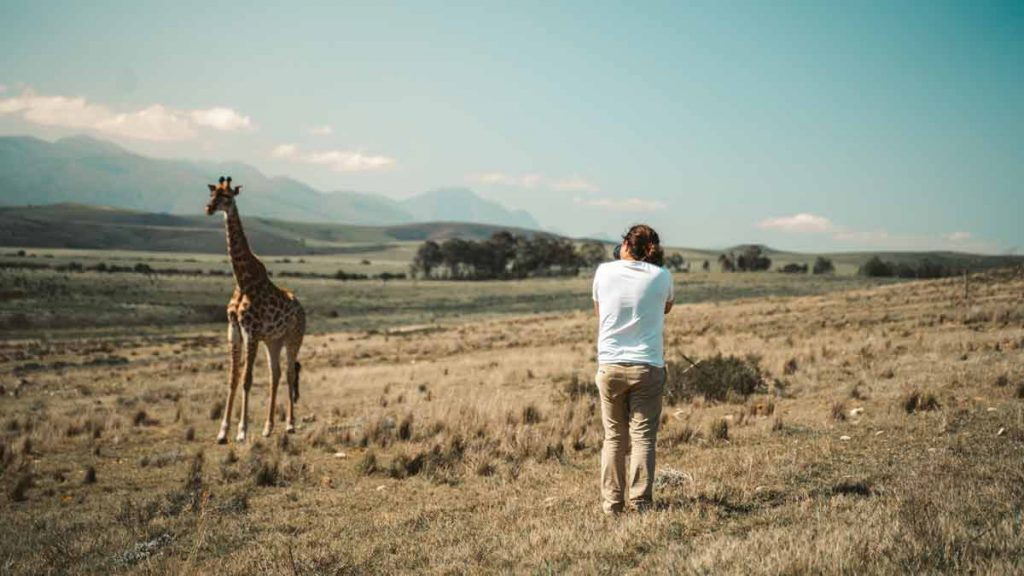
There is a reason why we still call them wild. Not all calm animals are tamed. Many tourists mistook the calm demeanor of a lion for it does not attack. Against guidelines, some photographers even get out their cars to take pictures.

If you see the guides taking a risk, this is because they have been around for years and they know how the animals would react and are trained to escape possible danger.

Follow guidelines anywhere when you are inside a park with wild animals.

2- Natural landscapes

Have you ever wondered what it would feel like to jump from a 10 feet cliff or swim in open water that you don’t know about? Then you may not survive in Africa Safari.

You cannot jump from a cliff that you don’t know about. This reminded me of the hot spring that I once wanted to wash my hands with. My teenage mind didn’t even realize how hot the water was, even at the surface. I was soon awakened by the scream of the guide who later pointed to me that the locals even boil corn with it.

3- Terrorisms and Crimes

Terrorism is not far from Africa either. Religion and ethnic-based violence are seen in some places including Nigeria, Ethiopia, and central Africa.

Terrorism is not the only challenge here. Violence and crime are also seen in some areas. Some gangs prefer places away from the city, and deep in forests. Some close roads and rob by passers.

Even the highly populated areas have crimes. You may witness street robbing and fraud. This is not a big issue in many countries, especially if you follow guidelines.

Here are 5 Tips to Have safe Africa Safari.

1- Don’t come close to wild animals. Stay in your van. Follow guidelines.

2- Don’t go far from the guides and if you do, watch where you are stepping. Don’t swim in water that you don’t know about.

3- Have basic accessories such as pocket knives and first aid although the Safari may have it.

4- Never separate from a group.

5- Don’t get involved in any street activity. Don’t break fights or don’t give money to anyone. Don’t carry money more than you need.

6- Follow guidelines in border areas and known terrorism areas.

best time to visit africa safari

What Is The Best Month To Go On An Africa Safari?

Climate is the main requirement to choose when to go to an African safari. The ciliate, however, is not as harsh as the northern hemisphere. Especially, in countries near the equator, the majority of months in a year are warm and only a few months will get heavy rain. Even in other parts of Africa, the climate only has a rainy or sunny month.

  • Southern Africa– May to October is a dry season and November to April is a rainy season.
  • East Africa- January to March and June to October is dry season and April to June and November to December is the rainy season.

Then, when should you visit Africa. It depends on the location of the countries. The southern Africa category: Botswana, Namibia, Zambia, Zimbabwe, South Africa. And the East Africa category: Uganda, Rwanda, Kenya, and Tanzania.

What Is The Best Month To Go On An Africa Safari? Always choose dry seasons. The rain is a challenge for a drive, the animals would not be around under the rain and most of the landscape will be covered with fog.

Is December A Good Time To Go On Safari?

December is a short rainy season and is a good time to see newborn animals. You will also see migratory birds. However, the rain may limit your experiences.

In Tanzania, you will see migratory herds heading through the central Serengeti park.

In South Africa, the weather changes wet in December. December is also a holiday for local schools. Therefore, it may get busy in South Africa Safari.

In Botswana, December gets wet. Therefore, you won’t get much traffic.

In December Rwanda is dry and it is a good time to go on a safari.

How Long Do You Need At African Lion Safari?

2-3 hours.

Most African lion safaris don’t take more than 3 three hours. It usually begins early in the morning and ends before noon.

what-animals-do-i-find-on-africa-safari

What Animals do I find on Africa Safari?

You will find the major animals tha tyou know in books.

  • The first animal is the lion. You will find while lions and the golden lions in Africa Safari.
  • Elephants are other graceful creatures of the Africa safari. You will find these family-oriented wild creatures moving slowly across the field at any moment. Are There Elephants At African Lion Safari? Yes.
  • If you are lucky you will also see Giraffes. These tall wild animals may be smaller in number but these are also nice to watch.
  • Tigers, cheetahs, and Leopards
  • Rhinos
  • Buffalos are not rare. These are everywhere. You may also see these chased by a lion.
  • Wild dogs. These are group animals. You will find them playing rough or eating their kill at any moment.
  • Are There Monkeys At African Lion Safari?

What Should You Not Wear On Safari?

What should you wear in Africa Safari? Well, it depends on the climate and your mood. However, since we are dealing with the wild, I would advise you to blend with the environment.

  • These means don’t wear bold and unnatural colors that get the attention of the wild animals. For example, green and brown make you part of the surrounding. What Color Should You Not Wear On Africa Safari? Exerts say, bold colors scare animals away.
  • Make sure to not over a cloth. Wear light clothes as the temperature would go higher than what you are used to.
  • Don’t go out bare skin. Especially if you are from the cold regions. The temperature is not harsh but still, it could hurt your skin. Therefore, cover your body as much as you can.
  • Don’t go out without sunscreen.
  • Don’t go out without covering your face. Use hats and sunglasses.
  • Don’t wear bold colors at night. Use light colors to avoid insects and mosquitoes. For example, dark color blue-black, colors, and dark blue colors attract TseTse flies.
africa-man-feeding-girraffe

What Can You Not Do On An African Safari?

Africa safari is fun but dangerous as well. If you violate the following rules, you may end up in danger.

  • Don’t leave the guide’s advise- The guides know what is dangerous and what is not. They have experience and expertise. Especially, while on foot, the guide may tell you when to stop and when to get back, and which path to take.
  • Don’t leave your Vehicle- One of the most dangerous things that some tourists do is leaving the vehicle to take pictures.
  • Don’t shout or cut the Guide– Travellers need to understand what they are seeing. You only get that from listening to the guide. If you keep cutting off the guide, it may ruin the whole trip. Wait to ask questions and even to get up to take pictures.
  • Don’t bring your food to feed the wild- This is a bad idea because food from different sources may have substances that just the animals. The wild is not a neat eating space either. However, everything is what the animals used to eat. Introducing new food could be bad for the wild. This also will attract attention and would provoke prey instinct.
  • Don’t dress bold color clothes. Blend into nature.
  • You can’t go to the bathroom for 3 hours while you are on Safari. So, Where Do You Go To The Toilet On Safari? Nowhere. Sad but true. Always go to the toilet at the lodge before starting the safari drive.

Finally,

Africa Safari is the best thing to do at least once in your lifetime. it is a great experience to tell others. However, Africa safari could also be relatively expensive for most travelers. It is always wise to plan in advance.

You also need to follow rules and stay safe while you are on Africa safari. It is always safe to assume danger anywhere in the safari. Don’t forget to not only blend in but also save the experiences.

A Guide to Beautiful Rwanda Cities, Maps and Tips

0
Rwanda cities

Rwanda cities could be smaller in size but these are not ordinary cities in Africa. Besides the new trends of clean cities, community living, peaceful settlements, the cities have their own characters. In general, you can categorize Rwanda cities into five provinces: the Kigali province, the southern province, the Northern province, the Western province, and the Eastern province.

The Kigali province includes Kigali, the capital of Rwanda, and the other two cities, Kicukiro and Rutongo.
The Southern province includes Nyanza (capital of the province), Muhanga, Kamonyi, Ruhango, Butare, Gisagara, Nyaruguru, and Nyamagabe.
The Northern province includes Ruhengeri and Byumba.
The Western province includes Kibuye (capital of the province), Cyangugu, and Gisenyi.
The Eastern province includes Rwamagana (capital of the province) and Kibungo.

Rwanda Cities Map

Rwanda cities map showing Rwanda and the surrounding countries with international borders, prefectures boundaries, the national capital Kigali, prefecture capitals, major cities, roads, tracks, and airports.

What Are The Major Cities In Rwanda?

1- Kigali

Kigali is a major city in Rwanda mainly because of its population size and its strategic point as the capital of the country. With more than 800,000 inhabitants, the city became a multinational destination.

Kigali became the capital of Rwanda in 1962 after it got its independence from Belgium and German oppression. Soon the city became an economic, cultural, and transport center for the whole nation.

Kigali is located in the geographic center of Rwanda, at 1°57′S 30°4′E. The city of Kigali is divided into three administrative districts: the Nyarugenge in the southwest, the Kicukiro in the southeast, and the Gasabo 

Kigali is also a beautiful place with steep slopes and mountains including the mount Kigali and Mount Jali.

Rwanda cities

The city has a temperate tropical highland climate which makes the city cool most of the year. The elevation together with the location limits the city’s daily temperature between 15 and 27 °C (59 and 81 °F). Kigali is also one of the Rwanda cities that gets rainy seasons twice a year.

The rain comes twice between February to June and between September and December. The rainy season is separated by dry seasons comes with an average rainfall of 155 mm. or 6 in.

2- Butare

With an alternative name of Huye, the Rwandan city of Butare inhabits more than 89,000 people.

The city is associated with the university that was founded in 2013. The city is much known with the student activities that later gained its nick name as a university city. Butare is education or intellectual center of the counrty.

It is possible to catch a place from the Butare airport to Kigali.

3- Gitarama(Muhanga) 

Gitarama is one of the Rwanda cities that now called Muhanga. The city is located 45 km or 28 mi. southwest of the capital.

Today Muhanga is the second-largest city in Rwanda with a population of more than 87 thousand. It is also a transit location to the west and south of the country.

4- Ruhengeri

This Rwanda city is useful because of its population size that is above 86 thousand. It is also located near tourist attraction natural features of the country including Lake Burera and Lake Ruhondo and Volcanoes national park and places where the mountain Gorillas live.

This makes Ruhengeri a tourist destination point as well and is provided with hotels and other tourist services.

5- Gisenyi

Gisenyi is another historic City of Rwanda that is located in the northwest part of the country. Gisenyi is known for its resort on the shores of Lake Kivu and its hotels and three sandy beaches.

This is one of the Rwanda cities that is a tourist attraction for its water sports.

The northern shore is associated with lava formation from the Mountain Nyiragongo. The ereption affected the two Rwanda cities: Goma and Gisenyi. Gisenyi escaped the lava flow twice in 1977 and 2002

How Many Cities Are There In Rwanda?

19 Cities. 5 provinces.

Rwanda has 19 important cities categorized under 5 provinces. These Rwanda cities are rather smaller in size and none of these cities have more than a million population. Ten Rwanda cities have between 10,000 and 100,000 population. Kigali has about 745,000 population.

What Is the Capital City Of Rwanda?

Kigali.

Kigali is also called a land of thousand hills, which is also explains its location in the hills of Rwanda.

Kigali is one of the cleanest destinations in Africa, it has banned the use of plastic bags. To encourage environmental consciousness and a clean city, Kigali also encourages car-free days every month.

Is Kigali The Most Beautiful City In Africa?

Kigali the capital of Rwanda is regarded as the cleanest city in Africa. In 2020 BBC put out a note on Rwanda cities especially Kigali as inviting cities of Africa.

Rwanda Cities by Pop

Cities in Rwandapopulation 2012
Kigali859,332
Gisenyi136,830
Ruhengeri59,333
Butare50,220
Gitarama49,038
Byumba34,544
Cyangugu27,416
Nyanza25,417
Bugarama24,679
The population of people living in Rwanda cities

The 2012 census showed that Kigali is one of the most populous cities in Rwanda. This city of Rwanda is followed by Gisenyi and Ruhengeri that contain a population of forth of the Kigali population.

What is Vision City Rwanda?

Vision city Rwanda is a housing project being built in Kigali. Being built on 158 ha, it is one of the largest residential housing projects in the country. At the end of the project period, The Vision city will have 4500 households or units. By 2017, about 500 units were completed.

Finally,

Rwanda cities may appear small in size but these are not ordinary cities. Rwanda cities rather have natural, cultural, and geographical contributions to the overall setting of the continent.

Rwanda cities are tourist destinations due to their water , land, and living attractions. These attractions are as extreme as open lava from volcanos to water sorts.

Rwanda cities are also service centers, educations centers, and even technology centers.

The new vision cities also contribute to the future aspirations of Africa to build better cities.

More on Cities

Ethiopia Addis Ababa

15 Ethiopia National Parks

0
awash national park ethiopia

The Ethiopia National Parks include the Simien mountains national park, Bale mountain national park, Awash national park, which are home to many endemic birds and wild animals. The vast Ethiopia national parks together gave the land a unique natural setting that attracts thousands of visitors every year.

Ethiopia is a land highland locked country in East Africa. It is also referred to as the horn of Africa due to the horn-shaped setting in the region. It Neighbours the countries surrounding it are Eritrea, Djibouti, Somalia, Kenya, South Sudan, and Sudan. There are different varieties of climate, terrain, vegetation, and living conditions.

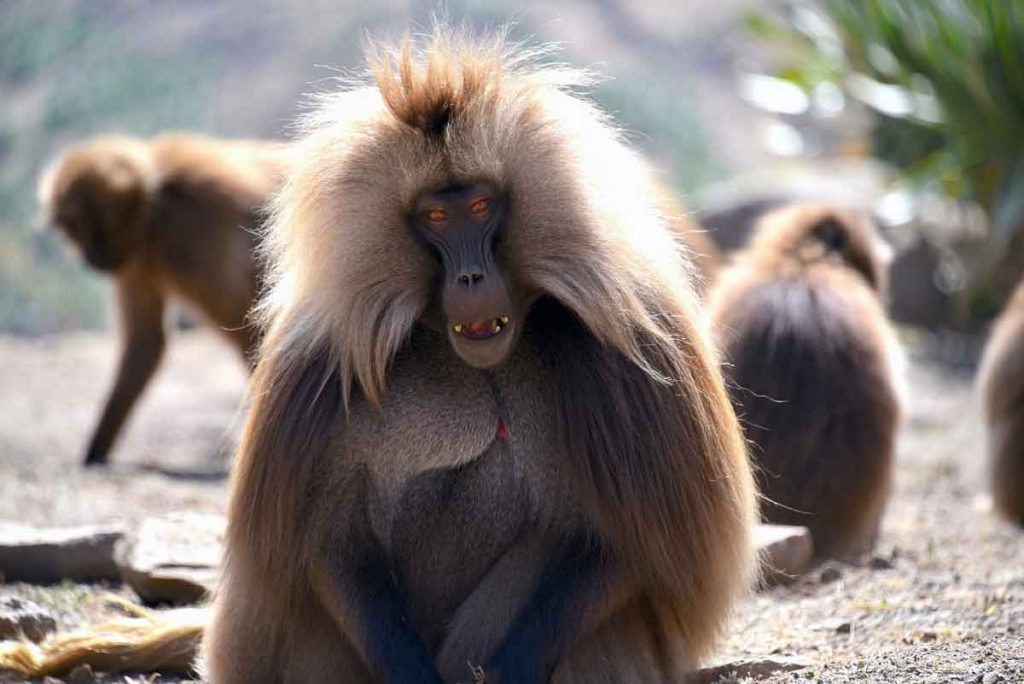
Due to its geographic setting and vairy of altitude in the country, Ethiopia is an ecologically diverse country with a great variety of animals and plants such as the endemic species like the red fox, gelada baboon.

Not only that the main historic cities like Gondar and Axum are located in the highlands of this country which covers most of it. Having world heritage sites like The Rock-Hewn churches of Lalibela, King Fasiledes’ castle of Gondar, Aksum, Harar Jugol, Tiya stones, Landscapes of Konso, Awash and Omo valleys and the Simien Ethiopia National Parks make it one of the best tourist destinations in the world, the National parks being one of those.

awash national park ethiopia
Ethiopia national parks zebras

National parks are areas of land protected to conserve native plants and animals and their habitats, places of natural attractiveness, historic heritage, and native cultures. It is an area in use for conservation purposes.

The ecosystem must not materially be altered by human exploitation and occupation. Therefore, it is a place for plant and animal species, and geomorphological sites.

National parks also contain a natural landscape of great beauty. Usually, the highest competent authority of the country has taken steps to prevent or eliminate exploitation or occupation as soon as possible in the whole area. This is to effectively enforce the respect of ecological, geomorphological, or aesthetic features that have led to its establishment.

Including the Ethiopia national parks, most other parks allow visitors to enter for inspirational, educative, cultural, and recreational purposes.

The Ethiopia national parks also have legal protection, budget, and staff sufficient to provide sufficient effective protection and protection from exploitation of natural resources.

Being a country with diverse ecology and wildlife, Ethiopia has several protected national parks and wildlife sanctuaries.

Abijatta-Shalla National Park

Abijatta-Shalla National Park established in 1963 is located in the Oromia Region and the Ethiopian Highlands region, 200 kilometers south of Addis Ababa, and east of the Ziway–Shashamane highway.

The park covers about 887 square kilometers, that includes the Rift Valley lakes of Abijatta and Shalla. The park altitude differs between 1540 to 2075 meters.

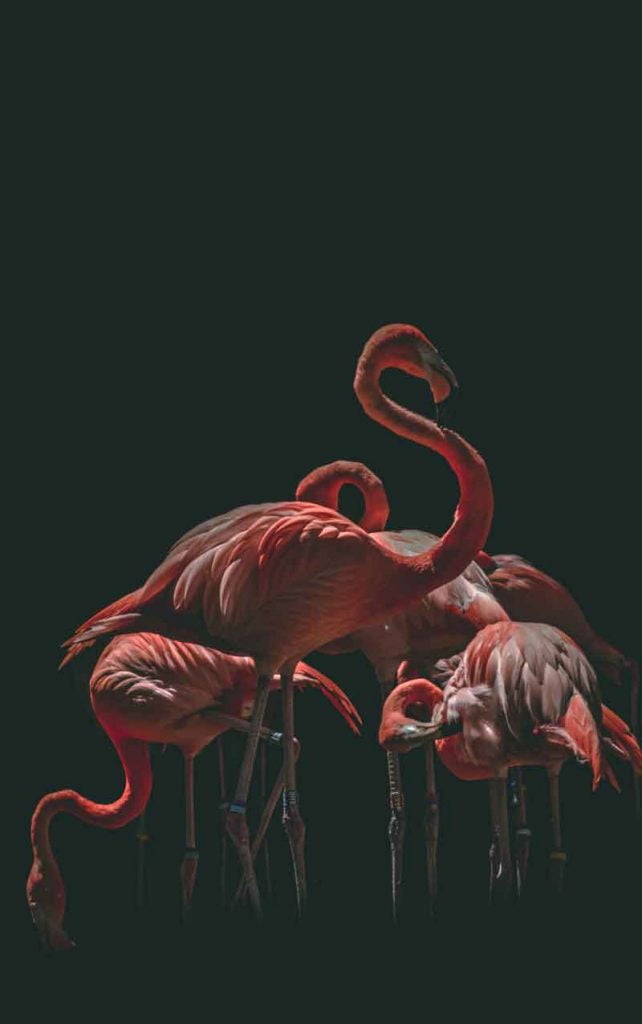
Besides the two lakes, the park has hot springs on the northeast corner of Lake Abijatta, and large numbers of flamingoes on the lake.

It is reportedly said some of the Acacia woodlands near the Lake Abijatta has been exploited for charcoal. This practice still persists. Many cut and sell the trees and charcoal not far from the lakes.

Ethiopia National Parks #1- Abijatta-Shalla National Park

Alatash National Park

Alatash national park or Alatish national park is a rather new national park located in the Amhara region. Alatash national park covers about 2666 square kilometers. It was established in 2006.

Ethiopia National Parks #2- Alatash National ParkPark

Awash National Park

Located at 225 kilometers east of Addis Ababa in the regions Oromia and Afar, the Awash national park is considered the first in Ethiopia. Established in 1958 with an area of 756 square kilometers, it inhabits wildlife including the East African oryx, Soemmerring’s gazelle, dik-dik, the lesser and greater kudus, and warthogs.

This Ethiopia national parks also has the Anubis baboons and hamadryas baboons and over 453 species of native birds like the North African ostriches. 

African wild dogs that used to live in the park are now extinct.

Ethiopia National Parks #3- Awash National Park

Bahir Dar Blue Nile River Millennium Park

Established in 2008 in the Bahir dar region, the Bahir Dar Blue Nile River Millennium Park has a large area of 4728 square kilometers.

Ethiopia National Parks #4- Bahir Dar Blue Nile River Millennium Park

walia ibex
Walia Ibex Ethiopia National Parks

Borena Saynt national park

Borena Saynt national park located in the Amhara region having an area of 4325 square kilometers was established in 2001.

Ethiopia National Parks #5- Borena Saynt national park

Bale Mountains National Park

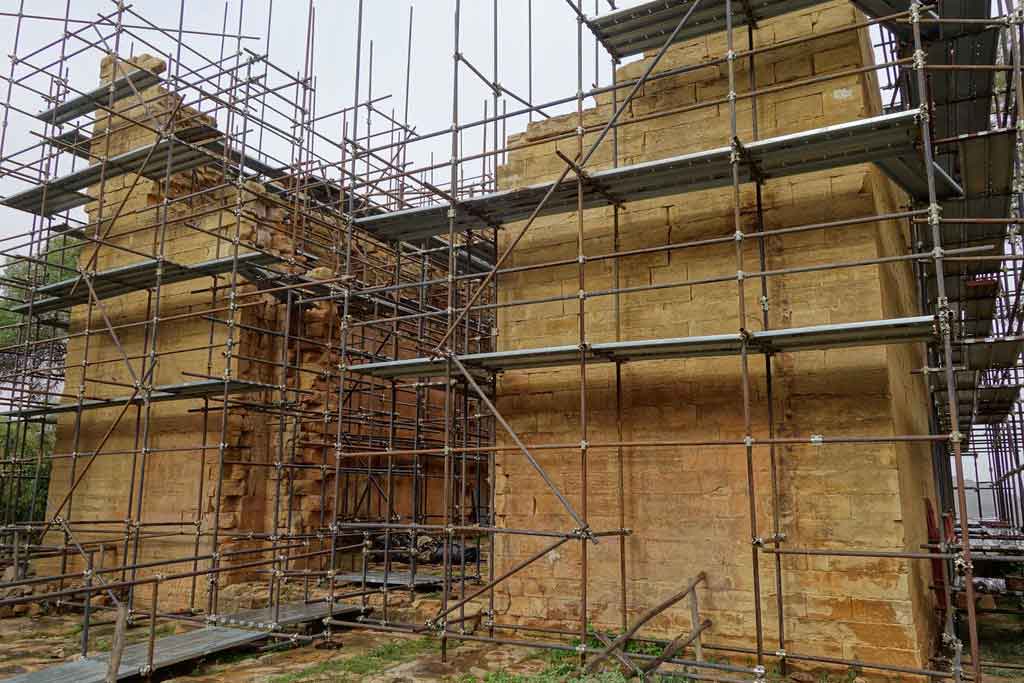
Bale Mountains National park is located in southeastern Ethiopia, 400 km southeast of Addis Ababa, and 150 km east of Shashamene in the Oromia region.

The park encompasses an area of approximately 2,150 square kilometers in the Bale Mountains and Sanetti Plateau of the Ethiopian Highlands. The Bale Mountains are part of the Bale-Arsi massif, which forms the western section of the southeastern Ethiopian Highlands.

The boundary of the Bale Mountain National Park lies within five districts, Adaba (west), Dinsho (north), Goba (northeast), Delo-Mena-Angetu, and Harena-Buluk (southeast). The park’s Afromontane habitats have one of the highest incidences of animal endemicity of any terrestrial habitat in the world.

The park was nominated to the World Heritage Tentative List in 2009. The park is divided into five distinct and unique habitats, the Northern Grasslands (Gaysay Valley), Northern Woodlands (Park Headquarters), Afro-alpine Meadows (Sanetti Plateau), Erica Moorlands, and the Harenna Forest.

ethiopia-national-parks-elephants

Habitats of the Bale Mountains National Park range from grassland areas around 3,000 meters in elevation to Mount Tulu Demtu, the second-highest point in Ethiopia at 4,377 meters above sea level. The Bale Mountains National Park is an important area for several threatened Ethiopian endemic species.

Additionally, the park holds 26% of Ethiopia’s endemic species including one primate, one bovid, one hare, eight rodent species, and the entire global population of the big-headed African mole-rat. There are also several rare and endemic amphibians.

Bale Mountains National Park is home to 1,321 species of flowering plants, 163 of which are endemic to Ethiopia, and 23 to Bale alone. The forests of the Bale Mountains are important for genetic stocks of wild forest coffee and for medicinal plants in Ethiopia.
Ethiopia National Parks #6- Bale Mountains National Park

Chebera Churchura National Park

Chebera Churchura National Park is a national park located in Southern Nations, Nationalities, and Peoples’ Region in the southwest of Ethiopia. The park was founded by the regional government in 1997.

The park covers 1,250 square kilometers and contains four types of habitat. Most of the park is wooded grassland dominated by elephant grass, with montane woodland and riparian forest. 37 species of large mammal, including African elephants, have been recorded in the park, and 237 species of bird.

Ethiopia National Parks #7- Chebera Churchura National Park

abiata-shalla-ethiopia-national-parks
Ethiopia National Parks

Nech Sar National Park

Nech Sar National Park is a national park in the Southern Nations, Nationalities, and Peoples’ Region (SNNPR) of Ethiopia. It is in the Great Rift Valley, within the southwestern Ethiopian Highlands. The 514-square-kilometer park includes the “Bridge of God”, an isthmus between Lake Abaya and Lake Chamo, and the Nech Sar plains east of the lakes. It is east of Arba Minch.

It was established in 1966. In the lawless period at the end of the Derg rule and immediately afterward, Nech Sar suffered much damage. Park buildings located far from the headquarters were looted and damaged. Wildlife in the park includes plains zebra, Grant’s gazelle, dik-dik, and the greater kudu as well as one of the last three populations of the endangered Swayne’s hartebeest, endemic to Ethiopia.

A stretch of the northwest shore of Lake Chamo is known as the Crocodile Market, where hundreds of crocodiles gather to bask. The park also has populations of bushbuck, bush pig, Anubis baboon, vervet monkeys, and black-backed jackal.

The endangered painted hunting dog once existed in the park with last sightings at Fincha, but may now be extirpated due to human population pressures in this region. In 2009, a small group of fewer than 23 lions was estimated in and around the protected area.

Nech Sar National Park of Ethiopian National parks is considered an important habitat for bird populations particularly those migrating. It has a noted population of kingfishers, storks, pelicans, flamingos, and African fish eagles.

Ethiopia National Parks #8- Nech Sar National Park

abiata national park ethiopia
Ethiopia national park- flamingos

Mago National Park

Mago National Park is located in the Southern Nations, Nationalities, and Peoples’ Region about 782 kilometers south of Addis Ababa and north of a large 90° bend in the Omo River, the 2162 square kilometers of this park is divided by the Mago River, a tributary of the Omo, into two parts.

To the west is the Tama Wildlife Reserve, with the Tama river defining the boundary between the two. To the south is the Murle Controlled Hunting Area, distinguished by Lake Dipa which stretches along the left side of the lower Omo.

The park office is 115 kilometers north of Omorate and 26 kilometers southwest of Jinka. All roads to and from the park are unpaved. The major environments in and around the Park are the rivers and riverine forest, the wetlands along with the lower Mago and around Lake Dipa, the various grasslands on the more level areas, and scrub on the sides of the hills.

Open grassland comprises about 9% of the park’s area. The largest trees are found in the riverine forest beside the Omo, Mago, and Neri. Areas along the lower Omo (within the park) are populated with a rich diversity of ethnic groups, including the Aari, Banna, Bongoso, Hamar, Karo, Kwegu, Male, and Mursi peoples.

The Mago National Park was established in 1974, making it the newest of Ethiopia’s several National Parks. The park’s perhaps best-known attraction is the Mursi, known for piercing their lips and inserting disks made of clay.

Ethiopia National Parks #9- Mago National Park

Maze National Park

Maze National Park is a national park in the Southern Nations, Nationalities, and People’s Region of Ethiopia. It is 210 square kilometers in size. Maze was founded in 1997 and is managed by the Ethiopian Wildlife Conservation Authority.

Ethiopia National Parks #10- Maze National Park

black lion ethiopia
Ethiopia National Parks African lion

Simien Mountains National Park

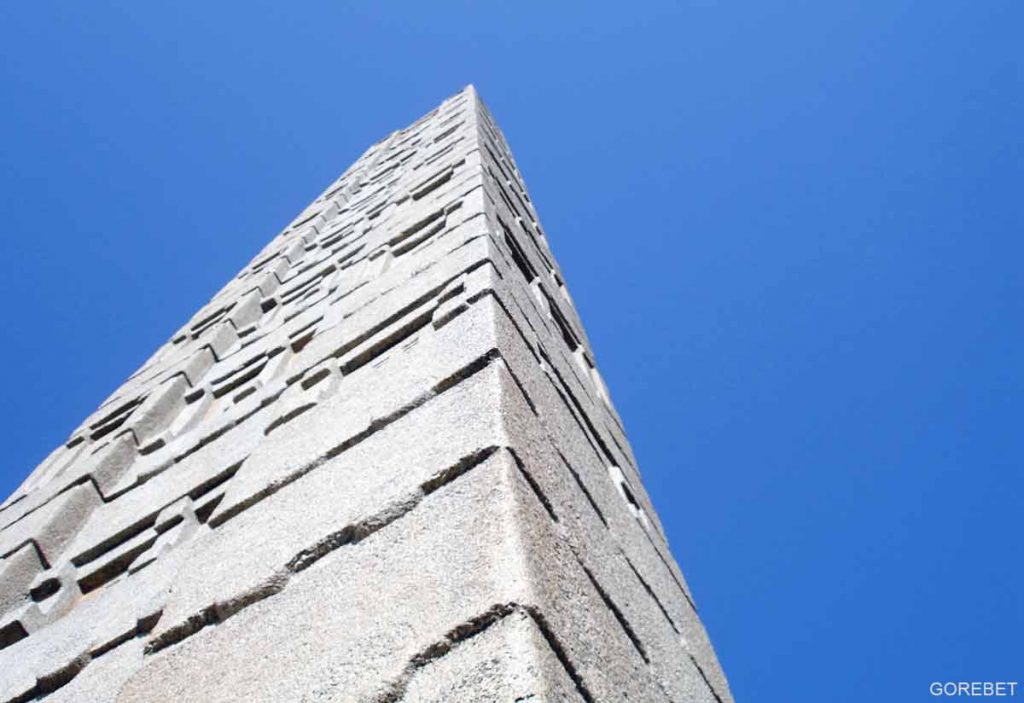
The other well-known Ethiopia national parks is the Simien mountains national park, found in the north Gondar zone in the Amhara region. The park covers the Simien Mountains, which includes the Ras Dashan, which is the tallest mountain in Ethiopia and the tenth tallest in Africa with an altitude of 4550 meters. The park stretches out 412 square kilometers.

This Ethiopia National park was established in 1959 and was one of the first sites to be delegated to a World Heritage Site by UNESCO. However, due to serious population declines of some of its characteristic native species, in 1989 it was also added to the List of World Heritage in Danger.

The heritage area is on the western side of the Simien Mountains and is 120 km from the Gondar province of Begemder in the northwestern part of Ethiopia. The vegetation is mixed with African alpine forests, wilderness forests, and alpine vegetation.

High altitude areas include montane savannah and tree heath, giant lobelia, yellow primrose, everlastings, A lady’s mantle, and a moss. Lichen covers the trees of the alpine area. The vegetation throughout the park is divided into three sections

  • Montane forest (1900-3000m),
  • Ericaceous Belt or Sub Afroalpine (2700-3700m) and
  • the Afroalpine (3700-5433m).

Within the Montane forest, there are Juniper trees, African Redwood, African Olive, Fig Trees, and Water berry Trees. 

There are also many varieties of shrubs including Nightshade, Abyssinian rose, Cowslip, and Stinging Nettle. The ridges and canyons have scattered meadows, forests, and bushes.

The St. John’s wort Forests that grew from 3,000 m to 3,800 m above sea level are now deforested away. Only a few exist today. The park is populated with over 130 bird species and over 20 large mammal species such as gelada baboon, Ethiopian wolf also called Simien fox, Walia ibex, wild mountain goats, and the Anubis baboon.

Inhabits on the slope of the northern slope of the massif are mostly native to the Simien Mountains, and most of them are found in the park. The Ethiopian wolf is endemic to Ethiopia and other mammals include hamadryas baboon, colobus monkey, leopard, caracal, wild cat, spotted hyena, and golden jackal.

There are also large herbivores, such as bushbuck, common duiker, and klipspringer. The 400 species of birds include lammergeyer, Verreaux’s eagle, kestrels, vultures, lanner falcon, African buzzard, and thick-billed raven.

A total of 21 species of mammals, 3 species of endemic species, 63 species of birds, and 7 species of endemic species are recorded.
Ethiopia National Parks #11- Seimen National Park

ethiopia national parks -
Ethiopia National Parks

Yangudi Rassa National Park

Yangudi Rassa National Park is located in the Afar Region, its 4730 square kilometers of territory include Mount Yangudi near the southern border and the surrounding Rassa Plains, with altitudes from 400 to 1459 meters above sea level.

Sandy semi-desert and wooded grassland cover the majority of the park’s area. This park lies between the territory of the Afars and the Issas, and while violence has been frequent between them, most of the park is in an area where they avoid each other.

As a result, most of the active protection of the park is focused on managing their conflict. This national park was proposed in 1969 in specific to protect the African wild ass, but the steps needed to officially establish this park had not been completed as of 1994. Recently, the wild ass became extinct in Yagundi Rassa.

Ethiopia National Parks #12- Yagundi Rassa National Park

Gambella National Park

Gambella National Park is a 4,575-square-kilometre national park in Ethiopia, near the South Sudanese border. It is the nation’s largest national park. Gambella is located several hundred kilometers from Addis Ababa.

Gambella was established in 1966, but is not fully protected and has not been effectively managed for much of its history. Gambella National Park has one of the highest concentrations of wildlife in Ethiopia.

69 mammal species occur in the protected area including African elephant, African buffalo, White-eared kob bush pig, common warthog, giraffe, hippopotamus, kéwel, Nile lechwe, sable, tiang, topi, and waterbuck, cheetah, leopard, lion, mantled guereza, olive baboon, patas monkey, and spotted hyena.

The park also hosts herds of Bohor reedbuck, bushbuck, Lelwel hartebeest, oribi, reedbuck, roan antelope, and white-eared kob. The white-eared kob migration is Africa’s second-largest mammal migration.

In 2007, African Parks and the Ethiopian Wildlife Conservation Authority surveyed the park’s giraffe population for the first time and estimated there were between 100 and 120 giraffes. Gambella’s giraffes were once thought to belong to the Nubian subspecies.

327 bird species, including seasonal migrants, have been recorded, including the African skimmer, black-faced firefinch, Carmine bee-eater, cisticolas, crowned cranes, Egyptian plover, exclamatory paradise whydah, green bee-eater, pelicans, approximately 40 species of raptors, red-necked buzzard, red-throated bee-eater, storks, warblers, and vultures.

Plant species along the Akobo and Baro rivers include: Acacia victoriae, Arundo donax, shenkorageda, and temba. The invasive Eichhornia crassipes has also been reported. Since 1997, the protected area is considered a Lion Conservation Unit. Efforts to reduce poaching doubled the number of wild animals in the park between 2000 and 2005.

Ethiopia National Parks #13- Gambella National Park

Holiday to ethiopia - Gelada monkey ethiopia animals
Ethiopia National Parks Gelada Monkey

Yabelo Wildlife Sanctuary

Yabelo Wildlife Sanctuary is a protected area and wildlife sanctuary in southern Ethiopia. It is located in the Borena Zone of the Oromia Region west of the town of Yabelo. It has an area of 2,500 square kilometers.

The area of the sanctuary is notable for its red soils which have little organic matter. Yabelo reportedly suffers from a great deal of deforestation, and illegal hunting of the spotted cats and ostrich is common.

Ethiopia National Parks #14- Yabelo Wildlife Sanctuary

Kafta Sheraro National Park

Kafta Sheraro National Park is in Ethiopia’s western Tigray region, in the districts of Kafta Humera and Tahtay Adiyabo. The park borders with Eritrea’s GashSetit to the north and is traversed by the Tekezé River. Vegetation communities in the park include Acacia-Commiphora, CombretumTerminalia, dry evergreen montane woodlands and riparian types.

A total of 167 mammal species, 95 bird species and 9 reptile species have been recorded at the site. The park is home to a transboundary African elephant population of about 100 individuals, which it shares with Eritrea’s Gash-Setit, and which constitutes the northernmost elephant population in Eastern Africa.

Kafta-Sheraro is also an important wintering site for demoiselle cranes. Other notable wildlife species include lion, leopard, caracal, aardvark, greater kudu, roan antelope, red-fronted gazelle and red-necked ostrich.

Ethiopia National Parks #15- Kafta Sheraro National Park

Finally, On Ethiopia National Parks

There are also several more national parks, protected wildlife sanctuaries, and wildlife reserves in Ethiopia. As we have seen in the above descriptions of the most dominant national parks of Ethiopia.

There are many attraction points like endemic species, amusing views of nature and topography, different vegetation, and different rivers. These attractions could be a very important way to promote the country and make it a focal point for tourism, and this will help boost the countries economy significantly.

But these protected areas are facing problems like poaching, deforestation, extinction on the species, different conflicts between the tribes living around, etc… this makes it hard to develop the areas and make them suitable enough to the public.

Different measures should seriously be taken and the government body that is responsible for the development and protection of these areas should work very organized.

Different developmental activities like educating the people around the areas, promotional activities, and accommodation and suitable transportation and protection for the public and tourists to view the area should be available. These places are advantages for growth in the country and should really be taken seriously as they are the treasures of the country as a whole.

A Guide to Amazing Ethiopian Cultural Clothes, Pictures, and Design

0
tribes in ethiopia -

Ethiopia is one of the countries around the world known to have its own traditional Ethiopian Cultural Clothes and the production of fabrics. It is one of the major sources of income for the country in the non-agricultural sector of production.

These Ethiopian cultural clothes and fabrics are produced by the technique of hand weaving. Handweaving is a traditional way of fabric production in different parts of the country scattered throughout Ethiopia.

Of these places which are well known for the production of Ethiopian cultural clothes and fabrics, we can mention Kechene Medhane Alem, Guellele, Shiro Meda, Addisu Gebeya as an example market in Addis Ababa. And for the rural areas, we can mention Gonder, Gojam, and Wollo from the Amhara region, Dorze, and Konso from the southern region of the country.

Traditional textiles and fabric production in Ethiopia have been practiced and dependent on the country’s reputation of cotton cultivation and hand made here for thousands of years. Cotton being the center of the rural culture, Ethiopian women will grow or buy an unrefined cotton, card it by hand and spin it with the so called inzirt.

Women twist the so called inzirt, basically a free standing spindle, in one hand while pulling the cotton in the other hand to make yarn. The inzirt is topped with a part which bobbin to pull the thread on a material called the Kesem.

The thread being passed to weavers that use handlooms that are either raised or suspended in a pit loom all weaving is done by interweaving the warp threads with weft threads. Weavers operate the loom by stepping on pedals with their feet interchanging up and down to interweave the threads.

tribes in ethiopia -
Ethiopian cultural clothes Design

Most handlooms are only 70 – 90 cm wide which makes them easily reachable by both hands and make the working process easier. Often, weavers will sew together multiple panels to make larger swatches of cloth because due to the width of the handloom the fabrics produced are relatively narrower.

The craft designs in the traditional society of Ethiopia are composed of three-dimensional object forms and artifacts and also the two-dimensional features such as patterns, lines, and colors.

The visual designs on material artifacts have always integrated the culturally practiced aesthetics and this added value to their local identity and commercial price.

Being done by technical enterprise expertise and covering wide areas of applied art and design, such as jewelry, interior design, ceramics, household wares, architecture, textile designs, leisure goods, and woodwork. Hand weaves textiles products are a material medium for the communication and exchange of social as well as cultural values.

Since visual and material articles are a piece of such correspondence and trade forms that offers ascend to social structures, visual and material socio-culture has risen up out of the cooperation among man and Hand weaves materials and textures.

Today, plan woven textures have become an indivisible segment of human culture, social character, and a significant wellspring of reference for present-day society. These hand weaved textures and materials are instrumental and obligatory to tasteful articulation and socio-social communication inside a neighborhood setting just as globally recognizable proof.

Behind each man-made article and item is a significant idea, convictions, customs, ceremonies, propensities, and thoughts that shape its recognition inside a socio-social setting and neighborhood condition.

Woman wearing Ethiopian cultural clothes

Visual culture has been depicted as the aesthetic qualities and understanding of what is stylishly speaking to an individual or the entire society relying upon the environment and the earth. Be that as it may, it isn’t simply aesthetic contrasts that are impacted by natural contrasts yet additionally the common sense of the visual proclamation.

Many historical references refer to cotton, cloth trade, and the handloom in this area of east Africa as the earliest once to practice these processes. Excavations at Axum in northern Ethiopia by a team led by David Phillipson show indirect evidence for textiles and fabrics that used to be produced at that time period.

Documentation of specific weave structures and design vocabulary for the woven “Tibeb”, as well as other textiles and fabrics, remains sparse. Taboos associated with weaving vary and are dispersed in different areas of the country.

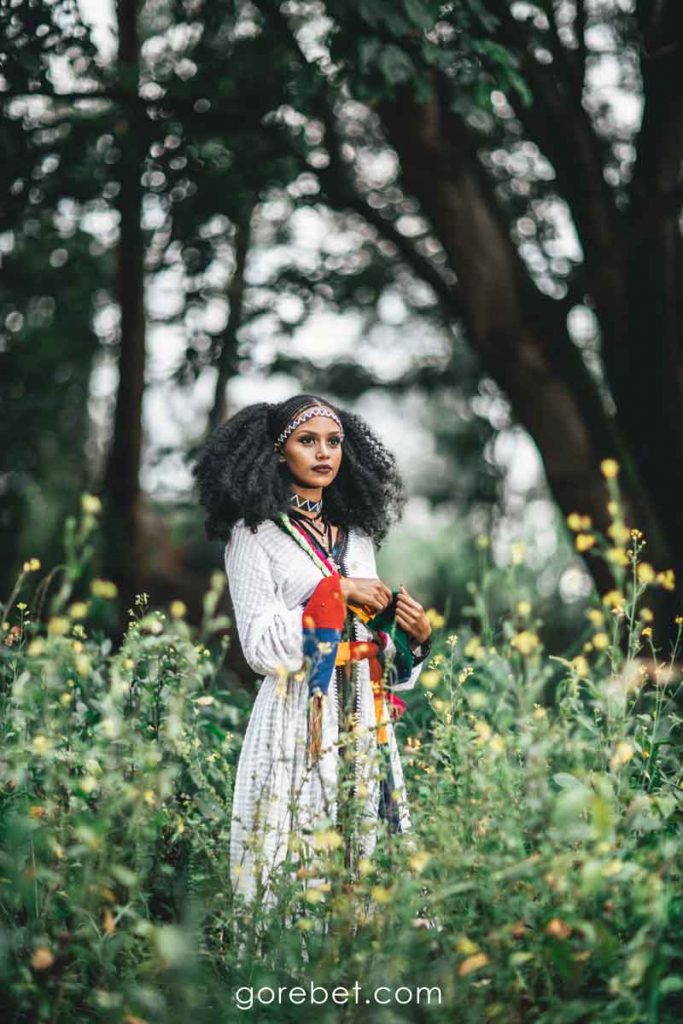
In Addis Ababa today the Ethiopian cultural clothes so-called the “Yehabesha Lib’s” is a national dress with the woven “Tibeb” is worn predominately by women on different ceremonies but also by men for special occasions like holidays and weddings. It is considered to be traditional, elegant, comfortable, versatile, and modest to all these events.

Thus the interaction between hand weaving societies and the majority public is a two-way relationship. Their study is mainly focused on social status and the economy of artisans.

However, the relationship between material culture and society was addressed in a fairly limited way. Cultural values of hand-weaving in particular selected areas were studied deep in detail.

For example, traditionally made for the wedding gift, the bride’s family must give the groom a Buluko before the marriage ceremony. These Ethiopian cultural clothes are also used by village chefs during important village meetings as a symbol of leadership within the society.

Most Ethiopian cultural clothes are worn during special occasions, public events, and holidays. Even if there are diverse religions, cultures, and ethnicity they have a blood tie relationship among the peoples that make Ethiopia different from any other place and country. The other most interesting things that the wearing styles of Ethiopian cultural clothes (traditional clothes) like gabi and Netela of Muslims and Christian are distinct and have their own different ways.

Woman wearing Ethiopian cultural clothes

History of hand weaving and textile in Ethiopian cultural clothes

Handweaving and textiles used for the production of fabrics like the gabi, Netela, Kuta, and Qemis are the key pieces of Ethiopian cultural clothes (traditional clothes) that are worn throughout the country.

The gabi is a large heavy, white wrap having many layers that can unfold getting thinner and thinner and are used by both men and women to protect themselves from the cold air during nights and the winter season. Its thick cotton weave helps to keep out the cold.

During the warmer month or on special occasions, men will also wear a Kuta in the place of the gabi which is more like it but relatively simple and more beautiful. Women on the other hand wear the Netela which is very thin cotton made fabric worn above everyday clothes.

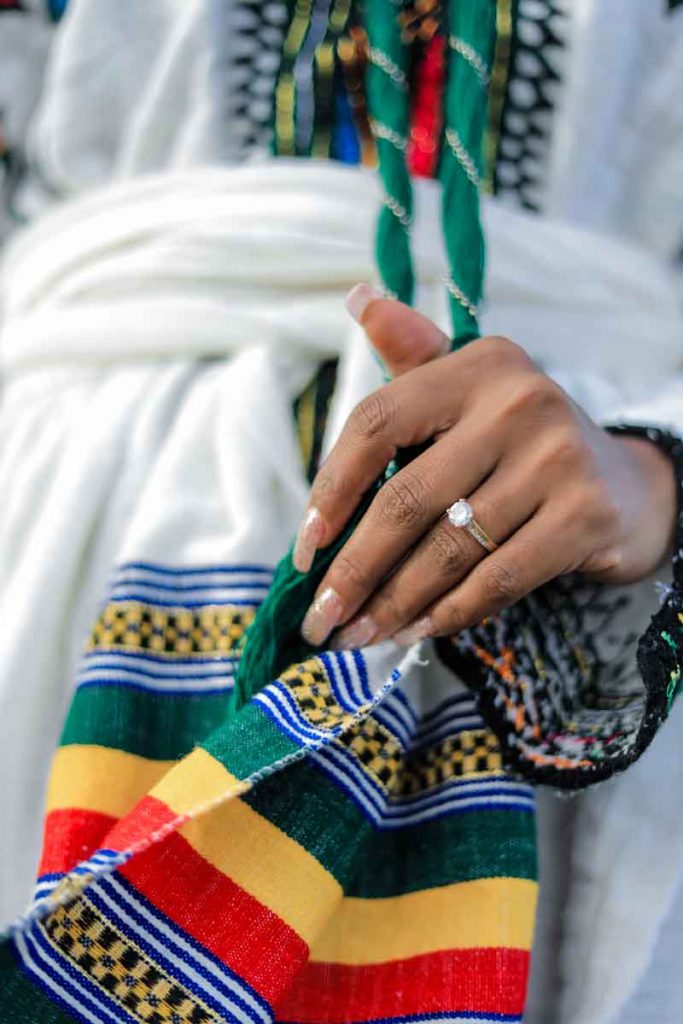
Usually, the Netela edge is decored with beautiful multicolored fabric designs called Tibeb on the edges which often have shiny silver or gold metallic threads which are the major source of its aesthetical value.

More recently, the weaver has incorporated the Tibeb design and concept into larger patterns for home decor and fashion accessories. The traditional dress for women called the Qemis, a long, white robe decorated with Tibeb on the edges and waistband in a matching design and pattern with the Netela that is worn with it.

These traditional dresses are made from Shemma along strips of woven fabric sewn together. Recently, innovative designers have been creating modern styled dresses with dyed Shemma cloth and Tibeb. Finally, Buluko holds a special place in Ethiopian clothing that is given to the groom from his mother and fathers-in-law as discussed earlier.

Meqenet is a piece of Ethiopian cultural clothes used as a belt tied around the waist on the Qemis. The cloth is about 3m in length, and its width is approximately 70 cm. Once the woman has put on the Qemis, the Meqenetis wrapped around her waist folded in half-length, and it is tied in the front.

Cloth for the Meqenetalso features the thin stripes and simple geometric line patterns. Traditionally made for the wedding gift, the bride’s family must offer the groom a buluko before marriage ceremony. These heavy wraps are also used by village chefs during important village meetings to illustrate their leadership.

The best fabric in Ethiopia is today delivered by two ethnic gatherings that live near each other in the southern good countries of Ethiopia: The Konso and the Dorze. The Dorze relocate to the enormous towns looking for different outlets for their items, which the Konso individuals once in a while do.

In Ethiopia, the even treadle loom is utilized in weaving the cotton, silk, and manufactured textures. There are various local varieties of the treadle loom. The “pit looms” is the one Dorze employments. Others portray it as the weaver is perched on the edge of the pit above which the loom is mounted and in which he works the treadles with his feet.

Interchangeably, the weaver may sit upright with his feet operating the treadles at ground level. Predominantly Male craftsmen are engaged in operating the weaving while the women are cleaning and spinning the cotton.

On the weaving, process warping is done first and it is done outside in an open and larger area. The weaver unrolls the wrapping threads which are made in the factory around eight wrapping wooden posts that are placed in the ground in two parallel rows. When the weaver roll up the threads a zigzag design is formed between the two parallel posts.

When the warping of threads is finished it is ready to be put on the loom and be used for the next step of production. The weaver takes one end of the warp threads and ties this to a post located at the front of the loom where the weaver seats at. Then the warp threads are brought around a second post, which is 2.5m beyond the back end of the loom.

Next, the weaver takes the warp threads along with them so that they can pull them through the harnesses. After this, half of the threads will be on each side of the harnesses which are then pulled through a small space of reed.

Finally, the warp threads are tangled onto the beam at the anterior part of the loom. After the loom is wrapped the threads are ready for using a material called bobbin winder (ibid) on small hollow pieces of bamboo. The weavers use three kinds of raw materials: Dir(yarn), a factory-produced warp also locally known as “Komtare”; mag, a weft which is spun by women mostly in the house and Tilet (Thread) which are factory produced colored threads used for decorative borders and edges.

Weaving Techniques in Ethiopian Cultural Clothes

The basic six steps in the production of traditional handwoven clothes are namely spinning the weft thread, warping, starching the warp thread, setting up the loom, test weaving, and weaving the final order.

A loom is a manual machine that produces different types of textile Ethiopian cultural clothes from warp and threads; this is a primary machine used in the production process of traditional weaving.

The basic purpose of any loom is to hold the warp threads under tension to facilitate the interweaving of the threads. Warping thread entails fixing cotton thread onto a bamboo tool called Qwoshere to hank it. The tips of the thread are taken from each hank and twisted into one strand and rotates creating the hank.

During the warping process, the thread is treated with tef starch which enables it to resist the tension and friction of weaving work. To create the tef starch for the treatment, one handful of tef powder is added to 10 L of hot water (80–90ºC) and boiled. The warped thread is dipped in the mixture and boiled for about an hour while it is in it.

Then excess moisture is pressed out and the thread is laid out to the sun to that it will dry. When it dries the warp is tied in the shape of a ball. The tension of the warp is checked after the thread is placed in the loom.

Then the weaver weaves several centimeters to test the weave that they are able to resist to withstand the tension created in the production process. Weaving the final piece of cloth begins after the weaver checks and adjusts warp, heddles, and a reed in ways that are required for the production.

Handwoven fabrics and textiles in Ethiopian society are used for different purposes ranging from day-to-day activities to ceremonial occasions and religious purposes. They are woven materials produced in amazing designs with rich colors and patterns which are made for both genders.

Different designs and ideas are folded into the material before dyeing and the fabric is often beaten to achieve its shiny, colorful attractive appearance. Weaving is not simply a particular way of making cloth but is inextricably bound up with structure value history and identity of the community in which it practiced. Of all the clothing and fabric produced the traditional weaving technique, some of them are discussed in brief below.

Netela Ethiopian Cultural Clothes

The way to wear the Neteladiffers depending on the religion of the wearer and also on the occasion. The Ethiopian Orthodox wear the Netelaat church, on public holidays, at weddings and funerals, and also as the Everyday.

On the other hand, Muslims wear Netelaonly at weddings and funerals. For funerals, it opened horizontally and wrapped around the body, and the remaining piece of cloth may be hung from both shoulders which are the upper parts to the lower part of the body. In general, the people of Amhara vary hanging their patterns horizontally or vertically depending on the occasion.

ethiopian woman wearing habesha kemis
Woman wearing Ethiopian cultural clothes Habesha Kemis

Qemis Ethiopian Cultural Clothes

Unlike the Netela the Qemisis formal wear for women regardless of their religion. The fabric used for the Qemis is machine-spun cotton thread for warp and hand-spun cotton thread for the weft. There is no standard for length or width of this cloth rather the woman gives the order of her cloth for the weaver and he takes the measurement of her form and height and produces it accordingly.

On the areas around the collar, the chest, the back, and part of the skirt of the Qemis have embroidery which differs according to their religion. The Ethiopian Orthodox uses a pattern of the cross and diamonds whereas and Muslims use a star and crescent pattern. Embroidery of the Qemisis done after the garment is sewn.

Gabi Ethiopian Cultural Clothes

The length of the cloth used for the Gabiis about 25 m. The cloth for the Gabiis cut into 3m and stacked, and these stacks are sewn together on one side so that it can unfold getting thinner and larger in size. Among the people of Amhara, the Gabi is widely worn irrespective of religion by both genders.

Men wear the Gabi as formal wear at funerals, during worship services, and as everyday wear and women wear them as winter clothing at home. In addition, at funerals, Gabi is used to wrapping the body of the dead, and at weddings, Gabi is given as a gift to the groom.

mekenet ethiopian traditional clothing -
Woman wearing Ethiopian cultural clothes– Mekenet

Meqenet Ethiopian Cultural Cloths

The Meqenet is a piece of cloth used as a belt twisted around the waist a woman is wearing a Qemis. These Ethiopian cultural clothes are about 3 m in length, and approximately 70cm wide. Once the woman has put on the Qemis, the Meqenet is folded in half lengthwise and twisted around the Qemis, and it connects in the front.

The fabric for the Meqenet also features thin stripes and simple geometric patterns. Just like the Qemis the Mekenet is also widely worn irrespective of religion.

culture of ethiopia -
Ethiopian cultural clothes Oromo clothing

In Oromo, hand weave just like other Ethiopian cultural clothes their products protects cold from the skin. Apart from being clothes, their products are highly linked with Oromo philosophy and cultural identity. In a social event like a funeral, market, and wedding ceremonies adult men and women wear bale and bullukkoo.

Bale is dressed by women whereas bullukkoo is worn by adult men. On the marriage ceremony, these Ethiopian cultural clothes are prepared especially bullukkoo and bale are things that do not leave. Even if a girl’s family is very poor one bullukkoo for father in law and one bale and sabbata for mother in law are mandatory.

On this day family relatives and friends give her Bullukkoo or bale which is called Gumaata meaning gift. The girl’s family should prepare Bullukkoo for husband and father in law and Sabbataa for Mather in law. The number of Bullukko and bale gave for girls on the wedding day indicates her parent status and strength.

Generally Hand-woven cotton textiles and garments are artisanal traditional crafts and craftsmanship which differ from region to region, and group to group with hundreds and thousands of different material traditions in evidence.

Hand-woven cotton garments also called shemma were traditionally worn by the Christian and Muslim populations of the northern and central highlands of Ethiopia and the central and southern highlands of the country.

Today the hand-woven cotton garments are found nearly everywhere in all part of the countries and are not only used for garments but also for household products like blankets, cushion covers and table covers.

Traditional handwoven fabrics show different socio-culture values. The fabrics also show the religious statues of the society, the nations and nationality of the groups, the age of the society also the cloths show the socioeconomic level of the group.

Traditional Weaving has various socio-cultural, economic, and religious significance and values. Costumes that participate wear in ritual activity, religious, political, and in the different cultural events are provided by local weavers.

Their products are more preferable to modern factory production, which has a great contribution to the development of the textile and fashion sectors. The local products are cost-effective, durable, thick, and propend as a socio-cultural context of users. In blessings and prayers like for God, every individual in society comes to God by wearing cultural cloth.

All ritual ceremony has its own cultural cloth or ways of dressing them. Therefore the Ethiopian cultural clothes (cultural clothes) are mandatory on these events and ceremonies and are taken as pure. On the other hand, the production does not pollute the environment or nature make it an ecofriendly way of production.

This means like the modern industry, it does not release burnt air to the environment in the process of fabric production which gives it more positive value in avoiding environmental pollution. But on the other hand, this production process is time-consuming and it takes much time for the production of a single cloth.

Therefore, the process needs to be upgraded and a faster and cheaper way of production needs to be introduced while maintaining the pollution-free way of production.

More may be found on Ethiopian Ministry of Culture and Tourism

Italy Tried the Ethiopia Colonization Twice and This Happened

0
ethiopia colonization -

Ethiopia colonization of four years has been a historic moment for Africans as well. The word colonization is synonymous with the country, and different countries in Africa took it in a unique way. This put the country on the spot again, in the chaotic political arena of the world.

It was a dream for African countries to defeats the European colonialists who had both the better weapon and experience of war and aggression. This incident stamped a new hope for countries under slavery that “Africans can win, it was a matter of perspective after all” Ethiopia colonization has been in every heart of an African people since then.

The history of colonization (only narrating about African colonization) dates back to the beginning and the expansion of the industrial revolution in Europe. All the demand to scramble Africa came from the political, economical and social needs of European imperialists. That shortly preceded the industrial revolution, in the 18th century.

The revolution was a transition from handmade techniques to mass production through pieces of machinery at a large level. This mass production of the capitalist resulted in the need for human power and a place to sell the surplus production and at the same time significant social issues developed in Europe: joblessness, neediness, vagrancy, social relocation from country territories, and more.

These social issues grew incompletely because not all individuals could be consumed by the new industrialist enterprises. One approach to determine this issue was to secure states and sell this “surplus production.” This eventually led to the foundation of colonial settlements in Algeria, Tunisia, South Africa, Namibia, Angola, Mozambique, and focal African zones like Zimbabwe and Zambia.

ethiopia colonization -
“Slave shackles” by national museum of american history is licensed under CC BY-NC 2.0 light edited To fit Ethiopia colonization

In this way, it was the summation of these financial, political, and social factors and powers that led to the scramble for Africa. The furious endeavors by European business, military, and political operators to announce and set up a stake in various pieces of the continent.

This was through business rivalry, a statement of selective territories to specific domains for exchange, the imposition of tax against another European imperialist, and claims to elite control of waterlines and business centers in various parts of the continent Africa.

This scramble reached its peak point that there were fears that it could lead to colonialist clashes and even to wars. To compromise all these situations, the German chancellor Otto von Bismarck met a strategic summit of European powers in the late nineteenth century.

This was the popular Berlin West African meeting more known as the Berlin Conference, held from November 1884 to February 1885. The meeting created a common treaty known as the Berlin Act, with arrangements to direct the lead of the European between settler rivalry in Africa.

Some portion of its significant articles were as per the following: The Principle of Notifying different forces of a regional addition, The Principle of Effective Occupation to approve the extensions, Opportunity of Trade in the Congo Basin, Opportunity of Navigation on the Niger and Congo Rivers, Opportunity of Trade to all countries and so on.

Italian long ambition to the horn of Africa was put on the table of the summit and gained acceptance by some powerful European countries that need the end of French’s vision to create an east-west colonial route in Africa.

Italian Invasion of Ethiopia -
“Detail, ‘Battle of Adwa’” by A.Davey is licensed under CC BY 2.0  (color and size modified) Ethiopia colonization war

Ethiopia Colonization First Attempt

The Italian vision for the conquering of Ethiopia colonization began at this time. The Italians first settle in Eritrea replacing Egyptian armies. A tension started on both sides and led to a battle of Dogali near Massawa port on the red sea.

This battle further led the two countries to a treaty of Wuchale, an arrangement signed between Ethiopian and Italians. On May 2, Emperor Menelik ii marked the Treaty of Wuchale with the Italians, which clearly gave them authority over Eritrea, the Red Sea coast toward the upper east of Ethiopia, as a byproduct of acknowledgment of Menelik’s standard.

But in any case, the bilateral treaty didn’t state something very similar in Italian and Amharic; the Italian version of the treaty didn’t give the Ethiopians the “noteworthy self-rule” composed into the Amharic translation.

The previous content built up an Italian protectorate over Ethiopia. However, the Amharic form just expressed that Menelik could contact outside forces and lead remote undertakings through Italy if he wants to.

In October 1889, the Italians notified all regarding the other European governments as a result of the Treaty of Wuchale that Ethiopia was presently an Italian protectorate, and accordingly. The other European countries couldn’t lead political and diplomatic relations with Ethiopia.

This was the main reason for the battle of Adwa to broke out between Ethiopia and Italians in 1896 on which the Italian troops were defeated. Italian at the time was forced to retreat beyond the Tigray province and settle in the Eritrean territory. from that time on almost most of Eritrea was a product of Italian occupation.

Ethiopia Colonization Second Attempt

The influence of Italian occupation on Ethiopia was more dominant when the came back for the second time rather than the first Ethio-Italian war.

Menelik the second died in 1906 and the power finally was on the hand of emperor Haile Silasse through successive throne change from Lij Iyasu to empress Zewditu when Italians came back for an act of revenge.

haile selassie ethiopia colonization -
“Haile Selassie by Lucien Aigner” by weeklydig is licensed under CC BY 2.0 Ethiopia colonization

Sovereign Haile Selassie’s reign was hindered in 1935 when Italian powers attacked and involved Ethiopia. The Italian armed force, under the heading of dictator leader Benito Mussolini, attacked the Ethiopian region on October 2, 1935.

They conquered the capital Addis Ababa on May 5. King Haile Selassie argued to the League of Nations for help in opposing the Italians. In any case, the nation was officially attached on May 9, 1936, and the Emperor went into banishing.

The war was brimming with mercilessness. while the Italians utilized gas which was disallowed under the Geneva Protocol of 1922. Many Ethiopians left their lives in the invasion.

How Did Ethiopia Resist Colonization?

The emperor claimed that more than 275,000 Ethiopian troops were murdered contrasted with just 1,537 Italians, while the Italian specialists assessed that 16,000 Ethiopians and 2,700 Italians (counting Italian pioneer troops) passed on in battle.

Some 78,500 nationalists (guerrilla warriors) kicked the bucket during the occupation, 17,800 regular citizens were executed by the flying machines and 35,000 individuals were killed in military camps. And In the end, the city of Addis Ababa lies in the hand of the Italians.

Italy in 1936 mentioned the League of Nations to perceive the extension of Ethiopia: all part countries (counting Britain and France), except for the Soviet Union, voted for it. And the King of Italy (Victor Emmanuel III) was renamed Emperor of Ethiopia and the Italians made an Italian realm in Africa (Italian East Africa) with Ethiopia, Eritrea, and Italian Somalia.

In 1937 Mussolini flaunted that, with his success of Ethiopia, “revenge for Adwa” and that he had declared that he has stopped slavery in Ethiopia, a training that existed in the nation for centuries. Up to the end of 1941 Italians stayed in Ethiopia for five years even though they were not stable in a different part of the country.

During the Italian five year stay (Ethiopia colonization), they have made both positive and negative influences on Ethiopia. Starting from the massacre of the local people to construction of infrastructure and civilization.

The first unforgettable public massacre which locally known as Yekatit 12 happened in 1937 following an attempt to kill Italian general Rudolf Graziani. The attempt was later a reason for the loss of more than 30,000 thousand Addis Ababa city civilians, which was 20% of the city population at the time.

Starting from that time a huge mistrust was formed between Italian governors and the local civilians in a different part of the country. That’s why Italians start to build up their own settlement areas without intervening in the local peoples of the area.

Funny description of Ethiopia colonization

The current Kazanchis & Piassa in Addis Ababa, “ferenge Arada” in Jimma and another Piassa in Gondar are an example of this.

Mussolini at the time supported a huge number of jobless Italians to emigrate to the new African states, while numerous different Italians lived there for shorter timeframes, either during military assistance or while assisting with building the provincial foundation.

Italy Influence and Ethiopia Colonization

These settlers assisted with making a particularly provincial design in Italian East Africa, some of which despite everything endures today. Italian organizers spread out new urban focuses utilizing straightforward, fundamentalist style road formats, and raised new open structures proposed to speak to the intensity of the fascist system.

The Italian pioneer focus of Asmara in previous Ethiopia (now Eritrea), Piassa in Addis Ababa, Gondar, Jimma, and Harar are evidence of Italian fascist-style urban design. And a mark of the architectural intervention was made to cities where Italians have been there.

Since most of the architectural buildings and infrastructures made by Italians survived for many decades anything that survives long is said to be made by Italians. And someone may joke on an old property saying it to be made by Italians long years before.

The aviation industry is another sector on which the Italians left their mark. A new air link between those three Italian empires, the Eritrea the Somalia and Ethiopia were established.more over a new air route was established between the city of Rome and Addis Ababa.

A new railroad was also part of this huge physical infrastructure manifestation. Especially the commercial route between the port of Djibouti and Addis Ababa is still well known today.

While their stay for construction and military assistance those with power and capital seizure local land around the city and turn it to farmland by employing the locals as a worker which later passed to the locals when the Italians leave the country.

The main influence, besides the manifestation of physical infrastructure, as a result of any colonization is cultural influence. Any colonialist wants to burden up their own culture on the local people so as to make the conquest successful.

During their stay, besides the construction of physical infrastructure Italians have introduced a new way of lifestyle and some of their language to the local people. The entertainment sector was revolutionized during the Italians stay. cinemas, theaters, and restaurants become to flourish at the hub of their settlement.

Night bars start to become popular at the time. Even nowadays the local peoples blame Italians for spreading prostitution in Addis abba and other cities in the country. Different words have also been borrowed from Italians. Words like bandira, bambuwa, pasta, forjo,bira, and so on are an example of this.

Briefly, the Italians have left a footprint in architecture, infrastructure, and lifestyle of the local people.

Ethiopia colonization cover “Battle of Adwa by A. Davey” licensed under CC BY 2.0 Ethiopia colonization Edited by gorebet

The Complete Guide to the Historic Ethiopia Axum

0
yeha ruines
"Ruínas de Yeha, Etiópia" by Samuel Santos is licensed under CC BY-NC-SA 2.0

The city of Ethiopia Axum was the capital of an old domain. It ranged on what is currently northern Ethiopia, some portions of Sudan, and current Yemen.

Situated along the Red Sea, the realm was a significant gathering purpose of social and business interests.

Axum’s numerous obelisks worked as landmarks to its numerous lords, stay remaining in the present day and fill in as a demonstration of the social accomplishments of that time.

The name Axum, or Axum may get from a mix of two words from neighborhood dialects, the Agew word for water, and the Geez word for official, Shum.

The water reference is most likely because of the nearness of huge old stone storages in the territory of the capital at Ethiopia Axum.

The town was at one time the focal point of an incredible old human advancement. It is known to have been the home of the Queen of Sheba and is accepted by some to house the Ark of the Covenant.

Despite Ethiopia Axum’s present condition of destitution, it was previously a city recognized by a greater force. The previous development whose roots go back to 100 B.C.E. was once well off from the exchanging of ivory, fascinating creature skins, and gold with different nations.

Ethiopia Axum’s political rulers utilized its recently discovered force, picked up from exchanging, to manufacture a concentrated express that firmly controlled its society.

It was the principal sub-Saharan African state to make its coin and, around 350 CE, the first to authoritatively embrace Christianity. Axum even made its writing, Geez, which is still being used in Ethiopia today.

yeha ruines
“Ruínas de Yeha, Etiópia” by Samuel Santos is licensed under CC BY-NC-SA 2.0

Rise and Fall of Ethiopia Axum Kingdom

Axum was recently thought to have been founded by Sabaeans, in the southwest of the Arabian Peninsula. Most researchers agree that before the Sabaeans, an African settlement by the Agaw individuals and other Ethiopian gatherings had existed in the domain.

The Sabaean impact is currently thought to have been minor, constrained to a couple of territories, and vanishing following a couple of decades or a century, maybe speaking to an exchanging or military province. The settlers were Christians at the time.

The realm of Ethiopia Axum started to flourish from the first century CE on account of its rich farming terrains, reliable summer storm rains, and control of the provincial exchange.

This exchange organize included connections with Egypt toward the north and, toward the east, along the East African coast and southern Arabia. The realm of Ethiopia Axum truly began to take off around 350 CE.

The Axumite Empire is outstanding for various accomplishments, for example, its letters in order, the Geez letters, which was, in the long run, changed to also include vowels Furthermore, in the early occasions of the kingdom.

The Kingdom of Ethiopia Axum had an intricate social pecking order and its urban communities had expounded settlement designs. The stratified society had an upper world-class of rulers and nobles, large portion of the poor were presumably skilled workers or ranchers.

The ruler is depicted as “Lord of Kings” which may propose that there were other, junior rulers in remote pieces of the realm which the Axumites slowly took over.

Archeologists have revealed archives and tombs which recommend that the first-class delighted in excessive entombment works on, including funerary landmarks known as Stelae.

In the mid-fourth century CE, Nubia, with its capital at Meroe, attacked Ethiopia Axum from the north, on account of a disagreement regarding control of the locale’s ivory exchange.

The Axum ruler Ezana I respond to the situation was with a great force. When powerful Nubia, as of now debilitated by overpopulation, overgrazing, and deforestation, was before long overthrown and separated into three separate states: Faras, Dongola, and Soba.

This breakdown left the path clear for Ethiopia Axum to overwhelm the area. The time known as a golden age was under the reign of king Ezan(320 and 360 AD) which adopted and converted his country to Christianity.

The location of Axum was in between the Mediterranean Sea and the Red and the Arabian Sea, this has tremendously helped Axum by allowing taking over the international trade.

The Ethiopia Axum military did incredible endeavors and was known all through the world to utilize iron apparatuses lances and shields in a fight. Their military procedure additionally uses wild animals, for example, elephants to win over the opposite side and were successful in numerous fights.

Queen of Sheba is assumed to be from Axum. How the Empire has established beginnings from the sovereign of Sheba going to see Solomon in Jerusalem in the wake of thinking about his insight and when she was there he was charmed by her greatness.

How the Empire has founded starts from the queen of Sheba going to see Solomon in Jerusalem in the wake of knowing about his knowledge and when she was there he was enchanted by her excellence.

Ibn al-Malik also called Menelik is the child of King Solomon and Queen of Sheba. And said to have ruled the Solomonic Dynasty. Kings of the Axum Empire all are said to be descendants from Menelik. His birth is what settled the domain for the kings of the Ethiopia Axum kingdom.

There exist various theories about why the realm has fallen and led people of Axum to go into the highlands. In the range of 632 and 750 Islamic intruders defeated major domains in the Mediterranean world, spreading their religion as they went.

Axum ensured Muhammad’s family and a group of followers during their ascent to control. Holding control of that coastline empowered Ethiopia Axum to remain an exchanging power. After a time, however, the intruders held onto solid footings on the African coast too.

In 710 Aduli’s was destroyed. This success cut Axum off from the significant ports along both the Red Sea and the Mediterranean. Accordingly, the realm declined as a worldwide exchanging power.

Historians say that the atmosphere changes must have incredibly added as far as possible to Axum fall. As worldwide benefits from the trade organize declined, Ethiopia Axum lost its capacity to control its crude material sources, and that system crumbled.

The outcome was a flood of soil disintegration that started on a nearby scale around 650 and achieved and turned to disastrous after 700. These are assumed to be parts in declining support, crumbling and fractional relinquishment of minor yield land, movements to ruinous peaceful misuse, and possible discount and irreversible land corruption.

The Axumite Empire finished with the last King, Dil Na’od who was crushed by his previous General Mara Takla Haymanot who established the Agaw Zagwe tradition.

Ethiopia Axum started to ascend in control and grow around 100 CE, arriving at its top around 350 CE. It kept on administering the locale until around 940 CE when it was vanquished by a remote sovereign. After a time of agitation, the Zagwe Dynasty assumed responsibility for the locale.

Aksum -

Trade and Coinage of Ethiopia Axum

Axum was situated to turn into a significant focus of exchange. Shippers would go from focal Africa, Persia, India, and Egypt carrying their merchandise to Axum to exchange. Axum approached a few distinctive exchange courses, for example, the Red Sea, the Gulf of Aden, and the Nile River. The nearness of Mediterranean amphorae at Axum destinations shows that such merchandise as wine and olive oil were additionally imported.

The significant port city of Axum was the city of Adulis, which was arranged on the shoreline of the Red Sea. Vendors in Adulis exchanged a wide assortment of items including salt, gold, ivory, diamonds, material, glass, and olive oil. A few dealers would go from removed terrains, for example, the Roman Empire and India to obtain products at Adulis.

The major exportation of Ethiopia Axum was products mainly from agriculture. The land was fruitful during the hour of the Axumite kingdom, and the chief harvests were grains, for example, wheat and grain.

The individuals of Axum likewise raised cows, sheep, and camels. Wild creatures were pursued ivory and rhinoceros horns. The realm was rich with gold and iron stores, and salt was a plenteous and broadly exchanged mineral. The empire imports items such as cloth, glass, copper, iron, wine, oil, and olive.

One evidence for the existence of this great trade establishment with the other countries is the production of coins. It is known that the first Axumite coins were planned for worldwide exchange.

These coins, showing the name of King Endybis (c. 270/290 C.E.), were, for the most part, struck in gold and silver and kept the weight standard which existed in the Roman Empire. At first, the images of the bow and plate, which were basic to the religions in South Arabia to which Aksum followed, were utilized on early Axumite coins.

In any case, after the change of King Ezana around 340–356 C.E., the lord offered an incredible expression by supplanting the current images with a cross which plainly signified the significance that Christianity presently had in the realm.

The coins likewise had a representation of the ruler on the front-side and opposite of the coin alongside Teff, a nearby kind of wheat. Engravings were another type of data remembered for the coins. Another type of coin that has been discovered is characterized by an enormous cross on the opposite side of the coin symbolizing Christianity.

This occurred during the fourth century when King Ezana Converted His religion. The old strict images of the sun and the moon never again showed up on coins and were supplanted with a cross, which was augmented throughout the years.

Aksum Empire- church and stales -
“File:Obelisken in Aksum (6821531495).jpg” by Martijn.Munneke from Netherlands is licensed under CC BY 2.0

Religion and Culture in Ethiopia Axum

Axumites had a different religion and culture over time. They included the Arabs who passed the Red Sea and then into Africa and a group of Kushite people that settled among the society.

As the realm extended and turned into an incredible exchanging focus, it pulled in individuals from everywhere throughout the old world. Before its transformation to Christianity, the Ethiopia Axumites had a polytheistic religion assumed to be religion from southern Arabia.

Before changing religion over to Christianity King Ezana II’s coins and engravings show that he may have believed in the divine beings Astar, Beher, Meder/Medr, and Mahrem. Another of Ezana’s engravings is unmistakably Christian and is descriptive of “the Father, the Son, and the Holy Spirit”.

Steve Kaplan, a professor on African studies, assumes that Ethiopia Axum culture was altogether affected by Judaism, saying that “The principal bearers of Judaism arrived at Ethiopia between the rule of Queen of Sheba BC and transformation to Christianity of King Ezana in the fourth century AC.”

He is convinced that even though Ethiopian custom proposes that these were available in huge numbers, that writings and people in the social and political focus could have had a great effect. And that their impact was diffused all through Ethiopian culture in its developmental period.

When Christianity grabbed hold in the fourth century, a considerable lot of the initially Hebraic-Jewish components had been embraced by a great part of the indigenous populace and were never again seen as remote attributes.

Nor were they seen as in struggle with the acknowledgment of Christianity. Judaism likewise affected the realm greatly. A gathering of individuals from the district called Beta Israel has been depicted as “Black Jews.”

Although their sacred writings and supplications are in Geez, as opposed to in Hebrew, they follow their faith that is in Torah which is the religious writing for the Jewish. Somewhere in the range of 1985 and 1991, nearly the entire Beta Israel populace of Ethiopia was moved to Israel.

Axum’s unique heritage is the product of cultural exchange and religious influence. Ethiopia Axum is maybe most eminent globally for its solid Stelae, raised during the third and fourth hundreds of years A.D. as funerary markers.

To the believers of the Ethiopian Orthodox Church, it is where the Ark of the Covenant was brought by Menelik I, child of the Queen of Sheba and King Solomon of Israel. When Menelik grew up he asked who his dad was and after finding it was King Solomon the Menelik went to see him.

Menelik remained with Solomon for a long time yet was approached to leave when the Israelites. When Menelik was sent away, He was joined by the oldest child of the priest, Azariah, and 1000 individuals from every one of the 12 clans of Israel.

Be that as it may, before they left, Azariah had a fantasy instructing him to take the Ark of the Covenant with him. Azariah took the Ark from the sanctuary with Menilik and supplanted it with a duplicate and afterward carried it to the new location which is Axum. Currently, it is believed that it is located inside Axum Tsion Church.

Christianity was initially confined to Aksum’s imperial top society. In the later fifth century, it was spread to the general people through teachers migrating into Ethiopia from the Eastern Roman Empire.

These Evangelizers fled to the Ethiopian Orthodox Church because, together with the Alexandrian church, it kept on keeping up the Monophysite regulation after it was marked unorthodox in 451 by the Council of Chalcedon.

(The argument about Monophysitism was doctrinally worried about differences over the idea of Christ’s status as both God and a Man). It came to have strong political and social hints and was made worse by the rival between Rome, Constantinople, and Alexandria.)

One mark Ethiopia Axumite kingdom left is the steles. Axumites built up a one of a kind design, they put no mortar on the stones used to develop immense illustrious royal residences and open structures. Rather, they cut stones to fit together firmly. Enormous stone columns were raised as landmarks or tomb markers. The carvings on the columns are portrayals of the design of the time.

The Kingdom of Axum had an intricate social pecking order and its urban communities had expounded settlement designs. The stratified society had an upper world-class of rulers and nobles, large portion of the poor were presumably skilled workers or ranchers.

The ruler is depicted as “Lord of Kings” which may propose that there were other, junior rulers in remote pieces of the realm which the Axumites slowly took over. Archeologists have revealed archives and tombs which recommend that the first-class delighted in excessive entombment works on, including funerary landmarks known as Stelae.

Conclusion, Ethiopia Axum

The decline of the Ethiopia Axumite Empire didn’t mean the decline of Aksumite culture and conventions; the engineering of the Zagwe tradition at Lalibela and Yemrehana Krestos Church shows Ethiopia Axumite impact.

The main character of Axum Kingdom is the obelisk, coins, and tombs, this character is what shows the rise and fall of the empire and the living system of the society.

The Ethiopian Orthodox Church outlived human advancement and has stayed a crucial base for the Arts and monuments that are still standing.

Cover image: “DSC01710” by Samuel Santos is licensed under CC BY-NC-SA 2.0, Adapted, color changed

Is Ethiopia a Poor Country? GDP of Ethiopia and the Economy

0
addis ababa at night

In the following article, we’ll see the capita per financial gain or the gross domestic product of the Federal Democratic Republic of Ethiopia (GDP of Ethiopia).

We see the economy and the GDP of Ethiopia have evolved through the years regarding the history of the Ethiopian economy, the event challenges that affect the Ethiopian economy, this gross domestic product growth and economy, the cross border trade, and its impacts.

Ethiopia is found within the Horn of the continent, near to the center East and its markets. Bordering African country, Somalia, Kenya, South Sudan, and Sudan, which may be the middle of the economic bridge between the Arabs and Asia to the complete horn of the continent.

The Federal Democratic Republic of Ethiopia is inland and used Djibouti’s main port for the last twenty years.

Ethiopia’s location gives its strategic dominance as a great purpose within the Horn of the continent, near to the center East and its markets. Bordering African country, Somalia, Kenya, South Sudan, and Sudan, the Federal Democratic Republic of Ethiopia is inland and has been victimization neighboring Djibouti’s main port for the last twenty years.

The economy of Ethiopia may be a mixed and transition economy with an outsized public sector. The gov’t of Ethiopia is within the method of privatizing several of the state-owned businesses and moving toward an economic system.

Ethiopia has one in all the fastest-growing economies within the world and is Africa’s second most thickly settled country. However, bound sectors like telecommunications, monetary and insurance services, air and land transportation services, and retail, are thought-about as strategic sectors and are expected to stay below state management for the predictable future.

Ethiopia’s location offers its strategic dominance as a jumping-off purpose within the Horn of Africa, about to the center East and its markets.

By bordering South Sudan, Eritrea, Somalia, Kenya, and Sudan. Ethiopia is inland and has been victimized by neighboring Djibouti’s main port for the last 20 years that was part of Ethiopian land. However, with the recent peace with Eritrea, Ethiopia is ready to resume accessing the Eritrean ports of Assab and port for its international trade. 

Ethiopia’s economy experienced robust growth averaging 9.9% within years from 2007/08 to 2017/18, compared to a regional average of 4.4%. Ethiopia’s real gross domestic product (GDP of Ethiopia ) growth decreased to 7.7% in 2017/18. 

The Gross Domestic Product per capita was at 1794.29 dollars in 2018, once adjusted by buying power parity (PPP). The GDP of Ethiopia once adjusted by buying Power Parity which is 10 percent of the world’s average.

In Jun 2020 Ethiopia’s Nominal GDP Per Capita (GDP of Ethiopia) is forecasted to be 1, 066.199 USD as reportable by International money – World Economic Outlook. It records a rise from the last reportable variety of 953.179 USD in Jun 2019.

Trying ahead, Ethiopia’s Nominal GDP Per Capita is projected to face at one, 411.769 USD in Jun 2024. The information is updated yearly and is categorized in CEIC below World Trend Plus’s Country Forecast – Table IMF, WEO, Gross Domestic Product, Per Capita, Current Prices: USD. The bureau report explicit the agriculture sector grew 6.7 percent that was around 2 percent within the 2015/16 budget year.

The business and repair sector grew by 18.7% and 10.3% severally. “In the time market rate the expenditure facet GDP of Ethiopia stood at 1.807 trillion birr, that is USD sixty six.2 billion with this rate of exchange,” the report explained. For the 2015/16 budget year, the GDP stood at one.

5 trillion birr, with maybe a growth of 17.2 percent, the commission report says. Per capita financial gain has conjointly up. It was explicit that a year past per capita financial gain stood at USD 863 which means it’s full-grown by 62 USD compared with the preceding year. In the 2015/16 budget year, the per capita financial gain was USD 801.

The reports were explicit that the service sector continues to have the largest share of GDP at 39 3 percent. The report shows that the service sector grew by 0.2 percent. Whereas the agriculture sector, which was stricken by El lino created up 36.3 percent. Agriculture went down from thirty 7.8% to 36.3% of the GDP (GDP of Ethiopia ).

According to the report industrial sector, which was principally dominated by the construction sector, has full-grown over service, at 1.3 percent compared to the 2015/16 budget year.

The report was explicit that the GDP of Ethiopia share of the economic sector is 24.4 percent. Government officials argued that within the past decade the country registered integer growth.

national bank of ethiopia in addis ababa
GDP of Ethiopia, recent National Bank

However, some international monetary and economic organizations and native economic specialists say the expansion isn’t that prime. But all agree that Ethiopia has been growing economically at a high rate.

At his look at the Parliament hinted that the country’s economic process for the past budget year would be between 9 and ten %. The higher economic process brought with it positive trends in economic condition reduction in each urban and rural areas.

The share of the population living below the national personal income faded from half-hour in 2011 to pure gold in 2016. The gov’t is implementing the second section of its Growth and Transformation arranges (GTP II) which can run to 2019/20.

GTP II aims to continue increasing physical infrastructure through public investments and to rework the country into a producing hub. GTP II targets a mean of 11 November GDP of Ethiopia growth annually, and in line with the producing strategy, the economic sector is ready to expand by two hundredths on the average, making a lot of jobs

GDP of Ethiopia and the Development Challenges

Ethiopia’s main challenges are sustaining its positive economic process and fast economic condition reduction, that each needs important progress in job creation also as improved governance. The gov’t is devoting a high share of its budget to pro-poor programs and investments. Massive-scale donor support can still offer an important contribution within the near-term to finance the price of pro-poor programs. Key challenges are connected to:

  • Limited aggressiveness constrains the event of producing, the creation of jobs, and therefore the increase in exports.
  • An underdeveloped personal sector, which might limit the country’s trade aggressiveness and resilience to shocks. The government’s goal is to expand the role of the personal sector by appreciates foreign investment and industrial parks to create Ethiopia’s growth momentum a lot of property. 
  •  Political disruption, related to social unrest, might negatively impact growth through lower foreign direct investment, business enterprise, and exports.

History of Ethiopian Economy

The familiar and written history of Ethiopian trade and therefore the use of coin is initiate to the Aksumite civilization. Within the book called Periplus of the Erythraean ocean mentioned that Aksum imported from foreign minerals like brass “which they used for ornaments and for cutting as money”, which they foreign “a very little cash for foreigners UN agency live there.

Around the 5th–8th century, the low plant was introduced into the Arab world from the Federal Democratic Republic of Ethiopia coffee tree, the foremost extremely regarded species, is native to the southwestern highlands of the Federal Democratic Republic of Ethiopia.

The Seventies and Eighties were an amount of political and economic turmoil in the Federal Democratic Republic of Ethiopia. The country was semiconductor diode by the brutal leader Mengistu Haile Mariam and through his reign the country two-faced warfare, famine, and failing socialist development policies.

Following the overthrow of the, a Marxist military government ( the DERG)  nationalized all corporations and land, and by expelling foreign investors, and pursued an intensive military expenditure.

The Ethiopian economy considerably deteriorated because of the warfare and famines of the Seventies and Eighties. Since 1991, the Ethiopian government has started a program of economic reform, as well as privatization of state enterprises and rationalization of presidency regulation.

Whereas, the method continues to be in progress, the reforms have attracted much-needed foreign direct investment. Several properties owned by the govt. throughout the previous regime have currently been privatized and area unit within the method of privatization.

In 2015, the Federal Democratic Republic of Ethiopia has a pair of, 700 millionaires, variety that has over doubled since 2007.

Their fortunes area unit in the main in-built niches of economic rents like banks and mines while not finance in structural and strategic sectors and may in no means promote economic development or represent a supply of competition for Western multinationals.

Aksum -
History of GDP of Ethiopia, the Economy

The Ethiopian government is stepping up its efforts to draw in foreign investors, significantly within the textile sector. Corporations like athletic contests, H&M, and Huainan.

These corporations additionally enjoy an inexpensive working class, with a monthly wage of around thirty-five euros. Finally, trade agreements between the Federal Democratic Republic of Ethiopia and also the Common Market enable them to export exempt.

UN estimated from, 2000 to 2016, Ethiopia was the third-fastest growing country of ten million or a lot of population within the world, as measured by gross domestic product per capita. The country’s financial condition rate fell to thirty-first by 2011 (the latest year Ethiopia’s income was assessed by the planet Bank).

The outlook for the following 5 years is bright. In its latest international forecast, the UN agency projected that Ethiopian gross domestic product per capita would expand at associate degree annual pace of 6.2% through 2022 among countries with ten million or a lot more populations, solely Asian nation and Burma area unit expected to grow quicker.

GDP of Ethiopia and The Current Economic Scenario

The current gross domestic product (USD) per capita of the Federal Democratic Republic of Ethiopia shrank by forty-third within the 1990s. The economy saw continuous gross domestic product growth of a minimum of five-hitter since 2004.

Until 2013, the most important agricultural export crop was low, providing concerning 26.4% of Ethiopia’s exchange earnings. Within the starting of 2014, oilseeds exports are a lot of vital. Low is essential to the Ethiopian economy.

Over fifteen million of the population (25% of the population) derive their sustenance from the low sector. Alternative exports embody live animals, animal skin and animal skin merchandise, chemicals, gold, pulses, oilseeds, flowers, fruits and vegetables, and African tea.

Cross-border Trade

Cross-border trade by pastoralists is commonly informal and on the far side state management and regulation. In geographical area, over ninety fifth of cross-border trade is thru unofficial channels and also the unofficial trade of live cattle, camels, sheep, and goats from the Federal Democratic Republic of Ethiopia sold to the African nation.

The African nation associate degreed Djibouti generates a calculable total worth of between US$250 and US$300 million annually. This can be a hundred times of the official figure.

However, there’s additional risk like permitting malady to unfold a lot of simply across national borders. Moreover, the govt. of the Federal Democratic Republic of Ethiopia is supposedly sad with lost taxation and exchange revenues.

The Federal Democratic Republic of Ethiopia lacks adequate exchange. The financially conservative government has taken measures to resolve this drawback, as well as tight import controls and sharply reduced subsidies on retail gas costs.

All the same, the for the most part subsistence economy is incapable of supporting high military expenditures, drought relief, associate degree bold development arrange, and indispensable imports like oil.

Ethiopia’s economy is targeted within the services and agriculture sectors. The planet Bank estimates that of the10.8% average annual growth recorded by the Federal Democratic Republic of Ethiopia between 2004 and 2014, 0.5 came from services, like cordial reception and transportation that was largely a result of the country’s urbanization.

ethiopia economy -
Agriculture and GDP of Ethiopia

Agriculture, meanwhile, accounted for 3.6% of the expansion throughout the amount. Improved agriculture production was largely a result of the variation of improved seeds and chemical fertilizer, per International Food Policy analysis Institute. Producing, although a tiny low portion of the economy is burgeoning, growing at over 100 percent  p.a.

A recent study by the middle for International Development, a US company, complete that Federal Democratic Republic of Ethiopia was the foremost seemingly country in the continent to become the “New China.”

Still, the Federal Democratic Republic of Ethiopia faces a spread of problems. Although the present government has overseen a growing economy, it’s suppressed dissent, and there area unit issues it favors bound ethnic teams and regions of the country.

Over five hundred folks died in clashes between the police and ethnic teams complaining about the government’s locomotion autarchy that began in late 2015. a lot of recently, confrontations between ethnic Oromo’s and ethnic Somalis within the southeast of the country semiconductor diode to a minimum of thirty deaths and 600 displaced.

If the country is ready to beat its political instability, the economic opportunities area unit huge associate degree progressively educated population, rising infrastructure, and investments from China, provide Federal Democratic Republic of Ethiopia the possibility to keep up its place among the world’s brightest development stories.

Summary, GDP of Ethiopia and Economy

Nowadays Ethiopia’s economy is experiencing a strong growth averaging 9.9 percent a year from 2007/08 to 2017/18, compared to a regional average of 5.4 percent. Now Ethiopia’s real gross domestic product (GDP of Ethiopia ) growth decelerated to 7.7 percent in 2017/18.

Ethiopia’s Per capita income is rising. This stated that before one year per capita income of Ethiopia stood at USD 863 meaning that it has grown by 62USD compared with the preceding year. In the 2015/16 budget year the per capita income was estimated to be USD 801.

Ethiopia’s 2020 Nominal GDP Per Capita (GDP of Ethiopia ) is estimated to be 1,066.199 USD. It is an increased record from the last year’s reported number of 953.179 USD in Jun 2019.

Best Sports Betting Ethiopia Sites

1
betting in ethiopia -

If you are looking for Betting Ethiopia sites, it is not a new phenomenon anymore. The beauty of sports is that you can log on to the internet and bet on the result while watching the fast-paced action. And, thanks to the internet’s massive online sportsbook, punters can bet on their favorite event no matter where it takes place or when it takes place. However, making a substantial profit from sports betting is more difficult than it seems, particularly if you are unfamiliar with the fundamentals of online betting.

However, since finding value is a key component of making money from sports betting, as a player, you must seek out places that offer the best odds. Although there are many legal and trustworthy online betting sites, there are also some that are dangerous. As a result, punters must conduct due diligence on the platforms on which they wager to avoid losing their hard-earned money to dubious betting websites. Make sure you compare the odds offered by various sites before deciding to put a wager. Here are some of the best sports websites in Ethiopia to get odds if you want to make a killing from sports betting.

To ensure that gambling has a positive impact in Ethiopia, the government, through the National Lottery Administration, has mandated that all companies in the sector contribute 20% of their income to fund sporting clubs and institutions.

Ethiopians who wanted to bet had to settle for foreign sports betting sites, which included some of the world’s most well-known brands, until recently. The Ethiopian government has yet to pass legislation governing betting on international sites, prompting many people to use several providers. The Ethiopian betting industry is currently experiencing rapid expansion, as evidenced by the proliferation of betting shops across the region. The retail betting market is experiencing a surge of growth, with physical shops beginning to establish themselves across the country.

betting in ethiopia -

On the other hand, the e-commerce or Ethiopian online betting industry lags far behind the retail sector, with only ten fully licensed betting companies offering sports bookings, such as Hulu Sports Betting, while physical shops have an average of around forty shops in each area of Ethiopia.

However, since finding value is a key component of making money from sports betting, as a player, you must seek out places that offer the best odds. Although there are many legal and trustworthy online betting sites, there are also some that are dangerous. As a result, punters must conduct due diligence on the platforms on which they wager to avoid losing their hard-earned money to dubious betting websites. Without a doubt, Ethiopians are passionate about football, which has resulted in the country being the most popular place to place sports bets. Make sure you compare the odds offered by various sites before deciding to put a wager.

Here are some of the best sports websites in Ethiopia to get odds if you want to make a killing from sports betting.

1. Betika Betting Ethiopia

Betika is a plain-looking app with only the most basic sports betting features, but they do have a sizable football jackpot, which might entice many punters. Only two sporting codes are available on the portal, with football and basketball being the most common. Football is a huge moneymaker in Africa, and Betika is no exception.

betika betting ethiopia

Many Ethiopian betting sites tend to run in their local language, but Betika provides an English version. The platform is very plain, and with just a few sporting codes and bet markets, there isn’t much in the way of color, graphics, or a pleasing interface. However, when it comes to sports betting, the football jackpot action and the scale of the pay-out are often the only factors to consider, and they have it right in this department.

The Daily Jackpot connection does not provide a service, but the weekly football jackpot has a bonus pool of 1.5 million birrs. A register and log-in tab take up the majority of the home page. A tiny tab with the word ‘deposit’ on it guides the player through the process of replenishing their Betika wallet. There is also a small tab with the bet slip, but unlike almost all other betting sites, the bet slip is not available, and the player must click on the link to see possible wins, stake numbers, and other information.

Betika Betting Ethiopia

2. Hulusport Betting Ethiopia

Hulusport Betting is the pioneer betting company in Ethiopia and offers up to 7500 odd rates. It also includes local leagues in its portfolio. Their Ethiopian online betting platform is well built and easy to use. Hulu Sport offers a maximum winning lottery of 64,000 ETB/1,882 USD, with their maximum winning cap at 300,000 ETB/8,823 USD.

hulu betting ethiopia

Hulusport is one of the best online betting sites in the world, and although it does not live up to the standards of many other African brands, it still has a professional look and a sizable football market. There are no other sports on which to wager, and soccer dominates the landing page and all subsequent page links. There is no discernible football jackpot, but there is a market for leagues all over the world, so the action is still new and important. They have markets for all of the big European leagues as well as games from all over the world.

Hulusport Betting Ethiopia

3. Anbessa Sports Betting Ethiopia

Anbessabet.com is one of the best online betting sites, and while it only provides a bet, market, and general look and feels for football, the layout, and overall look and feel are professional. Anbessa Bet currently provides two methods of depositing funds into your betting account. These are done with Amole or Hello Cash.

Anbessa Bet has a wide football market with action from leagues all over the world, such as the Premier League, Bundesliga, Champions League, Europa League, Serie A, La Liga, Ligue 1, and Eredivisie. The football leagues are listed on the left-hand side of the main landing page. The majority of the landing page displays the most recent matches available each day, which range from obscure action to elite league games. The bet slip is positioned at the top of the landing page’s right-hand flank.

Anbessa Sports Betting Ethiopia

Abyssinia betting Ethiopia

4. Abyssinia Betting Ethiopia

Abyssiniabet provides large win amounts in comparison to the competition, and the platform is professional-looking, with an impressive layout given the market’s scale.

Abyssiniabet’s main landing page features a menu directory with options such as “start,” “prediction,” “results,” “rules,” and “language shift.” The landing page is crammed with banners promoting the new football jackpot action from the Bundesliga, EPL, La Liga, and Ligue 1 leagues around the world.

Punters will win millions of Birrs in their ‘Bet on Football’ play, according to a broad banner. The idea is simple: select a league, make predictions about matches, and put a wager. No connection or icon is indicating how to log in or where to sign up, but the Abyssinia bet app should have this detail. To play online, a player must first register and create a Hello Cash account, according to the site’s rules.

Abyssiniabet Betting Ethiopia

5. Galaxy Betting Ethiopia

The online sports betting scene in Ethiopia is dominated by foreign-based brands, and glxwin.com is one of the most successful, ranking 11ths in the country according to data research. It’s difficult to assess an international betting platform when taking into account local variables such as currency and a wide set of sporting codes that the general public is ostensibly unaware of… However, the platform offers almost all of the sports that a top sportsbook might.

Glxwin does not have all of the bells and whistles of virtual play, football jackpots, casino action, or promotions, but based on the betting statistics displayed next to each sporting code, the site appears to be very successful.

It’s debatable if this refers to the global market or the Ethiopian market, but it gives the impression that this is more foreign than local. For example, there are more than 50 000 active football bets, which is much more than the average for almost all African betting sites. The maximum payout for Glxwin is 500 000.

Galaxy Betting Ethiopia

betking betting ethiopia

6. Betking Betting Ethiopia

Betking.com.et is one of the best online mobile and websites on the market, with an appealing design, a large betting market, and a diverse selection of sporting codes.

Although the Betking Ethiopia platform does not offer a football jackpot, casino, or promotions, it does appear to be one of the more impressive in a low-key marketplace. A significant accumulator bonus is available, with up to a 225 percent boost on initial winnings. This is one of Africa’s biggest accumulator incentives and a key selling point.

Betking Betting Ethiopia

7. Axumbet Betting Ethiopia

With 70 000 active bets every day across all sporting codes, the networks are incredibly busy. The site is well-designed and resembles many of the continent’s leading platforms. The landing page has a well-designed layout and appearance, with the main menu directory containing all of the site’s links (however limited).

Axumbet also offers a wide variety of betting options across all sports, with football being the most common. Basketball and ice hockey has a lot of active bets, and other sports like handball, rugby, and American football are also common.

Axumbet Betting Ethiopia

8. Bet251 Betting Ethiopia

With a large sportsbook, a large bet market, and a slew of promotions, Bet251 is one of Ethiopia’s most promising betting sites. Almost every betting site in Ethiopia appears to have the same issues, such as a lack of football jackpots, virtual play, lucky numbers, or other gaming bet games, and this website is no exception.

Only a standard sportsbook and live in-play action are available on the Bet251 web and mobile sites. Both portals have an attractive exterior that is slick, professional, and well-designed. With colorful banners and an original prototype, bet251 has one of the most well-designed platforms in the region.

Here is the top Betting in Ethiopia Companies. You can beat against any sport, any club. Luck is on your way. Play responsible.

Bet251 Betting Ethiopia

Find More

  1. addis bet
  2. aditbet
  3. anbessa betting
  4. axsum bet
  5. galaxy betting
  6. forebet today
  7. habesha bet
  8. hulusport betting
  9. zulu bet
  10. Winner betting ethiopia

More: Ethiopian Holiday

addis bet, aditbet, anbessa betting, best football prediction, betting, betting in ethiopia, football prediction for tomorrow, football predictions today, fore bet, galaxy betting, galaxy betting ethiopia, habesha bet, habesha bet ethiopia, habesha bet sport, habesha sport betting ethiopia, habesha sports betting, hulusport betting, tipsbet, today football match prediction, vitibet, windrawwin, www axum bet

Addis Ababa Weather

0
the ethiopia weather sun rise

Addis Ababa Weather is directly or indirectly associated with topography and location. The Addis Ababa lies on 2350 m above ocean level In Addis Ababa, the atmosphere is warm and calm. The summers are a lot rainier than the winters in Addis Ababa.

This area is delegated by Cwb by Köppen and Geiger. The normal yearly temperature in Addis Ababa is 16.3 °C | 61.4 °F. Precipitation here is around 1143 mm | 45.0 inches every year.

The driest month is November There’s 8 mm | 0.3 inches of precipitation in November. The best measure of precipitation happens in August, with a normal of 263 mm | 10.4 inches.

The capital, Addis Ababa, is arranged at 2,300 meters (7,500 ft) over sea level, in any case the rise within the different regions of the city ranges from 2,100 to 2,700 meters (7,000 to 9,000 ft), and features a smooth environment.

Evenings are cool, even cold from November to February, when lows dip under 10 °C (50 °F), while days are agreeably warm, around 23/25 °C (73/77 °F), with the exception of in July and August, at the tallness of the stormy season, when highs drop to around 20 °C (68 °F). The period from Walk to May, as habitually happens in Ethiopia, is the sultriest of the year, yet by a couple of degrees.

Consistently, 1,200 mm (49 in) of downpour fall, with a most extreme from June to September, which is the main surprisingly blustery period. From November to February, there is little downpour, and uncommon showers happen; from March to May, evening showers become more continuous, happening for 6/7 days of the month, while in July and August, they happen on normal each other day.

The measure of daylight in Addis Ababa is acceptable from October to May, while in the blustery season, from June to September, the daylight hours decline, and particularly in July and August, the sky is regularly shady.

In a few urban communities orchestrated on the level, the climate is like that of Addis Ababa, with varieties because of elevation and position. The rainiest piece of the level is the western one: in Gore, 2,100 mm (83 in) of downpour fall every year, and it rains a great deal from April to October included. In Gondar, situated in the north-west at a height of 2,000 meters (6,500 feet), the temperature is somewhat higher than in Addis Ababa.

The precipitation adds up to 1,100 mm (43 in) every year, conveyed similarly as in the capital. In Bahir Dar, at 1,800 meters (5,900 ft) above ocean level, 1,400 mm (55 in) of downpour fall, of which up to 430 mm (17 in) fall in July; here, precipitation is upgraded by the waters of Lake Tana, from which the Blue Nile starts; the waterway offers ascend to astounding cascades close Tissisat.

Addis Ababa Weather, Climate and Temperature

Addis Ababa, Ethiopia is at 8°58’N, 38°47’E, 2324 m (7625 ft).

Addis Ababa has a moist subtropical gentle summer atmosphere that is mellow with dry winters, mellow blustery summers, and moderate regularity. This atmosphere is typically found in the good countries of some tropical nations. (Köppen-Geiger characterization: Cwb).

According to the Holdridge life zones arrangement of bioclimatic order, Addis Ababa is arranged in or approach the subtropical wet woods biome.

The mean yearly temperature is 15.9 degrees Celsius (60.7 degrees Fahrenheit). See the temperatures page for a month to month breakdown and the fixed scale chart.

Average month to month temperatures change by 3 °C (5.4°F). This demonstrates the continentality type is hyper oceanic, subtype genuinely hyper oceanic.

In the wintertime, records show temperatures by day arrive at 23.3°C (74°F) on normal tumbling to 7.3°C (45.2°F) medium-term.

In springtime, temperatures climb arriving at 24.7°C (76.4°F) for the most part toward the evening with medium-term lows of 10.7°C (51.2°F).

During summer normal high temperatures are 21°C (69.8°F) and normal low temperatures are 10°C (50°F).

Come harvest time/fall temperatures decline accomplishing normal highs of 22°C (71.6°F) during the day and lows of 8.3°C (47°F) for the most part not long after dawn.

Total yearly Precipitation midpoints 1089 mm (42.9 inches) which is identical to 1089 Liters/m² (26.71 Gallons/ft²).

On normal, there are 2439 hours of daylight for every year. Visit the daylight and light segment to check month to month subtleties remembering how high for the sky the sun arrives at every month.

Were you to tunnel down through the focal point of the Earth from Addis Ababa you would spring up closest to the atmosphere station at Altoona, French Polynesia where you would locate a Tropical wet atmosphere.

Addis Ababa Weather: Average Temperature

With a normal of 18.0 °C | 64.4 °F, May is the hottest month. The most reduced normal temperatures in the year happen in November, when it is around 14.8 °C | 58.6 °F.

The precipitation changes 255 mm | 10 inches between the driest month and the wettest month. The variety in temperatures during the time is 3.2 °C | 37.8 °F.

What Amount Does it Downpour in Addis Ababa Weather?

Consistently, in Addis Ababa, there are 132 precipitation days, and 1165mm (45.9″) of precipitation is amassed.

What are the hottest months in Addis Ababa Weather?

Hottest months in Addis Ababa are March through May, with a normal high-temperature of 25°C (77°F).

What is the Coldest Month in Addis Ababa Weather?

August is the coldest month in Addis Ababa, Ethiopia, with a normal high-temperature of 20°C (68°F) and a normal low-temperature of 12°C (53.6°F).

What is the Rainiest Month in Addis Ababa Weather?

August is the month with the most precipitation. Downpour falls for 26 days and aggregates 290mm (11.4″) of precipitation.

What is the driest month in Addis Ababa?

Addis Ababa weather: November and December are a long time with minimal downpour in Addis Ababa when the downpour falls for 1 days and ordinarily totals up to 7mm (0.3″) of downpour.

  •              The average high temperature in January: 23°C
  •              The average high temperature in February: 24°C
  •              The average high temperature in March: 25°C
  •              The average high temperature in April: 25°C
  •              The average high temperature in May: 25°C
  •              The average high temperature in June: 23°C
  •              The average high temperature in July: 21°C
  •              The average high temperature in August: 20°C
  •              The average high temperature in September: 22°C
  •              The average high temperature in October: 23°C
  •              The average high temperature in November: 23°C
  •              The average high temperature in December: 22°C

Addis Ababa weather: Hottest months (with the most elevated normal high temperature) are March, April and May (25°C). The month with the least normal high temperature is August (20°C).

  •              The average low temperature in January: 9°C
  •              The average low temperature in February: 9°C
  •              The average low temperature in March: 11°C
  •              The average low temperature in April: 12°C
  •              The average low temperature in May: 13°C
  •              The average low temperature in June: 12°C
  •              The average low temperature in July: 12°C
  •              The average low temperature in August: 12°C
  •              The average low temperature in September: 12°C
  •              The average low temperature in October: 10°C
  •              The average low temperature in November: 8°C
  •              The average low temperature in December: 8°C

The month with the most elevated normal low temperature is May (13°C). Coldest months (with the most minimal normal low temperature) are November and December (8°C)

Addis Ababa weather: Normal stickiness Addis Ababa, Ethiopia

  •              Average stickiness in January: 47%
  •              Average stickiness in February: 51.5%
  •              Average stickiness in March: 47.5%
  •             Average stickiness in April: 54.5%
  •              Average dampness in May: 53%
  •              Average dampness in June: 67.5%
  •              Average dampness in July: 79.5%
  •              Average dampness in August: 79%
  •              Average dampness in September: 71.5%
  •              Average dampness in October: 47.5%
  •              Average dampness in November: 48%
  •              Average dampness in December: ss5.5%

The month with the most noteworthy relative stickiness is July (79.5%). The month with the least relative dampness is December (45.5%).

Normal precipitation Addis Ababa Weather

  •              Average precipitation in January: 13mm
  •              Average precipitation in February: 30mm
  •              Average precipitation in March: 58mm
  •              Average precipitation in April: 82mm
  •              Average precipitation in May: 84mm

Normal precipitation days Addis Ababa Weather

  •              Average precipitation days in January: 3 days
  •              Average precipitation days in February: 5 days
  •              Average precipitation days in March: 7 days
  •              Average precipitation days in April: 10 days
  •              Average precipitation days in May: 10 days
  •              Average precipitation days in June: 20 days
  •              Average precipitation days in July: 27 days
  •              Average precipitation days in August: 26 days
  •              Average precipitation days in September: 18 days
  •              Average precipitation days in October: 4 days
  •              Average precipitation days in November: 1 day
  • Average precipitation days in December: 1 day The month with the most noteworthy number of stormy days is July (27 days). Months with the most minimal number of blustery days are November and December (1 days).
  •              Average precipitation in June: 138mm
  •              Average precipitation in July: 280mm
  •              Average precipitation in August: 290mm
  •              Average precipitation in September: 149mm
  •              Average precipitation in October: 27mm
  •              Average precipitation in November: 7mm
  •              Average precipitation in December: 7mm

Addis Ababa weather: The wettest month (with the most noteworthy precipitation) is August (290mm). Driest months (with the most reduced precipitation) are November and December (7mm).

Ordinary light/Average sunshine Addis Ababa, Ethiopia

  •              Average light in January: 11.7h
  •              Average light in February: 11.9h
  •              Average light in March: 12.1h
  •              Average light in April: 12.3h
  •              Average light in May: 12.5h
  •              Average light in June: 12.6h
  •              Average light in July: 12.6h
  •              Average light in August: 12.4h
  •              Average light in September: 12.2h
  •              Average light in October: 11.9h
  •              Average light in November: 11.7h
  •              Average light in December: 11.6h

Addis Ababa weather: Months with the longest days are June and July (Average light: 12.6h). The month with briefest days is December (Average daylight: 11.6h).

  • •             Average daylight in January: 9h
  • •             Average daylight in February: 9h
  • •             Average daylight in March: 8h
  • •             Average daylight in April: 7h
  • •             Average daylight in May: 8h
  • •             Average daylight in June: 6h
  • •             Average daylight in July: 3h
  • •             Average daylight in August: 3h
  • •             Average daylight in September: 5h
  • •             Average daylight in October: 8h
  • •             Average daylight in November: 9h
  • •             Average daylight in December: 9h

Addis Ababa weather: Months with most daylight are January, February, November and December (Average daylight: 9h). Months with least daylight are July and August (Average daylight: 3).

Normal UV record Addis Ababa, Ethiopia

  • •             Average UV record in January: 12
  • •             Average UV record in February: 12
  • •             Average UV record in March: 12
  • •             Average UV record in April: 12
  • •             Average UV record in May: 12
  • •             Average UV record in June: 12
  • •             Average UV record in July: 12
  • •             Average UV record in August: 12
  • •             Average UV record in September: 12
  • •             Average UV record in October: 12
  • •             Average UV record in November: 12
  • •             Average UV record in December: 11

Addis Ababa weather: Months with the most elevated UV file are January, February, March, April, May, June, July, August, September, October and November (UV record 12). The month with the most reduced UV record is December (UV file 11).

Source: Monthly weather forecast and climate Addis Ababa, Ethiopia

Tribes Ethiopia

0
culture of ethiopia -

A nation is made up of multiple elements to be sovereign, strong, and competent in the world arena. Tribes Ethiopia makes up most of the proportion compared to the other elements because that’s what makes a nation unique and special regarding language, culture, and tradition.

Ethiopian is well known for its diversified ethnic group’s settlement across the country. This ethnic group may arise out of many major tribes.

There are about 83 ethnic groups in the country which make the country one of those few countries that own multiple languages, culture, and traditions. In Africa, there are also so many tribes Ethiopia and ethnic groups.

Ethiopia is the second diversified and populated country in the continent next to Nigeria. Nigeria is the most diversified and populated country in the continent, there are more than 200 ethnic group and tribes Ethiopia which make the country rich in culture, language, and tradition.

Ethiopian custom, language, tradition, way of life and so many cultures is the combined output of each tribe.

Tribes Ethiopia: Culture

Nowadays there are some major foods, language, and cultural cloths which serve as the national icon and symbol which initially may be owned by some tribes. So, in the process of building a nation, tribes Ethiopiacontribute a lot of culture and tradition to be called the country as a whole.

It might be very hard to determine the real number of each tribe and
ethnic group in the country. Some of them are very small, for instance, their number could fall between 100 and 1000. Whereas the others have a population in millions.

The other factor which makes the determination of the number hard is their way of life. Many ethnic groups are nomadic and have no contact with the government and the rest of the world as well.

Tribes Ethiopia: Language

There are a few ethnic groups with any number of speakers and members. These tribes Ethiopia occupy more than half of the population of the country.

Oromo 34.5%, Amhara 26.9%, Somali 6.2%, Tigray 6.1% Sidama 4%, Gurage 2.5%, Wolayta 2.3% are those major groups with their population ratio.

Amhara Is the largest ethnic group next to Oromiya. One-fourth of the total population belong to this group. Their official language is the one of nation’s working languages called Amharic.

Tribes Ethiopia: Religion

It belongs to the afro Asiatic language category, the language is related to Geez which is literally the orthodox Christian language. Some scholars also relate the language with Arabic and Hebrew. They are located in the northern part of the country in a region called Amhara.

The group was highly dominant in the leading position or they were highly advanced in governing and leading the country when referred to history. The dominant religion in the region is Christianity and Islamism.

Tribes Ethiopia: Economy

About 90 % of the total population is a farmer and lives in rural
area. Corn, Malt, Barley, Sorghum, and teff are some of the major crop they produce.

Tribes Ethiopia: The Amhara

Their culture is rich in verbal folklore in the form of religious teaching
and saying, proverb, myth, and legends. This verbal folklores play a vital role in teaching and shaping society. Amhara’s family culture is patriarchal in which the male is the head of the family and take superiority over the female.

As they live in the cold and highland area their clothing is designed to
prevent heat loss. But most of them prefer to wear the native dress which is called Gabi or Netela and the naming is based on the thickness of the cloth.

The region is also well known in a cultural, historical, and religious heritage which mainly links them with the early civilization of the country. Lalibela, Fasil castle, Lake Tana, and other cultural ceremonies are few of the heritages the region owns.

culture of ethiopia -

Tribes Ethiopia: The Oromo

Oromo is the highly populated and largest ethnic group in the country.
33.8 % of the total country population is member and speaker of this group.

Afan Oromo is the language spoken in this group and it is the most widely spoken language in Africa next to Arabic, Hausa, and Swahili. The language is a family of Cushitic languages. They are located in southeastern part of Ethiopia, They also live in some part of North Kenya.

The highly developed oral tradition but they also developed their own writing system using the Latin alphabet called Qubee. The group divided into two major clans or tribes Ethiopia which are The Borena Oromo and Barentu Oromo.

The Borena Oromo is the pastoralist group and they occupy the southern part of the country and Northern Kenya. Shewa, Kafa, Illubabor, Welega, Jimma, and Sidamo belongs to the Borena Oromo. Whereas the Barentu Oromo occupied the eastern part of the Oromiya region.

Hararghe, Arsi, Ble, Dire Dawa, and other similar clans belong to the Barentu Oromo family. They have their own traditional religion called waaqeffanna but currently, there are also some other religions widely worshiped in the region.

The Oromo peoples are also known for their own governing system called the Gadaa system. The system is the icon of the tribe which makes them the first to practice democracy in the early period. The system guide and shapes the social, political, economic and cultural values of the people.

Generally, there is three main body of the gadaa system which are the General assembly (also called gmi gayo and it is the legislative body), Gadaa council (a collective member of the gadaa), and Qalu assembly (religious organ).

Ireecha is the major holiday they have and it is about thanking their god (Waqqaa) for making the season change from the rainy one to the sunny without any natural harm and accident.

Tribes Ethiopia: The Tigre

Tigray is the third largest populated tribe in the country next to oromiya and Amhara. The tribe has 4.9 million people across the region and the country.

They are located in the northern highland of the country and settled high plateau. Tigrigna is the official language of the tribe that belong to Semitic language family and it is highly related to Hebrew, Arabic and Amharic language.

Amhara tribe also developed the verbal skill of narrating history and other significant event happened in the region which has historical significance to them.

Christianity dominates in the region and it is believed the ancient Axum was the route to introduce Christianity in the country. Islamism is also another major religion in the region next to Christianity.

Most holidays in the region are related to the church calendar and
major events. Tigray is rich in cultural, historical, and traditional heritage which makes the region the most preferable and advanced route for tourism.

gurage girl

Tribes Ethiopia: The South

Southern Nations, Nationalities, and Peoples’ for short SNNPR is the most diversified and home for different unique tribes Ethiopia and ethnic group in Ethiopia.

There are over 45 indigenous ethnic groups in the region which makes it a bit hard to study the individual group because for some of the tribes in Ethiopia there are no specific documented materials. Sidama is the largest ethnic group in the region, there are about three million people in this group.

They are located in the southern part of the country around a city called hawassa. Most of the people are protestant. Sidaamu-Afoo is the language they speak. Gurage is also the other largest and populated tribe in the region and 2.5 % of the total population of the country belongs to this group.

They are located in the southwest part of Ethiopia and the tribe is known for its variety of cultural foods. Wolayta is the third most populated region in the region. There are about 1.7 million people in the region which is 2.3 % of the total country’s’ population.

There are some few interesting tribe lives in the southern part of Ethiopia as well. Mursi, Bodi, Hamar, and Surma tribes Ethiopia are one of those few interesting and unique tribes in the region. The Mursi tribe has about 7,500 people and they have a tribal lifestyle.

In general, their beliefs, language, and practice falls into a category called Animism. Many people find it odd and inappropriate to make Mursi women wear lip plate which is their strong way of showing
beauty combined with body painting.

Tribes Ethiopia: Hamar

The Bodi tribes Ethiopia are located near to or same place where the Mursi people reside. They have a ceremony of choosing the fattest man of the year and to be champion of this ceremony most men spend their time eating foods with high calories to get fat and be the champion.

Usually, this event takes place around June. Hamer is another
the tribal clan who also lives in the southern region of the country.
Most tourists and Ethiopian are familiar with the name hammer and their tradition and culture as well.

One of their unique and interesting tradition is bull jumping. Bull-jumping is a ceremony which men do to show and test age transition. The Surma tribe is also a tribal clan who has a similar lifestyle
with the above-mentioned tribes Ethiopia.

All the above tribes Ethiopia live in a similar way; they have a traditional lifestyle and maintain their life by raising goats and some other cattle.

afar man smoking ciggarate

Tribes Ethiopia: The Afar

Afar tribe is the other highly populated clan in the country. They are located in the northeast part of Ethiopia in a region called afar. Their official language is afar language and it is Cushitic family language.

Almost all people of this tribe are Islam. They live a nomadic lifestyle and raise cattle and camels. Their land is extremely arid consisting of stone and sand. Culturally their tribe is classified into two subclasses which are The Asaimara and the Adoimara.

The former one is commonly known as a red class consisting of a noble and highly respected members of the clan. The later one
also known as the white class which consists of the common dweller of the tribe.