Home Blog Page 8

Currency for Ethiopia- Basic and Concise guide (and 20 tips)

0
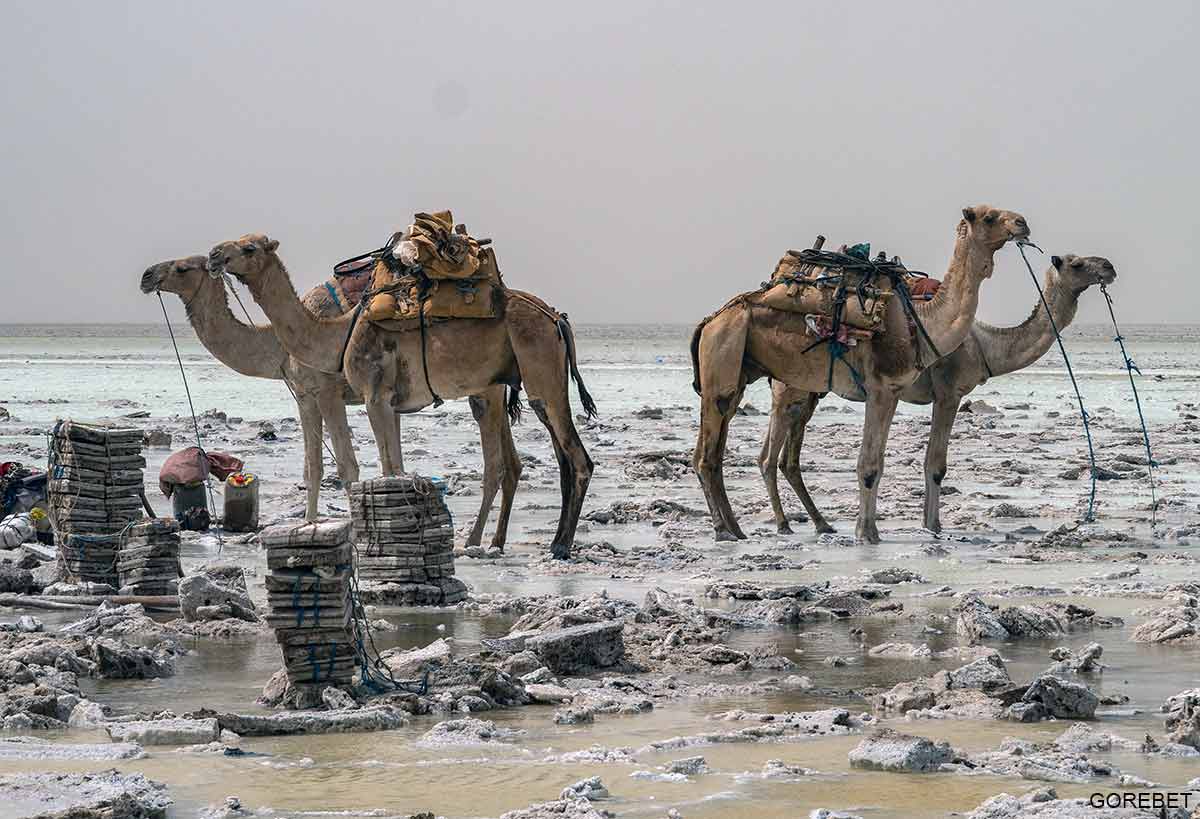
afar salt camel landscape ethiopia

Currency for Ethiopia has been around in many forms in the country. From the salt to coin currency, the country has exhibited medium of exchanges that transcended through history. Currency is the medium of exchanging goods and resources within a government. This could be in the form of paper print, exchange of goods with equally valuable goods, or by virtually without using any physical system. People in ancient times used to exchange goods and services by using other valuable goods such as Gold silver and other precious stones until the existence of coins take place.

Researches show that using paper as a medium of currency ages around 600 BC but using valuable goods as a medium of exchange ages furthermore. The oldest coin recorded was found in modern-day Turkey around 600 BC. Since then different civilizations were starts using gold, silver, and bronze coins as a medium of exchange.

History of Currency for Ethiopia

Ethiopian has more than 3000 years of history. Aksum was the major commercial route between Roman and India. The necessity for faster and lighter currency led to the first utilization of coins for currency. Around 80 BC the Axumite civilization introduced the usage of coin for currency. And this became the first known currency for Ethiopia.

Valuable for Valuables as Currency for Ethiopia

Even if coins were introduced during these times many people used to exchange goods with goods or goods with other locally accepted items as a primary currency for Ethiopia. The good of exchange differed from one place to another. Localities who have a surplus amount of Teff crop could exchange with an equally valuable quantity of bean. This method is used to exchange local products with other products that could not be produced in the place.
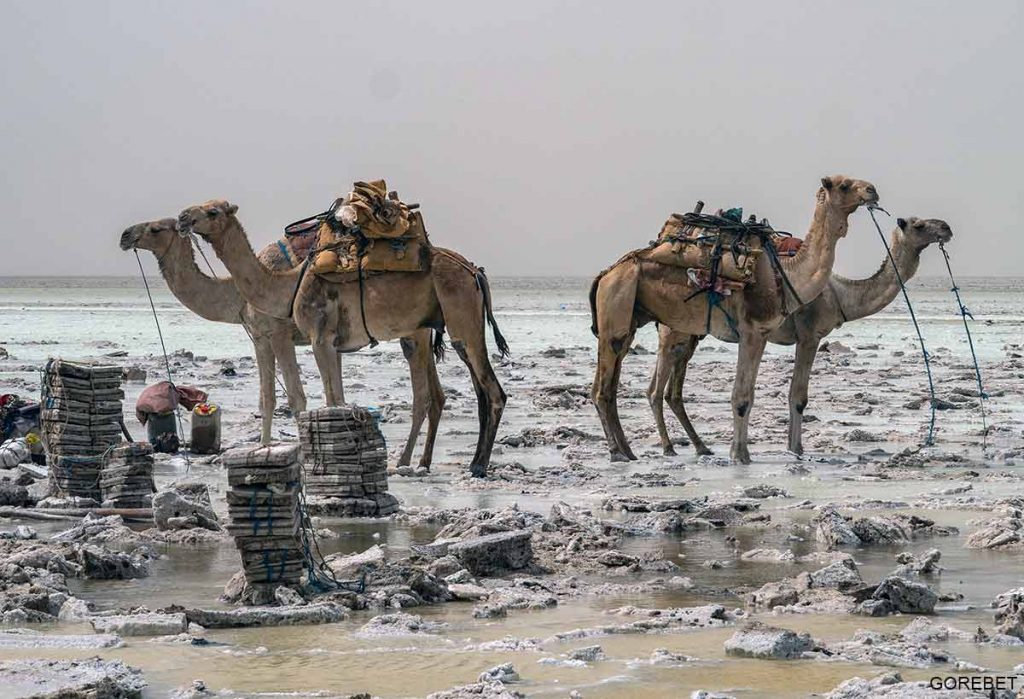
afar salt camel landscape ethiopia

Valuables for Products as Currency for Ethiopia

The other type of currency for Ethiopia was the exchange of products with a valuable item. Usually, the valuable items will be based on a general agreement between society. In some places, salt blocks which are called amole chew were preferred as currency for Ethiopia. This type of currency will be based on the agreement of the society and the availability of the resource which will be used as a currency. There was a limitation to this type of currency for Ethiopia as it is heavy and hard transport and won’t survive in different climates zone, did not function well on international trade.

Axumite Coins as Currency for Ethiopia

The Axumite kingdom was one of the strong ancient kingdoms that existed till the eighth century AD with its center in the Northern part of Ethiopia. The largest portion of Eritrean highlands was part and parcel of this ancient kingdom. The coins are important sources of history and symbols of foreign trade and commerce. It is to be noted that the Axumite Kings were the first to mint coins in the African Continent (Pankhurst, 1965).

These coins were made of gold, silver, and bronze. However, no one knows the exact time when the minting of coins started in Axum. Some archaeologists endorse the view that Endybis was the first king to introduce gold coins in his name around the third century AD. In the 3rd century AD, coins were minted, with inscriptions in Greek and the indigenous Semitic language- Ge’ez.

As explained in the first part of this article, all sorts of physical items were used as currency for Ethiopia by different societies. The second king to strike similar coins in his name was Aphilas. After Endybis and Aphilas each succeeding Axumite sovereign introduced his own coins with his image and insignia (Pankrust, 1961; Rena, 2005 38-40). The other views also advocate that the first kings to mint coins were: Endybis,

Aphilas, Osanas, Wazieb – I, Wazieb – II, and Taziena. These coins 4 indicate the names of the kings and religion. The Axumite coins show that there were extensive trade relations with the Greek and Roman World (Pankhurst, 1965; National Bank of Ethiopia, 2002a; Rena, 2005: 39). In ancient history, an outstanding feature of trade between the Mediterranean countries and the Eritrean Sea was the use of currency for Ethiopia. Along the route from Adulis(Eritrean coast), the principal outlet to the sea of the ancient civilization to cities like Kohaito (Color), Keskesse, Metera (Belew Kelew) and others, archaeologists have uncovered coins from those days (Pankhurst, 2002; Rena, 2005).

After the defeat of the Axumite Kingdom, the accompanying ten centuries, it is discovered that the printing or the utilization of coins was ended inconclusively (Rena, 2005). In the interim, at that point individuals (right now), we’re utilizing a trade arrangement of trade utilizing crude cash structures like a bar of salt, pieces of clothing (fergi, abujedid), little iron bars, nectar, spread, rifles cartridges, yields, and dairy cattle. The crude currency for Ethiopia was utilized in some piece of Ethiopia and Eritrea. History has recorded loads of such items (Pankhurst, 2002:4). In numerous occurrences, rare merchandise filled in as mode of trade (Pankhurst, 1961:13-18).

From the get-go in its history, Ethiopia utilized salt squares referred to as Amole Tchew as currency. Later Amole Techew circled close by ‘Maria Theresa thaler’ which was embraced under the standard of Emperor Iyasu II who drove the nation from 1730 to 1755.

Maria Theresa Thaler Coins as Currency for Ethiopia

The Maria Theresa thaler is a silver bullion coin initially printed in 1741, and named after Empress Maria Theresa who was a leader of Austria, Hungary, and Bohemia until 1780. It immediately turned into the favored coin of worldwide exchange, significantly after it stopped to be the official coin of Austria in 1858. In 1893 the MTT turned into the standard unit of cash in Ethiopia, where it was privately known as birr, which means silver. As indicated by certain evaluations, of the 245 million MTT that were printed somewhere in the range of 1741 and 1931, 20% were in Ethiopia.

In 1903, a quarter birr, and 1/16 birr known as a Ghersh circled in Ethiopia, and the official bookkeeping money became 1 birr = 16 Ghersh = 32 Bessa. In 1915 the Bank of Abyssinia discharged banknotes; however, they were utilized basically by traders and outsiders.

Ethiopia Birr as Currency for Ethiopia

The name Ethiopia had been utilized inside the nation for more than 1500 years, yet it wasn’t until 1931 that Haile Selassie, the Emperor of Ethiopia, formally mentioned that the global network alluded to the nation in that capacity, instead of as Abyssinia. He additionally purchased out the Bank of Abyssinia and renamed it the Bank of Ethiopia. The birr, which had been alluded to as the Abyssinian birr, became perceived globally as the Ethiopian birr. The currency for Ethiopia was likewise decimalized

Italian colonialism Lira as Currency for Ethiopia

Following Italy’s attack and control of Ethiopia, the Italian lira circled and notes of up to 50 Lira kept on coursing after the British freedom of the nation in 1941. The British likewise carried with them MTT, and cash from India, Egypt, and British East Africa. The British East African Shilling at that point turned into the official bookkeeping cash until the war finished in 1945. The Ethiopian birr was revived after WWII, yet was alluded to as the Ethiopian dollar until 1976 when the cash was authoritatively called birr in all dialects.

During the eighteenth and nineteenth centuries, the currency for Ethiopia was the Maria Theresa Taler, otherwise called the Birr, which means silver. The Taler turned into the official coin in 1855; however, the Indian Rupee and the Mexican Dollar were utilized for outside exchanging. In 1893, the Birr was presented as the standard unit. It was subdivided into 20 girsch. Another scope of Ethiopian coins showed up in 1903. The Bank of Ethiopia was shaped in 1931. Around then the Birr got equivalent to the mentonnyas. 1 Birr = 100 metonnyas. During the mid-1930s the monetary standards flowed were the Birr and the Talari. From 1936 to 1941 Italy involved Ethiopia and the Italian Lira was utilized. In 1945, the subsequent Birr was presented; 2 schillings = 1 birr.

1976, the Birr was made the official cash.

Other than having practically all the legends in Amharic, there are two highlights that help to promptly recognize an Ethiopian birr. Early dated coins, those dated before EE1969, highlight a delegated widespread lion holding a cross. This can be found in the adjoining picture. Later dated coins, those dated EE1969 or after, picture the leader of a thundering lion, with a streaming mane.

Coins were struck at a few mints, including Paris, Berlin, and Addis Ababa. Coins without mintmarks were commonly struck at Addis Ababa. The coins struck at Paris have either the mintmark “A” with the cornucopia and fasces privy imprints or the cornucopia and light privy imprints without the “A”.

The Bank of Abyssinia presented banknotes for 5, 10, 100, and 500 Talari in 1915. 280,000 pay worth of notes were printed. The content on the notes was in Amharic and French. A 50-talar note was included in 1929, by which time over 1.5 million pay in notes were circling.

Currency for Ethiopia is called the birr, and there are one, five, 10, 50- and 100-birr notes. The Birr1 note is gradually being supplanted by the Birr1 coin. The birr is isolated into 100 pennies and there are 5, 10, 25, and 50 penny coins.

US Dollar Globalism as Currency for Ethiopia

Similarly, as with numerous African nations, the US dollar is the favored remote cash in Ethiopia in spite of the fact that the euro is likewise simple to trade. You’ll experience no difficulty trading US money any place there are Forex offices, however, attempt to bring US dollar notes (particularly US$100) from 2006 or later; prior notes may not be acknowledged at banks.

Most services will trade US$ money or euros for you, however, the rates are in some cases (yet not constantly) more expensive than those offered by the banks.

As indicated by the National Bank of Ethiopia guidelines, all bills in Ethiopia must be paid in birr. Be that as it may, this isn’t upheld and Ethiopian Airlines, most significant lodgings, and most travel offices acknowledge (and some of the time request) US cash.

One guideline that is carefully upheld is the change of birr to US dollars or euros; this exchange must be accomplished for individuals holding ahead air tickets from Ethiopia. This implies individuals leaving overland must spending plan in like manner. There are bootleg market brokers around the outskirts, however, rates are poor and it very well may be dangerous.

The Transition of Coins as A Currency for Ethiopia

In the eighteenth and nineteenth hundred, Maria Theresa thalers and squares of salt called “amole Tchew” filled in as cash in Ethiopia. The thaler was referred to locally as the Birr (actually signifying “silver” in Ge’ez and Amharic). The Maria Theresa thaler was authoritatively received as the standard coin in 1855, despite the fact that the Indian rupee and the Mexican dollar were likewise utilized in remote exchange.

The talari (thaler, dollar, birr) turned into the standard unit on 9 February 1893 and 200,000 dollars were delivered at the Paris Mint in 1894 for Menelik II. The talari, proportionate to the Maria Theresa thaler, was isolated into 20 ghersh (likewise guerche or gersh, the name originating from the Ottoman Empire’s qirsh) or 40 bessa (a little copper coin).

Another Ethiopian coinage showed up around 1903. The new silver birr kept up a similar weight and fineness as the old, yet there was currently a quarter-birr and a silver ghersh, the last 1/16 the heaviness of the birr. The cash of record currently became 1 birr’ = 16 ghersh = 32 bessa.

The Bank of Abyssinia was set up in 1905 by Emperor Menelik and the European financial gathering behind the National Bank of Egypt; the bank was authoritatively introduced by Menelik on 15 February 1906. The Ethiopian coinage picked up acknowledgment just continuously, and Bank of Abyssinia imported Maria Theresa thalers. When World War I broke out, the bank was all the while bringing in around 1,200,000 of these coins every year. Bank of Abyssinia put banknotes into dissemination in 1915. These notes were named birr in Amharic and thaler in English. They were utilized by vendors and by outsiders yet were not at first acknowledged by and large. Nonetheless, the note course expanded impressively after 1925.

Sovereign Haile Selassie purchased out the Bank of Abyssinia in 1931 for £235,000 so as to make it an absolutely Ethiopian establishment. It was redesigned as the Bank of Ethiopia. Simultaneously, the money was decimalized and token nickel and copper coins were presented, the birr gets equivalent to 100 metonymies (frequently composed madonnas). The content on the monetary orders showed up in Amharic and French.

After 1991 (a triumph of the Tigray Peoples Liberation Front (TPLF) on a system of Mengistu Haile Marian) numerous previous Ethiopian guerrillas have moved into the Badme district to cultivate little plots of land, dislodging numerous Eritrean ranchers who were at that point there. This procedure gradually brought about Ethiopian control over these Eritrean regions, powerful ousting of Eritrean ranchers from their properties and plundering of their animals. In August 1997, Ethiopian soldiers involved the Eritrean town of Adi Murug under the appearance of seeking after “fear mongers”.

Around the same time, Ethiopia removed Eritrean residents from their homes around Badme. These ejections and the pulverization of harvests and other property proceeded all through the following year. Two rounds of battling followed in 1998 and 1999 These covering zones in Gash Setit and Akule Guzai were then ‘involved’ by Eritrea in May 1998 and are alluded to as the Badme and Zalambessa front. In any case, while Ethiopia is requesting to restore the ‘involved’ an area, Eritrea is just protecting her lawfully settled outskirts!

Along these lines, Ethiopia emblazoned this new change in its new cash notes gave in November 1997. The bolt-on the Ethiopian 100 birr note beneath focuses on the ‘new’ Ethiopian guide. Comparative audacious recovery of land won’t be anything but difficult to discover on the planet’s history.

Red ocean port Assab has assumed a significant job in the arrangements between Italy/Eritrea and Ethiopia. Ruler Melenik II didn’t request access to the port. He would not like to be subject to Italy and made a settlement with France in 1897. Something that was masterminded right now that a railroad was to be work from the port of Djibouti in French Somalia to Addis Ababa. In 1917 the primary trains were running. The railroad was adequate for the unassuming Ethiopian imports and fares.

In 1928 Emperor Haile Selassie made an arrangement with Italy and Ethiopia got a free zone in the port of Assab. A street was to be work among Assab and Dese in Ethiopia.

At the point when the railroad to Djibouti was exploded at a few places in the war with Somalia, Assab turned into Ethiopia’s most significant port. In 1991 (in the wake of having expelled Mengistu), freed Eritrea dealt with Ethiopia’s entrance to the ocean. In the arrangements among Eritrea and Ethiopia, Eritrea ensured that Ethiopia could utilize the port of Assab on indistinguishable terms from Eritrea itself. This has some rationale since Assab is 750 kilometers from Asmara and the central districts of Eritrea which are served by the port of Massawa. Meanwhile, Ethiopia is recreating the railroad to Djibouti with French assistance.

The second Coin birr as Currency for Ethiopia

The birr was reintroduced in 1945 at a pace of 1 birr = 2 shillings. The name Ethiopian dollar was utilized in the English content on the banknotes. It was isolated into 100 santim (got from the French centime). The name birr turned into the official name, utilized in all dialects, in 1976.

currency for Ethiopia

Banknotes as Currency for Ethiopia

The first birr

The Bank of Ethiopia gave notes in 1932 in categories of 5, 10, 50, 100, and 500 talari. A 2-talari note dated 1 June 1933 was given to pay tribute to the Imperial couple. Before the finish of 1934, some 3.3 million talari in notes were flowing.

The second birr

On 23 July 1945, notes were presented by the State Bank of Ethiopia in categories of 1, 5, 10, 50, 100, and 500 birrs. The National Bank of Ethiopia was built up by royal declaration 207 of 27 July 1963 and started procedure on 1 January 1964. The National Bank of Ethiopia took over note creation in 1966 and gave all divisions with the exception of the 500 birrs. Banknotes have been given in the accompanying arrangement.

Currency for Ethiopia and The Economy   

Ethiopia’s economy is mainly based on the agricultural industry, which forms 80% of the yearly GDP. There are no private businesses and no patent laws apply in Ethiopia. The unemployment rate among youth is estimated at 70%. The main industries are metals, cement, textiles, food processing, and cement. Export products are leather, oilseeds, coffee, flowers, gold, qat, and live animals. Import products are motor vehicles, textiles, cereals, petroleum, food, and chemicals.

One of the most wonderful highlights of the monetary history of Ethiopia is the utilization of ‘ crude cash ‘, for example, bars of salt, bits of material and bars of iron for some hundred years preceding the Italian intrusion of 1935. In spite of the fact that this wonder of * crude cash ‘ is obviously notable in many pieces of Africa, just as indifferent landmasses it is exceptionally compelling in Ethiopia for the nation’s moderately rich verifiable records bear the cost of us the chance to analyze the issue in some detail.

Generally, the Ethiopian economy was to a great extent dependent on subsistence farming, exchange being in this manner at any rate. An enormous extent of such exchanges as happened in addition appeared as a deal. A specific measure of Hungarian, Venetian, and Arab cash was regardless utilized in the sixteenth century while Maria Theresa dollars, which previously showed up in the nation in the mid-nineteenth century, before long gained a significant flow. The national currency for Ethiopia didn’t appear until 1894 when it was set up by the improving Emperor Menelik.

Despite the commonness of bargain and the not irrelevant utilization of such coins, * crude cash ‘ appreciated a wonderful situation in Ethiopian exchange. Despite the fact that the things utilized as cash were altogether different in substance, they had two regular qualities: one, they were in across the board interest for reasons for utilization being articles of nourishment, apparel, embellishment or else basic things utilized in farming or war; and two, they were much of the time not effectively possible, shortage coming about because of the way that they had frequently to be carried.

Finally on Currency for Ethiopia,

Currency for Ethiopia has passed through history from a heavy salt cube to a simple paper currency. Currently, the Ethiopian Birr is widely used as a currency for Ethiopia. Currently, a dollar is being exchanged for 32 Ethiopian birr.
Addis Ababa Concise Guide (and 11 questions answered)

0
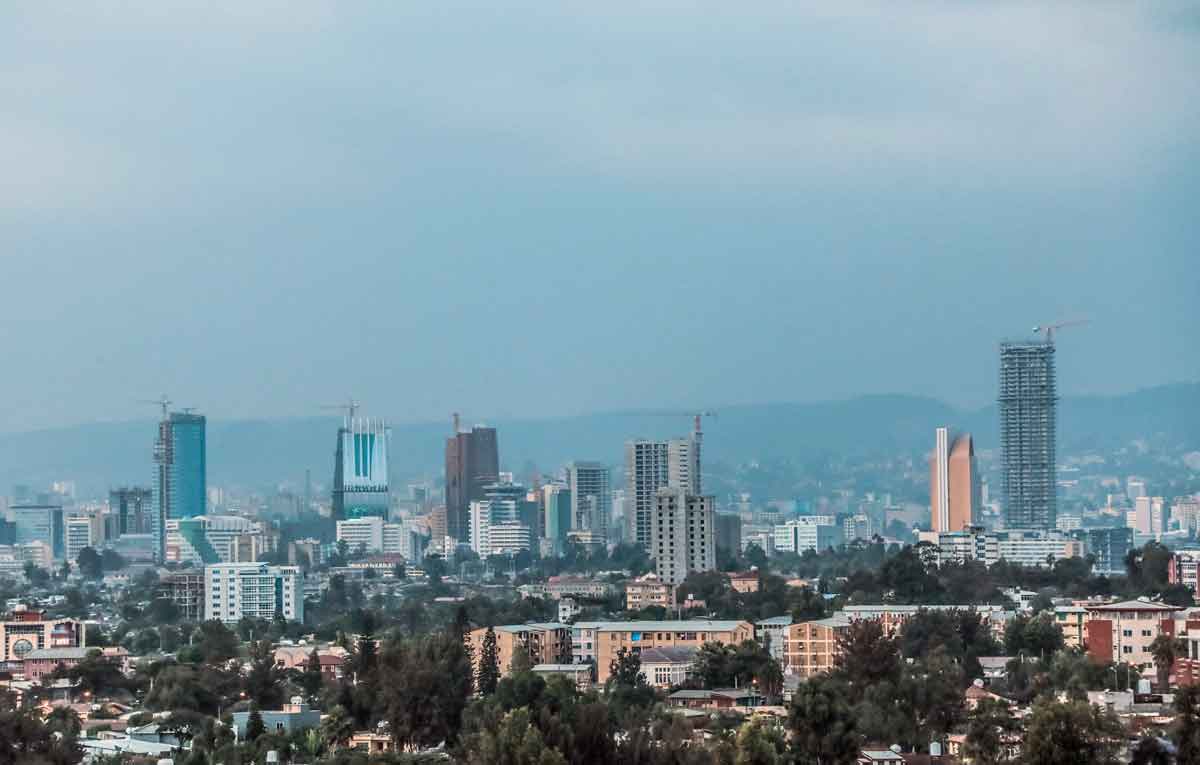
Ethiopia city addis ababa panorama -

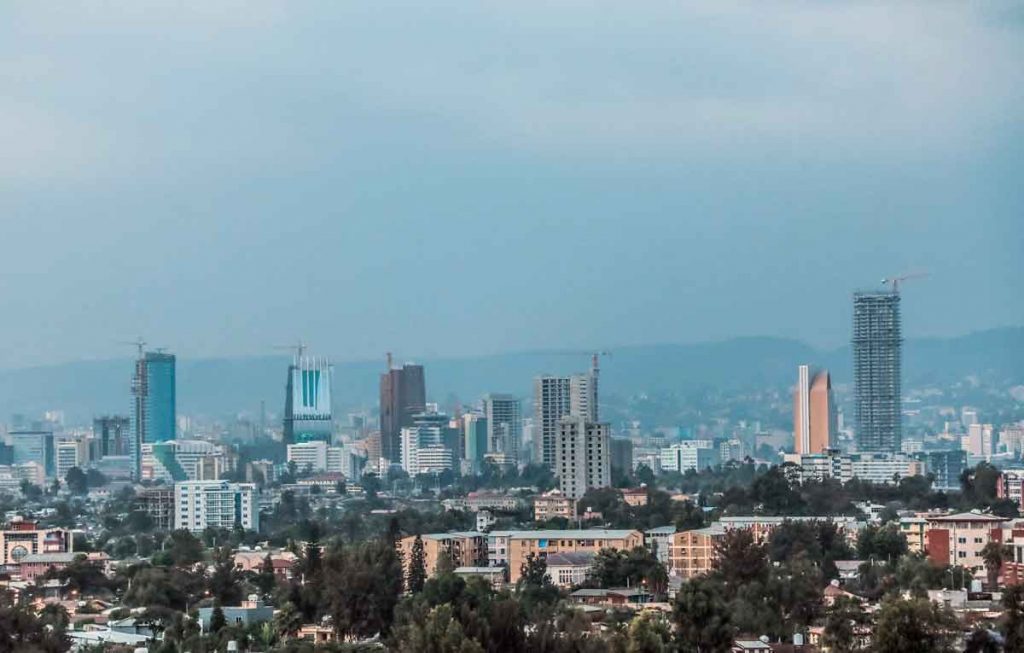
Addis Ababa is now the largest and capital city of Ethiopia. The city is located within the geography of the country, on a well-watered plateau usually surrounded by mountains and hills. Addis Ababa is sometimes called the capital of Africa, due to its geographic locations, combined with its political and socio-economic status have made Addis Ababa be recognized and given the attention by thousands of individuals and nations coming from all over the world.

Addis Ababa is now growing fast and becoming more sophisticated. This dynamic growth makes Addis Ababa be a center target by many continental and international organizations, such as Africa Union, making the city Addis Ababa as headquarter for the continents. Also, its role and engagement towards peace and security, historical, political significance for the continent, and diplomatic strategies, Addis Ababa is now often referred to as “the capital of Africa.”

What Was the Origin of Addis Ababa?

The world Addis Ababa means “New Flower” in the African language of Amharic, the official language of Ethiopia. Addis Ababa was founded and given the name by Empress Taitu, who was the wife of Emperor Menelik II, around 1886. Their settlement at that time was based centrality of the city. Therefore, the king palace was located at the center of the city, now Entoto.

Due to the Italian colonization of Ethiopia, from 1935 up to 1941, the city Addis Ababa had been affected both on Architectural designs and city planning. The Italians invented many European styles to the county and also big central district’s which is known as Piazza. This effect can be seen now on many historical buildings and sites. 

Addis Ababa was discovered by the Empress Taytu Betul, who was the wife of Emperor Menelik II, and the city was founded in 1886 by her husband, Emperor Menelik II. The reason they choose the site was due to its topography because this makes the site to be in higher altitude than the rest cities. Then the Emperor found Addis Ababa to be a useful base for military operations in the south.

However, the initial site Entoto was not comfortable for the Emperors to build. This was because of the lock of firewood and water within the site. So, the settlement had to shift to the south mountain, so the Emperors started to build along the valley south of the mountain in 1886.

Emperor Taytu started to build in a place her own house called “Filwoha” which is characterized by hot mineral springs. This created an opportunity for the Empress and members of the Showan Royal Court to enjoy the place and take mineral baths. Other nobilities and their staff started to settle in the vicinity, and Emperor Menelik started to expand his wife’s house to make the Imperial Palace, and this palace is now used as a seat for the government.

When Emperor Menelik II became the King of Ethiopia, the town changed its name to Addis Ababa and Addis Ababa became Ethiopian Capital City and from that point of time, Addis Ababa started to grow, expand, and characterized as a modern city. Within this rapid growth of the city, one of the King’s contributions was the planting of trees, which is still visible called the Eucalyptus trees planted along the city streets. 

addis ababa panorama

What Institutions do I Get in Addis Ababa?

Because Addis Ababa is in growing rapidly, many embassies and missions are there with in the city. This makes the city more dominant and a key to the country’s diplomacy and political intentions. The city Addis Ababa contains more than 120 international missions and embassies, which makes the city a central hub for its continents. There are many continental and international organizations that are found in the city Addis Ababa, such as the African Union and Economic Commission for Africa; both headquarters are found in Addis Ababa.

How Do I Find Places in Addis Ababa?

Addis Ababa is divided into sub-cities, and then sub-cities are divided into wards kebeles. Suburbs found in the east include Bole and Urael, North includes Entoto and Shiro Meda, West includes Kolfe and Keranio, and finally, suburbs in the south include Mekanisa.

The settlement within Addis Ababa can be also further analyzed based on the economy of the peoples which makes Bole in Southeast, Old airport in Southwest, CMC, Ayat, and Lamberet parts of the town have settlements for the wealthiest people. Addis Ababa is one of the cities to have rail-based public transit, this light rail system was built with the help of the Chinese, and now China is taking the place of foreign countries that help Addis Ababa to grow rapidly.  

What the Addis Ababa Climate Like?

The climate of Addis Ababa is characterized by a subtropical highland climate. Addis Ababa’s average highs lay between 21 C and 25 C, and also the average lows lay between 7 C and 11 C. most of the time, Addis Ababa experiences the warmest months on February up to May, but this warm temperature differs from that person imagining Africa as a hot month, due to this, hotels found in Addis Ababa, they don’t have air conditioning because that temperature is not that much hot compared to other African hot climates.

Addis Ababa has a constant temperature throughout the year, the amount of rainy days per year recorded shows that Addis Ababa has 132 rainy days per year and records of 1,165 mm of rainfall annually.

Ethiopia weather -

What is the Ababa Season Like?

The blustery season is from mid-June to mid-September. Regardless of whether the temperature is comparative with another month, July and August seem colder and less agreeable because of 80% relative mugginess, hardly any long stretches of daylight, and every day downpours: tonsillitis and basic virus are visits.

Rains likewise cause mud and make earth streets lathery. A flood occurs on streets making congested roads, eminently toward the start of the blustery season (end-June), when the water seepage pipes are plugged by residue and squander aggregated during 8 months of the dry season. Tempests (short however overwhelming downpours) are visit and disconnected. It is normal to move to another part of the city for an hour or two only to find the other place wet. In August, it is likewise conceivable to encounter some hail.

How do I travel inside Addis Ababa?

By Air

As the name indicates, Addis Ababa Bole International Airport is the main airport center the country is now using; it is located in Bole suburbs and this airport is now used as by many customers from all over the world and this makes the airport to be a main hub for the Ethiopian Airlines.

The airport is now hosting many international airport hubs such as Lufthansa for Germany, Sudan Airways, Kenya Airways, British Airways, KLM, Turkish Airways, Emirates, Gulf Air, Egypt Air, and fly Dubai. There are many daily flights from Bole International Airport such as Europe, the United States, Asia, and lots of African countries such as Accra, Bamako, Brazzaville, Cairo, Dakar, Dar es Salaam, Djibouti, Khartoum, Harare, Johannesburg, and Nairobi.

This transit is the most famous and successful airline. Here at this airport, there are two terminals. Terminal 1 which is the older and smaller is used for domestic flights but however the second Terminal 2 is used for all international flights.

Access to the airport is limited, which means anyone who came to the airport has to park his/her car outside in the car park. However, considering the tourists, hotel cars have the right to pass through and wait at the arrival areas for their customers. This rule is applied for other stations outside Addis Ababa.

Public transports also wait for our side the arrival, but since the airport is more than 4 km from the closest light rail transit station, this makes it unconnected but however, this will be fixed in the future and they will be connected with the airport.

The amount of money is fixed which is 300 birr to get from the airport to anywhere in the city. You will find yellow taxis at the exit point of the international airport.  

By Bus

Since the city Addis Ababa is the capital city of Ethiopia, there are many bus terminals stations from Addis Ababa to other cities of Ethiopia. These terminal stations are…

Autobus Tera …this terminal is located at the corner of the Fitawrari Habte Giyorgis St and Central African Republic St, and this terminal is the most usable bus terminal station because most of the national buses arrive and depart from this terminal station.

Ras Mekonin Avenue. This terminal is located in La Gare near the railway station, but now it is closed and moved to another district known as Kality District on Debre Zeit road. This terminal station is usually used by buses to or from Adama Nazret, Debre Zeit, Dire Dawa, Nairobi, Lalibela, Shashemene, Awahha, and Bahir Dar cities.

Asco. This terminal is used by buses to connect Addis Ababa with Nekempte and also beyond from Asco on the old Ambo road.

By Train

There is also a railway line that connects Addis Ababa city with the port city of Djibouti, which is via Dire Dawa. This railway line was opened in 2016/17. The time taken to reach from Addis Ababa to Djibouti is about twelve hours and in every second days. There is only one train available so anyone who wants to go to Addis Ababa has to book by considering the date in order not to miss his or her flight. Tickets are available and can be bought either at the railway stations or at a ticket office which is found next to the old colonial Legehar station on Churchill Ave.  

Blue and White minibus

These are blue and white buses that travel efficiently around the city. Due to the number of the people they hold, most of the time these vehicles are the full width of people. Since they don’t have a stopping point, anyone can catch the bus just by hailing it, and also the conductor will be the one to call out his destination.

Orange/Yellow public buses

According to research in 2016, these buses connected the whole city. There aren’t any schedules or maps available, however, if you attend a significant street where a crowd gathers, you’ll ask people or the cashier which is usually in a very cabin at the rear door for your destination but however, these buses might be overcrowded some times.

Uber type Taxi

Uber doesn’t operate here yet, but there are some alternatives. Ride and Zay ride are one of the few. You need to call directly to call for a cab or you need to use the app that you will find on Appstore. This is probably one of the best options to travel to the city. The price is fixed on the distance; therefore, you won’t have to negotiate as you do on blue Lada taxis.

Small blue Lada taxis

Small blue Lada taxis are costlier. Negotiation is that the norm and any tourist need to regularly press quite hard to urge a bargain as a foreigner. They will be contracted for one trip, an hour, or a full day. Many foreigners get confused if the value of the taxi increases in the dark for an identical trip.

Yellow taxis (not the airport ones)

Yellow and green taxis usually lurk around hotels like Sheraton. They’re costlier but reliable. If you’re willing to procure peace of mind, slightly better drivers, and a car that wasn’t featured within the Flintstones, use these cars.

Is It Safe to Walk in Addis Ababa?

Walking from Meskel square to Sidest kilo, we can find a beautiful and amazing experience. we will see the Sheraton Hotel, the primary modern school (which Emperor Menelik II inbuilt the 1880s), the Trinity Orthodox cathedral, the National Museum, and therefore the New Flower University (which hosts a former palace and museum).

Arat Kilo Avenue is marked by a statue inbuilt commemoration of the Ethiopian day of victory during the Second war. Around Arat Kilo, you’ll find a part of an old town called Serategna Sefer (literally, the dominion of laborers). If you go past Sidest Kilo, the road becomes steeper and plenty of of the attractions are going to be on the correct side of the road.

The Entoto college is also there, which stands up to three, 300 m above water level. You can take a taxi or a bus to the mountain unless you’re of a mind to undertake it yourself. On the mountain, you’ll find the primary churches of New Flower, called Saint Mary and Saint Raguel, and a smaller palace of Menelik II. Walking the mountain, especially between the churches, is refreshing and provides the possibility to work out rural life, the city, and the forest.

Addis Ababa is a generally safe city.

What Are the Must-Visit Museums in Addis Ababa?

There are a lot of Museums found in Addis Ababa site, such as: –

Addis Ababa Museum-This museum focuses on artifacts and also exhibits.

Ethiopian railway museum

Ethnological museum- Also referred to as the Museum and Library of the Institute of Ethiopian Studies, this can be a desirable museum with exhibits about the history and culture of Ethiopia. There are many displays of the varied ethnic groups found in Ethiopia with information about each of their lifestyles. Ethnic outfits, instruments, tools, and other artifacts accompany each ethnic exhibit, making it one among the foremost interesting museums within the city.

National Museum of Ethiopia- An interesting museum with the famous exhibit is the replica of Lucy, an early hominid. The artifacts within the museum span thousands of years, including some from its earliest days.

Red Terror martyr’s memorial museum- This museum is about in memory of those who lost their lives during Derg regime. The building was during a fairly poor state with none of the lights seemingly working. Worth a fast visit, won’t take quite a quarter-hour.

bole addis ababa medhane alem church

What Are the Major Churches I Can Visit?

Many churches are open for tourists. The modern architecture and the historic artifacts they hold are a must-visit.

Gola Saint Michael church- this church is known by its bold interior old paintings and features a museum displaying church articles given by many famous people of the country including the emperor Haile Selassie and his Empress.

  • Holy trinity cathedral-found in Arat kilo
  • Medhane Alem cathedral-largest cathedral in Ethiopia
  • Roman Catholic cathedral of nativity- this is found in Mercato area
  • St George’s cathedral-This church is found in Piassa and this cathedral is shaped octagonal building. As you walk around it, you’ll notice people praying beside the walls. The interior is bold and nicely decorated with huge paintings and mosaics. The near museum has a remarkable and well-displayed collection including ceremonial clothes and ancient manuscripts.
  • Bata Maryam church-known as Menelik mausoleum

What Are Tourist Places In Addis Ababa?

  • Africa Hall-headquarter for AU
  • Tiglachin monument-also called Derg monument
  • Ethiopian national library
  • Lion of Judah Menelik-located near the former railway station
  • Unity Park- this is one among the must-see sights in Addis Ababa. The site was home to the Palace of Emperor Menelik II. It has exhibitions, sculptures, and many more. it’s probably the most effective presented site in Ethiopia, the pet project of the Prime Minister, whose office is additionally on the sight.
  • National Palace
  • Netsa Art Village
  • Parliament Building
  • Shengo Hall
  • Hager Fikir Theatre-piazza district
  • Jan Meda race ground-Timket holiday
  • Addis Ababa Golf club
  • BihereTsige recreation center
  • Entoto Mountain
  • Fendika Azmari bet- located in Zewditu st Kazanches

What can I buy in Addis Ababa?

There are several places where you will find anything from food to products to local arts. Mercato- is the largest outdoor market within the world and the biggest in Ethiopia, and foreigners should be able to get anything from tourist goods (t-shirts, wood crafts, etc.). Haggling and bargaining are standard operating procedure, and foreigners (especially those of European ancestry) should expect to be charged higher prices. to confirm a positive experience, maintain a way of humor,

In Merkato, people always negotiate for lower prices and they will be able to avoid brokers and this is highly accessed and this creates the site to be more vibrant and condensed.

Hypermarkets such as Friendship mall in Bole, to Edna mall to other commercial centers. Most shops contain a huge book shop, boutique, barbershop, fashion districts and cinema (some 3D multiplex film “Matti Multiplex” (three screens)), which plays both Amharic and English-language films. Western movies commonly are appeared inside seven days to a month of their U.S. discharge, however infrequently they may work on European discharge plans.

The focal point of the shopping center highlights an arcade zone and an indoor event congregation with merry go round, bull-riding, climbing tubes, 7D film, and fun-mobiles; it’s an enjoyable place for little kids, however truly swarmed on the ends of the week and occasions. Incorporate a few eateries. Additionally, found close by are a few move clubs.

These buildings include Edna mall- Dembel city center, Getu commercial center, Addis Sheraton shopping, Piassa shopping center, Shoa supermarket, Lafto mall, and Makush gallery and restaurant.

 Finally,

Addis Ababa’s fabricates incorporate materials, shoes, nourishment, drinks, wood items, plastics, and substance items. A large portion of Ethiopia’s administration enterprises is additionally situated in the city. Banking and protection administrations are moved in Addis Ababa, and the country’s significant papers are distributed there.

Addis Ababa is the instructive and managerial focus of Ethiopia. It is the site of Addis Ababa University (1950) and contains a few educators preparing universities and specialized schools. Likewise situated in the city is the Museum of the Institute of Ethiopian Studies (worked by the college), the National School of Music, the National Library and Archives, castles of previous rulers, and legislative services. A few global associations have their home office in the city; the most significant are the African Union and the United Nations Economic Commission for Africa, both situated in Africa Hall.

The greater part of the fare and import exchange of Ethiopia is directed through Addis Ababa on its approach to or from the ports of Djibouti, on the Gulf of Aden, or Asseb, Eritrea, on the Red Sea. The city is likewise the assortment and appropriation place for a great part of the nation’s inner exchange. The Mercato, situated in the western piece of the city, is one of the biggest outside business sectors in Africa. The Piazza in the focal city and Bole Road toward the southeast component progressively costly European-style strip malls.

Addis Ababa is the center point of the country’s transportation organization. A few streets interface it to other significant urban areas; the main railroad races to Djibouti. The city is likewise served by a worldwide air terminal.

Culture of Ethiopia and What to Expect

0
Who Are Habesha people -

When looking at the culture of Ethiopia, two very large factors come into play. One is our knowledge of Ethiopia and the other is our understanding of the concept of culture as a whole.

Webster defines culture as the collective Ideals, Customs, and social behaviors of a particular society as well as the human intellectual achievements regarded collectively. Here the word collective is seen repeatedly as if to emphasize the significance of the presence of a social group for the existence of a culture.

Culture is a social habit, which flourishes through intellectual incubation and then becomes seasonally exercised by a significant number of a collective group of people, who are then defined by that very culture. Thus, without a question culture differs from place to place, from peoples to peoples.

Tradition is, in some cases synonymous with religious or doctrinal beliefs. It is a heritage or lore of beliefs that continue to be passed down between generations. It differs from a culture in that culture doesn’t necessarily have to be age-old. Culture can be a trending characteristic that defines a particular generation of people and that generation only. Popular culture or pop-culture is a crystal-clear illustration of this.

Culture is bridged to tradition in that it can become a tradition, all it needs is to be passed down between generations. In the case of what the culture of Ethiopia is, we will have to consider the different varieties and subcultures within Ethiopia, in the context that is characterized by all the indigenous peoples with all their respective characteristics. Not to mention that present trends have to be taken into consideration, given that they are a characteristic representation of society and often come into play when assessing the reflective natures and expressive mannerisms.

There are various language groups within Ethiopia. The most predominant language groups being either Cushitic or Semitic in their language families. Under Cushitic, there are the Oromo and Somali people. And under Semitic, there are the Amhara and Tigrean people. The above-mentioned people comprise 75% of the total language groups inside Ethiopia. Each people with their own respective culture.

The remaining 25% is comprised of Southern and Western peoples who speak languages with roots both in Afro Asiatic and Osmotic linguistic families. Two alphabets are mainly used, one being the Ge’ez and the other being the Latin Alphabets. English is the most dominant foreign language and speaking in terms of pop culture American movies are seen almost as frequently as locally filmed movies within Ethiopia.

Listing all the respective cultures of each and every regional group would be time-consuming and the scope of this report would be inadequate to have such an in-depth and detailed analysis. However, to simplify the task, classification based on religious tradition would unite a vast array of peoples and would be a methodical approach to understanding how these different cultures operate within their respective traditions.

Religion and The Culture of Ethiopia

There are two major religions within Ethiopia. That of the Christian and those of the Muslim. Christianity within Ethiopia is mainly Orthodox, with a slight presence of variations of Protestantism and in part a portion that follows Catholicism. Islam is a very wide and vastly practiced religion in Ethiopia. Religion also make culture of Ethiopia.

  • Religion and The Culture of Ethiopia

Culture of Ethiopia – Holidays

There are two types of holidays, religious and public. Of the public holidays, the major ones are New Year “Enqutatash” and Adwa Victory day, which is now an inter-continental holiday to commemorate the victory of Africans over a colonial force.
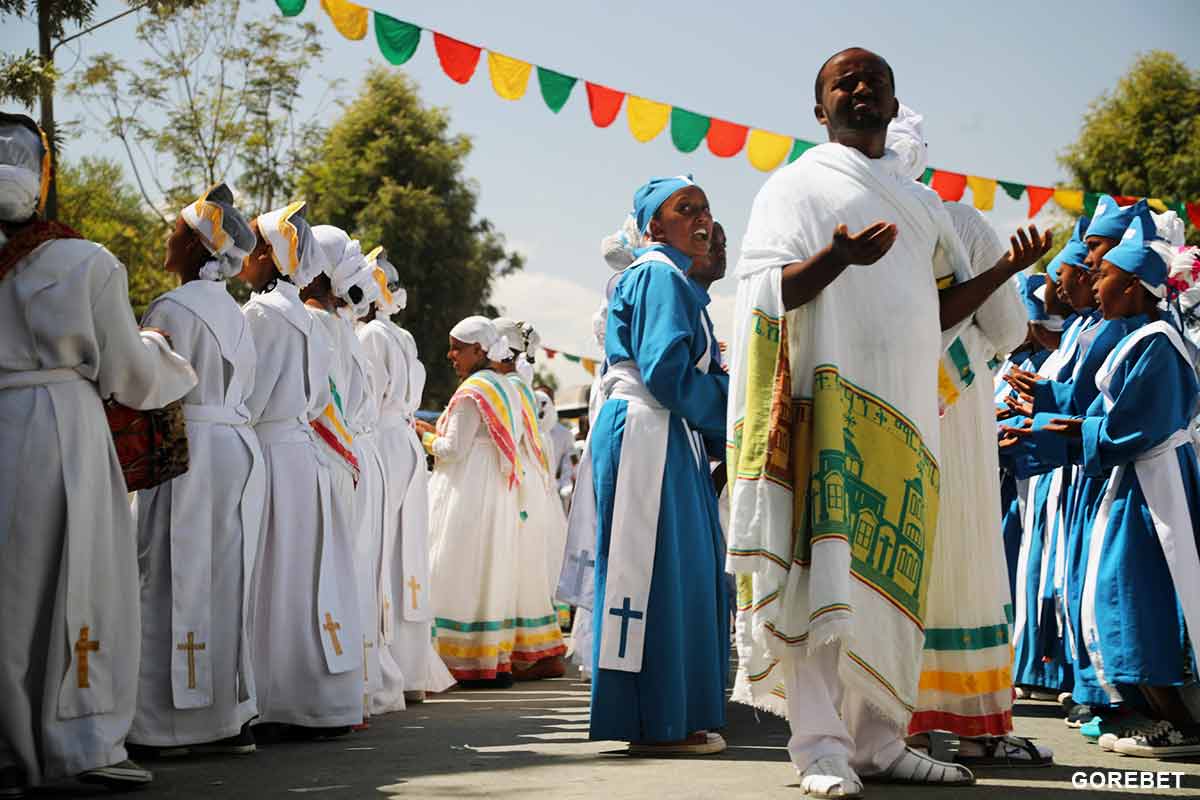
Amongst the Christian religious the definitive ones that are most expressive of the culture of Ethiopia are “Meskel” and “Timket”/Epiphany. During Meskel the Guraghe people of Ethiopia head back home, from wherever they may be in the country to the native town of their families and celebrate the holidays together during a time of extensive feasting. Meskel, in Guraghe culture of Ethiopia, is a time for reuniting families.

In the case of the Muslim Guraghe, Eid-Al-Adha or Arefa would be the equivalent holiday that reunites the Muslim Guraghe families. It is a time for the young Guraghe to return to his hometown and show his family how successful he has been in his line of work, how much wealth he has accumulated and what kind of social standing or reputation he has earned for himself, be it trade or another line of work.

The Meskel holiday is not only culturally unique for the Guraghe people, but throughout Christian Ethiopia it is a large festivity celebrated to honor the efforts of Queen Eleni to find the true cross of Christ. It is celebrated by lighting a large fire to commemorate the process by which the queen mystically used to locate the cross. Christians throughout the country light this fire to celebrate this.

Another special holiday particularly unique within the Ethiopian context and essential to the culture of Ethiopia is Timket/Epiphany. This is the celebration of the baptism of Jesus, it is particularly endemic and essential to Ethiopia in that it is celebrated in such a unique manner. ‘Tabot’s or replicas of the Ark of the Covenant are serenaded around the city, with a congregation following up as all the ‘Tabot’s are led to a field called Jan Meda or the King’s Field.

Then there is dancing and singing, with a ceremonial sprinkling of holy water, customarily followed by a practice called “Lomi Wurwera” or a throwing of Limes. A man who has a certain attraction towards a particular female lets her know or symbolically confesses his feelings by means of throwing a Lime at the woman. Then it would commence as she favors.

In Gondar, Timket has a very special celebration where people travel from wherever they may be to Gondar and then go to the Bathtub of Fasiladas. It is not a classic bathtub, but rather a fairly large compound with a swimming pool embedded into the landscape, and a castle built inside the pool itself. Here the pool is filled with water, every Timket, then blessed by the prayers of a member of the clergy, then the celebrations commence where people dive into the pools one by one.

A non-religious holiday that is worthy of mention perhaps, is the coming of age of the Omotic Hamer boy. The day the boy becomes a man. In order for the boy to prove that he is a man, he must jump over the backs of seven bulls paced side to side one after another. If he fails to walk/jump over the back of each bull without slipping and falling then he will have to try the following year. Otherwise, the man won’t be able to win over a wife, and will not be legitimately allowed to marry by the tribe.

  • Culture of Ethiopia – Holidays
Who Are Habeshas

Culture of Ethiopia – Gender Roles

Gender roles in the culture of Ethiopia are typical in regards to the fact that Males dominate the household and in turn the social aspects, the economy, the politics, the education, and every major aspect in the face of human civilization. Women are traditionally, especially in rural Ethiopia, reserved for household management, cooking, cleaning, fetching water, and conforming to the classic image of becoming a housewife. Since birth, a girl’s life is geared towards growing up, becoming a wife, and becoming a mother.

This is fading away nowadays, with women being provided a better platform to engage in the socio-economic and political aspects of the state, they’re being involved in leadership and political roles. As the first female president of Ethiopia, Sahlework Zewde once said, “There is nothing a woman or a girl ‘cannot’ do”, in reference to all the things girls are told they CANNOT do whilst growing up. A better platform is provided in education nowadays, making it more suitable for female faces to pop up in the scene of science and technology.

There is still, however, a major schism when it comes to what is happening in the urban scene versus what is happening in the rural scene. Since, on the rural side, men are involved in agriculture, and naturally, their spouses would resort to roles that feed into or support the ‘man of the house’. Here the relevance of education might not be as boldly visible as it is in the urban scene, where social roles and standings are highly rooted in the level of education one has.

With the exception of trade and commerce which is dependent on one’s natural talents, communication skills, knacks, and capability of finding a way around things. Even in this field, women are still not present as much as the dominating men. But the way things are headed provided the new hopeful faces that arise every day it is possible that the future holds much more for women than they have been traditionally resorted to.

  • Culture of Ethiopia – Gender Roles

Culture of Ethiopia – Cusine

Ethiopian Cuisine is unique in that it is spicy and dominated by meat. This is a unifying character amongst the majority of subcultures within Ethiopia. This, however, does not mean that consumption resorts to meat and meat only. In the fasting season, of the Ethiopian Orthodox Christian Church, an array of vegetables and ‘Wot’ which is basically sauce or stew is the dominant dish on the table. The Wot is put on a plate with some of the internationally popular ‘Injera’, the sourdough flatbread, made from the even more infamous Teff flour.

Customarily, almost every food is eaten with the hands. And it’s imperative to the grace of the culture that it must be done so. It is a culture of Ethiopia that is rigorously practiced to this day, and it is considered dishonoring the Injera if it is being eaten with a fork or spoon. It is shameful, and in some cases treated as a taboo even. Also, now that the word taboo is mentioned, Injera must always be eaten with the right hand. Even by left-handers.

Some endemic and cultural drinks of Ethiopia are “Tej” which is essentially like mead made from fermented honey, ‘Tella’ which is another fermented alcoholic drink, ‘Borde’ which is an alcoholic drink made from cereals and ‘Keneto’ which is like a pre-fermented ‘Tella’ Each and every subculture within Ethiopia, has their own characteristic and unique dishes, and once more the scope of this paper does not delve into that depth. However, those that are mentioned are just highlights of the characteristics of the culture of Ethiopia dominantly practiced by the large portion of the population or are so unique and endemic to the country that they just have to be mentioned.

  • Culture of Ethiopia – Cusine

Culture of Ethiopia – Clothing

Clothing in Ethiopia is characteristically depicted by a white cotton weaving. This weave can be expressed in a variety of styles, varying from culture to culture, but the essential underlying concept is the same. The process of weaving is known as “Shimena” and it is widely practiced by the Dorze peoples who are infamous for their weaving skills. Characteristically, the Dorze people don’t wear white clothing for themselves. Nor do any of the Southern peoples. They wear colorful clothes that are decoratively lined, and this is a character most boldly seen in the case of the Wolayita people.

White is the color used mostly to the north of Ethiopia, with the exception of the Afar people. White, in the Ethiopian context, symbolizes hope, purity, cleanliness, and good. Whereas black is symbolically representative of death, despair, and doom. In the case of Ethiopia, this is conventionally the case, there is no sample of a culture that likes to use black as their representative cultural color.

Coming back to the North, there is an obvious difference in the way men and women wear this cultural cloth. The process of making the cloth, ‘Shimena’, is called Shimena because of the fabric that is being used. The fabric is called ‘Shema’. Shema is roughly comparable to cotton.

When women wear this clothing, it is woven into a dress or ‘kemis’ and a ‘Netela’ which roughly translates to shawls. The rim of the shawl as well as right above the hem of the Habesha dress or Kemis there is a colorful lining of decorative pattern design. Which can be customized based on the client’s preference. Contemporarily, these dresses are worn either on holidays or to church, if worn elsewhere with no particular special event being held, it might raise eyebrows as to why they dressed so well.

When men wear clothing there are three major articles, the trousers, the shirt, and the top. Everything is white.

oromo girl standing irrecha ethiopia

The trousers are sometimes called ‘Tenefanef’, due to the swishing sound they make during walking. This sound is caused due to the nature or shape of the trousers, which are really tight below the knees and really wide above the knees. The shirt is a long shirt, which goes all the way down to the knees, it is, of course, white, and has collars without a fold. The top can either be a ‘Netela’ or a white sweater.
Nowadays, it is more common or frequent to see women in traditional clothing than men. The men of the generation hardly ever dress in a full-fledged composition of traditional clothing articles. Even in the case of holidays.

  • Culture of Ethiopia – Clothing

Culture of Ethiopia – Music

Music has a very distinctive and special character in Ethiopia. Ethiopian music is unlike any other kind of music heard elsewhere in the world. The name synonymous with Ethiopian music is St. Yared, who was just a student of the doctrine and had failed seven times before the successful composition of the infamous Ge’ez, Ezil, and Araray melodies.

Which would then later serve as the basis for the infamous pentatonic scale to be derived. Of the many artists that have succeeded with the use of this melody, we can mention Aster Aweke, Ejigayehu Shibaba, and Teddy Afro. Of some pioneers who have brought foreign styles back to their homeland and translated them to the pentatonic scale.

Mulatu Astatke, the father of Ethio-jazz and Rophnan Nuri the pioneer of electronic dance music in Ethiopia is known for it. To name the instruments used in Ethiopian music, we can mention ‘Mesenqo’ from the chordophones, ‘Washint’ from the aerophones, ‘Tsenatsel’ from the idiophones, and ‘Kebero’ from the membranophones.

Several artists with Ethiopian roots have even made it to the international scene, Such as Meron Addis from England and Abel Tesfaye from Canada. Abel in particular, or as he is more commonly known ‘The Weeknd’ has cited and sampled the Ethiopian Pentatonic scale in a variety of his works. Even sampling the voice of Aster Aweke at the end of one of his songs.

  • Culture of Ethiopia – Music

Culture of Ethiopia – What is trending?

Contemporary Ethiopia is characterized by a fusion of foreign styles, in particular western styles with the traditional roots inherited from the previous generation. The influence of Hollywood films from Los Angeles is loudly visible, and the mass has easy access to this thanks to the ubiquitous satellite dishes that receive the continuous streaming of western films by the channels of Arab Sat. In addition to that people dig up additional forms of entertainment of all natures. Rastafarian and Jamaican styles are honored by a particular local group, which resonates with their sense of national pride, autonomy, and sacred nature.

Entertainment is also channeled through social media and YouTube which can all be attributed to the internet. All this plays a role as a factor in the contemporary culture of Ethiopia, and what kind of culture can flourish in the future. Whether it is distinctively visible or clearly perceptible is a matter of debate. However, it would be more farfetched to assume the media has no effect on popular contemporary culture than it is to deduce that there is an influence by media on our culture of Ethiopia.

Finally, on the Culture of Ethiopia

As it was mentioned at the start of this paper, culture is a definitive characteristic that is representative of a particular generation as opposed to tradition, which is the inherited sacred characteristics of a particular society or a group of people. Without a question, it is crystal clear that the behaviors of the previous generations of Ethiopians are completely different from those that live today.

We can attribute this to the different environments and social settings that have brought about our different behaviors, and an essential part of that is contemporary popular culture or simply, what’s trending. Trends come and go, and thus they are only a temporary means of expression and the characterization of a society.

No matter what, though, one thing remains unchanged. That is the nature of the Ethiopian people. No matter where from, the Ethiopian people are generous, kind-hearted, welcoming, and humble. They would go to unmentionable lengths to comfort someone and place them in their comfort zones. They play the role of the overwhelming guests and generally put forth their best face, their best attitudes, and their best gestures to communicate and interact with others. Humble as may be, however, when it comes to national pride no games are played. And in an instant, the most kind and meek individual can burst into a raging fury that roars upon any threat.

Inferring from the past, and making present recordings, one can easily see that tradition is held very sacredly within Ethiopia, and even though it may not necessarily be as flaunted as it once was, it still holds deep meaning and is cherished by a mass that still has very heated emotions on the subject.

Ethiopia is a historic nation, with a record of over three thousand years, and different cultures that have come and passed and different traditions that carry on to this day. It is only fitting, that the weight of the traditions and the impositions that drive the natures of present cultures are only as massive as the large span of years held in the shackles of history as we know them today. The culture of Ethiopia is truly unique and worth the visit.

  • Culture of Ethiopia – trending


Top Ethiopia Cities- Discover and Visit on Budget

1

Most Ethiopia cities are rather new and under development. However, the ancient cities are hidden gems, away from civilization. Ethiopian cities and towns such as Lalibela and Axum are tourist attraction cities for their historic artifacts. The rest of Ethiopia cities have their own modern character that makes present-day Ethiopia. Ethiopia is a landlocked country located in the horn of Africa.

It’s the second-most populous country in Africa as well. It has a long history as it is named the “land of origins”, as an origin of humankind or as an ancient civilization. The history dates back to more than 3 million years as it has an archaeological founding, thus this long history has been one of the forcing elements for it to have a varying ancient culture.

It’s a well-known fact that Africa is rapidly changing and Ethiopia has been a leading country in this exponential growth. Ethiopia’s population has nearly tripled since the past three decades, thus creating rapid and dramatic urbanization that made it somehow uncomfortable to live in as it was sudden and not planned well. These kinds of cases are seen widely in the developing world. Based on the last population data Ethiopia has a number close to a hundred million of which around 84% live in the rural area and the rest in the fast-growing urban areas.

After a long war and struggle, Ethiopians have created a Federal Democratic Republic system composed of nine National Regional States: Tigray, Afar, Amhara, SNNPR, Somali, Oromia, Harari, and Benshangul-Gumz. These states are further divided into Kebeles and Woredas.

Based on the researches done this paper mainly covers some major issues that relate to the in Ethiopia cities (a description of major cities) and the current and future urban situation, problems, and possible solutions.

How Many Ethiopia Cities are there?

There are 94 Ethiopia cities, almost 9 of these with a population between 100,000 and a million and one above a million population and 84 with a population between 10,000 and 100,000. The capital of Ethiopia city Addis Ababa has the largest population in the country.

What Are Some Major Ethiopia Cities?

Addis Ababa

Addis Ababa Is the capital of Ethiopia Cities, the capital of Ethiopia, is the largest and most populous one? The history of this city began when Taitu and Menelik came to the site in 1889. The landscape and the mineral water around were one of the greatest attractions that made this site to be the capital. Before Addis Ababa, the king was seated in a mountainous area named Entoto, but as a result of the site’s difficulty to expand because of lack of water and firewood, they chose the current location to stay.

The first community that was built in the new city was Taitu’s. She and the royal court used to take mineral baths. Then soon after her settlement, the members of the royal courts and other nobilities began to settle along with their staff and families. After these settlements, the new city started to boom, by the year 1910 the population of the city reached around 70,000.

In the colonization period, Italian troops occupied Addis Ababa from 1936 – 1941. In these five years the cities development was booming, the Italians built hospitals, stadiums, roads, and other important elements. Then after the defeat of Italy Emperor Haile Selassie re-established the city and invited new organizations like OAU to make their headquarters and establishments here in Addis Ababa, which has helped the city to gain the name it has now, The Capital City of Africa.

Addis Ababa Only since the late 19th century has Addis Ababa been the capital of the Ethiopian state. Its immediate predecessor, Entoto, was situated on a high tableland and was found to be unsatisfactory due to extreme cold and an acute shortage of firewood. The empress Taitu, the wife of Emperor Menilek II, persuaded the emperor to create a house near the recent springs at the foot of the tableland and to grant land within the area to members of the nobility. the town was thus founded in 1887 and was named Addis Ababa (“New Flower”) by the empress. In its first years, the town was more sort of a military encampment than a town.

Until know, Addis Ababa is that the educational and office of Ethiopia. Several international organizations have their headquarters within the city; the foremost important is the African Union and therefore the United Nations Economic Commission for Africa, both located in Africa Hall. Addis Ababa’s manufactures include textiles, shoes, food, beverages, wood products, plastics, and chemical products. Most of Ethiopia’s service industries also are located within the city. Banking and insurance services are concentrated in Addis Ababa, and therefore the nation’s major newspapers are published there. Addis Ababa is the hub of the nation’s transportation network. Several roads connect it to other major cities; the sole railway runs to Djibouti. the town is additionally served by a world airport.

Adwa

This city is mainly known for the Battle of Adwa, which was fought between Italy and Ethiopia as mentioned earlier. It’s a town that is part of Tigray, thus located to the north of Addis Ababa which is close to the center. Besides the history of the battle, this site is also known for the churches it has and the trade routes.

Adwa was established following Gondar. At the beginning of the 16th century because of its market potential and other factors, the governor of Tigray settled in this area that it overshadowed the previous main city Debarwa. Currently, based on the last census the population of the city is around 40,500.

Ethiopia cities 1 Adwa

Afar Ethiopia 101: A full on the road guide to visiting Afar region

Arba Minch

It’s a city that is located in the southern part of Ethiopia and is the second-largest city in the SNNPR next to Awassa. As its name suggests (Forty Springs) the city has remarkable resources, it has the two largest lakes in Ethiopia; Lake Chamo and Abaya in addition to these it also hosts Nech Sar National park, 40 spring all around and also produces several types of fruits including banana, apple, mango and the like.

Arba Minch was founded by Fitawrari Aemeroselasie Abebe in the 1960s, it succeeded the Chencha (previous capital of Gamo Gofa). After the settlement, the city grew firstly because of the Norwegian Lutheran missionaries in the 1970s then after a textile industry was established along with supporting infrastructures like roads and electricity. Currently, based on the last census the population of the Ethiopia cities is around 74,900.

Ethiopia cities 2 Arba Minch

bole medhanialem church addis ababa ethiopia

Awassa

Similar to Arba Minch Awassa is also located in the south and is the capital of the SNNRP. The city is more or less surrounded by a lake called Lake Awassa. The city being new it does not have a long history like the others mentioned. It started based on the political unrest of the 1990s. Currently, based on the last census the population of the city is around 70,000.

Awassa is a city in Ethiopia, on the shores of Lake Awasa within the Great Valley. it’s located 273 km (170 mi) south of Addis Ababa via Bishoftu, 130 km (81 mi) east of Sodo, and 75 km (47 mi) north of Dilla. The town is the capital of the Southern Nations, Nationalities, and Peoples’ Region, and maybe a special zone of this region. It lies on the Trans-African Highway 4 Cairo-Cape Town and an elevation of 1,708 meters (5,604 ft) above water level. Its name comes from a Sidamic word sense “wide body of water”.

Ethiopia cities 3 Awassa

Axum

Aksum is an ancient town in northern Ethiopia. It lies at an elevation of about 7,000 feet (2,100 meters), just west of Adwa. it had been founded within the 1st century. The economy trusted agriculture, cattle herding, and control over trade routes which saw gold and ivory exchanged for foreign luxury goods, it had been the primary sub-Saharan African state to mint its coinage and, around 350 CE, the primary to officially adopt Christianity. Axum even created its script, Ge’ez,

Yeha is a town within the Central Zone of the northern Tigray Region in Ethiopia. It served because of the capital of the pre-Aksumite kingdom of D’mt. Yeha is taken into account the birthplace of Ethiopia’s earliest known civilization nearly three millennia ago. Many features here, like the immense, windowless, sandstone walls of the so-called Great Temple, are just like those found in temples in Saba, Yemen, and the debate continues among scholars on whether it had been founded by Sabaean settlers from Arabia or by Ethiopians influenced by Sabaean ideas. The present thinking is that it had been created by a mixture of the 2 groups.

Ethiopia cities 4 Axum

seimen mountains

Bahir Dar

It is the capital city of the Amhara Region and is located in the northwest of Ethiopia. It is one of the main tourist attractions sites in Ethiopia, as it has Lake Tana and Blue Nile River within. in 1891 Bahir Dar was considered as a village, it was estimated to have around 1,500 people. But the current situation tells another story, because of the rapid urbanization the population of the city has now reached close to 330,000.

Ethiopia cities 5 Bahir Dar

Dessie

Like the others stated above, Dessie is also located in the Amhara region towards the central north. During the reign of Emperor Yohannes IV in 1882 there was a voyage to convert the Muslim Wello people to Christians, thus Yohannes had to stay there for the night in that night he saw a comet and imagined it to be the havens and called the place Dessie “My Joy”. Starting from that day Dessie was a refuge for multiple emperors and also was an important administrative center during the Italian occupation. Currently, based on the last census the population of the city is around 150,000.

Ethiopia cities 5 Dessie

Dire Dawa

It is located in the eastern part of Ethiopia. There where stone paintings found a few kilometers away which suggests that the history of this city started in the Stone Age era. Several rulers have been part of the history, first was the Adal Sultanate in the medieval times which were a Somali tribe and the Oromo took over after weakening the Somali tribe.

Dire Dawa (which means “empty plain”) is one among two chartered cities in eastern Ethiopia (the other being the capital, Addis Ababa). Dire Dawa was founded in 1902 after the Addis Ababa-Djibouti Railway reached the world and its growth has resulted largely from trade brought by the railroad. The railroad couldn’t reach the town of Harar at its higher elevation, so Dire Dawa was built nearby. it’s a serious hub for several ethnic groups in Ethiopia, especially the Afar, Oromo, and Somali. The city is an industrial center on the Dechatu River, and residential to many markets.

The Dire Dawa we know now has been mainly boomed because of the train line that was built for market and transport purposes. This train route started from Addis and extended to Djibouti through Dire Dawa. So, because of this trade route, the city was attracting not only Ethiopians but also the French, Americans Greeks and other nationalities to establish their businesses (hotels and shops). Currently, Dire Dawa is trying to gain its historical name back.

Ethiopia cities 6 Dire Dawa

Gondar

Located in the semen part of the Amhara Region. It’s a Christian city in the north of Lake Tana. This city has served as a capital for many emperors and also includes castles like Fassile Gimb. Gondar is currently a popular tourist destination it has buildings that have a long history like the castles and also a different kind of civilization that came during the time of colonization. Based on the current data Goder has 200,000 residents within it.

Ethiopia cities 7 Gondar

Harar

Harar is one of Ethiopia’s unique cities. It is a walled city found in the eastern part of Ethiopia. It is home to 76,300 people according to the latest data. Before Dire Dawa Harar was one of the major routes that connected the trade activity of the Horn of Africa and the Arab Peninsula. The Jegol Gimb, the old wall surrounding the city is now registered in the list of World Heritage Site by UNESCO.

Harar 7th Century: a part of Coptic Christian Kingdom of Axum, area adopted Islam.1007: Harar city founded.16th Century: Capital of Harari Kingdom, a serious center of regional trade and Islamic learning. Said to be the primary city Muslims migrated to from the Arabian Peninsula With 368 alleys squeezed into only one sq. km, the old walled city of Harar in eastern Ethiopia maybe a colorful maze that begs exploration.

Its thick, five-meter-high walls were erected within the 16th century as a defensive response to the neighboring Christian Ethiopian Empire, but today Muslims and Christians share the town in peace. Harar grew into a crossroads for commerce between Africa, India, and therefore the Middle East and was a gateway for the spread of Islam into the Horn of Africa. With its 110 mosques and 102 shrines, Harar is usually mentioned because of the fourth-holiest city in Islam.

Ethiopia cities 8 Harrar

Mekelle

Mekelle is the capital of Tigray Region located in the northern part of Ethiopia. It is the fifth-largest city following Addis Ababa, Dire Dawa, Adama, and Gondar.

The credit for Mekelle’s growth into a regional capital goes to Yohannes IV who made Mekelle political capital of his expanding state. He must have chosen the place for its strategic proximity both to rich agricultural areas (of Raya Azebo) and to the Afar salt country. Mekelle’s position on the route to Shewa, the facility base of Yohannes’s main rival Menelik could are another factor. Three institutions still important for contemporary Mekelle were founded by Yohannes: The grand palace inbuilt 1882-84 by his architect Giacomo Naretti, alongside the engineer Engedashet Schimper and still forms the nucleus of Mekelle.The large market Edaga Senuy (“Monday Market”). The church, at Debre Gennet Medhane Alem, built after the return from Raya Azebo campaign in 1871.

Ethiopia cities 9 Mekelle

Lalibela

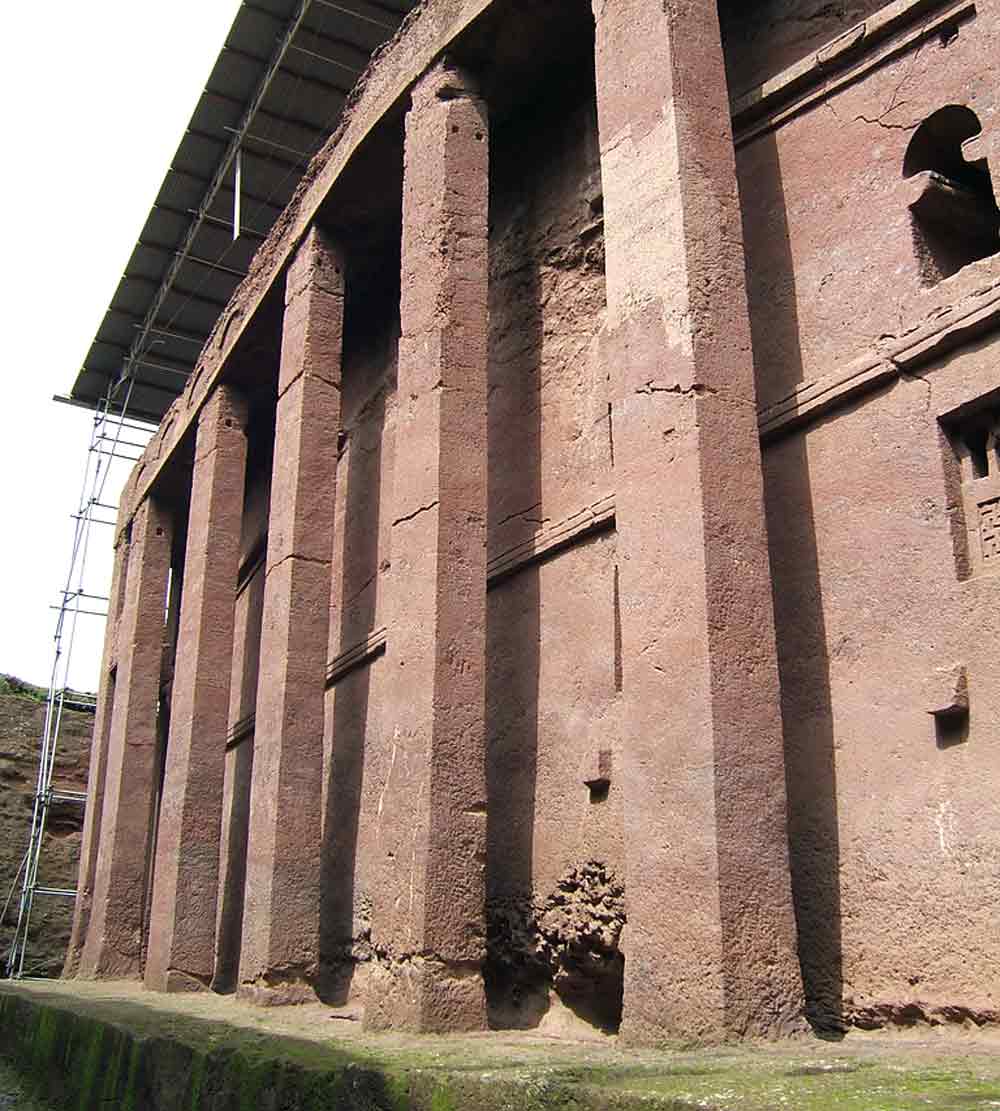
Lalibela (c. 1185-1225) is the most documented and marveled of all the Zagwe kings. he’s credited for building the eleven famous rock-hewn churches in his capital city, known originally as Roha but renamed as Lalibela after his death. Lalibela was the capital of Ethiopia until the 13th century. Know maybe a town in northern Ethiopia within the Amhara region.

At an elevation of two ,500m/8,202ft. Gondar Fasilides established a replacement capital at Gonder, a trading center north of Lake Tana that connected the inside to the coast. At its height about 1700, the town supported the humanities and academic, religious, and social institutions also as Beta Israel craftspeople, Muslim traders, and an outsized population of farmers, day laborers, students, and soldiers.

Ethiopia cities 10 Lalibela

national bank of ethiopia in addis ababa

Which Ethiopia Cities is the best?

Every Ethiopia city has its own unique character. Some are green, while others are arid, some have good infrastructure while others have gravel road and mud huts. Some are tourist attractions places while others are places you need to run from.

Addis Ababa is one of the best Ethiopia cities. This is because of the superior quality of services and infrastructure above any other city in the country. Addis Ababa is yet a slum city, by UN standard, and more than 70 percent of the city is not suitable to live in. The developed part, however, has world-standard services, hotels, spas, and even good transportation systems.
Cities like Awassa and Bahir Dar and Gondar are preferred by some as entertainment and tourist destinations. Lalibela is also a small town, on a very high altitude, that brings a large number of tourists every year.

Most Afar and Somali cities are underdeveloped and the climate is harsh by Ethiopia city standards. These Ethiopia cities, however, are developing and are attracting investment. This may change the face of the cities in the near future.

Are Ethiopia Cities Urbanized?

As stated earlier, Ethiopia has a predominantly agricultural economic system, however, the cities of Ethiopia are growing at a fast rate that it is becoming hard to provide enough infrastructure such as housing. The urbanization process of Ethiopia started in the Axumite era. Although not much of the city is not left to witness, the dugout findings and artifacts show how civilized the town used to be. In the twentieth and twenty-first century, the growth has been accelerating even faster. The World Bank has stated that the annual growth rate exceeds 4.5% which is faster urbanization than Sub-Saharan Africa which is considered among the world’s fast urbanizing areas.

In response to this rapid urbanization of cities, professionals are trying to come up with the best urban plan that would make this transition comfortable. The professionals are considering three different possible causes, which are: creating large cities, medium-sized cities, and small cities. All of these possibilities have their pros and cons. The large cities have the potential to offer a wide range of jobs and innovation, thus aiding the rapid economic growth. But on the contrary, it is also apparent to see that the wider a city is the more it’s hard to address basic infrastructural needs like transportation, housing, water, and electricity.

The second group of professionals argues that medium-sized cities and small cities are favorable for a country that is in this kind of urbanization process. It is explained that these smaller cities could be the solution as jobs can be created as easily and the urban centers, won’t be as segregated as the large cities and also can be integrated with the rural parts of Ethiopia as they can be widely spread across the country, thus making it easily accessible.

The current organization of Ethiopia’s urbanization consists of a high number of small cities, a lesser number of mid-sized cities, and very few large cities. The formation of these types of urbanization is mainly dependent on the creation of mandatory infrastructure and services which depends on the central government system. The suburbs of Addis Ababa like Hayat and Betel are growing in a rapid rate and are regions that host thousands of urban settlers, so it is possible to observe that there is a huge say from the government as it aids the growth by providing infrastructure and services, in this case mainly focused on housing.

The urban growth of Addis Ababa came forth mainly because of the rural-urban immigration from across the countryside seeking employment and a better life. This rapid internal moment has forced the city to host different kinds of living conditions, to mention some of the important ones: it has created multiple slum areas that offer below standard lifestyle, created suburban areas with a high density of people that there is the problem of transportation and discomfort.

This kind of urbanization problem occurs when there is an imbalance between the internal human movement and the central government planning. The government in this state couldn’t provide an urban plan and structure fast enough to host the demanding population growth.

Which Ethiopia Cities Are a Must-Visit?

There are tourist destination Ethiopia cities such as Gondar and Lalibela and Axum. These cities are historic cities and are UNESCO registered. Because of this reason many tourists prefer to visits these places.

Addis Ababa is a primary destination, as the main airport is located in this city. Addis Ababa is also a good start to understand the past of the country. The museums and the landmarks teach you a lot about the country.

Places in the south and in the Omo region are natural places with immense mountains, landscapes, and wild animals. Afar is the birthplace of mankind. Many skeletons of hominids are found in this place. The landscape, the volcanic lava, colorful landscape, make the place to visit. The climate, however, is harsh and need further care.

Here are few Ethiopian cities, and places that you must visit: Danakil Depression, Lalibela Ethiopia Cities, Harar Ethiopia Cities, The Blue Nile falls Ethiopia Cities, The Omo Valley Ethiopia Cities, Axum Ethiopia Cities, Gondar historic Ethiopia Cities, Addis Ababa capital Ethiopia Cities, Simien Mountains North Ethiopia Cities, Bahir Dar Ethiopia Cities

The Blue Nile in Ethiopia

1
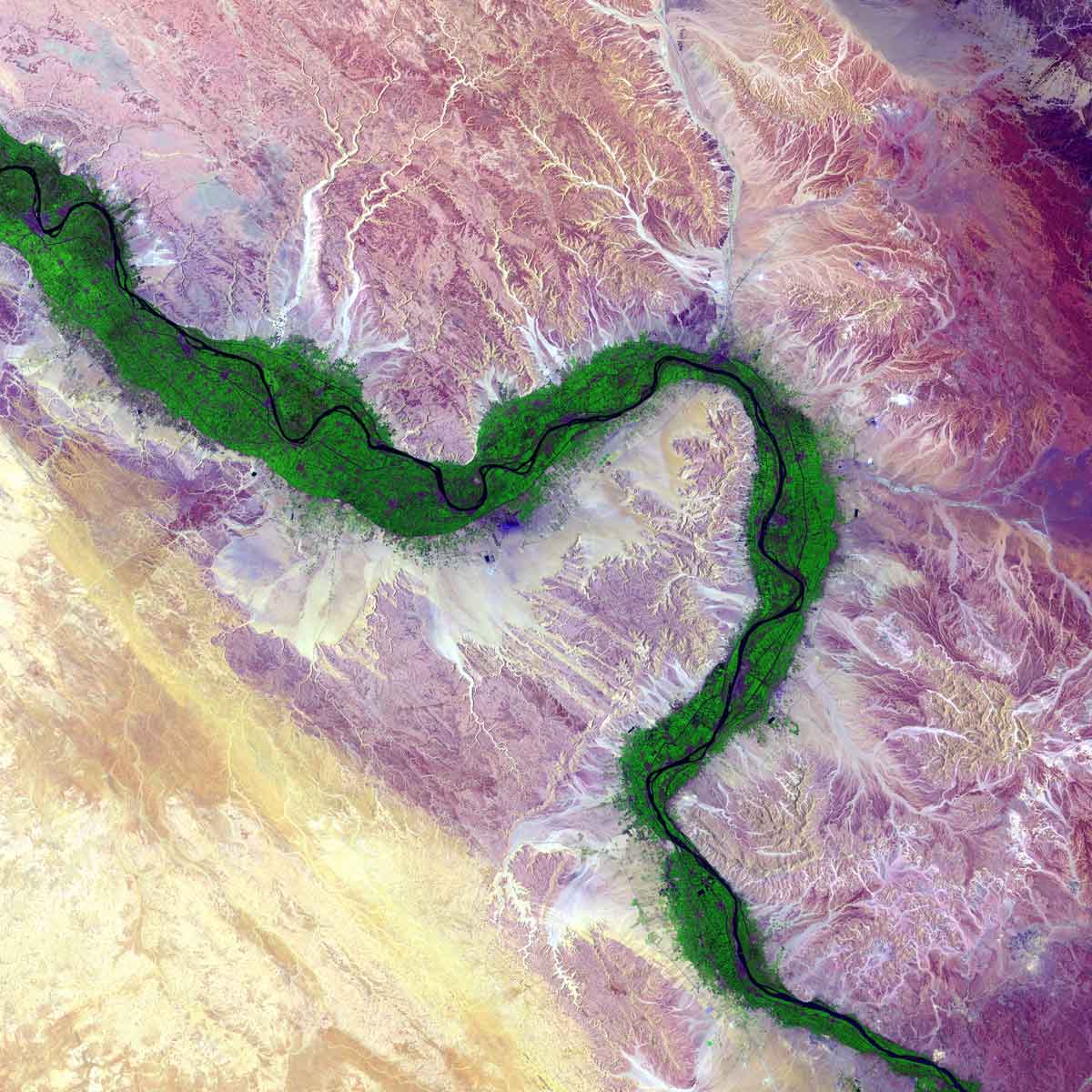
nile from above

The Blue Nile in Ethiopia has been recent news when Ethiopia began its dam to use the Blue Niles water. This has not been good news for Egypt that uses the river as a primary source of irrigation for its agriculture.

The Blue Nile (the Blue Nile in Ethiopia), regionally known as Abbay, is the main feeder of the magnificent Nile River – the largest river in the world. The Blue Nile in Ethiopia River originates from Ethiopia’s Lake Tana and blends with the shorter feeder White Nile at Khartoum Sudan to create the Nile River and it flows in Egypt.

It is commonly thought that the first foreigner to have noticed the source of Blue Nile in Ethiopia was Pedro Paez, a Spanish Jesuit who went to the region in the early 1600s; however, John Bermudez contributed the first information of the Tis Issat Falls in his biographies.

Here we explore what is the Blue Nile in Ethiopia, what are the rivers that meet the Nile, the destination of the Blue Nile in Ethiopia and out of Ethiopia, and the disputes in the region.

What is the Blue Nile in Ethiopia?

The Blueniles including the Blue Nile in Ethiopia is commonly recognized to be a tiny spring at Gish Abay, located at an altitude of about 2,744 meters (9,003 ft). This river, perceived as the Gilgel Abay (Lesser Abay River), runs north into Lake Tana. Gish Abay is the common large of some sixty rivers moving toward Lake Tana.

Following the origins of the Nile were found the preponderance of researches has centered on hydrology and not on the social and spiritual characters of the river. Gish Abay has been recognized as the exit of the river Gihon streaming straight from Paradise joining this world with Heaven. The grace of Abay and the origin, in particular, have had and still have a vital role in the Ethiopian Orthodox Church.

The exact distance of the river is not exactly known and some scholars say the distance is between 1460 km and 1600 km. The river will merge with White Nile in Khartoum Sudan and form the Nile River together. The general basin size is about 325,000 km2. The river generally flows from the southern area of Lake Tana toward North West of the country across the western area of Ethiopia. During the rainy season, the river will be 400 meters wide.

#What is Blue Nile in Ethiopia

nile from above
Blue Nile in Ethiopia and beyond

What Is the History of Blue Niles?

The Blue Niles has been generous to its neighboring countries since the Stone Age and also is where the Egyptian civilization started. around 3400 BC which was at the end of the recent ice age the sea level increased changing the course of the Nile flow from west to the north which was a major change of climate that led to the creation of the Saharan desert.

There was one prominent event for the people who were living around the two river valleys and it was the conquest or an invasion of the area by different groups of warriors in 1600.

#What is the history of Blue Nile in Ethiopia

Where Does the Blue Niles Start?

Blue Niles, also called ‘Tikur Abay is the major Nile River tributary next to White Nile in Sudan. The main source of the river is Gilgel Abay or Lake tana. Lake Tana is the largest lake in the country, and the second-largest in the continent next to Lake Victoria. Tana is the source and starting point of the famous Blue Niles River which goes to Khartoum on its way.

The lake is situated on the north side of Bahir Dar town. There are several streams that flow to Lake Tana and serve as a feeder for the river, but it is considered a small spring called Gish Abay (Gilgel Abay) is the sacred and initial source of the river. Gish Abay is approximately 2744-meter-high in elevation. There are also some other feeders for the river including Magech river, Gumara river, Reb river, and Kilte river.

#Where does the Blue Nile in Ethiopia start

The Nile feeders- the Blue Nile and the while Nile

The Nile possesses two main feeders – the White Nile and the Blue Niles. The White Nile is thought to be the lead water and primary water of the Nile. The Blue Nile in Ethiopia, yet, is the origin of the most maximum of the water and deposit. The White Nile remains large and spreads in the famous Lakes area of middle Africa, including the usual distant origin still undetermined but discovered in both Rwanda and Burundi. It runs north within Tanzania, Lake Victoria, South Sudan, Uganda. The Blue Niles rises in Lake Tana in the country of Ethiopia and runs toward Sudan of the southeast. These two rivers join the north side of the Sudanese famous city Khartoum.

The northern segment of the river runs north almost completely in the Sudanese desert to Egypt, then departs in a big delta and runs into the Mediterranean Sea. Egyptian culture and Sudanese nations have relied on the river since ancient times. Most of the people and towns of Egypt depend along with those pieces of the Nile canyon north of Aswan, and almost all the cultural and traditional places of Ancient Egypt are located on river edges.

#Blue Nile in Ethiopia– Nile feeders

What Is the Blue Nile For Egypt?


Blue Niles (Blue Nile in Ethiopia) plays a vital role in the livelihood of Egypt. The Blue Niles, a major tributary of the Nile, contributes a large amount of water to the Nile’s streamflow. Blue Niles is shorter than the White Nile in Sudan, but 59% of the water originates from Ethiopia and merges with the White Nile, and flows to Egypt. It is also a crucial resource for Sudan, for instance, the Roseires Dam and Sennar Dams produce 80% of the country’s power. The dams help the country to produce crops and other products by means of irrigation, the region also produces wheat and animal feed crops.

blue niles for egypt
Blue Nile in Ethiopia- egypt

The Nile was also an essential element of ancient Egyptian religious life. Hapi was the power of the yearly floods, and both he and the pharaoh did think to manage the flooding. The Nile was thought to be a path from life to death and eternity. The east was conceived of as a region of birth and growth, and the west was supposed the point of death, as the father Ra, the Sun, experienced birth, death, and rebirth each day as he joined the sky. Thus, all graves were west of the Nile, because the Egyptians thought that to enter eternity, they had to be hidden on the side that signified death.

As the Nile was such an essential part of Egyptian life, the ancient calendar made based on the three series of the Nile. These periods, each having four months of thirty days respectively, were named Akhet, Peret, and Shemu. Akhet, which implies flood, was the season of the year when the Nile overflowed, dropping many courses of rich soil back, serving in farm growth. Peret the developing period, and Shemu, the last period was the autumn season when there were no rains.

#What is Blue Nile in Ethiopia and Nile for Egypt

Why Is the Blue Nile Called Blue?

The Blue Niles got the ‘blue’ part of its name because of its muddy color due to the huge amount of fertile soil it erodes from the Ethiopian highlands. Why they called it blue rather than the more logical color of brown, dark brown, or even black is open to speculation.

#Blue Nile in Ethiopia and the blue

The Blue Nile Falls

Another interesting feature of Blue Niles is The Blue Niles Falls, which is an attractive waterfall on the river in Ethiopia. It is also known as Tis Abay in Amharic, its corresponding meaning in English is “great smoke”. It is located on the upper course of the river, and it is 30 km far from the town of Bahir Dar and Lake Tana. The falls are estimated to have 37 to 45 meters high.

The Blue Niles Fall is the common exciting view that the whole Nile system has to give. Four hundred meters (1,312 feet) far when in overflow (which usually happens in September and October, following the wet season), and splashing above a clear gorge more than forty-five meters deep, the falls start-up a constant splash of water droplets which wet spectators up to a kilometer apart. This dark deluge, in turn, creates colors that change and shimmer over the canyon and a continuing rainforest of rich leafy plants – enough to the enjoyment of the many monkeys and multi-colored birds that occupy the canyon.

It is just a five-minute ride from the lakeside city of Bahir Dar over the Blue Niles Bridge, to the point where the great river runs out of Lake Tana. But the falls are around 40 kilometers south of the city and are best addressed from Tis-Isat village, a business town of the Amhara people who live in this city growing crops like wheat, sorghum, and teff (from which injera, bread, is made).

#Blue Nile in Ethiopia and falls

The Renaissance Dam

In April 2011 Ethiopia was able to begin a huge hydroelectric power dam on the Blue Niles River. The late prime minister of Ethiopia Meles Zenawi was the one who raises the idea and motivates the nation to contribute and support the dam financially.
The final place for the Grand Ethiopian Renaissance Dam was known by the United States Bureau of Reclamation in the way of the Blue Niles study, which was administered within 1956 and 1964 when the government of Aklilu Habtewold. The Ethiopian Government viewed the place in October 2009 and August 2010. In November 2010, a plan for the dam was proposed by James Kelston.

On 31 March 2011, a day later the design was gone public, a US$4.8 billion deal was granted without competing for the call to Salini Costruttori, and the dam’s base stone was set on 2 April 2011 by late Prime Minister Meles Zenawi. A rock-crushing factory was built, along with a little airstrip for fast shipping. The expectation was for the initial two power-generation turbines to enhance operational after 44 months of construction.

Egypt, located over 2500 kilometers downstream of the place, crosses the dam, which it thinks will decrease the volume of water accessible from the Nile. Zenawi presented, based on unnamed research, that the dam would not decrease water availability downstream and would also improve water for fertilization. In May 2011, it was declared that Ethiopia would give plans for the dam with Egypt so that the downstream influence could be reviewed.

The dam was first called “Project X”, and following its deal was declared it was named the Millennium Dam. On 15 April 2011, the Council of Ministers renamed it Grand Ethiopian Renaissance Dam. Ethiopia holds the potential for approximately 45 GW of hydropower. The dam is being supported by government certificates and private contributions.

It was slated for the finish in July 2017.
As most Ethiopian expecting the dam is said to start generating electricity in the coming months, but it seems there is an unresolved affair between Ethiopia and Egypt regarding the amount of water Ethiopia should use while generating electricity.

See detailed explanation here.

#Blue Nile in Ethiopia and the dam

The Source and Destination of Blue Niles

Blue Niles River also is known as (Tikur Abbay) is one of the four rivers that created huge empires (civilizations) and is the longest rivers in the world, which originates near Lake Tana in (Bahirdar-Ethiopia). It is very famed for the (Tis Issat) or The Blue Niles falls that contain four streams that fluctuate from time to time. With the alliance of The White Nile, it creates the River Nile. The Blue Niles alone contributes 80% of the water that flows through the Nile River.

As the name indicates Tikur Abbay is so-called because during summer season overflows are formed eroding the huge amount of fertile soil from the Ethiopians Highlands straight downstream to adjacent countries through that process the water turns dark brown almost black.

The distance from its source to its meeting point is documented in between 1460 to 1600 kilometers, this documentation varies because when you follow the river lines it passes through different gorges depth relative to the Grand Canyon and that journey is really hard to attain. Its source is said to be at Gish Abbay which is 1800 meters high in altitude. The River Flows west out of Lake Tana across Ethiopia and northwest into Sudan passing through Egypt to level up to the Mediterranean.

#Blue Nile in Ethiopia and the sources

blue niles
Blue Nile in Ethiopia

The Blue Niles and its Offerings

The Blue Niles Basin involves many different lands and cities through its journey, which made the soil it touches rich fertile. For example, if we take Egypt, The Blue Niles built the whole country almost 90 percent of the water that flows to Egypt is provided by this river, also if we take Sudan 80% of the countries electric power is generated by the river Abbay.

The water seems to a provider but us Ethiopians aren’t using it efficiently, because when we see the statistics our country is one of the lowest energy-consuming countries in the world by that I meant only 22%of the population have access to electricity. But currently, Ethiopia is exporting electric power to the neighboring countries, which shows the political interference inside Ethiopia and its unstable issues.

At present, there is a tension between Egypt and Ethiopia Because of the Renaissance dam which Ethiopia is building.

#Blue Nile in Ethiopia and the end

What Are the Tributes to The Blue Niles?

Rahad, Dinder, Beles, Dabus, Didessa, Angar and Wajja, Gulla, Guder, Mugere, Jima, Wanchet, Qechene, Robe, Dembi, Walaqa, Bashilo, Checheho, LakeTana, Gilgel Abay, Magecha, Lesser Angereb, Reb and last but not least Gumara river. Almost All of them summed could equate to the Blue Niles together making the vast amount of the river Nile.

#Blue Nile in Ethiopia and the attributes

Is There Tourist Attraction in Blue Niles?

Tis Issat or the Blue Niles falls is one of the attractions that the Nile provides, It reaches to 400 M during/after the rainy season, falling 45m deep into the gorge. The Fall Sprinkles a constant stem of water droplets that will completely soak viewers from a kilometer away. This water on the air creates a rainbow giving the place (peace and serenity). It is located near Bahirdar across the bridge of the Abbay to where the river leaves Tana. I have never been to the Tis Issat in my entire life but been hearing its fame since I can remember, our community reminiscing from this gift of the land through history and culture.

#Blue Nile in Ethiopia and the tourists

Blue Niles and Major Rivers

The Nile River has many characters that can be distinguished from the rest but still there some similarities with some of them. It is said to be that Tikur Abbay is most similar to the Indus River which is located in India. They both served for the rise of the earlier civilizations but The Indus river was more about expanding trade and gaining economic power, While the Nile river is all about giving life and conservations i.e. (irrigations and farming) was its major role.

#Blue Nile in Ethiopia and the rivers

Finally, on Blue Nile in Ethiopia

The Blue Niles River is the largest in the world reaching up to 1600km; it is located in the highlands of Ethiopia originating from Lake Tana. The river flow southwest out of tana changing course to North West out of Ethiopia into the deadly valley of Sudan; while later on joining the White Nile and other tributes to form the river, Nile. This river has been giving gifts to the neighboring countries providing fresh fertile water that gave life to the deserted Egypt, which is recently becoming a huge issue between those countries whether who’s the rightful user of the river, could escalate into urging war.

The Blue Niles river (the Blue Nile in Ethiopia) will keep on providing our rich and freshwater until some kind of geographical movement like the recent ice age that could redirect the flow back to Ethiopia or we need to fight for what’s ours and we need to give tremendous value to our selves to our community and our country and make the best of the Niles never-ending gift.

Ethiopia Flag: 13 Flags, 3 Colors, 1 People

0

The Ethiopia flag is an image of a people’s character and the nation’s sovereignty. The historical background of flags and pendants emblems goes back to over 2000 years of mankind’s history.

Ethiopian old stories assert that green-yellow-red speaks to rainbow hues not too far off as a token of God’s vow not to flood the earth into elimination. At first, the shading or grouping changed and now and again there were different hues included or added too. Ethiopians call our flag ‘Sendek Alama’ which truly signifies “Staff Motoo ” or “Staff Symbol” or “National Flag”.

All through the period, the Ethiopian tricolored flag has been a guide of nobility, energy, expectation, and steadiness for the people and our pioneers. Because of our ceaseless battles for the country and the people, we Ethiopians have built up an uncommon love and idealization for the national flag.

What is Ethiopia Flag History?

The Ethiopia flag as top yellow, center red, and lower green Pendants (triangle formed). This kind of banner was used by Emperor Menelik in Addis Ababa. The three pendants were later joined into the customary Green Yellow Red flat pieces of the Ethiopian banner as we probably see it today.

Minilik Ethiopia Flag: First Ethiopia Flag

Flags of those three hues had been there before the main authority Ethiopia flag was set up by Emperor Menilek II on October 6, 1897; his banner bore on the yellow stripe the primary letter of his name in Amharic “ም” content.

Ethiopian Pennants.svg
By Orange Tuesday (talk) – Own work (Original text: self-made), Public Domain, Link

Three colored pennants Ethiopia flew in the 19th century and had red originally on top.

Flag of Ethiopia (1897-1914).svg

By Thommy – Own work (2003). “Vlajky a znaky Etiopie“. Vexilolog., CC0, Link

Menilik II used his monogram as a personal emblem

Ethiopia had never been vanquished by a pioneering force and crushed the Italians, in their journey of an African settlement, on 1 March 1896 at the Battle of Adwa (typically known as Adowa, or now and then by the Italian name Adua), in Tigray. The next year, on 6 October 1897, it presented its first rectangular red-yellow-green banner, in view of the three flags.

The hues were deciphered as having an association with the Holy Trinity and the three fundamental territories and represented: red – influence and confidence, yellow – church, harmony, characteristic riches and love, green – land and expectation. Later the royal crest—comprising of the “Overcoming Lion of Judah,” a lion holding a staff beat by a cross with strips in the three national hues—showed up on the banner when it was used for authentic purposes.

The lion emblematical attested that Emperor Menilek was the child of the Queen of Sheba and the scriptural King Solomon. The main legitimate definition was given to the lion banner in November 1932, not long after the crowning celebration of Emperor Haile Selassie.

Before long, the request for hues was changed and the Imperial image, the Lion of Judah bearing a cross, was put on the focal stripe. This image was said to be related to Menelik I generally accepted to be the child of King Solomon of old Israel and Makeda, the Queen of Sheba. As indicated by legend, he established the Solomonic line of Ethiopia that governed Ethiopia with scarcely any interferences for near 3,000 years (and 225 years later finished with the fall of Emperor Haile Selassie in 1974).

On 3 October 1935, the Italian Fascist system under Mussolini again assaulted Ethiopia, utilizing tanks, planes and substance weapons, and for a long time, from 1936 to 1941, involved Ethiopia, flying the Italian banner, as the state of Abyssinia (the name it used to be alluded to outside the nation, got from an early Arabic name). In 1941 the Italians were driven out by British and Ethiopian loyalist powers and the National banner was re-established.

Haile Sellasie Ethiopia Flag: Lion of Judah

In 1949 Emperor Haile Selassie I received an Imperial Standard, highlighting the Lion of Judah on the (front-side) and an image of the figure of St. George killing mythical serpent was found on the back, enclosed by the neckline of the Order of Solomon’s Seal to symbolize the country having vanquished its adversaries.

Flag of Ethiopia (1897-1936; 1941-1974).svg


By Oren neu dag – Based on these images: [1][2][3][4], Public Domain, Link


On the obverse side it depicted the Lion of Judah, On the reverse side it depicted St. George slaying the dragon; on each side, the depictions are encircled by the collar of the Order of Solomon’s Seal and in each corner of the Standard is the badge of the order, a Star of David with a cross.

Ethiopia’s State flag was adjusted after the ousting of Emperor Haile Selassie I on 12 September 1974 by the military regime: the crown was expelled from the lion’s head and the Cross finial was changed to a lance point. This variant kept going just a couple of years until the Socialists dominated and fundamentally changed Ethiopia’s images. In 1975 a progressive government (“Derg” military system) built up another flag with a communist image, structured by Taddesse Mesfin.

The communist image depicted a traditional plow emphasizing the importance of agriculture, a cogwheel suggesting industry, and 14 administrative districts. There’s a sling that is attached to the plow; emphasizing education.

Flag of Ethiopia (1974-1975).svg
By ThommyOwn work Flags of the World – Imperial Ethiopia This vector image includes elements that have been taken or adapted from this file:  Flag of Ethiopia (1897-1936; 1941-1974).svg (by Oren neu dag)., Public Domain, Link

Haile Selassie’s emblem was modified by the military on 12 September 1974, by removing the crown from the lion’s head and changing the Cross finial to a spear point.

Derg Ethiopia Flag: Communist Flag

Flag of Ethiopia (1975–1987).svg
By Johannes Rössel (talk) – Own work, Public Domain, Link

The Socialist military “Derg” regime adopted a flag featuring a new State Arms designed by Tadesse Mesfin In 1987 President Mengistu Haile Mariam broadcasted the People’s Democratic Republic of Ethiopia under a flag with a considerably more transparently Marxist plan, including a red star at the top.
Figure 5 Haile Selassie’s emblem was modified by the military on 12 September 1974, by removing the crown from the lion’s head and changing the Cross finial to a spear point.

Flag of Ethiopia (1987-1991).svg
By TRAJAN 117 This W3C-unspecified vector image was created with Inkscape. – Own work, based upon This vector image includes elements that have been taken or adapted from this file:  Flag of Ethiopia (1991-1996).svg (by Ultratomio). This vector image includes elements that have been taken or adapted from this file:  PDR Ethiopia emblem.svg (by TheSign 1998)., CC BY-SA 3.0, Link

Figure 6 The Socialist military “Derg” regime adopted a flag featuring a new State Arms designed by Tadesse Mesfin

This rendition went on until 1987 when, through a submission, Ethiopia turned into a “Fair People’s Republic” with Mengistu Haile Mariam as president. The green-yellow-warning now conveyed another image and was in use from 1987 until Mengistu’s system was toppled in 1991.

Flag of Ethiopia (1992-1996).svg
By Thommy – Own work (2003). “Vlajky a znaky Etiopie“. Vexilolog. This vector image includes elements that have been taken or adapted from this file:  Flag of Ethiopia (1975–1987).svg (by Joey-das-WBF). This vector image includes elements that have been taken or adapted from this file:  Emblem of Transitional Government of Ethiopia.svg (by Samhanin)., CC0, Link


Mengistu Haile Mariam’s making of the People’s Democratic Republic of Ethiopia or PDRE generated the production of another official escutcheon. It was set in the focal point of the Ethiopia flag.

Recent Ethiopia Flag

The dissidents who toppled his system in 1991 flew a straightforward green-yellow-red tricolor. A green-yellow-red Ethiopia flag with no symbol had consistently been used by the people, as it could be inexpensively made and would stay current in any event, when systems changed: this fundamental example couldn’t be changed. It turned into the nation’s flag just after the ousting of the socialist system until, on 6 February 1996, new images were presented for the Federal Democratic Republic of Ethiopia.

Flag of Ethiopia.svg
By Drawn by User:SKopp – http://www.ethiopar.net/type/Amharic/hopre/bills/1998/654.ae..pdf, Public Domain, Link

After the fall of the socialist Derg system, the Transitional Government of Ethiopia returned to utilizing the clear tri-shading banner. Just the proportion size was different.

Ethiopia Flag Meaning

As characterized on the Ethiopia flag, the Green: “speaks to the wealth and the abundance of the land just as expectation, ” Yellow: “speaks to strict opportunity and harmony.” Red: “speaks to the penance of the fathers, who threatened their wellbeing with regards to Ethiopia “

The insignia includes a blue circle, symbolizing harmony. The star is yellow on a blue circle which covers the green and red stripes. The star vouches for Ethiopia’s brilliant future, while the yellow beams radiating from its internal points which are equidistant and are said to speak to the fairness of all Ethiopians paying little heed to race, statement of faith, or sex, connoting “the brilliant possibility in sight for the Nations, Nationalities, and Peoples (of Ethiopia) joined in their normal will”.
Figure 9 The present flag of the Federal Democratic Republic of Ethiopia has a star and streaks. These speak to the different provincial states and the countries and nationalities present inside them.

Impact of Ethiopia flag on other African countries

The Ethiopian tricolor of green, yellow, and red speaks to life and ripeness, confidence, and expectation just as enthusiasm and shedding of blood for the dad/motherland. Ethiopians are appropriately pleased with their nation and their national flag on the grounds that their free history and their flag as its image have constantly fit normally—five years of transitory five years of Italian occupation in the 1930s regardless.

Accordingly, Africans and other dark people wherever they are, they have a love for the Ethiopia flag as a reference point revitalizing image and battle for their privileges and opportunities. Honest history specialists have regarded and hailed Ethiopia’s effective battles against bigotry, expansionism, and dominion. Ethiopia’s conclusive enemy of provincial triumph against Italy in Adwa in 1896 stirred and enabled a significant part of the dark world from Africa to America and the Caribbean.

The Ethiopia flag that has existed for such a long time is today the idea behind for the national flags of no under 28 nations in Africa and the Caribbean-Latin America districts. This incorporates 11 nations with imaginative tricolor states of the green, yellow and red hues with particular symbols in addition to 17 nations utilizing the three hues in addition to different hues.

After picking up freedom from pilgrim rule, a few nations in Africa that recently uncolonized received these three colors in praise to Ethiopia’s obstruction against the remote occupation. At the point when embraced by Pan-Africanist countries and associations for their exercises, the hues are often alluded to as the Pan-African colors. All in all, we can say that there is no other flag that has been embraced in the world like the way the Ethiopia flag did.

Ethiopia flag

Conclusion, the Ethiopia flag

Since the Ethiopia flag has an old root, numerous understandings exist about what the hues imply, such as, Faith Hope and Charity or Father Son and Holy Spirit or Wealth Blood and Fertile Land and other present time terms. Ethiopians anyway trust it was given to us by God and its holiness is beheld.

The Ethiopia flag has undergone different kinds of transformations depending on the regimes, or political situations. The Ethiopia flag developed into its present type of green at the top, yellow in the center, and red at the base towards the finish of the nineteenth century during a period of deliberate European colonialist infiltration and control of the African mainland.

Despite all the changes on the emblem of the Ethiopia flag, the basic colors on the flag, green, yellow, and red have stayed the same, even though they had different meanings during different times. A blue circle including a five-pointed star and equally discharged beams are now the highlighted insignia.

Whilst Red is now included at the base of the level tricolor, this was switched until the mid-nineteenth century. The insignia was included in 1996. What the hues symbolize differs relying upon perspective. Be that as it may, red speaks to the blood spilled with regards to Ethiopia; yellow speaks to harmony and agreement between Ethiopia’s different ethnic and strict gatherings, and green is said to symbolize trust or the land and its ripeness.

Ethiopia Dallol: Dare to Visit the Harshest Place on the planet

0
afar salt camel landscape ethiopia

Ethiopia Dallol is a marvelous place in Ethiopia. Its location in the rift valley gave it a different climate zone that is unfavorable to live in. The climate could go up to 40 degrees in certain months. This is directly due to the altitude of the location that is 125 meters below the sea level. This created a dry climate. Dallol, on the other hand, has colorful landscapes created by volcanic activities. The open lava lake is also marvelous to watch at night.

If you are reading this, probably because you are interested in dallol Ethiopia. Here I will tell you a few things you need to know about Ethiopia Dallol.

Ethiopia Dallol weather

The average annual temperature within the town was 34.4°C.

The Ethiopia Dallol volcano (Dallol Depression), or also called the Ethiopia Dallol hydrothermal field is found in a farther portion of the northern Denakil Depression in NE Ethiopia (in the Afar region). It is the lowest known sub-aerial volcanic zone within the world. Despite its harsh climate, Ethiopia Dallol is one of the world’s most fabulous scenes and a boundless zone of elevated salt stores resulted from volcanic activity. It is likely caused by a dynamic volcanic system underneath a few kilometers of dissipation salt deposits.

Ethiopia Dallol is said to be the hottest place on the planet, with normal yearly temperatures well over 30 deg C. 1.5 x 3 km wide Ethiopia Dallol “mountain” (rising around 50 m over the extraordinary Salt Lake) close the border with Eritrea. Ethiopia Dallol is popular for its hot brine, and multicolored white, pink, ruddy, yellow, green, gray, and dark salt store.

It is a place on the globe made between the harsh sun and the infinite salt ground. Only a few people visited Dallol and accessing this place is still challenging and tiring.  Which you can only reach using camels as transportation after traveling using cars up to Danakil depression. The First most detailed researches were carried out in this sultry region in the 60s of the last century. At that point, researchers found out that the mean yearly temperature within the region of Ethiopia Dallol is 34 degrees Celsius and above, which is the most extreme within the world.

Dallol town is One of the most Incredible attractions of Ethiopia. Nowadays it’s uninhabited, but 50 years back there was an expansive settlement; its inhabitants have been developing mineral deposits found adjacent. Ethiopia Dallol also has an extremely hot and dry climate. The First most detailed researches were carried out in this sultry region in the 60s of the last century which is (1960 to 1966). At that time, it was found that the average annual temperature within the town was 34.4°C.

afar salt camel landscape ethiopia

Ethiopia Dallol, Ethiopia’s first impression, the temperature appears to be very high like we have never seen, but also it should be emphasized that researchers have calculated the average temperature. For months, the temperature in Ethiopia Dallol can be over 38°C, though there is no correct distinction between winter and summertime. Despite the reality that at present the mining town is in ruins, it never ceases to pull in tourists though. Somehow, tourists are interested in this place. It is probably because Dallol is nothing like many have seen on earth.

This phantom settlement is arranged within the Afar Depression, a region of expanded volcanic activity. The adjacent Ethiopia Dallol volcano only strengthens the sultry climate and shapes around the Strikingly Harsh desert.

The name Ethiopia Dallol was given by the afar people and it means dissolution or disintegration describing a landscape of green acid ponds, iron oxide, sulfur, and salt desert planes. One of the most striking features of Ethiopia Dallol is the broad palette of colors of the brines and the solids. It’s a unique hydrothermal system Known for its science fiction moving colors and mineral patterns. Small white spread temporary gazers produce salt.

The Ethiopia Dallol deposits include significant bodies of potash found directly at the surface.

Additionally, the area contains the Ethiopia Dallol sulfur springs or hot springs. These springs boil like they are on a stove though it is the nature of the place that makes it act like that.

Also, according to the research, Ethiopia Dallol’s lakes are among the hottest places on the planet, with temperatures drifting at around 45-degrees Celsius in the wintertime. The researchers said that Ethiopia Dallol’s scene has both profoundly saline and exceedingly acidic pools in plenitude.

dallol afar ethiopia

Chemicals in the Ethiopia Dallol

The researchers found a tremendous sort of primitive salt-loving micro-organisms within the Ethiopian desert, as well as the saline gorges around the Ethiopia Dallol geothermal field, but none within the extremely sultry and acidic pools or within the Black and Yellow lakes of Ethiopia Dallol, which contain expansive sums of magnesium. This is often especially unusual, by their scale.  

The Hot Springs

There are so many places in this world that are just odd and wonderful, and I believe Ethiopia Dallol is one of them, in spite of the fact that you cannot swim here (since the water is poisonous). The hot springs are worth visiting as they are one of the reasons why the Ethiopia Dallol scene is so visually striking. These springs discharge chemical compounds like ferrous chloride and press hydroxide that bond when they come into contact with the climate.

Also, it strikes you with the question that as we know currently earth is the only planet that life exists in and somehow Ethiopia Dallol is inhabitable even for microorganisms. Previous studies had claimed the presence of certain micro-organisms that can develop in this greatly inhospitable environment, the new finding suggests that, in any case, it appears that it cannot support life at all. It was in fact displayed as a terrestrial simple of early Mars. Researchers said that they examined numerous more tests than past studies, guaranteeing that there was no contamination, and came to the conclusion that there’s no microbial life within the salty, acidic lakes, or within the magnesium-rich brine lakes adjacent.

Ethiopia Dallol Wild Life

The natural life of the Ethiopia Dallol Desert Wildlife within the Ethiopia Dallol Depression is extremely rare and debilitated, but a few species still hang on to their survival. You’ll not see an incredible assortment of species, indeed among the winged creatures, sightings are uncommon. In any case, a few exceptionally living species still are around and if you see them, it’ll be an amazingly fulfilling experience. Because imagine the place we thought was unhabitable, has living species in it.  

The Oryx, a draft well-evolved creature that can survive days without water. The Somali Ostrich, Cheetah, and also a few Somali Wild Ass are surviving the Ethiopia Dallol Depression.

Ethiopia Dallol and Salt Extraction

In Ethiopia Dallol, Ethiopia there are several salt stores within the locale; salt extraction is carried out day today. The peoples around their support their self and their family by selling salt. The extraction is done in groups, which they stood on opposite sides to each other and they use ‘Gesso’ for the digging and also use an axe for shaping the salts into a rectangular volume. The primary settlement within the hot desert was established over 50 years back, a significant portion of its population was engaged in the salt extraction process.

Afar salt extraction is carried out using Camel as transportation. Ethiopia Dallol Depression Camels at the Ethiopia Dallol Depression, Ethiopia Afar Salt Mining The cutting of salt tiles at the Afar distance mining site. Camels are incredible when it comes to dessert because of their water holding capacity for salt transport.

afar man smoking ciggarate
image: Afar man

Is There Any One Living in Dallol Ethiopia?

Ethiopia Dallol Depression has no comfortable housing. In fact, it only has one street navigating it that does not reach all of the interesting places like the sulfur springs, the Afar distance salt mining location, and the Erta Ale Volcano. Visitors are obliged to rest in tents and primitive structures, whereas food and water are brought along. The farthest distance from the mainland, lack of regular traffic, in other words, its inaccessibility, extreme climatic conditions, and awful crime circumstances are some of the reasons why Ethiopia Dallol depression can be called Extreme

Be that as it may, its surroundings are occupied by individuals who adjust to the harsh climate. You might feel like you would not survive there for a day because of its unbearable temperature, but the peoples there will amuse you. Imagine living there for your whole life within that temperature, how hard is that? Well for me it is really hard, I cannot even bear with 30 c. A visit to some of the towns and villages of the positioning could be life-threatening, while a trip to the Ethiopia Dallol depression can become the ultimate experience. but we have to be accompanied by armed guards.

Finally, What precaution I need to visit Dallol?

Dallol is the harshest and hottest place on earth, which is inhabitable because of its extreme climatic conditions. Despite that, it would be an incredible experience to go there and witness the salt land, Hot springs, Ethiopia Dallol, Ethiopia The Sulfur hot springs with colors changing from ochre, lemon yellow, snow white to lime green, for ourselves.

The place is bringing lots of tourists every year. You have to be accompanied by a guide to visit the place because of as I mentioned earlier ‘safety issues. The place is at the borders of Djibouti and Eritrea, therefore, is not far from violence. Second, the ground is not proven to be solid except by empirical experience. You need to follow your guide to avoid danger.

Protecting skin from the sun is necessary. The locals have better resistance to the UV light and while on foot make sure you have a proper sunscreen. Stay hydrated. Your body needs it.

Ethiopian Weather: A Basic Guide To The Cool And Harsh Climate

0

Ethiopia is one of the biggest nations in Africa, only second in population. The nation is located in the horn of Africa which is East of Africa. It Shares limit with Kenya, Somali, Sudan, Djibouti, and Eritrea. There is high social and cultural variety in Ethiopia that makes it one of the most visited nations in the world.

On the other hand, the high elevation contrast in Ethiopia made a different climatic zone within the boundary of Ethiopia. The elevation differs from Ras Dashen Mountain to the absolute bottom of Assale Lake in Danakil depression.

Before visiting Ethiopia, you probably need to answer a few Ethiopian weather questions.

  • What are the seasons in Ethiopian weather.
  • How many climatic zones are in the country, and more?

Ethiopia is located near the Sahara Desert, and it gets the effect of the dry heat, especially in the northern part.

The rest of the country is green and has unique soil types and weather types. Each Ethiopian weather also has its opportunity and threats. The cold in the semen mountains, for example, makes life hard on the plateau. The optimal temperature of the Southern Ethiopia is good for many crops and coffee. In other areas, the rain comes early and may stay longer than in other places.

What are the Seasons in Ethiopian Weather?  

There are four seasons in Ethiopian weather: Bega, Belg, Kiremet, and Tseday. The Bega is the driest season of all where the amount of rain falls is at its minimum with frost in the morning, especially in January. It’s called winter, and it includes December, January, and February.

Belg is autumn which comes in September, October, and November. This season is the harvesting season and the time of the year the landscape is covered with plants and its beautiful product. The harvesting time might be different based on the type of crop.

Kiremet/meher is called summer and it has the month of June, July, and August. This season is the rainiest. Even though the amount of the rainfall differs from place to place.it is this time of the year the preparation of land and crops starts.

Tseday is called spring that contains the month of March April and May. This season is well known with its hottest of all seasons with high temperatures which requires occasional showers.

What are Climate Zones in Ethiopia?

Ethiopia is in the tropical zone lying between the equator to the tropic of cancer. In Local terms, it is classified into 5 major groups Dega, Wonadega, Kolla, Bereha, and Wirch.

Dega is the cool zone. It is a climatic zone in areas of the altitude above 2440 meters and the average annual temperature of about 160 c and the annual rainfall between 1270mm and 1280 mm. The rain here is much less than tropical zone.

Weyna dega is warm, wet and lies below 2440 to 1800 m the zone includes highland areas. The average annual temperature of 220 with the annual rainfall between 510 and 1530 mm.

Kola climatic zone is much warmer than weyna dega and also drier. Bereha and wirch, both of which refer to Ethiopia’s most extreme climate zones.

Bereha is the hottest and drier of all the zones and in contrast, the Wirch is the coldest of all which is above 3200 meters of altitude.

Since Ethiopia covers a large area in eastern Africa, and since the altitude differs largely from place to place these climatic zones are found distributed in the country. The northern mountains and plateaus are cold while the Danakil depression only few kilometers away are the hottest places in the country. 

How Does Ethiopian Weather Affect the Society and my Travel? 

From the way of dressing to the architecture, Ethiopian culture is affected by the Ethiopian weather. In the Afar, a desert climate zone, the dressing code is light clothes on the day time and more cloths at the night as the temperature dramatically falls at night. Therefore, you need to prepare with extra cloths.

The climate in Afar forces the people to live a nomadic lifestyle, and they are constantly on the move. Therefore, they use small, easy to carry materials to build their houses and to demolish and rebuild in another location where there is water. They use sticks and mats as these are easily transportable.

In south Ethiopia, many places are colder and rainy. The places are green and wild coffee and fruits are easily found. The people need permanent living and they depend on the landscape. In the Gurage zone, for example, the land is green and their houses are permanent and well designed. The houses are placed integrated with landscapes such as rivers and local plants.

Most places have an optimal temperature that does not need an air conditioner. Addis Ababa, for example, has 22 degrees at its highest temperature. These days, due to the contractions and deforestation, the temperature seems to increase in some months. However, the city has a consistent and optimal temperature.

What are the Climatic Regions in Ethiopia?

Plateau: This Ethiopian weather can be cool, mild, or pleasantly warm, depending on altitude. There is a season characterized by scarce rains from November to February and a rainy season from June to September, preceded by a period, from March to May, when some showers and thunderstorms may occur in the afternoon. The annual rainfall ranges from 1,000 to 2,200 millimeters. Rainfall occurs as downpour or thunderstorm, usually in the afternoon or in the evening, even during the monsoon season, when, however, cloudiness is more widespread.

Arid regions in the arid or semiarid areas surrounding the Ethiopian plateau the amount of rainfall drops below 800 mm (31.5 in) per year. The narrow strip of the west of the plateau receives the southwest monsoon.

Danakil in northern Ethiopia, in the Afar Region, is desert and hot consistently throughout the year. Specifically, in the Danakil Depression, where some salt lakes, for example, Lake Afrera are discovered, the atmosphere is especially scorching. Since the altitude drops to 125 meters below sea level, the climate is for all time and very hot consistently.

The relinquished settlement of Dallol, in the far north, is viewed as the hottest spot on the in the world, by and large, having an everyday temperature of 35 °C throughout the entire year. Lows are around 30 °C and highs around 40 °C. On the inclines of Erta Ale fountain of liquid magma, dim basalt rock assimilates the sun’s beams and warms up with a certain goal in mind, in this way making a repulsive domain.

Among mountains from the Ethiopian Plateau, several mountain peaks, Ras Dashen is the highest in the country at about 4,550 meters. In some mountains where several interesting ecosystems are found up to 2,800 meters, you find a forest, replaced at higher altitudes by barren mountain vegetation, able to withstand the cold of the night. While above 4,000, the constant cold prevents the growth of almost any type of vegetation. On the contrary, some mountains such as Ras Dashen (in the north) and Abuna Yosef (in the east) are located in the semi-arid area.

What Is the Best Time to Visit Ethiopia?

The best time to visit Ethiopia is from November to February, the driest and coolest the year almost everywhere. In the arid areas, this is still a hot period at low altitude, with scorching days, but nights are usually pretty cool. The worst months on the plateau are July and August because of the rainfall, and April and May in the semi-arid areas because of the heat. The Danakil Depression is steadily scorching and inhospitable throughout the year although it is probably a little less hot from December to February.               

CONCLUSION

The climatic zone in Ethiopia is rather very diverse and is different from many other countries. The climate highly differs from one place to another, based on the altitude of a city or a location. You will experience a huge climatic change if you are traveling in a car.

Before traveling to cities in Ethiopia, first, you need to know the climatic zones of the areas. Then you need to wear for the climatic zone.

November to February is the best time for a visit to many areas in Ethiopia. In these months the sun is not harsh and the rain has not yet come. This might not be true for some areas, especially in the northern mountains and in southern Ethiopia. Except in some areas in the eastern part, Ethiopian weather has an optimal temperature that doesn’t need air conditioning.

There are four seasons in Ethiopia with their character but only two of them, the summer and the winter have much more effect. The summer is dry and sunny and the winter is when the rain begins. The summer is about 9 months and the winter is 3 or months depending on the location.

Finally, you may need to use sunscreen to keep your skin safe, especially if you came from cold areas. Although the sun may not be that harsh, you still may get the effect. You also need to stay hydrated. Since the climate changes fast from place to place, keeping body temperature optimal is necessary.

Ethiopian weather, Ethiopian weather guide

Author: Tesfaye Abebe , edited

A Simple guide for 11 Best-Known Rivers in Ethiopia

0
Rivers-in-Ethiopia -

Rivers in Ethiopia have their own size, structure, and destinations. Despite its location closer to the Sahel Deseret, Ethiopia is a land of green and dry, rivers, and mountains. “Ethiopia is where everything began. It is the cradle of life the home of the greatest mountains, the spirit of greatness the home of the lions, the largest ecosystem of many unique species, and the longest rivers. Rivers are the symbol of one country and also the symbol of life. Ethiopia is the symbol of life and the home of nature.

This beautiful country is located in the Horn of Africa. It has occupied a total area that is 1, 126,829 square kilometers, making the country the 27th largest country in the world. Ethiopia is bordered by Djibouti, Eritrea, Somalia, South Sudan, and Kenya.

The country is characterized by a vast complex of mountains, lowlands, dissecting plateaus, semi-desert, and tropical forests. And also the greatest civilization occurred following the Nile basin which is one of the largest rivers in the whole world. 

A river is a natural stream of water that is fairly large and flowing in a definite course or channel or series of diverging and converging channels. Though it begins with streams which become larger and larger on its way up to its final destination.

And it is said that rivers are the most powerful, effective, and ubiquitous geomorphic agents, capable to shape the Earth’s surface and to produce a large variety of landscapes.

The following article focuses on Rivers in Ethiopia and that flows within the boundaries of the country or those which flows across many countries like the Nile river which have greater impacts on those nations that share the water from eastern Africa up to Egypt which we can see now likewise Egypt and Ethiopia. We will see about the major rivers and other rivers that are found in Ethiopia, their list, in which ocean or basin they flow in to, and also rivers that flows through the capital city Addis Ababa.

Although most of the rivers found in Addis Ababa are polluted, we will see what the major causes of the pollutions are. What are the impacts of the pollution what should be consider protecting and treating these rivers?

We get a glimpse of Ethiopian rivers their structures their characters and also what rivers are cross country or those rivers which flow within Ethiopian boundaries and the rivers found in Addis Ababa and about their conditions.

So, how many rivers does Ethiopia have and what are their names, and where do they is found? Ethiopia has many rivers that are included within the boundaries of Ethiopia and beyond that and nine major rivers. which may also cross to other countries like the Nile river. Here are the major rivers that are found in Ethiopia or that flows in the land of Ethiopia.

Rivers in Ethiopia: River Nile

River Nile is one of the rivers in Ethiopia. It is the 2nd largest stream within the world when it is at its highest. It is the lifetime of Africa up to northern Egypt and it is the starting point of civilization principally for Ethiopian and for Egyptians. Both countries lived on its bank and depended on it for their survival and development.
The waters of stream Nile River square measure shared by eleven countries, particularly Uganda, Tanzania, Burundi, Rwanda, Sudan, Congo, Kenya, Eritrea, South Sudan, Egypt, and Ethiopia. Two of its tributaries blue and White Niles. Wherever the White Nile is the headwater of the river. 

The Nile River may be a major supply of irrigation and hydro-electricity in Egypt. The stream has conjointly been a significant supply of conflict between North and North-Eastern African countries. Egypt has been suspecting of dominating the resources of the stream particularly by constructing the Aswan High Dam. The development of another Dam by Ethiopians on the stream is seen as a threat by Egypt and presently changing into a supply of confusion between these countries.

The supply of the Blue Nile stream is Lake Tana and flows to the western a part of the Federal Democratic Republic of Ethiopia and into the northwest of Sudan. The higher course of the Blue Nile stream is named Abbay. The Blue Nile contributes quite half the Nile’s stream flow and additionally supports the support of communities living on its banks. The Ethiopian government has created a mega-dam, Grand Ethiopian Renaissance Dam that creates a political fusion between the Federal Democratic Republic of Ethiopia Egypt and additionally America.
Rivers in Ethiopia 1: River Nile

Rivers-in-Ethiopia -

Rivers in Ethiopia: Awash Nile

Its course is entirely contained among the boundaries of Ethiopia and it merges into a sequence of interconnected lakes. The supply of the inundated stream is Mount Warqe and flows to inundated park its tributaries together with Logiya, Mille, Kabenna, Hawadi, and Durkham Rivers.

The inundated stream depression is home to several species just like the African ass, Beisa Oryx, Dorcasantelope, and Equus grevyi. in keeping with the Ethiopian, Central applied math Agency, the inundated stream is 1200 kilometers long. Cotton is fully grown within the fertile inundated stream depression, and dams provide electrical power. 


Rivers in Ethiopia 2: Awash Nile

Rivers in Ethiopia: Shebelle Nile

If you travel to the east of Ethiopia, you will find the Shebelle river. The name “Shebelle” springs from a Somali word Webi Shabeellex which means “tiger” or “leopard”. The Shebelle stream originates from the highlands of the Federal Democratic Republic of Ethiopia and flows into the African nation, wherever it becomes a seasonal body of water, as an alternative rising and disappearing at totally different times of the year.  The stream covers a distance of 702 miles creating it the fourth-longest stream in the Federal Democratic Republic of Ethiopia. The Shebelle stream has each seasonal and permanent tributary. Together with the Erestream, Galetti stream, and Wabe stream.

The stream is encircled by a sacred enclosure that’s jungly with juniper trees. The region through that the Shebeli flows is occupied by Somalis, Bantu-speaking folks, and Oromo. Cultivation has, for the most part, replaced pastoral nomadism within the river’s lower basin, and therefore the bananas fully grown on the southern reaches of the Shebeli, and therefore the Jubba compose an oversized portion of Somalia’s export trade. 
Rivers in Ethiopia 3: Shebelle Nile

Rivers in Ethiopia: Omo Nile

Omo stream is the largest stream outside the Nile that is found in the southwestern Federal Democratic Republic of Ethiopia, the Japanese continent. It rises within the Ethiopian highland and flows southward for concerning four hundred miles (644 km) into the northern finish of Lake Rudolf; it’s the lake’s solely perennial affluent.

The lower Omo depression is made in life and additionally, the complete Omo geographic region is vital geologically and archaeologically. Many hominid fossils and anthropology localities, qualitative analysis to the epoch and epoch, and thanks to its several archeological reasons, it had been selected a UNESCO World Heritage website in 1980. Situated on the stream is that the Gilgel Gibe II electricity station that was inaugurated.

The stream passes varied scenery, together with an open gallery forest of tamarinds and figs, alive with colobus. Below the cover on the stream, banks are also seen several colorful birds goliath herons, blue breasted coraciiform bird, white-cheeked turacos, emerald noticed wood doves, and red-fronted bee-eaters square measure all-satisfying sights.
Rivers in Ethiopia 4: Omo Nile

Rivers in Ethiopia: Genale Doriya River

The stream is found in the southeastern Federal Democratic Republic of Ethiopia. it’s a perennial stream. Rising within the mountains east of Aleta Wendo, the Genale flows south and east to affix with the Dawa at the border with African nation. The river’s tributaries embody the Welmel, Weyib (also referred to as Gestro), Dumale, Doya, Hawas, And therefore the Hambala.
Rivers in Ethiopia 5: Genale Doriya River

Rivers in Ethiopia: Atbara River

The name is Arabic that is known as when a town situated in Nile stream northeastern Sudan? The Atbara River rises within the Ethiopian highlands north of Lake Tsana and flows westward into Sudan, then meets with the Angereb and Satīt (Tekeze) rivers before heading northwestward to the Nile River. This connects Ethiopia and Sudan. Therefore, the stream flows into Sudan and reaches the Nile.
Rivers in Ethiopia 6: Atbara River

Rivers in Ethiopia: Tekeze River

Tekeze stream starts within the central Ethiopian Highlands close to close to, Tekeze additionally spelled Takaze, Arabic Nahr Satīt, river, a significant tributary of the Atbara stream, itself a tributary of the Nile River. Ethiopia, and flows in an exceedingly deep vale, north so west, wherever it forms a part of the border between the Federal Democratic Republic of Ethiopia and Eritrea, to enter Sudan below Om Hajer. 

The Tekezé stream is 608 kilometers (378 mi) long. The canon that it’s created is that the deepest incontinent and one among the deepest within the world, at some points having a depth of over 2000 meters. Although it’s some history back that the Tekezé served as an early link between Ethiopia and Egypt. The Kebra Nagast, that received its current kind within the thirteenth century, states that king Menelik I came back to Ethiopia by following this stream from Egypt.
Rivers in Ethiopia 7: Tekeze River

Rivers in Ethiopia: Dawa River

The Dawa stream starts because the Mormora and Awata rivers that flow down the Japanese slopes of the Sidamo mountains Rising within the mountains east of Aleta Wendo, the Dawa flows south and east to affix with the Genale Dorya at the border with African nation (shared with African nation and Somalia) The Dawa stream is that the largest tributary of the Genale stream and forms a part of the Genale–Dawa basin.

It drains nearly a 3rd of Genale’s basin space. The Dawa stream then loops spherical in an exceedingly south-easterly direction till it joins the Ethiopia–Kenya border close to Melka Mure and continues east on the border for a hundred and fifty clicks till connexon the Genale stream at Dolo on the Ethiopia–Somalia border. Many seasonal rivers and streams feed into the Dawa. 

The most important trees within the riverine forest on this lower section of the Dawa stream square measure genus Diospyrosmespliformis, dicot genus sycamores, Mimusops liqueur, tamarind, and mahogany tree Trichilia emetica. Shrubs of Dicot Genuscapreaefolia cowl abundant of the bank, and their square measure reed beds within the stream.
Rivers in Ethiopia 8: Dawa River

Rivers in Ethiopia: Baro River

The Baro watercourse is that the solely passable watercourse in the Federal Democratic Republic of Ethiopia. The watercourse is accessible by land or air through the western Federal Democratic Republic of Ethiopia, Gambella, however, it’s settled in the southwestern Federal Democratic Republic of Ethiopia that defines a part of Ethiopia’s border with South Sudan. The Baro watercourse is made by the confluence the Birber and Gebba Rivers, east of Metu within the Illubabor zone of Oromiya region.
Rivers in Ethiopia 9: Baro River

Rivers in Ethiopia: Angereb River

Angereb additionally called the Bahr as-Salam could be a watercourse of the Federal Democratic Republic of Ethiopia and jap Sudan, and one in each of the sources of the river. It rises close to Daqwa, north of Gondar within the Ethiopian Region, flowing west to hitch the Atbara watercourse that flows to Sudan. Additionally, it contains several birds and animal species.
Rivers in Ethiopia 10: Angereb River

Rivers in Ethiopia: Mereb River

The Mereb watercourse (or Gash watercourse), could be a watercourse flowing out of the central State of Eritrea. Its chief importance is processing a part of the boundary between the State of Eritrea and the Federal Democratic Republic of Ethiopia. The Mereb watercourse is 440 kilometers (270 mi) long. The Ethiopian Ministry of Water Resources reports its Ethiopian geographic region as five,700 sq. kilometers.

Its source rises south-west of national capital in the central State of Eritrea. It flows south, bordering the Federal Democratic Republic of Ethiopia, then west through the western State of Eritrea to achieve the Sudanese plains close to Kassala. not like the Setit or Takazze watercourse, that flows out of the Federal Democratic Republic of Ethiopia and additionally forms a natural border with the State of Eritrea, the waters of the Mareb do typically not reach the river however dissipate within the sands of the jap Sudanese plains.

TANA -

The Mareb is dry for an abundance of the year, however just like the Takazze is subject to unforeseen floods throughout the rainy season; solely the neighborhood of the higher course of the Mareb is in Ethiopian territory. Its main tributaries square measure the Obel watercourse on the correct bank (in Eritrea) and therefore the Sarana, Balasa, Mai Shawesh, and ‘Engweya Rivers on the left (in Ethiopia).  Rivers in Ethiopia 11: Mereb River

Ethiopia has additionally twelve water course basins that are: Abbay, Awash, BaroAkobo, Genale-Dawa, Mereb, Omo-Gibe, valley, Tekeze, Wabe-Shebele, Afar-Denakil, Ogaden and Aysh with a complete quantity of 122 Billion Meter cube-like (BMC) annual runoff There square measure loads of rivers in the Federal Democratic Republic of Ethiopia and that we cannot end listing them among this short article however I’m tried to place some in some categorical manner.

Lake Tana flows into the following rivers

  • Lesser Abay
  • Magech River
  • Lesser Angereb
  • Reb River
  • Gumara River
  • Adar River
  • Yabus River
  • Daga River
  • Sobat River
  • Baro River
  • Jikawo River
  • Alero River
  • Birbir River
  • Dipa River
  • Gebora River
  • Karsa River
  • Gebba River
  • Sor River
  • Pibor River
  • Gilo River
  • Akobo River

Rivers flow into the Indian ocean

  • Jubba River
  • Shebelle River
  • Fafen River
  • Jerer River
  • Erer River
  • Ramis River
  • Galetti River
  • Dungeta River Gololcha River
  • Ganale Dorya River Mena River
  • Weyib River
  • Welmel River
  • Dawa River

Rivers that flow into the Endorheic Basins

  • Awash River
  • Logiya River
  • Mille River
  • Ala River
  • Golima River
  • Borkana River
  • Ataye River
  • Hawadi River
  • Kabenna River
  • Germama River
  • Durkham River
  • Keleta River
  • Mojo River
  • Akaki River
  • Dechatu River
  • Meki River
  • Katar River
  • Bilate River
  • Kulfo River
  • Weito River
  • Sagan River
  • Kibish River
  • Omo River
  • Usno River
  • Mago River
  • Neri River
  • Mui River
  • Mantsa River
  • Zigina River
  • Denchya River RiverGojeb River
  • Gibe River
  • Gilgel Gibe River
  • Maze River
  • Awash River
  • Logiya River
  • Mille River
  • Ala River
  • Golima River
  • Borkana River
  • Ataye River
  • Hawadi River
  • Kabenna River
  • Germama River
  • Durkham River
  • Keleta River
  • Mojo River
  • Akaki River
  • Meki River
  • Katar River
  • Bilate River
  • Kulfo River
  • Weito River
  • Sagan River
  • Kibish River
  • Omo River
  • Usno River
  • Mago River
  • Neri River
  • Mui River
  • Mantsa River
  • Zigina River
  • Denchya River
  • Gojeb River
  • Gibe River
  • Gilgel Gibe River
  • Maze River

Addis Ababa Rivers

The tributaries of the Akaki watercourse embody Kebena, BancheYeketu, Kortame, Bulbula, LequSoramba, and kotebe, and Fincha rivers, etc. Akaki watercourse consists of 2 main branches, the confluence of that at the Aba-Samuel reservoir. very little Akaki flows through the western a part of the town, rises north-west of Addis Ababa on the flanks of Wechacha Mountain and flows for forty metric linear units before it reaches the reservoir and also the huge Akaki watercourse flows through part of the town that rises from the north-east part of Addis Ababa (Entoto Kidane Miheret) space and flows into Aba-Samuel reservoir once fifty-three metric linear unit.

The most water resources that give the town by synthetic water reservoirs within the inundated basin, particularly Legedadi, Gefersa, Dire, and Aba prophet. Aside from Aba prophet, all reservoirs provide domestic and industrial water. 
The Aba prophet Reservoir was made within the late Nineteen Thirties for electricity generation, and these days a number of the municipal and industrial effluents are discharged into this reservoir. 

It’s according that the Akaki well field provides half-hour of the water system of Addis Ababa and it needs correct geological formation management. The African nation has termed the reservoir of the continent because of its combination of mountainous areas with a relatively massive share of water resources incontinent. Solely a fraction of this potential has been used currently to this point to become the powerhouse of continent African nation is now pushing forward to largest dam comes and programs. 

Thus, it is the rivers that play the best role. However, several of the comebacks lack to satisfy the correct and want of the habitats and also the system in this space.

The conditions of rivers found in Addis Ababa: in the African nation, from the increasing human population, uncontrolled urbanization and inadequate sanitation infrastructure cause serious quality degradation of surface waters. currently, a day’s pollution from disposal of commercial waste is changing into Associate in Nursing environmental concern in Addis Ababa town and its locality areas, wherever most (More than four-hundredth of enormous and medium scale producing industries are situated.

As a result, several rivers and streams are heavily contaminated as they flow through major cities and cities. Pollutants will enter surface waters from purpose sources like single-source industrial discharges and waste treatment plants. 

However, most pollutants result from non-point supply pollution activities together with runoff from agricultural lands, urban areas, construction, and industrial sites, and unsuccessful septic tanks. Thus, Environmental pollution of the Addis Ababa watercourses significantly Akaki River has been an issue of concern for several students, establishments, the affected community, and lots of environmental teams. Each solid and liquid waste generated from antecedently mentioned sources contribute to the pollution of Addis Ababa Rivers. Addis Ababa holds quite 0.5 % of the country’s industries.

SUMMARY

We have seen that Ethiopia has many rivers that are included within its boundaries and beyond that and nine major rivers, and many other rivers that flow within the country or beyond. These include the Nile River, Awash River, Baro River, Genale Dorya River, Omo River, Tekeze River, Shebelle River, The Atbara River, Mereb River, Angereb River, Weyib River, and Dawa River.

Although Ethiopia has many rivers that flow throughout the country the rivers are not preserved well as we can see now on Addis Ababa and many of them are endangered that is the responsibility of every person in the country because we are the one who is benefited from them and as long as we keep them safe we are secured because nature is venerable if we cannot use it properly.

Lalibela And My Experience In The Holy City On A Budget

3
lalibela bete
DSCF0549-by-Giustino-is-licensed-under-CC-BY-2.0

Lalibela, one of the oldest towns of Ethiopia, located in Lasta, Amhara Region, in Ethiopia. The town is famous for its rock-cut monolithic churches. The whole of Lalibela is a large antiquity of the medieval and post-medieval civilization of Ethiopia. Lalibela is one of Ethiopia’s holiest towns, the first being Axum, and is a center of pilgrimage. The population of Lalibela is almost completely Ethiopian Orthodox Christian like most towns in Ethiopia.

This article is an overview of the history of this amazing town and a description of the culture, religion and different aspects based on my personal visits and researches.

I had the chance to visit this town almost a year ago (end of February to the beginning of March). I had the privilege of seeing all the 11 churches in detail and interact with the people there. I stayed there for five days before traveling to another marvelous town of Gondar.

Lalibela was an experience for me and was the highlight of my trip to northern Ethiopia.

The town of Lalibela was built surrounding the famous Lalibela churches. It has a very high slope to get to the town and this makes traveling harder. The narrow roads into the town are usually packed with high traffic of busses carrying tourists who came from all over the world. The horse and donkey carts transport the local people and supplies up and down the slope slowing the buses and making it harder for a faster drive.

We finally got to the top, to the center of the town and asked for the hotel we booked ahead. The hotel is called ‘Yemra ha’. It had a unique Architectural approach to it. It imitated the horizontal wall treatments of the local churches or as some experts would say the northern rock-hewn churches.

It had rooms lined up on the edges of the compound leaving a vegetation area and a campfire area in the middle with a height that goes above the room’s roofs on the east side. Though the landscape features are not that exceptional. It’s a good place to sit down and enjoy a view.

The hotel room I stayed in was wide and had local materiality and furniture design. Wooden wide beds and side tables with working showers and bathrooms and enough space to put my belongings in along with my two roommates.

The first night in Lalibela, we had dinner in a nearby restaurant. The ‘Shero’ or locally known as ‘tegabino’ was exceptional. The season we went was, unfortunately, a fasting season and culturally the society there is very intertwined with religion, given that the town is constructed as the rock-hewn churches as it’s center. Food was with no meat and dairy products. Still good.

That night ended with dinner and back to the rooms early given that the next day I had a visit planned to go to the churches, study them as an Architecture student and document some things for my report presentation back home. Before going to bed I had to go through the compiled files of Lalibella to get a general overview of the place I was in once again. In my files, I had data about the history, cultural observations of foreigners and local people and overall studies of the hewn churches.

Lalibela Monolithic Churches

The site of Lalibela on the northern plateau of Ethiopia is world-renowned as a historical riddle and a tourist attraction. The site is named after King Lalibela of the Zagwe dynasty. The Lalibela complex is traditionally divided into groups of three.

The first group, located in the northern part of the site, includes five monuments namely, Medhane Alem, Maryam, Denagel, Masqal and the complex of Debre Sina/Golgota/Sellasse (which comprises three churches). This Northern Group is separated from the Eastern Group by a seasonal stream, the Jordan (Yordanos), which runs in a deep ditch of sorts that collects water from the entire site. This ditch shows evidence that it is partly man-made. The Eastern Group has five monuments, Gabriel-Rafael, the Bethlehem, Marqorewos, Amanuel, and Libanos. Another group, to the west, only comprises the church of Giyorgis.

History of Lalibela

During the reign of Gebre Mesqel, a king in the Zagwe Dynasty who ruled Ethiopia at that time (late 12th and early 13th century), the current town of Lalibela was known as ‘Roha’. The saint/king was named because a swarm of bees is said to have surrounded him at his birth, which his mother understood as a sign of his future. A future as the emperor of Ethiopia.

The names of several places in the town and the layout of the hewn churches themselves are said to mimic names and patterns observed by Lalibela during the time he spent as a youth in Jerusalem and the Holy Land. Lalibela is said to have seen Jerusalem, and then tried to build a new Jerusalem (a mimic of the real one) as his capital in response to the capture of old Jerusalem by Muslims in 1187.

Each church was carved from a single piece of rock, thus being called a monolithic underground church, to symbolize spirituality and humility. Christian faith inspired big parts of the naming of the features with Biblical names. For example, the river Jordan in the church complex is named after the river in the bible/ Jerusalem.
According to the Futuh al-Habaša of Sihab ad-Din Ahmad, Ahmad ibn Ibrahim al-Ghazi burned one of the churches of Lalibela during his invasion of Ethiopia.

However, Many scholars including Richard Pankhurst has expressed his skepticism about this ever happening through history, pointing out that although Sihab ad-Din Ahmad provides a detailed description of a rock-hewn church like the fact that it was carved out of the mountain and that its pillars were likewise cut from the mountain, only one church is mentioned. Pankhurst adds that “what is special about Lalibela, is that it is the site of eleven or so rock churches, not just one – and they are all within more or less a stone’s throw of each other!” thus concluding that the claim of Sihab ad-Din Ahmad being somehow false.

Lalibela and the infamous monolithic churches

The town of Lalibela is known around the world for its churches carved from the earth from “living rock”. The construction is rather unique given that the church was built from top to bottom and not bottom-up. When we see from a modern construction perspective, they started to excavate down from a hilltop till they reached a certain depth then proceeded to excavate some more horizontally (which would be the room of that church later) and as they keep on going horizontally

The previously excavated areas would go deeper into the ground which gives it the room height we see now. Of course, the site location and choice of the base rock helped as well. The character of the rock is that it is soft rock at first when it is not exposed to air, then quickly dries or hardens at the slight touch or air. This probably made the construction and excavation easier.

lalibela bete
DSCF0549-by-Giustino-is-licensed-under-CC-BY-2.0

All of this plays an important part in the history of rock-cut architecture. Though the age of the churches is not well known, most are thought to have been built during the reign of Lalibela, (during the late 12th and early 13th centuries). UNESCO identifies 11 churches (locals say there is another one, in fact, the first one, that has a different texture and carving technique to it that indicates a not so well-developed technique but rather an experimental one), assembled in three groups:

  1. The Northern Group:
    A. Bete Medhane Alem (House of the Saviour of the World), home to the Lalibela Cross.
    B. Bete Maryam (House of Mary), possibly the oldest of the churches, and a replica of the Tombs of Adam and Christ.
    C. Bete Golgotha Mikael (House of Golgotha Mikael), known for its arts and said to contain the tomb of King Lalibela)
    D. Bete Meskel (House of the Cross)
    E. Bete Denagel (House of Virgins)
  2. The Eastern Group:
    A. Bete Amanuel (House of Immanuel), possibly the former royal chapel
    B. Bete Qeddus Mercoreus (House of Saint Mercurius/House of Mark the Evangelist), which may be a former prison
    C. Bete Abba Libanos (House of Abbot Libanos)
    D. Bete Gabriel-Rafael (House of the angels Gabriel, and Raphael) possibly a former royal palace, linked to a holy bakery.
    E. Bete Lehem
  3. The Western Group:
    A. Bete Giyorgis, (Church of Saint George), thought to be the most finely executed and best-preserved church on site.

Farther afield, there is the monastery of Ashetan Maryam and Yemrehana Krestos Church (possibly built in the Aksumite fashion in the eleventh century, but still within a cave).


The churches are also known for having significant engineering feature, given that they are all associated with water (which fills the wells next to many of the churches which some use as baptizing water or holy water). The drainage system throughout the whole site is very efficient and no water, per se, is wasted and we do not see a case of flooding. Water from every corner is collected effectively through the small ditches that run throughout the site and are collected onto a main gully of sorts to then go out of the site to a point on the land where the floor of the churches aligns with the surface.

Overall, the churches of Lalibela are as explained in the above writings. UNESCO along with local authorities are currently undergoing some reconstruction and maintenance works on-site, thus seeing shades for some of the churches like Bete Amanuel. The significance of World Heritage listing in the context of traditional society, evolving communities and living heritage at the rock-hewn churches of Lalibela is very high.

(Some studies explore the tendency towards the use of heritage as a tool for social and economic development, noting that tourism-based development should be focused on and may also contribute to and comprise heritage sites. It stresses the need for an integrated site management plan because the current management plan is not well crafted.

It is obvious as the churches grow old their structural integrity goes down a notch and with a new management plan that considers this and many other factors like clear vision based on high standards for future protection of the site, including tangible and intangible aspects, with main considerations of tourism interests.

The new plan also needs to consider the development pressures in a way that ensures long-term conservation of the churches and society as a whole, benefits for the local community living in the town surrounding the churches and consideration for religious practices that go on there and the designation of the rock-hewn churches as a sacred site (given that people still use the site as a major religious site). This is challenging and it requires commitment from local and national stakeholders, with big support from the international community as well.

Even though the current approach to this whole concept of conservation is good in the eyes of the international community, local people (mainly the visitors of the site) think that the method they are using takes the beauty way from the Lalibela they have seen in pictures. Some are even skeptical about the materiality of the structures put in place and most of all the materials used to fill up the cracks being created on the walls of the churches.

But the fact of the matter is that to maintain and have the Lalibela monolithic churches as they are today (or at least close to what they are today) we need to be patient on the workflow and need to have some sort of compromise to things. This might be hard for a society, given that religion is the priority in many aspects of the Ethiopian lives, this is something people need to consider and go along with.)

.. My experience at the churches was a very mesmerizing experience, especially for an architecture student. Everything was either as good or maybe more than what was explained and expected. I saw all the churches and walked through the site, saw priests and deacons prepare for religious ceremonies and monks and nuns that live there along with religious teachers and their students (‘kolo temari’) and their paintings. I also bought souvenirs form the marketplaces where locals sell different types of crosses known as Lalibela crosses and rings that go along with them.


The next days I decided to go look into and explore the society and the town on Lalibela…

Lalibela and the Local Housing Architecture

In 1970, a report on the historic dwellings of Lalibela, it was assessed that the vernacular earthen architecture on the Lalibela World Heritage Site, including the characteristics of the traditional earth houses located just a few meters away from the churches and analysis of their state of conservation.


They have two types of characters, one type is a group called the “tukuls”, which are round huts built of stone and usually having a maximum of two stories. The second once is the single-story “chika” buildings which are round and built of a mixture of earth and grass excretes like the cultural houses found in the mid-northern parts of Ethiopia. Common features to both house types are that they both have local grass roof coverage.

Even though this is the character of the Lalibela houses, this does not mean that there are no other types of housing there. The local houses are made of bricks and HCB walls and streets are made of asphalt and cobblestones.

Lalibela People

The people of Lalibela are rather friendly and polite. As a person from the more urbanized town, I was surprised by my encounter with them. Every morning I went out of my hotel room to go through the site and just go about my day people used to greet me in a warm welcoming way. At first, I was startled by that but then I got used to it.

There are many places the local people go to enjoy their time. I visited both local/cultural places and modern places in the town of Lalibela. Of all the cultural places that are there a specific spot stands out. Torpido is located around the northern square just up the slope of the town. It is very well known for its ‘Tej’, a local alcoholic drink made from honey and went through a little bit of fermentation. It is one of the purest and strongest Tejs we have ever experienced.

The ‘Azmari’ people in Lalibela are well known for their poetic approaches towards music. Standing in the middle of the crowd with their ‘Masinko’ (a cultural instrument with only one string and another on hand looking like a bow, sound created by friction caused by grinding one over the other), getting a starting word or phrase from the crowd then using that in the poetic music they made was one of the unforgettable moment in my stay in Lalibela.

As Lalibela is a town of tourism, there are a lot of places that are very high standard and start rated hotels and restaurants. We can find these hotels inside the town and on the peripheries of the town as well. Mostly peripheries are taken that there is not much space to build in the town. But this is aside from the fact that the town I surrounded by mountain ranges from the north side (thus the slope of the site) giving the top of the mountains an amazing view down to parts of the town and the landscape on the other side of the mountains.

This amazing feature is well exploited by a place located in the far northern part of Lalibela. Ben Abeba, for example, is owned by European and Ethiopian partners. I had the privilege of meeting the owner and discussed the naming of the place and the concept behind the design. The place was designed by local architect and the design concept (form-wise) was made to imitate the highest mountain peak around that area that is visible from the top of the Ben Abeba.

The other imitation used on the design was the shape of the terraces on the west side of the complex. It is from an indigenous plant that is called ‘Adey Abeba’ which only grows all over Ethiopia showing the end of the rainy summer, around the end of September and the start of October. The name is a combination of both nationalities. Ben, meaning mountain and Abeba taken from the ‘Adey Abeba’ the local flower coming up with Ben Abeba meaning a flower on top of a mountain! Which surprisingly anyone can see when they see the design.

Like many other modern Lalibela hotels, it is a very open and well ventilated and lit space. Mostly outdoor. Built only with concrete that is cast in a very organic manner (only structural elements are shown and none or very little of other building elements). Done so that it has a very low impact on the existing ground. Vegetation is integrated with the design of the cafeteria and wooden pathways that follow the slope leading down to the campfire areas and bathrooms. Further down the slope are lodges that were being built on the final finishing level.

They also have a simplistic, environmentally friendly approach to design. Back in the cafeteria area, there are terraces on the above floor that hang out to the landscape by the west. It has an amazing overview of the landscape below. A very wide valley created by mountain ranges that surround it. We had dinner there two nights of our stay with the sunset as a background and a slow breath as a calming effect. The food was amazing (a bit expensive but worth it) and with good company, it was one of the highlights on my trip to the northern Ethiopian town of Lalibela!

Final Notes

Lalibela is a great attraction spot in Africa. Everything in this small town is new for any foreigner experiences. The monolithic churches, the town, the people, the modern hotels, the landscape, the religious artifacts all create great scenery.

10th of October 2010 done by ICOMOS Scientific Symposium named “Conserving the Rock-Hewn Churches of Lalibela as a World Heritage, Site: a case for international support and local participation”,

Author: Biruh Ketema , edited

Traveling to Ethiopia: How to Make the Best Out of Your Travel.

0
orthodox church timket celebrations

Traveling to Ethiopia? Or Are you planning Ethiopia travel? You are not alone. Thousands of tourists flock to Ethiopia to get a different experience, possibly a third-world experience that they need to tell their families when they returned. Others prefer traveling to Ethiopia in order to experience a completely new country with a new experience. Ethiopia is the best choice for you in anyways. It is affordable, with many experiences and with good people especially for visitors. You will surely get the experience you desire.

Here are few things to remember while traveling to Ethiopia. Tips and guides, security guides, Getting visa , Tips on where you should eat and drink, where you should stay, where to never move, which areas to avoid and more.

Why Traveling to Ethiopia?

Ethiopia is one of the oldest countries in the world, and the only country on the continent of Africa to have never been colonized. Therefore, Ethiopia has its own history, culture, custom, heritage, and language that is mildly diluted with foreign culture.

Historians believe that Ethiopia may have been home to the beginning of mankind, and among the fossils found were that of the oldest living specimen, known as “Lucy.” Lucy was discovered in 1974 in Africa, at Hadar, a site in the Awash Valley of the Afar Triangle in Ethiopia, by paleoanthropologist Donald Johanson of the Cleveland Museum of Natural History.

Lucy then became famous worldwide after the story of its discovery and reconstruction was published in a book by Donald Johanson. Beginning in 2007, the fossil was exhibited publicly in an extended six-year tour of the United States with a theme of ‘Lucy’s Legacy: The Hidden Treasures of Ethiopia.’

After a continuous doubt and discussion of the risks of damage to the unique fossils, since other museums also wanted to display casts of the fossil assembly. The original fossils were returned to Ethiopia in 2013, and subsequent exhibitions have used only casts of the fossils.

Ethiopia is Unique among African countries; the ancient Ethiopian monarchy maintained its freedom from colonial rule with the exception of a short-lived Italian occupation from 1936-41. It was more recently a founding member of the United Nations and is home to the African Union’s headquarters.

Ethiopia is Ancient.

Traveling to Ethiopia is like traveling back in time. Abyssinia was its previous title. It could be the arrival of remote and wild places. A few of the most elevated, and most stunning places on the Africa landmass are found here, Such as the ruggedly-carved steeples and towers of the Simien Mountains, one of UNESCO’s world legacy sites. A few of the least, such as the hot but intriguing Danikal Depression, with its sulfur fumaroles and Lunar like landscape.

orthodox church timket celebrations

Traveling to Ethiopia Visa

Getting a visa to Ethiopia is not a hard process. In fact, the process is as simple as filling a short form and attaching your personal information. YOu will then receive a message on the email of your visa in three days.

Apply to get your visa to Ethiopia in two ways. On arrival application and online application. On arrival, the application is when you apply when you arrive at Bole airport in Addis Ababa. You will approach one of the windows and ask for a visa. Except few, almost all of the countries around the world can request for visa on arrival. This option is best if you are a last-minute traveler. If not, the process is time taking and you need to take long lines with other visitors to get your visa.

The second option is the eVisa, where you fill in personal information, the purpose of visit, passport, and online payment options. You may need three passport size photos. Pay using a card or Paypal. Since the payment is not refundable, you need to be sure of traveling before paying. You will pay 52 USD for 30 days visa and 72 USD for 90 days visa. Your visa will be single entry, which means once you leave the county, you need to reapply for a new visa. Traveling to Ethiopia with a visa is recommended.

Traveling to Ethiopia: What is the Climate Like?

Located just north of the equator, with most towns located on mid to high altitude locations, the climate in Ethiopia is most often temperate. There are three main climates in Ethiopia-a light rainy season from March to May, a heavy rainy season from June to September, and the dry season from October through February.

The dry season is the sunniest time of the year, though even at the height of the rainy season in July and August there are still usually several hours per day of bright sunshine and an average annual temperature of 61 degrees; thus, the tourism motto of “13 months of sunshine…” The new year begins in September, the year is eight years different from the Gregorian calendar (now 2008). Each month has 30 days with the 13th month of five days, six in leap year Ethiopia is really the face of extremes.

Traveling to Ethiopia: What are the tourist places?

1-Gondar Fasil Castle

King Fasilides made Gondar the seat of his empire in 1636 and created a palace that would eventually sprawl into a compound. The site was inscribed as a UNESCO World Heritage Site in 1979. Guided or self-tours available. For two centuries the walled royal enclosure, Fasil Ghebbi, in Gondar served as the capital of the Ethiopian Empire.

Initiated by the Ethiopian emperor Fasilides around 1635 and expanded by his successors, Fasil Ghebbi, surrounded by a 900-m-long wall, contains Indian and Baroque style palaces, churches and monasteries, the likes unknown anywhere else in Sub-Saharan Africa.

2- Lake Tana and Rift Valley Lakes

Lake Tana is the largest lake in Ethiopia and located at a distance of 560 km from Addis Ababa. As the outgoing river of the Lake is the Blue Nile, the Lake is considered the origin of the Blue Nile, one of the two main tributaries of the Upper Nile. Known to the ancient Egyptians and Greeks, the lake has a long history of exposure to the ancient world, and from a very early age, it has been one of the centers of Christianity.

The lake houses more than 20 churches and monasteries, mostly located on little islands. Read more about Lake Tana. A short distance from the city of Bahir Dar, the Blue Nile falls of a 60m high cliff at the Blue Nile Falls.

The rift valley lakes are a series of lakes formed in the rift valley that cuts the country from southwest to northeast. These lakes have their own characters and yet some of them are identified as tourist destination zones.

3- Axum

The Kingdom of Axum developed enormous stelae, the largest of which are protected as a UNESCO World Heritage Site. The kingdom officially adopted Christianity as the state religion in the fourth century AC. The Ethiopian Orthodox Church claims that the Church of Our Lady Mary of Zion in Axum houses the Biblical Ark of the Covenant, in which lie the Tablets of Law upon which the Ten Commandments are inscribed.

4- Gheralta

The Gheralta region is famous for its rock-hewn churches, most of which are carved out of rock walls of often incredibly unreachable places. While Lalibela has the highest density of rock-hewn churches, the Tigray region has both the largest number of churches as well as the older ones, some of them dating back to the fourth century.

5- Mount Entoto

A historical place where Emperor Menelik II resided and built his palace when he came from Ankober and founded Addis Ababa. It is considered a sacred mountain and has many monasteries. Mount Entoto is also the location of a number of celebrated churches, including Saint Raguel and Saint Mary.

16 important things to do in Addis Ababa

6- National Museum

The museum is among the most important in sub-Saharan Africa, featuring two casts of Lucy, a collection of fossilized bones that once made up the skeleton of a hominid from the Australopithecus afarensis species, who lived 3.2 million years ago.

7-Lalibela

One of Ethiopia’s holiest cities, Lalibela is located in northern Ethiopia and known for its monolithic rock-cut churches. Debatably the greatest tourist attractions of Ethiopia are the rock-hewn churches of Lalibela.

11 monolithic rock-hewn cave churches from the 13th-century make up the ‘New Jerusalem’ at Lalibela, a small town with circular-shaped two-storied houses. Lalibela is one of the holiest places of the Ethiopian Church, attracting thousands of tourists every year.

8- Simian Mountains National Park

The highest point in Ethiopia, the Similan Mountains are home to such endangered species as the Ethiopian wolf, the Walia ibex, the gelada baboon, and the caracal.

9- Religious celebrations and holidays

Religion in this fascinating nation is interesting as well. Numerous Guests know Ethiopia for its Impressive Rock-hewn churches and colorful ceremonies, typical of the Ethiopian Standard Church. Christianity and Islam are the two primary religions in Ethiopia. Most Christians have a place in the Ethiopian Standard Church.

Whereas going to Churches- Shoes must be expelled sometime recently entering the building. – One ought to never smoke anyplace close to a church. – As it were clerics are permitted to step into the Heavenly of Holies where the ‘TABOT’- reproduction of the Ark of the Contract is kept. As well as around 50 million Ethiopians who are Standard Christians,33% Muslim, and around 18% are Protestant.

afar salt camel landscape ethiopia

Traveling to Ethiopia: Is It Safe to Travel to Ethiopia?

Ethiopia is generally a safe place. Despite recent local clashes and political demonstrations, the country is relatively safe. There are precautions that you need to take as a foreigner in a new country.

There are a few things to keep in mind.

  1. Never go out of a group, if you are traveling to Ethiopia or visiting in a group.
  2. Never confront a local and don’t insult the local culture
  3. Do not involve yourself in a group fight or any other street event unless the local guide told you it is safe to do. Because it might be a trick to rob you
  4. Nightlife in Addis Ababa is very much alive, especially in the central areas. This does not mean the city is perfect. You might come across problems. It is safer to go out in pairs or in groups.
  5. Use bank for a currency change. When you are traveling to Ethiopia, please don’t trust anyone with your money. You are responsible.
  6. Traveling to Ethiopia or any city, don’t leave your stuff around. There might be some vultures waiting around.
  7. Protect your health by drinking responsibly. Diseases in the third world may not be higher than the rest of the world in numbers. But there is obviously a high rate of transmission due to lack of knowledge.
  8. contact local police or your embassy for further information.

Traveling to Ethiopia: Are There Any Good Hotels?

Addis Ababa has hotels that cater for all pockets, from the luxurious Sheraton and Hilton hotels to the tourist class hotels. Outside Addis, mainly in the ‘Historic Route’, good standard hotels are available. However, to visit the remote and the people of the wilderness, Clean Local Hotels and Lodges are available these days.

Traveling to Ethiopia: What are the Food to Eat?

Coffee

Coffee is synonymous with Ethiopia, as it was first discovered here and the quality is very high. Ethiopia is known for its elaborate coffee ceremony, which involves three rounds of coffee that proceed from strong (Abol) to medium (Tona) to weak (baraka), with the final round considered as bestowing a blessing on the coffee drinker.

Coffee is also ordered from an Italian espresso machine (leftover from the five-year Italian occupation during World War II), with a macchiato (coffee with a small amount of steamed milk) among the most popular. Have a group of local coffee, at home, or even cultural restaurants. Enjoy the moment.

While traveling to Ethiopia, don’t forget to experience the local coffee.

Food

Nourishment and Drinks: The food and drink of Ethiopia reflect the numerous diverse cultural societies. A commonplace dish is Wot, a hot stew of meat or vegetables, prepared with a mix of Berbere (chili powder). It may moreover be made with Doro (chicken), and ordinarily served with Injera, the conventional springy hotcake made from a matured Teff flour batter. Ethiopia presently produces fabulous wine, 7 assortments beneath the brand names Fracture Valley and Acacia. The popular nectar wine or Tej is found all over the nation as is Tela, a nearby lager, and Katikala, distilled alcohol.

Injera, a slightly sour spongy pancake-like flatbread made from fermented Teff (a gluten-free grain indigenous to Ethiopia), is fundamental to every Ethiopian meal. It is what you will use to pick up food from plates in small bites. In traditional Ethiopian meals, circles of injera will be rolled out across the plate and topped with a smattering of spicy stews, cooked vegetables, and salads.

Restaurants will also bring out baskets full of additional napkin-rolled injera rounds. There is no silverware used in Ethiopian meals. Instead, injera is torn off into small bits with your right hand to scoop up bits of the stews and various dishes, forming a bite-sized food parcel. Some common types of foods:

  • Minchet: spicy ground beef stew often served with a boiled egg.
  • Key Wat: spicy beef stew made with meat chunks instead of minced meat. Also served with a boiled egg on top.
  • Tibs: cubes of beef, lamb, or goat stir-fried with onions, peppers, and other vegetables. Quite often, twigs of rosemary or other herbs are added to it.
  • Kitfo: raw lean ground beef blended with spices.
  • Shiro: a vegetarian stew made from chickpea flour mixed with spices.
  • Mesir Wat: rich and spicy red lentil stew
  • Kik Alicha: a non-spicy split pea stew made with turmeric.
  • Gomen: kale or collard greens, onions and spices sautéed and simmered together.
  • FirFir: a combination of shredded injera, spices, onions, sometimes meat.

Foods in Ethiopia: 13 Best Dishes and Drinks

Traveling to Ethiopia: Language

Language Ethiopia is a multi-ethnic state with a great variety of languages spoken in the country, of which there are 83 with 200 dialects. The main three languages are Amharic (the national language of the country), Tigrigna and Oromigna. English is also widely spoken.

Traveling to Ethiopia, language could be a barrier. You may need a guide or a small amharic terms could take you a long way. However, English is also a known language in many urban area.

ethiopian woman wearing habesha kemis

Traveling to Ethiopia: Clothing

Many men wear suits for business situations, although business casual attire is also appropriate. In rural areas, khakis and a collared shirt are usually acceptable. Women often wear business casual attire, but skirts/dresses that might not be suitable. Jeans, shorts, and very revealing clothing are generally not appropriate in business situations.

Clothing differs based on the month you are visiting the country. Unless you went on traveling to Ethiopia from June to October, expect the days to be sunny up to 21 degrees or more in the capital city. Some cities could go much higher or lower. Cloth for the climate.

Traveling to Ethiopia: Currency

Visitors may bring in an unlimited amount of foreign currency, providing a declaration of such currency is made to customs on arrival. Foreign currency may be changed only at authorized banks and hotels. The currency declaration form must be retained, as this will be required by customs on departure. Visitors, however, will be able to change any excess Ethiopian Birr to foreign currency at the bank in the airport (Or anywhere else they choose in other banks) before departure.

Traveling to Ethiopia: How Cheap Is Ethiopia?

A dollar is changed to 32 birr in 2020. This means a good that you buy for a dollar in the US could cost you 32 birr in Ethiopia. It seems the cost is similar since most hotels and services that provide for high spenders and near tourist areas estimate their price based on how high you can pay regardless of the value they give. This is a good opportunity as well. This high price created a variety of places with a variety of prices.

Hotels could be expensive. For westerners, a 100-dollar overnight room cost may not be expensive. For others it is. The good news is you may find a place that you could stay for 10 days for 100 dollars.

Home cooing is the best option to save money. A standard lunch could cost you up to 4 dollars. A high end places a single lunch could go as high as 15 dollars. There are places that you could get a full meal for 2 dollars or even less. You need to experiment, especially if you are staying long in Ethiopia.

Unfortunately, clothes and artifacts could go higher in price for foreigners. People assume visitors afford better than the locals. Go shopping with a local or have general information before shopping.

Traveling to Ethiopia Vaccinations

Do I need vaccines to travel to Ethiopia? The answer is Yes. It is recommended that you get vaccines for the following diseases- hepatitis A, hepatitis B, typhoid, yellow fever, rabies, meningitis, polio, measles, mumps, and rubella, Tdap (tetanus, diphtheria, and pertussis), chickenpox, shingles, pneumonia, and influenza.

After the Covid, Covid-19 vaccination is recommended before traveling to Ethiopia.

Here is why you need the vaccines for the above disease. When you travel to a new destination that you have no prior experience of, it is important to be careful of what you eat or where you stay. For example, diseases such as COvid 19 and Meningitis are transmitted through airborne and direct contact with someone who has the disease.

Hepatitis A, Typhoid, and Polio could be transmitted through food and water. Although some of the cases have not been found in Ethiopia for a long time, it is best to get at least Hepatitis A and B and Yellow fever vaccinations. In fact, a yellow fever vaccination certificate is usually requested from all travelers.

Traveling to Ethiopia shots: necessary

Traveling to Ethiopia: Advice

Many embassies advise the following:

  • Any traveler who comes near the border should do so with care. It is better to avoid areas that have security. Boarders have conflicts especially the north and the west and the east of the country are frequent conflict zones.
  • With the current northern conflict, it is better to avoid the Eritrean border and even the northern region as well.
  • Traveling to Ethiopia, avoid some parts of Oromia have conflicts as well, therefore, don’t travel in these areas unless it is necessary.
  • The Sudan border is another conflict zone in the west. Avoid traveling 10km close to these regions
  • Traveling to Ethiopia, avoid traveling closer to 100kms on to Somalia and Kenya border. Not much security is in these areas
  • Avoid traveling to Besangul Gumz region is another security risk
  • Afar and Somali have high-security risk

Therefore, only cities have the highest security in Ethiopia this time. Avoid travelling away to boarders and where internal tension is reported.

Traveling to Ethiopia from US

  • Passport validity: 6 months.
  • BLANK PASSPORT PAGES: 1 page
  • Tourist visa: required. Get your visa online.
  • Vaccination: Yellow fever certificate required if traveling to Ethiopia from a country with risk of yellow fever transmission
  • Currency restrictions for an entree: 1,000 ETB for all travelers; 1000 USD or another foreign currency equivalent if a person resides in Ethiopia; 3,000 USD or another foreign currency equivalent if a person is not residing in Ethiopia. Excess currency may be confiscated.
  • Currency restrictions for exit: 1,000 ETB (4,000 ETB if travelling to Djibouti) and 3,000 USD or other foreign currency equivalent.
  • Requirements for Entry: Passport, Visa, World Health Organization (WHO) card with yellow fever vaccination if coming from a country with risk of yellow fever transmission
  • Avoid carrying extra electronics as it could be subjected to taxation upon entrée
  • Avoid Ivory as a souvenir. If you are found with Ivory you may be fined or detained.
  • Ask for a receipt at the shop for souvenirs that are copies of religious artifacts or antiques
  • The US embassy warns its citizens to avoid these areas: western areas of Oromia, Southern areas of Oromia, Ethiopia’s Southern Nations, Nationalities, and People’s Region (SNNPR), Border with Kenya, Tigray and Border with Eritrea, Gambella and border with South Sudan, Somali region, Afar, Amhara regions.
  • Avoid crime in Addis Ababa including pickpocketing. don’t carry expensive stuff

Find your emabssy here: U.S. Embassy Addis Ababa

Entoto Street
PO Box 1014
Addis Ababa, Ethiopia
Telephone:
 +251-11-130-6000
Emergency After-Hours Telephone: 011-130-6000
Fax: +251-11-124-2435 and +251-11-124-2419
Email: [email protected]

Final words on Traveling to Ethiopia

Traveling to Ethiopia is a good decision you would make for your vacation or business. Especially, if you love society and culture, you will surely find something new to hang out too. Ethiopia is an ancient civilization, that has lost its power over time. The leftovers of history are all over the place and is still a country worth the visit.

Ethiopia has a place for all. Trekking, relaxing, culture, religion, nightlife. Modern services such as massage and spa are all over the capital city. Food and drinks, you will find at every corner. Traveling in Ethiopia is also easy and more comfortable these days.


If you are traveling to Ethiopia or planning to travel, then you can contact us for more information.

Ethiopia Coffee Hack- A Concise guide (and 12 questions answered)

0
how to make ethiopian coffee at home

Ethiopia coffee beans of the species Coffee arabica can be isolated into three classifications: long berry, Short berry, and Mocha. long berry assortments comprise of the biggest beans and are regularly considered of the highest caliber in both worth and flavor. Short berry assortments are littler than the long berry beans however are viewed as a high evaluation bean in Eastern Ethiopia where it begins. Additionally, the Mocha assortment is an exceptionally prized item. Mocha Harar’s are known for their peaberry beans that frequently have complex chocolate, flavor, and citrus notes.

We can locate Coffee Arabica in Ethiopia. It is provided with a wealthy collection of coffee and its unique beans. Ethiopia coffee is rich with a unique flavor and smell in light of the topographical (height, soil, temperature, precipitation, geography, environment), genotypic, and social assortment inside the nation.

5 Best ways to Make Ethiopian Coffee at Home.

Coffee has been developing in Ethiopia for a great many years, in the backwoods of southwestern good countries. The word coffee derives from Kaffa, the name of a spot in the South Western Ethiopian good countries where coffee was first found. It is likewise known to be the principal Coffee Arabica exporter in Africa and is as of now the fifth biggest coffee maker on the planet.

As per organic proof, Arabica Coffee has started on the levels of Southwestern Ethiopia from where it spreads to Yemen and afterward around the globe. Arabica Coffee is endemic to the afro montane downpour backwoods of Ethiopia where wild coffee populaces despite everything develop in the good countries of southwest and southeast parts.

Inquiries about affirmed that inside little region, the wild coffee plants of Ethiopia have generally high hereditary inconstancy when contrasted with the wild coffee populaces from Yemen that demonstrated a naturally low hereditary decent variety.

The nearness of the high hereditary assorted variety of coffee in Ethiopia is ascribed to the nearness of indigenous conventional creation arrangement of coffee in the nation.

In addition, the presence of a high hereditary decent variety of coffee plants is because of Ethiopia’s reasonable height, plentiful downpour fall, ideal temperature, and planting materials.

Around 1,000 years back, coffee was a goatherd in Ethiopia southwestern good countries. It was first discovered in Kaffa region where its first bloom gave its name to coffee. It is generally accepted that coffee development and drinking started as early as the ninth century in Ethiopia. It was later used in Yemen before, around AD 575.

While, it started in Ethiopia, from where it made a trip to Yemen around 600 years back, and from Arabia started its excursion around the globe. Among the numerous legends, Kaldi, an Abyssinian goatherd, who lived around AD 850 found the root of coffee.

Ethiopia brags displays shocking excellence and sensational complexities from the taking off zeniths of the Simien Mountains – the Roof of Africa – to the falling profundities of the Danakil Depression, the most minimal – and most sultry – place on Earth.

You will discover cloud timberlands, for example, those in the Kafa Biosphere Reserve – the sole home of numerous wild coffee assortments – dynamic volcanoes, natural aquifers, cool underground sinkholes, tough canyons, fabulous cascades, streams, and sparkling lakes.

Ethiopia is the fourth biggest bio-assorted variety zone on Earth and you can see plants and creatures here which are discovered no place else.

how to make ethiopian coffee at home

Today Ethiopia is Africa’s significant exporter of Arabica beans, the quality coffee of the world, and the assortment that began in Ethiopia is as yet the main assortment developed there.

Coffee Arabica, which was recognized by the botanist Linnaeus in 1753, is one of the two significant species utilized in most creation, and by and by accounts for around 70 percent of the universe’s coffee.

Somewhere in the range of 12 million individuals are reliant on Ethiopia’s coffee industry, overseen by the Ethiopia coffee Export Enterprise ECEE once in the past the Ethiopia coffee Marketing Corporation. A free, benefit making association, ECEE exchanges on the open market and controls around 50 percent of the market following the advancement.

ECEE forms its coffee at five plants in Addis-Ababa with an absolute limit of right around 500 tons per day and a plant in Dire Dawah. The association is additionally assembling another 250-ton daily handling plant for washed coffee.

5 Best ways to Make Ethiopian Coffee at Home.

Why is the climate good for Ethiopia coffee?

Ethiopia is known for its different geography with elevations going from around 100 meters underneath ocean level in the Danakil despondency to 4,600 meters above ocean level in the Semien mountains.

It is home to a gigantic assortment of land sub-locales, going from dry sandy deserts in the extraordinary east to lavish tropical wildernesses in the far southwest.

It has remarkable geography that is glimmering. It comprises of mountain extents, levels, and high valleys between these mountains. Inside a similar locale, one can locate the various geologies that would prompt assorted ecologies.

The other significant species is Coffee Cane fora, or Robusta, whose creation is expanding now because of better yields from Robusta trees and their toughness against expire.

Robusta espresso is for the most part utilized in the mix, yet Arabica is the main coffee to be smashed on its own unblended, and this is the sort developed and tanked in Ethiopia, The arabica and Robusta trees both produce crops inside 3-4 years in the wake of planting and stay gainful for 20-30 years.

Arabica trees prosper in a perfect world in a regular atmosphere with a temperature scope of 59-75o F, while Robusta favors a central atmosphere

Coffee History in Ethiopia

The most celebrated story was that of the goat crowd, Kaldi (who lived around a ninth century) who watched his regularly easygoing goats had out of nowhere carried on particularly exuberant, skipping, raising and bleating uproariously in the wake of eating the splendid red berries from a gleaming dim leaved bush close by and that Kaldi attempted a couple of berries himself and before long felt phenomenal, animated or a novel feeling of euphoria

Inside minutes the cloister loaded up with the sublime fragrance of simmering beans, and different priests accumulated to examine. The beans were raked from the fire and squashed to stifle the coals. The Monk requested the grains to be set in the ewer and secured with high temp water to protect their decency.

That night the priests sat up drinking the rich and fragrant mix, and from that day promised they would drink it day by day to keep them wakeful during their long, nighttime commitments.

Ethiopian social functions and customs were utilizing the beans in early times of taming as an energizer and uncommon strong nourishment, for example, the ready berries were squashed, joined with creature fats and formed into balls, which can be conveyed and eaten during the long excursion since the days of yore by Oromo individuals.

Another record recommends that espresso was brought to Arabia from Ethiopia, by Sudanese slaves who bit the berries on the way to assist them with enduring the excursion. There is some proof that espresso was ground and blended in with margarine, and devoured like chocolate for sustenance, a strategy apparently utilized by the Gala clan of Ethiopia, which loans some trustworthiness to the account of the Sudanese slaves.

The act of blending ground espresso beans with ghee (explained margarine) perseveres right up ’til the present time in certain pieces of Kaffa and Sudama, two of the standard espresso delivering locales of Ethiopia, What’s more, in Kaffa, from which its name determines, the beverage is fermented today with the expansion of liquefied ghee which gives it an unmistakable, rich flavor.

Ethiopia Coffee Production

coffee service that is Ethiopia’s customary type of friendliness. Constantly directed by an excellent little youngster in a conventional Ethiopian ensemble, the stylized contraption is organized upon a bed of long grasses. The green beans are simmered in a skillet over a charcoal brazier, the rich fragrance of coffee blending with the powerful smell of incense that is constantly scorched during the service. The beans are then beat with a pestle and mortar, and the ground coffee at that point fermented in a dark pot with a restricted spout. Customary backups are popcorn, additionally broiled on the fire, and the espresso is sugared to be smashed from little handless cups.

Ethiopia coffee and Ethiopia

Coffee creation in Ethiopia is a longstanding convention that goes back to many hundreds of years. Ethiopia is the place Coffee arabica, the coffee plant starts. The plant is presently developed in different pieces of the world; Ethiopia itself represents around 3% of the worldwide coffee showcase. Coffee is essential to the economy of Ethiopia; around 60% of outside pay originates from coffee, with an expected 15 million of the populaces depending on some part of coffee creation for their occupation. In 2006, coffee sends out acquired $350 million, equal to 34% of that year all out fares.

Ethiopia is the world’s seventh-biggest maker of coffee, and Africa’s top maker, with 260,000 metric tons in 2006. Half of the coffee is devoured by Ethiopians, and the nation drives the mainland in residential utilization. The significant markets for Ethiopia coffee are the EU (about a portion of fares), East Asia (about a quarter), and North America. The all-out territory utilized for espresso development is assessed to be around 4,000 km2 (1,500 sq. mi). The specific size is obscure because of the divided idea of the coffee ranches. The method for creation has not changed a lot, with about all work, developing drying, still done by hand.

The incomes from coffee trades represent 10% of the yearly government income, in view of the enormous offer the business is given exceptionally high need, yet there are cognizant endeavors by the administration to lessen the coffee a lot of the GDP by expanding the assembling part.

Ethiopia coffee bag

Ethiopia Coffee Beans

Ethiopia coffee beans that are developed in either the Harar, Yirgacheffe, or Limu areas are kept separated and showcased under their provincial name. These territorial assortments are trademarked names with the rights claimed by Ethiopia.

Coffee Ethiopia Sidamo

In all likelihood, in and around this area is the spot espresso had its beginning stages. Sudama espresso is even with estimating notes indicating berries and citrus with complex sharpness. The espresso hails from the locale of Sudama in the Ethiopian great nations at ascends from 1,500 up to 2,200 meters above sea level. At these statures the espresso beans can be qualified as “Cautiously High Grown” (SHG). Here the Ethiopian espresso even more step by step and right now greater chance to hold supplements and develop dynamically healthy flavors reliant on the close-by environment and soil conditions.

Espresso from Sidama in the south of Ethiopia has an astounding flavor and is uncommonly standard, especially the beans known as Yirgacheffes. From numerous perspectives Ethiopian espresso is uncommon, having neither irrational sharpness nor the destructiveness of the Kenyan brands. It is closest in character to the Mocha coffee of Yemen, with which it to the extent anybody knows shares a commonplace source, and it can’t be high cooked or its character is crushed. The best Ethiopian espresso may be differentiated and the best espresso on earth and premium washed arabica beans welcome noteworthy costs on the world market.

Ethiopian Genika Coffee

“Ethiopia Genika” is a kind of Arabica coffee of a single starting point developed solely in the Bench Maji Zone of Ethiopia. Like most African coffee, Guraferda highlights a little and grayish bean, yet is esteemed for its profound, flavor and wine or chocolate-like taste and flower smell. The most unmistakable flavor notes found in all Sudama coffee lemon and citrus with brilliant fresh sharpness. Sidamo coffee incorporates Yirgacheffes Coffee and Guji Coffee. Both espresso types are high caliber.

Ethiopian Harar Coffee

Harar is in the Eastern good countries of Ethiopia. It is one of the most seasoned coffee beans despite everything created and is known for its particular fruity, wine enhance. The shells of the coffee bean are utilized in a tea called Hasher-Qahwa. The bean is medium in size with a greenish-yellowish shading. It has medium causticity and a full body and a particular mocha enhance. Harar is a dry prepared coffee bean with arranging and handling done primarily by hand. Despite the fact that handling is finished by hand, the workers are very learned of how each bean is sorted.

Ethiopian Djimmah Coffee

Djimmah coffee, developed in the Illubabor and Kaffa locales at heights from 4,400 to 6,000 feet above ocean level, is an astounding, low-corrosive Ethiopia coffee when it is wet prepared (washed). When Djimmah is dry handled characteristic; unwashed), be that as it may, it is known to give a for the most part bothersome restorative flavor.

In the Jemma region alone, yearly creation is around 30,000 tons. Broadly the nation produces 200,000 tons every year, of which practically half is for residential utilization, the most noteworthy in Africa.

Ethiopian Limu Coffee

Limmu Coffee, which is developed at heights extending from 3,600 to 6,200 feet in southwest Ethiopia, is a top-notch wet handled (washed) Ethiopia coffee that displays a moderately low corrosiveness yet is to some degree sharp.

Limu and Djimmah are much of the time recognized by being from Western Ethiopia, with Limu being wet handled and Djimmah being dry prepared. Limu and Sidamo coffee every now and again tradable because of comparative flavor profiles.

man holding ethiopia coffee

The fermented cup of Limu coffee is recognized by its even body (mouthfeel) and perceptible winey and hot flavors—charmingly sweet and energetic.

Ethiopian Ghimbi Coffee

Ethiopian Ghimbi coffee a wet-handled (washed) coffee varietal developed in the western piece of Ethiopia. Ghimbi coffee is known to have a heavier body than Ethiopian Harrar coffee, is likewise progressively offset with a more drawn out the enduring body. Ghimbi is known for its perplexing flavor.

Ethiopian Lekemti Coffee

Developed in the Ghimbi and Wollega districts of Ethiopia at heights between 4,900 feet and 5,900 feet above ocean level, Lekempti coffee is known for its wonderful acridity and sound body suggestive of Ethiopian Harrar long berry coffee. Ethiopian Lekempti Coffee likewise shows a slight yet particular fruity flavor.

Ethiopia coffee also includes Ethiopia Guji coffee and Ethiopia Yirgacheffe coffee.

METHOD OF PROCESSING ETHIOPIA COFFEE

There are two strategies for handling coffee: the wet and the dry. Economically the wet strategy is liked, however, the little maker who picks the fruits wild may spare time by sun-drying the beans subsequent to picking, and then sell them directly to clients in the neighborhood showcase.

5 Best ways to Make Ethiopian Coffee at Home.

ETHIOPIA COFFEE BRANDS

Ethiopia coffee is regularly sold by area – Sidamo, Yirgacheffes, Harrar, and so forth – as a solitary birthplace, however, the most reduced valued ones can be consolidated into mixes. The partnership will Reserve the program that has highlighted various Ethiopia coffee in the past.

For the most part, customers need to purchase from a provider who can crisp dish the coffee and requests an entire bean. coffee is cooked or pre-ground and sit on store racks or in conveyance focuses (eg. Amazon, markets) lose their flavor inside half a month, and the whole appropriation chain implies that it tends to be weeks or months before the coffee ends up on those racks.

girl with ethiopia coffee

Coffee in Ethiopian Culture

In Ethiopia, coffee is a significant piece of the way of life, and regarded everyday occasion is the Ethiopia coffee Ceremony. Most history specialists concur that coffee started in Ethiopia, however, there is some discussion over the issue. Ethiopia is the place them as often as the possible recounted story starts, of a goat raiser who saw unusual conduct in his rush of goats after they ate berries from a specific tree. Taking the berries to a religious community, priests fermented him a tea from it, and coffee was created and refined from the subsequent blend, spreading over the area and in the long run the world.

Coffee Ceremony in Ethiopia

An espresso function (romanized: Bunna Maflat, lit.: “to blend espresso”) is a ritualized type of making and drinking espresso. The espresso function was first polished in Ethiopia and Eritrea. There is a daily schedule of serving espresso consistently, primarily to get together with family members, neighbors, or different guests. On the off chance that espresso is respectfully declined, at that point tea (Chai) will in all probability be served.

Free grass is spread on the floor where the espresso service is held, frequently enlivened with little yellow blossoms. Composite blossoms are now and then utilized, particularly around the festival of Meskel. That is the first step in a coffee ceremony in Ethiopia.

The service is commonly performed by the lady of the family unit and is viewed as respect. The espresso is blended by first broiling the green espresso beans over an open fire in a skillet. This is trailed by the granulating of the beans, generally in a wooden mortar and pestle.

The espresso beans are then placed into an uncommon vessel that contains bubbled water and will be left on an open fire two or three minutes until it is all around blended in with the high temp water. In the wake of crushing, the espresso is gotten through a strainer a few times. The bubbling pot (jebena) is normally made of earthenware and has a circular base, a neck and pouring spout, and a handle where the neck associates with the base. The Jebena additionally has a straw cover. This is the main part of a coffee ceremony in Ethiopia.

The host pours the espresso for all members by moving the tilted bubbling pot over a plate with little, handleless cups from a tallness of one foot without stop until each cup is full. The grounds are prepared multiple times: the first round of espresso is called Awel in Tigrinya, the second Kale’i, and the third Baraka (‘to be honored’). The espresso function may likewise incorporate consuming of different conventional incense. Individuals add sugar to their espresso, or in the open country, in some cases salt or customary margarine (see niter kibbeh). The refreshment is joined by a little nibble, for example, popcorn, peanuts, or Himbasha (additionally called Ambasha). That makes a good coffee ceremony in Ethiopia.

Ethiopia Coffee Development

Ethiopia is the #5 biggest coffee developing nation on the planet, and in 2015 Ethiopia created 886,244,753 lbs. and exported 408,141,360 lbs. That is just 46%.

Sounds like a ton? It’s really 4.4% of the coffee in the world coffee share.

What Are Best Ethiopian Coffee Beans

There are three top coffee delivering locales in Ethiopia, with every coffee developing district creating a really particular coffee.

•             Ethiopian Yirgacheffes Ethiopia coffee beans

•             Ethiopian Sidamo Ethiopia coffee beans

•             Ethiopian Harrar Ethiopia coffee beans

Finally,

Coffee is a culture in Ethiopia. Ethiopia coffee has its place in the social and economic sectors of society. In general, the coffee seems to have mixed with the Italian macchiato style, which was acquired by locals at the time of 4 years of Italian occupation in the 50th.

The coffee has brought the society together, creating a bond and a place for information exchange. Oral history tells us that Ethiopia discovered coffee and it took a white for the rest of the world to catch up. Today, coffee has a big place in the houses of many countries. Ethiopia coffee has stayed with its unique taste and culture.

5 Best ways to Make Ethiopian Coffee at Home.

More on Coffee and Ethiopia