Ethiopia is one of the biggest nations in Africa, only second in population. The nation is located in the horn of Africa which is East of Africa. It Shares limit with Kenya, Somali, Sudan, Djibouti, and Eritrea. There is high social and cultural variety in Ethiopia that makes it one of the most visited nations in the world.
On the other hand, the high elevation contrast in Ethiopia made a different climatic zone within the boundary of Ethiopia. The elevation differs from Ras Dashen Mountain to the absolute bottom of Assale Lake in Danakil depression.
Before visiting Ethiopia, you probably need to answer a few Ethiopian weather questions.
What are the seasons in Ethiopian weather.
How many climatic zones are in the country, and more?
Ethiopia is located near the Sahara Desert, and it gets the effect of the dry heat, especially in the northern part.
The rest of the country is green and has unique soil types and weather types. Each Ethiopian weather also has its opportunity and threats. The cold in the semen mountains, for example, makes life hard on the plateau. The optimal temperature of the Southern Ethiopia is good for many crops and coffee. In other areas, the rain comes early and may stay longer than in other places.
What are the Seasons in Ethiopian Weather?
There are four seasons in Ethiopian weather: Bega, Belg, Kiremet, and Tseday. The Bega is the driest season of all where the amount of rain falls is at its minimum with frost in the morning, especially in January. It’s called winter, and it includes December, January, and February.
Belg is autumn which comes in September, October, and November. This season is the harvesting season and the time of the year the landscape is covered with plants and its beautiful product. The harvesting time might be different based on the type of crop.
Kiremet/meher is called summer and it has the month of June, July, and August. This season is the rainiest. Even though the amount of the rainfall differs from place to place.it is this time of the year the preparation of land and crops starts.
Tseday is called spring that contains the month of March April and May. This season is well known with its hottest of all seasons with high temperatures which requires occasional showers.
What are Climate Zones in
Ethiopia?
Ethiopia is in the tropical zone lying between the equator to the tropic of cancer. In Local terms, it is classified into 5 major groups Dega, Wonadega, Kolla, Bereha, and Wirch.
Dega is the cool zone. It is a climatic zone in areas of the altitude above 2440 meters and the average annual temperature of about 160 c and the annual rainfall between 1270mm and 1280 mm. The rain here is much less than tropical zone.
Weyna dega is warm, wet and lies below 2440 to 1800 m the zone includes highland areas. The average annual temperature of 220 with the annual rainfall between 510 and 1530 mm.
Kola climatic zone is much warmer than weyna dega and also drier. Bereha and wirch, both of which refer to Ethiopia’s most extreme climate zones.
Bereha is the hottest and drier of all the zones and in contrast, the Wirch is the coldest of all which is above 3200 meters of altitude.
Since Ethiopia covers a large area in eastern Africa, and since the altitude differs largely from place to place these climatic zones are found distributed in the country. The northern mountains and plateaus are cold while the Danakil depression only few kilometers away are the hottest places in the country.
How Does Ethiopian Weather Affect the Society and my Travel?
From the way of dressing to the architecture, Ethiopian culture is affected by the Ethiopian weather. In the Afar, a desert climate zone, the dressing code is light clothes on the day time and more cloths at the night as the temperature dramatically falls at night. Therefore, you need to prepare with extra cloths.
The climate in Afar forces the people to live a nomadic lifestyle, and they are constantly on the move. Therefore, they use small, easy to carry materials to build their houses and to demolish and rebuild in another location where there is water. They use sticks and mats as these are easily transportable.
In south Ethiopia, many places are colder and rainy. The
places are green and wild coffee and fruits are easily found. The people need
permanent living and they depend on the landscape. In the Gurage zone, for
example, the land is green and their houses are permanent and well designed.
The houses are placed integrated with landscapes such as rivers and local
plants.
Most places have an optimal temperature that does not need an
air conditioner. Addis Ababa, for example, has 22 degrees at its highest
temperature. These days, due to the contractions and deforestation, the
temperature seems to increase in some months. However, the city has a consistent
and optimal temperature.
What are the Climatic Regions in Ethiopia?
Plateau: This Ethiopian weather can be cool, mild, or pleasantly warm, depending on altitude. There is a season characterized by scarce rains from November to February and a rainy season from June to September, preceded by a period, from March to May, when some showers and thunderstorms may occur in the afternoon. The annual rainfall ranges from 1,000 to 2,200 millimeters. Rainfall occurs as downpour or thunderstorm, usually in the afternoon or in the evening, even during the monsoon season, when, however, cloudiness is more widespread.
Arid regions in the arid or semiarid areas surrounding the
Ethiopian plateau the amount of rainfall drops below 800 mm (31.5 in) per year.
The narrow strip of the west of the plateau receives the southwest monsoon.
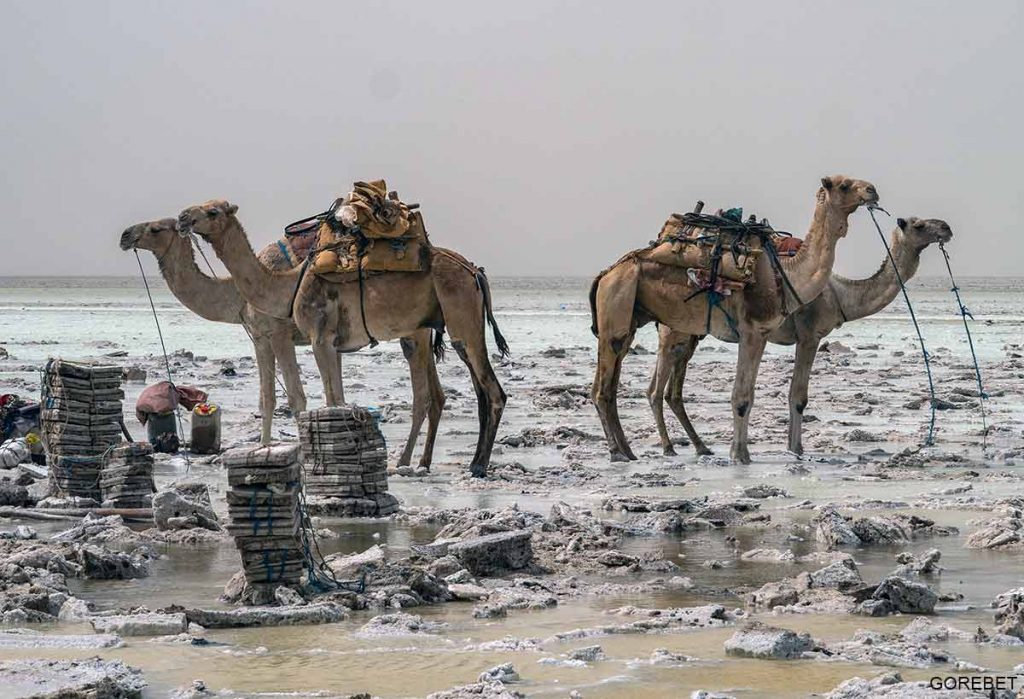
Danakil in northern Ethiopia, in the Afar Region, is desert
and hot consistently throughout the year. Specifically, in the Danakil
Depression, where some salt lakes, for example, Lake Afrera are discovered, the
atmosphere is especially scorching. Since the altitude drops to 125 meters
below sea level, the climate is for all time and very hot consistently.
The relinquished settlement of Dallol, in the far north, is
viewed as the hottest spot on the in the world, by and large, having an
everyday temperature of 35 °C throughout the entire year. Lows are around 30 °C
and highs around 40 °C. On the inclines of Erta Ale fountain of liquid magma,
dim basalt rock assimilates the sun’s beams and warms up with a certain goal in
mind, in this way making a repulsive domain.
Among mountains from the Ethiopian Plateau, several mountain
peaks, Ras Dashen is the highest in the country at about 4,550 meters. In some
mountains where several interesting ecosystems are found up to 2,800 meters, you
find a forest, replaced at higher altitudes by barren mountain vegetation, able
to withstand the cold of the night. While above 4,000, the constant cold
prevents the growth of almost any type of vegetation. On the contrary, some
mountains such as Ras Dashen (in the north) and Abuna Yosef (in the east) are
located in the semi-arid area.
The best time to visit Ethiopia is from November to
February, the driest and coolest the year almost everywhere. In the arid areas,
this is still a hot period at low altitude, with scorching days, but nights are
usually pretty cool. The worst months on the plateau are July and August
because of the rainfall, and April and May in the semi-arid areas because of the
heat. The Danakil Depression is steadily scorching and inhospitable throughout
the year although it is probably a little less hot from December to February.
CONCLUSION
The climatic zone in Ethiopia is rather very diverse and is
different from many other countries. The climate highly differs from one place
to another, based on the altitude of a city or a location. You will experience
a huge climatic change if you are traveling in a car.
Before traveling to cities in Ethiopia, first, you need to
know the climatic zones of the areas. Then you need to wear for the climatic
zone.
November to February is the best time for a visit to many areas in Ethiopia. In these months the sun is not harsh and the rain has not yet come. This might not be true for some areas, especially in the northern mountains and in southern Ethiopia. Except in some areas in the eastern part, Ethiopian weather has an optimal temperature that doesn’t need air conditioning.
There are four seasons in Ethiopia with their character but only two of them, the summer and the winter have much more effect. The summer is dry and sunny and the winter is when the rain begins. The summer is about 9 months and the winter is 3 or months depending on the location.
Finally, you may need to use sunscreen to keep your skin safe, especially if you came from cold areas. Although the sun may not be that harsh, you still may get the effect. You also need to stay hydrated. Since the climate changes fast from place to place, keeping body temperature optimal is necessary.
Rivers in Ethiopia have their own size, structure, and destinations. Despite its location closer to the Sahel Deseret, Ethiopia is a land of green and dry, rivers, and mountains. “Ethiopia is where everything began. It is the cradle of life the home of the greatest mountains, the spirit of greatness the home of the lions, the largest ecosystem of many unique species, and the longest rivers. Rivers are the symbol of one country and also the symbol of life. Ethiopia is the symbol of life and the home of nature.
This beautiful country is located in the Horn of Africa. It has occupied a total area that is 1, 126,829 square kilometers, making the country the 27th largest country in the world. Ethiopia is bordered by Djibouti, Eritrea, Somalia, South Sudan, and Kenya.
The country is characterized by a vast complex of mountains, lowlands, dissecting plateaus, semi-desert, and tropical forests. And also the greatest civilization occurred following the Nile basin which is one of the largest rivers in the whole world.
A river is a natural stream of water that is fairly large and flowing in a definite course or channel or series of diverging and converging channels. Though it begins with streams which become larger and larger on its way up to its final destination.
And it is said that rivers are the most powerful, effective, and ubiquitous geomorphic agents, capable to shape the Earth’s surface and to produce a large variety of landscapes.
The following article focuses on Rivers in Ethiopia and that flows within the boundaries of the country or those which flows across many countries like the Nile river which have greater impacts on those nations that share the water from eastern Africa up to Egypt which we can see now likewise Egypt and Ethiopia. We will see about the major rivers and other rivers that are found in Ethiopia, their list, in which ocean or basin they flow in to, and also rivers that flows through the capital city Addis Ababa.
Although most of the rivers found in Addis Ababa are polluted, we will see what the major causes of the pollutions are. What are the impacts of the pollution what should be consider protecting and treating these rivers?
We get a glimpse of Ethiopian rivers their structures their characters and also what rivers are cross country or those rivers which flow within Ethiopian boundaries and the rivers found in Addis Ababa and about their conditions.
So, how many rivers does Ethiopia have and what are their names, and where do they is found? Ethiopia has many rivers that are included within the boundaries of Ethiopia and beyond that and nine major rivers. which may also cross to other countries like the Nile river. Here are the major rivers that are found in Ethiopia or that flows in the land of Ethiopia.
Rivers in Ethiopia: River Nile
River Nile is one of the rivers in Ethiopia. It is the 2nd largest stream within the world when it is at its highest. It is the lifetime of Africa up to northern Egypt and it is the starting point of civilization principally for Ethiopian and for Egyptians. Both countries lived on its bank and depended on it for their survival and development. The waters of stream Nile River square measure shared by eleven countries, particularly Uganda, Tanzania, Burundi, Rwanda, Sudan, Congo, Kenya, Eritrea, South Sudan, Egypt, and Ethiopia. Two of its tributaries blue and White Niles. Wherever the White Nile is the headwater of the river.
The Nile River may be a major supply of irrigation and hydro-electricity in Egypt. The stream has conjointly been a significant supply of conflict between North and North-Eastern African countries. Egypt has been suspecting of dominating the resources of the stream particularly by constructing the Aswan High Dam. The development of another Dam by Ethiopians on the stream is seen as a threat by Egypt and presently changing into a supply of confusion between these countries.
The supply of the Blue Nile stream is Lake Tana and flows to the western a part of the Federal Democratic Republic of Ethiopia and into the northwest of Sudan. The higher course of the Blue Nile stream is named Abbay. The Blue Nile contributes quite half the Nile’s stream flow and additionally supports the support of communities living on its banks. The Ethiopian government has created a mega-dam, Grand Ethiopian Renaissance Dam that creates a political fusion between the Federal Democratic Republic of Ethiopia Egypt and additionally America. Rivers in Ethiopia 1: River Nile
Rivers in Ethiopia: Awash Nile
Its course is entirely contained among the boundaries of Ethiopia and it merges into a sequence of interconnected lakes. The supply of the inundated stream is Mount Warqe and flows to inundated park its tributaries together with Logiya, Mille, Kabenna, Hawadi, and Durkham Rivers.
The inundated stream depression is home to several species just like the African ass, Beisa Oryx, Dorcasantelope, and Equus grevyi. in keeping with the Ethiopian, Central applied math Agency, the inundated stream is 1200 kilometers long. Cotton is fully grown within the fertile inundated stream depression, and dams provide electrical power.
Rivers in Ethiopia 2: Awash Nile
Rivers in Ethiopia: Shebelle Nile
If you travel to the east of Ethiopia, you will find the Shebelle river. The name “Shebelle” springs from a Somali word Webi Shabeellex which means “tiger” or “leopard”. The Shebelle stream originates from the highlands of the Federal Democratic Republic of Ethiopia and flows into the African nation, wherever it becomes a seasonal body of water, as an alternative rising and disappearing at totally different times of the year. The stream covers a distance of 702 miles creating it the fourth-longest stream in the Federal Democratic Republic of Ethiopia. The Shebelle stream has each seasonal and permanent tributary. Together with the Erestream, Galetti stream, and Wabe stream.
The stream is encircled by a sacred enclosure that’s jungly with juniper trees. The region through that the Shebeli flows is occupied by Somalis, Bantu-speaking folks, and Oromo. Cultivation has, for the most part, replaced pastoral nomadism within the river’s lower basin, and therefore the bananas fully grown on the southern reaches of the Shebeli, and therefore the Jubba compose an oversized portion of Somalia’s export trade. Rivers in Ethiopia 3: Shebelle Nile
Rivers in Ethiopia: Omo Nile
Omo stream is the largest stream outside the Nile that is found in the southwestern Federal Democratic Republic of Ethiopia, the Japanese continent. It rises within the Ethiopian highland and flows southward for concerning four hundred miles (644 km) into the northern finish of Lake Rudolf; it’s the lake’s solely perennial affluent.
The lower Omo depression is made in life and additionally, the complete Omo geographic region is vital geologically and archaeologically. Many hominid fossils and anthropology localities, qualitative analysis to the epoch and epoch, and thanks to its several archeological reasons, it had been selected a UNESCO World Heritage website in 1980. Situated on the stream is that the Gilgel Gibe II electricity station that was inaugurated.
The stream passes varied scenery, together with an open gallery forest of tamarinds and figs, alive with colobus. Below the cover on the stream, banks are also seen several colorful birds goliath herons, blue breasted coraciiform bird, white-cheeked turacos, emerald noticed wood doves, and red-fronted bee-eaters square measure all-satisfying sights. Rivers in Ethiopia 4: Omo Nile
Rivers in Ethiopia: Genale Doriya River
The stream is found in the southeastern Federal Democratic Republic of Ethiopia. it’s a perennial stream. Rising within the mountains east of Aleta Wendo, the Genale flows south and east to affix with the Dawa at the border with African nation. The river’s tributaries embody the Welmel, Weyib (also referred to as Gestro), Dumale, Doya, Hawas, And therefore the Hambala. Rivers in Ethiopia 5: Genale Doriya River
Rivers in Ethiopia: Atbara River
The name is Arabic that is known as when a town situated in Nile stream northeastern Sudan? The Atbara River rises within the Ethiopian highlands north of Lake Tsana and flows westward into Sudan, then meets with the Angereb and Satīt (Tekeze) rivers before heading northwestward to the Nile River. This connects Ethiopia and Sudan. Therefore, the stream flows into Sudan and reaches the Nile. Rivers in Ethiopia 6: Atbara River
Rivers in Ethiopia: Tekeze River
Tekeze stream starts within the central Ethiopian Highlands close to close to, Tekeze additionally spelled Takaze, Arabic Nahr Satīt, river, a significant tributary of the Atbara stream, itself a tributary of the Nile River. Ethiopia, and flows in an exceedingly deep vale, north so west, wherever it forms a part of the border between the Federal Democratic Republic of Ethiopia and Eritrea, to enter Sudan below Om Hajer.
The Tekezé stream is 608 kilometers (378 mi) long. The canon that it’s created is that the deepest incontinent and one among the deepest within the world, at some points having a depth of over 2000 meters. Although it’s some history back that the Tekezé served as an early link between Ethiopia and Egypt. The Kebra Nagast, that received its current kind within the thirteenth century, states that king Menelik I came back to Ethiopia by following this stream from Egypt. Rivers in Ethiopia 7: Tekeze River
Rivers in Ethiopia: Dawa River
The Dawa stream starts because the Mormora and Awata rivers that flow down the Japanese slopes of the Sidamo mountains Rising within the mountains east of Aleta Wendo, the Dawa flows south and east to affix with the Genale Dorya at the border with African nation (shared with African nation and Somalia) The Dawa stream is that the largest tributary of the Genale stream and forms a part of the Genale–Dawa basin.
It drains nearly a 3rd of Genale’s basin space. The Dawa stream then loops spherical in an exceedingly south-easterly direction till it joins the Ethiopia–Kenya border close to Melka Mure and continues east on the border for a hundred and fifty clicks till connexon the Genale stream at Dolo on the Ethiopia–Somalia border. Many seasonal rivers and streams feed into the Dawa.
The most important trees within the riverine forest on this lower section of the Dawa stream square measure genus Diospyrosmespliformis, dicot genus sycamores, Mimusops liqueur, tamarind, and mahogany tree Trichilia emetica. Shrubs of Dicot Genuscapreaefolia cowl abundant of the bank, and their square measure reed beds within the stream. Rivers in Ethiopia 8: Dawa River
Rivers in Ethiopia: Baro River
The Baro watercourse is that the solely passable watercourse in the Federal Democratic Republic of Ethiopia. The watercourse is accessible by land or air through the western Federal Democratic Republic of Ethiopia, Gambella, however, it’s settled in the southwestern Federal Democratic Republic of Ethiopia that defines a part of Ethiopia’s border with South Sudan. The Baro watercourse is made by the confluence the Birber and Gebba Rivers, east of Metu within the Illubabor zone of Oromiya region. Rivers in Ethiopia 9: Baro River
Rivers in Ethiopia: Angereb River
Angereb additionally called the Bahr as-Salam could be a watercourse of the Federal Democratic Republic of Ethiopia and jap Sudan, and one in each of the sources of the river. It rises close to Daqwa, north of Gondar within the Ethiopian Region, flowing west to hitch the Atbara watercourse that flows to Sudan. Additionally, it contains several birds and animal species. Rivers in Ethiopia 10: Angereb River
Rivers in Ethiopia: Mereb River
The Mereb watercourse (or Gash watercourse), could be a watercourse flowing out of the central State of Eritrea. Its chief importance is processing a part of the boundary between the State of Eritrea and the Federal Democratic Republic of Ethiopia. The Mereb watercourse is 440 kilometers (270 mi) long. The Ethiopian Ministry of Water Resources reports its Ethiopian geographic region as five,700 sq. kilometers.
Its source rises south-west of national capital in the central State of Eritrea. It flows south, bordering the Federal Democratic Republic of Ethiopia, then west through the western State of Eritrea to achieve the Sudanese plains close to Kassala. not like the Setit or Takazze watercourse, that flows out of the Federal Democratic Republic of Ethiopia and additionally forms a natural border with the State of Eritrea, the waters of the Mareb do typically not reach the river however dissipate within the sands of the jap Sudanese plains.
The Mareb is dry for an abundance of the year, however just like the Takazze is subject to unforeseen floods throughout the rainy season; solely the neighborhood of the higher course of the Mareb is in Ethiopian territory. Its main tributaries square measure the Obel watercourse on the correct bank (in Eritrea) and therefore the Sarana, Balasa, Mai Shawesh, and ‘Engweya Rivers on the left (in Ethiopia). Rivers in Ethiopia 11: Mereb River
Ethiopia has additionally twelve water course basins that are: Abbay, Awash, BaroAkobo, Genale-Dawa, Mereb, Omo-Gibe, valley, Tekeze, Wabe-Shebele, Afar-Denakil, Ogaden and Aysh with a complete quantity of 122 Billion Meter cube-like (BMC) annual runoff There square measure loads of rivers in the Federal Democratic Republic of Ethiopia and that we cannot end listing them among this short article however I’m tried to place some in some categorical manner.
Lake Tana flows into the following rivers
Lesser Abay
Magech River
Lesser Angereb
Reb River
Gumara River
Adar River
Yabus River
Daga River
Sobat River
Baro River
Jikawo River
Alero River
Birbir River
Dipa River
Gebora River
Karsa River
Gebba River
Sor River
Pibor River
Gilo River
Akobo River
Rivers flow into the Indian ocean
Jubba River
Shebelle River
Fafen River
Jerer River
Erer River
Ramis River
Galetti River
Dungeta River Gololcha River
Ganale Dorya River Mena River
Weyib River
Welmel River
Dawa River
Rivers that flow into the Endorheic Basins
Awash River
Logiya River
Mille River
Ala River
Golima River
Borkana River
Ataye River
Hawadi River
Kabenna River
Germama River
Durkham River
Keleta River
Mojo River
Akaki River
Dechatu River
Meki River
Katar River
Bilate River
Kulfo River
Weito River
Sagan River
Kibish River
Omo River
Usno River
Mago River
Neri River
Mui River
Mantsa River
Zigina River
Denchya River RiverGojeb River
Gibe River
Gilgel Gibe River
Maze River
Awash River
Logiya River
Mille River
Ala River
Golima River
Borkana River
Ataye River
Hawadi River
Kabenna River
Germama River
Durkham River
Keleta River
Mojo River
Akaki River
Meki River
Katar River
Bilate River
Kulfo River
Weito River
Sagan River
Kibish River
Omo River
Usno River
Mago River
Neri River
Mui River
Mantsa River
Zigina River
Denchya River
Gojeb River
Gibe River
Gilgel Gibe River
Maze River
Addis Ababa Rivers
The tributaries of the Akaki watercourse embody Kebena, BancheYeketu, Kortame, Bulbula, LequSoramba, and kotebe, and Fincha rivers, etc. Akaki watercourse consists of 2 main branches, the confluence of that at the Aba-Samuel reservoir. very little Akaki flows through the western a part of the town, rises north-west of Addis Ababa on the flanks of Wechacha Mountain and flows for forty metric linear units before it reaches the reservoir and also the huge Akaki watercourse flows through part of the town that rises from the north-east part of Addis Ababa (Entoto Kidane Miheret) space and flows into Aba-Samuel reservoir once fifty-three metric linear unit.
The most water resources that give the town by synthetic water reservoirs within the inundated basin, particularly Legedadi, Gefersa, Dire, and Aba prophet. Aside from Aba prophet, all reservoirs provide domestic and industrial water. The Aba prophet Reservoir was made within the late Nineteen Thirties for electricity generation, and these days a number of the municipal and industrial effluents are discharged into this reservoir.
It’s according that the Akaki well field provides half-hour of the water system of Addis Ababa and it needs correct geological formation management. The African nation has termed the reservoir of the continent because of its combination of mountainous areas with a relatively massive share of water resources incontinent. Solely a fraction of this potential has been used currently to this point to become the powerhouse of continent African nation is now pushing forward to largest dam comes and programs.
Thus, it is the rivers that play the best role. However, several of the comebacks lack to satisfy the correct and want of the habitats and also the system in this space.
The conditions of rivers found in Addis Ababa: in the African nation, from the increasing human population, uncontrolled urbanization and inadequate sanitation infrastructure cause serious quality degradation of surface waters. currently, a day’s pollution from disposal of commercial waste is changing into Associate in Nursing environmental concern in Addis Ababa town and its locality areas, wherever most (More than four-hundredth of enormous and medium scale producing industries are situated.
As a result, several rivers and streams are heavily contaminated as they flow through major cities and cities. Pollutants will enter surface waters from purpose sources like single-source industrial discharges and waste treatment plants.
However, most pollutants result from non-point supply pollution activities together with runoff from agricultural lands, urban areas, construction, and industrial sites, and unsuccessful septic tanks. Thus, Environmental pollution of the Addis Ababa watercourses significantly Akaki River has been an issue of concern for several students, establishments, the affected community, and lots of environmental teams. Each solid and liquid waste generated from antecedently mentioned sources contribute to the pollution of Addis Ababa Rivers. Addis Ababa holds quite 0.5 % of the country’s industries.
SUMMARY
We have seen that Ethiopia has many rivers that are included within its boundaries and beyond that and nine major rivers, and many other rivers that flow within the country or beyond. These include the Nile River, Awash River, Baro River, Genale Dorya River, Omo River, Tekeze River, Shebelle River, The Atbara River, Mereb River, Angereb River, Weyib River, and Dawa River.
Although Ethiopia has many rivers that flow throughout the country the rivers are not preserved well as we can see now on Addis Ababa and many of them are endangered that is the responsibility of every person in the country because we are the one who is benefited from them and as long as we keep them safe we are secured because nature is venerable if we cannot use it properly.
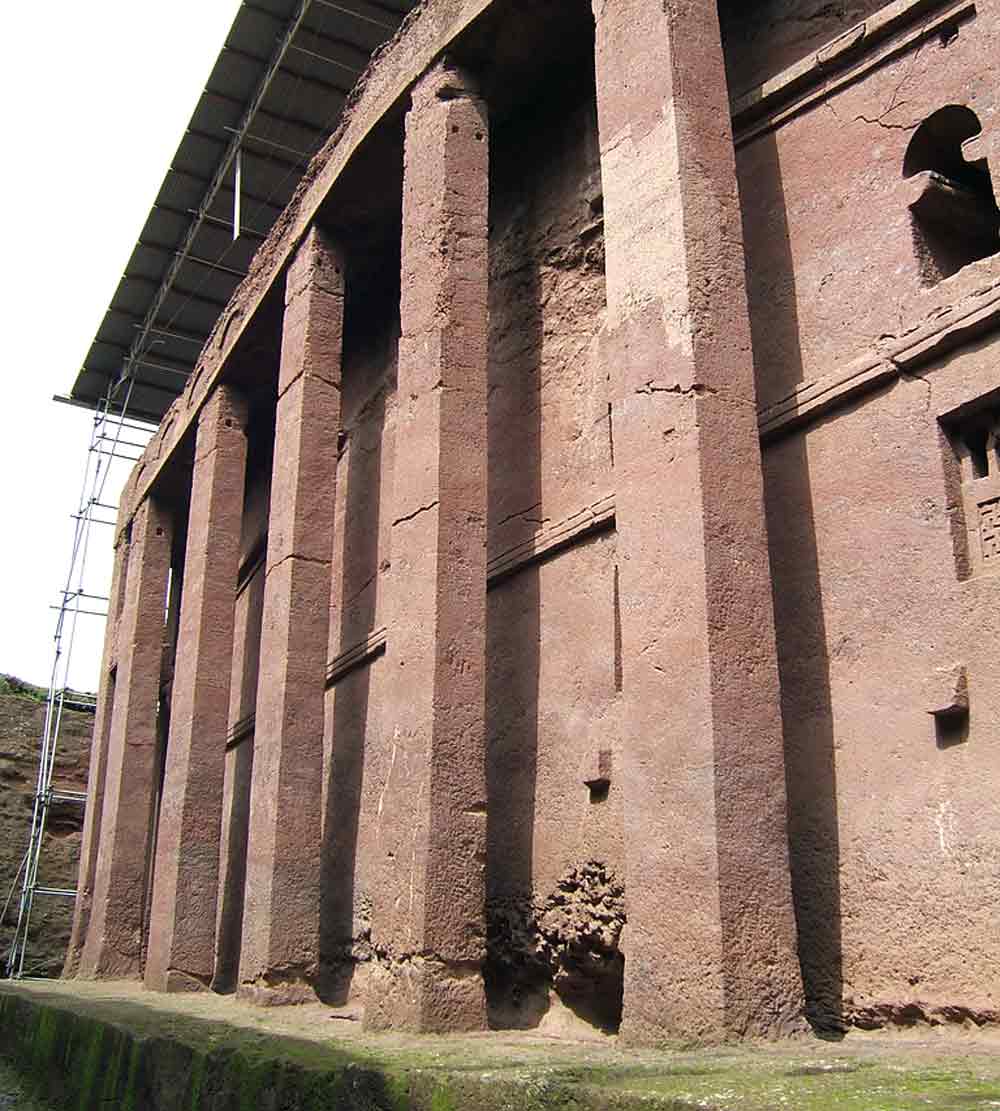
Lalibela, one of the oldest towns of Ethiopia, located in Lasta, Amhara Region, in Ethiopia. The town is famous for its rock-cut monolithic churches. The whole of Lalibela is a large antiquity of the medieval and post-medieval civilization of Ethiopia. Lalibela is one of Ethiopia’s holiest towns, the first being Axum, and is a center of pilgrimage. The population of Lalibela is almost completely Ethiopian Orthodox Christian like most towns in Ethiopia.
This article is an overview of the history of this amazing town and a description of the culture, religion and different aspects based on my personal visits and researches.
I had the chance to visit this town almost a year ago (end of February to the beginning of March). I had the privilege of seeing all the 11 churches in detail and interact with the people there. I stayed there for five days before traveling to another marvelous town of Gondar.
Lalibela was an experience for me and was the highlight of my trip to northern Ethiopia.
The town of Lalibela was built surrounding the famous Lalibela churches. It has a very high slope to get to the town and this makes traveling harder. The narrow roads into the town are usually packed with high traffic of busses carrying tourists who came from all over the world. The horse and donkey carts transport the local people and supplies up and down the slope slowing the buses and making it harder for a faster drive.
We finally got to the top, to the center of the town and asked for the hotel we booked ahead. The hotel is called ‘Yemra ha’. It had a unique Architectural approach to it. It imitated the horizontal wall treatments of the local churches or as some experts would say the northern rock-hewn churches.
It had rooms lined up on the edges of the compound leaving a vegetation area and a campfire area in the middle with a height that goes above the room’s roofs on the east side. Though the landscape features are not that exceptional. It’s a good place to sit down and enjoy a view.
The hotel room I stayed in was wide and had local materiality and furniture design. Wooden wide beds and side tables with working showers and bathrooms and enough space to put my belongings in along with my two roommates.
The first night in Lalibela, we had dinner in a nearby restaurant. The ‘Shero’ or locally known as ‘tegabino’ was exceptional. The season we went was, unfortunately, a fasting season and culturally the society there is very intertwined with religion, given that the town is constructed as the rock-hewn churches as it’s center. Food was with no meat and dairy products. Still good.
That night ended with dinner and back to the rooms early given that the next day I had a visit planned to go to the churches, study them as an Architecture student and document some things for my report presentation back home. Before going to bed I had to go through the compiled files of Lalibella to get a general overview of the place I was in once again. In my files, I had data about the history, cultural observations of foreigners and local people and overall studies of the hewn churches.
The site of Lalibela on the northern plateau of Ethiopia is world-renowned as a historical riddle and a tourist attraction. The site is named after King Lalibela of the Zagwe dynasty. The Lalibela complex is traditionally divided into groups of three.
The first group, located in the northern part of the site, includes five monuments namely, Medhane Alem, Maryam, Denagel, Masqal and the complex of Debre Sina/Golgota/Sellasse (which comprises three churches). This Northern Group is separated from the Eastern Group by a seasonal stream, the Jordan (Yordanos), which runs in a deep ditch of sorts that collects water from the entire site. This ditch shows evidence that it is partly man-made. The Eastern Group has five monuments, Gabriel-Rafael, the Bethlehem, Marqorewos, Amanuel, and Libanos. Another group, to the west, only comprises the church of Giyorgis.
History of Lalibela
During the reign of Gebre Mesqel, a king in the Zagwe Dynasty who ruled Ethiopia at that time (late 12th and early 13th century), the current town of Lalibela was known as ‘Roha’. The saint/king was named because a swarm of bees is said to have surrounded him at his birth, which his mother understood as a sign of his future. A future as the emperor of Ethiopia.
The names of several places in the town and the layout of the hewn churches themselves are said to mimic names and patterns observed by Lalibela during the time he spent as a youth in Jerusalem and the Holy Land. Lalibela is said to have seen Jerusalem, and then tried to build a new Jerusalem (a mimic of the real one) as his capital in response to the capture of old Jerusalem by Muslims in 1187.
Each church was carved from a single piece of rock, thus being called a monolithic underground church, to symbolize spirituality and humility. Christian faith inspired big parts of the naming of the features with Biblical names. For example, the river Jordan in the church complex is named after the river in the bible/ Jerusalem. According to the Futuh al-Habaša of Sihab ad-Din Ahmad, Ahmad ibn Ibrahim al-Ghazi burned one of the churches of Lalibela during his invasion of Ethiopia.
However, Many scholars including Richard Pankhurst has expressed his skepticism about this ever happening through history, pointing out that although Sihab ad-Din Ahmad provides a detailed description of a rock-hewn church like the fact that it was carved out of the mountain and that its pillars were likewise cut from the mountain, only one church is mentioned. Pankhurst adds that “what is special about Lalibela, is that it is the site of eleven or so rock churches, not just one – and they are all within more or less a stone’s throw of each other!” thus concluding that the claim of Sihab ad-Din Ahmad being somehow false.
Lalibela and the infamous monolithic churches
The town of Lalibela is known around the world for its churches carved from the earth from “living rock”. The construction is rather unique given that the church was built from top to bottom and not bottom-up. When we see from a modern construction perspective, they started to excavate down from a hilltop till they reached a certain depth then proceeded to excavate some more horizontally (which would be the room of that church later) and as they keep on going horizontally
The previously excavated areas would go deeper into the ground which gives it the room height we see now. Of course, the site location and choice of the base rock helped as well. The character of the rock is that it is soft rock at first when it is not exposed to air, then quickly dries or hardens at the slight touch or air. This probably made the construction and excavation easier.
DSCF0549-by-Giustino-is-licensed-under-CC-BY-2.0
All of this plays an important part in the history of rock-cut architecture. Though the age of the churches is not well known, most are thought to have been built during the reign of Lalibela, (during the late 12th and early 13th centuries). UNESCO identifies 11 churches (locals say there is another one, in fact, the first one, that has a different texture and carving technique to it that indicates a not so well-developed technique but rather an experimental one), assembled in three groups:
The Northern Group: A. Bete Medhane Alem (House of the Saviour of the World), home to the Lalibela Cross. B. Bete Maryam (House of Mary), possibly the oldest of the churches, and a replica of the Tombs of Adam and Christ. C. Bete Golgotha Mikael (House of Golgotha Mikael), known for its arts and said to contain the tomb of King Lalibela) D. Bete Meskel (House of the Cross) E. Bete Denagel (House of Virgins)
The Eastern Group: A. Bete Amanuel (House of Immanuel), possibly the former royal chapel B. Bete Qeddus Mercoreus (House of Saint Mercurius/House of Mark the Evangelist), which may be a former prison C. Bete Abba Libanos (House of Abbot Libanos) D. Bete Gabriel-Rafael (House of the angels Gabriel, and Raphael) possibly a former royal palace, linked to a holy bakery. E. Bete Lehem
The Western Group: A. Bete Giyorgis, (Church of Saint George), thought to be the most finely executed and best-preserved church on site.
Farther afield, there is the monastery of Ashetan Maryam and Yemrehana Krestos Church (possibly built in the Aksumite fashion in the eleventh century, but still within a cave).
The churches are also known for having significant engineering feature, given that they are all associated with water (which fills the wells next to many of the churches which some use as baptizing water or holy water). The drainage system throughout the whole site is very efficient and no water, per se, is wasted and we do not see a case of flooding. Water from every corner is collected effectively through the small ditches that run throughout the site and are collected onto a main gully of sorts to then go out of the site to a point on the land where the floor of the churches aligns with the surface.
Overall, the churches of Lalibela are as explained in the above writings. UNESCO along with local authorities are currently undergoing some reconstruction and maintenance works on-site, thus seeing shades for some of the churches like Bete Amanuel. The significance of World Heritage listing in the context of traditional society, evolving communities and living heritage at the rock-hewn churches of Lalibela is very high.
(Some studies explore the tendency towards the use of heritage as a tool for social and economic development, noting that tourism-based development should be focused on and may also contribute to and comprise heritage sites. It stresses the need for an integrated site management plan because the current management plan is not well crafted.
It is obvious as the churches grow old their structural integrity goes down a notch and with a new management plan that considers this and many other factors like clear vision based on high standards for future protection of the site, including tangible and intangible aspects, with main considerations of tourism interests.
The new plan also needs to consider the development pressures in a way that ensures long-term conservation of the churches and society as a whole, benefits for the local community living in the town surrounding the churches and consideration for religious practices that go on there and the designation of the rock-hewn churches as a sacred site (given that people still use the site as a major religious site). This is challenging and it requires commitment from local and national stakeholders, with big support from the international community as well.
Even though the current approach to this whole concept of conservation is good in the eyes of the international community, local people (mainly the visitors of the site) think that the method they are using takes the beauty way from the Lalibela they have seen in pictures. Some are even skeptical about the materiality of the structures put in place and most of all the materials used to fill up the cracks being created on the walls of the churches.
But the fact of the matter is that to maintain and have the Lalibela monolithic churches as they are today (or at least close to what they are today) we need to be patient on the workflow and need to have some sort of compromise to things. This might be hard for a society, given that religion is the priority in many aspects of the Ethiopian lives, this is something people need to consider and go along with.)
.. My experience at the churches was a very mesmerizing experience, especially for an architecture student. Everything was either as good or maybe more than what was explained and expected. I saw all the churches and walked through the site, saw priests and deacons prepare for religious ceremonies and monks and nuns that live there along with religious teachers and their students (‘kolo temari’) and their paintings. I also bought souvenirs form the marketplaces where locals sell different types of crosses known as Lalibela crosses and rings that go along with them.
The next days I decided to go look into and explore the society and the town on Lalibela…
Lalibela and the Local Housing Architecture
In 1970, a report on the historic dwellings of Lalibela, it was assessed that the vernacular earthen architecture on the Lalibela World Heritage Site, including the characteristics of the traditional earth houses located just a few meters away from the churches and analysis of their state of conservation.
They have two types of characters, one type is a group called the “tukuls”, which are round huts built of stone and usually having a maximum of two stories. The second once is the single-story “chika” buildings which are round and built of a mixture of earth and grass excretes like the cultural houses found in the mid-northern parts of Ethiopia. Common features to both house types are that they both have local grass roof coverage.
Even though this is the character of the Lalibela houses, this does not mean that there are no other types of housing there. The local houses are made of bricks and HCB walls and streets are made of asphalt and cobblestones.
Lalibela People
The people of Lalibela are rather friendly and polite. As a person from the more urbanized town, I was surprised by my encounter with them. Every morning I went out of my hotel room to go through the site and just go about my day people used to greet me in a warm welcoming way. At first, I was startled by that but then I got used to it.
There are many places the local people go to enjoy their time. I visited both local/cultural places and modern places in the town of Lalibela. Of all the cultural places that are there a specific spot stands out. Torpido is located around the northern square just up the slope of the town. It is very well known for its ‘Tej’, a local alcoholic drink made from honey and went through a little bit of fermentation. It is one of the purest and strongest Tejs we have ever experienced.
The ‘Azmari’ people in Lalibela are well known for their poetic approaches towards music. Standing in the middle of the crowd with their ‘Masinko’ (a cultural instrument with only one string and another on hand looking like a bow, sound created by friction caused by grinding one over the other), getting a starting word or phrase from the crowd then using that in the poetic music they made was one of the unforgettable moment in my stay in Lalibela.
As Lalibela is a town of tourism, there are a lot of places that are very high standard and start rated hotels and restaurants. We can find these hotels inside the town and on the peripheries of the town as well. Mostly peripheries are taken that there is not much space to build in the town. But this is aside from the fact that the town I surrounded by mountain ranges from the north side (thus the slope of the site) giving the top of the mountains an amazing view down to parts of the town and the landscape on the other side of the mountains.
This amazing feature is well exploited by a place located in the far northern part of Lalibela. Ben Abeba, for example, is owned by European and Ethiopian partners. I had the privilege of meeting the owner and discussed the naming of the place and the concept behind the design. The place was designed by local architect and the design concept (form-wise) was made to imitate the highest mountain peak around that area that is visible from the top of the Ben Abeba.
The other imitation used on the design was the shape of the terraces on the west side of the complex. It is from an indigenous plant that is called ‘Adey Abeba’ which only grows all over Ethiopia showing the end of the rainy summer, around the end of September and the start of October. The name is a combination of both nationalities. Ben, meaning mountain and Abeba taken from the ‘Adey Abeba’ the local flower coming up with Ben Abeba meaning a flower on top of a mountain! Which surprisingly anyone can see when they see the design.
Like many other modern Lalibela hotels, it is a very open and well ventilated and lit space. Mostly outdoor. Built only with concrete that is cast in a very organic manner (only structural elements are shown and none or very little of other building elements). Done so that it has a very low impact on the existing ground. Vegetation is integrated with the design of the cafeteria and wooden pathways that follow the slope leading down to the campfire areas and bathrooms. Further down the slope are lodges that were being built on the final finishing level.
They also have a simplistic, environmentally friendly approach to design. Back in the cafeteria area, there are terraces on the above floor that hang out to the landscape by the west. It has an amazing overview of the landscape below. A very wide valley created by mountain ranges that surround it. We had dinner there two nights of our stay with the sunset as a background and a slow breath as a calming effect. The food was amazing (a bit expensive but worth it) and with good company, it was one of the highlights on my trip to the northern Ethiopian town of Lalibela!
Final Notes
Lalibela is a great attraction spot in Africa. Everything in this small town is new for any foreigner experiences. The monolithic churches, the town, the people, the modern hotels, the landscape, the religious artifacts all create great scenery.
10th of October 2010 done by ICOMOS Scientific Symposium named “Conserving the Rock-Hewn Churches of Lalibela as a World Heritage, Site: a case for international support and local participation”,
Traveling to Ethiopia? Or Are you planning Ethiopia travel? You are not alone. Thousands of tourists flock to Ethiopia to get a different experience, possibly a third-world experience that they need to tell their families when they returned. Others prefer traveling to Ethiopia in order to experience a completely new country with a new experience. Ethiopia is the best choice for you in anyways. It is affordable, with many experiences and with good people especially for visitors. You will surely get the experience you desire.
Here are few things to remember while traveling to Ethiopia. Tips and guides, security guides, Getting visa , Tips on where you should eat and drink, where you should stay, where to never move, which areas to avoid and more.
Why Traveling to Ethiopia?
Ethiopia is one of the oldest countries in the world, and the only country on the continent of Africa to have never been colonized. Therefore, Ethiopia has its own history, culture, custom, heritage, and language that is mildly diluted with foreign culture.
Historians believe that Ethiopia may have been home to the beginning of mankind, and among the fossils found were that of the oldest living specimen, known as “Lucy.” Lucy was discovered in 1974 in Africa, at Hadar, a site in the Awash Valley of the Afar Triangle in Ethiopia, by paleoanthropologist Donald Johanson of the Cleveland Museum of Natural History.
Lucy then became famous worldwide after the story of its discovery and reconstruction was published in a book by Donald Johanson. Beginning in 2007, the fossil was exhibited publicly in an extended six-year tour of the United States with a theme of ‘Lucy’s Legacy: The Hidden Treasures of Ethiopia.’
After a continuous doubt and discussion of the risks of damage to the unique fossils, since other museums also wanted to display casts of the fossil assembly. The original fossils were returned to Ethiopia in 2013, and subsequent exhibitions have used only casts of the fossils.
Ethiopia is Unique among African countries; the ancient Ethiopian monarchy maintained its freedom from colonial rule with the exception of a short-lived Italian occupation from 1936-41. It was more recently a founding member of the United Nations and is home to the African Union’s headquarters.
Ethiopia is Ancient.
Traveling to Ethiopia is like traveling back in time. Abyssinia was its previous title. It could be the arrival of remote and wild places. A few of the most elevated, and most stunning places on the Africa landmass are found here, Such as the ruggedly-carved steeples and towers of the Simien Mountains, one of UNESCO’s world legacy sites. A few of the least, such as the hot but intriguing Danikal Depression, with its sulfur fumaroles and Lunar like landscape.
Traveling to Ethiopia Visa
Getting a visa to Ethiopia is not a hard process. In fact, the process is as simple as filling a short form and attaching your personal information. YOu will then receive a message on the email of your visa in three days.
Apply to get your visa to Ethiopia in two ways. On arrival application and online application. On arrival, the application is when you apply when you arrive at Bole airport in Addis Ababa. You will approach one of the windows and ask for a visa. Except few, almost all of the countries around the world can request for visa on arrival. This option is best if you are a last-minute traveler. If not, the process is time taking and you need to take long lines with other visitors to get your visa.
The second option is the eVisa, where you fill in personal information, the purpose of visit, passport, and online payment options. You may need three passport size photos. Pay using a card or Paypal. Since the payment is not refundable, you need to be sure of traveling before paying. You will pay 52 USD for 30 days visa and 72 USD for 90 days visa. Your visa will be single entry, which means once you leave the county, you need to reapply for a new visa. Traveling to Ethiopia with a visa is recommended.
Located just north of the equator, with most towns located on mid to high altitude locations, the climate in Ethiopia is most often temperate. There are three main climates in Ethiopia-a light rainy season from March to May, a heavy rainy season from June to September, and the dry season from October through February.
The dry season is the sunniest time of the year, though even at the height of the rainy season in July and August there are still usually several hours per day of bright sunshine and an average annual temperature of 61 degrees; thus, the tourism motto of “13 months of sunshine…” The new year begins in September, the year is eight years different from the Gregorian calendar (now 2008). Each month has 30 days with the 13th month of five days, six in leap year Ethiopia is really the face of extremes.
Traveling to Ethiopia: What are the tourist places?
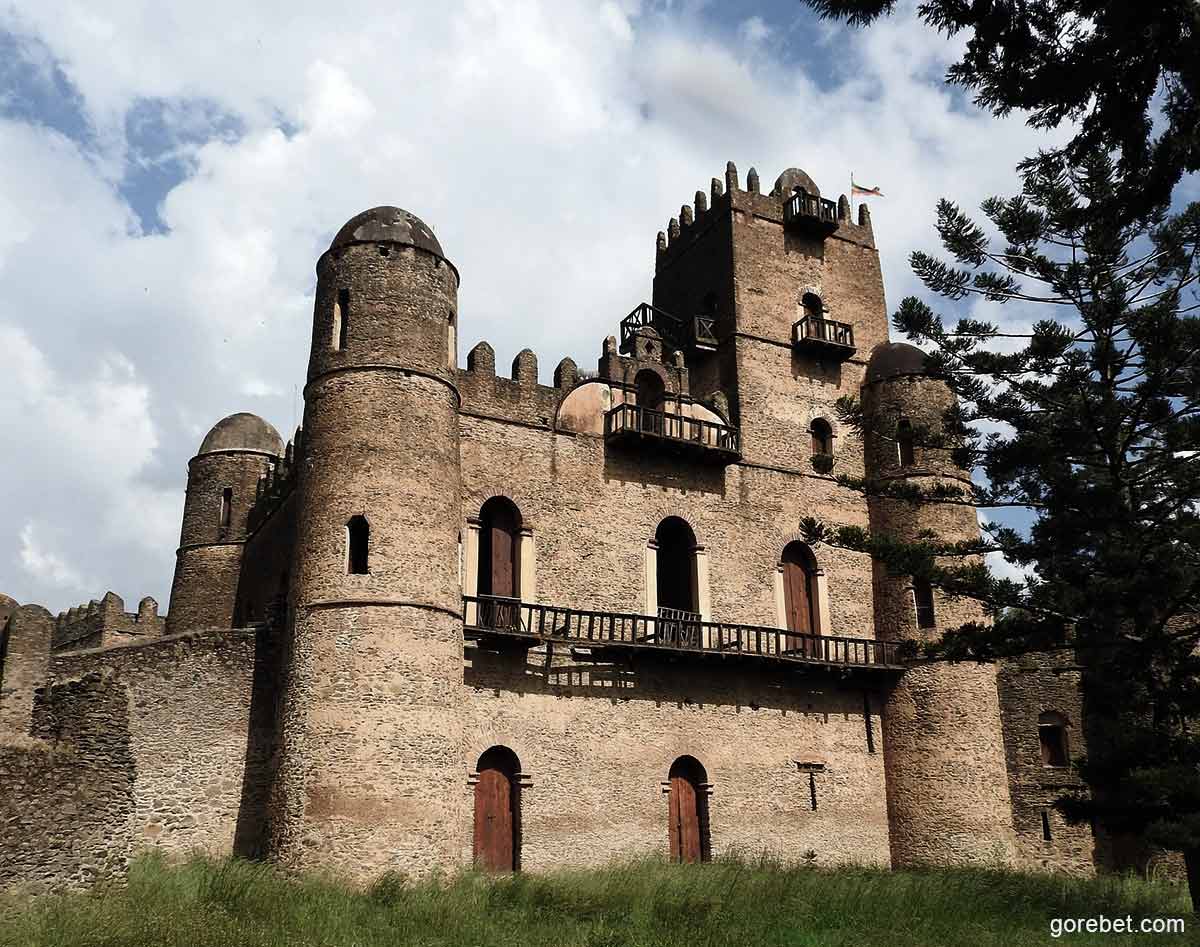
1-Gondar Fasil Castle
King Fasilides made Gondar the seat of his empire in 1636 and created a palace that would eventually sprawl into a compound. The site was inscribed as a UNESCO World Heritage Site in 1979. Guided or self-tours available. For two centuries the walled royal enclosure, Fasil Ghebbi, in Gondar served as the capital of the Ethiopian Empire.
Initiated by the Ethiopian emperor Fasilides around 1635 and expanded by his successors, Fasil Ghebbi, surrounded by a 900-m-long wall, contains Indian and Baroque style palaces, churches and monasteries, the likes unknown anywhere else in Sub-Saharan Africa.
2- Lake Tana and Rift Valley Lakes
Lake Tana is the largest lake in Ethiopia and located at a distance of 560 km from Addis Ababa. As the outgoing river of the Lake is the Blue Nile, the Lake is considered the origin of the Blue Nile, one of the two main tributaries of the Upper Nile. Known to the ancient Egyptians and Greeks, the lake has a long history of exposure to the ancient world, and from a very early age, it has been one of the centers of Christianity.
The lake houses more than 20 churches and monasteries, mostly located on little islands. Read more about Lake Tana. A short distance from the city of Bahir Dar, the Blue Nile falls of a 60m high cliff at the Blue Nile Falls.
The rift valley lakes are a series of lakes formed in the rift valley that cuts the country from southwest to northeast. These lakes have their own characters and yet some of them are identified as tourist destination zones.
3- Axum
The Kingdom of Axum developed enormous stelae, the largest of which are protected as a UNESCO World Heritage Site. The kingdom officially adopted Christianity as the state religion in the fourth century AC. The Ethiopian Orthodox Church claims that the Church of Our Lady Mary of Zion in Axum houses the Biblical Ark of the Covenant, in which lie the Tablets of Law upon which the Ten Commandments are inscribed.
4- Gheralta
The Gheralta region is famous for its rock-hewn churches, most of which are carved out of rock walls of often incredibly unreachable places. While Lalibela has the highest density of rock-hewn churches, the Tigray region has both the largest number of churches as well as the older ones, some of them dating back to the fourth century.
5- Mount Entoto
A historical place where Emperor Menelik II resided and built his palace when he came from Ankober and founded Addis Ababa. It is considered a sacred mountain and has many monasteries. Mount Entoto is also the location of a number of celebrated churches, including Saint Raguel and Saint Mary.
The museum is among the most important in sub-Saharan Africa, featuring two casts of Lucy, a collection of fossilized bones that once made up the skeleton of a hominid from the Australopithecus afarensis species, who lived 3.2 million years ago.
7-Lalibela
One of Ethiopia’s holiest cities, Lalibela is located in northern Ethiopia and known for its monolithic rock-cut churches. Debatably the greatest tourist attractions of Ethiopia are the rock-hewn churches of Lalibela.
11 monolithic rock-hewn cave churches from the 13th-century make up the ‘New Jerusalem’ at Lalibela, a small town with circular-shaped two-storied houses. Lalibela is one of the holiest places of the Ethiopian Church, attracting thousands of tourists every year.
8- Simian Mountains National Park
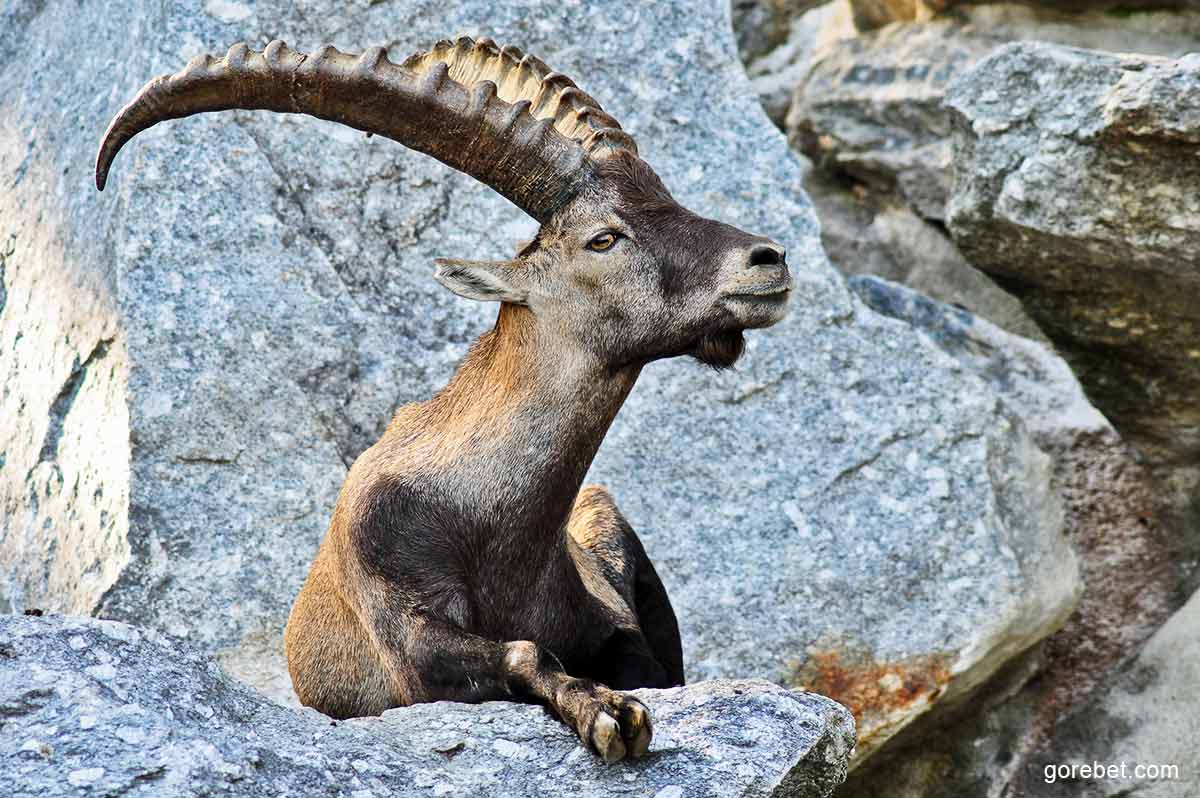
The highest point in Ethiopia, the Similan Mountains are home to such endangered species as the Ethiopian wolf, the Walia ibex, the gelada baboon, and the caracal.
9- Religious celebrations and holidays
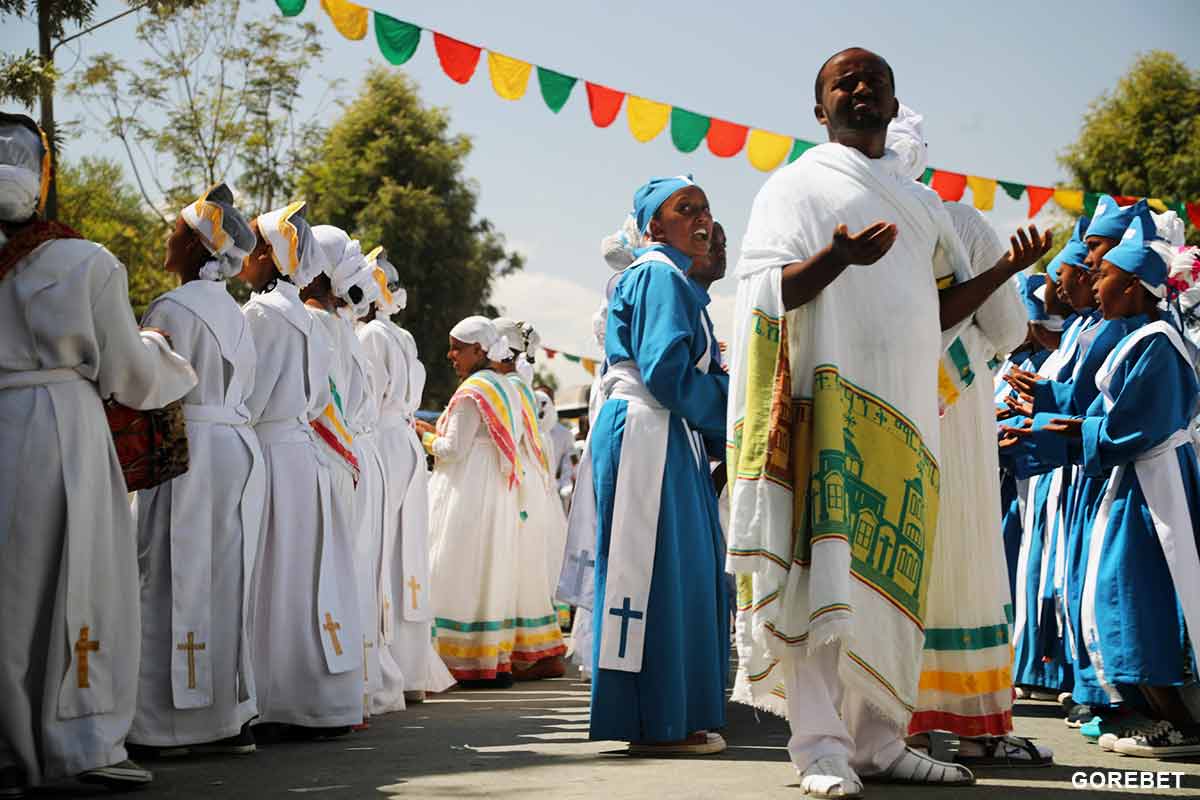
Religion in this fascinating nation is interesting as well. Numerous Guests know Ethiopia for its Impressive Rock-hewn churches and colorful ceremonies, typical of the Ethiopian Standard Church. Christianity and Islam are the two primary religions in Ethiopia. Most Christians have a place in the Ethiopian Standard Church.
Whereas going to Churches- Shoes must be expelled sometime recently entering the building. – One ought to never smoke anyplace close to a church. – As it were clerics are permitted to step into the Heavenly of Holies where the ‘TABOT’- reproduction of the Ark of the Contract is kept. As well as around 50 million Ethiopians who are Standard Christians,33% Muslim, and around 18% are Protestant.
Traveling to Ethiopia: Is It Safe to Travel to Ethiopia?
Ethiopia is generally a safe place. Despite recent local clashes and political demonstrations, the country is relatively safe. There are precautions that you need to take as a foreigner in a new country.
There are a few things to keep in mind.
Never go out of a group, if you are traveling to Ethiopia or visiting in a group.
Never confront a local and don’t insult the local culture
Do not involve yourself in a group fight or any other street event unless the local guide told you it is safe to do. Because it might be a trick to rob you
Nightlife in Addis Ababa is very much alive, especially in the central areas. This does not mean the city is perfect. You might come across problems. It is safer to go out in pairs or in groups.
Use bank for a currency change. When you are traveling to Ethiopia, please don’t trust anyone with your money. You are responsible.
Traveling to Ethiopia or any city, don’t leave your stuff around. There might be some vultures waiting around.
Protect your health by drinking responsibly. Diseases in the third world may not be higher than the rest of the world in numbers. But there is obviously a high rate of transmission due to lack of knowledge.
Addis Ababa has hotels that cater for all pockets, from the luxurious Sheraton and Hilton hotels to the tourist class hotels. Outside Addis, mainly in the ‘Historic Route’, good standard hotels are available. However, to visit the remote and the people of the wilderness, Clean Local Hotels and Lodges are available these days.
Traveling to Ethiopia: What are the Food to Eat?
Coffee
Coffee is synonymous with Ethiopia, as it was first discovered here and the quality is very high. Ethiopia is known for its elaborate coffee ceremony, which involves three rounds of coffee that proceed from strong (Abol) to medium (Tona) to weak (baraka), with the final round considered as bestowing a blessing on the coffee drinker.
Coffee is also ordered from an Italian espresso machine (leftover from the five-year Italian occupation during World War II), with a macchiato (coffee with a small amount of steamed milk) among the most popular. Have a group of local coffee, at home, or even cultural restaurants. Enjoy the moment.
While traveling to Ethiopia, don’t forget to experience the local coffee.
Food
Nourishment and Drinks: The food and drink of Ethiopia reflect the numerous diverse cultural societies. A commonplace dish is Wot, a hot stew of meat or vegetables, prepared with a mix of Berbere (chili powder). It may moreover be made with Doro (chicken), and ordinarily served with Injera, the conventional springy hotcake made from a matured Teff flour batter. Ethiopia presently produces fabulous wine, 7 assortments beneath the brand names Fracture Valley and Acacia. The popular nectar wine or Tej is found all over the nation as is Tela, a nearby lager, and Katikala, distilled alcohol.
Injera, a slightly sour spongy pancake-like flatbread made from fermented Teff (a gluten-free grain indigenous to Ethiopia), is fundamental to every Ethiopian meal. It is what you will use to pick up food from plates in small bites. In traditional Ethiopian meals, circles of injera will be rolled out across the plate and topped with a smattering of spicy stews, cooked vegetables, and salads.
Restaurants will also bring out baskets full of additional napkin-rolled injera rounds. There is no silverware used in Ethiopian meals. Instead, injera is torn off into small bits with your right hand to scoop up bits of the stews and various dishes, forming a bite-sized food parcel. Some common types of foods:
Minchet: spicy ground beef stew often served with a boiled egg.
Key Wat: spicy beef stew made with meat chunks instead of minced meat. Also served with a boiled egg on top.
Tibs: cubes of beef, lamb, or goat stir-fried with onions, peppers, and other vegetables. Quite often, twigs of rosemary or other herbs are added to it.
Kitfo: raw lean ground beef blended with spices.
Shiro: a vegetarian stew made from chickpea flour mixed with spices.
Mesir Wat: rich and spicy red lentil stew
Kik Alicha: a non-spicy split pea stew made with turmeric.
Gomen: kale or collard greens, onions and spices sautéed and simmered together.
FirFir: a combination of shredded injera, spices, onions, sometimes meat.
Language Ethiopia is a multi-ethnic state with a great variety of languages spoken in the country, of which there are 83 with 200 dialects. The main three languages are Amharic (the national language of the country), Tigrigna and Oromigna. English is also widely spoken.
Traveling to Ethiopia, language could be a barrier. You may need a guide or a small amharic terms could take you a long way. However, English is also a known language in many urban area.
Traveling to Ethiopia: Clothing
Many men wear suits for business situations, although business casual attire is also appropriate. In rural areas, khakis and a collared shirt are usually acceptable. Women often wear business casual attire, but skirts/dresses that might not be suitable. Jeans, shorts, and very revealing clothing are generally not appropriate in business situations.
Clothing differs based on the month you are visiting the country. Unless you went on traveling to Ethiopia from June to October, expect the days to be sunny up to 21 degrees or more in the capital city. Some cities could go much higher or lower. Cloth for the climate.
Traveling to Ethiopia: Currency
Visitors may bring in an unlimited amount of foreign currency, providing a declaration of such currency is made to customs on arrival. Foreign currency may be changed only at authorized banks and hotels. The currency declaration form must be retained, as this will be required by customs on departure. Visitors, however, will be able to change any excess Ethiopian Birr to foreign currency at the bank in the airport (Or anywhere else they choose in other banks) before departure.
A dollar is changed to 32 birr in 2020. This means a good that you buy for a dollar in the US could cost you 32 birr in Ethiopia. It seems the cost is similar since most hotels and services that provide for high spenders and near tourist areas estimate their price based on how high you can pay regardless of the value they give. This is a good opportunity as well. This high price created a variety of places with a variety of prices.
Hotels could be expensive. For westerners, a 100-dollar overnight room cost may not be expensive. For others it is. The good news is you may find a place that you could stay for 10 days for 100 dollars.
Home cooing is the best option to save money. A standard lunch could cost you up to 4 dollars. A high end places a single lunch could go as high as 15 dollars. There are places that you could get a full meal for 2 dollars or even less. You need to experiment, especially if you are staying long in Ethiopia.
Unfortunately, clothes and artifacts could go higher in price for foreigners. People assume visitors afford better than the locals. Go shopping with a local or have general information before shopping.
Do I need vaccines to travel to Ethiopia? The answer is Yes. It is recommended that you get vaccines for the following diseases- hepatitis A, hepatitis B, typhoid, yellow fever, rabies, meningitis, polio, measles, mumps, and rubella, Tdap (tetanus, diphtheria, and pertussis), chickenpox, shingles, pneumonia, and influenza.
After the Covid, Covid-19 vaccination is recommended before traveling to Ethiopia.
Here is why you need the vaccines for the above disease. When you travel to a new destination that you have no prior experience of, it is important to be careful of what you eat or where you stay. For example, diseases such as COvid 19 and Meningitis are transmitted through airborne and direct contact with someone who has the disease.
Hepatitis A, Typhoid, and Polio could be transmitted through food and water. Although some of the cases have not been found in Ethiopia for a long time, it is best to get at least Hepatitis A and B and Yellow fever vaccinations. In fact, a yellow fever vaccination certificate is usually requested from all travelers.
Traveling to Ethiopia shots: necessary
Traveling to Ethiopia: Advice
Many embassies advise the following:
Any traveler who comes near the border should do so with care. It is better to avoid areas that have security. Boarders have conflicts especially the north and the west and the east of the country are frequent conflict zones.
With the current northern conflict, it is better to avoid the Eritrean border and even the northern region as well.
Traveling to Ethiopia, avoid some parts of Oromia have conflicts as well, therefore, don’t travel in these areas unless it is necessary.
The Sudan border is another conflict zone in the west. Avoid traveling 10km close to these regions
Traveling to Ethiopia, avoid traveling closer to 100kms on to Somalia and Kenya border. Not much security is in these areas
Avoid traveling to Besangul Gumz region is another security risk
Afar and Somali have high-security risk
Therefore, only cities have the highest security in Ethiopia this time. Avoid travelling away to boarders and where internal tension is reported.
Vaccination: Yellow fever certificate required if traveling to Ethiopia from a country with risk of yellow fever transmission
Currency restrictions for an entree: 1,000 ETB for all travelers; 1000 USD or another foreign currency equivalent if a person resides in Ethiopia; 3,000 USD or another foreign currency equivalent if a person is not residing in Ethiopia. Excess currency may be confiscated.
Currency restrictions for exit: 1,000 ETB (4,000 ETB if travelling to Djibouti) and 3,000 USD or other foreign currency equivalent.
Requirements for Entry: Passport, Visa, World Health Organization (WHO) card with yellow fever vaccination if coming from a country with risk of yellow fever transmission
Avoid carrying extra electronics as it could be subjected to taxation upon entrée
Avoid Ivory as a souvenir. If you are found with Ivory you may be fined or detained.
Ask for a receipt at the shop for souvenirs that are copies of religious artifacts or antiques
The US embassy warns its citizens to avoid these areas: western areas of Oromia, Southern areas of Oromia, Ethiopia’s Southern Nations, Nationalities, and People’s Region (SNNPR), Border with Kenya, Tigray and Border with Eritrea, Gambella and border with South Sudan, Somali region, Afar, Amhara regions.
Avoid crime in Addis Ababa including pickpocketing. don’t carry expensive stuff
Entoto Street PO Box 1014 Addis Ababa, Ethiopia Telephone: +251-11-130-6000 Emergency After-Hours Telephone: 011-130-6000 Fax: +251-11-124-2435 and +251-11-124-2419 Email: [email protected]
Final words on Traveling to Ethiopia
Traveling to Ethiopia is a good decision you would make for your vacation or business. Especially, if you love society and culture, you will surely find something new to hang out too. Ethiopia is an ancient civilization, that has lost its power over time. The leftovers of history are all over the place and is still a country worth the visit.
Ethiopia has a place for all. Trekking, relaxing, culture, religion, nightlife. Modern services such as massage and spa are all over the capital city. Food and drinks, you will find at every corner. Traveling in Ethiopia is also easy and more comfortable these days.
If you are traveling to Ethiopia or planning to travel, then you can contact us for more information.
Ethiopia coffee beans of the species Coffee arabica can be isolated into three classifications: long berry, Short berry, and Mocha. long berry assortments comprise of the biggest beans and are regularly considered of the highest caliber in both worth and flavor. Short berry assortments are littler than the long berry beans however are viewed as a high evaluation bean in Eastern Ethiopia where it begins. Additionally, the Mocha assortment is an exceptionally prized item. Mocha Harar’s are known for their peaberry beans that frequently have complex chocolate, flavor, and citrus notes.
We can locate Coffee Arabica in Ethiopia. It is provided with a wealthy collection of coffee and its unique beans. Ethiopia coffee is rich with a unique flavor and smell in light of the topographical (height, soil, temperature, precipitation, geography, environment), genotypic, and social assortment inside the nation.
Coffee has been developing in Ethiopia for a great many years, in the backwoods of southwestern good countries. The word coffee derives from Kaffa, the name of a spot in the South Western Ethiopian good countries where coffee was first found. It is likewise known to be the principal Coffee Arabica exporter in Africa and is as of now the fifth biggest coffee maker on the planet.
As per organic proof, Arabica Coffee has started on the levels of Southwestern Ethiopia from where it spreads to Yemen and afterward around the globe. Arabica Coffee is endemic to the afro montane downpour backwoods of Ethiopia where wild coffee populaces despite everything develop in the good countries of southwest and southeast parts.
Inquiries about affirmed that inside little region, the wild coffee plants of Ethiopia have generally high hereditary inconstancy when contrasted with the wild coffee populaces from Yemen that demonstrated a naturally low hereditary decent variety.
The nearness of the high hereditary assorted variety of coffee in Ethiopia is ascribed to the nearness of indigenous conventional creation arrangement of coffee in the nation.
In addition, the presence of a high hereditary decent variety of coffee plants is because of Ethiopia’s reasonable height, plentiful downpour fall, ideal temperature, and planting materials.
Around 1,000 years back, coffee was a goatherd in Ethiopia southwestern good countries. It was first discovered in Kaffa region where its first bloom gave its name to coffee. It is generally accepted that coffee development and drinking started as early as the ninth century in Ethiopia. It was later used in Yemen before, around AD 575.
While, it started in Ethiopia, from where it made a trip to Yemen around 600 years back, and from Arabia started its excursion around the globe. Among the numerous legends, Kaldi, an Abyssinian goatherd, who lived around AD 850 found the root of coffee.
Ethiopia brags displays shocking excellence and sensational complexities from the taking off zeniths of the Simien Mountains – the Roof of Africa – to the falling profundities of the Danakil Depression, the most minimal – and most sultry – place on Earth.
You will discover cloud timberlands, for example, those in the Kafa Biosphere Reserve – the sole home of numerous wild coffee assortments – dynamic volcanoes, natural aquifers, cool underground sinkholes, tough canyons, fabulous cascades, streams, and sparkling lakes.
Ethiopia is the fourth biggest bio-assorted variety zone on Earth and you can see plants and creatures here which are discovered no place else.
Today Ethiopia is Africa’s significant exporter of Arabica beans, the quality coffee of the world, and the assortment that began in Ethiopia is as yet the main assortment developed there.
Coffee Arabica, which was recognized by the botanist Linnaeus in 1753, is one of the two significant species utilized in most creation, and by and by accounts for around 70 percent of the universe’s coffee.
Somewhere in the range of 12 million individuals are reliant on Ethiopia’s coffee industry, overseen by the Ethiopia coffee Export Enterprise ECEE once in the past the Ethiopia coffee Marketing Corporation. A free, benefit making association, ECEE exchanges on the open market and controls around 50 percent of the market following the advancement.
ECEE
forms its coffee at five plants in Addis-Ababa with an absolute limit of right
around 500 tons per day and a plant in Dire Dawah. The association is
additionally assembling another 250-ton daily handling plant for washed coffee.
Ethiopia is known for its different geography with elevations going from around 100 meters underneath ocean level in the Danakil despondency to 4,600 meters above ocean level in the Semien mountains.
It is home to a gigantic assortment of land sub-locales, going from dry sandy deserts in the extraordinary east to lavish tropical wildernesses in the far southwest.
It has remarkable geography that is glimmering. It comprises of mountain extents, levels, and high valleys between these mountains. Inside a similar locale, one can locate the various geologies that would prompt assorted ecologies.
The other significant species is Coffee Cane fora, or Robusta, whose creation is expanding now because of better yields from Robusta trees and their toughness against expire.
Robusta espresso is for the most part utilized in the mix, yet Arabica is the main coffee to be smashed on its own unblended, and this is the sort developed and tanked in Ethiopia, The arabica and Robusta trees both produce crops inside 3-4 years in the wake of planting and stay gainful for 20-30 years.
Arabica trees prosper in a perfect world in a regular atmosphere with a temperature scope of 59-75o F, while Robusta favors a central atmosphere
Coffee History in Ethiopia
The most celebrated story was that of the goat crowd, Kaldi (who lived around a ninth century) who watched his regularly easygoing goats had out of nowhere carried on particularly exuberant, skipping, raising and bleating uproariously in the wake of eating the splendid red berries from a gleaming dim leaved bush close by and that Kaldi attempted a couple of berries himself and before long felt phenomenal, animated or a novel feeling of euphoria
Inside minutes the cloister loaded up with the sublime fragrance of simmering beans, and different priests accumulated to examine. The beans were raked from the fire and squashed to stifle the coals. The Monk requested the grains to be set in the ewer and secured with high temp water to protect their decency.
That night the priests sat up drinking the rich and fragrant mix, and from that day promised they would drink it day by day to keep them wakeful during their long, nighttime commitments.
Ethiopian social functions and customs were utilizing the beans in early times of taming as an energizer and uncommon strong nourishment, for example, the ready berries were squashed, joined with creature fats and formed into balls, which can be conveyed and eaten during the long excursion since the days of yore by Oromo individuals.
Another record recommends that espresso was brought to Arabia from Ethiopia, by Sudanese slaves who bit the berries on the way to assist them with enduring the excursion. There is some proof that espresso was ground and blended in with margarine, and devoured like chocolate for sustenance, a strategy apparently utilized by the Gala clan of Ethiopia, which loans some trustworthiness to the account of the Sudanese slaves.
The act of blending ground espresso beans with ghee (explained margarine) perseveres right up ’til the present time in certain pieces of Kaffa and Sudama, two of the standard espresso delivering locales of Ethiopia, What’s more, in Kaffa, from which its name determines, the beverage is fermented today with the expansion of liquefied ghee which gives it an unmistakable, rich flavor.
Ethiopia Coffee Production
coffee service that is Ethiopia’s customary type of friendliness. Constantly directed by an excellent little youngster in a conventional Ethiopian ensemble, the stylized contraption is organized upon a bed of long grasses. The green beans are simmered in a skillet over a charcoal brazier, the rich fragrance of coffee blending with the powerful smell of incense that is constantly scorched during the service. The beans are then beat with a pestle and mortar, and the ground coffee at that point fermented in a dark pot with a restricted spout. Customary backups are popcorn, additionally broiled on the fire, and the espresso is sugared to be smashed from little handless cups.
Ethiopia coffee and Ethiopia
Coffee creation in Ethiopia is a longstanding convention that goes back to many hundreds of years. Ethiopia is the place Coffee arabica, the coffee plant starts. The plant is presently developed in different pieces of the world; Ethiopia itself represents around 3% of the worldwide coffee showcase. Coffee is essential to the economy of Ethiopia; around 60% of outside pay originates from coffee, with an expected 15 million of the populaces depending on some part of coffee creation for their occupation. In 2006, coffee sends out acquired $350 million, equal to 34% of that year all out fares.
Ethiopia is the world’s seventh-biggest maker of coffee, and Africa’s top maker, with 260,000 metric tons in 2006. Half of the coffee is devoured by Ethiopians, and the nation drives the mainland in residential utilization. The significant markets for Ethiopia coffee are the EU (about a portion of fares), East Asia (about a quarter), and North America. The all-out territory utilized for espresso development is assessed to be around 4,000 km2 (1,500 sq. mi). The specific size is obscure because of the divided idea of the coffee ranches. The method for creation has not changed a lot, with about all work, developing drying, still done by hand.
The incomes from coffee trades represent
10% of the yearly government income, in view of the enormous offer the business
is given exceptionally high need, yet there are cognizant endeavors by the
administration to lessen the coffee a lot of the GDP by expanding the
assembling part.
Ethiopia
Coffee Beans
Ethiopia coffee beans that are developed in either the Harar, Yirgacheffe, or Limu areas are kept separated and showcased under their provincial name. These territorial assortments are trademarked names with the rights claimed by Ethiopia.
Coffee Ethiopia Sidamo
In all likelihood, in and around this area is the spot espresso had its beginning stages. Sudama espresso is even with estimating notes indicating berries and citrus with complex sharpness. The espresso hails from the locale of Sudama in the Ethiopian great nations at ascends from 1,500 up to 2,200 meters above sea level. At these statures the espresso beans can be qualified as “Cautiously High Grown” (SHG). Here the Ethiopian espresso even more step by step and right now greater chance to hold supplements and develop dynamically healthy flavors reliant on the close-by environment and soil conditions.
Espresso from Sidama in the south of Ethiopia has an astounding flavor and is uncommonly standard, especially the beans known as Yirgacheffes. From numerous perspectives Ethiopian espresso is uncommon, having neither irrational sharpness nor the destructiveness of the Kenyan brands. It is closest in character to the Mocha coffee of Yemen, with which it to the extent anybody knows shares a commonplace source, and it can’t be high cooked or its character is crushed. The best Ethiopian espresso may be differentiated and the best espresso on earth and premium washed arabica beans welcome noteworthy costs on the world market.
Ethiopian Genika Coffee
“Ethiopia Genika” is a kind of Arabica coffee of a single starting point developed solely in the Bench Maji Zone of Ethiopia. Like most African coffee, Guraferda highlights a little and grayish bean, yet is esteemed for its profound, flavor and wine or chocolate-like taste and flower smell. The most unmistakable flavor notes found in all Sudama coffee lemon and citrus with brilliant fresh sharpness. Sidamo coffee incorporates Yirgacheffes Coffee and Guji Coffee. Both espresso types are high caliber.
Ethiopian Harar Coffee
Harar is in the Eastern good countries of Ethiopia. It is one of the most seasoned coffee beans despite everything created and is known for its particular fruity, wine enhance. The shells of the coffee bean are utilized in a tea called Hasher-Qahwa. The bean is medium in size with a greenish-yellowish shading. It has medium causticity and a full body and a particular mocha enhance. Harar is a dry prepared coffee bean with arranging and handling done primarily by hand. Despite the fact that handling is finished by hand, the workers are very learned of how each bean is sorted.
Ethiopian Djimmah Coffee
Djimmah coffee, developed in the Illubabor
and Kaffa locales at heights from 4,400 to 6,000 feet above ocean level, is an
astounding, low-corrosive Ethiopia coffee when it is wet prepared (washed).
When Djimmah is dry handled characteristic; unwashed), be that as it may, it is
known to give a for the most part bothersome restorative flavor.
In the Jemma region alone, yearly creation
is around 30,000 tons. Broadly the nation produces 200,000 tons every year, of
which practically half is for residential utilization, the most noteworthy in
Africa.
Ethiopian Limu Coffee
Limmu Coffee, which is developed at heights extending from 3,600 to 6,200 feet in southwest Ethiopia, is a top-notch wet handled (washed) Ethiopia coffee that displays a moderately low corrosiveness yet is to some degree sharp.
Limu and Djimmah are much of the time
recognized by being from Western Ethiopia, with Limu being wet handled and
Djimmah being dry prepared. Limu and Sidamo coffee every now and again tradable
because of comparative flavor profiles.
The fermented cup of Limu coffee is
recognized by its even body (mouthfeel) and perceptible winey and hot
flavors—charmingly sweet and energetic.
Ethiopian Ghimbi Coffee
Ethiopian Ghimbi coffee a wet-handled (washed) coffee varietal developed in the western piece of Ethiopia. Ghimbi coffee is known to have a heavier body than Ethiopian Harrar coffee, is likewise progressively offset with a more drawn out the enduring body. Ghimbi is known for its perplexing flavor.
Ethiopian Lekemti Coffee
Developed in the Ghimbi and Wollega
districts of Ethiopia at heights between 4,900 feet and 5,900 feet above ocean
level, Lekempti coffee is known for its wonderful acridity and sound body
suggestive of Ethiopian Harrar long berry coffee. Ethiopian Lekempti Coffee
likewise shows a slight yet particular fruity flavor.
Ethiopia coffee also includes Ethiopia Guji coffee and Ethiopia Yirgacheffe coffee.
METHOD OF PROCESSING ETHIOPIA COFFEE
There are two strategies for handling coffee: the wet and the dry. Economically the wet strategy is liked, however, the little maker who picks the fruits wild may spare time by sun-drying the beans subsequent to picking, and then sell them directly to clients in the neighborhood showcase.
Ethiopia coffee is regularly sold by area – Sidamo, Yirgacheffes, Harrar, and so forth – as a solitary birthplace, however, the most reduced valued ones can be consolidated into mixes. The partnership will Reserve the program that has highlighted various Ethiopia coffee in the past.
For the most part, customers need to purchase from a provider who can crisp dish the coffee and requests an entire bean. coffee is cooked or pre-ground and sit on store racks or in conveyance focuses (eg. Amazon, markets) lose their flavor inside half a month, and the whole appropriation chain implies that it tends to be weeks or months before the coffee ends up on those racks.
Coffee in Ethiopian Culture
In Ethiopia, coffee is a significant piece of the way of life, and regarded everyday occasion is the Ethiopia coffee Ceremony. Most history specialists concur that coffee started in Ethiopia, however, there is some discussion over the issue. Ethiopia is the place them as often as the possible recounted story starts, of a goat raiser who saw unusual conduct in his rush of goats after they ate berries from a specific tree. Taking the berries to a religious community, priests fermented him a tea from it, and coffee was created and refined from the subsequent blend, spreading over the area and in the long run the world.
Coffee
Ceremony in Ethiopia
An espresso function (romanized: Bunna Maflat, lit.: “to blend espresso”) is a ritualized type of making and drinking espresso. The espresso function was first polished in Ethiopia and Eritrea. There is a daily schedule of serving espresso consistently, primarily to get together with family members, neighbors, or different guests. On the off chance that espresso is respectfully declined, at that point tea (Chai) will in all probability be served.
Free grass is spread on the floor where the espresso service is held, frequently enlivened with little yellow blossoms. Composite blossoms are now and then utilized, particularly around the festival of Meskel. That is the first step in a coffee ceremony in Ethiopia.
The service is commonly performed by the lady of the family unit and is viewed as respect. The espresso is blended by first broiling the green espresso beans over an open fire in a skillet. This is trailed by the granulating of the beans, generally in a wooden mortar and pestle.
The espresso beans are then placed into an uncommon vessel that contains bubbled water and will be left on an open fire two or three minutes until it is all around blended in with the high temp water. In the wake of crushing, the espresso is gotten through a strainer a few times. The bubbling pot (jebena) is normally made of earthenware and has a circular base, a neck and pouring spout, and a handle where the neck associates with the base. The Jebena additionally has a straw cover. This is the main part of a coffee ceremony in Ethiopia.
The host pours the espresso for all members by moving the tilted bubbling pot over a plate with little, handleless cups from a tallness of one foot without stop until each cup is full. The grounds are prepared multiple times: the first round of espresso is called Awel in Tigrinya, the second Kale’i, and the third Baraka (‘to be honored’). The espresso function may likewise incorporate consuming of different conventional incense. Individuals add sugar to their espresso, or in the open country, in some cases salt or customary margarine (see niter kibbeh). The refreshment is joined by a little nibble, for example, popcorn, peanuts, or Himbasha (additionally called Ambasha). That makes a good coffee ceremony in Ethiopia.
Ethiopia Coffee Development
Ethiopia is the #5 biggest coffee
developing nation on the planet, and in 2015 Ethiopia created 886,244,753 lbs. and
exported 408,141,360 lbs. That is just 46%.
Sounds like a ton? It’s really 4.4% of the
coffee in the world coffee share.
What Are Best Ethiopian Coffee Beans
There are three top coffee delivering
locales in Ethiopia, with every coffee developing district creating a really
particular coffee.
• Ethiopian
Yirgacheffes Ethiopia coffee beans
• Ethiopian
Sidamo Ethiopia coffee beans
• Ethiopian
Harrar Ethiopia coffee beans
Finally,
Coffee is a culture in Ethiopia. Ethiopia coffee has its place in the social and economic sectors of society. In general, the coffee seems to have mixed with the Italian macchiato style, which was acquired by locals at the time of 4 years of Italian occupation in the 50th.
The coffee has brought the society together, creating a bond and a place for information exchange. Oral history tells us that Ethiopia discovered coffee and it took a white for the rest of the world to catch up. Today, coffee has a big place in the houses of many countries. Ethiopia coffee has stayed with its unique taste and culture.
If you heard about Ethiopia, you
probably heard about the Aksum civilization, a civilization of one time was a powerful
nation with its effect on the surrounding nations. The civilization had controlled
up to the red sea and beyond. The country Ethiopia has been mentioned in the
bible oftentimes and to express a mighty power from the south of the middle
east.
Today, only a few buildings, stelae and historic artifacts are left in the area. The city is not as powerful as it once has been. Tourists travel there to visit the historic and cultural attractions in that part of the country. Aksum is located at an altitude of 2,200 m in the highlands of Tigray in northern Ethiopia.
It is the capital of the powerful Aksumite Empire which flourished from 100AD to 1000AD, centered at the present territory of empire territory of Ethiopia, Eritrea, Djibouti, and Somalia. This kingdom was one of the earliest powerful civilizations in Africa. Today Aksum remains an urban settlement, known for its tourist artifacts, best known for its monumental stelae.
Once you visit Lalibela, another
historic town of Ethiopia, you then have to see the Aksum town. This small town
holds beautiful people and beautiful culture. Despite, the place being near a
war zone between Ethiopia and Eretria, the people are nice and respectful. The
culture is rich, the food is delicious and the climate is optimal.
Here, I will tell you why you need
to visit Aksum and what its place is in history.
Where does Aksum come from?
The name Aksum, or Aksum as its
sometimes referred to, is derived from the Agew word “Aks” which means water
and the Geez word “Shum” which means official.
The historical record of the rise
of Axum is not well known. But it is said that the Sabaean people from South
Arabia had an influence parallel with the locals being the Da’amot people.
Following the decline of the kingdom of Kush, located in Sudan, Axum had the
opportunity to expand. Aksumite Kings then expanded their control to the parts
of modern Ethiopia, Sudan, Egypt Yemen, and Saudi Arabia.
Initially, the pre-Axumite
civilization developed based on agriculture. Similar to the Egyptian
civilization, the fertile soil of the Nile river lead to settlements. The
farmers used local tools to make their dwellings. Axumite rulers played an
enormous role in the expansion of the empire. They dominated over several
nations. As they ruled over them, they were titled as King of kings (Negusa
Negast).
What Was the Axumite People Religion?
Through the northern Highlands of Ethiopia,
the south Arabians had a strong influence on the culture and religion of the
Axumite civilization. The Axumite people adapted the Sabean religion from the South
Arabians. The crescent and the disk were a common element in the finding of the
Axumite civilization. They represented the moon and the sun. They associated
the crescent with feminine and fertility. While the disk represented strength
and power.
Introduction of Christianity to Aksum Ethiopia
Christianity was first introduced
to eastern Africa during the 4th century. A renowned king of Aksum named king
Ezana was converted to Christianity in 320AD. Furmentius, a traveler during the
4th century, was employed as a teacher for the royal family. He was a childhood
tutor of king Ezana. King Ezana was then persuaded to adopt Christianity. After
traveling to Alexandria to receive an official title as patriarch, Furmentius
became the first bishop of Aksum.
The form of Christianity was
similar to the Roman Empire or Coptic Egypt. Bishop Furmentius remained a
strong figure in the Ethiopian church and Kingdom. Churches and monasteries
were built. The most significant church was at Aksum, the church of Maryam
Tsion. According to texts, the church houses the Ark of the Covenant. The Ark
is believed to be still there.
The nine saints worked to spread
Christianity in the region by establishing monasteries in the rural areas. By
the 5th century, the rural population was converted. The success of the endeavors
made Christianity be practiced to this day. Aksum and Islamic religion Refugees
from Arab were set to settle in the Tigray region, Negash. The Muslim legends
say that the king of Aksum was secretly converted to Islam after being
impressed by the refugees. At the same time, the Ethiopian orthodox legends say
that Muslim refugees living in Axum were converted to Christianity. The Muslim
community remains the minority to this day. But the Muslims live peacefully
with the Christian community.
The Sabaean language, a semantic language
used in south Arabia, was adapted by the Axum people. The Sabaean syllabic
included characters of vowels and consonants which was read from left to right.
From the Sabaean language originated Amharic and Geez language. Greek was also
used in some scripts. The kingdom of Axum had its writing system, the earliest
examples of which are found on sheets of schist rock slabs which date to the
2nd century CE.
Axumite Architecture
Temples
The prehistoric Axum is also known
for the temples. The temples were made before the acceptance of Christianity.
The temples where constructed meticulously. They had perfectly smooth surfaces
with long cut blocks of stone with straight tight joints with perfect corners.
The stones were not connected with mortar but merely with the friction between
the stones. The utterly perfect walls are allegedly claimed to have been made
with a stone melting technology. One of these famous temples is the temple of
yeha.
The domestic houses are made from
stone structural elements woof for roof construction and sometimes mud as
walls. This domestic housing remains more of the same till today.
The Axum Stele
Axumite people had advanced
architecture. The ruins from the monuments are proof of their high level of
artistic and engineering ability. The ruins are found around the northern
Ethiopian border. They mark the heart of Ethiopia. It testifies the greatness
of the kingdom of Aksum between the Eastern Roman Empire and Persia. The ruins contain
giant obelisk, royal tomb, and ruins of Ancient Castles.
The Royal tombs and Stele date to
the 6th and 7th century AD. Some Stele survived in the town of Aksum. The
Largest Stele is 33 meters tall and weighs 160. At present, it lies where it
fell for reasons unknown. It is the tallest stone stele any human being has
ever attempted to erect. Currently, the tallest stele is 23 meters tall. It is
decorated with serious reliefs and inscriptions. Most of the inscription was
written in Sabaean and geez language which described their beliefs and
religion. The concept of the multi-storey building was ahead of its time when
the Axumite people decorated the monumental steles with these characters. The
decorations on the steles where elements from building such as windows and
doors.
These elements were staggered vertically
eight to ten stories high. The monuments were there to mark the graveyard found
underneath the obelisk. The ruins of the Axumite obelisks are not fully
recorded. Due to financial conditions, it is said that only 5 percent of the
Axumite civilization has been discovered so far. Even today, the engineering of
the tall obelisk is a controversy. It is still not known how the Axumite people
structurally erected the stele to last till today. During the Italian fascist
occupation of Ethiopia, King Ezana stele of Aksum was taken by the Italians.
It was then erected in Rome. In 1947 the UN
agreement Italy was forced to return the stele to Ethiopia. In the process of
the reassembly in Rome, the stele hit lighting due to a violent thunderstorm on
May 27, 2002. This causes significant damage. In the reconstruction, the three
sections were fixed together. This arrangement has a guarantee of structural
resistance during future incidents of earthquakes and lighting. It would also
avoid rust. Although the vastly known architecture of Aksum is the obelisk, Axumite
people were also known for the palaces. Their palaces were of a grand entrance
which was emphasized with stairs. It had courtyards with well-dressed corner
walls. They were mostly multi-story with stone buttresses.
Vernacular architecture Axumite vernacular
architecture is known for its monkey heads. This where timber structures
connected without nails, only by interlocking. This was connected as cross
pieces. The edges where visible as protruding and rounded; monkey heads. The
domestic houses were made with small stone and clay masonry. They used
materials natural and easily found around the site, the windows were made with
shallow and recessed projections. Axumite dry stone masonry construction.
Some bigger structures were made
without the use of masonry. This was a remarkable architecture and engineering,
as it was constructed during that period. The construction had walls with big
stones at corners and crushed smaller stones in-between. The bigger stones at
the corners, like column, supporters the smaller stones to its sides to stand
firmly. From the Flat stones are used at a uniform level. The walls stepped
inwards as the height increases. As the stones stepped inwards the flat stones
as slabs support to stabilize the walls. Design ideas. The Axumite people used
an equal-equal principle. This is a measurement mechanism. They divide spaces
equally. The Axumite people used the central symmetrical idea. This is when the
central element is set apart while the elements right and left are similar.
Ancient Aksum Agriculture
In the 4th and 5th century the remarkable
development of culture and society was coupled with a high level of production.
Citterns and Dams made with stone and terraced agriculture plots. The remains
of the settled people are there to testify. The Axumite is said to have an education
of viticulture. They grew wheat and other grain crops. Phillipson (1995: 4) has
proposed that Aksum first attained prosperity through the exploitation of
indigenous agricultural resources, including teff and emmer wheat, well before
its people obtained control of gold and ivory sources and established relations
with overseas partners, including the eastern Roman Empire. They reared a large
amount of herd and cattle.
Aksum trade Agriculture cultivated
in Aksum was not surplus to provide for market yet it was enough to fill the
needs of the merchants. These merchants came from different areas that came
with goods such as textiles, knives, swords, cotton, and silk. Through the
trade, the Axumite kingdom wielded considerable power. As the manifestation,
they minted their independent coin.
They were made from gold silver and
bronze and where used in trade among the local Axum people and the merchants
from abroad.
Geographically territory the
territory of Axum was suited for trade. It had access to the Indian Ocean and
the Red Sea. It had commercial relations with Persia, Arabia Romans, Byzantine,
Ceylon, and India. This gave the Axumite people control of the northeastern
Africa trade. Axum was surrounded by North Tigray Mountains. This was an
advantage for the military of Axum
The minting of these coins was a
political and economic activity of proofing to the world as an independent and
powerful state. It also fosters the names and mottos of the kings.
Trade was carried along with the
African countries along the Indian ocean through the intermediately of Axum and
Adulis. This brought wealth to the Aksumite kingdom. The kings and the king
vassals were the primary costumers. They extended their trade through their
agents. The king’s agents were usually accompanied by other persons (Aksumites)
Although the kingdom was to the
best advantage through the trade, the population had a great advantage as well.
The bracelets made from imported
The local Aksum people would sell
gold, ivory, hippopotamus hide, and slaves. In the process of trade exchange,
there was a great deal of cultural exchange. Brackets made from imported bronze
by local Smith, Spears made from imported iron and cloth made from imported
textile were made for commercial markets.
The political domination of the
trade routes gave Aksum great advantage as to becoming the leading state and
economy.
Political structure
The kingdom had three zones. The
center was where the king wielded power directly. The ruler’s immediate
relatives worked as administrative. Too little is known about the history of Aksum.
At the highest reach of power, the Axumite king Ezana was concerned with the
centralization of power. He went no further to subjugating earlier territories.
Axumite people had trading power
through the Red sea that predated the earliest mentions of the Roman Empire. It
said that the Axum Empire began to decline due to Persians and the Arabs rival
along the red Sea tread routes. In time Axum was forced to be cut off from its
principal markets in the Roman-Byzantine and Arab traders. As the empire
declined, the influence in the city declined as well. It is believed that
empress Yodit Gudit finally destroyed the Axumite Empire as it was in its
weakest state.
Axum at present
At the present Axum is a city of
population 56,000. The majority of the population practices Christianity. 85.0
percent was reported to be Christian while 15 percent where Islam. Relative to
other developing cities, Axum is clean and well planned. The roads are
pedestrian-friendly. The roads are chartered with bicyclists and walkers. The
city is centered around the Axum obelisk. Just next to the Axum obelisk is the
Gishen Mariam church. It is constructed out of granite.
Most roads in Axum are made from
cobblestones. The stones are colorful. They give a lively character to the
city. Axum University was established in May 2006. It has five facilities.
Social science and languages, natural science and mathematics, business and
economic science, technology and agriculture. The university has also dormitory
and cafeteria facilities. Students from all over Ethiopia learn there. All
students of the university are granted dormitories and can use the cafeteria.
The student cafeteria is relatively affordable prices.
Conclusion
Although it is famous for the stone stele, obelisk, and relics it is so much more. It is one of the most powerful ancient civilizations in Africa. It was the first African city to accept Christianity. The economy of Axum was prominent. It played a big role in the commercial route of Ancient India and the Roman Empire. It was the first African nation to adopt its currency. Axumite civilization is remarkable. It is the identity of the Ethiopian people. Yet only five percent of the civilization is discovered. And limited information is available digitally. Hence, it is necessary to invest in the research and documentation of Axumite civilization. Aksum is UNESCO listed city.
Afar Ethiopia is one of the many attractive places that are found
in Ethiopia. The Place and the people have their unique features that are worth
visiting. It is also one of the hottest areas in the country. Despite the
optimal climate around the place, the Afar region has the shallowest point below
sea level that makes it hot and unbearable.
The afar people, however, have no problem with that. Their everyday life defies all the norms. The Afar men walk for miles with their camels to find water or back and fro to work into the Danakil depression. They extract salt from the mineral-rich area. The Afar Ethiopia people are nomadic and independent.
The Afar Ethiopiaarea is the origin of the oldest hominids and the skeletons found in this area proves this point. The place is also a marvelous scene, of course, together with the harsh sun. The colorful land due to the mineral over from the volcanos creates unforgettable scenery.
If you reading this, you probably are wondering whether to visit
this area or not, or you need information for some reason.
Afar is a good experience to visit. Not a well-developed town but
the whole experience is what you probably have never imagined before. It will
be a total new exposure for most people.
Here are a few points you need to know before visiting the area or
to know the Afar Ethiopia region.
The Afar Ethiopia people speak Afar, a language of the Eastern Cushitic branch of the Afro-Asiatic language family.
Afar, Adal, Danakil, are used to express these people in the Horn of Africa. The Afar Ethiopia interchangeably people live in north-eastern Ethiopia, south-eastern Eritrea, and Djibouti.
The
Afar Ethiopia people were probably the first of the present inhabitants of
Ethiopia. Their nomadism took them from the highlands of southeast Ethiopia and
migrating to the desert area of Danakil.
The Afar Ethiopia Triangle, the northern part of which is the Danakil Depression, is part of the Great Rift Valley of Ethiopia and is located in the north of the region. It has the lowest point in Ethiopia and one of the lowest in Africa.
The southern part of the region consists of the valley of the Awash River, which empties into a string of lakes along the Ethiopian-Djibouti border. Other notable landmarks include the Awash and Yangudi Rassa National Parks.
What does the Afar Ethiopia Economy look lIke?
The Afar subsistence economy depends on livestock. They are known for their sheep, goats, and camels. They rarely own cattle. They also mine and export salt. The Afar people have to travel long kilometers to get to the mining area and through the desert land.
They create shape the salt into cubes before transporting back to the town on their camel’s back. This has been a challenge for many to make a living. They travel back and forth every day through the harsh climate only to get small salt cubes.
The road is full of illegal control points where the miners need to pay tax to pass to town. This economic tension between these parties probably makes the area dangerous, if not properly approached.
There
are some exceptions, such as fishermen in the coastal areas and
agriculturalists in the Assau oasis. Proud and, highly individualistic, the
Afar Ethiopia people are feared by their neighbors. They live organized in
patrilineal kin groups.
What language Afar
Ethiopia speak?
The
Afar language or Qafaraf is an Afroasiatic language belongs to the Cushitic branch. Afar
language is spoken by the Afar people inhabiting Ethiopia, Eritrea, and
Djibouti. The Afar language is an official working language in the region. The
language has more than 2.3 million speakers.
Do the Afar People Write?
The Afar Ethiopia people use the Ge’ez script. Since 1850th the Latin script has been used in other areas to record the language. Later, in the early 1970s, two Afar intellectuals and formalized the Afar alphabet.
The Afar Ethiopia Government
In the current regional system, Afar Ethiopia is one of the nine regional states of Ethiopia. The capital city of Semera lies on the Awash–Assab highway.
What is Afar Ethiopia Demographics?
In 2017, according to the projections by the Central Statistical Agency of Ethiopia (CSA), the Afar Ethiopia region had a total population of 1,812,002.
Out of those the 991,000 are men and the 821,002 are women. The majority of the Afar Ethiopia inhabitants are pastoralists and one-sixth are urban inhabitants.
The
2017 statistics have shown a massive population growth. There has been an
additional half a million new population. The number of both genders has
increased equivalently. The urban population has doubled.
The
Afar people live with a density of 14 people per square meter.
What to visit in Afar Ethiopia?
Afar Ethiopia is much known for its landscape and as an origin of humankind. The evolutionists believe the humanoid creature began its journey from such places. Hadar was one of the places in the afar triangle where one of the first humanoid skeletons were found.
The major attractions in Afar Ethiopia include the Afar Depression, the Erta Ale, the Awash National Park, the Yangudi Rassa National Park, the Hadar, and the Aramis areas.
The
Afar depression or the Afar triangle is an area at the border of the red sea
and is also part of the Great Rift valley. This area is a location for the
discovered fossils of the earliest hominids. Being one of the lowest points in
Africa, that is 155 meters or 509 feet below sea level, the area is one of the
hottest.
The
Erta Ale is an active volcano in the Afar Depression. The Erta Ale is 613 meters (2,011 ft) high and it
has the longest existing lava lake in the world.
Is Erta Ale active?
Erta Ale is an active volvano in the Afar Depression.
Yes.
First, the location is the least inhabited places on earth. Second, the road to
the volcano is not a stroll in a park. Third, on the road there, there are
landmines, armed assaults, and even malaria.
The Afar depression is one of the most volcanic areas in the
world. This activity created a floor composed of lava and basalt. Minerals such
as salt, sulfur, and gypsum play a role in volcanic activities.
Afar is a place for geothermal energy sources and hot springs.
While you are in Afar national park, you will get a chance
to see wild animals such as African wild
ass, zebra, cheetah, wild fox, and
ostrich.
However, it is best to know that the number of
tourists in the area is relatively low. It may be due to undeveloped tourism
culture to the area, or the security issues or the harsh climate, the area
receives a lower number of tourists. Although you will find lodges in the area,
the services are very limited.
However,
if you are fascinated with nature, and if you plan to go to the extreme, Afar
is the place for you.
Therefore, You can visit these three places in Afar.
Erta Ale– An active volcano, with active lava on the surface.
Dallol– is a multi-color spring and fissure. The landscape created with mineral surface cover is marvelous to visit. The annual temperature of 35°C (95°F) could be hard for some.
Salt Lakes- As I said above, lakes such as lake Afdera and Lake Asale are hypersaline lakes in Danakil Depression. It is a minimal landscape, all white and gray and blue, and great to experience.
Afar Ethiopia and the skeletons
After
the discovery of Lucy, an almost full early hominid, in the Afar triangle area
in 1974, Afar became a household name in the field. Donald Johanson and his
team found the skeleton of an estimated age of 3.8 million years old. The
hominid is believed to be the world’s oldest bipedal hominid. Hadar, a
community in Afar, was the site of the discovery in 1973-74 of
“Lucy”,
First in the US museum, now in the Addis Ababa Museum, the skeleton is located on the ground floor of the museum. Even after that, in 2006, an almost complete cranium that is between Homo erectus and Homo sapiens have been found in the area.
In 2009, Ardi, a skeleton that dated 4.4 million years has been found. The skeleton was similar to that of Lucy.
A year later, old stone tools were found in the afar Ethiopia area. In 2015, hominid teeth and jawbone were found.
Every time, a new skeleton is discovered in Afar Ethiopia, it has its own story and surprise. This place, according to archeology, is the origin of human life. This is where the first human beings stood erect and acted like a human.
To
visit this area is to visit your ancestors and the place they lived. If not,
the place is another world in a small space on earth.
Do Afar People have building skills?
The Afar people are nomadic and need to move from place to place in search of water. They also have their goats and camels, and they need shelter for their short stay. Using their pastoralist life, the Afar people have simple and flexible shelters that are easy to build and demolish to building another place once again.
The afar people rather live together and locate their houses next to reach others.
These days, due to political pushes, land issues, the Afar Ethiopia people are pushed into settling than a nomadic lifestyle. This recently increased urban-like settlement. New small towns form following the main road that connects cities. These towns are rather linear towns that depend on the main road for their economic and social center
These days, you would find houses around smaller spaces as well.
The towns are getting new services and are growing without formal city plans. Even
the houses are not durable and are made out of mud and stick.
Are Afar Somali?
No. The Afar and the Somali People are related. But they are not the
same. Both the Afar and the Somali people speak a Cushitic language. The Afar
people live at the junction of Ethiopia, Djibouti, and Eritrea. And the Somali live
in Solakia, east Ethiopia, and Djibouti.
When to visit the Afar region?
Well, Danakil Depression is the hottest place on earth. People avoid the place for that reason. The temperature could go above 40-degree centigrade. And the rain is below 200 mm every year.
Unlike many places outside of the depression, the months from June to August is one of the highest temperatures in the area. The tours usually begin in a nearby city such as Mekelle and these months. The tour is also expensive.
For the rest of the months, from September to May, the temperature
will be between 35 degrees and 40-degree centigrade. This is a better time to
visit the depression.
What Precautions Should I Take While In Afar?
Well,
Ethiopians, in general, are good people towards foreigners. At the same time,
you will find people who need to profit from unsuspecting visitors. While you
are in Ethiopia or any other African country, you need to be vigilant of your
safety. You probably won’t find instant karma like you wish you would have in
any circumstance. The best thing to do is to minimize public show and focus on
your visiting. You need to avoid having too many expensive artifacts with you.
Afar is near the Somali border and Eritrea border and these places are known for its security issues. Even in Afar Ethiopia, it is much known that due to the salt trade or other, gangs sometimes cause a problem.
The
afar area is known with a cruel decision to assault extruders. Here are a few
tips.
1-Never
go without a guide that knows the area.
2- Never argue with anyone or never insult a culture.
3-never
carry too much money or valuables. Leave them at the hotel or home.
4-Never
take pictures of another man without permission. This is the fault of many
tourists. Some even believe they can do whatever they want and they forget to
respect the privacy of the people. This is dangerous in this area.
5-Camel
is expensive, maybe more expensive than your car. Respect that.
6-
Be careful of the chemicals, especially in the volcanic regions. Some could be
toxic.
7-
never approach the volcano. The flowing lave is nice to see close but too
dangerous.
8-The
Sun is harsh and hard especially if you are light skin. Use sunscreen and umbrella.
Stay hydrated as well.
9- Make sure that your car has full ventilation before you start moving to the Afar Ethiopia area. The climate is unbearable.
When
you are in Dallol, you need to see where you are stepping as the ground could
not hold as the surface could be weak salt deposits. You need to follow the
guides, they know the place better.
Where To Stay In Afar Ethiopia
There are few places to stay In Afar and even in Mekele city where you will probably begin your journey in the depression. The place has low accommodation due to the climate. At Erta Ale, you need to spend the night at the campfire and it will be close to the crater. In other places, you only find small wooden huts that are made for the climate.
It is not a luxury place, especially if you stay for 3 and 4 days. Only in Abaala Village, a market town, you will probably visit throughout the journey, you will find small rooms. You will find electricity as well and cold drinks as well. That is the nearest village to the main city of Mekele.
Final
Afar
is a marvelous place to visit. The place and the people are unique. They have their
own unique culture. Besides the national park has wild animals that you would
enjoy to see close. However, due to low tourist traffic to the area, the
services are very much limited.
Afar Ethiopia is a true experience for many. With the serious precautions and preparations, we advise you to visit this place at least once. We advise you to check health conditions, although that may not be an issue for many, before traveling to such extreme places.
Afar Ethiopia is a beautiful town with unique people with a unique culture. The town is not that developed compared to other cities. This could be due to the nomadic lifestyle of the people. This region contains one of the most marvelous natural attraction that is located in the Danakil depression. This place is also a begging of humankind, according to the evolution theory. Many million years old skeleton is found in this area.
The
place is preferred as a destination by many tourists, not for its comfort but
its extreme characters. The high temperature, due to its altitude that is 150
meters below sea level, and dry air makes it an experience. The surface lava, and
the salt and mineral landscape makes it a unique place on the planet.
Ethiopia facts that matter. Ethiopia is situated inside the tropical scopes, having equivalent good ways from the north-south and east-west. It’s one of the foremost populated nations in Africa. Over 80% of the populace lives in provincial zones. It’s circumscribed by Eritrea toward the north, Djibouti, and Somalia toward the east, Sudan and South Sudan toward the west, and Kenya toward the south.
Ethiopia is considered as the horn of Africa. This can be on the grounds that it’s the easternmost expansion of the African mainland isolating the Gulf of Aden from the Indian Ocean. Addis Ababa is the capital of Ethiopia. Ethiopia is probably the foremost established nation on earth. Human life in Ethiopia has existed for several years.
Ethiopia Facts: Climate
The atmosphere throughout Ethiopia changes significantly seeable of the varied domains. In any case, when all is claimed in done, eastern Ethiopia is ordinarily warm and dry while northern parts are cool and wet.
The climate ranges from tropical savanna within the west to a warm desert atmosphere within the east. pondering the seasons, from September to February is that the time of year which is bega and afterward the second season which is Belg.
Belg is that the short blustery season, March, April, and will be a hot and dry month followed by the long stormy season which is Keremt, July and august have the coldest temperature
Ethiopia has an unlimited assortment of indigenous plant and creature species. It’s a scope of untamed life with 242 recorded warm-blooded animal species, 28 of this are endemic. The bulk of Ethiopia’s mountains are secured with bushes.
Ethiopia’s western good countries are a greater amount of wetter land comprising of montane tropical vegetation with thick backwoods and rich undergrowth. Eastern good countries are secured with backwoods with field and it’s dry.
The upper elevations of western and eastern good countries are secured with the mild field. The break valley and eastern swamps are a greater amount of tropical bushes and luxurious steppe. Danakil plain contains desert steppe.
Most basic plants in Ethiopia contain coriander, myrrh cardamom, visit and caraway Lions, panthers, elephants, giraffes, rhinoceroses, and wild bison are rarities, particularly in northern Ethiopia.
Littler verities, as an example, foxes, jackal’s wild mutts, and hyenas are found inexhaustibly throughout the state. Waila ibex of simian mountains is that the most jeopardized species.
There are quite 6000 styles of plants, 277 species are warm-blooded animals and therefore the 35 species are considered as endemic. There are 800 styles of winged creatures. Ethiopia’s’ plants and creature species have diminished within the previous years.
The foremost intriguing creatures found in Ethiopia likewise incorporate the Abyssinian lion. The Abyssinia lion found in Ethiopia contains a huge, dull mane, reaching out from the pinnacle, neck, and chest to the midsection.
He is littler and more minimal than different lions .the dark lion is taken into account to talk to the regional populace of the African lion and therefore the freedom of Ethiopia.
The Ethiopian wolf is one amongst the world’s rarest canid species it’s otherwise called a simian jackal. Just 500 Ethiopian dark wolves are left within the mountains.
Ethiopia Facts: Ethnic groups and language
Ethiopia’s is an exceptionally assorted ethnic gathering which has, with various dialects .most various dialects and ethnic gatherings talk an ethic-Semitic and Cushitic language.
The Oromo, Amhara, Somali, and Tigray are the foremost communicated in dialects. When all is claimed in done, there are 80 unique dialects with various societies.
Amharic with English is the country’s official or the working language and is local to the focal and northwestern zones. (recently Oromigna and Somali became part) It is one of the Semitic dialects. Gurage and Harari are spoken by a pair of people within the south and east. Every ethnic gathering has its own way of life and language and distinctive way of life.
Ethiopia’s composing framework is designated “fidal”. it is the most seasoned letters so as .there are 33 essential characters each one of which has seven structures relying upon which vowel it’s to be articulated within the syllable.
Amharic consists of a variant of the Ge’ez content. It is the antiquated language of the Aksumite Empire. The old wow language is that the precursor of the leading edge Amharic and Tigran language of Ethiopia.
Ethiopia Facts: Religion
Among numerous religions the foremost known religion in Ethiopia is Christianity. The Ethiopian Orthodox Tewahedo Church is the biggest oriental standard Christian church. It affects the way of life and legislative problems with Ethiopia.
The greater a part of the number of inhabitants in Ethiopia follows the universal Tewahedo .generally found within the good countries of northern Ethiopia.
Started in Ethiopia when two Syrian Christians came to Aksum and commenced to teach individuals concerning Redeemer and therefore the Christian confidence it absolutely was presented for the Ethiopian by lord Ezana for the primary run through who controlled Aksum within the early piece of the fourth century and effectively he has changed over him to Christianity.
Islam was presented within the seventh century and it is the second biggest religion in Ethiopia. Generally, the eastern marshes follow the Islamic religion. Yet, additionally discovered everywhere throughout the state.
It tends to be discarded rapidly, incompletely as a result of the long clash among Christianity and Islam. Islam contains a long history in Ethiopia. It’s more established numerous hardships to attain this phase of relative concordance and therefore, the quiet conjunction of each strict division as indicated by Ahmadin Jebel.
Researcher on Islamic undertakings, Ethiopia is almost the first nation to ask Islam and Muslim during a period of extraordinary oppression and sufferings in Mecca, the origination of the faith
Ethiopia Facts: Economy
Ethiopia has a low level of income-inequality in Africa and, therefore, the lowest within the world. Ethiopia’s economy is principally supported agriculture (cereals, coffee, oilseed, cotton, sugarcane, vegetables, khat, cut flowers, hides, cattle, sheep, goat… ) and industries(food processing, beverages, textiles, leather, garments, chemicals, metals processing, cement ), but within the present days, it’s expanding to other economic activities like manufacturing, textiles, and energy generation.
Coffee is the major export crop to other countries. The agricultural sector suffers from poor cultivation practices and frequent drought.
Although recent joint efforts by the government of Ethiopia and donors have strengthened Ethiopia’s agricultural resilience changes in rainfall related to world-wide weather patterns still crate food insecurities banking, insurance, telecommunications, and micro-credit industries are restricted to domestic investors.
But Ethiopia has attracted significant foreign investment in textile, leather commercial agriculture.
Ethiopia Facts: Culture
Ethiopia includes a diverse culture supported different parameters: these are Music-each ethnic groups have their own unique sounds. Some kinds of traditional music are strongly influenced by popular music genre from the horn of Africa in northern Ethiopia in Wollo a Muslim musical form called Manzuma developed in 1907. In Amharic, Manzuma has spread to Harari and Jemma where it’s now sung within the Oromo language.
A long-standing popular musical tradition in Ethiopia was that of brass bands, imported from Jerusalem within the kind of forty Armenian orphans Clothing-in some central and northern areas women’s traditional clothes are often made of shemma. It’s basically material about 90cm wide, woven in long strips which are then sewn together. Sometimes shiny threads are woven into the fabrics. Men wear pants and knee-length shirt with a white collar and a sweater. The shawl is worn in numerous styles for various occasions. When visiting church women cover their hair with them
Cuisine- consists of varied vegetable or meat side dishes and entrees, often prepared as wat or thick stew. One or more servings of the wat are placed upon a bit of injera, an outsized sourdough flatbread, which is 50cm Sports-track and field are Ethiopians most successful sport, within which they need to be won many medals within the Olympic Games.
Holidays- there are various holidays in Ethiopia looking at religions, timkat, Adwa, Ramadan, and Errecha are publicly celebrated
Ethiopia Facts: Drainage
Ethiopia has three principle drainage systems. The primary and largest within the western system, which incorporates the watersheds of the headstream, the tekeze, and therefore the Baro Rivers. All three rivers flow west to the White Nile in South Sudan and Sudan.
The second is that the vale internal system, composed of the Awash River, the lake region, and therefore the Omo River. The awash flows northeast to the Danakil plain before it dissipates into a series of swamps and Lake Abe at the border with Djibouti.
The lakes region could be a self-contained geographical region and therefore the Omo flows south into Lake Turkana, on the border with Kenya. The third system is that of the Shebelle and Genale Rivers.
Both of those rivers originate within the range of mountains and flow southeast toward Somalia and therefore the Indian Ocean. Only the Genale River makes it to the ocean
Ethiopia Facts: Soils
The soils of Ethiopia are often classified into five principal types. The primary type consists of euritic nitisols and andosols and is found on portions of the western and range of mountains. These soils are formed from volcanic material and, with proper management, have medium to a high potential for rain-fed agriculture.
The second group of soils is eutric camisoles and ferric and orthic luvisold are found within the simian plateau of the western highlands. The highly weathered with a subsurface accumulation of clay and are characterized by low nutrient retention, surface crusting, and erosion hazards. With proper management, they’re of medium agricultural potential.
The third group of soils is that the dark clay found within the western lowlands and at the foothills of the western highlands. Composed of verisols, they need a medium to a high potential for both food and agriculture but pose tillage problems because they harden when dry and become sticky when wet.
A number of the rich coffee-growing regions of Ethiopia are found on these soils the fourth group consists of yermosols, xerosols, and other saline soils that cover desert areas of the eastern lowland and therefore the Danakil plain.
Due to moisture deficiency and coarse texture, they lack the potential for rain-fed agriculture. However, the wetter margins are Excellent for livestock, and even the drier margins respond well to irrigation.
The fifth soil group is lithosols found primarily within the Danakil plain. Lack of moisture and shallow profile preclude cultivation of those soils with only about one-fifth of the population urbanized, most Ethiopia board scattered rural communities.
Settlement patterns generally scattered to be near farm plots. Buildings vary between circular and rectangular styles and are constructed of materials readily found within the environment.
Roofs are mostly thatched, but rural households are increasingly choosing corrugated steel tops with only about one-fifth of the population urbanized, most Ethiopians board scattered rural with only about one-fifth of the population urbanized.
Most Ethiopians board scattered rural communities. So as to cut back traveling distance, homesteads are generally scattered to be near from plots. Buildings vary between circular and rectangular styles and are constructed of material readily found within the environment. Roofs are mostly thatched, but rural households are increasingly choosing corrugated steel tops.
Modern urban centers in Ethiopia include the urban center so national capital and such regional centers as dire Dawa, Jima, Nekemte, dese, Gondar, and Mekele. National capital, founded by Menelik II in 1886, brought an end to the custom of “roving capital” practiced by earlier monarchs. After war II, Addis obtained the lion share of investments in industry, social services, and infrastructure.
By earlier monarchs. After war II, “Addis” obtained the lion’s share of investments in industry, social services, and infrastructure, so it became the foremost attractive place for children to hunt opportunity.
Ethiopia Facts: Demographic trends
Ethiopia’s increase rate is well above the world average and is among the best in Africa. Birth and death rates for the country also are well above those for the planet.
Lifespan is about 50 years old, about average for the African continent but not up to that of the planet. Although the final age of the population is slightly older than it absolutely was in the last decades of the 20th century, Ethiopia still includes a relatively young population, with over two-fifths under age 15.
Ethiopia hosts refugees from several neighboring countries. The overwhelming majority of refugees are from Somalia, but there also are sizable numbers from Eritrea, Sudan, and South Sudan. Most have fled their countries due to conflict or famine.
Conversely, there’s some movement of Ethiopian refugees, most claiming political persecution and destined primarily for Kenya or the use additionally, since the half-moon of the 20th century, many young educated Ethiopians have opted to maneuver to the United States or European countries for greater opportunities.
Internal migration has occurred for a variety of reasons, including conflict and various government land-resettlement schemes. During the 1998–2000 war with Eritrea, as an example, over 300,000 Ethiopians within the Eritrean-Ethiopian border region were internally displaced, and, after periods of drought and famine within the early 2000s, some 300,000 people were moved from drought-prone areas to western parts of the country.
Ethiopia Facts: Resources and power
The role of minerals in Ethiopia’s economy is tiny. Only gold and tantalum are of significance. Gold is mined at Kibre Mengist within the south, platinum at Yubdo within the west, and tantalum within the south-central a part of the country.
Deposits of gemstones, niobium, and washing soda also are mined, and there’s potential for the exploitation of other natural resources, including petroleum and gas. Also important are mineral from the Denakil Plain and quarried building materials like marble. Compared with its potential, this sector contributes little or no to the country’s economy (less than 1 percent of GDP).
Hydroelectricity, the foremost important source of power for industries and major cities, is generated at several stations, including those on the Awash River, the Headstream River or its tributaries, the Omo River, the Gilgel Gibe River, and therefore the Shebelle River.
However, these stations represent only a part of Ethiopia’s full potential, et al is planned. Some hydroelectric projects have generated considerable controversies, like the large Gilgel Gibe III dam and powerhouse along the Omo River, which was inaugurated in 2016, and therefore the massive Grand Ethiopian Renaissance Dam and power stations along the Headstream River, construction of which began in 2011.
Most energy for domestic use in rural areas springs primarily from firewood and charcoal; this has strained the remaining wood resources within the country. Ethiopia’s long dependence on these sources has contributed to the depletion of its trees and to the erosion of its soil. The government has begun to expand hydroelectric power generation with the intent to extend access to electricity in rural areas.
Ethiopia Facts: Resources and power
Ethiopia Facts: Services
The services sector, primarily tourism, contributes to about two-fifths of Ethiopia’s GDP. Although tourism was curtailed during the amount of Derg rule, Ethiopia once more promotes the tourist potential of such historical wonders because of the rock-hewn churches of Lalibela, the antiquities at Aksum, and therefore the Gonder castles.
Of equal attraction are Ethiopia’s diverse peoples, their intriguing cultures, and therefore the natural fantastic thing about their land. Unfortunately, potential has been limited due to a scarcity of tourism infrastructure and continuing political instability within the country. The 1998–2000 conflict with Eritrea and lingering tensions have discouraged tourists from visiting places like Aksum, one in every of the foremost attractive destinations in northern Ethiopia.
Ethiopia Facts: Services
Ethiopia Facts: Labor and taxation
Ethiopian law allows all workers, with the exception of civil servants, to create and participate in unions. The Confederation of Ethiopian Trade Unions, an umbrella organization of several autonomous federations, is the largest labor organization. Also prominent is that the Ethiopian Teachers’ Association.
Tax revenue typically contributes to over half the government’s budget. Improvements made within the late 1990s to methods of assembling have contributed to a rise in revenue. Important taxes include import duties, income and profit tax, and nuisance tax.
Ethiopia Facts: Labor and taxation
Ethiopia Facts: Transportation and telecommunications
Among the more successful developments in Ethiopia has been the road system. During the brief Italian occupation of 1935–41, highways linking national capital to the provinces were displayed, and after war II the Imperial Highway Authority opened new feeder roads to isolated localities.
Construction and maintenance slowed during the periods of conflict within the 1980s and ’90s. In 1997 the government began an ambitious long-term road-development program and within the following decades constructed new roads and made repairs to the country’s existing road network.
With the 1994 secession of Eritrea, Ethiopia lost direct access to the Red Sea ports of Aseb and Mitsiwa. This loss placed greater importance on the Djibouti–Addis Ababa railway, which was originally built between 1897 and 1917 by a French company and was jointly operated by the governments of Djibouti and Ethiopia.
The railway fell into disrepair, however, and, within the early 21st century, in spite of ongoing attempts to implement repairs, large portions of the tracks were unusable at any given time.
The railway’s limited functionality curtailed passenger and freight traffic until finally, by late 2010, trains had stopped traveling on any a part of it. Within the following years, a brand new electrified railway line was constructed along the route of the old track; it absolutely was completed in 2016.
The route, which was capable of handling cargo trains at speeds of up to 75 miles (120 km) per hour and passenger trains at up to 100 miles (160 km) per hour, substantially reduced the period between Djibouti city and capital of Ethiopia.
The development of the railway was a part of a long-term plan by the Ethiopian government to make an expansive rail network across the country. A light-rail mass transit system in the capital of Ethiopia was completed in 2015.
Ethiopia’s shipping system has enjoyed successful unparalleled in Africa. There are numerous airports located throughout the country. The inner network of Ethiopian Airlines (EA), a state-owned but independently operated carrier, is well developed, connecting major cities and locations of tourist interest. Its international network provides excellent service to destinations throughout the globe.
Bole International Airport, near the capital of Ethiopia, serves EA and other international airlines and is additionally an acknowledged center for pilot training and aircraft maintenance.
Telecommunications systems in Ethiopia are rather underdeveloped. The use of landline and mobile phones isn’t widespread, although portable usage is increasing. Internet usage is restricted. Since the late 1990s the govt. has actively worked to expand telecommunications infrastructure and services within the country.
Ethiopia Facts: Transportation and telecommunications
Ethiopia Facts: Constitutional framework
Ethiopia’s ancient system of feudal government experienced significant changes under Ras Tafari Makonnen I (reigned 1930–74), who carefully grafted onto the normal governing institutions a weak parliament of appointed and elected legislators, a judiciary with modernized civil and criminal codes and a hierarchy of courts, and an executive cabinet of ministers headed by a chief minister but answerable to the emperor.
The Derg took power in 1974 and promised to bring revolutionary change to Ethiopia. Promulgating itself because of the Provisional Military Administrative Council (PMAC) and later because the Workers’ Party of Ethiopia (WPE), the Derg instituted a Soviet-style government with a state president and a house of deputies that were answerable to a revolutionary council with a politburo at the highest.
In May 1991 the Ethiopian People’s Revolutionary Democratic Front (EPRDF) entered the capital. The EPRDF introduced a short-lived constitution called the National Charter, created an 87-member assembly referred to as the State Council, and proceeded to create a cupboard for the Transitional Government of Ethiopia (TGE).
The TGE endorsed the secession of Eritrea, realigned provincial boundaries in a shot to make ethnic homogenates, demobilized the national defense force, and suspended the courts and enforcing agencies.
The TGE was replaced by the Federal Democratic Republic of Ethiopia, which was established by a constitution adopted in 1994 but not promulgated until after the federal elections of 1995.
The new constitution stated that “sovereignty resides within the nations, nationalities, and peoples of Ethiopia” instead of within the people as an entire and granted each nation, nationality, or people rights of self-determination, up to and including secession.
Under the constitution the govt. maybe a republic with a robust prime minister as head of state and a titular president as head of state. The legislature is bicameral, with a House of Peoples’ Representatives (lower chamber) and a House of the Federation (upper chamber).
Members of the previous are directly elected to a five-year term, while members of the latter, who also serve a five-year term, are often either selected by state councils or directly elected if state councils exercise the choice to carry an election.
The ruling party within the House of Peoples’ Representatives designates a chief minister. It also nominates a candidate for the presidency, who is then subject to a vote by both legislative houses. The president serves a six-year term.
Ethiopia Facts: Constitutional framework
Ethiopia Facts: Local government
The 1994 constitution created ethnically based kililoch (regional states; singular kilil)—Afar, Amhara, Benishangul Gumuz, Gambella, Harari, Oromia, Somali, Tigray, and Southern Nations, Nationalities and other people (SNNP)—and two self-governing administrations, the cities of the capital of Ethiopia and Dire Dawa.
Each regional state is headed by a president elected by the state council, and also the cities are headed by MD. Voters in a very 2019 referendum overwhelmingly supported the creation of a brand new skill for the Sidamo people, which might be split from the SNNP region.
Finally, Ethiopia has a vast cultural and natural values. The Ethiopia facts are intended to help you understand the overall reality of the country before traveling.
Walia Ibex is an endemic mammal of Ethiopia which is found in Semien mountain national park. It is a mammal that has hooves with a medium-size Physical appearance. It has a scientific name called Capra walie. It shows a marked sexual dimorphism and has a chocolate-brown coat color. It is a wild creature usually living in a herd of 5-10, but females are more solitary than males outside of the breeding seasons.
Unlike the other Ibex species, Walia Ibex seems to breed throughout the year. This may be conceivable because of the need for temperature regularity within the tropical Semien Mountains, creating no natural costs to individuals that breed year-round.
Walia Ibex Ethiopia
But Peak sexual action between males and females is watched between March – June covering with the brief groove season. Walia ibex individuals reach sexual maturity at the age of one year. The incubation period is around 150 – 165 days and female gives birth one, now and then two kids per birth. The males and the females both have horns, but the males’ are more gigantic.
Bending back in an elegant bend to the wilts they in some cases accomplish a length of over 110 cms. The females are littler in body and lighter in color with shorter more slender horns. They live in little parties of two to half a dozen and the enormous old males regularly live singular but amid the mating season. Since of the irregularity of the creature, it isn’t regularly conceivable to watch an expansive male and one feels advantaged to do so.
They are sturdily built creatures standing almost a meter tall at the bear and weighing up to 120 kgs. Their excellent chocolate to chestnut brown coats shade to grayish-brown circular the gag, paler dark around the eyes, lower flanks, legs, and back end, and pale dim or white on the paunch and interior of the legs. There’s a dark stripe down the exterior of the legs and a white fastener on each fetlock broken within the rear legs by a dark streak into the cleft of the foot. Matured males wear rich dark facial hair.
The tail is brief with a brushlike tuft of dark hairs. The radiant horns and striking coloration make it an extraordinary location. Their hooves have sharp edges and the undersides are concave, empowering them to follow to some degree like suction cups. To observe indeed the most youthful and littlest of the Walia kids romping around on inclined rough edges in a cliff confront of unnerving steepness, a 500-meter drop as it were inches absent, makes one capture one’s breath with uneasiness. They don’t fall.
The maximum life expectancy of this species is up to 15 years. Someone be able ordinarily to watch them when they come out on to the rocky edges to sun themselves within the morning and evening. Small groups of females and young are not exceptional, or even single females with a kid at the foot. Some of the time someone could see a yearling gather of young males which can be recognized by their paler greyer color and the thickness of their small brief horns. They eat grass and herbs but incline toward to browse instead of graze, standing up on their rear legs like residential goats to reach the tender shoots of giant heath.
There’s no deficiency of nourishment, as interior the woodland of heath there’s inexhaustible scavenge of herbs and sweet delicate grasses. They tend not to drink even though water is abundant; it is accepted that they get adequate dampness from the green stuff on which they bolster. They usually lie up in caves or shrubberies during the day. They usually live between 2600-3900 meters above sea level mountains of the park. They live on cliffs in an environment characterized by rocky mountains, gorges, outcrops, and loose stony screes.
It depends on undisturbed juniper and another mountain timberland, subalpine prairies and clean, and a year-round supply of water. Its inclination for the slope, where the abrupt cliffs offer security and refuge, may mostly be a result of past chasing weight. Walia Ibex is both a nibbler and a browser. In truth, it utilizes a wide assortment of grass and bush fabric in its eat less. Even though touching accounts for a significant part of its diet, this species spends most of its time feeding browsing in the cover of dense shrubs.
Seeing Walia Ibex
Walia ibex, once in the past broad within the northern mountain massifs, has presently a confined extend as it were in Semien Mountain National Park, northern Ethiopia. The most prominent concentration happens basically along 25 km of the northern ledge between Adarmaz Camp and Chennek Camp. Be that as it may, there are four little populaces exterior the park: north of Werkamba, west of the park; between Silki and Walka northeast of the park; between Bwahit and Mesarerya; and fair north of Weynobar along the Ras Dejen ledge to the north.
Walia Ibex were previously found to assist west within the park and more scrounge plants are accessible within the lowlands. In any case, right now, the dissemination of Walia ibex is towards Sebatminch within the eastern parcel of the park which has more highlands accessible.
The population of Walia ibex numbered 150 – 300 individuals between 1966 – 1969, increment gradually until 1983 when there were conceivably more than 500 individuals, and after that diminishing once more amid the period of civil unrest amid the early 1990s. During the civil unrest, the zone was a military technique, as a result, more Walia ibex were murdered by the outfitted strengths and society without any control which causes an extreme declined in population. 1994 and 1996 the population was evaluated at 200 – 250 individuals but it along these lines expanded coming to almost 500 individuals in 2004.
This increment in population was a result of the security exertion of the government after the conclusion of the civil unrest. Walia ibex checks have been done at the slightest twice a year in later times by the Semien Mountain National Park organizations beneath Ethiopian Wildlife Conservation Authority.
The population estimate has expanded marginally, evaluated to be 745 individuals amid the 2009 count. At present, not less than 10% of the cliff surface is composed of wide edges or green chasms in which Walia can feed. The Walia has no natural enemies separated conceivably from the periodic bird of prey, and in this way, with total assurance from Man they may well be anticipated to recoup their numbers and to double the present population in ten years.
Walia Ibex Endangered Species
Walia ibex is one of the foremost endangered mammal species within the world and is threatened by termination due to low numbers and the exceptionally confined zone of the remaining environment. Besides, environment misfortune, human settlement, animals touching and chasing are few of the major dangers to this species. Despite the presence of national and territorial legislation, the remoteness of the range coupled with the presence of people living inside and exterior of the Park earlier to its foundation as a preservation region makes legislation troublesome to uphold.
The increment of the human population and with it soil degradation by erosion constrained the people to settle and develop up to higher and higher as well as steeper and more extreme ranges of arable land over time. The high numbers of grazing cattle and other domestic animals have an amazingly annihilating impact on the afro-alpine grassland environment.
Nowadays the land use is hazardously high, all open zones, indeed if they offer only a contract strip of some meters between two rocks, are developed. Some Walia ibex moreover move to the south-east of their common extend to feed on cultivated crops at places where there’s the cultivation of barley and other crops on steep gradients. These rates every so often lead to conflict with neighborhood farmers. The natural effect on wildlife postured by executed road construction within the park is vital as the arrangement of the unused road between Mindigebsa and Sankaber precisely takes after the environmentally defenseless border zone between the level and the heather forest.
Here, the road isolates a Walia ibex, Klipspringer and Gelada scrounging habitat from the protecting cliffs. The same happens for the street from Chennek to Bwahit. Also, the street cuts straight through the Walia ibex passage which interfaces the northern ledge with the edges and crests of Mount Bwahit and Mesarerya. Walia ibex has been chased by neighborhood individuals for meat, hides, and horns for drinking vessels for a decade.
Be that as it may, chasing of the Walia ibex within the Park is now not allowed. Its blocked off environment given security until the coming of modern firearms, which drive to a critical reduction within the population. Even though not as expansive a problem as within the past, chasing still does happen to a few degree interiors the national park. The disease is an imperative threat that contributes to the decrease of wild creatures around the world. Within the case of Walia ibex, there’s no logical proof that considers disease as the major figure to its decrease.
Tana? You probably have heard the name “Tana” around Addis Ababa in many cases. There is a Tana building in Merkato that is quite old and famous. But also, there is a hotel and a resort. Yet the main name belongs to the Ethiopian Lake that is in Bahir Dar. And to be more specific the coordinates are 12°0′N 37°15′E.
Tana is one of the few lakes in Ethiopia that has its own unique wildlife, culture, and religion fused together. The lake is a source of higher temperatures near the towns in some months, and at the same time, it is a place for fishing, boat tours, a religious place in the middle of the lake.
A 20th-century geographer identified 37 landmasses, of which he thought 19 have or had hermitages or house of worship on them. Lake Tana (also denoted T’ana, Amharic: ጣናሀይቅ, Ṭana Ḥäyq, T’ana Hāyk’; the eldest alternative is Tsana, Ge’ez: ጻና Ṣānā; every so often called “Dembiya” following the province to the north of the lake is that the cause of the headstream and is that the biggest lake in Ethiopia.
Lake Tana is one of the most important lakes in Ethiopia not only for its astatic and strategic position but also for its connection to the Nile river. Lake Tana has been part of the discussion, in the Nile conversation and deal between Egypt, Ethiopia, and Sudan. Nile River is the source of farming and place for recreation for the Egyptians and the renaissance dam Ethiopia has been seen as a threat for their survival. Studies suggest that Lake Tana is probably the source of the Blue Nile that meets the White Nile in Sudan and flown to Egypt.
Ethiopia is home to more than 20 lakes. Lake Tana is the largest lake found in Ethiopia and it contributes up to half of Ethiopia’s freshwater and contributes approximately 60 % of the Nile River. Lake Tana is located in the northwestern part of Ethiopia situated in the Amhara region. Its primary inflows consist of Gilgel Abay which rises from the mountains of Gojjam and flows north into Lake Tana, Kaliti River, Magech River which surges just above the city of Gondar and flows south into the lake, Reb River, and Gomera River which arises from mount Guna and flows into Tana from the east.
It has a maximum length of 84km, a maximum width of 66km, a subsurface area 3200km2, and a maximum depth of 15m. This measure has been gradually changing due to the influences of activities around the shore. Lake Tana is a result of volcanic activities which prevented the inflow of nearby rivers in the ancient Pleistocene epoch, this is approximately 5 million years ago these volcanic activities also created numerous islands in the lake.
2-3 million people live around Lake Tana. Cities like Bahir Dar which translates as ‘by the lake’ contributing up to 1 million of the population existed since the 16th century flourished in the vicinities of Lake Tana. Bahir Dar is located in the southwestern extremities of the lake.
Where Is Lake Tana Ethiopia?
Lake Tana
Ethiopia is located in the …. latitude and longitude. The lake is located north
of the Bahir Dar city.
Lake Tana Map and Locations
Situated in Amhara Region inside the north-western Ethiopian Highlands, the lake is approximately 84 kilometers (52 miles) long and 66 kilometers (41 miles) wide, with the highest depth of 15 meters (49 feet), and an elevation of 1,788 meters (5,866 feet).
The lake is fed by the Gilgel Abay, Reb and Gumara rivers. Its vastness extends from 3,000 to 3,500 square kilometers (1,200 to 1,400 square miles), watching on time and rainfall. The lake level has been controlled since the advancement of the control weir where the lake explodes into the headstream. This controls the movement to the headstream Falls (Tis Abbai) and hydro-power base. At 1,830 m altitude, the lake is located on the basaltic Plateau of the north-western plateaus of Ethiopia encompassing a region of ca 3,050 km2. lake Basin is that the second biggest sub-basin of the headstream which includes a neighborhood of 15,114 km2.
What is About Lake Tana Ethiopia?
The tana lake was larger than what it seems these days. There are forty seasonal rivers and seven big consistent rivers. The main inflows are from the Megech, Rib rivers, Gilgel Abbay (Little Nile River), and, Gumara river. This great lake basin only in Ethiopia and outflows into the much greater Blue Nile.
For The Reason, That of the sizeable seasonal alterations in the inflow of its rivers, rain, and dehydration, the water concentrations of Lake Tana naturally vary by 2–2.5 m (6.6–8.2 ft) in a year, reach your peak in September–October just after the most crucial wet season. When the water amounts are high, the valleys around the lake often are flooded and other long-lasting wetlands in the territory become linked to the lake.
Going down the historic lane we see, about 5 million years ago, a volcanic activity that closed off the rivers that flowed in created this Lake. And after that, just like the pharos in Egypt, the remains of ancient Ethiopian rules and their wealth are said to be hidden away on an isolated island, including Mertola Maryam, Ura Kidane Mehret, Daga Estifanos, Kebran Gabriel, Medhane Alem of Rema, Kota Maryam, and Narga Selassie).
As historians have spoken, on Tana Qirqos they have researched that the introducer of Christianity to our country was buried there. Furthermore, the biblical figure and the mother of Jesus, the Virgin Saint Mary had been there from her trip to and from Egypt.
There is also information about the Daga Islands and the great rulers of Ethiopia Yekuno Amlak, Fasilides, Za Dengel, Zara Yaqob and Dawit I. Other notable islands here are Gelila zekarias, halimun, Mitraha, Dek and Briguida.
As far as the architecture in these sites goes, the monasteries are said to have been built a long time ago on former religious sites. In the 14th century the Debre Maryam, on the 18th-century Narga Silasie, the Ura Kidane Mihret is also known as Regalia and the tana Qiros is known for having housed the covenant ark until it moved to Axum.
The boat ride in this site connects Bahir dar through dek island and various lakeshore villages with Gorgora. On the southwest side of the lake there is the zege headland, which is a part of the Azawa Mariam abbey. Nile countries that are found by the east downstream have religious, ecological, environments, political, social and economic provision from this basin, as well as the Blue Nile river.
Blue Nile River and Lake Tana basin give political, environmental, economic, social, ecological and spiritual benefits also for downstream eastern Nile nations. The basin difficulties have also impact in downstream eastern Nile states. Food safety and conservation sustainability are big questions in the basin. Ensuring ample supply and quality of water for water consumer sectors in the basin continues to be a challenge.
The hygiene and cleanliness treatment remain not significantly enhanced compared to the unparalleled population increase. The basin suffers from easily perceivable land-living, soil and water dilapidation which are demonstrated in diverse forms: Sedimentation, reimbursement of wetland, canalization of the streams, augmented trend of eutrophication, toxigenic cyano microbes, the incidence of aggressive species like water hyacinth (Eichorniacrassipes), shareholders conflict, inappropriate blockading, erection of constructions in the Lakeshore areas.
These are ordinary upbringing and feeding lands for some fish and bird species, underprivileged waste administration, increased occurrence of waterborne sicknesses particularly in the riparian community which largely depend on raw water for drinking and regeneration are major difficulties of the Basin.
The climate shift is also getting its impact. Though the challenges and challenges are known in the area, successful actions proportion to the enormity of the problem is not yet undertaken adequately.
It is deficient in nutrients and the foundation of the Blue Nile River also known as the Great Abbay, with a drainage basin of ca 16,500 km2. The Lake has been developed by volcanic movement, hindering the course of action towards the inside rivers surrounded by the early Pleistocene periods ca 5 million years ago. The lava also removed the Lake and its headwaters as of the lower Blue Nile basin by 40 m high falls at Tissisat, 30 km downstream from the Blue Nile drainage.
Terraces imply that the Lake was originally much larger than it’s today. Seven large permanent rivers feed the lake also as ca 40 small temporary rivers. the most streams to the lake are Gilgel Abbay (Little Nile River), Megech River, Gumara River and similarly the Rib River. Simultaneously they contribute quite 95% of the whole yearly inflow. The Blue Nile is that the only outflowing tributary.
The shallow lake (median depth 8 m, max. depth 14 m) is Ethiopia’s biggest lake, including half the country’s freshwater reserves, and the third-largest surrounded by the Nile Basin. within the main season (July—August) the inflowing rivers bring a heavy load of delayed silt into the lake, thereby growing the turbidity of the lake water. The postponed sediments diminish the underwater power and in and of itself the first manufacture, the premise of the food cycle.
When it comes to the fauna and flora more than 230 types of birds, including 80 wetland kinds, like the African darter, hamerkop, great white pelican, ducks, kingfishers, ibis, and African fish eagle are all found at this location. A number of Palearctic migrant water birds find this ground as a great settling and feeding. Associated with additional tropical lakes, the streams in Lake Tana are comparatively cold, normally ranging from almost 20 to 27 °C (68–81 °F). The water has a pH that is neutral to some extent alkaline and its clarity is pretty minimal.
The fish population of the Lake is dominated by cyprinid fishes, 20 of the 27 fish varieties (e.g. Labeobarbus spp., Barbus spp., Garra spp.) are endemics to the Lake collection. This speciation was feasible because incipient Lake offered new environments for radiation and maintained its isolation for several years from the lower Blue Nile.
Wetlands are situated all-round the lake, apart from the Northeast. Together they’re the most valuable within the country and essential parts of the complex Tana-ecosystem. They adapt permanent swamps, seasonal swamps, and areas subjected to frequent inundation.
During the raining time, these wetlands relate to the lake. They act as nurseries for many of the fish populations within the lake and operate a piece of land for waterfowl and creatures. round the lake and its catchment, including the town of Bahir Dar, live about 2 million people. This lake and adjoining wetlands provide immediately and indirectly a livelihood for quite 500,000 individuals. The Blue Nile drains the NE Ethiopian Plateau (total catchment: 324,000 km2). Already in ancient Egypt society, this river was of key significance to early agriculture and today the river remains of critical significance for the economies of Sudan and Egypt.
What Attractions the Lake Tana Has?
The lake and its region have the potential to produce coffee, oilseeds, and grains because of the abundant rainfall it gets. Also, cattle and fish, that use the old ways of papyrus reed boat, raising is important.
There are 27 fish varieties in Lake Tana and 20 of them are ordinary. This comprises one in only two known cyprinid multiplicities clusters. It comprises of 15 relatively large, up to 1 m, Labeobarbus hooks that beforehand were contained in Barbus in its place. Along With these, L. megastoma and L. truttiformis L. acutirostris, L. longissimus, are strictly piscivorous, and L. macrophtalmus and L. platydorsus, L. kdainellii, L. gorguari, are mostly piscivorous.
Their most important victims are the diminutive Enteromius and Garra types. The lingering Labeobarbus in Lake Tana generate other distinct nurturing habits: L. beso that is non-endemic and not closely associated with the others eats on algae, L. surkis totally on macrophytes, L. gorgorensis on macrophytes and molluscs, L. brevicephalus on zooplankton.
However, youths of all governments of the varieties flock prey on zooplankton), L. osseensis on macrophytes and adults bugs, and L. crassibarbis, L.intermedius the non-common but intimately related with the others), L. nedgia and L. tsanensis on benthic invertebrates like chironomid larvae. Among the widespread Labeobarbus, eight species spawn within the lake’s wetlands and the continuing move seasonally into its rivers where they spawn.
Apart from the Labeobarbus species flock, the endemic species are Enteromius pleurogramma, E. tanapelagius, Garra regressus, G. regressus and Afronemacheilus abyssinicus (one of only two African stone loaches). The outstanding non-endemic species are Nile tilapia (widespread in Africa, but with the endemic subspecific tana within the lake), E. humilis, G. dembecha, G. dembeensis and large African sharp tooth catfish.
Lake Tana supports an enormous fishing industry, mainly buttressed the Labeobarbus barbs, Nile tilapia and sharp tooth catfish. per the Ethiopian Department of Fisheries and Aquaculture, 1,454 abundance of fish have been landed in 2011 at Bahir Dar, which the department estimated was 15% of its sustainable amount.
However, in a very review that compared catches in 2001 to those ten years earlier, it had been found that typical sizes of both the tilapia and also the catfish had decreased substantially, and populations of the Labeobarbus barbs that breed within the rivers had significantly declined.
Among the widespread fish, most are considered endangered (endangered or vulnerable) or data deficient (available data insufficient for evaluating a status) by the IUCN. within the early 2000s, authorities at the primary time introduced a fishery law-making and it’s hoped this may have a positive effect on the fish populations.
Is There History in Lake Tana That I Should Know About?
Lake Tana has been the center of the political and spiritual part of Ethiopian history. It plays an important part in the rise and fall of dynasties of the Christian empire. According to the legends, Emperor Menilik the first, A son of Queen of Sheba and King Solomon, went to Jerusalem and returned with the ark of the covenant to Ethiopia. He then hid it in the islands of Lake Tana and constructed monasteries and churches around it. Due to this reason, the islands are a destination for religious sanctuaries.
The islands and peninsulas are also historic tourist sites. They house various churches which are approaches through the southern end. Debra Mariyam, Daga Estefanose, Narga Selassie, Tana Cherkos, Bete Mariyam, and Azwa Mariyam are some of the many churches and monasteries found in the perimeter of Lake Tana.
What Are the Monasteries and Churches in Lake Tana?
Debra Mariam this monastery is located just before the Nile Bridge it is one of the younger monasteries found in the area it was built by emperor Tewodros in the 19th century. Daga Estefanose it is located on a hill 100m above Lake Tana. Its construction was the 16th century. In it found many mural paintings and mummified bodies of five previous emperors and is seen as the resting place of past emperors.
Nara Selassie was constructed in the early 18th century, established by Abune Hirut Amlak during the reign of Emperor Yikun Amlak. Entos Eyesus monastery located in the southern part of Lake Tana. This monastery was built by Abune Ze Yohanise in the time of Emperor Amade Tsion.
Kristos Semere
church established in the kristos semere peninsula is positioned at the eastern
shore of Lake Tana served as a technological institute during the reign of
Emperor Dawit in the 14th century. These monasteries are constructed
using local materials such as wood, stones, and mud. They served as the
building stone of the culture in the area and also as historical record
keepers.
How can I visit Lake Tana and the monasteries?
Visiting lake
tana is easy since the lake is located near the Bahir Dar City. You need to
take a place from Addis Ababa or Lalibela or Gondar or any other city with an
airport and fly to Bahir Dar. The city is also accessible by bus or by private vehicle.
Then you need to the part of the city where boats are easily available. Before departing to the monasteries, you should enjoy the lakeside hotels and restaurants. Order fish, in various forms and recipes, and eat with local hot sauces. Enjoy the lake view and the warm weather.
Then you will need to go and talk to the boats, or your restaurant could do that on your behalf. Boat rides could go up to 200 birrs (6 USD) each for foreigners.
The boats, against the water waves, will take you to the center of the lake where the islands are located. There you will find churches that have not been renovated for a long time. Most are made out of local ground and wood. These are old and not impressive for most visitors. Instead, learn the history of the place and the stories that may appear as a myth to you.
Take pictures of the books, the unique crosses, the priests, and the life of the people. Enjoy the local fruits and return back in an hour.
The entrance fee is about 3 dollars.
What Animals And Plants Can I Visit at Tana?
Lake Tana economic sector around Lake Tana is based on agriculture, wide range crop cultivation exists around the shores of Lake Tana. Crops endemic to the area such as sorghum and millet. Others such as rice and maze. Lake Tana gives rise to one of the biggest wetlands in Ethiopia due to this fact. This ecosystem both directly or indirectly affects and supports the lively hood of the area. The livelihood of the area, in turn, affects the ecosystem to be in a negative or a positive way
Lake Tana “A paradise of diversity” – The shores and islands of the lake have a high level of biological diversity. These shores adjacent to it are homes to numerous unique species of plants, plants, and reptiles. It acts as a resting spot for migrating birds from the different parts of the word, birds such as the northern pintail, northern shivelle, and black-tailed godwit.
This provides invaluable genetic recourse to add to the biodiversity of the area. It has also been internationally acknowledged as an important bird watching site. Close to 230 species of birds are found in the area including wetland bird-like storks, hamerkop, great white pelican, kingfisher, ducks, African fish eagle, and African spoonbill.
The lake itself has an exceptional collection of endemic fish species. Over 27 different fish species are found in Lake Tana 20 of which are endemic to Ethiopia. One being the Barabus fish which is said to be the only found in this place. Neither the less Lake Tana faces serious threats of distribution of habitats because of the rapid growth of population and urban growth of Bahir Dar and the equally growing demand of the city.
This results in current issues like pollution overfishing and erosion. One of the main problems faced by Lake Tana is the Water Hyacinth (eichhorinia crassipes) commonly known as the “Emboch Arem” which is a free-floating invasive plant. It restricts the flow of water, blocks sunlight from water surfaces and beds.
Does Lake Tana Have Historic and Cultural Value?
Lake Tana is the backbone of Ethiopia and the region for its historical heritage (culture), economic value, and biodiversity.
Lake Tana has small islands amid its water surfaces, that are only accessible by a boat. In the highlands, are ancient monasteries that were built for their remote location from the public. The monasteries contain ancient churches, usually hut, and impressive, but ancient books and paintings and crosses. Residents also live on selling fruits and artifacts for the visitors. For its religious value, the lake Tana is much respected in the region.
Challenges of Tana
Habitat destruction and pollution are some of the other serious threats. Bahir Dar is growing fast and is also becoming an outsized city. The lake is being a waste disposal space due to the leaking of wastewater into it. The flora within the lake’s marshlands are being exonerated at a fast speed, but they are very crucial to the Labeobarbus and other fish.
An establishment of an outsized and effective rapacious species, which has been associated with frequent disappearances in the lake, just like the Nile perch is a hypothetically serious threat to this unusual environment. The piscivorous Labeobarbus of Lake Tana is comparatively unproductive hunters that only can take fish up to about 15% of the size of the hunter itself.
Finally,
Between many more creatures, the lake chains comparatively a small number of invertebrates: There are 15 species of mollusks, as well as one common, and a common lake sponge. There are no crocodiles, but the African softshell turtle has been recorded near the Blue Nile outflow from the lake. Hippos are present, mostly near the Blue Nile outflow.
In the year 2015, the UNESCO recognized Lake Tana’s cultural, national and international importance.
The culture of Ethiopia has various dimensions and faces. Ethiopia, eastern African, the place of ‘thirteen months of sunshine’ (literally), land of origins, the uncolonized country in Africa, a country with its own calendar and with more than 80 cultures and languages, old alphabet and numerical system, and rich history of its own, that is free from colonialism.
Ethiopia is famous for the undeniably beautiful ladies in the world, talented great long-distance runners, great Nile river, home to many UNESCO world heritage. The list goes on and on.
The nature it offers is above and beyond, and as a person who was born and raised in this magical land, I will roughly explain how the culture of Ethiopia is real.
The dictionary defines culture as the arts, ideas, social behavior of a particular people or society. One could write many books about Ethiopia and yet is not enough to tell everything. In this article, I will mainly focus on the culture of Ethiopia that are not widely known to the foreign world. At the end of the article, I will surely change your mind about Ethiopia.
Culture of Ethiopia: History
Many historians refer to our country as one of the oldest countries in the world. Plenty of people at least know king Minilik who founded the present-day Addis Ababa; emperor Haile Selassie, who is known for his contribution to the origin of the African Union and as a man responsible for Rastafarian religion; and to the present government system.
The classic leaders also contributed a lot to the current face of the country. Kings from Ezana to Lalibela to the queen of Sheba had their own marks to the present of the country.
Ethiopia’s ancient name was Abyssinia that’s derived from the Arabic ”Habesh” referring to the northern populations in Ethiopia. The name Ethiopia refers principally to Nubia the word Ethiopia is derived from the word ‘ethiopis’, the name of an Ethiopian king.
The Book of Aksum identifies Ethiopia as the twelfth king of Ethiopia and is the father of Aksumawi. The word comes from the Greek words “Aitho” and “ops” which together mean “ burnt face” and that was how ancient Greek people used to describe dark-skinned people.
Culture of Ethiopia: Religion
Ethiopia is the oldest independent country and the second populous country. Based on the history of Kebra Nagast (Book of Kings) Menelik the first captured the area and the Abyssinian empire was created. Later, after the conquest of Aksum by Queen Gudit, a period began which some scholars refer to as Ethiopian dark ages. The country’s history, yet, survived with palaces, temples and everyday artifacts. These are the etiquette, cultures, and language.
Culture of Ethiopia: the Everyday
Starting from polite greetings with bowing heads, Ethiopians are well known for their guests handing and take care of a good standard. The care the people give to family members and the respect we give to our elders is limitless and it is with great humility. Both genders are respectful to one another and work at their job tirelessly and equally.
We share both happy and sad moments together with relatives friends family neighbors and the rest members of our community. Living in harmony, we have about more than 8 types of religion. Sure with more than 80 different ethnic groups with 200 dialects spoken there might be some misunderstandings with people and some arguments but that doesn’t mean expats can’t make a living and succeed here.
At the end of the day the awareness of what our grandparents fought for, for freedom against colonialism, would help us live in harmony with each other and with foreigners. This survived the country and even today people wish to live together and not without each other.
Culture of Ethiopia: the Unique timing
Yes, Ethiopia is a land of thirteen months of sunshine. Including the five day leap year, the mild sun is every month, even in between the rain.
We have our own calendar that we follow having an extra month named Puagume with 5 days in it and also we are 7 or 8 years behind the western calendar. Sun dictates time usually calling 7:00 a 1:00 we do not observe daylight saving time. All Ethiopians use a 12-hour clock system. The daytime cycle begins at dawn at 12:00and ends at dust at 6:00.
Ethiopia is a diplomatic capital of Africa, housing the African union centered herein in the main city Addis Ababa. Emperor Haile Selassie was one of the founders of the African Union and Ethiopia has always been the seat of the union ever since.
Tourists mainly choose Ethiopia as its one of the most amusing country with its green landscapes, historic sites like Gondar, Aksum, and the holy city of Harar. And national parks and mostly for hikingas Ethiopia has 70% of the mountains in Africa. We take care of tourists with a heart warmed welcoming and give them a friendly stay and environment.
Many tourists who visited the country get a unique experience before departure. Many share their experiences through blogs and social media. Ethiopia experiences high tourism growth with an income highly increasing year after year.
Culture of Ethiopia: The Dazzling Local Food
Another very fascinating thing about Ethiopia would be food. To name a few, sourdough flatbread(injera), Sautéed meat chunks(tibs), Shiro (Cheak peas) and Ethiopian beef tartare(kitfo) are amongst the wide range verity of food we have. some say the majority of our food is enriched with a great number of spices and is rather hot. Secret sauces passed through generations, makes the same food with different tastes.
Tourists recommend tasting Injera along with Misir wot, Salata, Shechebsa, Doro wat, key wat, and Gomen Besiga. These foods are made of grains such as teff, wheat, barley, corn, sorghum, and millet.
Ethiopian people are powered by injera, the most common in everyday meals. It is a nutritious and gluten-free tef grain that flourishes in the highlands of Ethiopia. It contains a high proportion of fiber more than other types of bread around the world.
While talking about the foods let’s not forget about the drinks. Tej and tela are mostly consumed drinks in the rural areas as well as in urban These are basically a mead or honey wine that is brewed and consumed. Flavored with the powdered leaves and twigs of Gesho. And others are very popular traditional fermented alcoholic drinks like Areki, Borde and Shamita.
Ethiopia is originally known for coffee. It is a longstanding tradition dating back to dozens of centuries. The story goes back to a shepherd called Khaldi who discovered the ‘hypering’ effect of coffee seed after he witnessed his goats getting active after consuming the plant. One of our identifications as Ethiopians is our coffee ceremonies and how we make coffee for the purpose of drinking and it is considered to be one of the best coffees in the world because of its high altitude growing conditions. The bean is steeped in a rich history of tradition and culture. From all the countries that grow coffee, ours is very special and unique and here is why.
Ethiopian beans of coffee have a high flavor profile and it is known for their bright fruited and floral flavors. It has high acidity (not the harmful they are with relatives, neighbors, or other visitors. It’s served after large meals and even at restaurants. It also plays a big role when it comes to income by exploring a large amount of coffee. People drink coffee on a daily basis. Hence, visiting or living in Ethiopia cannot be complete without having coffee with the ceremony. We can say that is the huge piece of the puzzle when It comes to discovering culture in Ethiopia.
Culture of Ethiopia: The local Music and Dance
Another culture in Ethiopia would music we listen to. The main genre would be Ethio jazz having a rich and fascinating history. It is based on a pentatonic scale with asymmetrical rhythm. Aster awoke, Tewodros Taddeese, Ali Bira, Mahammod Ahmud of course one of the legendary Tilahun Gessese are amongst a few of the famous singers renowned around the world when it comes to singers in Ethiopia.
Culture of Ethiopia: Nature and Man
The natural beauty of Ethiopia amazes first-time visitors. Among the most visited sites in the country, the wildlife takes place up top. Ethiopia has an extraordinary and astonishing range of wildlife.
It is home to many species boasting over 24,000 species overall. Most iconic epidemic animals in Ethiopia whose primary source of food being grass are Walia ibex, the mountain nyala, Somali wild donkey, yellow fronted parrot, bale mountain vervet, Minilik bushbucks and gelada baboons. It also contains 7 lion populations that contain about 500 lions. The country has wild animals and flying animals that are not yet fully explored.
We hear that most people who want to come to Ethiopia would want to be aware of the climate first. Ethiopia is in the tropical zone lying between the equator and the tropic of cancer. The climate varies mostly with altitude and goes from hot and arid climates of the lowlands to cool climate of a plateau having 3 seasons mainly known as Belg, Kiremt , and Bega. Dallol, located in the northern part of Ethiopia takes over as being the hottest place in the world averaging 94 degrees Fahrenheit. Of all the times and seasons, November and February are better when sunny, clear days are present.
Culture of Ethiopia: Clothing in Thousands
Clothing in Ethiopia could be a bit different when it comes to traditional costumes. The traditional clothes are mainly made of woven cotton and are named gabi and Netella. Women often wear dresses (Kemis) and Netella with borders of colored embroidered woven crosses.it is produced as white, gray, or beige chiffon woman’s dress that often falls to the ankles and is worn with a Shawa.
Basically, the ideal dress would be long flowing skirts and dresses that cover shoulders and knees are the common dressing styles. Shorts or sleeveless tops are rare, especially in rural areas. Whenever we attend funerals in our country we turn this Netella’s borders upside down stating or showing condolences to the family that is mourning and our Habesha Kemis is known to wear best for holidays, weddings, get together, and on so many other occasions.
Culture of Ethiopia: Diversity is a culture
The population in Ethiopia is a highly diverse mix of an ethnic and linguistic background containing over 80 different ethnic groups or tribes with a different way of living, different languages, different dressing styles, different types of foods and furthermore discrepancies among each other. And most known ethnics with most people in them are Oromo, Amhara, Tigray, Somali in that order.
Generally, Ethiopian languages are divided into four major language groups. These are Semitic, Cushitic, Omotic and Nilo-Saharan. And Oromo has the largest number of speakers. Though it is the official language of Ethiopia, and only a small percentage of the population speaks Oromo. Amharic taking over of being the first communicable language of all the others. Amharic is a Semitic language and comes behind Arabic as the most spoken Semitic language.
So, we could say that Amharic is the official national language of Ethiopia. English, Arabic, Italian, and French is widely spoken by many Ethiopians as well. And concerning religion, Ethiopia consists of a number of faiths. Among these many religions, the most numerous are Christianity (orthodox, protestant, catholic, and Jehovas) followed by Islam.
There is also a longstanding but small Jewish community called black Jewish or (felashas or bête Israel, various historians claim they are a lost tribe of Israel or descendants of king Solomon). Through all this diversity and differences, Ethiopia stands strong in living peacefully and cherishing one another.
When talking about Ethiopia geography, it is dominated by a vast highland complex of rugged mountains, flat-topped plateaus, and deep gorges and river valleys. Bordered by Eritrea to the north, Djibouti, and Somalia to the east, Sudan and South Sudan to the west and Kenya to the south. It consists of erosion, volcanic eruptions, and tectonic movements overages and has a diverse topography. The climate and its dependent territories vary greatly.
Culture of Ethiopia: Social Hierarchy
Cultural values are the main principles and ideas upon which an entire community exists. Culture has several branches which are traditions and rituals. And values are beliefs and culture. When it comes to a family structure which is much extended. Children are expected to grow to respect very strict social rules. The basics are shaking hands, covering hair, taking shoes off when the inside house or guest house, standing up and bowing heads as we greet people and elders.
Giving our seats to our elders, lowering voice during talking and silence when elder people are present, always pray before and after meals. Chewing gum when talking to people, liking hands and wearing hats when eating is considered rude behavior. Respecting elders is our main culture and what we are known for. Almost every Ethiopian citizen is raised with this rule and has them throughout their lives. These rules are being washed off through city life, and yet these survive in many areas.
Culture of Ethiopia: Local Architecture
Our most visited sites would include best-known architect features. From numerous sites in the list, few are the ruin of the temple at Yeha found in Tigray Region, the church of Abune Aregawi at Debre Damo monastery constructed around the mid-century, Lalibela’s monolithic church bête Gebriel, Fasilides’ castle in Fasil Ghebbi found in Gondar and the list goes on and on. Ethiopian architecture has been influenced by cultures and the country’s history. Architecture, especially the churches, and culture stick together.
Culture of Ethiopia: Celebrations
Regarding holidays, Ethiopia is wealthy in vibrant and colorful festivals holidays and well known for celebrating them with the gatherings of our family, closest ones and our community at large. Leddet (Christmas), Timket (epiphany) victory of Adwa Commemoration day, good Friday, ester, new year.
Most tourists like to be present during our Meskel ceremony and Timket holiday that honors the baptism of Jesus Christ in the river of Jordan. Hosted and celebrated on street consisting very huge population of the Christian community, the day goes in chants, songs, and performances. After the ceremony, at home, a family gathers at a big plate (mesob) to eat and have a coffee. They play games and share memories.
No doubt when talking about the beauty of Ethiopian women. Some say that Ethiopian beauty results from the mixing of ancient Yemeni people with people in eastern Africa. The facial and a body different from the other part of Africa may support this. Belonging to Semitic and Cushitic ethnic groups mostly from North Country people say that our generation of race elongates from that.
Culture of Ethiopia: Traditional
Traditional medicine is part of this culture. When one suffers from sickness and when they are in excruciating pain, grandparents used to make traditional medicine that quickly eases the pain and heals the pain. They do that using herbs to treat pains such as hepatitis, pneumonia even tapeworms.
Even scientists point out that common western drugs such as Asprin and other renowned medicines were realized and derived from traditional folk medicines. Doctor Aklilu lemma is a great proof who found Endod leaf and used it to kill snails that carry disease.
Culture of Ethiopia: Literature
Ethiopian literature dates from ancient Ethiopian literature up until modern Ethiopian literature, Started writing in either in classical Ge’ez or in Amharic. But Ge’ez had by now lost its vigor and mostly used in the Ethiopian orthodox church and Amharic is widely used to write poems reaching and touching people’s hearts. Poem reviles hidden expressions, feelings and used to expose the reality of the world using waves of beautiful words and phrases reflecting nationalism, patriotism, and unity of the country.
Poetry has the greatest power in uniting and motivating society together to work unshakably and live untroubled life. And Ethiopia is heavenly gifted with writers and poets succeeding in this department of culture. Writers like Zera Yakob, Dinaw Mengestu, Nega Mezlka and many more and among from poets most famous poet laureate Tsegaye Gebremedhin shows us the true color of the world both sides of the coin and are best for it. I will finish this essay with one of laureate Tsegaye’s best poems about Ethiopia.
This is where I am / Tongues of tombs, blazing / Sidetracking the breath of life / Egg, thorn the quiet of day / Override the stink of bodies / Leap and lash at what it seems / A wild dream coming true / This is where I am / A lone flame , distant/ aloof / A Time – bound serenity / Singularly embracing the shadow of deaths /Our truth crawling back /
From the grave of ages / Defying the demons of fear / With the stiff wings of younger hopes. / This is where I am. / Humming where eternal silence hung. / Calling, my innermost screaming / With a deafending silence, calling / Charging the multiple of outer silence. / This is where I am. / Lurking in my shere of the kill / Asking how I failed / The cause of the thousands dead /The cause of the thousands dying, / I , daily lurking in that fear /They overcome for me in their deaths. / This is where I am. –
–This is where I am, Tsegaye gebre-medhin, November 1974
Finally,
Culture in Ethiopia begins hundreds of years before. The country is even mentioned in the bible and is painted as one of the powerful nations in the world at the time. The people evolved socially and economically, and today the country is part of low-income countries.
However, cultural, religious, and historic artifacts are kept intact. You will be amazed to visit Ethiopia and to experience the diverse social and historic and cultural diversities.
Ethiopia economy growth is playing a great role in the world. Ethiopia is a country that is categorized under developing or emerging countries that have low-income in the economy. The estimated population size in Ethiopia in 2020 is about 108 million and this number puts the country in the second populous country in Africa. Ethiopia is a one-party state with a planned economy. Ethiopia is one of the fastest-growing countries among the 188 IMF member countries. This growth was driven by government investment in infrastructure, as well as sustained progress in the agricultural service sectors.
Ethiopia economy is based on agriculture, industry, and services. About 70% of Ethiopia’s population is still employed in the agricultural sector, but services are better than agriculture as the first in order of important sources of GDP. The economic activities that are included in the main industries are food processing, beverages, textile, leather chemical, metal processing, and cement production.
Ethiopia Economy
Ethiopia is one of the countries that have relations with other foreign countries, this relation has benefited the country economically in exporting and importing goods. Ethiopia is one of the countries that is trying to focus on the economy heavily.
There are different projects Ethiopia is working on, to mention the projects: power production and distribution, roads, rails, airports, and industrial parks. The major or main economic sectors are owned by the government, these economic sectors that are owned by the state are telecommunications, banking and insurance, and power distribution. Under Ethiopia’s constitution, the state owns all land and provides long-term leases to tenants. Title rights in urban areas, particularly Addis Abeba, are poorly regulated and subject to corruption.
Ethiopia follows a mixed type of economy and a transition economy type. This type of economy is managed by mainly the government and partly by the people, but in the case of Ethiopia, many businesses are owned by the government and distributed to the markets that are more close to the people to serve. The enrollment of the country’s network system is supplied and distributed by the government only until now.
Ethiopia has the lowest income compared to other African countries and the rest of the world. The country Ethiopia is working hard to eliminate extreme poverty, still, Ethiopia remains one of the poorest countries in the world this is the result of rapid population growth and a low starting base. The result of changes in the rainfall caused by the worldwide weather pattern will cause the worst drought in 30 years by creating food insecurity for millions of peoples living in Ethiopia.
Ethiopia Economy Growth
Around the 5th–8th century, the coffee plant was introduced into the Arab world from Ethiopia. Coffea arabica, the most highly regarded species, is native to the southwestern highlands of Ethiopia. Long before the cultivation of coffee, however, other food crops like finger millet, teff, sorghum, lablab bean, and castor bean were domesticated and cultivated in Ethiopia.
Following the overthrow of the Ethiopian monarchy, a Marxist military government nationalized all companies and land, expelled foreign investors, and pursued an extensive military expenditure. The Ethiopian economy significantly deteriorated due to the civil war and famines of the 1970s and 1980s. Since 1991, the Ethiopian government has embarked on a program of economic reform, including privatization of state enterprises and rationalization of government regulation. While the process is still ongoing, the reforms have attracted much needed foreign direct investment. In 2015, Ethiopia has 2,700 millionaires, a number that has more than doubled since 2007.
Their fortunes are mainly built-in niches of economic rents (banks, mines, etc.) without investing in structural and strategic sectors (industrial production, infrastructure, etc.) and should in no way promote economic development or represent a source of competition for Western multinationals. The Ethiopian government is stepping up its efforts to attract foreign investors, particularly in the textile sector. They can now import their machines without customs duties, benefit from a tax exemption for ten years, rents much lower than market prices and almost free water and electricity. Major brands have established themselves in the country, such as Decathlon, H&M, and Huajian. These companies also benefit from a cheap labor force, with a monthly salary of around 35 euros.
Finally, trade agreements between Ethiopia and the European Union allow them to export duty-free. Sectors of Economic Activities in Ethiopia Agriculture, Forestry and Fishing Agriculture is the main economic activity and many other economic activities depend on it including marketing, processing and exporting of agricultural products. The agriculture sector suffers from poor cultivation practices and drought. But the action of Ethiopia’s government and the other donor countries have strengthened Ethiopia’s agriculture to recover quickly from difficult conditions.
The economic activities that are based on agriculture make the main economic activity which is agriculture the highest-ranking economic activity in the country among the rest. The main exported goods are almost entirely agricultural commodities, among all; coffee is the largest foreign exchange earner and next to that flower industry follows.
Ethiopia economy and Forestry
Forestry is another economic activity that is highly useful for construction since Ethiopia is one of the developing countries. This forestry helps the country in the use of construction and manufacturing and also as an energy source.
The other sector is fishing, this economic activity is effectual because all the fisheries in the country are freshwater because Ethiopia has no marine coastline. This economic activity has become more wanted and increased in production since 2007. It should be taken into consideration that this economic activity is a very small part of the economy yet it has high quality in production.
Textile Industry and Ethiopia Economy
This economic activity is another type that supports the Ethiopia economy. Like many pieces of research shows there is low productivity in this particular economic activity due to the low payment for the employees and most of the income in this activity comes from the export of resources and this country imports the finished product which leads to the higher importing expense than production. Some factories have replaced all their employees on average every 12 months, this study is taken from the New York University in the 2019 report.
The report states:” Rather than the docile and cheap labor force promoted in Ethiopia, foreign-based suppliers have met employees who are unhappy with their pay and living conditions and who want to protest more and more by stopping work or even quitting. In their eagerness to create a “made in Ethiopia” brand, the government, global brands, and foreign manufacturers did not anticipate that the base salary was simply too low for workers to make a living from.”
Minerals and Mining and Ethiopia Economy
This is the smallest sector in Ethiopia. It is believed that there are coal, opal, gemstone, kaolin, iron ore, soda ash and tantalum deposited in the country’s crust but only gold is mined in significant quantities. The gold mining amounted to some 3.4 tons in the year 2001.
The salt is also extracted from the salt beds in the Afar depression, as well as from salt springs in Dire and Afder districts in the south. This particular economic sector is mainly used only inside the country and only a negligible amount is exported. On August 30, 2012, it was announced that British firm Nyota Minerals was about to become the first foreign company to receive a mining license to extract gold from an estimated resource of 52 tonnes in western Ethiopia.
Energy and the Ethiopia Economy
The main energy sources in Ethiopia are waterpower and forests. Hydropower drives about 90 percent of the country’s electricity. This can show that electricity like agriculture is dependent on abundant rainfall. The deforestation of the highlands of the country highly affects the electricity, agriculture, and construction of the country which are the main economic activities in the country.
Since Ethiopia has many urban cities in the country there should be a supply of energy for the vehicles, but there is no mineral and mining project that discovers petroleum so it is a must to import petroleum from other petroleum-producing countries that lead the country into a loan. It has been found that there is a huge amount of oil in the Gambela Region in the process of finding gas. The discovered amount of oil is said to be more than any other region in the world.
Ethiopia Economy Manufacturing
Most of the factories in the country are owned by the government and the production became higher since the 1990s. Nowadays manufacturing factories are starting to be owned by private enterprises. Industry parks are being built in most of the country that can increase the production and manufacturing rate of the country that can enhance the economic activities.
Transport and the Ethiopia Economy
The country of Ethiopia has one of the best and successful airways. This transportation through the air is helping the economies of the country by gaining a huge amount of money and creating a great positive image in the eyes of other countries. Ethiopia focuses on the construction of roads since it is a developing country. The background of the growth and civilization of a country is a road.
Road and the Ethiopia Economy
As of 2016, there are 113,066 kilometers (70,256 mi) all-weather roads. The size is increasing and supporting the Ethiopia economy.
Air
Ethiopian Airlines is Africa’s largest and most profitable airline. It serves 123 destinations and has a fleet size of over 100 aircraft. Other than airline business, Ethiopia has begun to produce electricity from the air which put another way in growing the country’s economy.
Rail
Ethiopia has back to the railway business again, it has stopped working for many years and started again as city transportation, across a country and as a commodity transporting. This transportation system by railway is much cheaper than any other transportation system. The first light rail in Africa was opened in Addis Abeba in 2015. Surveys show that the operation of the Ethio-Djibouti railway begun in 2017. Presently, two other electric railways are under construction: Awash-Woldiya and Woldiya-Mekelle.
Telecommunications
Ethiopia’s telecommunication system is provided by the state-owned monopoly, EthioTelecom, formerly known by the name Ethiopian Telecommunication Corporation. But in recent days Ethiopia is getting into an agreement to introduce or provide a new telecommunication system in the country.
Tourism and the Ethiopia Economy
Ethiopia is best known for its historical places that are favorable and admired. The culture is also another practice that plays a great role in a tourist attraction. This economic sector is connected or interrelated with other economic sectors because it is dependent on the sustainable growth of them.
But from all other sectors, the transportation and communication sector is the backbone of tourism. There are other business centers that are growing under tourism both as a country level and as a private level, for example, the hotel business is one of economic activity that is based on the presence of tourism. This specific economic sector is directly related to the peace and security performance of the country.
This is directly related to the safety of the country. Ethiopia is a remarkably safest country compared to other African countries. Serious or violent crime is rare in the country, especially for travelers it’s extremely rare. Outside the capital city, Addis Abeba, the risk is petty crime drops still further. Tourism plays a great role in creating an image in every individual.
Ethiopia is also benefited by this sector by putting great treasure of the country in the world Guinness book. Traditional and religious ceremonies are also another major factor in developing the tourism of the country. Unique traditions and cultures attract tourists to the country which is beneficial for foreign exchange. Ethiopia was ranked the “World’s Best Tourist Destination” by the European Council on Tourism and Trade in 2015.
Macroeconomic trends of the Ethiopia Economy
The current GDP (USD) per capita of Ethiopia shrank by 43% in the 1990s. The Ethiopia economy saw continuous real GDP growth of at least 5% since 2004. While the GDP growth has remained high, based on high saving and high investment, compared to other countries Ethiopia’s per capita income is still among the lowest in the world. Ethiopia issued a second state-led Growth and Transformation development plan in mid- 2015, which determine the relative importance of industrialization and urbanization. Ethiopia has achieved a high single-digit growth rate for the last ten years through government-led infrastructure expansion and commercial agriculture development.
Ethiopia Economy and Power
According to the research made in the year 2015, the industrial production rate of the country is 8.5% estimated, the electric production of the country is 6.632 billion kilowatt-hour and the sources for the electric production are fossil fuel (8.3% of the total installed capacity), hydropower (88.2% of the total installed capacity) and other renewable resources (3.6% of the total installed capacity), the electric consumption of the country is 5.227 billion kilowatt-hours, from the produced electric energy 400 million kilowatt-hours is exported to other countries, there is no electric energy source that is imported to the country so Ethiopia uses electric energy from the produced energy inside the country.
Ethiopia has no oil production site so the production of oil in the country is 0 bbl/day since Ethiopia does not produce oil; the amount that the country exports is 0 bbl/day, but Ethiopia needs oil consumption so it imports refined oil 51,960 bbl/day. Ethiopia’s current account balance is estimated about -3.78 billion US dollar since Ethiopia is categorized under the developing countries it needs loans from the developed countries to support the economy, this left Ethiopia in debt with 15.55 billion US dollar in amount.
Ethiopia economy challenges
The World Bank is helping to fight poverty and improve living standards in Ethiopia. Goals include promoting rapid economic growth and improving service delivery. The WBG, with United Nations Development Program and one bilateral donor, is one of the rotating co-chairs of the Development Assistance Group (DAG), the main forum for donor coordination in Ethiopia.
Through DAG there are efforts to make progress on the implementations of commitments the Paris and Accra Declarations, including joint economic and sector work (much of the WBG’s major analytical work has already been prepared with its partners) and joint missions. Much of the collective effort is focused on furthering harmonization through major multi-donor programs and policy areas of importance.
The WBG has taken the lead in developing a set of multi-donor programs to reduce transaction costs, aligning support with the country’s decentralized model, and enhancing the predictability of aid. These instruments allow for large scale leveraging of the International Development Association (IDA) support. Such approaches are used in the Enhancing Shared Prosperity through Equitable Services, the Productive Safety Nets Program 4; the water supply, sanitation, and Hygiene Universal Access Program, the Sustainable Land Management Project II, and the Agricultural Growth Program II.
External Trade
About 26.4% of Ethiopia’s foreign exchange earnings were gained by the export crop of the major agricultural product which is coffee in 2013. At the beginning of 2014, oilseeds exports have been more important. Coffee is critical to the Ethiopian economy. More than 15 million people (25% of the population) derive their livelihood from the coffee sector. Other exports include live animals, leather and leather products, chemicals, gold, pulses, oilseeds, flowers, fruits and vegetables and khats (or qat), a leafy shrub which has psychotropic qualities when chewed.
Ethiopia has many export partners but there are some countries identified by the main export partners with the country Ethiopia. The main export partners are Sudan, Switzerland, China, Somalia, Netherlands, United States, Germany, and Saudi Arabia. From these main export partners of the country and from any other export partners, the country Ethiopia exports about 3.23 billion US Dollars and imports goods with 15.59 billion US Dollars. China, Saudi Arabia, India, Kuwait, and France are considered as the main import partners to the country of Ethiopia.
Cross-border trade by pastoralists is often informal and beyond state control and regulation. In East Africa, over 95% of cross-border trade is through unofficial channels and the unofficial trade of live cattle, camels, sheep, and goats from Ethiopia sold to Somalia, Kenya and Djibouti generate an estimated total value of between US$250 and US$300 million annually.
External trade and Ethiopia Economy
This trade helps lower food prices, increase food security, relieve border tensions and promote regional integration. However, there are also risks as the unregulated and undocumented nature of this trade runs risks, such as allowing the disease to spread more easily across national borders. Furthermore, the government of Ethiopia is purportedly unhappy with lost tax revenue and foreign exchange revenues. Recent initiatives have sought to document and regulate this trade.
Dependent on a few vulnerable crops for its foreign exchange earnings and reliant on imported oil, Ethiopia lacks sufficient foreign exchange. The financially conservative government has taken measures to solve this problem, including stringent import controls and sharply reduced subsidies on retail gasoline prices.
Nevertheless, the large subsistence economy is incapable of supporting high military expenditures, drought relief, an ambitious development plan, and indispensable imports such as oil; it, therefore, depends on foreign assistance. In December 1999, Ethiopia signed a $1.4 billion joint venture deal with the Malaysian oil company, Petronas, to develop a huge natural gas field in the Somali Region. By the year 2010, however, implementation failed to progress and Petronas sold its share to another oil company.
Ethiopia is one of the countries that have great potential in developing faster than any other country. Ethiopia has many resources that can benefit the country and can be exported to other countries. As all the essays told us, there are many more resources that are undiscovered till now. It is believed that the resources found in the country can make Ethiopia the greatest country in the world, it’s a matter of time until that happens.
Ethiopia is a country with precious resources inside it, the people living in Ethiopia is not understanding what they have in their hands. Yet they are migrating into other countries rather than working in their country together to change into a better one. The productive part of the people is still not working due to different reasons, a major action should be taken to overcome this laziness.
In my opinion, Ethiopia is not using the resources that the country has, almost all the resources are still buried in the crust without purpose. The working environment of the country and the working habit of the peoples of Ethiopia is poor, the government and related media shall do make something that can change this embarrassing work culture. The future of the country is relayed on the back of the new generations which adapts technology faster than before. The Ethiopia economy is an untouched topic yet.
We use cookies to ensure that we give you the best experience on our website. If you continue to use this site we will assume that you are happy with it.