Home Blog Page 5

Bahir Dar Ethiopia: A Simple Visitor Guide and 11 Cool Tips

1
Bahir Dar People talking in rain -
"AAE026A" by gill_penney is licensed under CC BY 2.0

Bahir Dar Ethiopia is the third-largest city in Ethiopia. It is found within the jurisdiction of west Gojjam. Bahir Dar Ethiopia is the present capital city of the Amhara regional state.

Besides this, it is the headquarters for the Amhara regional administration. Bahir Dar Ethiopia implies “seashore” in Amharic. It got its title from Lake Tana, which is found inside the city.

How Does Bahir Dar Ethiopia Began?

The city is established alongside this lake. I will attempt to address everything that I have found out and known about Bahir Dar Ethiopia. It talks about Bahir Dar Ethiopia’s history, characteristics, demography, culture, climate, environment, economy, and last but not least my experience there.

Originally, Bahir Dar Ethiopia was known as Bahir giyorgis. It was more of a village or a city rather than a city. It was characterized by different traditional settlement patterns according to their social position.

The top in the hierarchy were the ‘balabbat’ communities and the kahenat/ clergy. Other than this, there are three groups of tenant craftsman communities.

These all three groups lived on balabbat lands. Despite the economic interdependence, there was no intermarriage between the tenants. The tenant communities were not allowed to marry with the balabbat and the kahenats.

At this time, there was high trading activity within themselves as well as with the people located at the ports of Lake Tana. The Italian traveler tried to estimate its population in 1891. In the early twentieth century, the British bring many teams that study on the outlet of Lake Tana with the desire to construct a stream there.

In 1936, when the Italians invaded as again, they occupied Bahir Dar Ethiopia and gave it many new urban features. The Italians abolished the old communal family land ownership and replaced it with private ownership.

The Italians took the land of the balabbats and utilized it for an organization, armed force, an airstrip, and harbor facilities. They even delineated new commercial and residential zones for the city.

They connected the city with the ports of Lake Tana using motorboats. Besides, roads that connect Bahir Dar Ethiopia with Addis Ababa, Gondar, and Debre Markos were built. This features changed the physical and social appearance of the city.

This derived new settlement patterns. Two of the tenant communities that are the weyto and the Muslim communities were affected by the new settlement pattern. However, the tanner communities were not affected by this new settlement. In the commercial zone, the participation of Ethiopian people was low.

Bahir Dar People talking in rain -
“AAE026A” by gill_penney is licensed under CC BY 2.0

Italians, Arabs, Somalis, and some Sudanese ran all of the shops, tearooms, restaurants, and bars. Bahir Dar Ethiopia got political importance in the eyes of the Italians. They made the city administrative center for the southern territories of Lake Tana.

They were also wanted to develop the Lake Tana agriculturally and produce hydroelectric power. Not all these ambitions of the Italians came to reality as the Ethiopian government was reinstated in 1941.

After the Ethiopian took over, Bahir Dar Ethiopia as a city was showing remarkable growth. From sub-district level to the municipality.

Moreover, in the early 1950s to the best substitute capital for Ethiopia. And later Bahir Dar Ethiopia becomes the capital of west gojjam.

The Ethiopian government developed Bahir Dar Ethiopia as a market and transportation center of the economic growth of lake tuna and the Blue Nile basin.

Germen experts prepared a comprehensive master plan with new zoning. The implementation of this new master plan completely changed the physical appearance of the city.

Bahir Dar Ethiopia became a center of economic and industrial development. Major infrastructures such as water supply, hydroelectric power, bridges, hospitals, and higher institutions were endowed. Because of the country’s free economic system, the growth of Bahir Dar Ethiopia skyrocketed in the 1990s.

The free economic system encouraged investments and other market potentials. This rendered Bahir Dar Ethiopia the core for industry, transport, communication, health, education and tourism development.

Bahir Dar Ethiopia Today?

In this time, Bahir Dar Ethiopia became the capital of the Amhara regional state.

Bahir Dar Ethiopia is the biggest city in Ethiopia after Addis Ababa and Dire Dawa. It is a clean and well-maintained city.

It is generally considered a safe and violent free city as it entertains most of the tourist flow. There are many options to get to the city. The first and shortest one is by plane.

How Can I Travel To Bahir Dar Ethiopia?

You can get there by using the inbound flight routes of Ethiopian airlines. The Bahir Dar Ethiopia Ginbot haya international airport is 10 km away from the city center. The second one is cross-country buses that connect different major cities.

These buses are safer minibusses. There is a newly built bus station on the south side of the city near the national stadium. The third means to get there is by using minibusses. They are faster than minibusses but due to the roads, it is less safe.

You can also take a private tour to get to Bahir Dar Ethiopia from any city you are. There are many means of transportation within the city. The city’s major means of transportation is ‘bajaj’, which is a three-wheeled mini car. It can hold 3 people at once.

However, the local drivers put on up to 5 persons. The second option is the minibus taxis. There are now a few minibusses that give transport services within the city. Most of them link to different cities. You can also rent cycles from the locals and go around the places you want.

There is low car traffic, which makes it trouble-free for cycling around. The palm trees along the street make the riding along the street fascinating.

lake tana

Who Lives in Bahir Dar Ethiopia?

More than 318,000 people live in the city. From this population, 51.6 percent are men and 48.4 percent are women. Based on the 2007 census 81.16% of them lives in urban parts of the city while the rest lives in the rural kebeles.

When we see the ethnic and linguistic composition, the largest is Amhara, which is 96.23%. The tigrayans are 1.11% and the Oromo’s are 1.1% and the rest ethnic groups together 1.56%. The popular language spoken is Amharic, few speak Oromia and others speak their primary language.

When we look at the religion 79.72% say the practice Ethiopian orthodox Christianity, 18.47 were Muslim, and 1.62 were Protestants. The city offers numerous little every day markets and vast weekend market. There are also conventional music houses within the city.

Any Institutions in Bahir Dar Ethiopia Worth Mentioning?

There are several colleges and universities within the city. The infamous one is Bahir Dar Ethiopia University. It was to begin with a Polytechnic Institute, which was built by the Soviets and inaugurated by Emperor Haile Selassie in 1963.

This was afterward consolidated with Bahir Dar Ethiopia teachers’ college and got became the Bahir Dar Ethiopia University in 2000.

The university now has more than 52,000 students with 219 academic programs. From these programs 69 are undergraduate programs, 118 are masters programs and 32 are Ph.D. programs.

The university comprises four institutes, five colleges, two facilities, and one school. The university is now working to be one of the ten research universities in Africa by 2025.

What are Tourst Attractions in Bahir Dar Ethiopia?

Bahir Dar Ethiopia is located 578 kilometers north of northwest from Addis Ababa. It has an altitude of 1820 meters above sea level. The city is located at the tip of Lake Tana where the Abay River begins.

There are also many islands on Lake Tana, which are monasteries and churches. There is also tis Abay, a beautiful waterfall that is breathtaking. Bahir Dar Ethiopia is rich in vegetation types and ecosystems. There are also many indigenous plants there.

The plants that are located around Lake Tana are known to self-heal themselves and thus are used for traditional medicine. One of the prominent vegetation is the palm trees. It has given the city an iconic character.

The man who was responsible for planting and taking care of these trees have been recognized publicly recently. The climate of Bahir Dar Ethiopia is a tropical savanna climate to subtropical highland climate. The average temperature ranges from 20 degrees to 25 degrees.

Bahir Dar Ethiopia’s economy is based on its tourism, market, and industry. The most dominant one is tourism. Bahir Dar Ethiopia is one of the prominent tourist destinations. Bahir Dar Ethiopia is suited at the edge of Lake Tana.

This geographical location acts as the starting point and the introduction of the northern parts of Ethiopia. They start their tour from Bahir Dar Ethiopia and continue to the north. There are many things to see that are worth your while. The first one is Lake Tana which is the starting point for the world’s largest rive the Nile.

The lake also has many islands. Most of these islands are churches and monasteries. Tourists can hire private tours and visit these islands. The other startling thing to see in Bahir Dar Ethiopia is the Blue Nile Falls. With a width of 400 meters and a fall from 45 meters is an astonishing thing to see there.

There are historical things to see in Bahir Dar Ethiopia. The well-known one is the palace of Emperor Haile Selassie which was built by the Italians. This tourism industry has enhanced the local markets. There are many markets alongside the main road.

It has also created many work opportunities for the local inhabitants. There are many tour guides and boat owners that give a tour to the tourist that goes there. There are also many hotels and resorts there with a price range depending on their standards.

To list some of them kuriftu Lake Tana resort and spa, dalot pension, Lake Tana Hotel, ghion hotel, papyrus hotel, etc.

What is the Weather Like in Bahir Dar Ethiopia?

And precipitation of 1400mm annually. The bega season is the months from November to March. This season is warm. and July and August are the kiremt seasons and this season is cooler seasons.

There is a high chance of precipitation during this season. Most of the city’s rainfall is obtained during this season. There is no such temperature difference because Ethiopia is located close to the equator.

Nevertheless, the nights are chill in December and January. Since Bahir Dar Ethiopia is all year round sunny city, anybody can visit at any time but because of the rain, it might be a little difficult for visitors to tour.

blue niles

Personal Experience on Bahir Dar Ethiopia

I had seen Bahir Dar Ethiopia last year. We had a batch trip to the northern parts of Ethiopia. we went to Bahir Dar Ethiopia as the last destination of our trip. So we had to enter the city from the north. We began our journey from Gonder and arrived there after 3 hours.

When I arrive at the city, my first impression was the palm trees in the streets that gives Bahir Dar Ethiopia its character. It had some similar characteristics with my hometown Addis.

After that, we carried on our baggage and went to the hotel we stayed in. Be checked in at the papyrus hotel. It was a nice hotel at an affordable price.

It has a swimming pool free for guests who stay there. Then we put our bags in our room and had lunch. Then some of us began to swim. Then at night, we went to a fish house and had our dinner.

And on the next, some of us hire a private tour and went on to see Lake Tana as well as the islands there. This was the time I was on a boat.

I had never been in one before and the wave is active, and it was a little bit scary. The funny thing is I did not wear my life vest in the first round. But in the next round, I wore my vest. We visited around 4 islands. They were all amazing with their character.

We had our lunch on the last island we visited. We had fish fresh from the lake. And there was this big fresh mango that I ate after lunch. After we finish our tour, we went back to our hotel.

Then at night, we had our dinner and packed our staff for our journey tomorrow. Then we returned to Addis and this was how our trip ended.

Conclusion

Bahir Dar Ethiopia is one of the fast developing cities in Ethiopia. The city is the leading destination of tourists and the starting point of tours in northern parts of Ethiopia.

Having an international airport and inbound flight routes from the capital city makes it easily accessible. The weather of the city is warm throughout the year and a comfortable place to live in.

In this article, I tried to show and tell the things I discovered and found out about Bahir Dar Ethiopia incorporating it with my personal experience.

I recommend anyone visiting there should see Lake Tana as well as the islands. The churches and monasteries in islands. And the fascinating Blue Nile falls.

There are also many things to see other than this. The historical palace of Emperor Haile Selassie, the local markets, and their cultural traditions. Bahir Dar Ethiopia is one of the places in Ethiopia that is worthy of your time for a visit.

Bahir Dar

Ethiopia Map Regions

0
Bahir Dar People talking in rain -
"AAE026A" by gill_penney is licensed under CC BY 2.0

Ethiopia Map Regions and groups make political and social demarcations. Ethiopia is divided into nine regions and two administrative states. Each region has its own state president, executive committee. The members are selected by the president, then they will be approved by the council.

The administrative states include Addis Ababa and dire Dawa.

The nine religions are the afar region, the Amhara region, the Gambella region, the Benishangul Gumuz region, Harari region Oromia region, the Somali region, the southern nations’ nationalities, and peoples region, Tigray region.

Ethiopia Map Regions : Addis Ababa

Addis Ababa previously Addis Ababa was known as Finfine also has a nickname Sheger because it is the center of the country. Addis Ababa is the capital city of Ethiopia and one of the federal city.

The total area of Addis Ababa is around 527 km2. Now the population is about 3,385,000. Addis Ababa is the largest city in Ethiopia. Addis Ababa is the headquarter for the African Union and there exist mainly institutions like ECA, National museum the minister office, Addis Ababa University, and many others.

Empress Taytu has selected in the city and it is founded in 1886. Menelik also agrees and he preferred Entoto for the military base. Then Taytu built a house at Filwoha. Then she and the royal family take a mineral bath in Filwoha.

Addis Ababa now has 10 sub-city, these are Addis Ketama, Akaky Kality, Arada, bole, Gullele, Kirkos, Kolfe keranio, lideta, Nifas silk Lafto, and yeka sub-city. The present mayor of Addis Ababa is engineer Takele Uma.

  • Ethiopia Map Regions : Addis Ababa

Ethiopia Map Regions : Afar

Afar region is located in the north east of Ethiopia previously afar is known by region 2. Which shares the boundary of Eritrea. Semera is the capital of Afar. The total area of the Afar region is about 72,000 km2.

The population size is around 1,812,000. The most known place in afar is Danakil dipression it is the lowest point in Africa. Almost 90 percent of afar peoples are Muslim. The main tourist attraction places are Awash national park, yangudi rassa national park, and other areas. Hadar is a place in afar where lucy skeletal was founded, this region is taken as the origin of people.

  • Ethiopia Map Regions : Afar
Bahir Dar People talking in rain -
“AAE026A” by gill_penney is licensed under CC BY 2.0

Ethiopia Map Regions: Amhara

Amhara region formerly known as region 3. it is located in the north waste of Ethiopia shares the border with north Sudan. Its capital is Bahir dar.

The total area of the Amhara region is around 154,709km2 it means the third-largest area from Ethiopian religions. The population size is around 20,018,988 the second populous region in Ethiopia.

The largest lake in Ethiopia is found in this region capital Bahir dar. It has 84km length and 66km width, also it has consisted of many islands about 37 in which monasteries exit in 19 of them, the monasteries are Daga Estifanos, Narga Selassie, Tana Cherkos, Kebran Gabriel, Ura Kidane Mehret, Bete Maryam monastery… , Also the source of Blue Nile is found in this region.

This region has many attractions places for tourists. These are Semien mountain national parks, Ras Dashan the highest elevation place in Ethiopia also Tis Abay is one of the most attractive places in Ethiopia mostly in the rainy season. also, the Gonder Castel, Lalibela churches are widely visited by tourists.

In Amhara region, about 80% of the people are orthodox Christians and about 20% are Muslims.

  • Ethiopia Map Regions: Amhara

Ethiopia Map Regions: Benishangul Gumuz

Benishangul Gumuz region previously region 6. it is found in the northwest of Ethiopia and shares the border with the Amhara region and north Sudan in the west. The capital of Benishangul is Asosa. The total area of Benishangul is around 50,670km2.

In Benishangul there are 1,127,000 people live in. The name of the region is coming from two ethnic groups which are called Benishangul (Berta) and Gumuz. In Benishangul Gumuz the main recent problem was a road that connects Asosa and Metekel because the Abay river divides them into two.

They have used the way of Wollega which makes a high additional kilometer but in 2012 road was constructed.

  • Ethiopia Map Regions: Benishangul Gumuz

Ethiopia Map Regions: Dire Dawa

Dire Dawa is located in the eastern part of Ethiopia. The area is about 1,213 km2. The region has 1,276m elevation. The first railway station was constructed in dire Dawa. It affects the commercial connection between Ethiopia and Djibouti, but it stopped working in 1909 because of financial problems.

The Dire Dawa region is separated by Dechatu rivers, mostly it is dry but when rain season comes it will become full. There are Muslim mosques in Dire Dawa but most of the people are Christians.

  • Ethiopia Map Regions: Dire Dawa

Ethiopia Map Regions: Gambella

Gambella region previous region 12. It is located in the west part of Ethiopia. It neighbors to South Sudan. The total area of Gmbela is about 29,782 km2, and a total population of 436,000.

This region is found between Baro and Akobo rivers. In Gambella, there are five main languages spoken by the people. Most of the people speak Nuer around 40% and also there exist Anuak, Amharic, Afan Oromo, and Majang speakers.

In Gambella, the dominant religion is protestant about 70% of the people. The second most people follow is the orthodox Christian religion, also there exist a few number of Muslim, catholic and who have traditional religion.

  • Ethiopia Map Regions: Gambella

Ethiopia Map Regions: Harari

Harari region previously region 13. Harar is located in the eastern part of Ethiopia within a few kilometers away from Dire Dawa. The total area of Harar is around 334km2. And population size is about 246,000. Harar is the smallest region of the 11 Ethiopian regions.

The people talk mostly about two languages Harari and Oromo. From the Ethiopian 11 region, Harar has a high amount of people live in urban areas. In Harar, there are seven ethnic groups that live in this region these are Oromo, Amhara, Harari, Gurage, Somali, Tigray, and Argoba.

In Harar about 69% of the peoples are islam and around 27% are orthodox Christians, also there exist 3% of protestants in these regions. The Harar walled city is the base for tourist attraction in this region.

  • Ethiopia Map Regions: Harari
culture of ethiopia -

Ethiopia Map Regions: Oromia regions

Oromia is the largest region in Ethiopia. Its total area is about 286,612 km2. And the population size is around 35,000,000 it means it is the first region with high population in Ethiopia.

Oromia region share a boarder in the west with south sudan and in the south with Kenya. And within the country region Oromia region share the boarder with six regions it means with all Ethiopian region except tigray. These are Gmbela, Benishangul Gumuz, afar, Amhara, Somali region and southern nations and nationalities.

The seat for Oromia administration was Addis Ababa, and it was changed to Adama in 2000. This brought conflict and later it was returned to Addis Ababa.

In the Oromia region, about 47% of the peoples are Muslims, around 30% of the peoples are orthodox Christians, 17% are protestant Christians, 3.3 % are waaqeffanna and about 1% of the peoples are following other religious groups.

In Oromia region, about 84% of the peoples speak Afaan oromoo and about 11% speaks the Amharic language. Gold, coffee and cattle are mainly exported from the Oromia region, the Somali region is located at the horn of Ethiopia. Share the boundary with three countries Djibouti, Somalia and Kenya, inside the country it shares the boundary with the Oromia region.

  • Ethiopia Map Regions: Oromia regions

Ethiopia Map Regions: Somali

Somali region have total area of 327,068 km2 it makes the second largest region in Ethiopia. The total population os Somali region are about 10,134,606. Gode was the capital of Somali region but in 1995 it is changed into Jigiga.

In 1970 the Somalia country tried to invade the Somali region, but they lost by Ogaden war. In Somali region 97% of the peoples are Somali, around 0.6% are Amhara and 0.4% oromo people live in this region. About 99.5% of the peoples are islam, 0.5% orthodox Christians and 0.1% follow other religion. Somali region peoples known for their main milk source is camel.

  • Ethiopia Map Regions: Somali

Ethiopia Map Regions: Southern Nations Nationalities and Peoples

Southern nations nationalities and peoples’ region is located in the southwest of Ethiopia. The capital of Southern nations nationalities and peoples is Hawassa. The total area of this region is about 105,887 km2. And the total population size is about 19,170,000.

This region share border with Kenya. In this region, many languages are spoken like Sidamigna, Guragigna, Welayta, Hadiyagna, Keffigna, and Kembatigna. This region is mostly known by Enset, it is a plant grown in this region and they used it for many types of food like Kocho, Amecho, Genfo, and many others by using traditional tools.

In this region there are many tribes live. They have different culture language and living style. From all Ethiopian regions this region have various ethnic groups.

Ethiopia Map Regions: Southern Nations Nationalities and Peoples

tigray people

Ethiopia Map Regions: Tigray

Tigray region previous region 1. This region is located on the north part of the country. And share a boarder with Eritrea and north sudan. Mekelle is the capital of tigray.

The total area of tigray region is around 53,640 km2. And the total population size is about 8.3 million people. The official language of this region is Tigrigna. The main cities in tigray are Adigrat, Aksum, Shire, Adwa, Humera, Alamata, Adi remets, Wukro, Maychew, Sheraro, Zalambessa and many more.

About 97% of the peoples in this region are tigray, about 2% Amhara and 1% afar, agew, oromo, irob and kunama. In religion 95% are orthodox Christians, 4% are muslims and 1% catholic religion is found.

In the Tigray region, there are many tourist attractions historical places these are Aksum Tsion, Aksum stelae, the emperor kaleb’s palace, and many places mostly in this region the tourist attraction places are religious and historical places.

  • Ethiopia Map Regions: Tigray

The regions of Ethiopia were divided based on the names given them only defined by a number that is given after region, such as region 1, and region 2… but now it has completely changed and the regions are divided by based on the ethnic group of the Ethiopian population. Now a days this leads to some disputes between various ethnic groups.

Ethiopia: Regions and Zones

Ethiopia Orthodox Mezmur (song)

0
Ethiopia orthodox

The Ethiopian Orthodox Church and Ethiopian Orthodox Mezmur have a long history in Ethiopia although their origins are not clear. It is estimated that the introduction of Christianity took place in Ethiopia around 300 A.D.

Despite it’s the Ethiopia Orthodox Mezmur old history and undiscovered information this topic is given a little focus and is kept inaccessible to the vast majority except for those who are part of the church community.

Other than the religious and spiritual views of the religion it also greatly influenced the educational system and the transfer of knowledge like art, music and literature throughout the country till the current days.

Ethiopia Orthodox Mezmur and Ethiopia Past

These being said it is very important to understand at least the basics like the introduction of Christianity and how the church got its own modes of Ethiopia Orthodox Mezmur songs and traditions.

Ethiopia is one of the first countries that accepted Christianity in the earlier times. Even before this it is said that Ethiopia believed in Monotheism and the existence of one God for a long period of time.

This can be seen by the times of Queen of Sheba where she went to King Solomon of Israel and, it is said that she accepted Judaism as the official religion.

Right after the introduction of Christianity to Ethiopia, it soon captivated the souls of many, and it dominated people’s way of life in both religious and secular life.

The church school system is the major one which originated in 4th century by the time of Aksumite kingdom. But before that the Ethiopian churches were highly influenced by the Egyptian culture since the bishops come from there.

After the spread of Christianity to the southern region of the country in the 6th century the church school system dominated the whole country under churches and monasteries.

The church school culture and its teaching systems reached its peak level by the 13th century and stayed in that way until the end of the 16th century. But in the 17th century, there were multiple attacks on the Ethiopian Orthodox Churches and the society as a whole by foreign external forces like Yodit Gudit from Egypt, Gragn Ahmed and so on. During this time the widespread of church school were prohibited and was forced to retract back to the hidden monasteries and churches.

The school teaches different things one of them being the spiritual songs. Also known for St. Yared Ethiopia Orthodox Mezmur songs the styles and techniques are said to be unlike any other in the world. It has its own unique ways of melody, tunes and notations. Starting from there St. Yared’s songs have been practiced and established in people’s way of life.

St. Yared- The Father of Ethiopian Orthodox Mezmur

But all this being said, who is St. Yared? And how do his songs come to existence? St. Yared was born from his father Yisak and his mother Kristina on April 5, 501 A.D in Aksum descending from a family whose bloodline is in the church scholars.

At the age of six a priest was assigned to him as a teacher to guide him with his traditional education. But St. Yared was not that much clever on his education and was poor on accepting new knowledge. So, he was sent back home to his parents.

During this time St.Yared’s father  Mr. Yisak passed away and his mother was forced to raise him on her own. So, she asked help from her brother Aba Gedeon who was a well-known priest by the time in the church of Aksum Zion. Aba Gedeon adapted St.Yared and takes care of his with his educations as promised to his mother. He taught the bible both the old testament as well as the New Testament.

Though unlike the other students it took St. Yared a lot of time to learn. Especially in the book of David, it took him a lot that he couldn’t even finish with the other students.

Ethiopia orthodox

Ethiopia Orthodox Mezmur, Yared Inspirations

Due to this, the other students used to make fun of him. Feeling that he was not successful with his education, St. Yared left school and went to Medebay, a nearby town where his other uncle lived in.

But on his way to there a heavy rainfalls and St. Yared was forced to take a rest and hide in the shades of a big tree. But while he was there a big thing happened that changed his life forever.

He saw an ant trying to climb up the tree. But the ant could not make it and fall back for several times. However, after the seventh trail the ant make it and reached to its final destination.

Seeing this St. Yared thought that he should not give up and try again and again until he reaches for what he was aiming. So, changing his thoughts he decided to go back to his school and continue with his education.

It is also claimed that he was taken to the Heavens and supernaturally taught about the mysteries of the arts of music by three Holy Spirits. This was how it is known that Ge’ez, Ezl and Araray.

These three are said to be the three categories in which all other musical notes lye under.

St. Yared used to sing in front of a big audience including the king and the queen. Impressed by his voice and performance as he sang with drums and sistra, Emperor Gebre Meskel asked St. Yared what he wanted that he can do for him.

Guaranteeing that the king would not refuse his request St. Yared asked the king that he wanted to live in sacred place alone and dedicate his life to the spiritual world and to the love of music. Then after he left Aksum, his own village and went to live in the Semen Mountains where it is believed that he lived there until his disappears.

Aside from the music life, St. Yared also contributed to the educational and literature system of the country. He states that in the educational system people must not only be taught but also be departed from idleness and the system must maintain the pace of a young individual.

Where as in the literature part his writings of Mezgebe Degua holds the oldest written literatures in Geez. Additionally, St. Yared is also called the founder of Qine by the Geez scholars which are a highly elaborative and multilayered form of Geez poetry.

As we go down deep to his ways of Ethiopia Orthodox Mezmur songs and musical techniques it comprises of different compositions that are spiritually uplifting and gives the sense of Holiness. Moreover, he separately defines the types of Ethiopia Orthodox Mezmur songs that are sung for different events as well as in the different times of the day and seasons.

Dagua in Ethiopia Orthodox Mezmur

Its name translating to the books of music it comprises of Ethiopia Orthodox Mezmur songs for praise and sorrow. It is divided into three parts of Yohannis, Astemiro, and Fasika. Tsome Dagua which is for fasting seasons now having its own division after the time of Abba Georgis used to be one part of Astemiro.

Miiraf Ethiopia Orthodox Mezmur

This comprises of two types of chants one being sung on a regular bases and the other for the time of fastings like the fasting of Wednesday and Friday. Unlike the Dagua the Miiraf are studied by heart.

Zimare Ethiopia Orthodox Mezmur

Well known and is use for the time of communal worshiping. It holds the Ethiopia Orthodox Mezmur songs of praises and prayers within it.
Mewasiit Ethiopia Orthodox Mezmur

Consist of Ethiopia Orthodox Mezmur songs that are sung on special occasions by mass. These special occasions can be those relating to the Lord, St. Mariam, saints and so on.
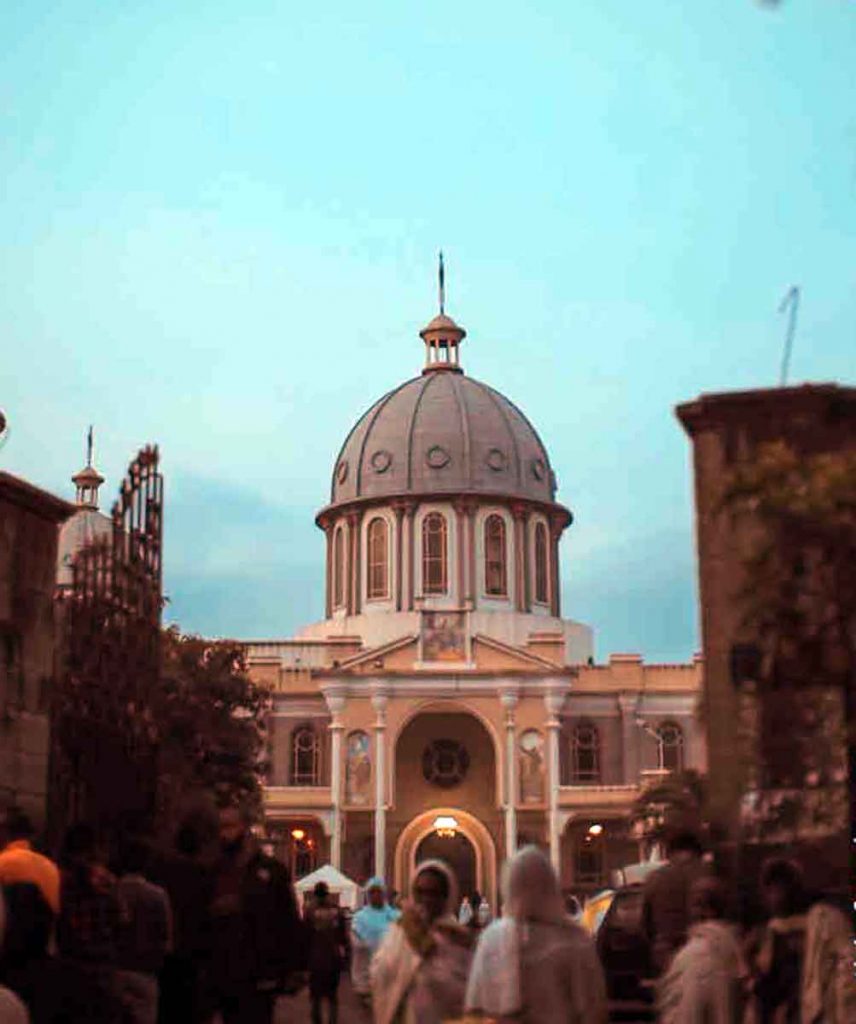
Ethiopian history - axum church

Liturgical music in Ethiopian Orthodox Mezmur

Of the fourteen compositions of Anaphora St. Yared gave us twelve of them are the basic ones that are used regularly. The Anaphora’s are namely our Lord Jesus Christ, our Lady Mary, St. John Chrysostom, St. DIoscorus, St. John the evangelist, St. Gregory the Armenian, the 318 Orthodox, St. Athanasius, St. Basil, St. Gregory Nazianzen, St. Epiphanius, St. Cyril and James Sarug.

These are all written by St. Yared but some others which are slightly different from these ones but almost the same as Degua were written by Abba Gorgorios of Gastch who was the spiritual son of St. Yared. These were called “seatat” which are hourly Ethiopia Orthodox Mezmur songs that have a slightly different musical form.

Aquaquam in Ethiopia Orthodox Mezmur

It is a musical performance which is conducted with the assistance of staff, sistra and drums. Also known for “mahlet” these are historical and graphical presentations that show these performances were practiced in a way to praise God.

Qine Ethiopia Orthodox Mezmur

As mentioned earlier above Qine is a powerful way of literature with the words or sentences having multilayered meanings. St. Yared also used this in his Ethiopia Orthodox Mezmur songs to praise God.

Though St.Yared found qine various poets like Iskindir, Dekik Estifanos Twenty, Hawira, and Menkera mastered it in different ways. Its poetic, mystery, and linguistic excellences making it famous many Ethiopians learned qine including Emperor Haile Selassie I.

Sources of Ethiopia Orthodox Mezmur

The holy bible, book of monks and scholars as well as literary works are said to be the sources of St. Yared Ethiopia Orthodox Mezmur songs. Especially in the bible psalm 150 which read as

“Praise God in his sanctuary

Praise him with the sound of trumpets

Praise him with psaltery

Praise him with tumbrel with stringed instrument and organs

Praise him up on the loud cymbals

Praise him up on the high-sounding cymbal”

Is said to be the major biblical source. This shows the lyrics is composed in a way that is comfortable to the music while the basic meaning and message are being unchanged.

Characteristics of Ethiopia Orthodox Mezmur

Generally talking St. Yared Ethiopia Orthodox Mezmur songs comprises of smooth sounds, gentle movement of the body from side to side front and back, rhythmic and slow march of dancing, and minimalistic percussion.

The setting of the St. Yared’s Ethiopia Orthodox Mezmur songs performance represents that of the quinemahlet or canticarum which is the outermost part of the church, mekdes, or sanctuary which is the innermost part of the church and the tabot or adobe which is the sacred part of the church.

The performance goes throughout the show as a smooth flowing current of the ocean. With the movement of the front and back as well as side to side. It is performed by two groups of people standing in front of each other holding sistrum in their hands that will enhance their movement and gives it a rhythmic movement with a beat.

These two groups of people are dressed in graceful cultural clothes which are both elegant and colorful. They also have a white turban around their head giving them more grace.

Doing this they stand in front of each other forming a y shape creating a space for the one who is playing the drum in the middle. The drummers beat the drum in various beats standing, seating, jumping or circling around adding a beauty to the play of the musical performance.

lalibela cross

This being accompanied by the movement of the other group one standing while the other seating or one going front as the other moving backward gives the performance flowing like the ocean as I mentioned above.

Other than the musical performance St. Yared Ethiopia Orthodox Mezmur songs have three basic melodies. The first one is Geez. It is the simplest and plain type that is used on a regular base on a day to day activities. The second one is the Ezel. It is a slow and glorifying heavy sounding style usually associated with fasting seasons or funerals.

Last but not least is the Araray. It is the most complex type of melody with a free and higher spirit mode. These melodies are used for special festivals and ceremonies. The symbolism being the heart of the Orthodox religion as well as St. Yared’s music the three melodies also have a meaning. The Geez symbolizes the father, Ezl symbolizing the son while the Araray is for the holy spirit.

Instruments in Ethiopian Orthodox Mezmur

St. Yared Ethiopia Orthodox Mezmur songs basically contains three different musical instruments. The first one is the “Tsinatsil”. It is a type of sistrum made out of three or four metal rods which are horizontally attached to a u-shaped frame or a bow while they are still moveable.

The bow can be made out of wood, pottery of porcelain which is now a days being substituted be the ones made out of metal. So as the bow is jiggled and tilted from side to side the metal rods makes a noise. And when this is done under a constant time frame interval it gives a rhythmic beat that cherishes the songs.

The second musical instrument is the “Mekuamia”. It is a long stick that supplements the movement of the hand. It is swung front, back then side to side symbolizing the four different corners of the world and spreading the message that the praise to the Lord shall be heard from all corners of the world. Thirdly there is the drum.

It is also known as “kebero”. It is a large cylindrical drum with two heads on both ends of the drum. It is made out of a hollowed out wooden logs that are covered with animal hides on the open parts. It has a handle that is used to hung the drum on the players shoulder which riches the height of the waist.

With the varying head sizes, the one with the larger size is kept to the right-hand side while playing the drum whereas the small one is kept to the left-hand side. The drum is always played with a bare hand.

Other than the St. Yared techniques the Ethiopian Orthodox Church and Ethiopia Orthodox Mezmur songs are well known for the use of “Begena”. It is a very big string-based musical instrument that is played while it is standing on the floor.

The players play it with their fingers by striking the strings and forming a vibration that created the sound. The sounds are very loud and deep which touches the heart when played giving the feeling that there is a connection with the upper holiness.

Ensemble and Dance in Ethiopia Orthodox Mezmur

The St. Yared’s musical performance is presented by the debteras which form two groups each having their own leaders named the “qegngeta” meaning leader of the right and “grageta” meaning leader of the left. And the whole group is led by the master named “merigeta” meaning leader of the choir.

St. Yared Ethiopia Orthodox Mezmur songs have five distinct chants and modes of performances. First is Qum zema. This chant is performed by the human voice alone which in modern-day is also known as acapella. Second there is the Zemame.

It is accompanying the Ethiopia Orthodox Mezmur song with the swinging of the staff players and swaying of the body. Third is Tsinatsil. It has its own three subcategories. Merged being the first it is a slow and even rhythmic, Neus-mereged meaning minor with a faster beat and Aby-merged the major with the fastest beat.

The latter is even accompanied by rhythmic clapping. Then came “Tsfat Chebchebo”. Like the major merged it is involved with a faster beating of the drum while jumping and circling around. Lastly, there is “Wereb”. It involves a slow forward and backward movement with a perfect beat.

I explained this much about St. Yared and his Ethiopia Orthodox Mezmur songs because almost all or the majority Orthodox songs follow his footsteps and it is considered as the basic guideline of the music culture. Other than this some songs follow the traditional Ethiopian way of songs.

churches Ethiopia-

Ethiopia Orthodox Mezmur instruments

These traditional ways of songs are namely “Bati, Ambasel, Anchihoye, and Tizita”. Unlike European or other styles of musical practice, it has only five tones. This is why it is also called pentatonic. The tones included in the Ethiopian traditional music are Do, Re, Mi, Sol, and La.

This gives it its own unique character that makes us able to recognize it as we heard it. So basically, this is all the fundamentals of the Ethiopian Orthodox Mezmur music.

Ethiopia maintains extraordinary social legacy and assorted music history in whole African mainland. The customary music legacy of Ethiopia has been universally perceived with its particular music culture and emblematic indication.

The conventional tunes and music of the nation spins around center harmony of their life and culture. The cutting-edge music of Ethiopia has been mixed with mix of components from customary Ethiopian music and western music which has made another pattern in the music world.

The music custom of the nation keeps up the social way of life as well as keeps up social attachment through social articulation at various social events and opposes social changes imbued through globalization.

The globalization has brought a progression of change and changes in the realm of Ethiopian music through commercialization, commodification and digitalization of social articulations separated from capturing the social privileges of conventional performers.

The more youthful ages have been pulled in towards western music undermining the stylish and social estimation of music convention of the nation. The worldwide institutions identifying with security and shielding of social privileges of individuals are yet to be properly converted into the real world.

The development of culture ventures and amusement houses has presented genuine dangers to neighborhood culture and prompted vanishing of nearby customs, melodic legacy, and their substitution by famous worldwide music. The social homogeneity and commodification have supplanted the assortment of societies right now.

Saying this all about my topic I would like to finalize my essay by mentioning some good and well known Ethiopian Orthodox Mezmur songs and some of the famous singers. Starting with the well-known Ethiopia Orthodox Mezmur songs we can list out “Aman beaman”, “Meaza senay”, “meaza afua”, “tefetseme mahilete tsige”, “ begol sekebe” and all the melodies composed by the well-known Ethiopian St. Yared in his books diguwa, tsome diguwa, miraf and so on.

And for the well-known singers, we can mention Yilma, Kinetibeb, Tewodros, Engidawork, Marta and so on. And these are the basics mentioned when talking about the Ethiopia Orthodox Mezmur. Personally, I recommend everyone to hear the songs even if it is not from the religious point of view and is sure that no one can pass by hearing the songs and admiring about the art involved in it.

Cover: “Ethiopian Monk” by Mark Fischer is licensed under CC BY-SA 2.0 

Nazret Ethiopia (Adama) A Simple Guide to a Friendly City, and 9 Tips

1
Ethiopia oromo- Ethiopian woman standing

Nazret Ethiopia (Nazareth in Ethiopia) town is also known as Adama town and it gets its name from Jerusalem’s Nazareth Town, an ancient Jewish town. The town name Adama was derived from a famous hotel called Adama found within the city.

The Oromo word Adaamii, which suggests a cactus or a cactus-like tree means Euphorbia candelabrum, a tree of the Euphorbiaceae found in Southeast Addis Ababa, around 100 km away.

Where is Nazret Ethiopia?

Surrounded by East Shewa Zone, the town sits between the bottom of an escarpment to the west, and also the Great valley to the east.

The exact location at 8°32′N 39°16′E / 8.54°N 39.27°E at an elevation of 1712 meters.

Why Nazret Ethiopia (Adama)?

Nazret Ethiopia Town is thought to be a center of Oromia Region.

Nazret Ethiopia Adama is potentially a busy transportation center, a town at a road junction and rail station of the Addis Ababa to Dire Dawa.

An outsized number of trucks use this same route to and from the seaports of Djibouti and Asseb (though the latter isn’t currently utilized by Ethiopia, resulting in the Eritrean-Ethiopian War).

Beginning within the 1950s, economic development brought a rapid increase to Nazret Ethiopia (Adama). An enormous sugar plantation and factory near the town increased employment, and another large farm raises civet cats for his or her civet, a secretion employed in the manufacture of perfume. one of Ethiopia’s chief exporters of oil cakes, oilseeds, and pulses has its headquarters in Nazret Ethiopia. There are hot springs within the vicinity.

Adama University (formerly Adama Technical Teachers College) is found in Adama. Adama Stadium is that the home of Adama City FC, a member of the Ethiopian Football Federation league.

Following war II, Emperor Ras Tafari renamed the town after Biblical Nazareth, and this name was used for the rest of the 20th century. In 2000, the town officially reverted to its original Oromo language name, Adama, though “Nazareth” remains widely used.    

In 2000, the govt moved the regional capital of Oromia from Addis Ababa to Nazret Ethiopia (Adama), sparking considerable controversy. Critics of the move believed that the Ethiopian government wished to deemphasize Addis Ababa’s location within Oromia.

On the opposite hand, the govt maintained that Addis Ababa “has been found inconvenient from the purpose of view of developing the language, culture, and history of the Oromo people.”

Ethiopiam woman standing
Nazareth in Ethiopia

How to Move in Nazret Ethiopia (Adama)?

The buses don’t follow a formal schedule. Generally, the mini buses wait at Kality station in addis ababa until they get enough passagers before they depart to Nazret. This probaby take an hour or much less. The trip it self takes much less than hour, using the express way.

Make sure your bus/minibus you take is “Express” – which suggests it goes non-stop via the dual carriageway connecting Addis Ababa and Adama. You can simply ask if it is non stop direct trip. This saves you from frustration and from jumping from station to station in different towns.

This way, an 80 km trip between Addis outskirts and Nazret Ethiopia (Adama) will take just over an hour – however, the traffic in Addis could easily double that.

On arrival to Nazret Ethiopia (Adama), the minibus will likely sometimes stop on the road offloading passengers, even before getting at the town center. The buses follow a common main roads and the passagers could ask the drver or the support person to stop the vechicle.

Therefore, choose the stop near to the place/area where you plan to stay, since the bus station could be a few kilometers far from the middle.

All you need to say is ‘weraj’.

Street names and addresses aren’t discernibly marked (if, indeed, they’re used at all). The Addis Ababa-Dire Dawa Road is that the main thoroughfare through the town, and is pretty good by African standards.

Blue-and-white taxis use fixed routes along major streets, and price but one birr per person, per ride. These will obtain and relieve other passengers along the route. it’s possible to rent a taxi for personal use (called “contract”) for a better fare, which should be arranged earlier.

A horse-drawn cart, or gari, is even cheaper than a public taxi, though by 2010 these had been largely supplanted by auto-rickshaws (called “Bajaj,” after their manufacturer).

Bajaj drivers don’t particularly pester foreigners passing by (there are few, if any, white foreigners anyway), but some may attempt to ask on arrival for quite agreed before (like 100 birr to the bus terminal rather than 50 – inner-city rides definitely should be even cheaper), possibly claiming misunderstanding.

Who Lives in Nazret Ethiopia (Adama)?

Based on the 2007 Census conducted by the Central Statistical Agency of Ethiopia (CSA), this city incorporates a total population of 220,212, a rise of 72.25% over the population recorded within the 1994 census, of whom 108,872 are men and 111,340 women.

With a district of 29.86 square kilometers, Nazret Ethiopia (Adama) incorporates a population density of seven,374.82; all are urban inhabitants. a complete of 60,174 households were counted during this city, which ends in a mean of three.66 persons to a household, and 59,431 housing units.

The four largest ethnic groups reported in Nazret Ethiopia (Adama) were the Oromo (39.02%), the Amhara (34.53%), the Gurage (11.98%), and also the Silte (5.02%); all other ethnic groups made up 9.45% of the population.

Amharic was spoken as a primary language by 59.25%, 26.25% spoke Oromiffa and 6.28% spoke Guragiegna; the remaining 8.22% spoke all other primary languages reported.

63.62% of the inhabitants practiced Ethiopian Orthodox Christianity, 24.7% of the population were Muslim, and 10.57% were Protestant.

nazret ethiopia adama

What Do They Speak in Nazret Ethiopia (Adama)?

As I stated above, many people speak amaharic and Oromigna. Although it may be poor, many people also speak English.

The Adama Science and Technology University

The Adama Science and Technology University (previously referred to as Nazareth Technical college, Nazareth college of technical teachers education) was founded in 1993.

Starting in 2011, the university began restructuring and also the number of faculties has reached seven, a separate school has been established to coordinate postgraduate studies.

The university has ratified a five years strategic plan and senate legislation, the university has started a hunt park and has signed memoranda of understanding and received letter for intent from institutions.

The university has different schools and programs as an example school of applies natural sciences programs, school of technology and architecture programs, school of computing programs, school of mechanical, chemical and materials engineering programs.

What Is the Religion in Nazret Ethiopia (Adama)?

Ethiopia could be a land of diversified and rich in religion language and culture Among the places of worship, they’re mainly Christian churches and place of worship (for example

Orthodox: Ethiopian Orthodox Tewahedo Church,

Protestant: Ethiopian Evangelical Church Mekane Yesus,

Evangelical Christian: Kale Heywet Word of Life Church, Full Gospel Believers Church, Catholic: Ethiopian Catholic Archeparchy of Addis Abeba).

Muslim mosques

What Is the Climate in Nazret Ethiopia (Adama)?

Nazret Ethiopia (Adama) is hotter than Addis Ababa. This may be due to the rift valley that the city is located in. The rift valley is the lowest point in the country crossing south west to northeast.  The climate is tropical wet and dry.

Is There Local Food in Nazret Ethiopia (Adama)That I Should Know About?

Food is additionally describing culture of the society like most of Ethiopian towns in Adama the famous “tibs”, or “kurt”, raw or roasted beef within the city’s famous restaurants specialized in serving roasted beef dishes.

Small restaurants on the most streets are inexpensive (with costliest meat dishes around 100-120 birr), but often there’s neither English menu, nor someone speaking basic English to assist a foreigner.

Oromo language in menus, unlike Amharic, uses Latin script, but the names are quite different from what you’ll know from Addis – worth to try to some research if you wish to do some truly local (or Somalian) delicacies.

Several cheap (around 20 birrs per mug) beer are available at and near the most road, where you will see many visitors from Addis enjoying their beer on a weekend.

Some nice club-like bars are open till late, but aside from that, there’s not much nightlife in town. because it is Ethiopia, coffee is additionally cheap, good, and simple to seek out.

What to Do in Nazret Ethiopia (Adama)?

Adama is about 25 km north of the spa town Sodere. Minibuses will take passengers to the doorway of Sodere for some birr. While there’s an outsized hotel at Sodere, the resort is probably more well-suited for day trips, as accommodations are better in Adama.

Minibuses that travel to the west stop to pick the passengers at the most road occasionally and you should listen to their loud calling where the bus is leaving. Stations (bus terminals) are destinations and departure points. 

Nazret Ethiopia (Adama) is rather a relaxation place, and not a place to visit for tourists. The heat would also deter any such outside activity. However, there are many standard hotels and nightlife that you can enjoy with family or friends.

Ethiopia Languages and Useful Tips Before a Visit

0
Amharic Hebrew Dictionary

Language is the basic tradition of every nation that serves as a communicative tool or skill and it all starts from a word.  Ethiopia becoming one of the ancient nations has developed a great deal on the subject field and the linguistics structure.  With all the difficulty to limit the insight of the topic it is essential to fall under the most important characteristics and features of the language, in order to maintain the theme of the topic. What language do they speak in ethiopia

Ethiopia languages are the pioneer to the linguistics area due to the interest of relating to multiple features when bounded together; in other words, in the sense of geographical aspect, they distinguish them from any other naturally placed definitive group of languages in the world. 

Even though this is one of the main features, some will not fall under this and some don’t even follow any of the patterns at all.  These languages will have shared features due to genetic relations and those that are shared from the process of reciprocal diffusion among languages.

Some don’t match with any of the described features again, but generally, most of the languages relate to Ethiopia’s boundaries and have the features of pronunciation, grammar, vocabularies, and patterns of expression.

Ethiopia constitutes a language that is rich with features of pronunciation; that have retroflex consonants, nasal vowel, and aspired slops, they have few spirants and lack word accent.  Currently, it is quite difficult to assure the number of Ethiopia Languages; but based on some adequate information it is possible to say that there are 75 – 80 types of languages.

The two main reasons for us not to say the numbers of spoken Ethiopia Languages are due to – Writings and researches that elaborate the kinds of languages claim by giving them one group name while instead, they have many specific names within their grouped names.

The most important reason; a research couldn’t explain if the languages are highly similar but are having different language names or they are just of the same language but have different dialect.  Some classify similar languages as specific languages giving each one of them their own name and others will put them under on definitive term.

According to linguistic science it is possible to say if two people communicate using their own language it means these are of the same language but different dialect; but if they couldn’t communicate then they are two different languages.

For example a man from Gojam( northern Ethiopia, speaking Amharic) and a man from Addis Ababa can communicate using their own language, of course it is possible to find few words that one couldn’t understand but these are negotiable  terms; but in other context its quite impossible to have conversation with that of a man who speaks Argoba.

It is important to notice that when you listen to the language at first it looks so much similar to Amharic but in order to understand to necessarily, you need to know the language.  Therefore, Argoba is considered as one language by itself.

Languages are different means of communication among people. Most countries of the world are known to have a national language and other languages spoken by the minority as well. Ethiopia languages are a lot in number and are unique. To understand the Ethiopia languages, we need a better way of classification, other than in region or location.

Here we see Ethiopia language at different periods and locations in the history of Ethiopia and also the endangered Ethiopia Languages or the extinction that this may have resulted in. These languages are diversified both culturally and by the means of the language classifications.

With Ethiopia being an ethnically diverse country, there are more than 80 Ethiopia languages used by the different cultural and religious groups of each language from the different linguistic families.

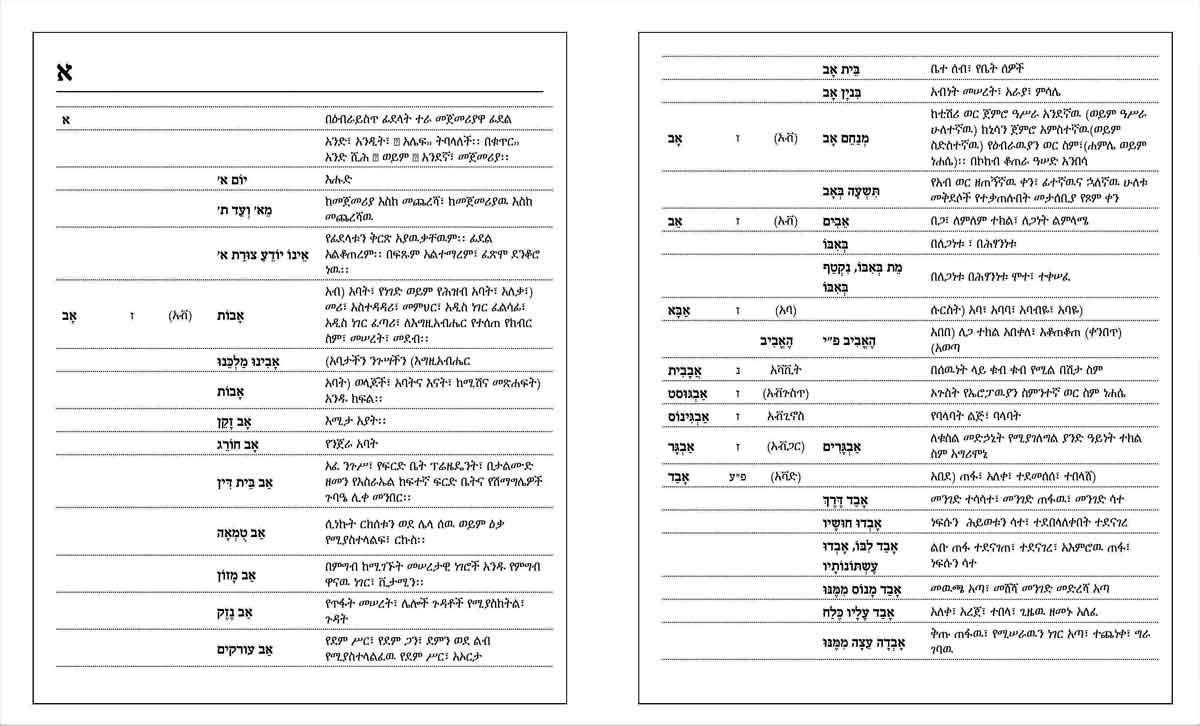
Amharic Hebrew Dictionary
“File:Amharic-Hebrew Dictionary.jpg” by Groyall2018 is licensed under CC BY-SA 4.0 

What Are Ethiopia Languages Categories?

Language classification is based on the origin from which language descends.

It is possible to classify languages in respective of their family.  Ethiopia Languages are basically under Afro-Asian and Nilo-Saharan families.  This means the languages are created with either of the two.

Afro-Asian has six sub-divisions within it.

The mainly known linguistic groups in Ethiopia are Semitic, Kushitic, Nilo Saharan and Omotic.

From this we can understand that once upon a time these six languages were just one but through time, they fall into six groups.  According to linguistic researchers, such languages are called proto-languages.  It is quite difficult to say Afro-Asian was the name of that language because the language was spoken 15,000 years ago; therefore, we have no clue what they called it back then.

As described on the above paragraph we have mentioned that Afro-Asian is classified into six; from that Semitic, Cushitic and Omotic are spoken in Ethiopia. Omotic is only found in Ethiopia and Cushitic is spoken in Ethiopia and neighbouring countries.  Most of the Semitic languages are spoken in Ethiopia and few of them in Middle East and some parts of Africa.

Semitic Ethiopia Languages

Semitic language group is internationally used by the largest world’s Semitic languages. Thsese groups are found in Ethiopia as well and are located in the northern and central parts of Ethiopia and are classified as north Semitic and South Semitic. Some of the known North Semitic languages include Tigrinya and Ge’ez, and in the south Semitic group Amharic, Harari, Argoba, East and West Gurage language group clusters, Silte are a few examples.

Semitic Languages that are spoken in Ethiopia are classified into North Ethio-Semetic and South Ethio-Semetic.  North Ethio-Semetic consists of three languages and those are Geez, Tigrigna and Tigr’e which is spoken in Eritrea. South Ethio-Semetic are classified into two groups and each have many under them. 

And within those are Harari, Amharic, Argobic, Selte, Zayi, sodo, Gogot, Cheha, Endegagn, Mes’qan etc.  Since the relation of these languages is different, they can be placed in different categories.   

For example, Amharic and Argob under one; Seltte, Harari, and Zayi in other categories and Gogot, sodo, and Mesqan under Gurage and the rest guragina languages are under western gurage.  And those that are in Western Gurage can again be classified into two sub-groups; West Central gurage and West edged gurage.

Ethiopian language amharic letters
ethiopia official language “File:Amharic alphabet Fidel ፊደል.gif” by Abel Gebremariam is licensed under CC BY-SA 4.0 

Cushitic Ethiopia Languages

The Cushitic group are located on the southwestern and eastern parts of the country and are grouped into several classifications. They are known as Agew languages, East Cushitic, Lowland East Cushitic, Southern lowland East Cushitic, and transversal southern East Cushitic.

These Ethiopia languages are spoken by people of Oromo, Somali, Agew, Hadiyya, Kambata, Konso and many other southern nations and nationalities in Ethiopia. Other than Ethiopia, the Cushitic family languages are known to be spoken in the horn of Africa.

This language is classified as Northern Cushitic, Central Cushitic, Eastern Cushitic and Southern Cushitic.  From these four sub-groups Central and Eastern Cushitic are spoken in Ethiopia.  The central Cushitic language is represented by Agaw and within it consists of Hemttegna, Qemantigna and Awngegra languages.  The Eastern Cushitic is also classified as Qolla and Dega (which means according to the climatic nature Qolla hot and Degga being cold).

Then Dega is classified into Burjigna, Gedeo, Sidamo, Kambata and Hadiya.  And the Qolla is classified inthree families; one is Afar-Saho include Afar and Saho the secone one includes Oromic, Busa, Barareit, Gidol, Konso, Erborie, Dasenech, Gewad, Gobezegna, Tsamay and Worzigna.  The third one includes Somali and Bargo.

Ethiopia Languages like Oromo, Somali, and Arabic are also spoken in neighboring countries.  For example, in Kenya, Djibouti, Eritrea, Somali.

Afro Asiatic Ethiopia Languages

Another large linguistic group which is the combination of the Cushitic and Semitic families is known as the Afro-Asiatic family. It is also known as “Hamito Semitic” or “Semito Hamitic” which originated from the book of Genesis in the bible.

These families have over 300 languages located in West Asia, North Africa, Horn of Africa, and Sahil. It is the 4th largest linguistic family group.

Omotic Ethiopia Languages

The other language family we can see is the Omotic group which is spoken widely in the southwest regions of the country. It is named after the Omo River so the location of the users is around that region. It has unclear classification so some of the languages are uncertain.

It’s mostly used by Wolayta people and another minimum of 30 Ethiopia languages are identified as members of this group.

This language consists of Anfilo, Welayita, Gamo, Hamer, Dime, Male, Kore Zeyise, Ganjule, Dizzi, sheko, Keficho, Nay, Baskelo, Oyida etc…

Welayita, Kulo, Konta and Gamo are highly similar but in order to give a conclusion it’s important to do additional researches.  Anfilo has less than 100 speakers so it’s a language about to be extinct.

Nilo Saharan Ethiopia Languages

The Nilo Saharan language group is part of the larger Nilo Saharan group which consists of the African countries located along the Nile River and the Sahara Desert. It is located mostly around the southwestern and western margins of the country.

The term in Ethiopia is referred to as Nilotic. Anuak, Berta, Gumuz, Mursi, Nuwer, and Suri are a few examples of these Nilotic family languages.

This proto-language has many sub-groupes; some are Komo, Abay, Surm etc… under this proto-language Kunama, Agniwak, Nuwer, Komo, Mesengo, Opa, Gumuz, Shabo, Berta etc are included.

In Ethiopia compared to those Cushitic and Semetic speakers; Omotic is smaller and is placed third in rank.

Actually, in Ethiopia there is a language that won’t be under any of the languages we mentioned and has no class and it’s called Berayle or Onogota.  It is spoken around Southern area and has less than 10 speakers.  Therefore, it’s a language that will be extinct within few years.

The other one is Symbol Language.  This one has its own structure meaning grammar.   But it is not studied well so it’s difficult to relate with language or even understand if there is any relation.

Phonetic Writing in Ethiopia Languages

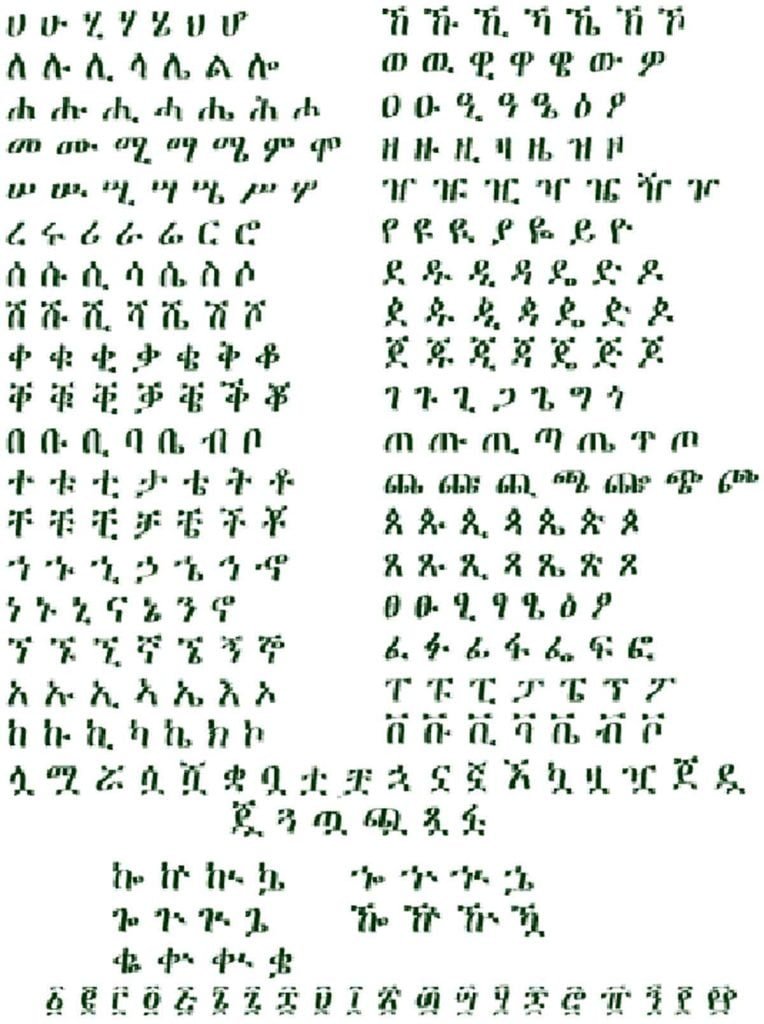
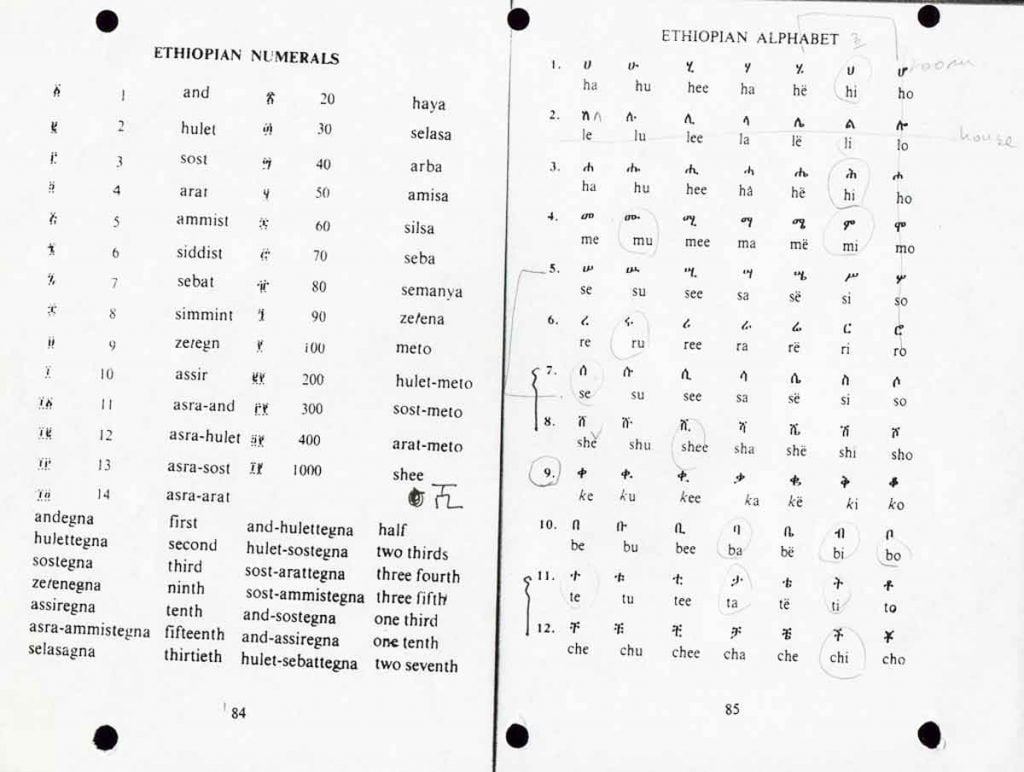
It is important to mention this while speaking of language.  There is a difference between the Phonetic writing and typical way writing.  Phonetic writing is when the consonant letters are written in their solid six letter form ( ሳድስ) and the vowels make up to being the intended word.

The Vowels are አ- አ-ኢ-አ-ኢ-እ-ኦ and the rest of the letters are consonant. Therefore in order to say for example GOBEZ (ጐበዝ) ጐ is made when ግ and ኦ  are combined and  በ  is made when  ብ and  ኧ and  ዝ since it’s in the six letter we do not touch that. 

learn amharic
“alphabet_textbook” by newflower is licensed under CC BY-NC-ND 2.0 

What Language Do They Speak in Ethiopia?

Amharic and English are used throughout Ethiopia.

Ethiopia is amazing country with more than 80 local language. This means each ethnic group has its own language. Since the country has never been under colonialism, the European influence is low to none.

However, English has been used as a learning language, especially for the high school and university level. It is expected students to learn the language since the kinder garden level. Due to the low-quality teachers or medium, the use of the language is still very low, although many understand and respond with English.

Amharic is a working language in Ethiopia, and many people know the language. This means you either need to communicate using Amharic or English for fast response. Oromigna is also famous in the Oromo regions.

What Is Ethiopia Official Language?

Amharic is one of the official language of Ethiopia.

Amharic gain its influence in the 10th century -12 century where power structure shifted from the north (Axum) to Amhara. Since then the use of the language grew rapidly.

Amharic is a working language in Ethiopia. Amharic is spoken clearly by many throughout the country. Other languages like English are used for office and education sectors. English is used to communicate with the rest of the world. Oromigna or Oromiffa and Somali have many speakers as well. Foreign languages such as Italian, French and Arabic have many speakers in the country.

In other regions of Ethiopia, several Ethiopia languages of the different families mentioned earlier were used widely. Following the unification of Ethiopia, Amharic was being imposed as a national language in many parts of the country. The only language used as a medium of instruction is Amharic and it kept spreading throughout all of the regions.

With request of some Ethiopian regions with large number of populations, other Ethiopia languages are also considered to be a working language as well.  As a result, a new government system allowed regions to use their Ethiopia languages as working language in addition to the Amharic. Amharic proceeded to be the official language of the country and the medium of instruction but all the other regions still enjoyed their rights to use their languages.

Is Swahili Spoken in Ethiopia?

No. Swahili is rather much known in the countries south of Ethiopia, including Kenya, Uganda and Tanzania. Amharic is much known language in Ethiopia. It is a decedent of Geez language that was created before 3000 BC, before both Amharic and Arabic.

Ethiopia Languages and Literature in Ethiopia

As mentioned earlier, Ethiopia has so many languages but most of them are known to be oral. Ethiopian history has been studied by the different manuscripts which are written documents. A language not written not only prevents the language from sustaining, but also prevents us from understanding the history of the country. Documentation in many Ethiopia Languages is very low. The fact that Ethiopia is known as the only black African country with its own alphabet, most of the other Ethiopia languages did not employ the alphabet.

The only Ethiopia Languages that made use of Ge’ez in their written documents starting from old times are Ge’ez, Amharic, and Tigrigna. However, other region populations of Ethiopia particularly the Muslim population made use of the Arabic alphabets to write their languages.

With the coming of Islam and the conversion of different Ethiopian communities, Arabic literacy was introduced. This population made use of Arabic literature to understand their religion and later on wrote their local languages using the Arabic alphabet. These literatures are called “Ajami”. We can find Harari, Oromo, Afar, Somali, Silte, Amharic, Alaba, Argoba, Hadiyya and Gurage Ethiopia languages written in the Ajami form of writing. It has more than 30 other languages spoken in black Africa.

What Was the First Ethiopia Language?

The first language known as Ge’ez used during the Axumite period in the central highlands of the country till the 14th century. This ancient language served both as an official, means of communication and liturgic purposes used by the state royals and the rest of the population.

Several pieces of kinds of literature were believed to be produced during the 4th century in the reign of Ezana as he introduced the religion of Christianity. The nine saints who fled from the religious prosecution in the Middle East were believed to have translated the bible from Greek to Ge’ez. Thus, we find manuscripts with these religious contents in the ancient Ge’ez language.

These manuscripts were spread to monasteries in different parts of the country. The alphabet used to write Ge’ez which has become the Ethiopic alphabet is known to have Sabaec origins. However, from the 14th century, it was replaced by Amharic as an official and communication language. Ge’ez remained for church and religious purposes until the present day.

What are Endangered Ethiopia languages?

Languages can live or die depending on the number of users it has and the population of its people. The less the number of speakers of a particular language is, the closer it is to the risk of extinction. These Ethiopia languages are called endangered languages.

Some Ethiopia languages have been extinct which also took place as a result of a lack of population of users. The second factor that results in the extinction of languages is socio-economic factors as a group of people are influenced and dominated by another group of people. The other reason would be the languages existing as oral and not having a written document for the language. Not having institutions that record or study the languages also contributes to the extinction of the language. Preserving diversity in languages is a responsibility to the people of a country as well as government officials.

One of the most used ancient Ethiopia languages is Ge’ez as it has lost its role as a national communicative language. But since it’s still serving for liturgy purposes, we cannot call it fully extinct. Qimant is also an Ethiopia language that has already been extinct. To prevent this risk of extinction that we are fearing it is very important that speaking the different Ethiopia Languages are encouraged and used as a medium of instruction in their regions.

What Language Is Spoken in Ethiopia Today?

Today, the Oromo language speakers have the highest population. Amharic has the second-highest number of speakers and Somali follows as the third most spoken language in Ethiopia. There were many debates going on still since the language usage does not consider the population.

The recent news on the number of national languages is to engage five Ethiopia languages with large number of speakers as national languages in Ethiopia. These Ethiopia languages are Oromigna, Amharic, Tigrigna, Somali and Afar.

When these proposals of language usage have been announced, a lot of effort needed to uplift the languages like Somali, Afar, Tigrigna, and Oromigna up to the standards of education, official languages and medium of instruction.

Conclusion

Ethiopia has a widely diversified culture and thus, diversified languages and populations. When trying to understand Ethiopia languages and their structures it is very crucial that we study their classifications and that can help us identify the similarities and differences of the various types of languages.

A language is a national heritage of a country so it has to be preserved and studied and documented. It is a cliché that a country or a nation has a single language as a medium of communication and that can prevent the cultural and linguistic diversity.

So, the solution might be to engage in practicing as many languages as possible which will not only preserve the languages from being extinct but also will promote a strong relationship between people of different cultural groups. Seeing the timeline and location of the languages is a major source of history so we must study the sources and the time they were spoken at.

Ethiopia Tribes: 10 Most Dazzling Culture

Cover: “alphabet_textbook” by newflower is licensed under CC BY-NC-ND 2.0 

Today Ethiopian Calendar

0
ethiopian calendar aztec -

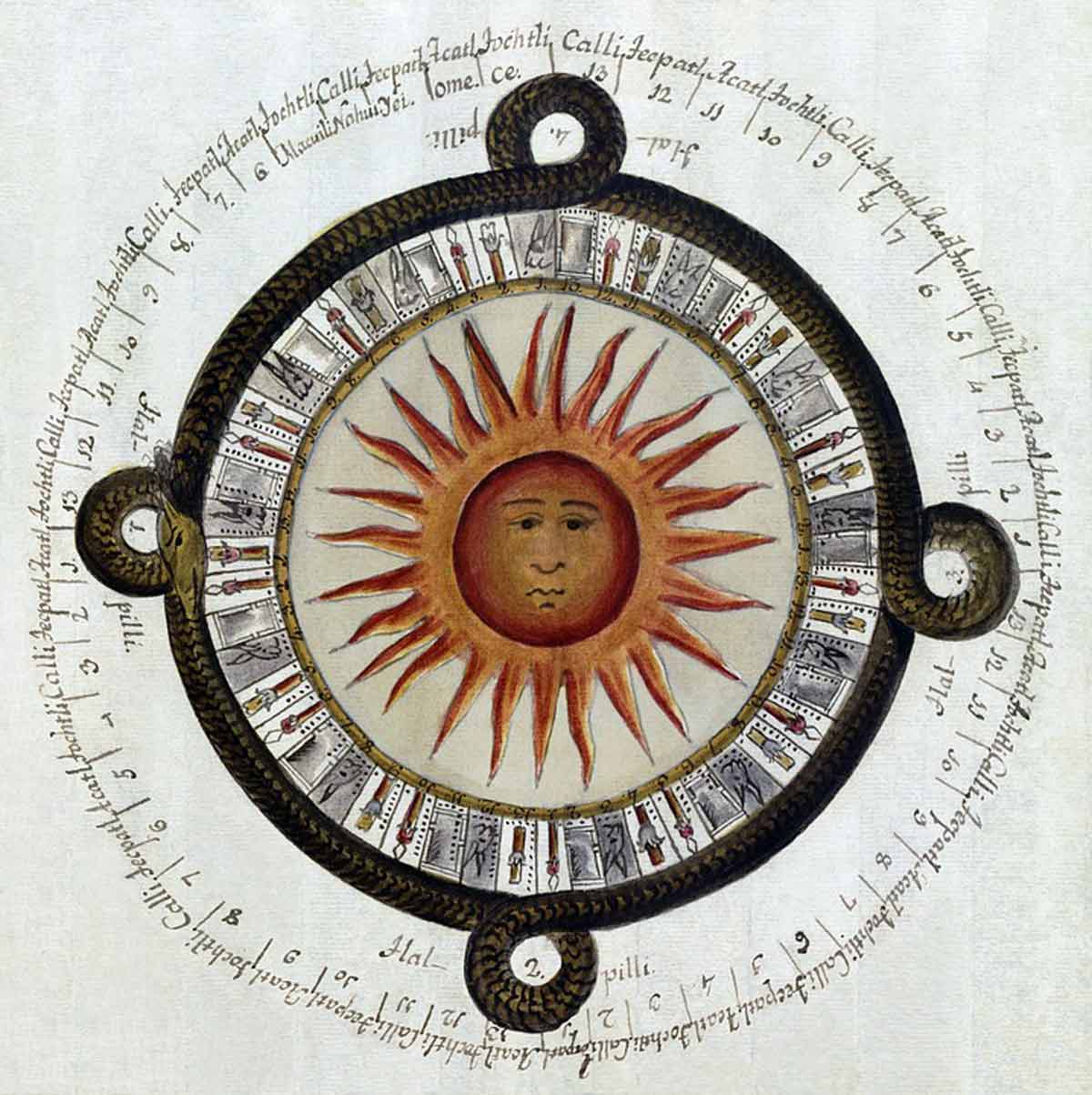
Today Ethiopian calendar and Gregorian calendar, Tuesday, or ‘Maksegno’ (in the Amharic language of Ethiopia) is Megabit 1, 2012 E.C and March 10, 2020 G.C. The first question that comes to many tourist’s minds is Ethiopian calendar? Why a unique calendar? I will elaborate on the points that make the Ethiopian calendar unique and different.

Ethiopia is one of the fewest countries, which follow the old calendar. However, due to the difference in the year, travelers hardly suffer any inconvenience. The Gregorian, however, is familiar to most Ethiopians and some still use both calendars interchangeably. This unique way of counting days of the year is closely associated with the Coptic and Julian calendars, but also it has some features and calculating techniques that make it different.

Many societies throughout the world have and developed their calendars that are different from the common Gregorian calendar. Despite their differences, all remained by the rule of 12 months a year.

An Ethiopian year is composed of 13 months and is seven years delayed from the Gregorian calendar. While the first 12 months have 30 days, the last month, called Pagume, has five days and six days in a leap year.

Ethiopia uses its ancient calendar, which hardly creates any inconvenience for travelers because of the calendar difference. Be that as it many, most Ethiopians these days are presently mindful of the Gregorian calendar, and a few indeed utilize both calendars traded.

Unlike the Gregorian calendar, both the Ethiopian and Coptic calendars have thirteen-months. The first twelve months have 30 days and the last month called Pagume has 5 or 6 days depending on whether the year is a Leap or not (every four years).

A Leap year will have 6 days in its thirteen-month and other regular years will have 5 days of this additional thirteenth month.

What is the Difference between today Ethiopian calendar and Gregorian?

The very first difference that makes the Today Ethiopian Calendar unique is it has 13 Months in a Year. A year in the Today Ethiopian Calendar is 13 months long, with 12 months of 30 days each. The last month has 5 days in a common year and 6 days during a leap year.

Like in the calendar of Julian, a leap year time in today Ethiopian Calendar happens every 4 years without exclusion.

The schedule of Gregori contains 12 months with January, March, May, July, August, October, and December having 31 days, and April, June, September, and November, 30 days, and February having 28 days (29 days in a leap year).

The Gregorian calendar is the famously utilized calendar in most of the world. It is titled after Pope Gregory, who founded it in October 1582. The calendar spaces leap years to make the average year 365.2425 days long, approximating the 365.2422-day cosmic year [tropical year] that is defined by the Earth’s revolution encompassing the Sun.

The calendar was formed as a revision to the Julian calendar, reducing the average year by 0.0075 days to stop the drift of the calendar regarding the equinoxes. To administer with the 10 days’ departure (between calendar and reality) that this drift had already relinquished, the date was forward so that 4 October 1582 was followed by 15 October 1582.

ethiopian calendar aztec -

The reformation was adopted initially by the Catholic countries of Europe and their overseas territories. Over the next three centuries, the Protestant and Eastern Orthodox countries also influenced what they called the Improved calendar, with Greece being the last European country to use the calendar in 1923.

The calendar of Gregori is a solar time schedule with 12 months of 28–31 days. A regular Gregorian year contains 365 days, but in several years known as leap years, a leap day is added to February. Gregorian years are recognized by continuous year numbers.

A calendar is completely designated by the year, the month, and the days. Although the calendar year in the present time operates from 1 January to 31 December, at earlier times year numbers were based on a distinct starting point throughout the calendar.

In the Julian time schedule, a leap year happened every 4 years, and the leap day was included by duplicating 24 February. The Gregorian reformation rejected a leap day in three of every four hundred years and left the leap day uninterrupted. However, it has become common in the current time to number the days orderly with no breaks, and 29 February is typically regarded as the leap day. The Gregorian calendar was an improvement of the Julian calendar.

The motive for the improvement was to produce the date for the festival of Easter to the time of year in which it was honored when it was launched by the old Church. The flaw in the Julian calendar (its hypothesis that there are precisely 365.25 days in a year) had commenced to the date of the equinox with respect to the calendar straying from the perceived truth, and thus an oversight had been imported into the estimation of the date of Easter

The Ethiopian New Year comes on September 11 in the Gregorian calendar. However, it is September one in the today Ethiopian Calendar. In Ethiopia the opening month of the year is September and the closing (thirteenth) month of the year is Pagumiene, which occurs after August. Each month holds 30 days from September to August and the thirteenth month, Pagumiene, becomes 5 days.

Considering the today Ethiopian Calendar bases its major ways of counting and calculating days of the year on the antique Coptic calendar, the Today Ethiopian Calendar is seven to eight years back the Gregorian calendar. Therefore, the significant variation arises from the number of months that live in a year.

In the Gregorian calendar, there are 12 months that vary from each other holding from 28 – 31 days in a month. February is the month with the fewest number of days in Gregorian calendar which is 28 days, and the peak of the days in a month in the Gregorian calendar is 31.

While in the Today Ethiopian Calendar there are 13 months in a particular year, with twelve months all having thirty days in each of them and with the last thirteen-month possessing 5 or 6 days whether that year is a Leap year or not.

If the year is a Leap year the thirteen-month will have 6 days, other than that it will have five days. A Leap year in Today Ethiopian Calendar occurs once every four years.

Jesus’ Birth Year Main Difference

The principal feature of variation rests in the calculation of the date of the birth of Jesus, which determines that the Today Ethiopian Calendar is 7 to 8 years back the Gregorian calendar.

While most Christians mark Christmas on December 25, Ethiopians feast Christmas on January 7 along with several Orthodox Christian churches around the world. Most other Orthodox churches practice the Julian calendar.

A few Orthodox societies practice the Revised Julian calendar instead, which is one of the most accurate calendars ever produced.

The additional principal variation among the Today Ethiopian Calendar and the Gregorian calendar is, The Today Ethiopian Calendar is seven to eight years back the Gregorian calendar. The primary issue that arises when understanding about these years of Gap is,

Why is the Ethiopian calendar 7 years Back?

Why do these two calendars have this much variation while they both accept the date of the birth of Jesus Christ as an origin point for their starting point?

These seven up to eight years of the break between the two calendars even if they both accept the birth date of Jesus Christ as an origin point for their estimations. The break in the two calendars is because of the substitute calculations that are used in discovering this date [the date Jesus Christ was born].

The Ethiopian Orthodox Church understands Jesus Christ was born in 7 BC, 5,500 years after God’s obligation to Adam and Eve. Owing to its complexity, the Ethiopians call their way of estimating the calendar ‘Bahere Hasab’, or ‘sea of thoughts’.

The calendar method originates with the idea that Adam and Eve lived in the Garden of Eden for seven years before they were dismissed for their sins. After they apologized, the Bible says that God promised to save them after 5,500 years.

today Ethiopian calendar

Therefore, the break of seven up to eight years between the two calendars spreads from the idea that Adam and Eve had prevailed in heaven for seven years before they made the sin which made them be dismissed.

As the Gregorian calendar was designed in 1582 by Pope Gregory XIII, by executing some modifications to the previously used Julian calendar. Many countries that denoted beneath the dominance of the Catholic Church had to acquire these new calendars.

At the period, most nations refused the unusual design of determining the days in a year, which challenged them to eliminate 11 days from their Julian calendar. But after times, many countries commenced approving the calendar and becomes the most accepted type of calendar in the world.

Since Ethiopia is a country independent of any colonial influences in her history and influences of the Roman church, was not influenced by the waves, and can easily maintain its original calendar, which declares that Jesus was born in 7 BC, and started counting days from that year on. Other calendars believed that he was born in AD 1.

The variation in the calendar that Ethiopia follows resulted from this day forward, which is why the country’s calendar is seven to eight years behind.

The months and their first dates are as regards:

Normal Year Leap Year in today Ethiopian calendar

  • Meskerem_ 11 Sept-12 Sept
  • Tikemet_ 11 Oct-12 Oct
  • Hidar_ 10 Nov-11 Nov
  • Tahesas_10 Dec-11 Dec
  • Tir_ 9 Jan-10 Jan
  • Yekatit_8 Feb-9 Feb
  • Megabit_10 Mar-11 Mar
  • Miyaza_ 9 Apr-10 Apr
  • Ginbot_ 9 May-10 May
  • Sene_ 8 Jun-9 Jun
  • Hamle_8 Jul-9 Jul
  • Nehase_7 Aug-8 Aug
  • Pagume_6 Sep-7 Sep

What Holidays Are in Today Ethiopian Calendar?

As one of the fewer countries in the world with its different calendar customs, Ethiopia feasts significant holidays on days that are various from the rest of the world. For instance, Ethiopia strikes the New Year on September 11, and not on January 1.

The calendar gives foreign travelers the ideal excuse to catch two different celebrations for New Year’s and Christmas.

The Christian Holidays in Today Ethiopian Calendar has remarkable variance with that of the Gregorian calendar. Christmas comes on January 7, as in the Orthodox traditional calendar. Likewise, Epiphany is on January 19. Easter would resemble to be estimated according to the orthodox calendar also.

Christmas and Epiphany also do not arrive to move by one day during Leap years as they would if they were being arranged by the above calendar. Thus, it would appear that the Christian celebrations are set following the Orthodox calendar rather than according to the Coptic.

Ethiopia’s New Year (Enkutatash) denotes the “gift of jewels”. The Enkutatash literature dates behind to the period when the legendary Queen of Sheba returned from her precious journey to attend King Solomon in Jerusalem.

What is the time in Ethiopia, and other best tips

Her leaders are assumed to have greeted her by showering her with gifts of jewels or ‘inku’. But Enkutatash is not particularly a religious holiday. The spring festival, which has been glorified since early times, also signifies the end of the rainy season followed by dancing and singing across the green countryside.

It is also the period for replacing formal New Year greetings and cards among the locals

These are the major public Holidays in today Ethiopian calendar.

  • January 7 Ethiopian Christmas
  • January 19 Ethiopian Epiphany
  • March 2 Victory of Adwa Day
  • March 13 Id Al Fitir [End of Ramadan]
  • April 6 Patriots Victory day
  • April 17 Id Al Adha [Arafa]
  • April 25 Ethiopian Good Friday
  • April 27 Ethiopian Easter [Fasika]
  • May 28 Downfall of the Dergue [since 1991]
  • July 17 Birth of prophet mohammed [moulid]
  • September 11 Ethiopian New Year [Enqutatash ]
  • September 27 Feast of the True Cross [Meskal]

In General, today Ethiopian Calendar, Ethiopians has their own method of calculating days of the year which differs from the Gregorian calendar and also a slight difference with the Egyptian Coptic Calendar. The methods and rules of calculating this calendar bases its rules on the ancient Ethiopian Orthodox Tewahedo church. The Calendar is seven up to years behind the Gregorian calendar because of the belief that Adam and Eve lived in heaven for seven years before they were expelled for their sins.

There for the Today Ethiopian Calendar is:

  • Used In – Ethiopia and Orthodox Tewahedo Church in Eritrea
  • Calendar type – Solar / depends on Earth rotation around the sun
  • Number of Months – 13

A holiday to Ethiopia: Plan your 100s of Memorable Options

0
red fox

Planning your holiday to Ethiopia is one of the things you should do at least once in your lifetime. Ethiopia is a country that has many features to see as a tourist. Places, Holidays, Cultures, Nature, and Different ethnicities and people are among the many things to see here. World renown places like Lalibela, Axum, Ert’ale, the Dallol depression, and many more are found in this country.

In this article, I will try to get through some of these sites along with the socio-economic and cultural aspects of the Ethiopian tourism and traveling experience with the understanding that the title is given is talking about vacation/ holiday to Ethiopia.

Many tourists come to this country to see these things. Even though it has not been exploited as much as we can due to many reasons it is a sector that the country can use in the future.

One of my closest friends visited Kenya to do her internship for BBC Africa for one year. She just came back to Ethiopia before a few months and I had a talk with her about her experience in the country.

She told me a great many things but I will share what really stood out for me in our conversations.

Kenya has a great country to be in, Land value is very high and daily necessities are relatively cheaper and accessible to many.

Technologically, a lot has been done to cope up with the current world we live in. Tourism wise a lot has been done. If anyone wants to visit the country online sites and different media can provide enough information detailed enough for someone to plan every single thing to do and what to expect and not to expect. That is a very crucial thing to have as a tourist.

red fox

Kenya, that Ethiopia shares borders with, is well known for its tourism policies and its tourist-based economy. It does not have features like ours in abundant quality and even quantity but has found a way to make the best of what they have.

Nairobi, Kenya is a city that has a national park and a metropolitan living, working properly functioning city side by side. Nature-based living and awareness creation on preserving what they have is well thought upon.

Holiday to Ethiopia: each country has its own character.

Ethiopia, on the other hand, has much more natural resources to offer and as listed in the above paragraph many more. We should put that into consideration next time we look for another economic income generator for our country.

According to The Guardian’s Backpacker’s guide through Ethiopia, Ethiopia has astonishing landscapes, ranging from the flat-topped mountains of the north to the otherworldly multicolored salt flats and lava lake of the Erta Ale volcano in the Danakil Depression.

Holiday to Ethiopia: Land of extremes

It also mentions facts about the remains of Lucy – our 3.2 million-year-old ancestor residing in the national museum and the walk through the streets of Piassa to Taitu Hotel, one of the first hotels in Addis Ababa, Ethiopia to be built in the time of the Emperor Minilik in the early 1900s.

Holiday to Ethiopia: Life Began here.

things to do in lalibela -

Why Plan My Holiday to Ethiopia?

It then proceeds to talk about different cities and sites to see in the northern part of Ethiopia. Cities like Lalibela, Gonder, Bahir dar, lake Tana, The Semien Mountains all the way to Axum with its Stelae park and palaces along with the churches and caves and cities in the Tigray region.

Holiday to Ethiopia: each city has its own unique attractions.

As we can clearly see the country has a very wide range of features on just one route, of course we can not neglect the fact that this specific route has most of the attraction points in Ethiopia, but even on this northern route from Addis Ababa to Tigray region through the Amara lands there are many more to see. Many more rock hewen churches, the semien highlands are some of the other features to see.

When we go to the south of Addis, we have even more things to see as tourists. most of the natural features are found in this part of the country.

As we go south, we find different ethnicities and cultures as well. The south nations and nationalities have the most diverse type of nations and nationalities and with this comes different clothing styles, different foods, and different types of housing and Architecture.

Holiday to Ethiopia: South is culture.

Natural features as we go to the south grow denser as the weather changes due to the proximity to the equator. Features like the Mago National Park, Omo National park, Chebera Churchura national park, the Crocodile market, the Bale Mountains, and the park, and so many more.

To go through some of these places we can see the Mago national park, according to Google’s things to do in the southern nations, nationalities and people’s region, Mago National Park is one of the National Parks of Ethiopia.

Holiday to Ethiopia: Any wild animal you need to see is here.

Located in the Southern Nations, Nationalities, and Peoples’ Region about 782 kilometers south of Addis Ababa and north of a large 90° bend in the Omo River, the 2162 square kilometers of this park are divided by the Mago River, a tributary of the Omo, into two parts.

It goes on to tell about the west part, which is the Tama Wildlife Reserve, with the Tama river. And to the south is the Murle Controlled Hunting Area, distinguished by Lake Dipa which stretches along the left side of the lower Omo. It then goes on explaining deeply into the specific features it has.

Another onew we can see is the Bale Mountains and the Bale national park, according to the official site if the park, the park is located 400km southeast of Addis Ababa, the park contains a spectacularly diverse landscape feature.

facts about Ethiopia -

Holiday to Ethiopia: Trekking

The very high altitude, afro-montane Sanetti Plateau rises that can go well over 4,000m also includes the highest peak in the southern Ethiopia highlands. This undulating plateau is well known for its numerous glacial lakes and swamps. The plateau is also surrounded by higher volcanic ridges and peaks. The southern slopes are covered by the lush and largely unexplored Harenna Forest.

Holiday to Ethiopia: climb marvelous landscapes.

Another one we could take as an example is the Omo national park. This park is a very good example of what we have but the problems of accessibility. The Omo National Park, located on the west bank of the Omo River, the park covers approximately 4,068 square kilometers, about 870 kilometers southwest of Addis Ababa; across the Omo is the Mago National Park.

The site tells us it is not a very accessible park for tourists (eventhough an airstrip was built next to it) to the limit that another site the Lonely Planet guide Ethiopia and Eritrea describes Omo National Park as “Ethiopia’s most remote park.”

mursi people

Holiday To Ethiopia: Culture

The lower reaches of the Omo river were declared a UNESCO World Heritage Site in 1980, after the discovery of the earliest known fossil fragments of Homo sapiens, which have been dated circa 195,000 years old. The site also tells us the park has no facilities for toursits and even roads leading to the park, yet it has many more things to see.

Holiday to Ethiopia: UNESCO registered attractions.

These natural features and social aspects aside, there are many holidays and events that can be tourist attractions. According to the rating of awazetours.com, Enkutatash – Ethiopian New Year, Ethiopian Christmas – Genna, Fasika – Easter, Meskel – Finding of the True Cross and Timkat – Ethiopian Epiphany are some of the major holiday Ethiopia.

Just like we did on the tourist destinations we shall see some of these holidays as well. Enkutatash, this festival or holiday Ethiopia celebrates both the new year and the feast of John the Baptist by the end of the long summer rains (rainy summers in Ethiopia on the contrary of hot summers in the northern hemisphere), when the Highlands are covered with wildflowers called Adey Ababas.

Ethiopian children, wearing brand-new clothes their parents bought them, dance through the villages with the hoya hoye dance for the boys and enkutatash dance.

The girls giving bouquets of flowers and paintings like flowers and other things to each household and in return getting elder blessings and cultural bread called mulmul bread, even though the culture of giving out the bread is growing lesser by the day due to many reasons, one of them being modern living conditions, these days the kids receive some amount of money and of course blessings from elders.

A holiday to Ethiopia: Celebration

The other one is Meskel. Meskel is one of the major Ethiopian Orthodox festivals is celebrated for two days beginning September 26th then extends to the 27th. Legend has it that in the year 326, Queen Helena (Empress Helen) the Mother of Constantine the Great, discovered the cross upon which Christ was crucified directed by the smoke from a burning fire.

Holiday to Ethiopia: Unique religious celebrations

The holiday Ethiopia is to celebrate the memory of this event. There are two main events on Meskel according to tradition. The first is Demera (September 26th), in which bonfires or locally known as demera are built with dry woods and sticks topped by a cross to which flowers which are Meskel Daisies or locally known as Adey Abebas.

The second part (September 27th) is the Meskel day, Families and loved ones gather around at home to feast on cultural foods like Doro wet, tibs, kitfo and defo Dabo in memory of the even Queen Helena did.
To conclude the idea of this whole paper, Ethiopia is a very diverse country.

This can be seen in tourist destinations, tourist attractions, socioeconomic and cultural events, and many more. It has not been exploited as much as it should be like given examples i.e. Kenya. Working in that aspect can be good for the country and the overall economic benefit for the people and the country as a whole.

Summary, Holiday to Ethiopia

If you plan to have a good holiday trip, travel to Ethiopia, then you choose right. You will find a good place to visit, places to rest and think, or places that you can enjoy with family.

Many trousts enjoy Holiday to Ethiopia for various reasons.

  • A holiday to Ethiopia: Trekking
  • A holiday to Ethiopia: Private time
  • A holiday to Ethiopia: Historic features
  • A holiday to Ethiopia: Cultural features
  • A holiday to Ethiopia: Wild Life and Plants
  • Holiday to Ethiopia: Family time and more

National Holidays in Ethiopia in 2020

Ethiopia Tribes: 10 Most Dazzling Culture

3
lalibella lalibela boy landscape -

A nation is made up of multiple elements to be sovereign, strong, and competent in the world arena. Tribes make up most of the proportion compared to the other elements because that’s what makes a nation unique and special regarding language, culture, and tradition.
Ethiopia is well known for its diversified ethnic group’s settlement across the country. This ethnic group may arise out of many major tribes.

There are about 83 ethnic groups, Ethiopia tribes, in the country which make the country one of those few countries that own multiple languages, culture, and tradition. In Africa, there are also so many Ethiopia tribes and ethnic groups.

Ethiopia is the second diversified and populated country in the continent next to Nigeria. Nigeria is the most diversified and populated country in the continent, there are more than 200 ethnic groups and Ethiopia tribes which make the country rich in culture, language, and tradition.
Ethiopian customs, language, tradition, way of life and so many cultures are the combined output of each tribe.

Nowadays there are some major foods, language, and cultural clothes which serve as the national icon and symbol which initially may be owned by some Ethiopia tribes. So, in the process of building a nation, Ethiopia tribes contribute a lot of culture and tradition to be called the country as a whole.

It might be very hard to determine the real number of each tribe and
ethnic group in the country. Some of them are very small, for instance, their number could fall between 100 and 1000. Whereas the others have a population of millions.

The other factor which makes the determination of the number hard is their way of life. Many ethnic groups are nomadic and have no contact with the government and the rest of the world as well.

There are a few ethnic groups with any number of speakers and members. These Ethiopia tribes occupy more than half of the population of the country.

lalibella lalibela boy landscape -

Ethiopia Tribes List

Oromo 34.5%, Amhara 26.9%, Somali 6.2%, Tigray 6.1% Sidama 4%, Gurage 2.5%, Wolayta 2.3% are those major groups with their population ratio.

Amhara Is the largest ethnic group next to Oromiya. One-fourth of the total population belong to this group. Their official language is one of the nation’s working languages called Amharic. It belongs to the afro Asiatic language category, the language is related to Geez which is literally the orthodox Christian language.

Some scholars also relate the language with Arabic and Hebrew. They are located in the northern part of the country in a region called Amhara. The group was highly dominant in the leading position or they were highly advanced in governing and leading the country when referred to history.

Ethiopia Tribes Religion

The dominant religion in the region is Christianity and Islamism. About 90 % of the total population is a farmer and lives in a rural
area. Corn, Malt, Barley, Sorghum, and teff are some of the major crops they produce.

Their culture is rich in verbal folklore in the form of religious teaching
and saying, proverb, myth, and legends. These verbal folklores play a vital role in teaching and shaping society. Amhara’s family culture is patriarchal in which the male is the head of the family and takes superiority over the female.

As they live in the cold and highland area their clothing is designed to
prevent heat loss. But most of them prefer to wear the native dress which is called Gabi or Netela and the naming is based on the thickness of the cloth. The region is also well known in a cultural, historical, and religious heritage which mainly links them with the early civilization of the country.

Ethiopiam woman standing

Oromo Ethiopia Tribes

Lalibela, Fasil castle, Lake Tana, and other cultural ceremonies are few of the heritages the region owns. Oromo is the highly populated and largest ethnic group in the country.

33.8 % of the total country population is members and speakers of this group. Afan Oromo is the language spoken in this group and it is the most widely spoken language in Africa next to Arabic, Hausa, and Swahili. The language is a family of Cushitic languages. They are located in the southeastern part of Ethiopia, They also live in some parts of North Kenya.

The highly developed oral tradition but they also developed their own writing system using a Latin alphabet called Qubee. The group divided into two major clans or Ethiopia tribes which are The Borena Oromo and Barentu Oromo.

The Borena Oromo are the pastoralist group and they occupy the southern part of the country and Northern Kenya. Shewa, Kafa, Illubabor, Welega, Jimma, and Sidamo belongs to the Borena Oromo. Whereas the Barentu Oromo occupied the eastern part of the Oromia region. Hararghe, Arsi, Ble, Dire Dawa, and other similar clans belong to the Barentu Oromo family.

They have their own traditional religion called waaqeffanna but currently, there is also some other religion widely worshiped in the region. The Oromo peoples are also known for their own governing system called Gadaa system. The system is the icon of the tribe which makes them the first to practice democracy in the early period. The system guide and shapes the social, political, economic, and cultural values of the people.

Generally, there is three main body of the Gadaa system which are the General assembly (also called gmigayo and it is the legislative body), Gadaa council (a collective member of the gadaa), and Qalu assembly (religious organ).

Ireecha is the major holiday they have and it is about thanking their god (Waqqaa) for making the season change from the rainy one to the sunny one without any natural harm and accident.

culture of ethiopia -

Northern Ethiopia Tribes

Tigray is the third largest populated tribe in the country next to Oromiya and Amhara. The tribe has 4.9 million people across the region and the country. They are located in the northern highland of the country and settled high plateau. Tigrigna is the official language of the tribe that belongs to the Semitic language family and it is highly related to Hebrew, Arabic, and Amharic languages.

As Amhara and Oromo, this tribe also developed the verbal skill of narrating history and other significant event happened in the region which has historical significance to them. Christianity dominates in the region and it is believed the ancient Axum was the route to introduce Christianity in the country. Islamism is also another major religion in the region next to Christianity.

Most holidays in the region are related to the church calendar and
major events. Tigray is rich in cultural, historical, and traditional heritage which makes the region the most preferable and advanced route for tourism.

Southern Ethiopia Tribes

Southern Nations, Nationalities, and Peoples for short SNNPR is the most diversified and home for different unique tribes and ethnic groups in Ethiopia. There is over 45 indigenous ethnic group in the region which make a bit hard to study the individual group because for some of the Ethiopia tribes there are no specific documented materials. Sidama is the largest ethnic group in the region, there are about three million people in this group.

They are located in the southern part of the country around a city called Hawasa. Most of the people are protestant. Sidaamu-Afoo is the language they speak. Gurage is also the other largest and populated tribe in the region and 2.5 % of the total population of the country belongs to this group.

They are located in the southwest part of Ethiopia and the tribe is known for its variety of cultural foods. Wolayta is the third most populated region in the region. There are about 1.7 million people in the region which is 2.3 % of the total country’s population.

There are some few interesting tribe lives in the southern part of Ethiopia as well. Mursi, Bodi, Hamar, and Surma tribes are some of those few interesting and unique Ethiopia tribes in the region. The Mursi tribe has about 7,500 people and they have a tribal lifestyle.

In general, their beliefs, language, and practice falls into a category called Animism. Many say It is odd and inappropriate to make Mursi women wear lip plates which is their strong way of showing beauty combined with body painting.

Ethiopia facts Hamar ethiopia black and white -

Omo Ethiopia Tirbes

The Bodi tribes are located near to or the same place where the Mursi people reside. They have a ceremony of choosing the fattest man of the year and to be champion of this ceremony most men spend their time eating foods with high calories to get fat and be the champion.

Usually, this event takes place around June. Hamer is another tribal clan that also lives in the southern region of the country. Most tourists and Ethiopia are familiar with the name hammer and their traditions and culture as well. One of their unique and interesting tradition is
bull jumping.

Bull-jumping is a ceremony which men do to show and test age transition. The Surma tribe is also a tribal clan that has a similar lifestyle to the above-mentioned Ethiopia tribes. All the above tribes live in a similar way; they have a traditional lifestyle and maintain their life by raising goats and some other cattle.

Omo Valley Ethiopia Tribes

East Ethiopia Tribes

Afar tribe is the other highly populated clan in the country. They are located in the northeast part of Ethiopia in a region called afar. Their official language is afar language and it is the Cushitic family language. Almost all people of this tribe are Islam. They live nomadic lifestyles and raise cattle and camels. Their land is extremely arid consisting of stone and sand.

Culturally their tribe is classified into two subclasses which are The Asaimara and the Adoimara. The former one is commonly known as the red class consisting of noble and highly respected members of the clan. The latter is also known as a white class that consists of the common dweller of the tribe.

Ethiopia Country Code

0

What is Ethiopia country code?


Country codes are short alphabetic or numeric geographical codes (geocodes) developed to represent countries and dependent areas, for use in data processing and communications.

Several different systems have been developed to do this. The term country code frequently refers to ISO 3166-1 alpha-2 or international dialing codes, the E.164 country calling codes.

ISO 3166-1 Standard

This standard defines for most of the countries and dependent areas in the world:

  • A two-letter (ISO 3166-1 alpha-2)
  • A three-letter (ISO 3166-1 alpha-3), and
  • A three-digit numeric (ISO 3166-1 numeric) code.

The two-letter codes are used as the basis for some other codes or applications, for example, for ISO 4217 currency codes and with deviations, for country code top-level domain names
(ccTLDs) on the Internet: list of Internet TLDs.

Ethiopia Country code(251) and Phone Codes

Ethiopia is identified by several universal country codes. The most used Ethiopia country code is 251. It is used to dial an ET phone number from another country.

How do I call To Ethiopia (ETH):

  • Find the ET Ethiopia Country Code (251)
  • Get the number you are dialing, illustration: 07111 99999.
  • Remove the 0 from the beginning of the number, that leads to 7911 111111.
  • Append Ethiopia country code and dial +251 7111 99999 from your phone.

If you are calling Ethiopia from the external country, you need to add the telephone Ethiopia country code “+251” before dialing the phone number.

ISO-numeric (231), E164 (251) and top-level domain (.et) are also recognized Ethiopia country code. ET is also designated by ISO 3166-1 (two-letter) and ISO 3166-1 three-letter codes which are ET and ETH. Appended to the 251 country code; these are the main Ethiopia country codes.

Statistics and Ethiopia Country Code

  • Capital of Ethiopia: Addis Ababa
  • The population of Ethiopia: 100 Mill.
  • Area of Ethiopia: 1,127,127 sqkm
  • GDP of Ethiopia: $47,340,000,000
  • Telephones in Ethiopia: 797,500
  • Mobile Phones in Ethiopia: 20,524,000
  • Internet Hosts in Ethiopia: 179
  • Internet Users in Ethiopia: 1.1%

Ethiopia Country Code

  • Phone Ethiopia country code: +251
  • ISO two digits of Ethiopia: ET
  • ISO Three digits of Ethiopia: ETH
  • .tld of Ethiopia: .et
  • FIPS of Ethiopia: ET
  • ISO numeric-3 of Ethiopia: 231
  • E. 164: 251
  • Language Ethiopia country code: am, en-ET, om-ET, ti-ET, so-ET, sid

What Languages Do I Use in Ethiopia?

There are many languages in Ethiopia. English and Amharic are widely spoken throughout the country. Somali and Oromo also have many speakers but in certain regions.

Oromo (official working language in the State of Oromiya) 33.8%, Amharic (official national language) 29.3%, Somali (the official working language of the State of Somali) 6.2%, Tigrigna (Tigrinya) (the official working language of the State of Tigray) 5.9%, Sidamo 4%, Wolaytta 2.2%, Gurage 2%, Afar (the official working language of the State of Afar) 1.7%, Hadiyya 1.7%, Gamo 1.5%, Gedeo 1.3%, Opuuo 1.2%, Kafa 1.1%, other 8.1%, English (major foreign language taught in schools), Arabic (2007 est.)

Phone Ethiopia country code

The Ethiopia country code 251 will allow you to call Ethiopia from another country. Ethiopia telephone code 251 is dialed after the IDD. Ethiopia international dialing 251 is followed by
an area code.

Area Ethiopia country code

  • +251 11 1xxxxxx Addis Ababa North
  • +251 11 2xxxxxx Addis Ababa West
  • +251 11 3xxxxxx Addis Ababa Southwest
  • +251 11 4xxxxxx Addis Ababa South
  • +251 11 5xxxxxx Addis Ababa Central
  • +251 11 6xxxxxx Addis Ababa East
  • +251 11 651xxxx WLL Addis Ababa East
  • +251 11 652xxxx WLL Addis Ababa South
  • +251 11 653xxxx WLL Addis Ababa Southwest
  • +251 11 654xxxx WLL Addis Ababa West
  • +251 11 655xxxx WLL Addis Ababa Central and North
  • +251 22 aaxxxxx Southeast region (Nazareth)
  • +251 33 aaxxxxx Northeast region (Assab, Dessie)
  • +251 34 aaxxxxx North region (Mekele)
  • +251 25 aaxxxxx Eastern region (Dire Dawa)
  • +251 46 aaxxxxx South region (Awassa, Shashamane)
  • +251 47 aaxxxxx Southwest region (Jimma)
  • +251 57 aaxxxxx Western region (Ghedo)
  • +251 58 aaxxxxx Northwest region (Gonder)
  • +251 91 1xxxxxx GSM mobile Addis Ababa and area
  • +251 91 4xxxxxx GSM mobile Northern region
  • +251 91 5xxxxxx GSM mobile East region
  • +251 91 6xxxxxx GSM mobile Southern region
  • +251 91 7xxxxxx GSM mobile Western region
  • +251 91 8xxxxxx GSM mobile Northwestern region
  • +251 98 111xxxx VSAT Faraway
  • +251 98 119xxxx VSAT Dialaway

Ethiopia country code: Addis Ababa and Other Cities

  • Arada I 011 111XXXX
  • Arada II 011 112XXXX
  • French Legation 011 114XXXX
  • Sidist Kilo I 011 122XXXX
  • Sidist Kilo II 011 123XXXX
  • Sidist Kilo III 011 124XXXX
  • Sidist Kilo Rss I 011 125XXXX
  • Addisu Gebeya 011 127XXXX
  • Kuyu 011 131XXXX
  • Alem Ketema 011 1320XXX
  • Deber Tsige 011 1330XXX
  • Muke Turi 011 1340XXX
  • Fitche 011 135XXXX
  • Arada III 011 155XXXX
  • Arada IV 011 156XXXX
  • Arada V 011 157XXXX
  • Arada VI 011 158XXXX
  • Sululta 011 1860XXX
  • Goha Tsion 011 187XXXX
  • Chancho 011 188XXXX
  • Addis Ketema I 011 213XXXX
  • Hagere Hiwot 011 236XXXX
  • Holeta Gent 011 237XXXX
  • Jeldu 011 238XXXX
  • Ginchi 011 2580XXX
  • Shegole 011 259XXXX
  • Asko 011 270XXXX
  • Addis Ketema II 011 275XXXX
  • Addis Ketema III 011 276XXXX
  • Addis Ketema IV 011 277XXXX
  • Addis Ketema VI 011 278XXXX
  • Kolfe 011 279XXXX

Addis Ababa Ethiopia

  • Guder 011 2820XXX
  • Addis Alem 011 283XXXX
  • Burayu 011 284XXXX
  • Wolenkomi 011 2850XXX
  • Enchini 011 2860XXX
  • Old Airport I 011 320XXXX
  • Mekanisa 011 321XXXX
  • Wolkite 011 330XXXX
  • Endibir 011 3310XXX
  • Gunchire 011 3320XXX
  • Sebeta 011 3380XXX
  • Teji 011 3390XXX
  • Ghion 011 341XXXX
  • Tullu Bollo 011 3420XXX
  • Jimmaber (Ayer Tena) 011 348XXXX
  • Keranyo 011 349XXXX

  • Old Airport II 011 371XXXX
  • Old Airport III 011 372XXXX
  • Old Airport IV 011 373XXXX
  • Old Airport V 011 374XXXX
  • Alem Gena 011 3870XXX
  • Keira I 011 416XXXX
  • Hana Mariam 011 419XXXX
  • Dukem 011 432XXXX
  • Debre Zeit 011 433XXXX
  • Akaki 011 434XXXX
  • Kaliti 011 439XXXX
  • Nifas Silk III 011 440XXXX
  • Nifas Silk I 011 442XXXX
  • Nifas Silk II 011 443XXXX
  • Keria II 011 465XXXX
  • Keria III 011 466XXXX
  • Keira IV 011 467XXXX
  • Keria V 011 468XXXX
  • Filwoha II 011 515XXXX
  • Sheraton/DID 011 517XXXX
  • ECA 011 544XXXX
  • Filwoha IV 011 550XXXX
  • Filwoha III 011 551XXXX
  • Filwha VI 011 552XXXX
  • Filwha V 011 553XXXX
  • Filwha VII 011 554XXXX
  • Bole I 011 618XXXX
  • Bole Michael 011 626XXXX
  • Gerji 011 629XXXX
  • YekaI 011 645XXXX

  • Yeka II 011 646XXXX
  • Yeka Rss III 011 647XXXX
  • Kotebe 011 660XXXX
  • Bole II 011 661XXXX
  • Bole III 011 662XXXX
  • Bole IV 011 663XXXX
  • Bole V 011 6640XXX
  • Civil Aviation 011 6650XXX
  • Bole VI 011 669XXXX
  • Debre Sina 011 680XXXX
  • Debre Birehan 011 681XXXX
  • Mehal Meda 011 685XXXX
  • Sendafa 011 6860XXX
  • Sheno 011 6870XXX
  • Enwari 011 6880XXX

Numbering Plan for PSTN Services in Regions

  • Nazreth I 022 111XXXX
  • Nazreth II 022 112XXXX
  • Wolenchiti 022 113XXXX
  • Melkawarer 022 114XXXX
  • Alem Tena 022 115XXXX
  • Modjo 022 116XXXX
  • Meki 022 118XXXX
  • WLL-Nazreth 022 119XXXX
  • Wonji 022 220XXXX
  • Shoa 022 221XXXX
  • Arerti 022 223XXXX
  • Awash 022 224XXXX

  • Melkasa 022 225XXXX
  • Metehara 022 226XXXX
  • Agarfa 022 227XXXX
  • Sire 022 330XXXX
  • Asela 022 331XXXX
  • Bokoji 022 332XXXX
  • Dera 022 333XXXX
  • Huruta 022 334XXXX
  • Iteya 022 335XXXX
  • Assasa 022 336XXXX
  • Kersa 022 337XXXX
  • Sagure 022 338XXXX
  • Diksis 022 339XXXX
  • Abomsa 022 441XXXX
  • Ticho 022 444XXXX
  • Gobesa 022 446XXXX
  • Goro 022 447XXXX
  • Bale Goba 022 661XXXX
  • Gessera 022 662XXXX
  • Adaba 022 663XXXX
  • Ghinir 022 664XXXX
  • Robe 022 665XXXX
  • Dodolla 022 666XXXX
  • Dolomena 022 668XXXX
  • LIST OF AREA CODES
  • Kabe 033 110XXXX
  • Dessie I 033 111XXXX
  • Dessie II 033 112XXXX
  • Kobo Robit 033 113XXXX
  • Akesta 033 114XXXX
  • Wore-ilu 033 116XXXX
  • Tenta 033 117XXXX
  • Senbete 033 118XXXX

  • Mekana Selam 033 220XXXX
  • Bistima 033 221XXXX
  • Hayk 033 222XXXX
  • Mille 033 223XXXX
  • Wuchale 033 224XXXX
  • Elidar 033 225XXXX
  • Jama 033 226XXXX
  • Sirinka 033 330XXXX
  • Woldia 033 331XXXX
  • Mersa 033 333XXXX
  • Kobo 033 334XXXX
  • Lalibela 033 336XXXX
  • Bure 033 338XXXX
  • Manda 033 339XXXX
  • Sekota 033 440XXXX
  • Ansokia 033 444XXXX
  • Logia 033 550XXXX
  • Kombolcha 033 551XXXX

  • Harbu 033 552XXXX
  • Bati 033 553XXXX
  • Kemise 033 554XXXX
  • Assayta 033 555XXXX
  • Dupti 033 556XXXX
  • Majate 033 660XXXX
  • Epheson 033 661XXXX
  • Shoa Robit 033 664XXXX
  • Semera 033 666XXXX
  • Decheotto 033 667XXXX
  • LIST OF AREA CODES
  • Mekele I 034 440XXXX
  • Mekele II 034 441XXXX
  • Quiha 034 442XXXX
  • Wukro 034 443XXXX
  • Shire Endasselassie 034 444XXXX
  • Adigrat 034 445XXXX
  • Abi Adi 034 446XXXX
  • Senkata 034 447XXXX
  • Humera 034 448XXXX
  • Shiraro 034 550XXXX
  • Korem 034 551XXXX
  • Betemariam 034 552XXXX
  • A.Selam 034 554XXXX
  • Rama 034 555XXXX
  • Adi Daero 034 556XXXX
  • WLL-Mekele 034 559XXXX
  • Adi Gudem 034 660XXXX
  • Endabaguna 034 661XXXX

  • Mai-Tebri 034 662XXXX
  • Waja 034 663XXXX
  • Adwa 034 771XXXX
  • Inticho 034 772XXXX
  • Edaga-Hamus 034 773XXXX
  • Alemata 034 774XXXX
  • Axum 034 775XXXX
  • LIST OF AREA CODES
  • DireDawa I 025 111XXXX
  • Dire Dawa II 025 112XXXX
  • Shinile 025 114XXXX
  • Artshek 025 115XXXX
  • Melka Jeldu 025 116XXXX
  • Bedeno 025 332XXXX
  • Deder 025 333XXXX
  • Grawa 025 334XXXX
  • Chelenko 025 335XXXX
  • Kersa 025 336XXXX
  • Kobo 025 337XXXX
  • Kombolocha 025 338XXXX
  • Hirna 025 441XXXX
  • Miesso 025 444XXXX
  • Erer 025 446XXXX
  • Hurso 025 447XXXX
  • Asebe Teferi 025 551XXXX
  • Assebot 025 554XXXX
  • Alemaya 025 661XXXX
  • Aweday 025 662XXXX
  • Babile 025 665XXXX
  • Harar I 025 666XXXX
  • Harar II 025 667XXXX
  • Kebribeyah 025 669XXXX
  • Degahabur 025 771XXXX
  • Gursum 025 772XXXX
  • Kabri Dehar 025 774XXXX
  • Jigiga 025 775XXXX
  • Godie 025 776XXXX
  • Teferi Ber 025 777XXXX
  • Chinagson 025 779XXXX
  • Kelafo 025 880XXXX
  • LIST OF AREA CODES
  • Shashamane I 046 110XXXX
  • Shashamane II 046 111XXXX
  • Kofele 046 112XXXX
  • Wondo Kela 046 114XXXX
  • Butajira 046 115XXXX
  • Arsi Negele 046 116XXXX
  • Adame Tulu 046 117XXXX
  • Kuyera 046 118XXXX
  • WLL-Shasemene 046 119XXXX
  • Awassa I 046 220XXXX
  • Awassa II 046 221XXXX
  • Wonda Basha 046 222XXXX
  • Aleta Wondo 046 224XXXX
  • Yirgalem 046 225XXXX
  • Leku 046 226XXXX
  • Chuko 046 227XXXX
  • Dilla 046 331XXXX
  • Yirga-Chefe 046 332XXXX
  • Wonago 046 333XXXX
  • Shakiso 046 334XXXX
  • Kibre-Mengist 046 335XXXX
  • Ziway 046 441XXXX
  • Hagere Mariam 046 443XXXX
  • Moyale 046 444XXXX
  • Negele Borena 046 445XXXX
  • Yabello 046 446XXXX
  • Dolo Odo 046 449XXXX
  • Wollayta 046 551XXXX
  • Durame 046 554XXXX

  • Hossena 046 555XXXX
  • Alaba Kulito 046 556XXXX
  • Enseno 046 558XXXX
  • Boditi 046 559XXXX
  • Kebado 046 660XXXX
  • Werabe 046 771XXXX
  • Gidole 046 774XXXX
  • Sawla 046 777XXXX
  • Arba Minch 046 881XXXX
  • Kibet 046 882XXXX
  • Buii 046 883XXXX
  • Arbaminch-WLL 046 881XXXX
  • LIST OF AREA CODES
  • Jimma I 047 111XXXX
  • Jimma II 047 112XXXX
  • Serbo 047 113XXXX
  • Assendabo 047 114XXXX
  • Omonada 047 115XXXX
  • Seka 047 116XXXX
  • Sekoru 047 117XXXX
  • Shebe 047 118XXXX
  • WLL-Jimma 047 119XXXX
  • Agaro 047 221XXXX
  • Ghembo 047 222XXXX
  • Dedo 047 223XXXX
  • Limmu Genet 047 224XXXX

  • Haro 047 225XXXX
  • Yebu 047 226XXXX
  • Atnago 047 228XXXX
  • Ghembe 047 229XXXX
  • Bonga 047 331XXXX
  • Yayo 047 333XXXX
  • Maji 047 334XXXX
  • Mizan Teferi 047 335XXXX
  • Aman 047 336XXXX
  • Chora 047 337XXXX
  • Metu 047 441XXXX
  • Dembi 047 443XXXX
  • Darimu 047 444XXXX
  • Bedele 047 445XXXX
  • Hurumu 047 446XXXX
  • Gambela 047 551XXXX
  • Itang 047 552XXXX
  • Jikawo 047 553XXXX
  • Gore 047 554XXXX
  • Tepi 047 556XXXX
  • Macha 047 558XXXX

  • Abebo 047 559XXXX
  • LIST OF AREA CODES
  • Ghedo 057 227XXXX
  • Ejaji 057 550XXXX
  • Dembidolo 057 555XXXX
  • Nekemte 057 661XXXX
  • Fincha 057 664XXXX
  • Backo 057 665XXXX
  • Shambu 057 666XXXX
  • Amuru 057 639XXXX
  • Arjo 057 667XXXX
  • Sire 057 668XXXX
  • Ghimbi 057 771XXXX
  • Nedjo 057 774XXXX
  • Assosa 057 775XXXX
  • Mendi 057 776XXXX
  • Billa 057 777XXXX
  • Guliso 057 778XXXX

LIST OF AREA CODES

  • Gonder 058 111XXXX
  • Azezo 058 114XXXX
  • Gilgel Beles 058 119XXXX
  • Bahir-dar I 058 220XXXX
  • Dangla 058 221XXXX
  • Durbette/ Abcheklite 058 223XXXX
  • Gimjabetmariam 058 224XXXX
  • Chagni/Metekel 058 225XXXX
  • Bahirdar II 058 226XXXX
  • Enjibara Kosober 058 227XXXX
  • Tilili 058 229XXXX
  • Merawi 058 330XXXX
  • Metema 058 331XXXX
  • Maksegnit 058 332XXXX
  • Chilga 058 333XXXX
  • Chewahit 058 334XXXX
  • Kola-deba 058 335XXXX
  • Delgi 058 336XXXX
  • Adet 058 338XXXX
  • Ebinat 058 440XXXX
  • Debre-tabour 058 441XXXX
  • Hamusit 058 443XXXX
  • Addis zemen 058 444XXXX
  • Nefas mewcha 058 445XXXX
  • Worota 058 446XXXX
  • Mekane-eyesus 058 447XXXX

  • Teda 058 448XXXX
  • Pawe 058 550XXXX
  • Motta 058 661XXXX
  • Keraniyo 058 662XXXX
  • Debre-work 058 663XXXX
  • Gunde-woin 058 664XXXX
  • Bichena 058 665XXXX
  • Mankusa 058 770XXXX
  • Debre-Markos I 058 771XXXX
  • Lumame 058 772XXXX
  • Denbecha 058 773XXXX
  • Bure 058 774XXXX
  • Finote-selam 058 775XXXX
  • Dejen 058 776XXXX
  • Amanuel 058 777XXXX
  • Debre Markos II 058 778XXXX
  • Jiga 058 779XXXX

Ethiopia Country Code 251 Country Code ET – Country Codes

Ethiopian: A Simple Guide to a Rich Culture

0
foods in ethiopia

In this section of the article, we will define the term which is called Ethiopian. Mostly when we check out and search the term “Ethiopian”, the first and the most common related thing or a name that comes to our mind is Ethiopian Airlines. But the term ‘Ethiopian’ definition is much more; it holds the feeling of nationality and pride for the citizens of the country.

So, basically the term Ethiopian represents the main pillars of the nation. This is the huge governmental and non-governmental institutions that always reflect the pride and dignity of the country and the thing and the citizens.

Mainly the article has two main focus areas, the first one is the thing and citizens that belong to the country and the second one is Ethiopian Airlines.

Ethiopian could represent the ‘thing’ and the ‘people’. Therefore the ‘thing’ represents the physical and ritual asset of the country. These assets and physical features are special to Ethiopia and its long history.

Thorough out these historic times, the country developed a different physical and ritual asset that is called Ethiopian. The ‘people’ represent the people of Ethiopia the main pillar that is called Ethiopian people or citizens. This is not only the name but the felling, dignity, power, freedom, and pride for being Ethiopian.

Ethiopian Calendar

The physical assets of the country started from the weather conditions of Ethiopia. Ethiopia is a place where 13 months of sunshine is magically appearing throughout the country from the low land part of Ethiopia to the high land of the country.

So, the sun will shine throughout the year.    “How come a country has 13 months in a year?” The answer is simple because Ethiopia has its own calendar called “Ethiopian calendar”.

The Ethiopian calendar is different from the Gregorian calendar not only in the months of the year but also the years of the Ethiopian calendar have eight years difference from Gregorian, not only that but the Ethiopian new year is not at the same time with the Gregorian calendar.

Ethiopian New Year and the Ethiopian calendar maybe a sun oriented calendar based on the Egyptian and Julian calendars and was brought to Ethiopia by ministers. The year comprises of 12 months of 30 days and the thirteenth month of five or six timekeeping days.

Based on the Julian calendar premise, the Ethiopian calendar is as of now seven a long time and eight months behind the Gregorian calendar utilized in most of the world. Enkutatash implies the ‘gift of jewels’. It is said to allude to the Ruler of Sheba returning from her visit to Solomon in Jerusalem in 980 BC. On the Queen’s entry back in Ethiopia, her chiefs invited her by filling her treasury with gems (‘enku’).

It may too allude to the wide-open, as this time of year coincides with the conclusion of the blustery season meaning the scene is secured with Adey Abeba, whose shinning yellow blossoms show up nearly in celebration of the approaching harvest. Celebrations for the Ethiopian New Year as a rule final for a week and are centered on family occasions.

Ethiopian Weather

The other physical asset is the variety of weather conditions of the country. Every corner of the country has different weather conditions and altitude, from the low land of the country to the high land.

The lowest land in the country is Dalol it is found at 130m below sea level and this place is the lowest and the hottest land in the country. Therefore it is called Ethiopian low land and is specifically located in the Afar region of Ethiopia.

And the high land of the country is Dashen, it is located in the Amhara region of Ethiopia and its height is 4550m above from sea level and it is called Ethiopian high land.

Ethiopian Weather: A Basic Guide To The Cool And Harsh Climate

foods in ethiopia

Ethiopian Food

Following the weather condition of the country is the variety of different seeds from north to south and east to west part of Ethiopia. These foods are contextual that made from a specific location based on their cultural and environmental conditions. For example, in the south, a special seed type is available which is called locally “enset”.

Enset is widely used for different kinds of foods and purposes. And the north has teff that widely used that is because teff is the wide production of that location. But there is a unifying food that is used throughout the country that is called Doro wet. Doro wet is an Ethiopian food that is used for holidays and special events.

culture of ethiopia -

Ethiopian Culture Clothing and Art

The other asset of Ethiopia is the Ethiopian Culture Clothing. These cultural dresses are so many based on their geographical location and culture. But “habesha lebes” is an a dress that is used throughout the country at the time of a holiday and special events. It is mainly made of cotton with fully hand made without a touch of any modern pieces of machinery that created for this purpose.

Many have serious about the national culture for hundreds of years. Lit up Books of scriptures and original copies have been dated to the twelfth century, and the eight-hundred-year-old churches in Lalibela contain Christian canvases, original copies, and stone relief. Wood carving and form are exceptionally common within the southern marshes, particularly among the Konso.

Social affiliations are the major sources of social welfare. There are numerous distinctive sorts of social welfare programs completely different parts of the nation; these programs have devout, political, familial, or other bases for their arrangement.

Two of the foremost predominant are the iddir and debo systems. An iddir is an affiliation that provides budgetary help and other shapes of help for individuals within the same neighborhood or occupation and between companions or family. This institution became prevalent with the arrangement of urban society.

The most objective of an iddir is to help families monetarily amid times of push, such as sickness, passing, and property misfortunes from fire or robbery. As of late, iddirs have been included in community advancement, counting the development of schools and streets.

The head of a family who has a place to an iddir contributes a certain sum of cash each month to advantage people in times of emergency.

The foremost far-reaching social welfare affiliation in country ranges is the debo. On the off chance that a rancher is having trouble tending his areas, he may invite his neighbors to assist on a particular date.

In return, the agriculturist must give nourishment and drink for the day and contribute his labor when others within the same debo require offer assistance. The debo isn’t confined to horticulture but is additionally predominant in lodging construction.

Welcoming takes the shape of numerous kisses on both cheeks and plenty of traded merriments. Any implies of predominance is treated with disdain.

Age could be a figure in social behavior, and the elderly are treated with the most extreme regard. When an elderly individual or visitor enters a room, it is standard to stand until that individual is situated. Feasting behavior is additionally imperative.

One must continuously wash the hands sometime recently a feast since all nourishment is eaten with the hands from a communal dish. It is standard for the visitor to start eating. Amid a feast, it is a proper frame to drag injera as it were from the space straightforwardly before oneself.

Drained parcels are supplanted rapidly. Amid dinners, cooperation in a discussion is considered neighborly; total consideration to the dinner is thought to be impolite.

Ethiopian Music

The other ritual thing to Ethiopia is Ethiopian music. The music is accepted to have been set up by Holy person Yared within the 6th century and is sung in Ge’ez, the formal dialect.

Both Standard and Protestant music is well known and is sung in Amharic, Tigrean, and Oromo. The conventional move, eskesta, comprises of cadenced bear developments and ordinarily goes with by the kabaro, a drum made from wood and creature skin, and the masinqo, a single-stringed violin with an A-shaped bridge that’s played with a little bow.

Ethiopian History

The Ethiopian ritual assets are more related to the culture and history of the country. Ethiopia is a country with different lingual and cultural wealth. From different spoken Ethiopian languages, Amharic is the working language throughout the country.

Amharic has been talked in Ethiopia since the late 12th century in different businesses counting the legitimate framework, commerce, communications, military, and religion. Even though hence distant Amharic has scarcely been utilized exterior of the country’s authoritative, devout and instructive writings, the scholarly body is developing and numerous books and verse books, as well as lexicons, manuals, and diaries, are presently being composed in present-day Amharic.

Amharic is the working and official language of Ethiopia since the cancelation of the ancient local dialect (Ge’ez) and is additionally broadly utilized in neighboring countries. The Amharic dialect is named after the Amharic people, who live within the North of Ethiopia.

ethiopian airlines closer

Ethiopian Airlines

Ethiopian airlines seems to have become part of Ethiopian identity. A simple search of the keyword ‘Ethiopian’ leads to the airline’s website.

Ethiopian Airlines is the flag carrier of Ethiopia(Green, Yellow, and Red). Ethiopian has ended up being one of the continent’s driving carriers, unrivaled in Africa for proficiency and operational victory.

It is known for its opportunistic manner where they use bad incidents for profit. The Ethiopian airlines are probably one of the few airlines that persisted amidst the Corona crisis.

Working at the bleeding edge of innovation, the carrier has moreover ended up one of Ethiopia’s major businesses and a veritable institution in Africa.

It commands a lion’s share of the dish African organize counting every day and twofold every day east-west flight over the landmass. Ethiopian as of now serves 100 international and 21 local goals working the most current and most youthful fleet.

As the flag carrier of Ethiopia, the Airlines has gotten to be one of the continent’s driving carriers, unrivaled in Africa for productivity and operational victory, turning benefits for most a long time of its existence. The Airlines was built upon December 21, 1945.

As one of the pioneer African airlines, Ethiopian started operations, with DC-3/C-47 airplane. It has presently ended up one of Ethiopia’s major businesses and an institution in Africa, working an advanced and natural neighborly fleet.

It commands the lion’s share of the air travel in Africa, and it has destinations all of the African countries.

Ethiopian’s arrange ranges to Europe, North America, South America, Africa, Center East, and Asia, interfacing cities over the globe. The carrier is as of now actualizing it is a 15-year vital arrange called “Vision 2025” to get to be the driving flying gather in Africa.

The airline is pleased to be a Star Organization together Part since December 2011. At a time when most African airlines are battling with a collapse in commodities and political instability, Ethiopian Airlines has remained shake consistent with a forceful development procedure in intellect.

The airline has fortified its nearness by growing, in terms of arranging, capacity as well as value cooperation and vital organizations in other African airlines. Whereas other African airlines are battling with loss accounts, Ethiopia’s flag carrier’s net benefit within the 2017/18 budgetary year rose to $233 million from $229 million, the past year. Its working income rose by 43 percent to $3.7 billion within the 2017/18 monetary year.

Ethiopian Airlines is not only stamped the flag on its plane, but it shows what it means Ethiopian by leading the continent.

Summary

Generally, the term Ethiopian is not only a little meaning or definition it is much more of that every touch of the country without excluding anything. Ethiopian is not only Ethiopian airlines as many relate the term to, but it also represents the physical and the ritual assets of the country.

36 Ethiopia Animals and Birds Only Found In Ethiopia

0
Holiday to ethiopia - Gelada monkey ethiopia animals

Ethiopia has an immense amount of treasure that can be set to tourism, research, and make an investment. Part of these what the country cherishes is the indigenous animal species and natural resources.

The country consists of a very diverse set of climate ranging from humid to the deserts of afar. The natural landscape plus the climate standout as a living testimony that can define the lifestyle of the endemic animals.

A total of 31 Indigenous Ethiopia Animals species are registered endemic, of which five are larger mammals (Walia ibex, Starck’s hare, gelada baboon, mountain nyala, and Ethiopian wolf.

Species with uncertain chances of continued survival are black rhinoceros, gravy’s zebra, African wild ass, Walia ibex, and Ethiopian wolf.

Gelada monkey ethiopia animals

Gelada monkey Ethiopia Animals

The Ethiopian highlands, especially Siemen mountains to the north and west of the rift valley, is considered to be the suitable spot for gelada monkeys.

They are other than inferred as the sanctified heart due to the revealed settle of shinning skin on their chests, this made them known as the ‘bleeding heart monkey’. Gelada baboons are more striking in appearance than the common monkeys with thick smooth brown hair.

These primates are found inside the Ethiopian highlands. The preeminent inquisitively reality roughly these endemic animals in Ethiopia is that they are the primates whose fundamental source of food is grass.

They are the last surviving species of grass-grazing primates. The Siemen mountains have the greatest concentration of geladas inside the country.

Ethiopian wolf

The native Ethiopian wolf is one of Africa’s imperiled species with the remaining population underneath 600. Locally known as ‘key kebero’, meaning red jackal, Ethiopian wolves have long legs, a long, pointed choke, and weigh between 11 and 19kg.

They are a specific brownish-red in color with paler underneath parts and a dull bushy tail.

The Ethiopian wolf is right presently is kept to bunch mountains, Arsi mountains, Borena Saiynt, and Simien mountains. It to boot conceivable to see this astonishing animal inside the community conservation zones in menz-guassa and abuna Yoseph.

It is the as it werewolf species found in Africa. In most cases, you may discover this wolf in a pack of 3-13 grown-ups

walia ibex

Walia Ibex

Limited as it were in the afro-alpine environment of Semien mountain national park in Ethiopia, the Walia ibex (wild goat) is another endemic animal of Ethiopia. Walia ibex are effectively recognized by their striking color and wonderful curving horns.

This natural life species is regularly dynamic early within the morning and late within the evening, with a particular resting period within the center of the day.

The Walia ibex lives in exceptionally soak, rough cliff zones between 2,500 and 4,500 meters tall and nearly solely within the northern slope in the Semien mountains national park. Numbers stay little, with as it were around 500 Ibex cleared out lively nowadays.

mountain nyala

Mountain Nyala

The mountain nyala is an appealingly marked gazelle, with a grayish to chestnut-brown coat body. These species are too considered as one of the endemic animals in Ethiopia.

These elands are found in the tall elevation forest of parcel mountains national park in central Ethiopia. Mountain Nyalas have a set of twisted horns whereas females have no horns, but or maybe long necks and huge ears, which are exceptionally prominent.

They are a radiant gazelle endemic to the Ethiopian highlands, east of the rift valley. The mountain nyala could be a part of the Bovidae family, commonly known as the spiral-horned elands of Africa.

Mountain nyala is known to possess three major mountain ranges that shape a chain along the east side of the crack valley: the checher, arussi, and parcel mountains. The lion’s share of mountain nyala is found within the bunch mountains, where most of the southern inclines are thickly forested.

Menelik's bushbucks

Menelik’s bushbucks

Menelik’s bushbucks are bashful, modest small deer standing as it were 35 inches tall. Among the forty races of bushbuck, the Menelik’s bushbuck holds an extraordinary put likely since of its coloration.

The bushbuck is an eland related to the nyala and the eland. It is decently common in Ethiopia, happening within the bunch mountain, within the cedar timberlands in Menagesha and the eucalyptus forests of the Entoto extend. But their common territory is the thick bush within the good country woodlands up to 4,000 meters.

black lion ethiopia

Black lion

Named for its particular dark mane, the dark mane lion is hereditarily unmistakable from all other lions in Africa. They live within the harenna timberland and within the Alatish national park. Usually, a gigantic region that exceptionally few individuals have gone to, in spite of the fact that lions are thought to have been displayed there for centuries

Ethiopia’s dark lion is hereditarily particular from all other lions in Africa. They are regularly found in bale mountain parks and sport a particular dark mane after which they are named.

Endemic bird species

Endemic bird species

In common, the birds of Ethiopia are grouped into three biome assemblages: the afro tropical highland biome species: it holds around 48 species of feathered creatures counting 7 endemic winged creatures.

Bale mountains national park is the wealthiest location for this biome array, speaking to over 80 percent of the species: the Somali-Massai biome species.

This is often the wealthiest in its species assortment and holds over 97 fowl species of which 6 are endemic; and the Sudan-guinea savannah biome species: in spite of the fact that the region is ineffectively known organically, it holds approximately 16 species of fowls. Gambella is the wealthiest range for this biome.

Ethiopia is domestic to plenty of birdlife, as well numerous to list here. We’ve joined forces with a few of the leading birding guides within the nation so you’ll get the foremost out of your time in Ethiopia.

Of course, you do not get to be an experienced bird-watcher to wonder at the colorfulness of flamingos in lake Abijatta or the beauty of brownish hawks taking off within the thermals of the Simien mountains.

Approximately 214 palarearctic transients are recorded from Ethiopia, of these, an expansive number of them have breeding populaces within the country.

The endemic feathered creatures of Ethiopia as compiled by ewnhs (1996): endemic feathered creatures of Ethiopia Harwood’s francolin Francolinus, Harwoodi Spot-breasted Plover Ethiopia Animals, Vanellus Melanocephalus Ethiopia Animals, Yellow-fronted Parrot Ethiopia Animals, Poicephalus Flavifrons, Prince Ruspoli’s Turaco Ethiopia Animals, Tauraco Ruspolii

Abyssinian Bush Crow, Zavattariornis Stresemanni, White-tailed Swallow, Hirundo Megaensis Ethiopia Animals, Salvadori’s Seedeater, Serinus Xantholaema Ethiopia Animals, Abyssinian Woodpecker Ethiopia Animals, Dendropicos Abyssinicus Ethiopia Animals, Degodi Songbird, Mirafra Degodiensis Nechisar Ethiopia Animals

Nightjar Caprimulgus Solala Ethiopia Animals, Black-Headed Siskin, Serinus Nigriceps Ethiopia Animals, Ankober Serin, Serinus Ankoberensis Ethiopia Animals, Yellow-Throated Serin, Serinus Flavigula, Abyssinian Catbird, Parophasma Falinieri Ethiopia Animals, Abyssinian Longclaw, Macronyx Flavicollis, Sidamo Songbird, Heteromirafra Sidamoensis Ethiopia Animals

However, the developing dangers have made annihilation of their territories and termination of the species itself.

Numerous species customarily seen as common are too appearing emotional falls in their numbers and territories have gotten to be contracted. Decays in common species show the broad weakening of our environment.

Teacher shibru tedla, chairman of Ethiopian natural life & characteristic history society comments: ‘in Ethiopia, the different biological systems of tall organic significance are debilitated and require solid preservation activity backed by undesirable plant species taking after flooding, shrinkage of lakes and wetlands due to mechanical and rural improvement.

The development of regular development, and the negative state of mind of individuals in a few ranges towards winged creatures especially cranes and goose for the harm they cause to crops and burning to control long grasses.’

The feathered creatures are telling us that our current hones on agribusiness, ranger service, fishery,   water administration are not feasible for the environment and biodiversity.

The Ethiopian natural life & normal history society is a dynamic organization working on the preservation of biodiversity and natural instruction within the nation. It is the most seasoned national non-governmental society built up in 1966.

The major points of the society are: the preservation and astute utilize of Ethiopia’s characteristic assets and the assurance of the environment through the dissemination of data to form mindfulness, and through conducting and supporting investigate concerning Ethiopia’s vegetation and fauna.

Territory misfortune of corruption is a major risk. The lion’s share of fowls is debilitated by deforestation of the burning of vegetation, commercial logging, subsistence cultivating, ranches, arable cultivating, and mining.

A decay within the quality of the living space can be as hindering as the misfortune of the environment itself, for the case through brushing by animals and specific logging. Presented species are an especially imperative calculate for island fowls where innate species need common protections.

Chasing for nourishment and exchange moreover take their toll. Habitat pulverization is the most noteworthy issue. In spite of the fact that undermined feathered creatures happen in numerous diverse living spaces, about 900 species (75% of all debilitated fowl species) live in timberlands.

With the tropical rain-forests being greatly wealthy in feathered creature species, the report highlights Asia and the Americas as, especially vital districts.

5 Ethiopia Religion, Millions of Followers, 1 Country

0
Ethiopia orthodox church

Ethiopia religion is involved in the everyday life of the people. It has been for centuries in the country. Priests and deacons abound in their colorful clothes, they carry their staff and ornate crosses mostly peoples kiss the cross as they pass. Most of the Ethiopian languages are based on the reference of god and the calendar they used.

The orthodox Ethiopia religion church holds influence, as it has done since the 4th century when Ethiopia became the first state to accept Christianity. The orthodox Ethiopia religion church has many networks with ancient Judaism. Fasting and detailed food constraints, the unique ways of slaughtering animals, the design of the churches, and the practice of circumcision all make for a very specific religious culture.

Ethiopia had large societies of ‘Falashas’, Ethiopian Jews, particularly in the Gondar region in the north, who have made a crucial role in the history of Ethiopia, specifically in the earlier years. Many of these are now departed to live in Israel, having been left out of the country with operation Solomon and Moses in the final part of the 20th century.

The second-largest Ethiopia religion is Islam with one-third of the population as followers. While certain regions are mainly either Islam or Christian, Muslims commonly live in peace with Christians in the country.

Ethiopia Religion

Ethiopia religion is the way of connection to their god, the way of overcoming sins that we make in our daily life. Ethiopian religious peoples believe in God, heaven, and hell in all religions. Ethiopia religion also affects calendar usage, languages, and lifestyles.

In Ethiopia, there are three main religions: Christians, Muslims, and protestants also other traditional beliefs. National census of 2007 43.5% were orthodox Christians, 33.9% Muslims, 18.6% protestants and 2.6% belief in tradition. Ethiopia took a religious place in the world because the peoples give priority to their Ethiopia religion.

Ethiopia orthodox church

1.    Orthodox Christianity Ethiopia Religion

Orthodox Christianity came to Ethiopia at the beginning of the 4th century. A Christian traveler from Syria named Frumentius was captured by the kingdom of Aksum. After he released, he helped to spread Christianity in the region. Eventually, King Ezana is the first king to convert to Christianity, after that he makes the Fruminetius go to Alexandria and he became the first bishop in Ethiopian the name of abba Selama. Ethiopia is the second country to accept the old testament next to Israel and the first to accept the new testament.

Ethiopian Christians believe that the arc of the covenant still exists and in Aksum, the ark of covenant named Tabot in the local language. The ark was brought to Ethiopia when Menelik returns from Jerusalem to Aksum. The ark of the covenant has remained in Ethiopian the chapel of Aksum Tsion Mariam, this makes Aksum the holiest place in Ethiopia. It kept in Maqdas in every Ethiopian church. One holy monk is elected to care and preserve the Tabot. The elected monk becomes the official guardian (Tebaki) of the ark and no one, except the elected monk who looks after the ark of the covenant, is allowed to enter the chapel.

The nine saints support the growth of Christians church, they came from Syria, Constantinople, And Rome. Their Names Were Abba Gerima, Abba Aregawi, Abba Aftse, Abba Pantelewon, Abba Guba, Abba Alef, Abba Liqanos, Abba Yem’ata, Abba Aregawi, And Abba Sehma. They Translated the Holy Bible from Greek To Ge’ez, they also founded a lot of monasteries.

The Ethiopian Orthodox Tewahdo Ethiopia religion Church has five pillars of mystery, the holy trinity, incarnation, mystery of baptism, the mystery of holy communion, the mystery of the resurrection.

1- the mystery of the holy trinity in Orthodox Ethiopia Religion

It is a belief in one God eternally exists three consubstantial persons (the father, the son, and the holy spirit). The doctrine of the trinity is regarded as one of the central Christian assertions about god.

2- the mystery of the incarnation in Orthodox Ethiopia Religion

The mystery of incarnation explains one of the three consubstantial persons ‘the son’ or Jesus Christ “was made flesh” from the womb of the holy woman, the virgin Mary. It entails Jesus is fully God and full man.

3, the mystery of baptism in Orthodox Ethiopia Religion

The mystery of baptism is the main entrance to the orthodox church and participation of its sacramental grace. Since we receive the invisible grace of adoption through visible performance it used to be called a mystery. “he that believes and baptized shall be saved, but he that believeth not shall be damned.” (john 19:34)

4, the mystery of holy communion in Orthodox Ethiopia Religion

On the maundy Thursday Jesus instituted the mystery of the holy communion at the last supper. “for as often as you eat this bread, and drink the cup, you do shoe the lord’s death till he comes” (1 Corinthian 11:26). The eucharist a sacrament to attain union with god and far off from our sin.

5- the mystery of resurrection

The mystery of resurrection is all about the eternal life of humans. We will resurrect after we die as Christ did which will happen at the second coming of Christ. “but Christ has been raised from the dead, the first fruits of those who have fallen asleep. For since death came through a man, the resurrection of the dead comes also through a man. For as in Adam all die, so in Christ, all will be made alive again.” (1st Corinthians 15:20)

Orthodox Tewahedo Christians do not eat meat and dairy products on fasting days. To gain forgiveness of sins committed during the year. Some people do not eat meat and

Diary products only others do not eat any food or drink anything the whole day. The main fasting time of the year of Ethiopian orthodox Tewahedo are Wednesday and Friday, the two days are selected because of Wednesday the Jews are meet and discuss for the crucifixion of Jesus and Friday is the day he died, Tsome Nebiyat 43 days before epiphany, Tsome Ghad the eve of epiphany, Tsome Nenewe 3 days before Abey Tsome Started, Abye Tsome Or Tsome Hudade 55 Days Before Fasika It Has Three Parts (Tsome Hirkan, Tsome Arba, Tsome Hemamat), Tsome Hawariyat And Tsome Filseta 15 days starting from 1-15 August.

Ethiopians have a unique feeling for holidays mainly the children have become excited when holidays are coming, it can be religious or the country holidays. For mast holidays peoples buy new clothes for children, or their best clothes are worn, most people go to Ethiopia religion church to pray.

Food and drink are plentiful, also peoples make food or give money to the poor. Mostly when the holiday is after the fasting period, they will slaughter sheep, ox or hen, usually, peoples clean their house deeply and also, they buy some goods for the holiday, in the holiday people dance and sing in different cultural music.

The greatest orthodox festival is that of Timkat on January 20. It celebrates epiphany and it is marked by the following of the Tabot from one Ethiopia Religion church to another. Many Ethiopians like this holiday because it is not only about the Ethiopia religion it also has the original Tabot is said to be in the chapel at Axum around the towns, covered in heavy materials. People in Gondar bathe in Fasil’s bath and splash holy water over viewers. Many peoples in Ethiopia and all tourists want to celebrate Timket in Fasil Gondar because the whole Gondar Tabot (44 Tabot) come up to one place. Other religious festivals are at Fasika (Easter), Inkutatash (the new year) and Genna (Christmas).

In Orthodox Ethiopia religion there are the ‘holiest’ churches in the country like Lalibela, Aksum Tsion, tana Gedamat that many tourists visit this area. They have many histories and different kinds of construction techniques in the early period without the help of advanced construction technology.

Ethiopia religion jew bete isreal

2.    Bete Israel Ethiopia Religion

Bete Israel accurate location for the origin of the Jews is difficult and complex to know. It requires investigation on at least 3,000 years of ancient human history using documents in huge quantities and variety written in at least ten near eastern languages. The ethnic routine to which Jews originally came from was a confederation of iron age Semitic-speaking tribes known as the Israelites. Modern Jews are named after and also descended from the southern Israelite kingdom of Judah.

According to the Hebrew bible description, Jewish origin is traced back to the biblical patriarchs such as Abraham, his son Isaac, Isaac’s son Jacob, and the biblical grandmothers Sarah, Rebecca, Leah, and Rachel, who lived in Canaan. The twelve tribes are defined as descending from the twelve sons of Jakob. Jacob and his family traveled to ancient Egypt after invited to live with Jacob’s son joseph by the pharaoh himself.

Bete Israel lived in Ethiopia for many years but their origin is actually unknown, some said that they came from the lost tribe of dan. Actually, the exact area where they come from is still unknown. The beta Israel starts living in the northern part of Ethiopia, mostly in the semen mountains, and around lake tana. There were periods when an independent Jewish kingdom refuses against Christian emperors, but in the 15th century the beta Israel was soundly defeated and from then on, they became a lower-status minority in the Christian empire. Now there are few members who follow this Ethiopia religion.

Bete Israel believe that Jesus is not born. That is the main element differentiates with the orthodox Christians. Their crosses have a unique form.

ethiopia islam mosque

3.    Islam Ethiopia Religion

Islam was introduced to Ethiopian 7th c. When the followers of Prophet Mohammed, including his wife wanted refuge in Aksum. The king of Aksum welcomed them, respected their Ethiopia religion, and offered them protection. They have started to live in Negash. It is found in Tigray region. Negash is the holiest place in the Islamic Ethiopia religion.

Many tourists have visited the place. Islam spread to the east and southeast of the country mainly Harar and Somali regions. Since its beginning, the Islamic calendar represents a history of a continuous struggle between truth and lie, trust and atheism, freedom and oppression, light and darkness, and between peace and war. Also, the prophet Mohamed has a great role in Muslim freedom. The oppression ends in his 2nd migration to the medina. In Islamic Ethiopia religion prophet, Mohamed is known as the messenger of God.

The Ethiopian Muslim Sunni is grounded on five pillars:

1- shahada (profession of faith) in Islam Ethiopia Religion

The first one is the shahada it is the main pillars of the five. There are two shahadas 1, there is no god but god 2, Muhammad is the messenger of god, it is taken as the main idea to accept the Muslim Ethiopia religion.

2- salat (prayer) in Islam Ethiopia Religion

The second pillar in Muslim is salat. It is about the discipline that we make before praying u have to wash your body parts. In Ethiopian, it is called (Dua). Then they go to praying for their god. These prayers are a very precise type of prayer and a very physical type of prayer called prostrations.

The Muslims pray 5 times a day,.

3- zakat (almsgiving) in Islam Ethiopia Religion

The third pillar zakat is about giving and voluntarism. Muslims have to support poor peoples by giving money from their income or another service for helping them.

The five rules that should be followed when giving the zakat

1- the giver must state to God his intention to give the zakat.

2- the zakat must be paid on the day that it is owing.

3- after the offering, the payer has not to spend the money on unwanted means.

4- payment must be in kind it has not to be only money if a person does not have money, they can always help by giving useful goods.

5- the zakat must be given to the people from which it was taken.

4- sawm (fasting) in Islam Ethiopia Religion

The fourth one is the sawm, the only sawm in Muslims is the Ramadan. It is the holiest month in Muslims. They eat in the night only at day time they have not eaten any meal till it becomes dark.

5, Hajj (pilgrimage) in Islam Ethiopia Religion

The last pillar is the haji, a Muslim is having to make the journey to mecca during the 12th month of the lunar calendar. This ceremonial consists of making a journey to mecca wearing only 2 white sheets so all of the travelers are identical and there is no class distinction among them. At mecca, the travelers get in the mosque and walk around it in a circle. They then pray together in official ceremonies.

Eid-al-fitr and eid-al-adha these two holidays take the main part in Muslim Ethiopia religion. They celebrate this holiday by giving utilities for poor people, they make foods and take them to the neighborhood, also hijra is the Islamic New Year.

The fasting period of Muslims is in Ethiopia it is in the summer days which is called Ramadan. These days have a great meaning for Muslims because these days are praying days, the days of forgiveness for their sins, and helping poor peoples. Most Muslims get to the mosque till the end of Ramadan for 14 days. The workers go to their workplaces but they don’t have a meal until 12:00 in the afternoon. After these fasting days they will celebrate Eid-al-fitr.

Ethiopia church

4.    Protestantism Ethiopia Religion

Protestant Ethiopian protestants tell that their form of Christianity is both the improvement of the current orthodox Tewahedo churches as well as the renewal of it to the original Ethiopian Christianity. They believe Ethiopian orthodox Christianity was paganized after the 960s, during the period of queen Gudit, who destroyed and burned most of the church’s properties and scriptures. Thus, they claim those events have led to the gradual paganization of the oriental orthodox churches which they claim is now simply dominated by rituals, gossip, and stories.

P’ent’ay Christians use the alleged “secularized teaching” of the current Ethiopian orthodox churches, the unproven inability of most orthodox followers to live according to the instructions of the bible and the extra-biblical books used by rural priests, as a proof to their belief in the orthodox Tewahedo teaching is also mainly syncretized. P’ent’ay Christians use the history of the Ethiopian Orthodox Christianity as previous to the 1960s as their own history.

Protestantism is a recent religious movement in Ethiopia. It has four major denominations kale Heywet, Mekane Yesus, Mulu Wongel, Meserete Kirstos. Protestants in Ethiopia known as Pentay. As orthodox Christians, they believe in Jesus Christ. But in protestant Ethiopia religion, there are no institutionalized fasting days, also the gospel Mezmur is different in instrument usage. Therefore, the orthodox church also doesn’t accept some ideas raised by protestants and vice versa.

The protestant church has no their own calendar just like orthodox Christians and Muslims but celebrates many holidays with orthodox Christians like new year, Easter and Christmas.

Even though some of the older generations of singers didn’t have the financial means to make tapes, they have an impact on Ethiopian music in various ways while singing in local churches. These are the early singers are Addisu Worku, Leggesse Watro, the Araya family who started to sing on Misrach Dimts radio. Mekane Yesus church controlled the way in translating hymnals from the Swedish and adapting from the Ethiopian Orthodox Tewahedo church.

In the early 1970s, the Meserete Kristos church choir was founded. Some from Tsion choir from Mulu Wongel joined the recently established choir and Meserete Kristos continued making songs in Ethiopian languages. These are the later coming singers in the late 20th century Kalkidan Tilahun (lily) of Kale Hiywet church, Ahavah gospel singers, Dagmawi Tilahun (Dagi) of Mulu Wongel church and elias abebe of the assemblies of god church.

Others are Awtaru Kebede, Sophia Shibabaw, Mesfin Gutu, Mihiret Itefa, Lealem Tilahun (Lali), Gezahegn Muse, Azeb Hailu and many more. There are also singers who teach in churches (pastors), some of them are Dawit Molalign, Kasshaun Lemma, and Yohannes Girma. In the Tigrinya language, there are well-known gospel singers like Yonas Haile, Mihret Gebretatios, Selam Hagos, Ruth Mekuria, Yemane Habte, And Adhanom Teklemariam And Duos Like Yonatan And Sosuna.

Nowadays the number of protestant Christians in Ethiopia increasing in number more than any other Ethiopia religion.

5.    Traditional Ethiopia Religion

Traditional beliefs many Ethiopians believe in the existence of evil eye (Buda) both Muslims and Christians. This misfortune is caused by another’s greed. For example, when people too, much admire a child it makes the baby sick. There are also many traditional belief systems in a tribal group for example we can take the Oromo traditional religion which is called Waaqe Ffannaa, the overall creator is called waqa.

Generally, Ethiopia has many religions they respect each other. Also, in Ethiopia there exist many sacred places. Peoples go out from one region to the other ones or more in the year to celebrate religious holidays. Unlike the violent history of conflict, where it was a scramble for imposition and conversion to declare an official state Ethiopia religion by whatever means necessary, nowadays the followers of Islam and the followers of Christianity live harmoniously, side by side, and even support each other during festivities, fasting and holidays.

In prevalence, the statistics are not constant, but there is almost an equal number of Muslims and Christians throughout Ethiopia. Both religions have come to an understanding of tolerance and perhaps even fraternity, whereby they protect each other from the various shams that threaten to destabilize their establishments, such as terrorism and radicalism for instance.

Within the particular sects of the individual religions, Islam is not divided, and the Islamic doctrine of Ethiopia is almost comparable to that of Saudi Arabia. In Christianity however, there are three major sects, the traditional and ancient orthodox Christianity, Catholicism introduced twice by means of emperor Susenyos and the Jesuit expedition, and Protestantism with its many different subdivisions alone. Of course, each religious sub-sect functions autonomously, and of course there is expansion, but there are strong respect and civil handling of doctrinal matters, and that is true more and more nowadays.