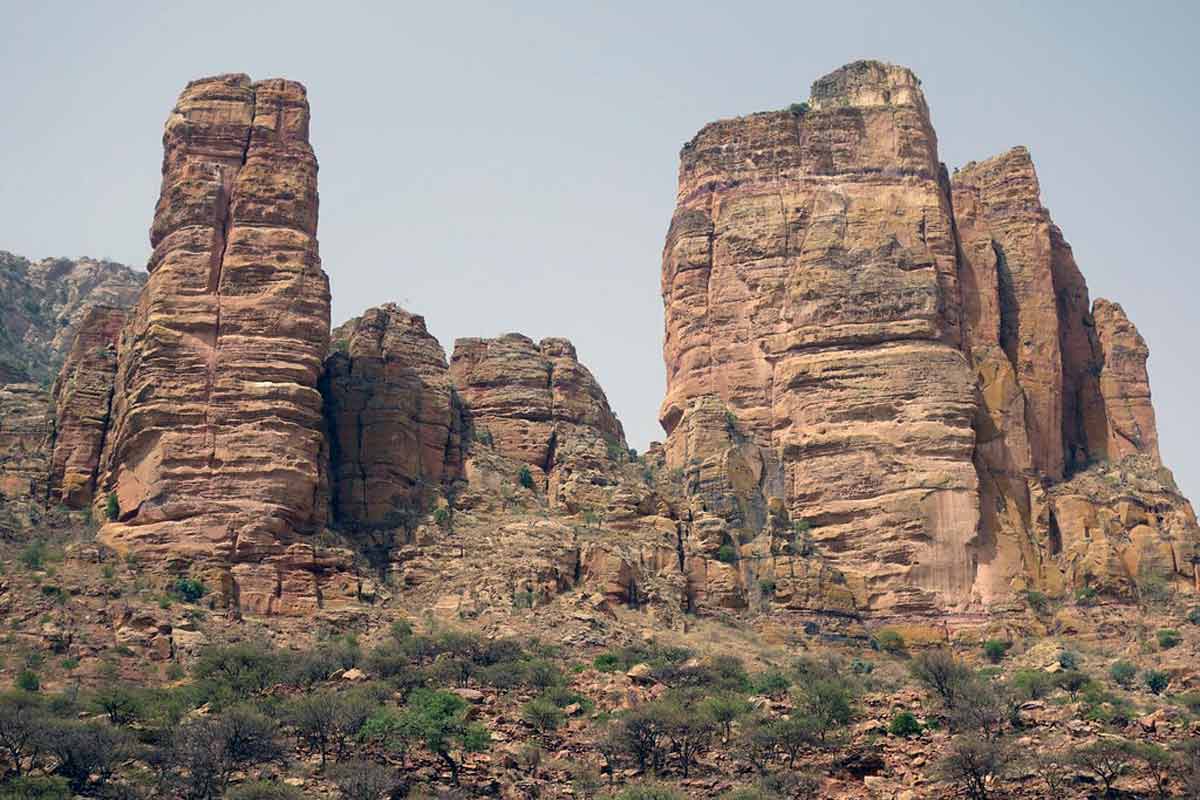
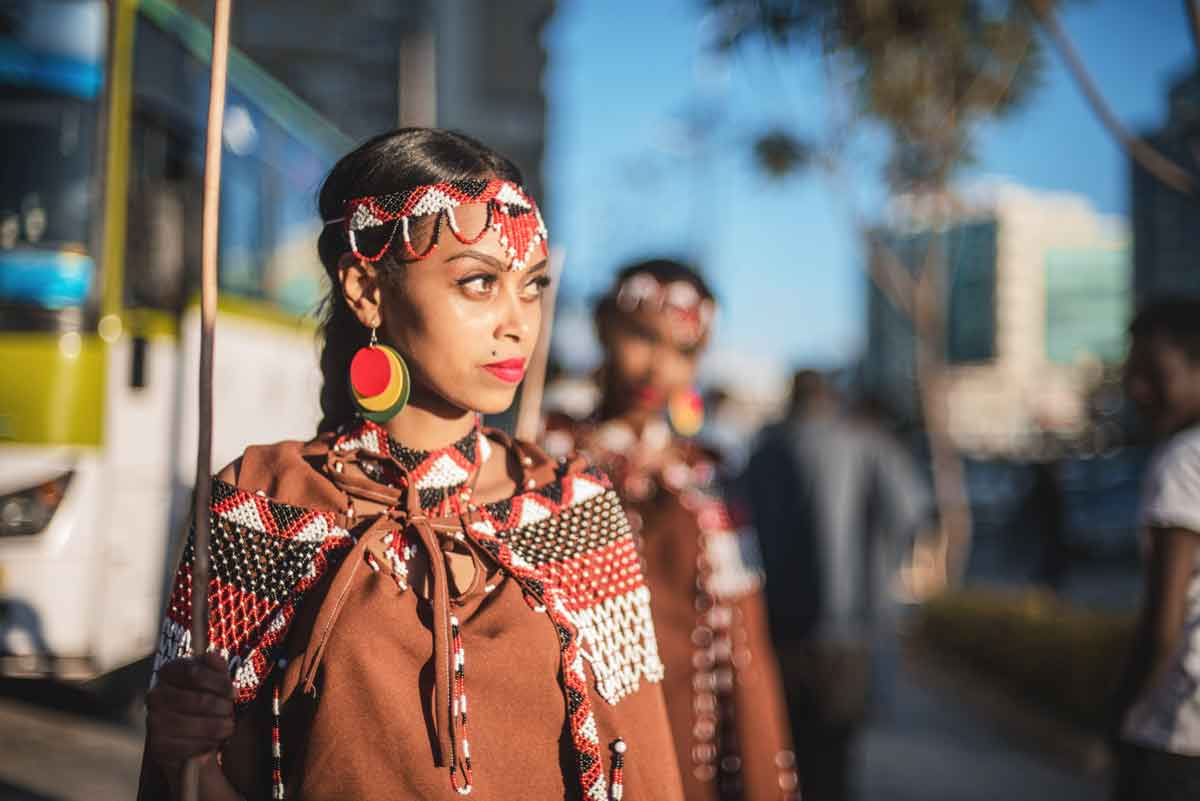
Tigray Ethiopia, also spelled Tegray, Tigrai, or Tigre, a historical region, northern Ethiopia. Its western part rises in a high-plateau country where elevations generally range between 5,000 and 11,000 feet (1,500 and 3,300 meters).
The region is drained by the Tekeze and Gash (Mareb) rivers. To the east lies the Danakil Plain, including the Kobar Sink (some 380 feet [116 meters] below sea level).
Today, Tigrayans number about 4.9 million and are concentrated in Tigray Ethiopia state (Ethiopia) and in Eritrea. The regions of Ethiopia and Eritrea where most Tigrayans live are a high plateau, separated from the Red Sea by an escarpment (cliff-like ridge) and a desert.
In good years, rainfall on the plateau is adequate for the plow agriculture engaged in by the majority of Tigray Ethiopia. However, when rainfall is low, the region is subject to disastrous droughts.
Here are few important points you need to have on your note book about Tigray.
Where is Tigray?
Tigray is an impoartant city in Ethiopoia, located at the north end. The city boarders Eriteria in the north and Sudan in the south.
The town is situated between 12°–15° N and 36° 30′ – 40° 30′ E.
Is Tigray Ethiopia Safe?
In 1998 relations deteriorated rapidly when a border dispute between Eritrea and Ethiopia failed. Centered around the Badme the conflict between the two countries exploded into violence. Following two years of bloodshed, a peace was negotiated in December 2000, and the UN established a peacekeeping mission along the border in question.
An international boundary commission agreed on border demarcation, but Ethiopia rejected the decision and refused to leave the territory that the commission had recognized as Eritrean.
A recent diplomatic work seems to have brought the two counties together. However, it is safe to assume a conflict and not to visit such areas in Ethiopia, at least with out a guide.
What is the History and Culture of Tigray Ethiopia?
The city has a history that goes back thousands of years. The seat of the Ethiopian empire has moved over the centuries. Once it has been located in a Tigrigna-speaking area in other times it has been in an Amharic-speaking area.
The Tigray and the Amhara (as co-inheritors of the Ethiopian empire) have represented the political elite of the country, except during a brief period of Italian colonial rule (1936– 1942). Until the Empire ended with the Marxist revolution and Haile Selassie’s death in 1974, all emperors were either Amhara’s or Tigray’s.
What is the Battle of Adwa?
Adwa is found in the Tigray region and on (March 1, 1896), military clash at Adwa, in north-central Ethiopia, between the Ethiopian army of King Menelik II and Italian forces. The decisive Ethiopian victory eliminated Italy’s attempt to build an empire in Africa.
Past Empires that controlled the Tigray Ethiopia region
By controlling the Red Sea ports of Massawa (Mitsiwa) and Asseb, Tigray became the region through which trading caravans reached the seat of the empire to the south.
After losing the coast to the Ottoman Empire in the 16th century, the region also lost power and status. Thereafter, with the brief exception of Yohannes IV (reigned 1872– 89), the region was dominated by the rulers of the Gondar and Shewa regions to the south.
It was also under constant threat from Egyptian, Sudanese, British, and Italian armies trying to penetrate to the interior. After occupation by Italy (1935–41), it was governed by officials appointed from the national capital in Addis Ababa.
What is the Source of Economy in Tigray Ethiopia?
Although vegetation is sparse, most of Tigray’s population is engaged in agriculture (cereals, legumes, coffee, and cotton) and stock raising. Hides and skins are important exports. Salt and potash from desert deposits are also exported. The region, which has long been home to the people, also supports the Raya, Azebo, Afar, and Agew peoples.
What are Ancient Civilizations in Tigray Ethiopia?
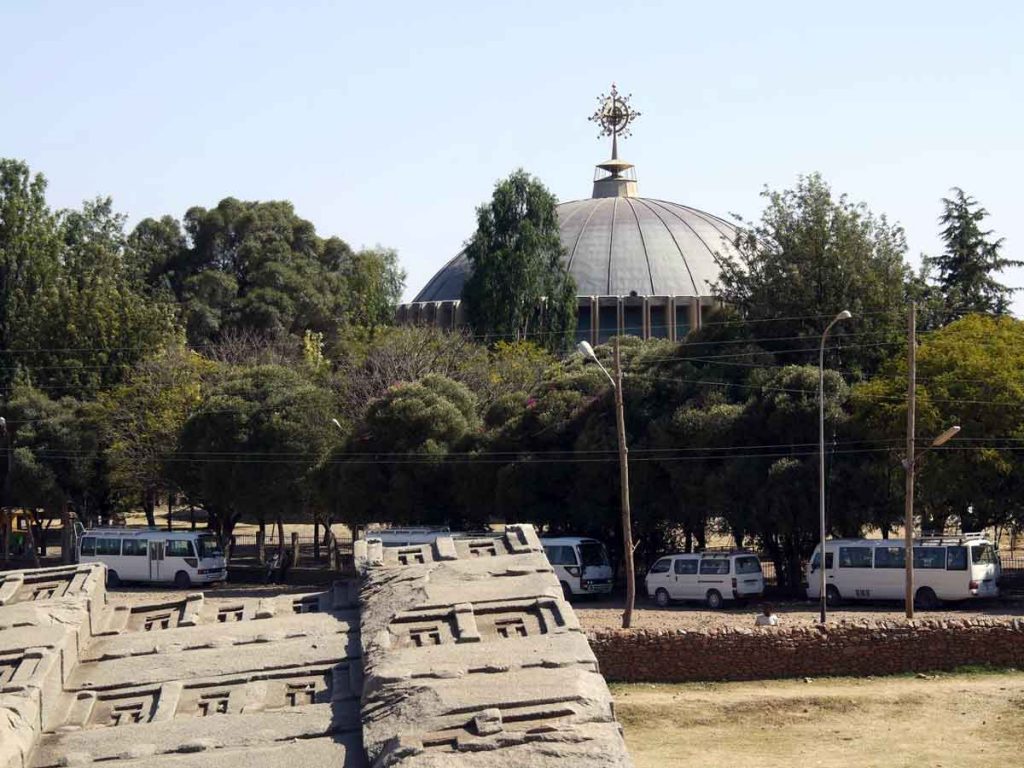
Tigray Ethiopia contains the core of the ancient Aksumite kingdom and the historic settlements of Aksum, the king- dom’s capital; Yeha, a ruined town of great antiquity; and Adwa, the site of a battle in 1896 in which the Italian invading force was defeated.
Is The Ark of Covenant in Tigray Ethiopia?
According to Tigrean history, the Axumite empire, which later became the Ethiopian empire, was founded by Menelik (1889–1913), the son of King Solomon of Israel, and Queen Sheba (or Saba). According to this history, it was Menelik’s men who captured the Ark of the Covenant from the Israelites and brought it to Axum, in what is now Tigray state in Ethiopia, where it remains to this day.
What do the Tigray People wear?
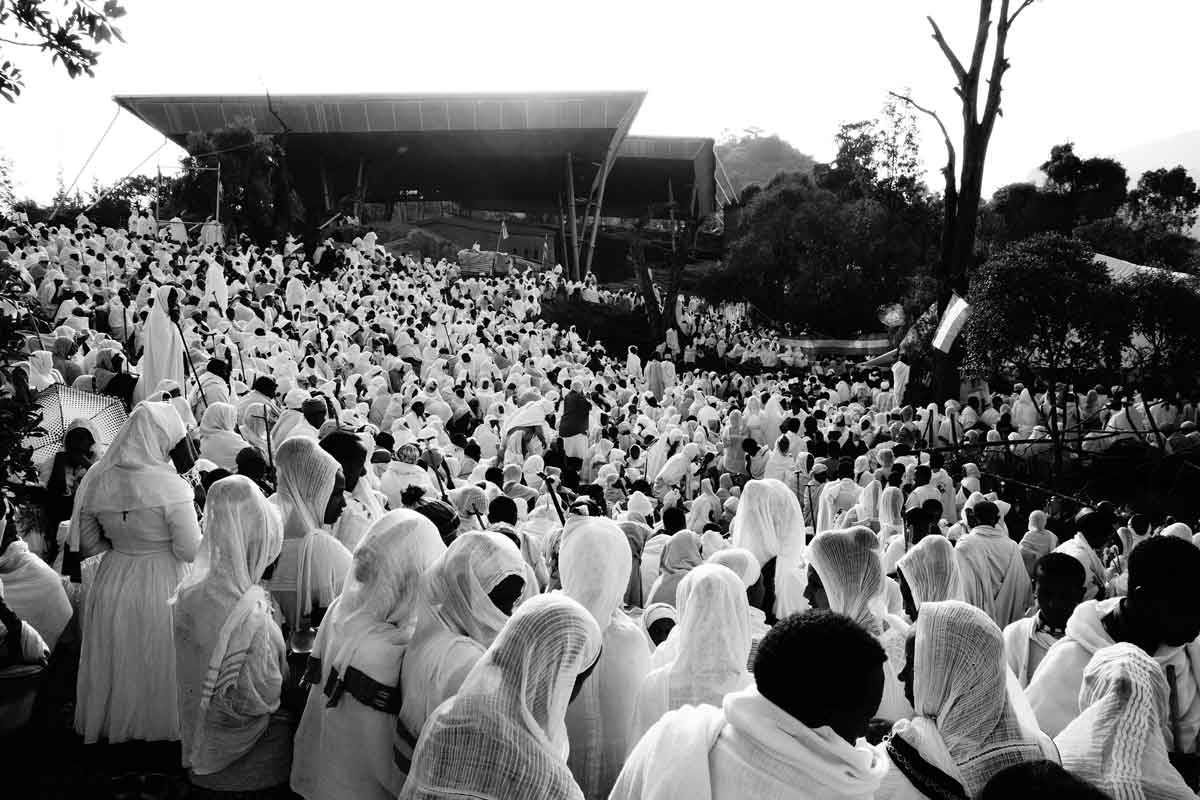
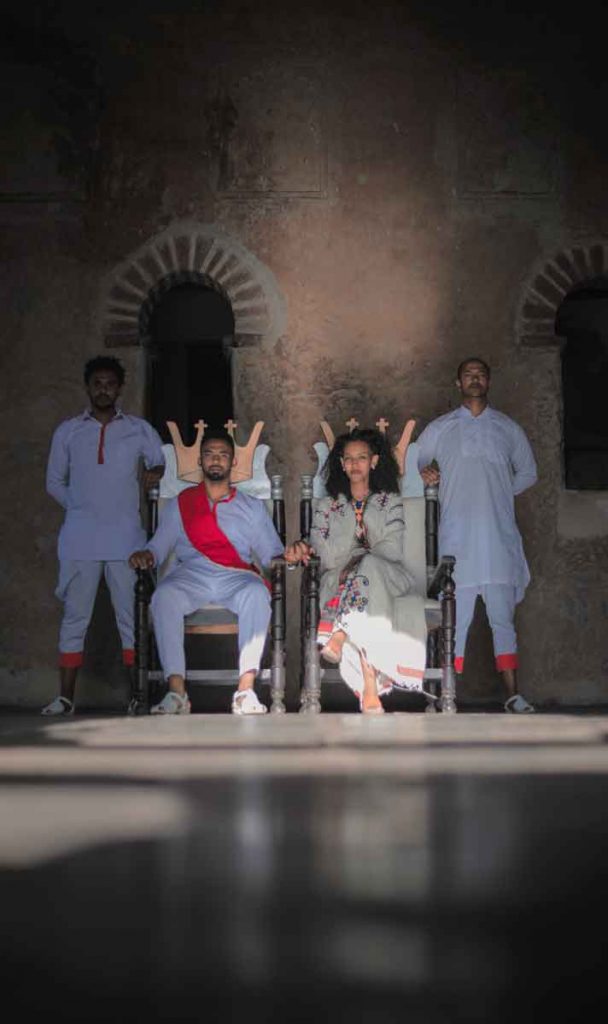
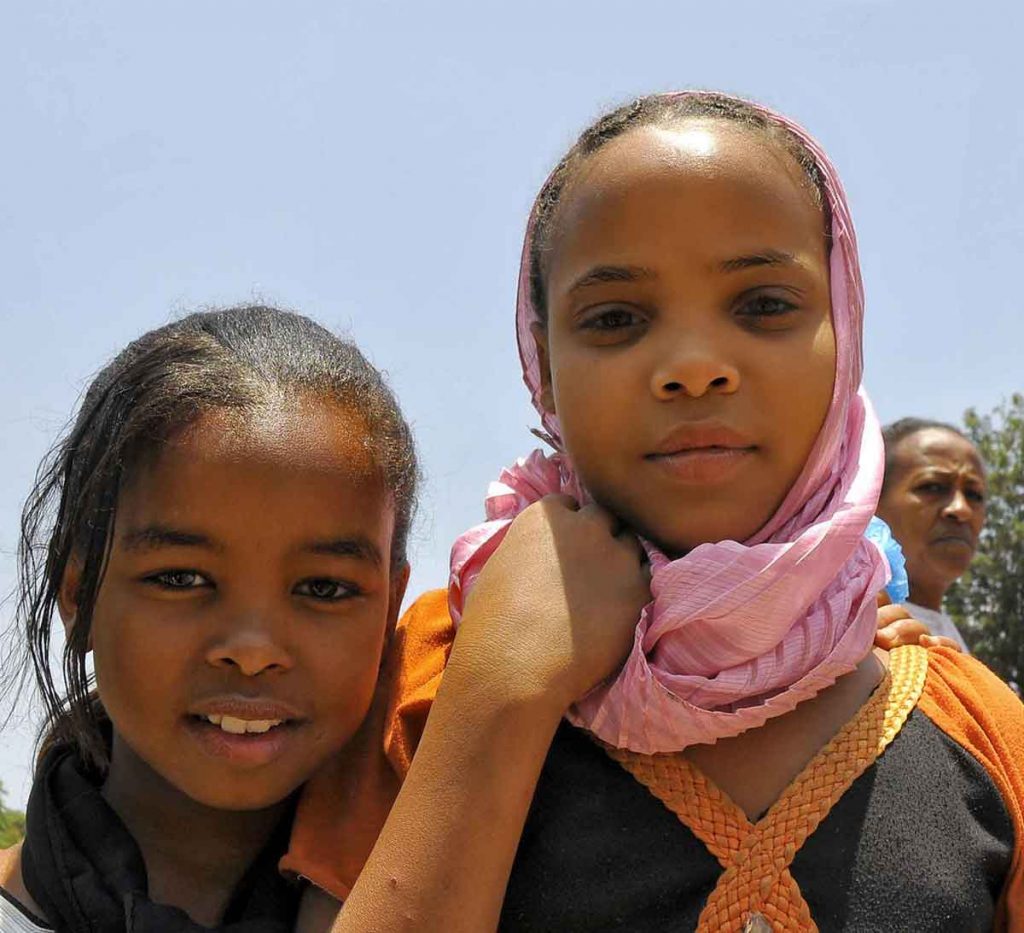
Traditional clothing in this area is white, which is regarded as Christian, with little adornment. For dressy occasions and church, women wear ankle-length dresses with long sleeves made of fine material. Men wear ankle-length pants that are tight from the knee to the ankle and baggy in the upper legs and hips.
A fitted, long-sleeved shirt covers the upper body. The shirt extends to just above the knee for laymen and to just below the knee for priests and deacons. Both men and women wear a gabbi (shawl or toga) draped around the shoulders.
What Language Do They Speak In Tigray Ethiopia?
Tigrinya, the language spoken by the people in the area, is from the Semitic family of languages, and is related to Arabic, Hebrew, and Aramaic. To the north of the Tigrinya speakers live people who speak the closely related language known as Tigre.
Amharic, the official language of Ethiopia, is so closely related to Tigrinya that most people in the area have little difficulty communicating in Amharic. Tigrinya, Amharic, and the ancient religious language Geez are written with the same alphabet. Many of the letters used in writing these languages are derived from ancient Greek.
What is Religion in Tigray Ethiopia?
The city has been in their present location since before the time of Christ and began converting to Christianity in the fourth century. Most people think that Christianity in Africa is because of colonization, but that’s wrong in the case of this city.
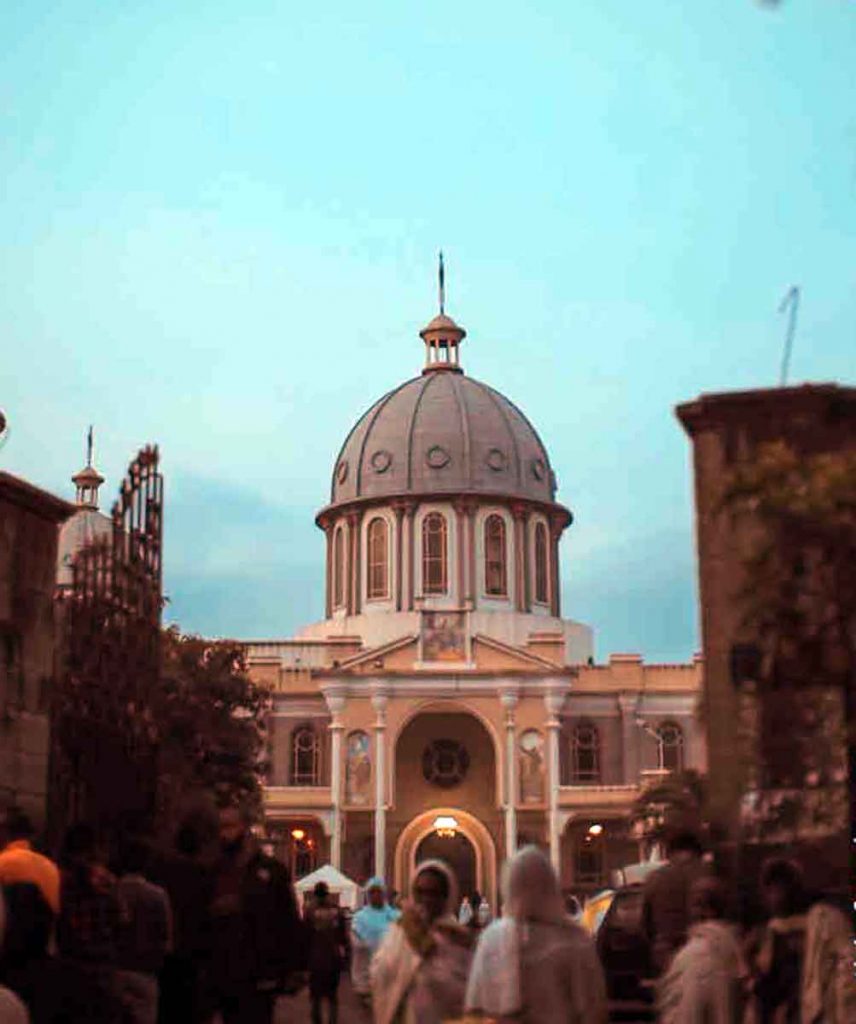
The empire centered in Axum and Adowa was part of the Mediterranean world in which Christianity grew. The arrival of Christianity in Tigrayan lands happened about the same time that it arrived in Ireland. The Tigrayans, in fact, had been converted to Christianity hundreds of years before most of Europe.
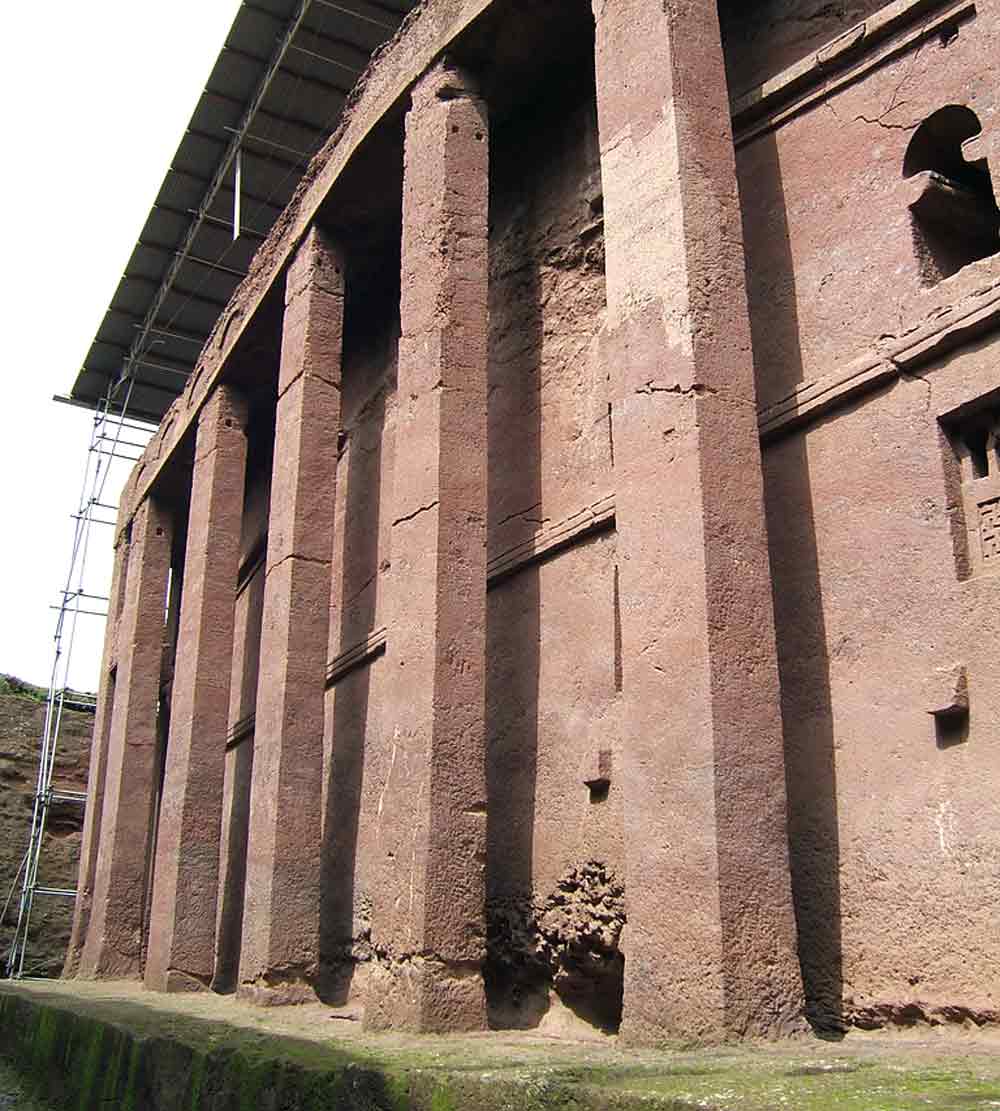
Many Tigrayan churches were cut into cliffs or from single blocks of stone, as they were in Turkey and in parts of Greece, where Christianity had existed from its earliest years. The church is a central feature of communities and of each family’s daily life. Each community has a church with a patron saint.
"IMG_4879 Addis Abeba" by Ninara is licensed under CC BY 2.0
If you’re looking to treat yourself, a high-end hotels Addis Ababa that has extra something to make your trip all the more memorable then Addis Ababa’s 5-star hotels are the place to be when you book your next vacation.
Ready to experience the next standard in luxury? We know you are thinking about it. Why not request the best of accommodations during your holiday to Addis Ababa?
These 5-star properties feature luxuries like on-site restaurants with sweeping city views, in-room massages, and spacious private terraces. You can also expect excellent customer service from these hotels, so get ready to kick back and indulge. They’re often situated in central locations, which makes exploring a destination’s main sights a breeze.
So, here are 10 Luxurious hotels Addis Ababa.
Sheraton Addis Hotel
Sheraton Addis, a Luxury Collection Hotel offers accommodation in Addis Ababa. Guests can enjoy the out- door pool or relax at the spa and wellness Centre. Free parking is available on site and there is free Wi-Fi in the public areas.
The rooms at Sheraton Addis feature flat-screen TVs with cable channels. The rooms are equipped with a desk, a minibar and a DVD player. Sheraton Addis guests can enjoy a meal or a drink at one of the 11 restaurants or bar/lounge outlets available on site, offering an array of cuisines.
The hotel offers a children’s playground and a gift shop, and guests can enjoy activities such as karaoke or an evening at Gaslight Night Club. Addis Ababa Bole International Airport is within an 8 km drive.
Hotels Addis Ababa: Sheraton Addis Hotel
Capital Hotel and Spa
Featuring a fitness Centre and a spa & wellness Centre, Capital Hotel and Spa is situated in Addis Ababa, 1.5 km from UN Conference Centre Addis Ababa. Guests at the 5-star property can enjoy mountain views in the rooms and access to a sauna.
The hotel provides a shared lounge. All rooms at the hotel are equipped with a seating area and a flat-screen TV with satellite channels. With a private bathroom, rooms at Capital Hotel and Spa also have pool view.
All units have a desk. A Full English/Irish breakfast is served every morning at the property.
There is an on-site restaurant, which serves African cuisine. The accommodation offers a terrace. Guests have access to the on-site business Centre and can use the on-site ATM machine. Speaking Arabic, German, English and French, staff are willing to help at any time of the day at the reception.
Hotels Addis Ababa: Capital Hotel and Spa
Golden Tulip Hotel
Offering a barbecue and fitness Centre, Golden Tulip Addis Ababa is situated in Addis Ababa. Guests can enjoy the on-site bar, and meals at the on-site restaurant. Free private parking is available on site.
Golden Tulip Addis Ababa features free Wi-Fi throughout the property. Guest rooms at Golden Tulip is air-conditioned and equipped with a flat-screen TV with satellite channels, tea-and-coffee-making facilities, and a minibar.
Each one comes with a private bathroom fitted with bath and shower, and also including bath robes and slippers. Golden
Tulip Addis Ababa offers a free shuttle service, a 24-hour front desk and meeting facilities. There is also a shared lounge where guests can relax and watch TV. Addis Ababa Bole International Airport is 2 km away.
Hotels Addis Ababa : Golden Tulip Hotel
Jupiter International Hotel -Bole
Jupiter International Hotel – Bole is located in Addis Ababa, 350 m from the UNECA Conference Center. Free Wi-Fi is offered and the hotel features a restaurant, bar and 24-hour front desk.
The modern rooms are deco- rated in natural colors and offer a view of the city. Each room comes fitted with a flat-screen satellite TV, desk, minibar and a safe. At Jupiter International Hotel – Bole the restaurant features a variety of delicious dishes and guests can enjoy a cocktail at the bar and lounge.
Free private parking is available on site. Guest service agents are stationed at the airport 24 hours a day and a free shuttle service is provided from the airport.
The hotel is 2 km away from Addis Ababa Bole International Airport, 5 km from the National Palace, and 5 km from the Addis Ababa Stadium. A number of embassies can be found within the surrounding area.
Hotels Addis Ababa : Jupiter International Hotel -Bole
Radisson Blu Hotel
Radisson Blu Hotel, Addis Ababa offers accommodation in Addis Ababa. The hotel has a terrace, spa Centre, a bar, and guests can enjoy a meal at the restaurant. Rooms include a flat-screen TV.
You will find a kettle in the room. Every room includes a private bathroom fitted with a bath or shower. Radisson Blu Hotel, Addis Ababa features free Wi-Fi throughout the property. You will find a 24-hour front desk at the property.
Hotels Addis Ababa : Radisson Blu Hotel
Getfam Hotel
Getfam Hotel offers accommodation in Addis Ababa. The hotel has a terrace and views of the mountains, and guests can enjoy a meal at the restaurant. Free Wi-Fi is offered throughout the property and free private parking is available on site.
Guests can enjoy the spa, swimming pool and a fitness center at the property. Each room comes with a flat-screen TV. Certain units have a seating area where you can relax.
All rooms have a private bathroom with a bath and shower, with bath robes provided. Extras include slippers and free toiletries. You will find free shuttle service at the property. Getfam Hotel is 4.9 km from Addis Ababa Bole International Airport.
This property is also rated for the best value in Addis Ababa! Guests are getting more for their money when compared to other properties in this city.
Hotels Addis Ababa : Getfam Hotel
Sapphire Addis
Set in Addis Ababa, Sapphire Addis features a spa experience, with its spa Centre, sauna and fitness Centre. Guests can have a drink at the bar at the property.
All guest rooms at the hotel come with a flat-screen TV with satellite channels and a kitchen while selected rooms will provide you with a balcony. The rooms will provide guests with a fridge, an electric kettle and a minibar.
Rooms are complete with a private bathroom with free toi- letries. A buffet or continental breakfast is available every morning at the property. Sapphire Addis can conve- niently provide information at the 24-hour front desk to help guests to get around the area.
Hotels Addis Ababa : Sapphire Addis
Harmony Hotel
Offering a spa Centre and hot tub, Harmony Hotel is located in the Bole district in Addis Ababa, 100 m from Gym. The hotel has a sun terrace and sauna, and guests can enjoy a meal at the restaurant.
Free private parking is available on site. Certain units feature a private bathroom with a hot tub, while others have bathrobes and slippers. Some units include a seating area where you can relax.
You will find a coffee machine and a kettle in the room. Extras include free toiletries and a hairdryer. Harmony Hotel features free Wi-Fi. A flat-screen TV is
provided. You will find free shuttle service, hairdressers and a gift shop at the property. You can play darts at this hotel, and car hire is available.
Edna Mall (Addis Ababa) is 200 m from Harmony Hotel, while Medhane Alem Cathedral is 400 m from the property. The nearest airport is Addis Ababa Bole International Airport, 2 km from Harmony Hotel.
Offering a free airport shuttle, Impress Hotel offers accommodation in Addis Ababa and within 5 minutes’ drive of Bole International Airport. The spacious rooms are equipped with a kitchenette.
Free Wi-Fi and private parking are available. The rooms also have a flat-screen TV with satellite channels and a desk. Some units feature a seating area where you can relax.
Certain rooms have views of the mountains or city. Every room includes a private bathroom equipped with a shower. For your comfort, you will find bath robes and slippers. Impress Hotel has a 24-hour front desk and there is a beauty shop on the premises. The hotel also offers car hire.
Hotels Addis Ababa : Impress Hotel
Empire Addis International Hotel
Empire Addis International Hotel provides rooms in Addis Ababa. Featuring a restaurant, the property also has a shared lounge. Rooms are fitted with a balcony with views of the mountain.
The units in the hotel are fitted with a flat-screen TV with satellite channels. With a private bathroom, rooms at Empire Addis International Ho- tel also offer free Wi-Fi. All units at the accommodation are equipped with a seating area.
Guests at Empire Ad- dis International Hotel can enjoy a continental breakfast. The hotel also provides a business Centre and guests can check the newspapers at Empire Addis International Hotel.
Speaking Arabic and English at the reception, staff are ready to help around the clock. Friendship Business Center is 800 m from the accommodation.
Hotels Addis Ababa : Empire Addis International Hotel
Cheaper Hotels Addis Ababa
Traveling to Addis Ababa but aren’t sure where to stay? The capital city of Ethiopia offers a range of budget, boutique, and luxury hotels for leisure and business travelers alike. Expect to pay around $75 per night on average for cheap hotels Addis Ababa. There are dozens of hotels within a short drive of Bole International Airport.
So, here are 10 Inexpensive hotels Addis Ababa if you have a limited budget.
Toronto Addis Hotel
Situated 1.8 km from Matti Multiplex Theatre and featuring a fitness Centre, Toronto Addis Hotel features accommodation in Addis Ababa. Free Wi-Fi is featured. Some units feature a terrace and/or balcony. A conti- nental breakfast can be enjoyed at the property.
Edna Mall Addis Ababa is 1.8 km from the bed and breakfast, while UNECA Conference Center is 3.2 km away. This property is also rated for the best value in Addis Ababa! Guests are getting more for their money when compared to other properties in this city.
Cheaper Hotels Addis Ababa : Toronto Addis Hotel
Trinity Hotel
Situated in Addis Ababa and within 90 m of Matti Multiplex Theatre, Trinity Hotel has barbecue facilities,
non-smoking rooms, and free Wi-Fi. This 3-star hotel offers a terrace. Pizza and African dishes are served at the in-house restaurant. At the hotel, rooms have a desk. Trinity Hotel offers certain units that include a balcony, and rooms come with a coffee machine.
At the accommodation, rooms include a private bathroom with a hot tub. The daily breakfast offers continental, vegetarian or vegan options. Guests can rent a car to explore the area, use the business center, or read the newspapers available on site.
Staff at the 24-hour front desk speak Arabic and English. Edna Mall Addis Ababa is 100 m from Trinity Hotel.
Cheaper Hotels Addis Ababa : Trinity Hotel
Wudasie Castle Hotel
Situated in Addis Ababa, 700 m from Kibru Supermarket, Wudasie Castle Hotel is a 3-star hotel that boasts a terrace and a shared lounge. This 3-star hotel features free Wi-Fi and a bar. There is free private parking avail- able on site.
At the hotel all rooms are equipped with a desk, a flat-screen TV and a private bathroom. Wudasie Castle Hotel features some units that feature a terrace, and the rooms come with a kettle. At the accommodation rooms are fitted with a seating area.
Guests at Wudasie Castle Hotel can enjoy a vegetarian or a vegan breakfast. There is an in-house restaurant, which specializes in American and Asian cuisine and also offers Vegetarian, Veg- an and Dairy-free options.
Speaking Arabic and English at the 24-hour front desk, staff will be happy to provide guests with practical guidance on the area. Addis Ababa Airport is an 11- minute drive from Wudasie Castle Hotel. The property offers free airport shuttle service.
Cheaper Hotels Addis Ababa : Wudasie Castle Hotel
Hanom Hotel
Hanom Hotel is set in Addis Ababa, 3.5 km from Friendship Business Center. Located around 4 km from Matti Multiplex Theatre, the hotel with free Wi-Fi is also 4 km away from Edna Mall Addis Ababa. The property features a terrace and a 24-hour front desk.
Certain rooms have a kitchen with a fridge. Guests at the hotel can enjoy a buffet breakfast. UNECA Conference Center is 7 km from Hanom Hotel, while UN Conference Centre Addis Ababa is 7 km from the property.
Cheaper Hotels Addis Ababa : Hanom Hotel
Bekelech Hotel
Set within 2.6 km of Matti Multiplex Theatre and 2.6 km of Edna Mall Addis Ababa, Bekelech Hotel offers rooms in Addis Ababa. The property is situated 3.4 km from UNECA Conference Center, 3.5 km from UN Conference Centre Addis Ababa and 3.9 km from Asni Gallery.
National Palace is 3.9 km from the property. At the hotel, each room comes with a wardrobe, a flat-screen TV and a private bathroom. All units have a seating area. A continental breakfast is available each morning at the property.
The on-site restaurant specializes in In- ternational and Local cuisine. The reception can provide advice on the area in order to help guests plan their day. Friendship Business Center is 5 km from Bekelech Hotel, while Addis Ababa Museum is 5 km from the property.
Cheaper Hotels Addis Ababa : Bekelech Hotel
Nega Bonger Hotel
Offering a year-round outdoor pool and spa Centre, Nega Bonger Hotel is situated in Addis Ababa. The hotel has a terrace and views of the pool, and guests can enjoy a drink at the bar. Each room features a flat-screen TV with satellite channels.
You will find a kettle in the room. Every room is equipped with a private bathroom. For your comfort, you will find bathrobes. There is free airport shuttle service at the property. African Union is 6 km from Nega Bonger Hotel, while UNECA Conference Center is 7 km from the property. Addis Ababa Bole International Airport is 5 km from the property.
Cheaper Hotels Addis Ababa : Nega Bonger Hotel
Caravan Hotel
Featuring a free airport shuttle and a 24-hour front desk, Caravan Hotel offers accommodation in Addis Aba- ba. The hotel is located just 4 km from Addis Ababa Bole International Airport. The rooms at the hotel are equipped with a flat-screen TV, desk, minibar and safety deposit box.
The bathrooms include a bidet and hair- dryer. Guests can enjoy International cuisine at the on-site restaurant and there is also a bar. Early breakfast can be arranged on request.
Caravan has meeting and business facilities and a currency exchange. Free Wi-Fi is available and private parking is possible on site. The National Museum of Ethiopia is a 15-minute drive away.
Cheaper Hotels Addis Ababa : Caravan Hotel
Friendship International Hotel
Set in the Bole district of Addis Ababa, Friendship International Hotel offers a fitness Centre, a spa & wellness Centre and a terrace. The property is close to several well-known attractions, 400 m from Edna Mall Addis Ababa, 400 m from Matti Multiplex Theatre and 500 m from Friendship Business Center.
The hotel has a hot tub and free shuttle service. At the hotel, the rooms are fitted with a balcony with a city view. Every room is equipped with a private bathroom with free toiletries. The rooms are equipped with a flat-screen TV with satel- lite channels. A buffet breakfast can be enjoyed at the property.
Guests can make use of the sauna. There is an in-house bar and guests can also make use of the business area. Languages spoken at the reception include Ara- bic, English and French. Dembel City Center is 2.3 km from Friendship International Hotel, while Addis Ababa Museum is 3 km away.
Cheaper Hotels Addis Ababa : Friendship International Hotel
Bete Abrham Hotel
Situated in Addis Ababa, Bete Abrham Hotel feature accommodations with free Wi-Fi. There is a fully equipped private bathroom with shower and free toiletries. The daily breakfast offers continental and American options.
Cheaper Hotels Addis Ababa : Bete Abrham Hotel
Ye Afoli International Hotel
Ye Afoli International Hotel is set in Addis Ababa, within 2.1 km of Friendship Business Center and 2.9 km of Matti Multiplex Theatre. Among the various facilities are a fitness center and a terrace. The hotel features a restaurant, and Edna Mall Addis Ababa is 2.9 km away.
All units at the hotel come with a seating area, a flat- screen TV with satellite channels and a private bathroom with free toiletries and a bath. Guest rooms feature a desk. A Full English/Irish breakfast can be enjoyed at the property. Round-the-clock assistance is available at the reception. Addis Ababa Museum is 4.4 km from Ye Afoli International Hotel, while UNECA Conference Center is 4.4 km from the property.
Cheaper Hotels Addis Ababa : Ye Afoli International Hotel
Finally, Hotels Addis Ababa
The number of hotels Addis Ababa is increasing, following a large increase of visitors in the country. Sheraton is one expensive hotels Addis Ababa and it costs up to 20 times other cheaper hotels Addis Ababa.
Therefore, based on the location and budget you have, you will have various hotels to choose from.
"Ruínas de Yeha, Etiópia" by Samuel Santos is licensed under CC BY-NC-SA 2.0
In a rural part of the Tigray area, a few hours drive from Axum lies Yeha, a beautiful and tranquil place. In this province, Ethiopia’s historic route begins with the look at the spectacular remains.
It is the earliest recorded civilization of Ethiopia nearly three million years ago during the bronze age. It has structures such as temples, residences, and tombs made from rocks solid walls with no windows and no mortar.
Yeha, What Was Before Axum
The powerful kingdom of Axum which is found in Ethiopia, at the highlands of Tigray was at its peak during the first millennium BC. It had trade connections through the red Sea to Europe and China. It had agriculture and architecture works that were ahead of its time.
It was once the greatest empires parallel to the Roman, Chinese and Persian civilizations. Yet what was the time before the Axum?
Yeha is a fascinating civilization in a less-known territory before the rise of Axum. It is frequently known as the pre-Aksumite civilization.
It’s period began in the early first millennium BC (ca. 800–700 BC) and is marked by the appearance of nucleated settlements, complex stratified societies and kingdoms, monumental architecture, metal production, and writing (Rodolfo_Fattovich, The Development of Ancient States in the Northern Horn of Africa, c. 3000 BC-AD 1000: An Archaeological Outline)
Origins of Yeha Civilization
There was trade contact between northern Africa and southwest Arabia. But in time developed even more cultural ties. Earlier archeologists believe some immigrates from southern Arabia settled in northern Ethiopia.
In the 1st century, BC immigrants from the Sabaean region together with the indigenous population established strong trade routes through the red sea. Through these trade routes flourished the Yeha civilization.
Yeha had the influence of the South Arabians. It had characters of south Arabian elements. This lead to the debate as to whether it was founded by Sabean settlers or was the Ethiopians influenced by Sabean culture and ideas. Currently, it is believed that it was made by the mix of these groups. Fragmented inscriptions on stone slabs, altars, and seals were found in Yeha written in Sabean language.
“Ruínas de Yeha, Etiópia” by Samuel Santos is licensed under CC BY-NC-SA 2.0
The architecture of the Yeha Civilization
Although little has been revealed about the civilization of Yeha, the architecture provides the majority of the evidence. It has proven about the civilization culture, religion language, and other social aspects. Most of the findings architecture of religious aspects but in recent years residential life are being revealed as well.
Meqaber Ga’ewa
The investigation for archeological findings began in the Rocky Mountains Southwest of wukro, around the village of meqaber Ga’ewa. An unusual stone structure appeared during a local quarry. This was carved limestone with inscriptions.
These findings were unexpected in that part of Tigray region. They were only tending to occur much further to the north near the Aksum and the Eritrea region. Then the local archeologists contacted a specialist from the North African archeology.
After careful excavation, a structure was revealed. It was 13m by 9m in size. It’s is a flat, undressed limestone. It is put in a large enclosure. The main building of the carved limestone had a large stepped entrance with porch. It had a central room and three smaller rooms at the back. In the central area of the built structure is a fascinating discovery.
It is a visible stone altar. It consists of well-decorated narrow steps on its base and false windows similar to the Axum monolithic obelisks. And on the top is a deep square carved basin. Perhaps through this, the sacrificed animal blood would flow from through to another basin. On the back of the shrine is another sanctuary.
This contained further limestone objects. This where a stone with Sabean inscription and miniature altars. The Sabean inscriptions on this altar supplied vital clues in the history of the altar. The inscriptions proved that the temple of meqaber Ga’ewa has dedicated to Alamqah; a chief God of the Arabians.
The back of this temple where spectacular polished cobblestones. They formed pre-Islamic shrines. Another important note was the mention of a King’s mother. It was rare to give recognition to women in South Arabia. But in North-Eastern Africa it was very common.
The civilization of Kush in Sudan women had a significant political role. It was the Queen and the king’s mother who was depicted in temples while the king’s had only matrilineal claims.
Great Temple of Yeha
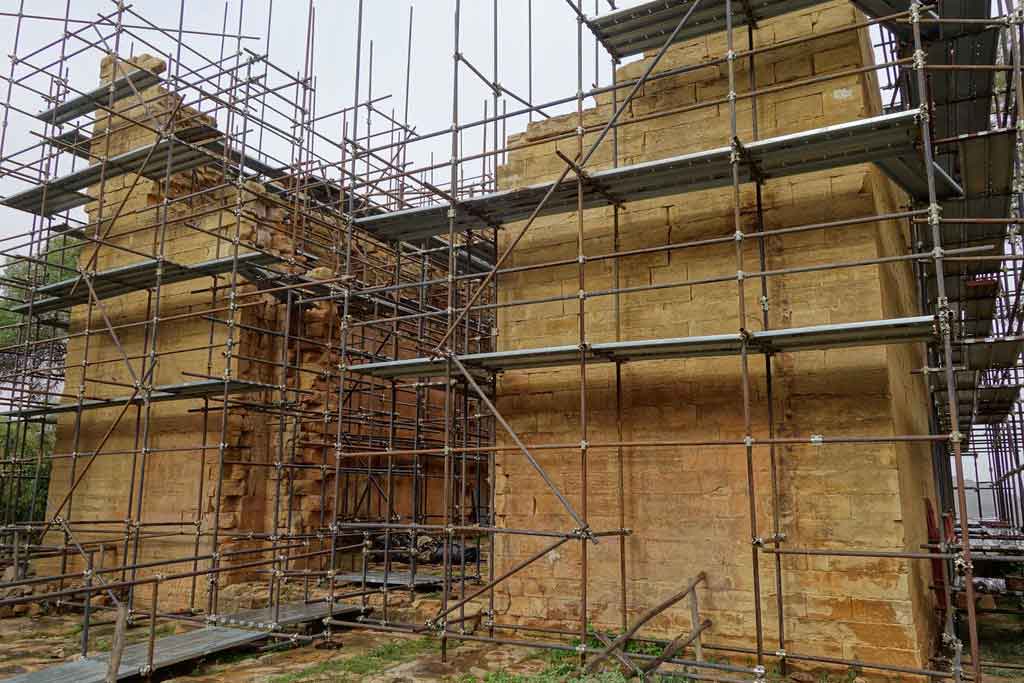
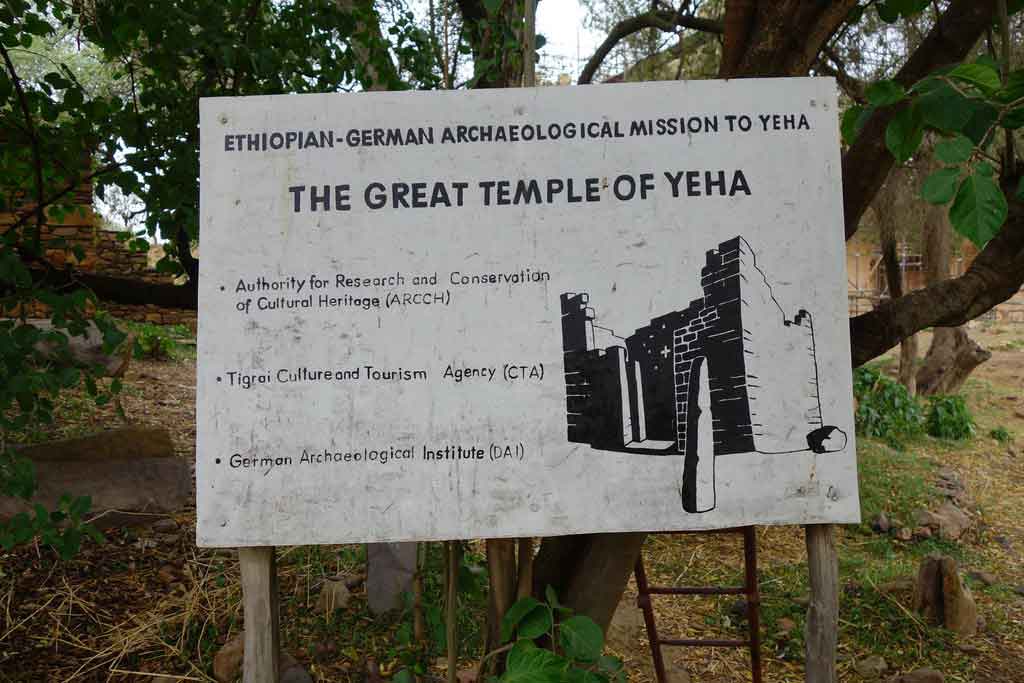
The grand temple of Yeha was located 50km east of the city Axum. It is one of the antique standing structures of Ethiopia. Currently, this temple stands within the grounds of a Christian Church.
Thus it is used for religious activities by priests and members of the church. And the area around the temple is used for burial purposes. Today not much remains of the building original state.
Form
The Yeha temple measures 19m by 15 meters It has a dramatic entrance with more than six steps. It has a rectangular form. The longest side extends from the East to the west. It is constructed on a bedrock surface with a larger podium as a stable foundation. The walls are smooth limestone blocks. They are laid without any mortar.
“Ruínas de Yeha, Etiópia” by Samuel Santos is licensed under CC BY-NC-SA 2.0
The north, south, and west walls are double-walled; they are 1.2 to 1.4 meters wide. At some interval, the stones are made perpendicular for extra strength and stability. The East wall seems to be thicker with 3 layers of wall.
This was probably to maintain more stability because it was built on a sloping terrain. All the four walls had a rise of 13 meters. On the west wall is a large doorway, currently damaged. But it is believed that it had rectangular and square mortise holes with iron tenons.
Today, the four walls remain intact to the height of six meters. This raises the thinking that the structure above the six meters was built less stable.
The main space of the Yeha Temple had a house of Altar which had similar characteristics with the meqaber of Gawa. It is said that the limestone which Yeha was built from is brought from wuquro.
Structure Yeha
Although there are no adequate findings of the temple of yeha scholars claim that the weight of roofs was supported by load-bearing walls and pillars every two meters span. Evidence suggests that there where twelve pillars.
This pillar support is dressed 1m by 1.5 meters. They are located 1.5 meters from the north and south walls and 2 meters from the west Wall. But on the central area (nave) the roof could have been supported by lintel and post. But the eastern platform is raised above the other level of supports.
The temple of Yeha was abandoned on the late pre-Axum times, the roof collapsed the interior partition walls that divided the rooms was damaged. Which once had two floors and a partially covered roof, was left as an empty crypt. The ruins of the temple have been reused in construction
Grat Be’al Gebri
The earliest Architecture in yeha is located at the palace grate be’al Gebri. It was constructed from 8th to 7th century BC. It is located in the northeast of the temple of Yeha. The structure was once a castle, it is estimated 2500 sq meters and it’s recognized for its unique, square-segmented, solid columns.
The entrance was at the front, It had raised platform which was 4.5 meters high. The platform was made from volcanic rock. On the exterior, the corners had characters of projections. It also has six pillars. These pillars have been preserved but the stairs that lead to the entrance have been lost although some ruins still exist.
At the back of the entrance, is an enormous gate with a narrow opening. Penetrating them where wooden beams. This beams had strong evidence in providing the time of this construction. The radiocarbon dating of these wooden beams dates to the 8th to the 6th century BC.
“Ruínas de Yeha, Etiópia” by Samuel Santos is licensed under CC BY-NC-SA 2.0
After the latest investigations, the Grat Be’al Gebri multi-storeyed half-timber complex is thought to be the greatest preserved roofed timber frame structure of South Arabia and Eastern Africa and possibly the oldest of Eastern Africa.
The construction-technique with horizontal assembled girders differs considerably from its South Arabian prototypes but continues in the Axumite architecture such as those displayed at the famous stele of Axum and later on, in the modern age building traditions of Ethiopian churches. Its cultural and historical significance, even for Ethiopian building history, can be highly appreciated for this reason.
Conclusion
Yeha was the center of the administrative and trade power of society. It had religious buildings, residences, and tombs. Yeha beyond the architecture was a stepping stone for the Great Axum civilization. It’s trade routes through the red Sea which led to it’s the economical growth of Yeha was very important for the Axum empire origin.
Thus is one of the most prestigious civilizations in the horn of Africa. Scholars say there is yet much to be revealed in this area. The conservation for the Yeha will requires short term and long term measures that include stabilization, preservation, maintenance, and development activities. There also must be an aggressive effort put forth to raise funds to support the conservation program.
Bibliography
Highlands, G. B.-b. (n.d.). Grat Beal Gebri – building history Analysis of a Monumental Building of the early 1st Millennium BC. Chr. In the Ethiopian Highlands.
Phillipson, A. C. (n.d.).
Rodolfo_Fattovich. (n.d.). The Development of Ancient States in the Northern Horn of Africa, c. 3000 BC-AD 1000: An Archaeological Outline.
Facts About Lalibela Church in Ethiopia…Lalibela is found in Northcentral Ethiopia. Historically known as Roha, capital of the Zague dynasty for about 300 years, was renamed for its most distinguished monarch, Lalibela (late 12th–early 13th century), who according to tradition built the 11 monolithic churches for which the place is famous.
The churches, designated a UNESCO World Heritage site in 1978, were hewn out of solid rock (entirely below ground level) in a variety of styles. Generally, trenches were excavated in a rectangle, isolating a solid granite block. The block was then carved both externally and internally, the work proceeding from the top downward.
Here are Facts About Lalibela Churches.
Legends are True?
According to an Ethiopian legend, God instructed Lalibela to build the unique Lalibela churches in Ethiopia; the structures were built with the help of angels. King Lalibela, who was poisoned by his brother and fell into a three-day coma, was taken to Heaven and given a vision of a rock-hewn city. After Lalibela woke up from the comma and was crowned as a king, he gathered local handymen and started building the churches, the likes of which the world had never seen before.
Another legend has it that that the king went into exile to Jerusalem and vowed that when he returned he would create a New Jerusalem. At that time, Muslims conquests halted Christian pilgrimages to the Holy Land making them often dangerous and even deadly.
Some scholars estimate it would have taken a 40,000-man workforce to build the churches; local legends claim that human workers labored the daylight hours away, with celestial beings taking over for night duty, doing dou- ble the amount of labor of their human counterparts, enabling the churches to be built at incredible speed.
Facts About Lalibela Churches in Ethiopia: Legends are True?
Excavated not constructed
a wide trench on all four sides of the rock, then painstakingly chiseling out the interior. The largest church is 40 feet high, and the labor required to complete such a task with only hammers and chisels is astounding.
One of the churches, Bet Maryam, contains a stone pillar on which King Lalibela wrote the secrets of the buildings’ construction. It is covered with old cloths and only the priests may look at it.
Facts About Lalibela Church in Ethiopia: Excavated not constructed
Structural Beauty
The churches have been in continuous use since they were built in the 12th century. The roofs of the Lalibela Church in Ethiopia are level with the ground and are reached by stairs descending into narrow trenches. The churches are connected by tunnels and walkways and stretch across sheer drops. The interior pillars of the churches have been worn smooth by the hands of supplicating worshippers.
The rock-cut churches are simply but beautifully carved with such features as fragile-looking windows, moldings of various shapes and sizes, different forms of crosses, swastikas (an Eastern religious motif) and even Islamic traceries. Several churches also have wall paintings.
Facts About Lalibela Church in Ethiopia : Beauty
Home to the Biggest Timket Festival
The Lalibela Church in Ethiopia hosts one of the largest Timket festivals in the country, and pilgrims from all around the province come to the town for it. During the festival, pilgrims participate in three days of singing, dancing, and festivities around the church of Saint George.
The churches attract thousands of pilgrims during the major holy day celebrations and are tended by Coptic priests.
Facts About Lalibela Church in Ethiopia: Home to the Biggest Timket Festival
1520 First Contact
The first Europeans saw these extraordinary holy sites were Portuguese explorers Pero da Coviha and Priest Francisco Alvares in the 1520s, one of whom noted in his journal that the sights were so fantastic, he expected readers of his descriptions would accuse him of lying.
The priest wrote, “I weary of writing more about these buildings, because it seems to me that I shall not believe if I write more.” While another Portuguese visitor came a few years after Covilha and Alvares, no other Europeans came for another 300 years!
Facts About Lalibela Church in Ethiopia: 1520 First Contact
One of Many
The rock-hewn churches in Lalibela are certainly an ancient Beauty, but they aren’t the only ones in the country. The Tigray region, located in northern Ethiopia is home to far more churches, around 150 more. The churches are spread out all the way between Axum and Mekelle. Some serious hiking and climbing is needed to get to them.
Facts About Lalibela Church in Ethiopia: The rock-hewn churches are not the only ones in Ethiopia
Home to the largest monolithic church
One of the Lalibela Church in Ethiopia (Bet Medhane Alem) is thought to be the largest monolithic church in the world. This puts it ahead of similar churches that were carved out of rock in Bulgaria, France, Finland, and Cappadocia, Turkey.
Facts About Lalibela Church in Ethiopia: Home to the largest monolithic church
Continuous Use
The churches have been in continuous use since they were built in the 12th century. The church arrangement. Restoration work in the 20th century indicated that some of the churches may have been used originally as forti- fications and royal residences.
Facts About Lalibela Church in Ethiopia: Continuous Use
The Churches Arrangement
The churches are arranged in two main groups, connected by subterranean passageways. One group, surround- ed by trench 36 feet (11 meters) deep, includes House of Emmanuel, House of Mercurios, Abba Libanos, and House of Gabriel, all carved from a single rock hill.
House of Medhane Alem (“Savior of the World”) is the largest church, 109 feet (33 meters) long, 77 feet (23 meters) wide, and 35 feet (10 meters) deep. House of Gior- gis, cruciform in shape, is carved from a sloping rock terrace. House of Golgotha contains Lalibela’s tomb, and House of Mariam is noted for its frescoes. The interiors were hollowed out into naves and given vaulted ceilings.
Facts About Lalibela Church in Ethiopia: The Churches Arrangement
Secret Tunnels
The expert craftsmanship of the Lalibela churches has been linked with the earlier church of Debre Damo near Aksum and tends to support the assumption of a well-developed Ethiopian tradition of architecture.
Facts About Lalibela Church in Ethiopia: Secret Tunnels
Lalibela is located in the North Wollo Zone in Amhara Region, at roughly 2,500 meters (8,200 ft) above sea level. Historical name Roha, religious and pilgrimage center, north-central Ethiopia. The whole of Lalibela is a large antiquity of the medieval and post-medieval civilization of Ethiopia. Famous for its rock-cut monolithic churches.
Lalibela is one of Ethiopia’s holiest cities, second only to Axum, and a center of pilgrimage. Roha, capital of the Zague dynasty for about 300 years, was renamed for its most distinguished monarch, Lalibela (late 12th–early 13th century), who according to tradition built the 11 monolithic churches for which the place is famous.
Facts About Lalibela: The Geography
The Town
Before the Town was named as such, the area that remains to be a stalwart hub of early Christianity was once known as Roha. Prior to the early middle ages, this place was just one of the many inconsequential hamlets in the ancient Nubian civilization. Now, the city of Lalibela is the second holiest city in the Ethiopian Christian sect after Axum.
Facts About Lalibela: The Town
DSCF0549-by-Giustino-is-licensed-under-CC-BY-2.0
The Churches
To think of Lalibela without its iconic monolithic churches is unimaginable. Lalibela is known around the world for its churches carved from within the earth from “living rock,” which play an important part in the history of rock-cut architecture. Though the dating of the churches is not well established, most are thought to have been built during the reign of Lalibela, namely during the 12th and 13th centuries. UNESCO identifies 11 churches, assembled in four groups. In fact, it’s because of these churches that a vibrant religious community thrives up to this day.
Facts About Lalibela Church in Ethiopia: The Churches
UNESCO Lalibela
The churches in Lalibela are already centuries old, but they were only inscribed in the list of UNESCO World
Heritage Sites during the year 1978. The 11 churches qualified under the three basic criteria:
Exceptional artistry
Regional and Cultural connection with other places like Jerusalem
A testimony to the host territory’s civilization
This important pilgrim site of early Christianity left an indelible mark in Ethiopia’s history and legends.
Facts About Lalibela Church in Ethiopia: The UNESCO
Lalibela The King
Lalibela (reigned ca. 1181-ca. 1221) was an Ethiopian king and saint to whom are attributed the famous mono- lithic churches of northern Ethiopia. Lalibela seems to have been born in the town of Roha in northern Ethiopia, which was then the capital of the Zagwe dynasty. This town was later renamed Lalibela in his honor.
In the late 14th or early 15th century a monk named Abba Amba wrote a biography of Lalibela. According to Amba, Lalibela was an extremely devout Christian in his youth even to the point of being an ascetic and recluse. It was with reluctance that Lalibela married and then accepted the crown of Ethiopia, which had previously been held by his brother.
Prior to his ascension to the throne, his baptismal name was derived from the phrase ‘the bees recognize his sovereignty.’ King Lalibela is best known for commissioning the creation of the magnificent monolithic churches.
Facts About Lalibela Church in Ethiopia: Lalibela The King
The Legend
Until these day, there is no definitive explanation as to how the churches were built. But, legend has it that the then King Lalibela got the inspiration when he saw Jerusalem in his lucid dreams. It is even believed that the construction of the magnificent churches in Lalibela was only possible with the aid of ‘Angels’.
Facts About Lalibela Church in Ethiopia: The Legend
Churches of Lalibela in Ethiopia and Tourism
Lalibela depends on tourism. There are about 1000 priests and deacons at Lalibela who are supported by revenue generated by the churches. Similarly, many of the town’s 20000 population depends on the tourists that come to see the churches and stay and eat in the town’s many hotels and restaurants.
Facts About Lalibela Church in Ethiopia: Tourism Dependent
Little is known how the Churches were built
For the past decade, the Lalibela mission, an international team of specialists, has come to visit the site to better understand its mysterious past, but little was answered. The team investigates a large trench running through the church complex that represents the Jordan river, the ancient cross denoting its religious significance. Nothing is known about how they were built.
Facts About Lalibela Church in Ethiopia: 4 Little is known how the Churches were built
Church in Ethiopia Lalibela and the Worshippers
A common sight around the churches are worshippers. Regardless of age, dropping to the ground in prayer and touching what they believe holy ground with their head three times in honor of the Holy Trinity. The churches are Christian sanctuary’s, who’s meaning to Ethiopian Orthodox is of profound importance.
Facts About Lalibela Church in Ethiopia: Worshippers
Ethiopia’s Jerusalem
The layout and names of the major buildings in Lalibela are widely accepted, especially by local clergy, to be a symbolic representation of Jerusalem. This has led some experts to date the current church forms to the years following the capture of Jerusalem in 1187 by the Muslim leader Saladin.
King Lalibela, revered as a saint, is said to have seen Jerusalem, and then attempted to build a new Jerusalem as his capital in response to the capture of old Jerusalem by Muslims in 1187. Each church was carved from a single piece of rock to symbolize spirituality and humility. Christian faith inspires many features with Biblical
names, even Lalibela’s river is known as the River Jordan. Lalibela remained the capital of Ethiopia from the late 12th into the 13th century.
Facts About Lalibela Church in Ethiopia: Ethiopia’s Jerusalem
Ethiopia’s Holiest city
Lalibela is one of Ethiopia’s holiest cities, second only to Axum, and a center of pilgrimage. Unlike Axum, the population of Lalibela is almost completely Ethiopian Orthodox Christian.
Ethiopia was one of the earliest na- tions to adopt Christianity in the first half of the fourth century, and its historical roots date to the time of the Apostles. The churches themselves date from the seventh to the thirteenth centuries.
Facts About Lalibela Church in Ethiopia: Ethiopia’s Holiest city
Conclusion on Facts about Lalibela Church in Ethiopia
Only a few facts about Lalibela Church in Ethiopia have been known until now. The continuous use of the church buildings and the tourism-centric plans seem to deter further studies.
However, the known legends and facts about Lalibela Church in Ethiopia show the beauty of the town and the places. Lalibela is definitely a place to discover.
If you have a plan to visit Ethiopia, Lalibela is the best place to consider.
Fun Facts about Ethiopia? Well, Ethiopia is Africa’s oldest independent country found on the horn of Africa. The capital is Addis Ababa meaning new flower in Amharic, the language the majority of Ethiopians speak, located at the geographic center of the country.
Ethiopia is one of the world’s oldest countries, its territorial extent having varied over the millennia of its exis- tence. In ancient times it remained centered on Aksum, an imperial capital located in the northern part of the modern state, about 100 miles (160 km) from the Red Sea coast.
The present territory was consolidated during the 19th and 20th centuries as European powers encroached into Ethiopia’s historical domain. Ethiopia has a unique heritage, being the home of the Ethiopian Orthodox Church – one of the oldest Christian denominations – and monarchy that ended only in the coup of 1974.
It became prominent in modern world affairs first in 1896, when it defeated colonial Italy in the Battle of Adwa, and again in 1935–36, when Ethiopia was invaded and occupied by fascist Italy. It served as a symbol of African independence throughout the colonial period and was a founder member of the United Nations and the African base for many international organizations. So here are 10 amazing fun facts about Ethiopia you will surely enjoy.
Fun Facts About Ethiopia: 10 Thirteen Months
Unlike the rest of the world Ethiopia has 13 months to a year. It all started several thousand years ago as Ethio- pians cottoned on to Spinal Tap’s belief that one more is always better and have been counting 13 months ever since.
And this means 2018 to the rest of the world is 2011 in Ethiopia. But that does profit tourism by legitimately claiming the country has 13 months of sunshine.
Did you know that Coffee was first discovered by an Ethiopian goat herder named Kaldi in the Kaffa region, from which the word “coffee” was derived when he noticed his goats “dancing” after eating the berries of the coffee plant?
Today, it is estimated that four out of five Americans drink coffee at least once a day. Coffee is the top agricultural export in 12 countries, with the livelihood of over 100 million people depending on its production, and it is the world’s second most valuable commodity after petroleum.
Most people assume that the birth place of Rastafari movement is in Jamaica, but it was the then Ethiopian emperor Haile Selassie who inspired the religion. In Amharic the native language in Ethiopia ‘ras’ is a title similar to chief, and ‘tafari’ the first name of Emperor Haile Selassie – essentially the movement suggests Selassie as an incarnation of God.
Ethiopians are proud of their former ruler’s supposed status as Jesus incarnate and some have adopted the dress and lifestyle habits of their Jamaican counterparts. Plus, just check the colors of the Ethiopian (Green, Yellow, and Red) flag to find their similarities. Although the Rastafari movement did evolve in Jamaica, it began in Ethiopia.
Fun Facts About Ethiopia: Ethiopia in ancient religious books
Ethiopia is one of the few countries mentioned in the Bible, the Koran, Homer’s Odyssey, and many other an- cient books.
The word Ethiopia appears in the king James Bible version 45 times. When the word Ethiopia is used in the bible, it mostly refers to the land south of Egypt.
And it is one of the few countries consistently mentioned in the Bible, the Koran, Homer’s Odyssey, and many other ancient books.
Fun Facts About Ethiopia: The Scenic Landscape
Ethiopia is home to many fantastic scenes sure to amaze all ecological researchers. A unique country with many facinating sites to see. The scene is varied and seamlessly green and beautiful with many wonderful geological features such as Dallol Depression (one of the lowest depressions in the world), the Erta ale Active Volcano, Sof Omar Cave, the Great East Africa Rift Valley, Blue Nile Gorge and others.
The country landscape gets as high as 4000 meters above sea level and as low as 500 meters below the sea level. The place has one of the hottest and the coldest places in a few kilometres apart.
Fun Facts About Ethiopia: Mankind’s origin
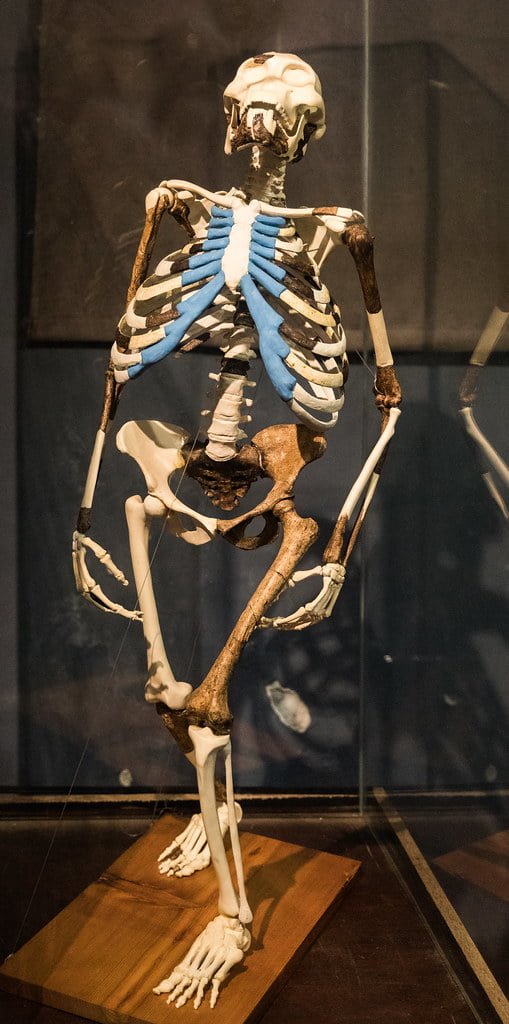
Another amazing fact about Ethiopia is that Several archaeological findings suggest that the country is the cradle of mankind. In 1972, Donald Johansson and Tim D. White discovered Lucy, a 3.2-million-year-old hominid skeleton.
For years Lucy had all the attention, embarking on a nine-year worldwide tour and being well renown. Then there came Ardi found in the same region but is older than Lucy. So, Ethiopia is believed to have marked an important transition period from the early Hominids to the likes of us.
Fun Facts About Ethiopia: Never been Colonized
Ethiopia is one of the two African countries to never be colonised, the second being Liberia. But it wasn’t for lack of trying. The Italians had tried to colonize the country twice and failed.
But the Italians did have a military occupation of the country for 5 years but, the Ethiopian forces were waging military opposition the entire time and the whole country was never brought under control. As some of the locals put it, “we waited until they had built us railways and nice buildings… and then kicked them out.”
Fun Facts About Ethiopia: Abebe Bikila Bare Feet Winner
Ethiopian distance runner Abebe Bikila was the first black African to win the gold medal in the Olympic Mar- athon not once but twice which made him the first person. At a time when Africans or generally blacks were looked down he rose to the occasion and won gold for the first time which is a hard thing to do because there were no black idols to look up to at that time.
When asked at the end of the race if he was tired he replied that he could have done another 10 kilometers which tells a lot about the person and don’t forget he run the race barefoot which again is a difficult thing to do.
Today, Many athletes including Haile Gebre Selassie and Fatuma Roba have made history in their own respective fields and continued the legacy.
Fun Facts About Ethiopia: Place of The True Cross
Hidden many times and then rediscovered chopped into pieces and dispersed, the precious relic has taken many journeys. But, according to legend, the True Cross on which Jesus Christ was crucified, was found by St. Hel- ena—the mother of Constantine the Great, the Roman Emperor who converted to Christianity—in the 4th century.
A relic of that cross was later given to Ethiopia’s kings for protecting Coptic Christians in their country. Meskel celebrates the arrival of the True Cross in Ethiopia and has been celebrated there for more than 1,600 years.
Today this day is celebrated once a year with colorful cloths and in groups. The days is much beautiful if you celebrate it in Lalibela and Axum, religious towns.
Meskel Ethiopian Holiday (Finding of the true cross) is one of Ethiopian orthodox major holiday and celebrated for two days at the beginning of September 26th this holiday celebrated in the colorful and large festivity.
It does have two occasions the first one held on the eve of Meskel Ethiopian Holiday called Damera to celebrate in huge religion festivity in the main city of Ethiopia Addis Ababa large rare fire built at Meskel Adebabaye, a place where most annual celebrations event occurs, then the patriarch of Orthodox Church expected to lighten the bonfire right after they are blessed.
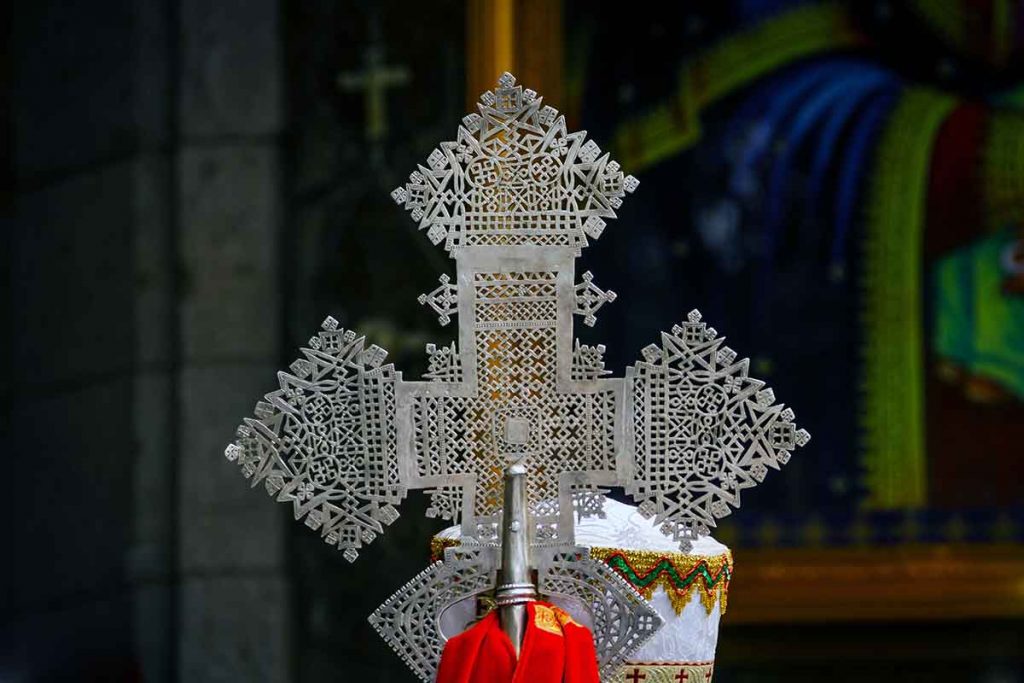
The quires from different Churches sing spiritual songs and the priest with full of colorful ceremonial cloths also perform Songs around the bonfire, while other priests are seen with traditional umbrellas which they used in churches, music instruments like drums and “Tsinatel” and ornate crosses.
The memorial of this celebration goes to Jerusalem that st Helena was advised to light a fire which by then uses the direction of the smoke to point the place where the cross buried.
Fun Facts About Ethiopia: Place of The Ark of Covenant
If you know that Steven Spielberg movie Indiana Jones: The Raiders of the lost Ark which presumably thought The Ark of Covenant was found in Egypt you would know that it’s wrong and actually the ark is found in Ethi- opia.
The Ark of the Covenant containing the Ten Commandments vanishes from Jerusalem and is said to have been taken to Ethiopia. Aksum, in Ethiopia, is famous as a claimant to the final resting place of the Ark of the Covenant, the chest containing the 10 commandments God gave to Moses, and the standing obelisk, which is 75 feet (23 m) high. With windows and doors, which look like the world’s first skyscraper.
Finally, Fun Facts About Ethiopia
Fun Facts about Ethiopia is not limited to culture and the past. The country is growing at a fast rate and the people are changing shaping culture and tradition. The Fun Facts about Ethiopia I learned are the basics of the country that a simple tourist could find out on the first visit. This time the country is getting small tourist traffic, less than 1million, compared to other countries in Africa.
However, the country has rich culture that you need access and visit to understand. The religion is a culture and it shaped the past of the country’s architecture and lifestyle.
Places such as lalibela are the resutlt of this. The religon dominance on the life of the people pushed people to create an extraordinary architecture that UNESCO considers to be on top 10 list of preserved places in the world.
The Habesha are people from the Northern part of Ethiopia, specifically the Tigre, the Agew, Beta Israel, and the Amhara. The Habesha, also known as Abyssinians, is the name given to three distinct ethnic groups and some minor ones inhabiting the Horn of Africa.
They are the various related ethnic groups in the Eritrean and Ethiopian Highlands who speak languages that belongs
to the South Semitic branch of the Afro-Asiatic family. Members’ cultural, linguistic, and in certain cases, ancestral origins trace back to the Kingdom of D’mt and the later Kingdom of Aksum.
Here are 8 things to know about Habesha.
The History
The Habesha history goes back to the Axumite Empire in the first century A.D. It was documented that around the first century A.D., some Hamitic-Semitic peoples (Sabaean traders) from South Arabian came into contact with native people and intermarried.
Their off-springs were referred to as “Habesha”, which means “people of mixed blood”. Their land (Tigray, Begemdir, Gojam, Northern Shewa, and Welo) was later termed Abyssinia.
It was only when the Abyssinia state exhausted its scarce resources that its leaders expended its frontiers South and Westward in order to amass the resources needed to feed their subjects.
With advice from Count Pietro Antonelli, an Italian with geographic Society mission in Abyssinia, the state of Abyssinia became a new nation with the newly added states of the South and the West, that were later referred to as “Ethiopia”
Historically, the entire Ethiopians irrespective of their ethnic, cultural, linguistic or historical origins were erroneously referred to as Habesha or Abyssinians.
However, the people who were really Habesha were/are these three major ethnic groups: the Amhara, the Gurage, the Tigray-Tigrinya and other satellite groups like the Agew, and the Beta Israel who are from the North part of Ethiopia.
Origin of the Name Habesha
Habesha is believed to have given rise to the term “Abyssinia” which refer to Amharic and Tigrinya speaking Christian Ethiopians. The modern term derives from the vocalized Ge’ez: Habaśā, rst written with a script that did not mark vowels as HBŚ or in “pseudo-Sabaic as HBŠTM”.
The earliest known use of the term dates to the 2nd or 3rd century AD South Arabian inscription recounting the defeat of the Aksumite Negus (“king”) GDRT of Aksum and HBŠT.
The Term Habesha
The term “Habesha” was formerly thought by some scholars to be of Arabic descent because the English name Abyssinia comes from the Arabic form. (Arabs used the word habaš, also the name of an Ottoman province comprising parts of modern-day Eritrea and Ethiopia).
South Arabian expert Eduard Glaser claimed that the hieroglyphic hbstjw, used in reference to “a foreign people from the incense-producing regions” (i.e. Punt, located in Eritrea and northeast Ethiopia) used by Queen Hatshepsut c. 1460 BC, was the first usage of the term or somehow connected.
This claim was repeated by others; however, this etymology is not at all certain, given the large time difference in the usage of the terms.
Language
Habesha people speak Ethiopian Semitic languages, including the classical language Ge’ez. Ge’ez literature is considered, to begin with, the adoption of Christianity in Ethiopia and Eritrea and the civilization of Axum in the 4th century BCE, during the reign of Ezana.
While Ge’ez today is extinct and only used for liturgical purposes in the Eritrean Orthodox Tewahedo Church and Ethiopian Orthodox Tewahedo Church, many related Ethiopian Semitic languages continue to be spoken such as Tigre, Tigrinya, Amharic, Harari, Gurage, and Argob- ba. Some of these languages, such as Tigre, are traditionally written in the Arabic script.
Clothing
The Habesha kemis (or dress) is the traditional attire of Habesha women. The ankle length dress is usually worn by Ethiopian women at formal events. It is made of chiffon, and typically comes in white, grey or beige shades.
Many women also wrap a shawl called a netela around the formal dress. The netela or netsela is a handmade cloth many Ethiopian women use to cover their heads and shoulders when they wear clothing made out of chiffon, especially when attending church. It is made up of two layers of fabric.
An Ethiopian suit is the traditional formal wear of Habesha men. It consists of a long sleeve, knee-length shirt, and matching pants. Most shirts are made with a Mandarin, band, or Nehru collar.
The suit is made of chiffon, which is a sheer silk or rayon cloth. The netela shawl is wrapped around the suit.
Religion
The Habesha centered in Axum and Adowa was part of the world in which Christianity grew. The arrival of Christianity in Northern Ethiopia and Eritrea happened around 4th century.
The Aksumites, in fact, had been converted to Christianity hundreds of years before most of Europe. Many of their churches were cut into cliffs or from single blocks of stone, as they were in Turkey and in parts of Greece, where Christianity had existed from its earliest years.
The Food
Habesha Food consists of vegetable and often very spicy meat dishes, usually in the form of wat (also w’et or wot), a thick stew, served atop injera, a large sourdough bread, made out of fermented Teff flour.
The Culture
The Habesha developed an agricultural society, which most continue, including raising of camels, donkeys, and sheep. They plow using oxen. The Orthodox Church is an integral part of the culture. The church buildings are built on hills. Major celebrations during the year are held around the church, where people gather from villages all around to sing, play games, and observe the unique mass of the church. It includes a procession through the church grounds and environs.
Ethiopian Coffee is a very important ceremonial drink. The “coffee ceremony” is common to the Tigray and the Amhara. Beans are roasted on the spot, ground, and brewed, served thick and rich in tiny ceramic cups with no handles.
The Habesha people have a rich heritage of music and dance, using drums and stringed instruments tuned to a pentatonic scale. Arts and crafts and secular music are performed mostly by artisans, who are regarded with suspicion. Sacred music is performed and icons are painted only by men trained in monasteries.
Finally, The habesha People
The Habesha people are those who live in present-day Ethiopia. These have much-related culture and look with the neighboring countries such as Eritrea, Djibouti and Somalia.
The habesha people are known for their rich culture and vast history. These are proud people and have not been under colonialism.
The Lalibela churches are located in the center of the town surrounded by the houses of villagers. It is also quite clear that the churches have been the bases for the beginning of settlement pattern and development of the town.
Historical and traditional sources show that the construction of the Lalibela churches preceded the establishment of the town.
The well-known rock-hewn Lalibela churches are eleven in number; but there are two monolithic sanctuaries that have been recently found, which are Bete Hawariat and Bete Estifanos, this makes the total number of Lalibela churches are twelve.
According to their location, they are divided into three groups (2 main groups), separated by the seasonal river Jordan. The first group comprises six Lalibela churches located north of the Jordan River, while the second group comprises four Lalibela churches situated south of the Jordan River.
Bete Ghiorgis is located in isolation on a sloping rock terrace southwest of both the first and the second group of churches.
Possibly the oldest of the Lalibela churches, and a replica of the Tombs of Adam and Christ. Bete Mariam is the central Lalibela church in the first group surrounded by a trapezoidal courtyard. It is a one-story monolithic building with seven rooms and it is the first work of Lalibela as said locally.
The wider courtyard of Bete Mariam has a special place in Lalibela, mainly because it is used for the sacred dances during Christmas. On the floor of the surrounding courtyard, there is a deep rectangular pool, which is locally believed to make barren women fertile if they bathe there and get the blessing of a priest.
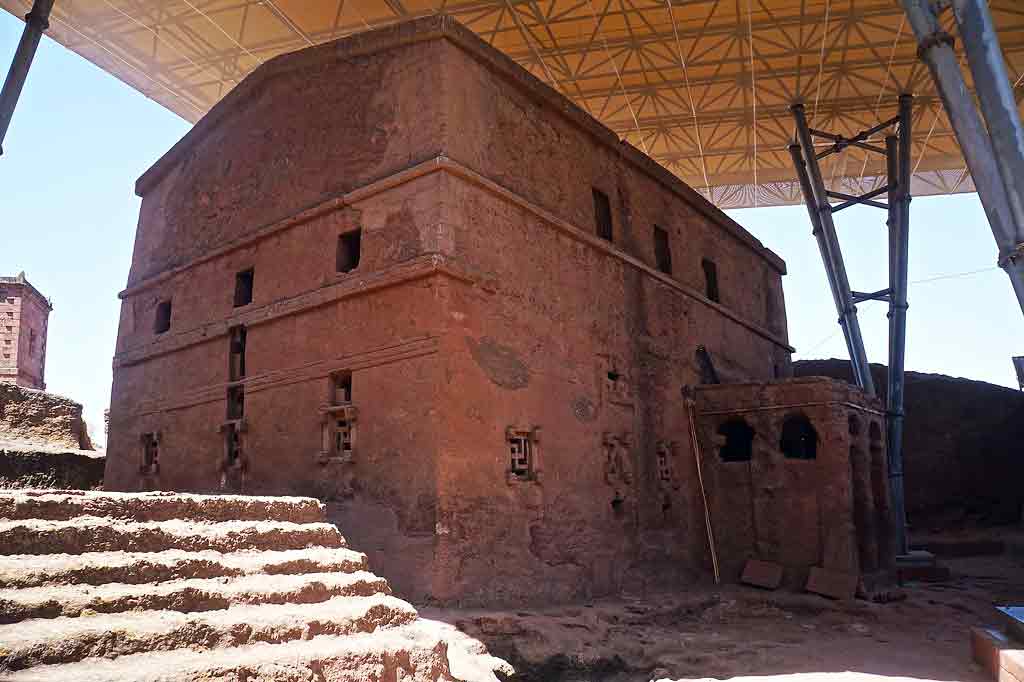
Bete Mariam is a rectangular church and from the exterior moldings running horizontally around the walls. The three rows of windows are better viewed from the outside, for which Bête Mariam is the most famous for.
The upper rows of windows are undecorated and rectangular without any fillings. The lower row windows are decorated with a variety of cross forms, which are very impressive. There are more than nine varieties of crosses including the swastika.
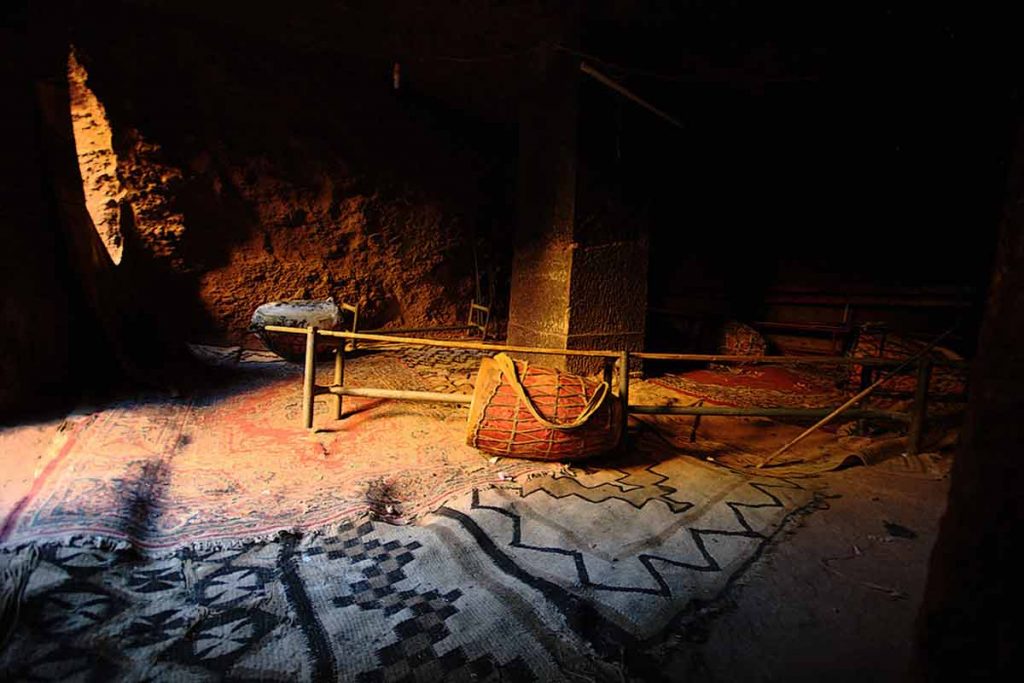
The interior of Bete Mariam is a fully developed basilica. It is decorated with icon graphs of St. Marry and Joseph, Star David (Shield of David), Seal of Solomon, Swastika symbols, two headed bird and St. George icon graph at the west gate. It consists of the narthex, a nave, two aisles and a domed sanctuary. The nave and aisles are formed between two rows of five rectangular pillars. The church also has a semi-circular gallery on the first floor (mezzanine floor), consisting of seven rooms.
Bete Medhane Alem (House of the Savior of the World)
In the “Northern Group” across the main road from St. George, the most notable church is Beta Medhane Alem, home to the Lalibela Cross and believed to be the largest monolithic church in the world. It is thought to be a copy of St. Mary of Zion in Axum.
Bete Medhane Alem is linked by walkways and tunnels to Beta Maryam (St. Mary’s), possibly the oldest of the Lalibela churches. In the east wall of the church is an array of geometric carved windows in a vertical line. From the bottom up is a Maltese cross in a square; a semi-circle shape like that on the Axum stelae; a Latin cross; and a simple square window.
Bete Gabriel-Rufael (House of the angels Gabriel, and Raphael)
A one-story structure connected to the mountain and accessed by wooden bridges to its story level. The ground floor of this church is filled with water and gives no service. The gate to the ground floor is not still known.
It has eight external columns, of which five of them continued to the ground floor and the rest three remain at the upper floor. Internally, there are two columns. It has a short room height relative to the others. Bete Rufael and Bete Gabriel are situated under one roof. Inside Bete Rafael, there is one huge column and two windows.
Externally its wall has recessed slots inscribing windows. The two doors have wider veranda. It has wider door at the south that takes to Eucharist Kitchen, store and amazing caves, which are too wide. Its western gate takes to Bete Rufael. Travelling through the cave way, a gate of wood which was during Lalibela’s time is confronted.
“Drum” by Andrea Kirkby is licensed under CC BY-NC 2.0
Bete Gabriel is a church located between two trenches on the north and south. The monumental northern facade is very beautiful. It is ornamented with ogival niches whose top shape is similar to the top part of the Ax- umite stele.
In addition, the two niches contain two doors in Axumite style, and five of them are windows. Near Bete Gabriel, there is a curved band of rock locally called “the path to Heaven” or “Meferareja” as locally said. Another important part of the Bete Gabriel complex is a well and underground cistern down in the courtyard.
Bete Golgotha Mikael (House of Golgotha Mikael)
Bete Golgotha is known for its artwork which includes life-sized carvings of saints on the walls. It is also home to the tomb of King Lalibela, over which stands a gold-draped Ark. The Western group is completed by the Selassie Chapel and the Tomb of Adam.
Bete Debre Sinai and Bete Golgotha are twin Lalibela churches. A tunnel at the western end of Bete Mariam leads to the twin Lalibela churches. They are six meters below the level of this courtyard (both are semi-monolithic and separated by a wall, east of which is Golgotha and to the west is Debre Sinai).
Access to the Lalibela churches is through a surrounding trench, which is 10.5 meters deep. The twin Lalibela churches appear from outside as one and are usually referred to together by the local people as Bete Golgotha Michael.
Bete Amanuel (House of Immanuel)
The most beautiful of all that depicts Axumites construction more than any other Lalibela’s work is his ninth work Bete Amanuael. This was believed to be the prayer house of Lalibela and his family. It is inside a court yard of mountain and accessed by three gates one of which is from Bete Merkorious. Its wall is carved with horizon- tal strips. It has 24 external columns and 45 windows. Its upper floor level is approached by a monolithic stair.
It is the only purely monolithic and carefully hewn church of the second group at the center of a quadrilateral courtyard. It is a rectangular church. The external facade shows the Axumite style of alternating recessed and projecting stonework. It imitates the old Ethiopian wood and stone method of construction, so that it offers an almost classic example of the Axumite style, more so than any other church in Lalibela.
The external walls are richly decorated with horizontal carvings, which make it very elaborate in appearance. The alternating vertical and horizontal moldings on the four facades of the church from the base up to the summit are impressive. There are three rows of windows displayed in the facades.
The lower windows are cross-shaped, those in the middle are round-arched with capitals, and the upper ones are square-headed. The bottom and the top windows display fully developed frames with corner posts of Axumite style.
The top row windows have no fillings. As usual, it has three doorways; the main entrance is on the west wall accessible by four steps. Bete Anamuel is a three-story building in which the ground floor in cross-shaped, the first floor is arched over, and the second is square-headed.
Church of Saint George (Bet Ghiorgis) (St. George’s)
DSCF0549-by-Giustino-is-licensed-under-CC-BY-2.0
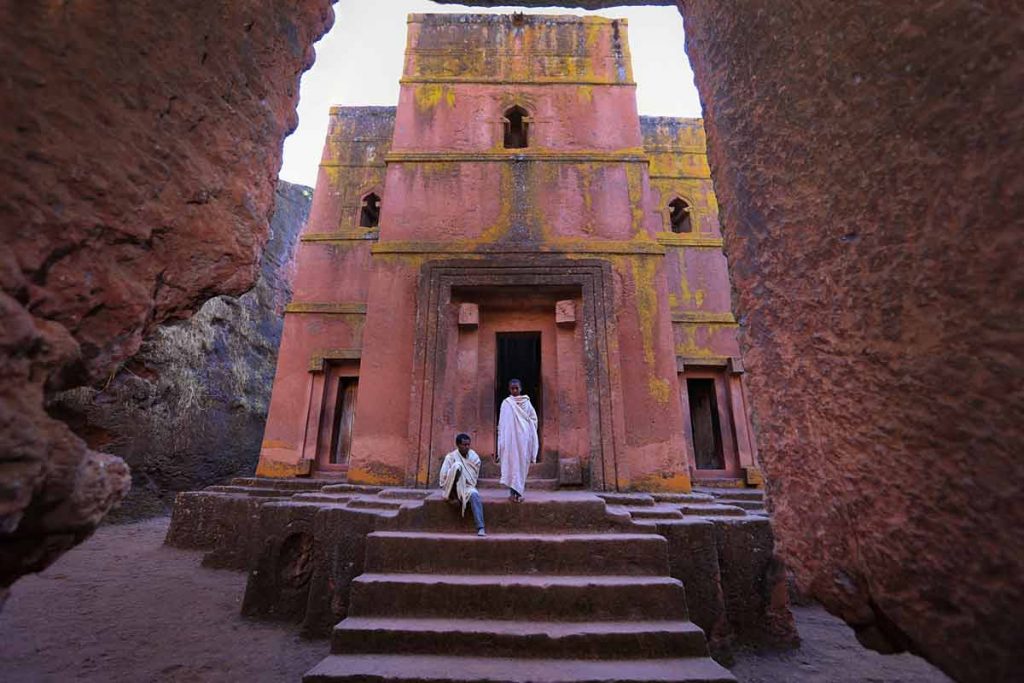
There are 11 rock-cut churches at Lalibela, the most spectacular of which is Bet Giorgis (St. George’s). Located on the western side of the cluster of Lalibela churches, it is cut 40 feet down and its roof forms the shape of a Greek cross. It was built after Lalibela’s death (c.1220) by his widow as a memorial to the saint-king. It is a magnificent culmination of Lalibela’s plans to build a New Jerusalem, with its perfect dimensions and geometrical precision.
Unlike some of the other Lalibela churches, St. George’s is plain inside. A curtain shields the Holy of Holies, and in front of it usually stands a priest displaying books and paintings to visitors. In the shadows of one of the arms of the cruciform church is its tabot or copy of the Ark of the Covenant.
Bete Ghiorgis, which is distinctively cross-shaped, is the last work of Lalibela. It is situated far from the other two groups of Lalibela churches and accessed in a cave way.
The building is inside the courtyard which is perforated by caves holding remains of holy peoples. Its walls, going up, slightly narrow, but horizontal bands of different width make an optical illusion so that it appears perfectly symmetric and monumental.
It is decorated by two rows of windows. The nine windows in the bottom row are blind and imitate the Axumite “monkey-head” framework. The twelve windows in the upper row have ogival arches and bracket capitals.
It has three doors in the west, north, and south. The main entrance in the west is approached by seven wide steps (representing the seven heavens). The main doorway has a shallow porch ornamented by simple moldings. Its rooftop is concentrically cross-shaped and stepped down to drain the rooftop through stone spout centered at each arm of the cross.
"Ethiopia4826" by kaiserinlee is licensed under CC BY-NC-SA 2.0
Harar Ethiopia is a beautiful and one of the oldest cities of Ethiopia. It is found in the eastern part of Ethiopia, close to Djibouti and Somalia, at a distance of 515 kilometers to the south-east of Addis Ababa.
It is a plateau with an elevation of 1750 meters above sea level, with deep gorges, surrounded by deserts and savannah. Harar Ethiopia is a fortified city with walls. The walls surrounding this sacred city, considered “the fourth holy city” of Islam, were built between the 13th and 16th centuries.
There were five historic gates, which corresponded to the main roads leading to the town. These gates also served to divide the city into five neighborhoods. It is a region inhabited mainly by Muslims.
History of Harar Ethiopia
The evolution of Harar Ethiopia goes back to the seventh century when Muslims from Mecca migrated to Ethiopia before Medina. For more than 40 years (from 1520 to 1568), Harar Ethiopia served as the capital of the Harari Kingdom, then it became a self-serving emirate in the 17th century and was integrated into Ethiopia in 1887.
From the late 16th century to the 19th century, Harar Ethiopia was an important trade center between the coast and the interior highlands and a location for Islamic learning.
Harar Ethiopia is known to have experienced turmoil and bloodshed for its existence. Ahmed Gragn killed Abu Beker Mohammed who was the ruler of the city. Ahmed Gragn was a militant Muslim leader.
In 1528, he used Harar Ethiopia as his base to launch his jihad and raids against the Ethiopian Christendom. He destroyed many churches and threatened the complete destruction of the Ethiopian Christian Empire. He was then killed by Emperor Gelawdewos in a Battle near Lake Tana in 1543. The incursion continued against the Christians led by Ahmed Gragn’s widow Bati Del Wambara.
In 1559, Emperor Gelawdewos marched on Harar with the aim to abolish the constant religious attack taking place. As a result, Gelawdewos was killed in a battle and his head was paraded around the city on a stake.
In 1647, Emir Ali ibn Daud took control of Harar Ethiopia and established an autonomous administration. Despite the continuous fight with Oromo tribes, Harar became larger; it became well populated, an important city for trade, and a center of Muslim scholarship.
Harar issued its own currency. After 250 years of autonomous rule, in 1875, Egypt occupied Harar and killed the Emir. The Egyptians action resulted in a strong resistance to the Muslim community of the city. Therefore, Emir Abdullah took control and led a campaign against the Egyptians, which came to an end in 1885.
In 1887, Menelik, Prince of Shewa, who later became Emperor of Ethiopia in 1889, started a war against the army of Emir Abdullah. In the end, Harar Ethiopia lost its autonomy when Menelik defeated the Emir at the Battle of Chelenko in 1887.
Menelik then established a new administration which will be headed by Ras Mekonnen, the father of Emperor Haile Selassie. This new administration included several members of the emir’s family to prevent renewed religious movement.
At the end of the 19th century, Harar Ethiopia began to disintegrate and lost its status as a trade centre. From 1902, Dire Dawa became the main commercial centre of Ethiopia when the railway line was built between Addis Ababa and Djibouti through Dire Dawa.
Despite this, Harar Ethiopia continued being the spiritual City of Ethiopia’s Muslim community, the political capital of Hararge Province until 1994, and has become a federal city-state since 1995.
Today Harar Ethiopia is the administrative capital of the Harar Ethiopia People National Regional State (HPNRS) which is one of the nine regional states of the Federal Democratic Republic of Ethiopia. This regional state is the smallest in terms of size, surface area, and population.
A walled city
The old city wall is the main attraction of Harar. The cityJugol wall is believed to be built somewhere between the 13th and 16th centuries and served as a protective barrier.
This thick, 5 meters high and 3.5 km long wall was built to keep away the rising migration of the Oromo people, which later also served its protective purpose when Menelik tried to take control of this fortified town.
This walled city once had five gates, a number supposed to represent the five pillars of the Islam: Shoa Gate, Buda Gate, Sanga Gate, Erer Gate, and Fallana Gate, each providing five pathways into five different quarters of the city.
These gates known as Bari to Hararis, were located on the north, east, south-east, south, and west of the city. In the old times, the gates of Harar Ethiopia were strongly guarded and were strictly closed at night.
Their locations have been determined according to defensive strategy as well as to the direction of trade routes, the location of lakes around the city, as well as the contribution of topography, rivers and springs.
The northern gate was known as Assum Bari because it was used to import assu, or paper and salt, from the gulf of aden coast of Africa. The eastern gate was called Argob Bari as it served merchants handling the lucrative trade from Argobba, which is a neighboring town.
Each of these gates played a different role in the economy of the city as each proceeded entry and egress to people traveling to and from different parts of the surrounding. The Harar gate, from where the main streets lead to the center, is constructed recently.
The Harari and their culture
The Hararis also called Geyusu (People of the city), according to linguistic classification, are one of the Semitic speaking peoples of Ethiopia in the Horn of Africa. To this day they have their own language called Gey sinan (the language of the city). So far, diverse people had lived in today’s eastern part of Ethiopia.
Hararis social history is based mainly on the social life of organizations or groupings identified by age, and sex and social obligations. The core of the city society is built around kinship, friendship, and afocha, or community organizations.
When it comes to kinship, the Harari does not marry non-Harari. Friendship provides the city with a small group of trusted equals who remain friends throughout their lives. Characteristically, a boy becomes close friends from other neighborhood boys his own age. A girl forms a friendship with the daughters of women who are close to her mother.
The afocha, or community organizations provide the Harar Ethiopia with social, ceremonial, and economic support for such occasions as weddings and funerals.
The traditional associations, i.e. the fraternities, the sororities, and the adult Jema’ah also enhance the quality of life of the Harar Ethiopia people in their own ways, as these organizations are directly concerned with the social needs and problems.
The ceremonies serve the purpose of bringing people together, strengthen the tradition of helping each other, and also pave the way for public deliberations. This can be done by creating a favorable atmosphere through these events, and, thereby, maintain the continuity of the city core values.
Among extraordinary elements that portray the self-identification of Hararis, the cultural dresses vibrant in color and intricate designs, are vivid. The Harar Ethiopia garment dresses for girls, married women, and the elderly appear identical yet they are distinct.
The daily hyena feeding tradition is also another example of this city’s unique heritage. Harar Ethiopia is famous for its ‘Hyena Man’. Feeding hyenas is actually a tradition in this part of town.
It all started in the 20th century when the people started feeding the local hyenas to stop them from decimating their livestock.
Consequently, these hyenas stopped searching for their own food and started coming into the city to get their meat from the local hyena men.
These Hyena men collect offal and bones to feed to the wild hyenas usually about 100 meters outside the Fallana Gate of the old city walls of the town. Hyenas appear just after sunset to take food from their hands.
This tradition has continued for the past century and to this day, the hyenas still come out at night to be fed by the local people.
Harar’s architecture
Over a long period of time, the African and Islamic traditions influenced the development of the city and its typical urban planning and resulted in its particular character and uniqueness.
The present urban layout follows the 16th-century design for an Islamic town with its central core occupied with commercial and religious buildings and a maze of narrow alleyways with colorful facades.
The traditional city house has a typical, specific, and original architectural form, with exceptionally ornate interior design. At the end of the 19th century, Indian merchants built new houses with wooden verandas that created a different urban landscape and resulted in the construction of the combined Indian/Harari houses.
Material for the fortification wall and the houses were rough stones of granite and sandstone from the vicinity; clay was used as mortar. A unique and distinct architectural feature in Harar Ethiopia, the traditional Adare house (derbi-gar) is a two-story structure with a flat roof made of thatch.
Inside the house, the main living room always consists of five raised platforms (Nadabas) of differing level where guests and household members sit befitting their status.
Sutri-nadaba is meant for the owner of the house, Gideer-nadaba is for elderly intellectuals and Sheikhs, and spiritual fathers, Amirnadaba is for the Amir or respected Alim; and the is gabti-ehernadaba which is the Nadaba behind the entrance door is for illitrates, and the lower platform in front of the house, Tit nadaba, is for students.
At the first sight of this living house, the eye is met by a scene of painted and carpeted area, walls covered with the city artifacts and antiquity, revealing a remarkable Harari identity. On the walls of this living room, the balance and color composition of the display of baskets is amazing.
The other ornate element of the house is the door (gambari). This door is a craft that is entirely made of wood. The door frame is decorated with carved ornaments; simple geometrical patterns and rosettes. These houses’ architectural and ornamental qualities are now part of the Harar Ethiopia cultural heritage.
Conclusion
Harar Ethiopia is a city that has a lot to offer culturally, historically, architecturally, and more. Harar Jugol is a one of a kind case of a relatively well-preserved historic town that has retained its traditions, colorful urban fabric, and rich Harari Muslim cultural heritage to this very day, and for this, it has gotten the recognition from UNESCO.
It is a city that has its own unique language, adorned architectural elements, and other identities. Its famous thick, five-meter-high walls were erected in the 16th century as a defensive response to the neighboring Christian Ethiopian Empire, resulting in a fortified city.
However, today Muslims and Christians share the city in peace. With its 99 mosques, including the 16th century Grand Mosque with the twin towers and slender minaret, it is considered to be the fourth most holy city in Islam after Mecca, Medina and the Dome of the Rock in Jerusalem.
The Harar Ethiopia people are identified by the continued cultural traditions and quality of their handicrafts, including weaving, basket making, and bookbinding.
This historic town has a traditionally functioning community, forming a complex social-environmental whole where each element has its representative and practical importance.
The organization of the communities through traditional systems has preserved its social and physical inheritance and, especially, the city language.
"AAE026A" by gill_penney is licensed under CC BY 2.0
Bahir Dar Ethiopia is the third-largest city in Ethiopia. It is found within the jurisdiction of west Gojjam. Bahir Dar Ethiopia is the present capital city of the Amhara regional state.
Besides this, it is the headquarters for the Amhara regional administration. Bahir Dar Ethiopia implies “seashore” in Amharic. It got its title from Lake Tana, which is found inside the city.
How Does Bahir Dar Ethiopia Began?
The city is established alongside this lake. I will attempt to address everything that I have found out and known about Bahir Dar Ethiopia. It talks about Bahir Dar Ethiopia’s history, characteristics, demography, culture, climate, environment, economy, and last but not least my experience there.
Originally, Bahir Dar Ethiopia was known as Bahir giyorgis. It was more of a village or a city rather than a city. It was characterized by different traditional settlement patterns according to their social position.
The top in the hierarchy were the ‘balabbat’ communities and the kahenat/ clergy. Other than this, there are three groups of tenant craftsman communities.
These all three groups lived on balabbat lands. Despite the economic interdependence, there was no intermarriage between the tenants. The tenant communities were not allowed to marry with the balabbat and the kahenats.
At this time, there was high trading activity within themselves as well as with the people located at the ports of Lake Tana. The Italian traveler tried to estimate its population in 1891. In the early twentieth century, the British bring many teams that study on the outlet of Lake Tana with the desire to construct a stream there.
In 1936, when the Italians invaded as again, they occupied Bahir Dar Ethiopia and gave it many new urban features. The Italians abolished the old communal family land ownership and replaced it with private ownership.
The Italians took the land of the balabbats and utilized it for an organization, armed force, an airstrip, and harbor facilities. They even delineated new commercial and residential zones for the city.
They connected the city with the ports of Lake Tana using motorboats. Besides, roads that connect Bahir Dar Ethiopia with Addis Ababa, Gondar, and Debre Markos were built. This features changed the physical and social appearance of the city.
This derived new settlement patterns. Two of the tenant communities that are the weyto and the Muslim communities were affected by the new settlement pattern. However, the tanner communities were not affected by this new settlement. In the commercial zone, the participation of Ethiopian people was low.
“AAE026A” by gill_penney is licensed under CC BY 2.0
Italians, Arabs, Somalis, and some Sudanese ran all of the shops, tearooms, restaurants, and bars. Bahir Dar Ethiopia got political importance in the eyes of the Italians. They made the city administrative center for the southern territories of Lake Tana.
They were also wanted to develop the Lake Tana agriculturally and produce hydroelectric power. Not all these ambitions of the Italians came to reality as the Ethiopian government was reinstated in 1941.
After the Ethiopian took over, Bahir Dar Ethiopia as a city was showing remarkable growth. From sub-district level to the municipality.
Moreover, in the early 1950s to the best substitute capital for Ethiopia. And later Bahir Dar Ethiopia becomes the capital of west gojjam.
The Ethiopian government developed Bahir Dar Ethiopia as a market and transportation center of the economic growth of lake tuna and the Blue Nile basin.
Germen experts prepared a comprehensive master plan with new zoning. The implementation of this new master plan completely changed the physical appearance of the city.
Bahir Dar Ethiopia became a center of economic and industrial development. Major infrastructures such as water supply, hydroelectric power, bridges, hospitals, and higher institutions were endowed. Because of the country’s free economic system, the growth of Bahir Dar Ethiopia skyrocketed in the 1990s.
The free economic system encouraged investments and other market potentials. This rendered Bahir Dar Ethiopia the core for industry, transport, communication, health, education and tourism development.
Bahir Dar Ethiopia Today?
In this time, Bahir Dar Ethiopia became the capital of the Amhara regional state.
Bahir Dar Ethiopia is the biggest city in Ethiopia after Addis Ababa and Dire Dawa. It is a clean and well-maintained city.
It is generally considered a safe and violent free city as it entertains most of the tourist flow. There are many options to get to the city. The first and shortest one is by plane.
How Can I Travel To Bahir Dar Ethiopia?
You can get there by using the inbound flight routes of Ethiopian airlines. The Bahir Dar Ethiopia Ginbot haya international airport is 10 km away from the city center. The second one is cross-country buses that connect different major cities.
These buses are safer minibusses. There is a newly built bus station on the south side of the city near the national stadium. The third means to get there is by using minibusses. They are faster than minibusses but due to the roads, it is less safe.
You can also take a private tour to get to Bahir Dar Ethiopia from any city you are. There are many means of transportation within the city. The city’s major means of transportation is ‘bajaj’, which is a three-wheeled mini car. It can hold 3 people at once.
However, the local drivers put on up to 5 persons. The second option is the minibus taxis. There are now a few minibusses that give transport services within the city. Most of them link to different cities. You can also rent cycles from the locals and go around the places you want.
There is low car traffic, which makes it trouble-free for cycling around. The palm trees along the street make the riding along the street fascinating.
Who Lives in Bahir Dar Ethiopia?
More than 318,000 people live in the city. From this population, 51.6 percent are men and 48.4 percent are women. Based on the 2007 census 81.16% of them lives in urban parts of the city while the rest lives in the rural kebeles.
When we see the ethnic and linguistic composition, the largest is Amhara, which is 96.23%. The tigrayans are 1.11% and the Oromo’s are 1.1% and the rest ethnic groups together 1.56%. The popular language spoken is Amharic, few speak Oromia and others speak their primary language.
When we look at the religion 79.72% say the practice Ethiopian orthodox Christianity, 18.47 were Muslim, and 1.62 were Protestants. The city offers numerous little every day markets and vast weekend market. There are also conventional music houses within the city.
Any Institutions in Bahir Dar Ethiopia Worth Mentioning?
There are several colleges and universities within the city. The infamous one is Bahir Dar Ethiopia University. It was to begin with a Polytechnic Institute, which was built by the Soviets and inaugurated by Emperor Haile Selassie in 1963.
This was afterward consolidated with Bahir Dar Ethiopia teachers’ college and got became the Bahir Dar Ethiopia University in 2000.
The university now has more than 52,000 students with 219 academic programs. From these programs 69 are undergraduate programs, 118 are masters programs and 32 are Ph.D. programs.
The university comprises four institutes, five colleges, two facilities, and one school. The university is now working to be one of the ten research universities in Africa by 2025.
What are Tourst Attractions in Bahir Dar Ethiopia?
Bahir Dar Ethiopia is located 578 kilometers north of northwest from Addis Ababa. It has an altitude of 1820 meters above sea level. The city is located at the tip of Lake Tana where the Abay River begins.
There are also many islands on Lake Tana, which are monasteries and churches. There is also tis Abay, a beautiful waterfall that is breathtaking. Bahir Dar Ethiopia is rich in vegetation types and ecosystems. There are also many indigenous plants there.
The plants that are located around Lake Tana are known to self-heal themselves and thus are used for traditional medicine. One of the prominent vegetation is the palm trees. It has given the city an iconic character.
The man who was responsible for planting and taking care of these trees have been recognized publicly recently. The climate of Bahir Dar Ethiopia is a tropical savanna climate to subtropical highland climate. The average temperature ranges from 20 degrees to 25 degrees.
Bahir Dar Ethiopia’s economy is based on its tourism, market, and industry. The most dominant one is tourism. Bahir Dar Ethiopia is one of the prominent tourist destinations. Bahir Dar Ethiopia is suited at the edge of Lake Tana.
This geographical location acts as the starting point and the introduction of the northern parts of Ethiopia. They start their tour from Bahir Dar Ethiopia and continue to the north. There are many things to see that are worth your while. The first one is Lake Tana which is the starting point for the world’s largest rive the Nile.
The lake also has many islands. Most of these islands are churches and monasteries. Tourists can hire private tours and visit these islands. The other startling thing to see in Bahir Dar Ethiopia is the Blue Nile Falls. With a width of 400 meters and a fall from 45 meters is an astonishing thing to see there.
There are historical things to see in Bahir Dar Ethiopia. The well-known one is the palace of Emperor Haile Selassie which was built by the Italians. This tourism industry has enhanced the local markets. There are many markets alongside the main road.
It has also created many work opportunities for the local inhabitants. There are many tour guides and boat owners that give a tour to the tourist that goes there. There are also many hotels and resorts there with a price range depending on their standards.
To list some of them kuriftu Lake Tana resort and spa, dalot pension, Lake Tana Hotel, ghion hotel, papyrus hotel, etc.
What is the Weather Like in Bahir Dar Ethiopia?
And precipitation of 1400mm annually. The bega season is the months from November to March. This season is warm. and July and August are the kiremt seasons and this season is cooler seasons.
There is a high chance of precipitation during this season. Most of the city’s rainfall is obtained during this season. There is no such temperature difference because Ethiopia is located close to the equator.
Nevertheless, the nights are chill in December and January. Since Bahir Dar Ethiopia is all year round sunny city, anybody can visit at any time but because of the rain, it might be a little difficult for visitors to tour.
Personal Experience on Bahir Dar Ethiopia
I had seen Bahir Dar Ethiopia last year. We had a batch trip to the northern parts of Ethiopia. we went to Bahir Dar Ethiopia as the last destination of our trip. So we had to enter the city from the north. We began our journey from Gonder and arrived there after 3 hours.
When I arrive at the city, my first impression was the palm trees in the streets that gives Bahir Dar Ethiopia its character. It had some similar characteristics with my hometown Addis.
After that, we carried on our baggage and went to the hotel we stayed in. Be checked in at the papyrus hotel. It was a nice hotel at an affordable price.
It has a swimming pool free for guests who stay there. Then we put our bags in our room and had lunch. Then some of us began to swim. Then at night, we went to a fish house and had our dinner.
And on the next, some of us hire a private tour and went on to see Lake Tana as well as the islands there. This was the time I was on a boat.
I had never been in one before and the wave is active, and it was a little bit scary. The funny thing is I did not wear my life vest in the first round. But in the next round, I wore my vest. We visited around 4 islands. They were all amazing with their character.
We had our lunch on the last island we visited. We had fish fresh from the lake. And there was this big fresh mango that I ate after lunch. After we finish our tour, we went back to our hotel.
Then at night, we had our dinner and packed our staff for our journey tomorrow. Then we returned to Addis and this was how our trip ended.
Conclusion
Bahir Dar Ethiopia is one of the fast developing cities in Ethiopia. The city is the leading destination of tourists and the starting point of tours in northern parts of Ethiopia.
Having an international airport and inbound flight routes from the capital city makes it easily accessible. The weather of the city is warm throughout the year and a comfortable place to live in.
In this article, I tried to show and tell the things I discovered and found out about Bahir Dar Ethiopia incorporating it with my personal experience.
I recommend anyone visiting there should see Lake Tana as well as the islands. The churches and monasteries in islands. And the fascinating Blue Nile falls.
There are also many things to see other than this. The historical palace of Emperor Haile Selassie, the local markets, and their cultural traditions. Bahir Dar Ethiopia is one of the places in Ethiopia that is worthy of your time for a visit.
"AAE026A" by gill_penney is licensed under CC BY 2.0
Ethiopia Map Regions and groups make political and social demarcations. Ethiopia is divided into nine regions and two administrative states. Each region has its own state president, executive committee. The members are selected by the president, then they will be approved by the council.
The administrative states include Addis Ababa and dire Dawa.
The nine religions are the afar region, the Amhara region, the Gambella region, the Benishangul Gumuz region, Harari region Oromia region, the Somali region, the southern nations’ nationalities, and peoples region, Tigray region.
Ethiopia Map Regions : Addis Ababa
Addis Ababa previously Addis Ababa was known as Finfine also has a nickname Sheger because it is the center of the country. Addis Ababa is the capital city of Ethiopia and one of the federal city.
The total area of Addis Ababa is around 527 km2. Now the population is about 3,385,000. Addis Ababa is the largest city in Ethiopia. Addis Ababa is the headquarter for the African Union and there exist mainly institutions like ECA, National museum the minister office, Addis Ababa University, and many others.
Empress Taytu has selected in the city and it is founded in 1886. Menelik also agrees and he preferred Entoto for the military base. Then Taytu built a house at Filwoha. Then she and the royal family take a mineral bath in Filwoha.
Addis Ababa now has 10 sub-city, these are Addis Ketama, Akaky Kality, Arada, bole, Gullele, Kirkos, Kolfe keranio, lideta, Nifas silk Lafto, and yeka sub-city. The present mayor of Addis Ababa is engineer Takele Uma.
Ethiopia Map Regions : Addis Ababa
Ethiopia Map Regions : Afar
Afar region is located in the north east of Ethiopia previously afar is known by region 2. Which shares the boundary of Eritrea. Semera is the capital of Afar. The total area of the Afar region is about 72,000 km2.
The population size is around 1,812,000. The most known place in afar is Danakil dipression it is the lowest point in Africa. Almost 90 percent of afar peoples are Muslim. The main tourist attraction places are Awash national park, yangudi rassa national park, and other areas. Hadar is a place in afar where lucy skeletal was founded, this region is taken as the origin of people.
Ethiopia Map Regions : Afar
“AAE026A” by gill_penney is licensed under CC BY 2.0
Ethiopia Map Regions: Amhara
Amhara region formerly known as region 3. it is located in the north waste of Ethiopia shares the border with north Sudan. Its capital is Bahir dar.
The total area of the Amhara region is around 154,709km2 it means the third-largest area from Ethiopian religions. The population size is around 20,018,988 the second populous region in Ethiopia.
The largest lake in Ethiopia is found in this region capital Bahir dar. It has 84km length and 66km width, also it has consisted of many islands about 37 in which monasteries exit in 19 of them, the monasteries are Daga Estifanos, Narga Selassie, Tana Cherkos, Kebran Gabriel, Ura Kidane Mehret, Bete Maryam monastery… , Also the source of Blue Nile is found in this region.
This region has many attractions places for tourists. These are Semien mountain national parks, Ras Dashan the highest elevation place in Ethiopia also Tis Abay is one of the most attractive places in Ethiopia mostly in the rainy season. also, the Gonder Castel, Lalibela churches are widely visited by tourists.
In Amhara region, about 80% of the people are orthodox Christians and about 20% are Muslims.
Ethiopia Map Regions: Amhara
Ethiopia Map Regions: Benishangul Gumuz
Benishangul Gumuz region previously region 6. it is found in the northwest of Ethiopia and shares the border with the Amhara region and north Sudan in the west. The capital of Benishangul is Asosa. The total area of Benishangul is around 50,670km2.
In Benishangul there are 1,127,000 people live in. The name of the region is coming from two ethnic groups which are called Benishangul (Berta) and Gumuz. In Benishangul Gumuz the main recent problem was a road that connects Asosa and Metekel because the Abay river divides them into two.
They have used the way of Wollega which makes a high additional kilometer but in 2012 road was constructed.
Ethiopia Map Regions: Benishangul Gumuz
Ethiopia Map Regions: Dire Dawa
Dire Dawa is located in the eastern part of Ethiopia. The area is about 1,213 km2. The region has 1,276m elevation. The first railway station was constructed in dire Dawa. It affects the commercial connection between Ethiopia and Djibouti, but it stopped working in 1909 because of financial problems.
The Dire Dawa region is separated by Dechatu rivers, mostly it is dry but when rain season comes it will become full. There are Muslim mosques in Dire Dawa but most of the people are Christians.
Ethiopia Map Regions: Dire Dawa
Ethiopia Map Regions: Gambella
Gambella region previous region 12. It is located in the west part of Ethiopia. It neighbors to South Sudan. The total area of Gmbela is about 29,782 km2, and a total population of 436,000.
This region is found between Baro and Akobo rivers. In Gambella, there are five main languages spoken by the people. Most of the people speak Nuer around 40% and also there exist Anuak, Amharic, Afan Oromo, and Majang speakers.
In Gambella, the dominant religion is protestant about 70% of the people. The second most people follow is the orthodox Christian religion, also there exist a few number of Muslim, catholic and who have traditional religion.
Ethiopia Map Regions: Gambella
Ethiopia Map Regions: Harari
Harari region previously region 13. Harar is located in the eastern part of Ethiopia within a few kilometers away from Dire Dawa. The total area of Harar is around 334km2. And population size is about 246,000. Harar is the smallest region of the 11 Ethiopian regions.
The people talk mostly about two languages Harari and Oromo. From the Ethiopian 11 region, Harar has a high amount of people live in urban areas. In Harar, there are seven ethnic groups that live in this region these are Oromo, Amhara, Harari, Gurage, Somali, Tigray, and Argoba.
In Harar about 69% of the peoples are islam and around 27% are orthodox Christians, also there exist 3% of protestants in these regions. The Harar walled city is the base for tourist attraction in this region.
Ethiopia Map Regions: Harari
Ethiopia Map Regions: Oromia regions
Oromia is the largest region in Ethiopia. Its total area is about 286,612 km2. And the population size is around 35,000,000 it means it is the first region with high population in Ethiopia.
Oromia region share a boarder in the west with south sudan and in the south with Kenya. And within the country region Oromia region share the boarder with six regions it means with all Ethiopian region except tigray. These are Gmbela, Benishangul Gumuz, afar, Amhara, Somali region and southern nations and nationalities.
The seat for Oromia administration was Addis Ababa, and it was changed to Adama in 2000. This brought conflict and later it was returned to Addis Ababa.
In the Oromia region, about 47% of the peoples are Muslims, around 30% of the peoples are orthodox Christians, 17% are protestant Christians, 3.3 % are waaqeffanna and about 1% of the peoples are following other religious groups.
In Oromia region, about 84% of the peoples speak Afaan oromoo and about 11% speaks the Amharic language. Gold, coffee and cattle are mainly exported from the Oromia region, the Somali region is located at the horn of Ethiopia. Share the boundary with three countries Djibouti, Somalia and Kenya, inside the country it shares the boundary with the Oromia region.
Ethiopia Map Regions: Oromia regions
Ethiopia Map Regions: Somali
Somali region have total area of 327,068 km2 it makes the second largest region in Ethiopia. The total population os Somali region are about 10,134,606. Gode was the capital of Somali region but in 1995 it is changed into Jigiga.
In 1970 the Somalia country tried to invade the Somali region, but they lost by Ogaden war. In Somali region 97% of the peoples are Somali, around 0.6% are Amhara and 0.4% oromo people live in this region. About 99.5% of the peoples are islam, 0.5% orthodox Christians and 0.1% follow other religion. Somali region peoples known for their main milk source is camel.
Ethiopia Map Regions: Somali
Ethiopia Map Regions: Southern Nations Nationalities and Peoples
Southern nations nationalities and peoples’ region is located in the southwest of Ethiopia. The capital of Southern nations nationalities and peoples is Hawassa. The total area of this region is about 105,887 km2. And the total population size is about 19,170,000.
This region share border with Kenya. In this region, many languages are spoken like Sidamigna, Guragigna, Welayta, Hadiyagna, Keffigna, and Kembatigna. This region is mostly known by Enset, it is a plant grown in this region and they used it for many types of food like Kocho, Amecho, Genfo, and many others by using traditional tools.
In this region there are many tribes live. They have different culture language and living style. From all Ethiopian regions this region have various ethnic groups.
Ethiopia Map Regions: Southern Nations Nationalities and Peoples
Ethiopia Map Regions: Tigray
Tigray region previous region 1. This region is located on the north part of the country. And share a boarder with Eritrea and north sudan. Mekelle is the capital of tigray.
The total area of tigray region is around 53,640 km2. And the total population size is about 8.3 million people. The official language of this region is Tigrigna. The main cities in tigray are Adigrat, Aksum, Shire, Adwa, Humera, Alamata, Adi remets, Wukro, Maychew, Sheraro, Zalambessa and many more.
About 97% of the peoples in this region are tigray, about 2% Amhara and 1% afar, agew, oromo, irob and kunama. In religion 95% are orthodox Christians, 4% are muslims and 1% catholic religion is found.
In the Tigray region, there are many tourist attractions historical places these are Aksum Tsion, Aksum stelae, the emperor kaleb’s palace, and many places mostly in this region the tourist attraction places are religious and historical places.
Ethiopia Map Regions: Tigray
The regions of Ethiopia were divided based on the names given them only defined by a number that is given after region, such as region 1, and region 2… but now it has completely changed and the regions are divided by based on the ethnic group of the Ethiopian population. Now a days this leads to some disputes between various ethnic groups.
The Ethiopian Orthodox Church and Ethiopian Orthodox Mezmur have a long history in Ethiopia although their origins are not clear. It is estimated that the introduction of Christianity took place in Ethiopia around 300 A.D.
Despite it’s the Ethiopia Orthodox Mezmur old history and undiscovered information this topic is given a little focus and is kept inaccessible to the vast majority except for those who are part of the church community.
Other than the religious and spiritual views of the religion it also greatly influenced the educational system and the transfer of knowledge like art, music and literature throughout the country till the current days.
Ethiopia Orthodox Mezmur and Ethiopia Past
These being said it is very important to understand at least the basics like the introduction of Christianity and how the church got its own modes of Ethiopia Orthodox Mezmur songs and traditions.
Ethiopia is one of the first countries that accepted Christianity in the earlier times. Even before this it is said that Ethiopia believed in Monotheism and the existence of one God for a long period of time.
This can be seen by the times of Queen of Sheba where she went to King Solomon of Israel and, it is said that she accepted Judaism as the official religion.
Right after the introduction of Christianity to Ethiopia, it soon captivated the souls of many, and it dominated people’s way of life in both religious and secular life.
The church school system is the major one which originated in 4th century by the time of Aksumite kingdom. But before that the Ethiopian churches were highly influenced by the Egyptian culture since the bishops come from there.
After the spread of Christianity to the southern region of the country in the 6th century the church school system dominated the whole country under churches and monasteries.
The church school culture and its teaching systems reached its peak level by the 13th century and stayed in that way until the end of the 16th century. But in the 17th century, there were multiple attacks on the Ethiopian Orthodox Churches and the society as a whole by foreign external forces like Yodit Gudit from Egypt, Gragn Ahmed and so on. During this time the widespread of church school were prohibited and was forced to retract back to the hidden monasteries and churches.
The school teaches different things one of them being the spiritual songs. Also known for St. Yared Ethiopia Orthodox Mezmur songs the styles and techniques are said to be unlike any other in the world. It has its own unique ways of melody, tunes and notations. Starting from there St. Yared’s songs have been practiced and established in people’s way of life.
St. Yared- The Father of Ethiopian Orthodox Mezmur
But all this being said, who is St. Yared? And how do his songs come to existence? St. Yared was born from his father Yisak and his mother Kristina on April 5, 501 A.D in Aksum descending from a family whose bloodline is in the church scholars.
At the age of six a priest was assigned to him as a teacher to guide him with his traditional education. But St. Yared was not that much clever on his education and was poor on accepting new knowledge. So, he was sent back home to his parents.
During this time St.Yared’s father Mr. Yisak passed away and his mother was forced to raise him on her own. So, she asked help from her brother Aba Gedeon who was a well-known priest by the time in the church of Aksum Zion. Aba Gedeon adapted St.Yared and takes care of his with his educations as promised to his mother. He taught the bible both the old testament as well as the New Testament.
Though unlike the other students it took St. Yared a lot of time to learn. Especially in the book of David, it took him a lot that he couldn’t even finish with the other students.
Ethiopia Orthodox Mezmur, Yared Inspirations
Due to this, the other students used to make fun of him. Feeling that he was not successful with his education, St. Yared left school and went to Medebay, a nearby town where his other uncle lived in.
But on his way to there a heavy rainfalls and St. Yared was forced to take a rest and hide in the shades of a big tree. But while he was there a big thing happened that changed his life forever.
He saw an ant trying to climb up the tree. But the ant could not make it and fall back for several times. However, after the seventh trail the ant make it and reached to its final destination.
Seeing this St. Yared thought that he should not give up and try again and again until he reaches for what he was aiming. So, changing his thoughts he decided to go back to his school and continue with his education.
It is also claimed that he was taken to the Heavens and supernaturally taught about the mysteries of the arts of music by three Holy Spirits. This was how it is known that Ge’ez, Ezl and Araray.
These three are said to be the three categories in which all other musical notes lye under.
St. Yared used to sing in front of a big audience including the king and the queen. Impressed by his voice and performance as he sang with drums and sistra, Emperor Gebre Meskel asked St. Yared what he wanted that he can do for him.
Guaranteeing that the king would not refuse his request St. Yared asked the king that he wanted to live in sacred place alone and dedicate his life to the spiritual world and to the love of music. Then after he left Aksum, his own village and went to live in the Semen Mountains where it is believed that he lived there until his disappears.
Aside from the music life, St. Yared also contributed to the educational and literature system of the country. He states that in the educational system people must not only be taught but also be departed from idleness and the system must maintain the pace of a young individual.
Where as in the literature part his writings of Mezgebe Degua holds the oldest written literatures in Geez. Additionally, St. Yared is also called the founder of Qine by the Geez scholars which are a highly elaborative and multilayered form of Geez poetry.
As we go down deep to his ways of Ethiopia Orthodox Mezmur songs and musical techniques it comprises of different compositions that are spiritually uplifting and gives the sense of Holiness. Moreover, he separately defines the types of Ethiopia Orthodox Mezmur songs that are sung for different events as well as in the different times of the day and seasons.
Dagua in Ethiopia Orthodox Mezmur
Its name translating to the books of music it comprises of Ethiopia Orthodox Mezmur songs for praise and sorrow. It is divided into three parts of Yohannis, Astemiro, and Fasika. Tsome Dagua which is for fasting seasons now having its own division after the time of Abba Georgis used to be one part of Astemiro.
Miiraf Ethiopia Orthodox Mezmur
This comprises
of two types of chants one being sung on a regular bases and the other for the
time of fastings like the fasting of Wednesday and Friday. Unlike the Dagua the
Miiraf are studied by heart.
Zimare Ethiopia Orthodox Mezmur
Well known and is use for the time of communal worshiping. It holds the Ethiopia Orthodox Mezmur songs of praises and prayers within it.
Mewasiit Ethiopia Orthodox Mezmur
Consist of Ethiopia Orthodox Mezmur songs that are sung on special occasions by mass. These special occasions can be those relating to the Lord, St. Mariam, saints and so on.
Liturgical music in Ethiopian Orthodox Mezmur
Of the fourteen compositions of Anaphora St. Yared gave us twelve of them are the basic ones that are used regularly. The Anaphora’s are namely our Lord Jesus Christ, our Lady Mary, St. John Chrysostom, St. DIoscorus, St. John the evangelist, St. Gregory the Armenian, the 318 Orthodox, St. Athanasius, St. Basil, St. Gregory Nazianzen, St. Epiphanius, St. Cyril and James Sarug.
These are all written by St. Yared but some others which are slightly different from these ones but almost the same as Degua were written by Abba Gorgorios of Gastch who was the spiritual son of St. Yared. These were called “seatat” which are hourly Ethiopia Orthodox Mezmur songs that have a slightly different musical form.
Aquaquam in Ethiopia Orthodox Mezmur
It is a musical
performance which is conducted with the assistance of staff, sistra and drums.
Also known for “mahlet” these are historical and graphical presentations that
show these performances were practiced in a way to praise God.
Qine Ethiopia Orthodox Mezmur
As mentioned earlier above Qine is a powerful way of literature with the words or sentences having multilayered meanings. St. Yared also used this in his Ethiopia Orthodox Mezmur songs to praise God.
Though St.Yared found qine various poets like Iskindir, Dekik Estifanos Twenty, Hawira, and Menkera mastered it in different ways. Its poetic, mystery, and linguistic excellences making it famous many Ethiopians learned qine including Emperor Haile Selassie I.
Sources of Ethiopia Orthodox Mezmur
The holy bible, book of monks and scholars as well as literary works are said to be the sources of St. Yared Ethiopia Orthodox Mezmur songs. Especially in the bible psalm 150 which read as
“Praise God in his sanctuary
Praise him with the sound of trumpets
Praise him with psaltery
Praise him with tumbrel with stringed instrument and organs
Praise him up on the loud cymbals
Praise him up on the high-sounding cymbal”
Is said to be
the major biblical source. This shows the lyrics is composed in a way that is
comfortable to the music while the basic meaning and message are being
unchanged.
Characteristics of Ethiopia Orthodox Mezmur
Generally talking St. Yared Ethiopia Orthodox Mezmur songs comprises of smooth sounds, gentle movement of the body from side to side front and back, rhythmic and slow march of dancing, and minimalistic percussion.
The setting of the St. Yared’s Ethiopia Orthodox Mezmur songs performance represents that of the quinemahlet or canticarum which is the outermost part of the church, mekdes, or sanctuary which is the innermost part of the church and the tabot or adobe which is the sacred part of the church.
The performance goes throughout the show as a smooth flowing current of the ocean. With the movement of the front and back as well as side to side. It is performed by two groups of people standing in front of each other holding sistrum in their hands that will enhance their movement and gives it a rhythmic movement with a beat.
These two groups of people are dressed in graceful cultural clothes which are both elegant and colorful. They also have a white turban around their head giving them more grace.
Doing this they stand in front of each other forming a y shape creating a space for the one who is playing the drum in the middle. The drummers beat the drum in various beats standing, seating, jumping or circling around adding a beauty to the play of the musical performance.
This being accompanied by the movement of the other group one standing while the other seating or one going front as the other moving backward gives the performance flowing like the ocean as I mentioned above.
Other than the musical performance St. Yared Ethiopia Orthodox Mezmur songs have three basic melodies. The first one is Geez. It is the simplest and plain type that is used on a regular base on a day to day activities. The second one is the Ezel. It is a slow and glorifying heavy sounding style usually associated with fasting seasons or funerals.
Last but not least is the Araray. It is the most complex type of melody with a free and higher spirit mode. These melodies are used for special festivals and ceremonies. The symbolism being the heart of the Orthodox religion as well as St. Yared’s music the three melodies also have a meaning. The Geez symbolizes the father, Ezl symbolizing the son while the Araray is for the holy spirit.
St. Yared Ethiopia Orthodox Mezmur songs basically contains three different musical instruments. The first one is the “Tsinatsil”. It is a type of sistrum made out of three or four metal rods which are horizontally attached to a u-shaped frame or a bow while they are still moveable.
The bow can be made out of wood, pottery of porcelain which is now a days being substituted be the ones made out of metal. So as the bow is jiggled and tilted from side to side the metal rods makes a noise. And when this is done under a constant time frame interval it gives a rhythmic beat that cherishes the songs.
The second musical instrument is the “Mekuamia”. It is a long stick that supplements the movement of the hand. It is swung front, back then side to side symbolizing the four different corners of the world and spreading the message that the praise to the Lord shall be heard from all corners of the world. Thirdly there is the drum.
It is also known as “kebero”. It is a large cylindrical drum with two heads on both ends of the drum. It is made out of a hollowed out wooden logs that are covered with animal hides on the open parts. It has a handle that is used to hung the drum on the players shoulder which riches the height of the waist.
With the varying head sizes, the one with the larger size is kept to the right-hand side while playing the drum whereas the small one is kept to the left-hand side. The drum is always played with a bare hand.
Other than the St. Yared techniques the Ethiopian Orthodox Church and Ethiopia Orthodox Mezmur songs are well known for the use of “Begena”. It is a very big string-based musical instrument that is played while it is standing on the floor.
The players play it with their fingers by striking the strings and forming a vibration that created the sound. The sounds are very loud and deep which touches the heart when played giving the feeling that there is a connection with the upper holiness.
Ensemble and Dance in Ethiopia Orthodox Mezmur
The St. Yared’s musical performance is presented by the debteras which form two groups each having their own leaders named the “qegngeta” meaning leader of the right and “grageta” meaning leader of the left. And the whole group is led by the master named “merigeta” meaning leader of the choir.
St. Yared Ethiopia Orthodox Mezmur songs have five distinct chants and modes of performances. First is Qum zema. This chant is performed by the human voice alone which in modern-day is also known as acapella. Second there is the Zemame.
It is accompanying the Ethiopia Orthodox Mezmur song with the swinging of the staff players and swaying of the body. Third is Tsinatsil. It has its own three subcategories. Merged being the first it is a slow and even rhythmic, Neus-mereged meaning minor with a faster beat and Aby-merged the major with the fastest beat.
The latter is even accompanied by rhythmic clapping. Then came “Tsfat Chebchebo”. Like the major merged it is involved with a faster beating of the drum while jumping and circling around. Lastly, there is “Wereb”. It involves a slow forward and backward movement with a perfect beat.
I explained this much about St. Yared and his Ethiopia Orthodox Mezmur songs because almost all or the majority Orthodox songs follow his footsteps and it is considered as the basic guideline of the music culture. Other than this some songs follow the traditional Ethiopian way of songs.
Ethiopia Orthodox Mezmur instruments
These traditional ways of songs are namely “Bati, Ambasel, Anchihoye, and Tizita”. Unlike European or other styles of musical practice, it has only five tones. This is why it is also called pentatonic. The tones included in the Ethiopian traditional music are Do, Re, Mi, Sol, and La.
This gives it its own unique character that makes us able to recognize it as we heard it. So basically, this is all the fundamentals of the Ethiopian Orthodox Mezmur music.
Ethiopia maintains extraordinary social legacy and assorted music history in whole African mainland. The customary music legacy of Ethiopia has been universally perceived with its particular music culture and emblematic indication.
The conventional tunes and music of the nation spins around center harmony of their life and culture. The cutting-edge music of Ethiopia has been mixed with mix of components from customary Ethiopian music and western music which has made another pattern in the music world.
The music custom of the nation keeps up the social way of life as well as keeps up social attachment through social articulation at various social events and opposes social changes imbued through globalization.
The globalization has brought a progression of change and changes in the realm of Ethiopian music through commercialization, commodification and digitalization of social articulations separated from capturing the social privileges of conventional performers.
The more youthful ages have been pulled in towards western music undermining the stylish and social estimation of music convention of the nation. The worldwide institutions identifying with security and shielding of social privileges of individuals are yet to be properly converted into the real world.
The development of culture ventures and amusement houses has presented genuine dangers to neighborhood culture and prompted vanishing of nearby customs, melodic legacy, and their substitution by famous worldwide music. The social homogeneity and commodification have supplanted the assortment of societies right now.
Saying this all about my topic I would like to finalize my essay by mentioning some good and well known Ethiopian Orthodox Mezmur songs and some of the famous singers. Starting with the well-known Ethiopia Orthodox Mezmur songs we can list out “Aman beaman”, “Meaza senay”, “meaza afua”, “tefetseme mahilete tsige”, “ begol sekebe” and all the melodies composed by the well-known Ethiopian St. Yared in his books diguwa, tsome diguwa, miraf and so on.
And for the well-known singers, we can mention Yilma, Kinetibeb, Tewodros, Engidawork, Marta and so on. And these are the basics mentioned when talking about the Ethiopia Orthodox Mezmur. Personally, I recommend everyone to hear the songs even if it is not from the religious point of view and is sure that no one can pass by hearing the songs and admiring about the art involved in it.
Nazret Ethiopia (Nazareth in Ethiopia) town is also known as Adama town and it gets its name from Jerusalem’s Nazareth Town, an ancient Jewish town. The town name Adama was derived from a famous hotel called Adama found within the city.
The Oromo word Adaamii, which suggests a cactus or a cactus-like tree means Euphorbia candelabrum, a tree of the Euphorbiaceae found in Southeast Addis Ababa, around 100 km away.
Where is Nazret Ethiopia?
Surrounded by East Shewa Zone, the town sits between the bottom of an escarpment to the west, and also the Great valley to the east.
The exact location at 8°32′N 39°16′E / 8.54°N 39.27°E at an elevation of 1712 meters.
Why Nazret Ethiopia (Adama)?
Nazret Ethiopia Town is thought to be a center of Oromia Region.
Nazret Ethiopia Adama is potentially a busy transportation center, a town at a road junction and rail station of the Addis Ababa to Dire Dawa.
An outsized number of trucks use this same route to and from the seaports of Djibouti and Asseb (though the latter isn’t currently utilized by Ethiopia, resulting in the Eritrean-Ethiopian War).
Beginning within the 1950s, economic development brought a rapid increase to Nazret Ethiopia (Adama). An enormous sugar plantation and factory near the town increased employment, and another large farm raises civet cats for his or her civet, a secretion employed in the manufacture of perfume. one of Ethiopia’s chief exporters of oil cakes, oilseeds, and pulses has its headquarters in Nazret Ethiopia. There are hot springs within the vicinity.
Adama University (formerly Adama Technical Teachers College)
is found in Adama. Adama Stadium is that the home of Adama City FC, a member of
the Ethiopian Football Federation league.
Following war II, Emperor Ras Tafari renamed the town after Biblical Nazareth, and this name was used for the rest of the 20th century. In 2000, the town officially reverted to its original Oromo language name, Adama, though “Nazareth” remains widely used.
In 2000, the govt moved the regional capital of Oromia from Addis Ababa to Nazret Ethiopia (Adama), sparking considerable controversy. Critics of the move believed that the Ethiopian government wished to deemphasize Addis Ababa’s location within Oromia.
On the opposite hand, the govt maintained that Addis Ababa “has been found inconvenient from the purpose of view of developing the language, culture, and history of the Oromo people.”
Nazareth in Ethiopia
How to Move in Nazret Ethiopia (Adama)?
The buses don’t follow a formal schedule. Generally, the mini buses wait at Kality station in addis ababa until they get enough passagers before they depart to Nazret. This probaby take an hour or much less. The trip it self takes much less than hour, using the express way.
Make sure your bus/minibus you take is “Express” – which suggests it goes non-stop via the dual carriageway connecting Addis Ababa and Adama. You can simply ask if it is non stop direct trip. This saves you from frustration and from jumping from station to station in different towns.
This way, an 80 km trip between Addis outskirts and Nazret Ethiopia (Adama) will take just over an hour – however, the traffic in Addis could easily double that.
On arrival to Nazret Ethiopia (Adama), the minibus will likely sometimes stop on the road offloading passengers, even before getting at the town center. The buses follow a common main roads and the passagers could ask the drver or the support person to stop the vechicle.
Therefore, choose the stop near to the place/area where you plan to stay, since the bus station could be a few kilometers far from the middle.
All you need to say is ‘weraj’.
Street names and addresses aren’t discernibly marked (if, indeed, they’re used at all). The Addis Ababa-Dire Dawa Road is that the main thoroughfare through the town, and is pretty good by African standards.
Blue-and-white taxis use fixed routes along major streets, and price but one birr per person, per ride. These will obtain and relieve other passengers along the route. it’s possible to rent a taxi for personal use (called “contract”) for a better fare, which should be arranged earlier.
A horse-drawn cart, or gari, is even cheaper than a public taxi, though by 2010 these had been largely supplanted by auto-rickshaws (called “Bajaj,” after their manufacturer).
Bajaj drivers don’t particularly pester foreigners passing by (there are few, if any, white foreigners anyway), but some may attempt to ask on arrival for quite agreed before (like 100 birr to the bus terminal rather than 50 – inner-city rides definitely should be even cheaper), possibly claiming misunderstanding.
Who Lives in Nazret Ethiopia (Adama)?
Based on the 2007 Census conducted by the Central Statistical Agency of Ethiopia (CSA), this city incorporates a total population of 220,212, a rise of 72.25% over the population recorded within the 1994 census, of whom 108,872 are men and 111,340 women.
With a district of 29.86 square kilometers, Nazret Ethiopia (Adama) incorporates a population density of seven,374.82; all are urban inhabitants. a complete of 60,174 households were counted during this city, which ends in a mean of three.66 persons to a household, and 59,431 housing units.
The four largest ethnic groups reported in Nazret Ethiopia (Adama) were the Oromo (39.02%), the Amhara (34.53%), the Gurage (11.98%), and also the Silte (5.02%); all other ethnic groups made up 9.45% of the population.
Amharic was spoken as a primary language by 59.25%, 26.25% spoke Oromiffa and 6.28% spoke Guragiegna; the remaining 8.22% spoke all other primary languages reported.
63.62% of the inhabitants practiced Ethiopian Orthodox Christianity, 24.7% of the population were Muslim, and 10.57% were Protestant.
As I stated above, many people speak amaharic and Oromigna. Although it may be poor, many people also speak English.
The Adama Science and Technology University
The Adama Science and Technology University (previously referred to as Nazareth Technical college, Nazareth college of technical teachers education) was founded in 1993.
Starting in 2011, the university began restructuring and also the number of faculties has reached seven, a separate school has been established to coordinate postgraduate studies.
The university has ratified a five years strategic plan and senate legislation, the university has started a hunt park and has signed memoranda of understanding and received letter for intent from institutions.
The university has different schools and programs as an example school of applies natural sciences programs, school of technology and architecture programs, school of computing programs, school of mechanical, chemical and materials engineering programs.
What Is the Religion in Nazret Ethiopia (Adama)?
Ethiopia could be a land of diversified and rich in religion language and culture Among the places of worship, they’re mainly Christian churches and place of worship (for example
– Orthodox: Ethiopian Orthodox Tewahedo Church,
– Protestant: Ethiopian Evangelical Church Mekane Yesus,
–Evangelical Christian: Kale Heywet Word of Life Church, Full Gospel Believers Church, Catholic: Ethiopian Catholic Archeparchy of Addis Abeba).
–Muslim mosques
What Is the Climate in Nazret Ethiopia (Adama)?
Nazret Ethiopia (Adama) is hotter than Addis Ababa. This may be due to the rift valley that the city is located in. The rift valley is the lowest point in the country crossing south west to northeast. The climate is tropical wet and dry.
Is There Local Food in Nazret Ethiopia (Adama)That I Should Know About?
Food is additionally describing culture of the society like
most of Ethiopian towns in Adama the famous “tibs”, or
“kurt”, raw or roasted beef within the city’s famous restaurants
specialized in serving roasted beef dishes.
Small restaurants on the most streets are inexpensive (with costliest meat dishes around 100-120 birr), but often there’s neither English menu, nor someone speaking basic English to assist a foreigner.
Oromo language in menus, unlike Amharic, uses Latin script, but the names are quite different from what you’ll know from Addis – worth to try to some research if you wish to do some truly local (or Somalian) delicacies.
Several cheap (around 20 birrs per mug) beer are available at and near the most road, where you will see many visitors from Addis enjoying their beer on a weekend.
Some nice club-like bars are open till late, but aside from that, there’s not much nightlife in town. because it is Ethiopia, coffee is additionally cheap, good, and simple to seek out.
What to Do in Nazret Ethiopia (Adama)?
Adama is about 25 km north of the spa town Sodere. Minibuses
will take passengers to the doorway of Sodere for some birr. While there’s an
outsized hotel at Sodere, the resort is probably more well-suited for day
trips, as accommodations are better in Adama.
Minibuses that travel to the west stop to pick the passengers at the most road occasionally and you should listen to their loud calling where the bus is leaving. Stations (bus terminals) are destinations and departure points.
Nazret Ethiopia (Adama) is rather a relaxation place, and not a place to visit for tourists. The heat would also deter any such outside activity. However, there are many standard hotels and nightlife that you can enjoy with family or friends.
We use cookies to ensure that we give you the best experience on our website. If you continue to use this site we will assume that you are happy with it.